
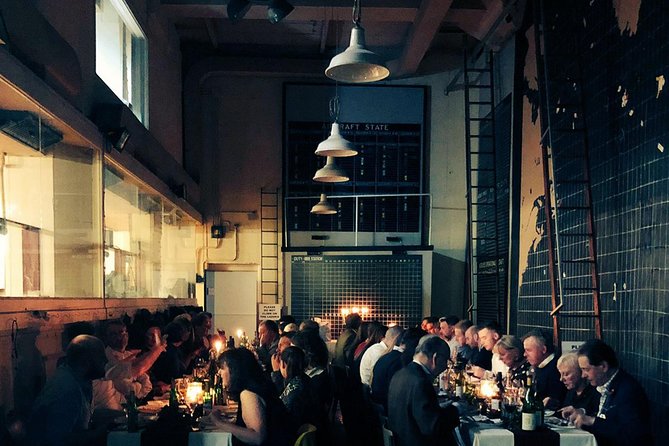
REVIEW · UK AUDIO TOURS
Western Approaches Self Guided Tour
Liverpool’s Western Approaches Museum takes you below the city streets and into the bunker where Britain tracked Atlantic convoys during World War II. The Map Room remains arranged as it was left in 1945, with its huge plotting table, maps, and wartime tools still in place. I like the chance to handle typewriters, teleprinters, and uniforms, and I like that your ticket includes free return visits for 12 months. The main drawback is that much of the museum relies on written displays, so it may feel less lively than London’s Churchill War Rooms.
Key points to know
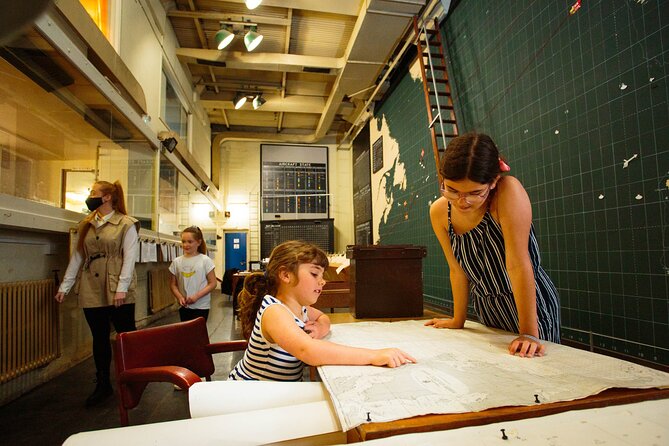
- The untouched Map Room: See the bunker’s nerve centre, preserved from the day it closed on 15 August 1945.
- A hands-on museum: Sit at desks, try typewriters and teleprinters, inspect the telephone exchange, and handle uniforms.
- The wartime telephone: Find one of only two surviving phones with a direct line to the War Cabinet in London.
- A flexible visit: Plan on one to two hours, but the self-guided format lets you stay longer without a fixed group schedule.
- Good repeat value: Your admission includes free return entry within 12 months.
- A practical warning: The bunker is reached by steps, and you need a moderate level of physical fitness.
Beneath Liverpool, the war was being plotted
The Western Approaches bunker sits close to Liverpool Town Hall, only about a five-minute walk from Albert Dock. From the street, it is easy to miss. That is part of its appeal. This is not a grand memorial building with a broad ceremonial entrance. It is a working underground headquarters concealed beneath the city centre.
The Battle of the Atlantic depended on keeping supply ships moving between North America and Britain. Enemy submarines threatened those shipping lines, and the people working here tracked convoy routes, studied reports, and passed information to the Royal Navy and British government.
That context matters when you enter the rooms. You are not simply looking at an old military building. You are seeing the place where information had to be accurate and fast. A misplaced ship marker or a delayed report could affect the safety of an entire convoy.
The visit begins at street level before you go down into the bunker. A short film introduces the Battle of the Atlantic and gives you the basic story before you move through the rooms. That introduction is useful, especially if you know little about Liverpool’s wartime role.
More Audio Tours in the UK:
- London: Emirates Stadium Entry Ticket and Audio Guide
★ 4.7 · 5,513 reviews - Westminster Abbey Entrance Ticket Including Audio Guide
★ 4.0 · 661 reviews - London: British Museum Audio Tour & Priority Entrance Ticket
★ 4.5 · 631 reviews
The Map Room is the main event
The strongest part of the museum is the Map Room, described as the nerve centre of Western Approaches Headquarters. Commanders, WRNS personnel, and WAAF personnel worked around the clock here, watching convoy routes and marking enemy positions across a large map table.
The room has been left much as it was when the bunker closed on 15 August 1945. That preservation gives it a real sense of place. You can picture staff leaning over the map, checking reports, and trying to keep track of ships spread across the Atlantic.
I would allow time to study the details rather than simply walk through. The ladders used to reach wall maps, the large plotting surfaces, and the arrangement of desks show how much work was done by hand. This was an information centre before computer screens and digital maps made constant updates easy.
The Map Room also helps explain the important role of women in the operation. WRNS and WAAF staff worked alongside military commanders, handling communication and routine tasks that kept the headquarters functioning. The separate WRNS display is an unexpected addition and gives the museum more human detail.
Wartime equipment you can actually handle
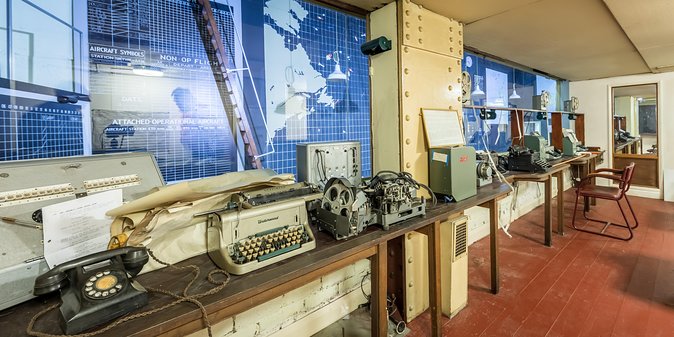
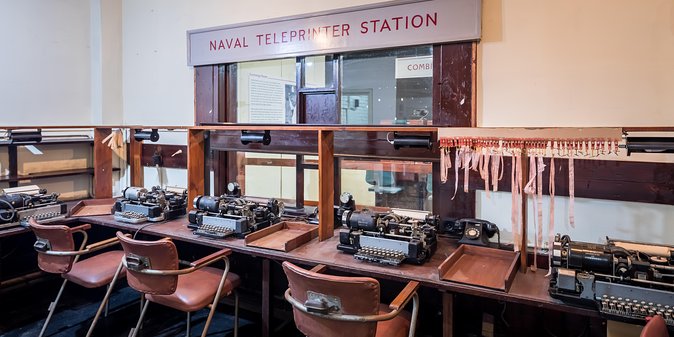
The museum is more engaging when you move beyond the wall text. You can sit at desks, use typewriters, try teleprinter machines, inspect the telephone exchange, and put on uniforms. These small activities make the bunker easier to understand, especially for children and families.
A typewriter or teleprinter may look simple today, but in this setting it shows how messages moved through the command system. You begin to see that the headquarters depended on a chain of people, machines, notes, and phone calls. The technology was not flashy, but it was vital.
The telephone display is especially striking. The bunker contains one of only two surviving wartime phones with a direct connection to the War Cabinet in London. That detail gives the otherwise plain corridors a sharp sense of importance. This was a place where a phone call could carry information directly to the highest level of government.
You will also find documents and tools used to monitor enemy convoys and report findings while keeping the information secret. The displays explain the work, though the museum does not turn every object into an interactive exhibit. If you prefer a highly polished, multimedia presentation, you may find some sections quiet and text-heavy.
A self-guided format that gives you room
This is a self-guided visit, not a timed group tour. You can walk through the corridors at your own pace, pause at the displays that interest you, and move on quickly from sections that feel less relevant.
The advertised visit takes about one to two hours. I would use that as a guide rather than a strict limit. It is possible to see the main rooms in an hour, but the Map Room, equipment displays, and film at the end deserve more time if you enjoy military history.
The flexible format is useful after a morning at Albert Dock or Liverpool’s city centre sights. You do not need to build your day around a guide’s schedule. The museum is open daily from 10 a.m. to 6 p.m. during the stated operating period, so you have plenty of scope to fit it around other plans.
The lack of a guided explanation is also the main weakness. Much of the interpretation comes through signs and static displays, with only a small number of videos. Some visitors will appreciate the quiet chance to read and think. Others may wish for audio commentary, more interactive map explanations, or a guide to explain how the Battle of the Atlantic unfolded.
Same place, a different route to walk:
- Shepton Mallet Prison – Entry Ticket
★ 5.0 · 478 reviews - Golden Tours York Hop-on Hop-off Open Top Bus Tour with Audio Guide
★ 4.5 · 468 reviews - Bath: Roman Baths Entry Ticket with Audio Guide
★ 4.7 · 425 reviews - Canterbury Cathedral: Entry Ticket with Audio Guide
★ 4.6 · 266 reviews
Corridors, offices, and the daily work of war
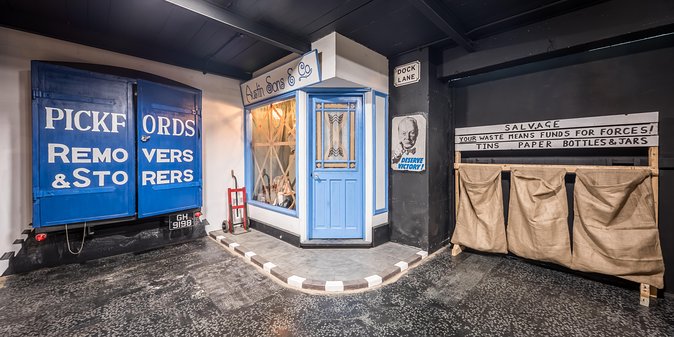
The bunker is not only about major decisions. Its smaller rooms show how ordinary work supported the wider operation. You pass through corridors and working spaces where staff handled messages, plotted ship movements, and maintained communication.
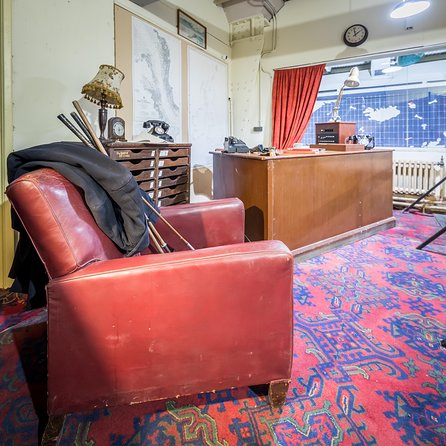
The setting is narrow and functional. Do not expect a grand museum hall filled with elaborate displays. The bunker’s plain rooms are part of the story. It can feel as if the doors were closed at the end of the war and only recently opened again.
That atmosphere is one of the museum’s best qualities. The building itself does much of the work. A long corridor, a cramped office, or a desk covered with equipment can tell you more about wartime routine than a polished modern display.
The museum continues to receive attention and refurbishment, so parts of the site may feel more developed than others. That unevenness is worth accepting because the experience is about seeing the original headquarters rather than entering a purpose-built attraction.
Finish with wartime Liverpool
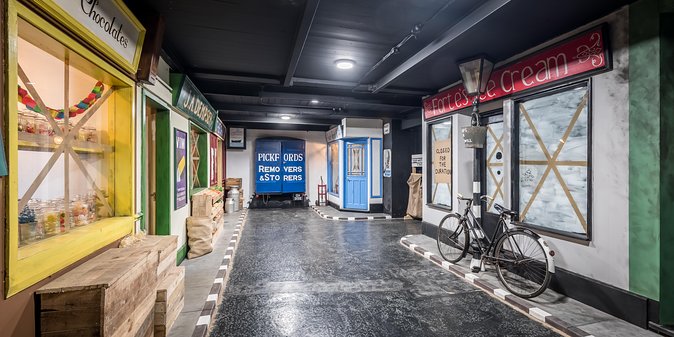
At the end of the route, you can find hot drinks sold at wartime prices, traditional games, and a film about life in Liverpool during the war. This gives the visit a welcome change of pace after the command rooms and military displays.
The games help younger children stay interested, while the film broadens the story beyond maps and naval operations. Liverpool was not only a headquarters for military planning. It was also a city living with wartime restrictions, danger, and uncertainty.
I like this closing section because it connects the secret bunker with everyday life above ground. The museum’s strongest material concerns military intelligence, but the final room reminds you that the war affected families, workers, and neighbourhoods across the city.
Hot drinks at period prices are a modest touch, not a full café experience. Plan on a simple pause rather than a meal stop. You can easily combine the museum with lunch or other attractions in the city centre.
Is the $24.26 price good value?
At about $24.26 per person, this is not Liverpool’s cheapest small museum visit. The value depends on how much time you give it and how interested you are in World War II history.
The ticket includes entry to the entire Western Approaches Museum, and the annual pass gives you free return admission for 12 months. That makes the price easier to justify if you are staying in Liverpool for several days or expect to return to the city. It also gives you the option of making a short first visit and coming back later to read the displays more carefully.
For a one-hour visit focused only on the main rooms, the cost may feel high compared with a free museum. For someone interested in the Battle of the Atlantic, Liverpool’s wartime role, or the work of WRNS and WAAF personnel, the original bunker and preserved Map Room add value that a general museum cannot offer.
I would especially consider the price worthwhile if you enjoy places where the building is part of the exhibit. You are paying for access to an original command centre, not just a collection of objects moved into a modern gallery.
Finding the entrance and preparing for the bunker
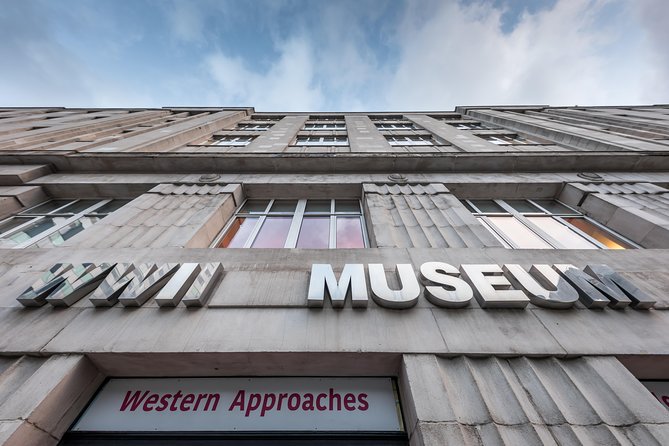
The museum is near Liverpool Town Hall and close to Albert Dock, with public transport nearby. The street entrance can be easy to overlook, and city street signs are not always helpful, so allow a little extra time to find the door.
You will go down steps into the bunker. The experience requires a moderate level of physical fitness, and the site may not suit anyone who finds stairs or underground corridors difficult. Service animals are allowed.
Because the visit is self-guided, you do not need to worry about keeping up with a group. That makes it easier to pause, take photos where permitted, or move at your own speed. It also means you should arrive ready to read the displays yourself rather than expecting a guide to fill in every detail.
The museum is offered in English. Confirmation is provided at booking, and free cancellation is available up to 24 hours before the experience begins. Changes or cancellations made within 24 hours are not accepted for a refund.
Who will enjoy Western Approaches most?
I would recommend this museum to anyone with a serious interest in World War II, naval warfare, intelligence, or the role of women in wartime administration. It is also a good choice if you want an indoor historical stop near Albert Dock that feels different from Liverpool’s larger public museums.
Families can enjoy the hands-on equipment, traditional games, and uniforms. Younger children may not read every display, but the bunker itself, the old machines, and the chance to sit at desks give them something concrete to explore.
You may enjoy it less if you want a highly theatrical attraction with constant video, sound effects, and guided storytelling. Compared with London’s Churchill War Rooms, this museum is smaller and less polished. Its strength is authenticity and atmosphere, not scale or advanced presentation.
I also would not rush through it between fixed appointments. The museum rewards curiosity. Give yourself time to inspect the Map Room, understand the convoy maps, and notice the equipment that made the headquarters work.
Should you book this Liverpool bunker visit?
Book it if you want to understand how Liverpool helped protect Atlantic supply routes and you appreciate original places with a strong sense of time. The preserved Map Room, direct-line telephone, wartime offices, and women’s service displays make this more than a general military exhibit.
Skip it if you dislike reading-heavy museums or cannot manage the steps into an underground bunker. For everyone else, the self-guided format, annual return pass, and central location make it a practical addition to a Liverpool itinerary. I would plan for two hours, arrive with a little patience, and treat the quiet, plain sections as part of the experience rather than expecting a high-tech show.
FAQ
Where is the Western Approaches Museum?
It is underneath Liverpool city centre, close to Liverpool Town Hall and about a five-minute walk from Albert Dock.
How long does the self-guided visit take?
The visit takes approximately one to two hours, depending on how much time you spend reading displays and trying the equipment.
Is admission included with the booking?
Yes. Entry to Western Approaches Museum is included.
Can I return to the museum after my first visit?
Yes. The admission includes free return entry within 12 months.
Is the museum open every day?
The stated opening hours are 10 a.m. to 6 p.m., Monday through Sunday, during the listed operating period.
Are there steps into the bunker?
Yes. You need to use steps to go down into the bunker, and a moderate level of physical fitness is recommended. Service animals are allowed.
Just added around the UK
- Inverness Quest: Self Guided City Walk & Immersive Treasure Hunt★ 4.0 · 5 reviews
- Inverness and Outlander Private Self-Guided Walking Tour★ 5.0 · 4 reviews
- Discovering Inverness: A Self-Guided Audio Tour of the Capital of the Highlands★ 4.5 · 19 reviews
- Glasgow Private Self-Guided Tour★ 4.0 · 21 reviews
- Falmouth Tour App, Hidden Gems Game and Big Britain Quiz (1 Day Pass) UK★ 4.5 · 3 reviews
- A Walk through Tudor Ipswich Tour and Exploration Game★ 4.5 · 3 reviews
- The Slow Food Capital of England: A Self-Guided Tour in Ludlow★ 4.5 · 9 reviews
- Highlights from Edinburgh’s Old Town: A Self-Guided Audio Tour★ 5.0 · 4 reviews
UK Audio Tours, compared.

London: Emirates Stadium Entry Ticket and Audio Guide
Read our review →
Westminster Abbey Entrance Ticket Including Audio Guide
Read our review →
London: British Museum Audio Tour & Priority Entrance Ticket
Read our review →
Golden Tours York Hop-on Hop-off Open Top Bus Tour with Audio Guide
Read our review →
Bath: Roman Baths Entry Ticket with Audio Guide
Read our review →
Canterbury Cathedral: Entry Ticket with Audio Guide
Read our review →
London: Churchill War Rooms Ticket & Political London Audio
Read our review →Browse the lists this tour appears in