
REVIEW · UK AUDIO TOURS
Glasgow Private Self-Guided Tour
Glasgow’s story unfolds in layers on this walk: medieval faith at Glasgow Cathedral, grand Victorian ambitions in the Necropolis, and sharp modern street art along the city centre route. For $12.37, you get a useful introduction to places that many quick city visits miss.
I like the freedom to stop for lunch, a dram, or a closer look without waiting for a group. I also like the mix of old and new, especially the cathedral, the murals, and Merchant City’s links to Glasgow’s tobacco trade. The main drawback is the app. You must use the map and audio together, and the narration may not start automatically.
Key points to know before you go
- The route links Glasgow Cathedral with St Enoch Subway Station, covering the medieval, commercial, civic, and modern sides of the city.
- The Necropolis and Glasgow Cathedral are the strongest historic stops, while the murals give the walk a clear present-day edge.
- Alex provides the recorded audio guide, with pictures, videos, directions, GPS routing, and extra recommendations.
- The route is private but not guided in person, so your group explores alone and controls the pace.
- Allow two to three hours at a brisk pace, or closer to five hours if you stop for food, drinks, and extra sightseeing.
- The audio app needs patience, especially when switching between the map and the tour narration.
A self-guided route through Glasgow’s many eras
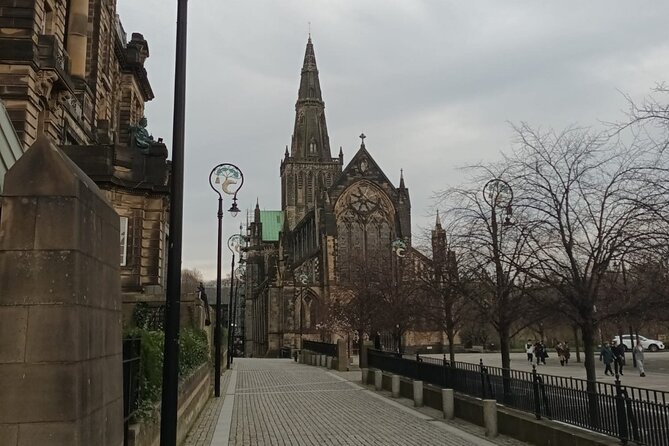
This is not a standard march from one famous building to another. The route begins beside the cathedral, climbs through the Necropolis, threads past old civic buildings and university spaces, then follows Glasgow’s murals and Merchant City streets toward Buchanan Street and St Enoch.
The listed stop times add up to less than the full two or three hours because they cover the time spent listening at the main points. You also need time to walk, check directions, pause for photographs, and find the smaller sights between the named stops.
You start at Glasgow Cathedral, Castle Street, and finish at St Enoch Subway Station. That one-way design is handy if you are building the walk into a day in central Glasgow. You do not need to return to the beginning to collect a bag or find a vehicle.
The audio is presented as a human recording rather than a computer-generated voice. Alex is named as the voice guiding the experience, and the commentary includes photographs, videos, recommendations, and background notes. One piece of feedback also praises Katie’s historical explanations, so the exact voice or content may vary by version, but you should expect recorded narration rather than a person walking beside you.
More Audio Tours in the UK:
- London: Emirates Stadium Entry Ticket and Audio Guide
★ 4.7 · 5,513 reviews - Westminster Abbey Entrance Ticket Including Audio Guide
★ 4.0 · 661 reviews - London: British Museum Audio Tour & Priority Entrance Ticket
★ 4.5 · 631 reviews
Glasgow Cathedral and the Necropolis
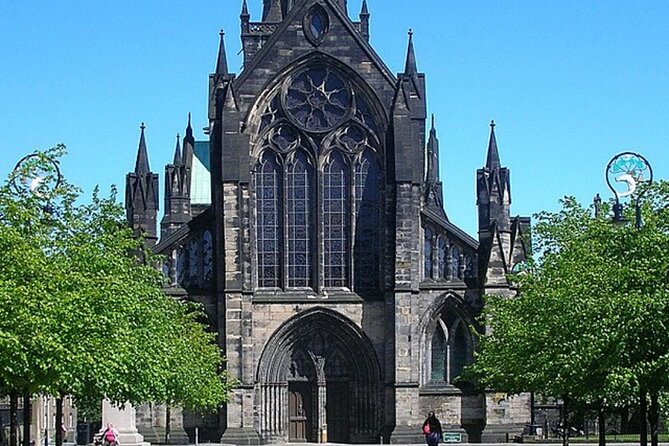
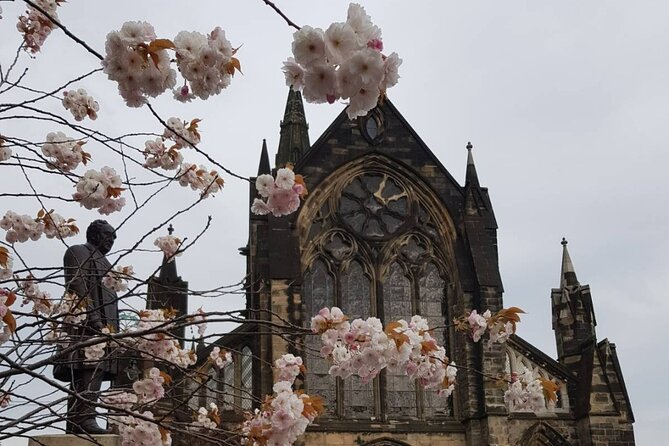
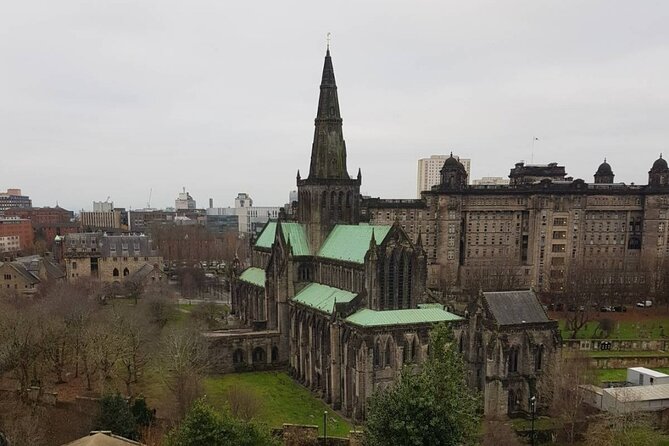
Glasgow Cathedral is the right place to begin. The building you see dates from 1197, after the first cathedral, built in 1136, was destroyed by fire. The present church has never been without a roof since its construction, and worship has continued within its walls for more than 800 years.
That fact gives the opening stop real weight. You are not simply looking at an old church facade. You are entering one of the city’s clearest links with medieval Glasgow. Set aside time to look up, around, and down, since the atmosphere comes from the whole interior rather than one famous object.
Admission to the listed stops is free, though the tour price does not include any separate entrance fees for attractions mentioned along the way. The cathedral stop is scheduled for about 30 minutes, which is enough for a focused visit if you listen while moving through the building.
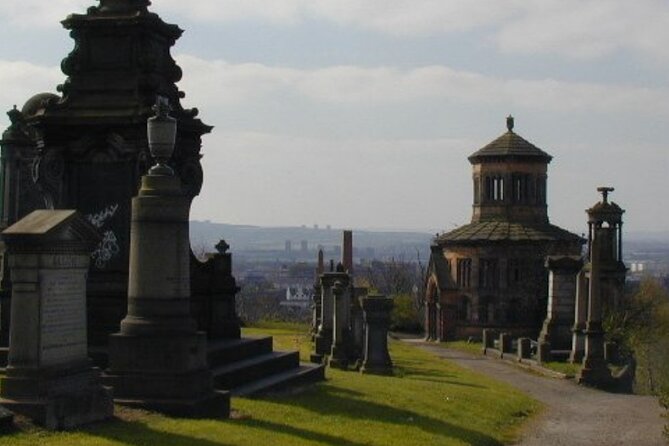
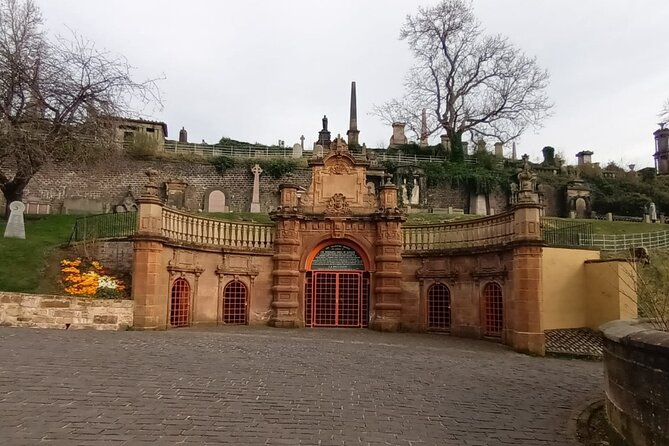
Next comes the Glasgow Necropolis, a 37-acre cemetery established in 1831. Its designers copied Paris’s Père Lachaise, and wealthy Glaswegians wanted impressive monuments for their final resting places. The scale is hard to grasp from a street-level description: the site covers about 150,000 square metres, roughly the size of 15 football fields.
The Necropolis is also one of the route’s best vantage points over the city, though the supplied details focus on its size, design, and social purpose rather than promising a particular view. Wear sensible shoes. The cemetery occupies sloping ground, and you will get more from it if you are willing to walk beyond the first monument.
Provand’s Lordship and Glasgow’s early civic past
The route continues to Provand’s Lordship, a stone building once known as the Hospital of St Nicholas. It has carried its current name since the late nineteenth century, though its earlier identity matters because it shows how Glasgow’s buildings changed use over time.
This is one of the smaller stops, and it may appeal most if you enjoy buildings with several chapters rather than a single famous claim. The route does not present the house as an isolated museum piece. Instead, it places it within the older part of Glasgow, close to the cathedral and cemetery.
You then pass several less obvious reminders of the city’s civic development. One building has been used as the Town Clerk’s office, a Justice Court, the Town Council, and, at the top, a jail. The jail’s high position was chosen for security. Details like this make the audio useful because the building itself may not explain its former roles.
The Tron church area adds another layer of local tradition. The tower now belongs to Tron Theatre, and Trongate takes its name from an earlier form, Saint Thenew’s Gait. Thenew is better known today as Saint Enoch, the mother of Saint Mungo. That connection becomes important later, when the walk ends near St Enoch.
Murals, Strathclyde, and Glasgow’s modern face
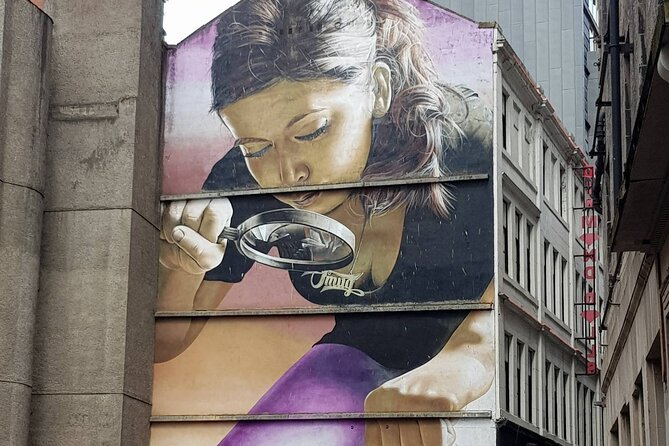
Glasgow is known for its large-scale murals, and this walk gives them more than a passing glance. The route treats street art as part of the city’s public story, not as decoration to be photographed and forgotten.
The murals were created in part to improve neglected walls and gable ends and to shift attitudes toward street art. That context matters. You are seeing a city use public art to change how its streets feel and how people view overlooked spaces.
At the University of Strathclyde, you encounter a major university campus with interesting architecture and more murals. The stop lasts about 15 minutes. It is a useful change of pace after the cathedral and cemetery because it brings you into a working academic part of Glasgow.
The St Enoch cradling St Mungo mural takes only about five minutes, but its subject is worth slowing down for. It shows a mother holding a baby in a futuristic interpretation of St Mungo. The audio explains the details of the image and connects it with the saint who shaped Glasgow’s early identity.
Another mural, Fellow Residents of Glasgow, was painted by Smug. It shows a hiker searching for mushrooms in woodland, with Glasgow animals appearing through openings in the wall. The animals represented can be found in the city’s parks and green spaces. This is a good example of the route’s approach: modern art is tied back to local life rather than treated as a separate attraction.
The final Smug mural is called Honey, I Shrunk the Kids. It is described as photo-realistic street art. The two Smug works give the walk a visual thread, so pay attention to how the artist uses the wall itself as part of the scene.
Same place, a different route to walk:
- Western Approaches Self Guided Tour
★ 5.0 · 505 reviews - Shepton Mallet Prison – Entry Ticket
★ 5.0 · 478 reviews - Golden Tours York Hop-on Hop-off Open Top Bus Tour with Audio Guide
★ 4.5 · 468 reviews - Bath: Roman Baths Entry Ticket with Audio Guide
★ 4.7 · 425 reviews
Merchant City, tobacco wealth, and the Ramshorn church
At 98 Ingram Street, the tour turns toward the people and money that shaped Glasgow’s commercial centre. The church here was built in 1824 to replace an older building and was designed in the Gothic Revival style by English architect Thomas Rickman.
The graveyard contains the graves of tobacco merchants Andrew Buchanan and John Glassford. The older Ramshorn cemetery, now partly covered by Ingram Street, was Glasgow’s fashionable and expensive burial ground in the eighteenth century. Later, the Necropolis took on that role.
This connection is valuable because it links three parts of the walk: the early cemetery near the cathedral, the grand Necropolis, and the commercial fortunes of Merchant City. You see how burial customs reflected wealth and social standing, not just religious belief.
Nearby, a statue of Mercury represents commerce, financial gain, travellers, luck, trickery, and thieves, among other things. It is one of two Mercury sculptures made by Alexander Sandy Stoddart. The statues also represent the Italian quarter of Merchant City.
Do not rush past small public sculptures on this route. The audio encourages you to look for the symbols behind them, and Mercury is a good example of how Glasgow’s commercial identity is expressed in stone.
George Square and the grand civic centre
The City Chambers were completed in 1888 and opened by Queen Victoria. A statue of Victoria stands at the opposite end of George Square, creating a clear link between the building and the monarch who inaugurated it.
George Square itself is named for King George III. It was first laid out in 1781 as part of a plan for a Georgian grid-style city centre, though the square was not developed for another two decades. The space is therefore less simple than it looks. Its shape reflects a long attempt to organise Glasgow as a modern commercial and civic city.
The route also points out one of Glasgow’s unusual emblems and explains the local sense of humour connected with it. The supplied details do not name the emblem, so you will need to let the audio reveal it rather than expect a full description in advance.
There is also a major gallery on the route, described as a must-see Glasgow attraction. The tour provides the information you need to understand it, but it does not include entrance fees for attractions. If you want to go inside any site along the way, plan extra time and check its opening arrangements separately.
Buchanan Street and the Charles Rennie Mackintosh connection
The walk reaches Buchanan Street, where the commentary shifts into present-day Glasgow. By this point, you have moved from medieval worship and nineteenth-century cemeteries through tobacco merchants, civic buildings, murals, and the city’s modern shopping centre.
Buchanan Street is scheduled for about ten minutes. That sounds short, but the point is not to inspect one monument. It is to understand the street as the lively centre of today’s Glasgow and to see how the city’s older stories continue into its commercial heart.
The route also passes a tea room established in 1983. Its interior draws on the work of Charles Rennie Mackintosh, while the room itself is modelled on Kate Cranston’s Ingram Street tea rooms from the early 1900s. The audio explains the story behind the tea rooms and gives you a chance to connect Glasgow’s design tradition with a place you can actually visit.
The Lighthouse is another important stop. It functions as a visitor centre, exhibition space, and event venue in the centre of Glasgow. It is a natural place to add time if you want more architecture and design after the walking tour, though any entrance cost is separate.
What using the app is really like
The tour includes three weeks of unlimited access, so you do not have to finish it on the day you activate it. That is useful if rain, meal stops, or another attraction interrupts your walk. You can also revisit the audio or use the material as a guide to return to a mural or building later.
You must download the Pandemic Tours app after booking. An email provides activation instructions, and the booking reference is not the activation code. Keep that distinction in mind before you set off.
The app includes:
- A map with the route and stop locations
- GPS directions
- Audio narration
- Pictures and videos
- Recommendations and background information
- Three weeks of access after activation
The weak point is navigation inside the app. The narration may not begin automatically, and you may need to leave the tour screen to check the map before returning to the audio. On some phones, the app can lose its place and force you to start a section again.
I would download the app and activate it before reaching the cathedral. Bring headphones if you prefer to hear the commentary clearly, though no special equipment is listed as required. The narrator’s voice has been praised for being clear and detailed, but another account found the audio too quiet and lacking voice filtering. Keep your phone volume up, and do not rely on the commentary alone to lead you from one stop to the next.
Time, price, and who will enjoy it
At $12.37 per person, this is inexpensive for a private city experience. You are paying for a prepared route, recorded commentary, visual material, and the ability to use it for three weeks, not for a live guide or admission to attractions.
The price works best if you want orientation without joining a group. A solo visitor can move at a comfortable pace, and a couple or family can stop whenever something catches their attention. One person completed the route in about five hours by adding lunch, drinks, and extra pauses. That is a useful way to think about the timing: two to three hours is the walking estimate, not a strict limit.
This tour suits you if:
- You want a low-cost introduction to Glasgow
- You like history mixed with street art
- You prefer exploring privately
- You need a flexible route during a short city stay
- You are comfortable using a map and phone app
- You want to stop for food or extra sightseeing
It is less suitable if you expect a person waiting at the cathedral. This is not a live walking tour, and the title’s use of private refers to your group using the self-guided experience, not to a private guide accompanying you.
The route is near public transport, and it finishes at St Enoch Subway Station, close to the Roman Fort area. Service animals are allowed, and most people can take part. The experience is available in English.
Should you book the Glasgow self-guided tour?
Book it if you want a cheap, flexible introduction that gives equal attention to Glasgow’s old buildings and new murals. The cathedral, Necropolis, Merchant City, and George Square provide a solid city framework, while the mural stops keep the route from feeling like a walk through dates and monuments alone.
Skip it if you want effortless navigation or lively conversation with a local guide. The app requires some attention, and the audio may be quiet on your device. At this price, though, the trade-off is fair if you prepare the app before starting and accept that you are responsible for following the route.
FAQ
Where does the Glasgow self-guided tour start?
It starts at Glasgow Cathedral on Castle Street, Glasgow G4 0QZ.
Where does the tour finish?
The tour finishes at St Enoch Subway Station in Glasgow, near the Roman Fort area.
How long does the tour take?
The estimated duration is two to three hours. You can take longer if you stop for lunch, drinks, photographs, or extra sightseeing.
Is there a live guide?
No. This is a self-guided experience for your private group, using recorded audio in the app.
Who provides the audio narration?
Alex is identified as the audio guide. The tour information also includes references to Katie in connection with the historical explanations.
What language is available?
The tour is offered in English.
What does the price include?
The price includes three weeks of unlimited access to the self-guided tour, the app route, map, GPS directions, audio, videos, pictures, recommendations, and tour information.
Are attraction entrance fees included?
No. Any entrance fees for attractions mentioned during the walk are separate.
Do I need an app?
Yes. You must download the Pandemic Tours app after booking. Activation instructions are sent by email, and the booking reference is not the activation code.
Can I use the tour more than once?
You receive three weeks of unlimited access after activation, so you can use the material again during that period.
Is the tour accessible by public transport?
Yes. The route is near public transportation, and it ends at St Enoch Subway Station.
Can service animals take part?
Yes. Service animals are allowed.
Can I cancel for a refund?
No. The experience is non-refundable and cannot be changed after booking.
Just added around the UK
- Falmouth Tour App, Hidden Gems Game and Big Britain Quiz (1 Day Pass) UK★ 4.5 · 3 reviews
- A Walk through Tudor Ipswich Tour and Exploration Game★ 4.5 · 3 reviews
- The Slow Food Capital of England: A Self-Guided Tour in Ludlow★ 4.5 · 9 reviews
- Highlights from Edinburgh’s Old Town: A Self-Guided Audio Tour★ 5.0 · 4 reviews
- Letchworth Garden City: Self-Guided History Puzzle Walk★ 5.0 · 5 reviews
- Highlights from the Royal Mile: A Self-Guided Audio Tour★ 4.5 · 3 reviews
- A History of Witchcraft in Edinburgh: A Self-Guided Audio Tour★ 5.0 · 3 reviews
- Edinburgh City of Wizards Exploration Game and Tour★ 4.5 · 3 reviews
UK Audio Tours, compared.

London: Emirates Stadium Entry Ticket and Audio Guide
Read our review →
Westminster Abbey Entrance Ticket Including Audio Guide
Read our review →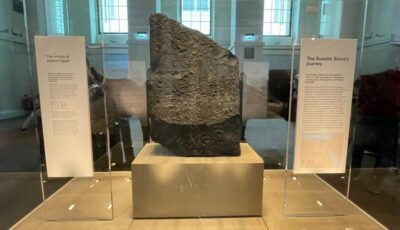
London: British Museum Audio Tour & Priority Entrance Ticket
Read our review →

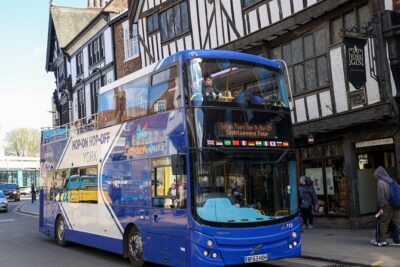
Golden Tours York Hop-on Hop-off Open Top Bus Tour with Audio Guide
Read our review →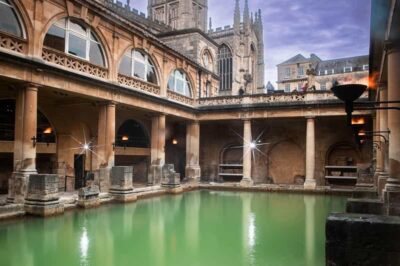
Bath: Roman Baths Entry Ticket with Audio Guide
Read our review →
Canterbury Cathedral: Entry Ticket with Audio Guide
Read our review →Browse the lists this tour appears in