
REVIEW · FLORENCE AUDIO TOURS
Florence: Santa Maria Novella Entry Ticket & Audioguide
Santa Maria Novella gives you one of Florence’s finest art stops in a compact visit. Michelangelo called this Gothic and Renaissance church his bride, and the compliment makes sense once you see the elegant facade, frescoed chapels, and quiet cloisters. I especially like the timed skip-the-line entry and the tablet’s audio, images, and 3D reconstructions. The main catch is value: direct admission can cost less, and the meeting instructions are not as clear as they should be.
I also like that the visit covers both the basilica and cloisters rather than stopping at the nave. You can follow artists from Giotto and Masaccio to Brunelleschi, Ghirlandaio, Filippino Lippi, Botticelli, and Vasari without hiring a private guide. Give yourself extra time if the tablet works slowly, locks itself, or feels awkward to operate.
Key points to know before you go
- Michelangelo’s bride: See the church that inspired one of the Renaissance’s most famous compliments.
- A one-hour art visit: The basilica and cloisters offer a focused stop in central Florence.
- 7-inch multimedia tablet: Audio, high-definition images, and 3D reconstructions add context to the art and architecture.
- Timed entrance matters: Your selected date and time are binding, and late arrival can mean refused entry.
- Bring photo ID: You must leave a valid passport or ID card while borrowing the multimedia guide.
- Check the price: The $18 charge may be worthwhile for convenience, but direct admission with an audio guide can cost less.
Why Santa Maria Novella deserves your time
Santa Maria Novella is not simply a pretty church near Florence’s train station. It is the first great basilica associated with the Dominican friars in Florence, and its building campaign grew from the early 13th century through later Gothic and Renaissance additions.
That long development gives the complex its special character. You are not looking at one clean architectural style. Instead, you see medieval structure, Renaissance design, painted chapels, cloister walks, and later displays sharing one site.
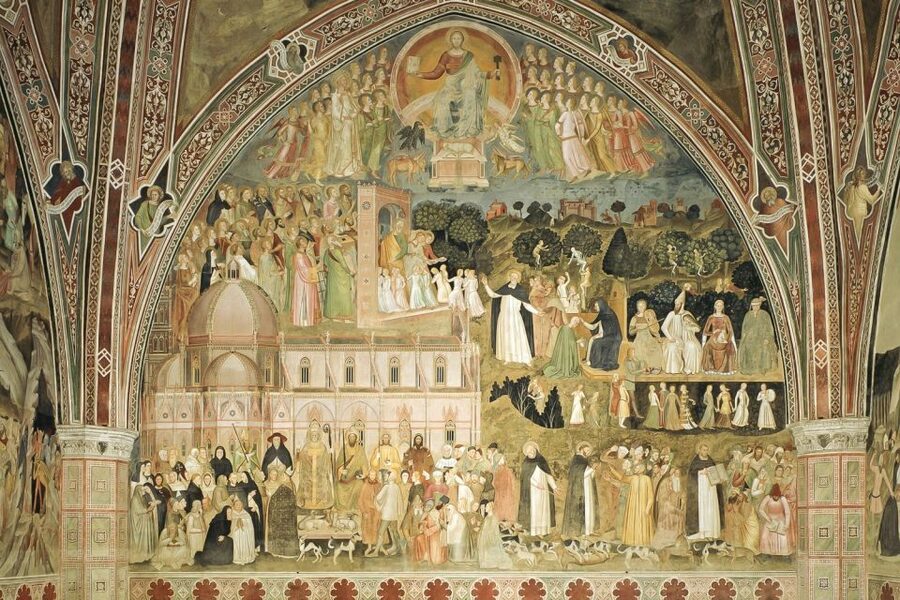
The church’s connection with Michelangelo gives the visit a memorable hook, but the art is the real reason to come. The basilica brings together major names from Italian painting and architecture, including Giotto, Masaccio, Filippo Brunelleschi, Paolo Uccello, Domenico Ghirlandaio, and Filippino Lippi.
I would not treat this as a quick photo stop. The building rewards slow looking. The frescoes, paintings, architectural details, and covered outdoor walks make the hour feel full, especially when the multimedia guide explains what you are seeing.
More Skip-the-Line Audio Guide Tickets in Florence
- Florence: Palazzo Vecchio Entrance Ticket & Audioguide
★ 4.4 · 4,822 reviews - Florence: Uffizi Gallery Timed Entry Ticket & Audio Guide
★ 4.2 · 2,794 reviews - Florence: Michelangelo’s David Entrance Ticket and Audio App
★ 4.3 · 1,901 reviews
Getting to the correct entrance
The meeting directions require care. You are told to go to the right of the church to redeem your ticket, then collect the multimedia guide inside the basilica. In practice, some ticket holders have been directed to the tourist office across from the train station, using the entrance at the back or north side of the church.
That difference matters because Santa Maria Novella has several sides and entrances. Do not assume the grand front facade is the place to exchange your voucher. Look for the ticket office or tourist entrance on the church’s right side and allow a little time to find it.
The starting time is mandatory. This is not a flexible ticket that you can use whenever you happen to reach the piazza. If you miss the allotted entry time, you can be refused admission, so avoid scheduling it immediately after a train arrival or another timed museum.
The central location makes the visit easy to fit into a Florence day, but the same location also means you should keep your belongings close in the piazza. One booking describes a wallet being stolen from a bag nearby. That is a practical warning, not a reason to avoid the church: use a zipped bag and keep it in front of you.
Inside the basilica: Gothic structure and Renaissance art
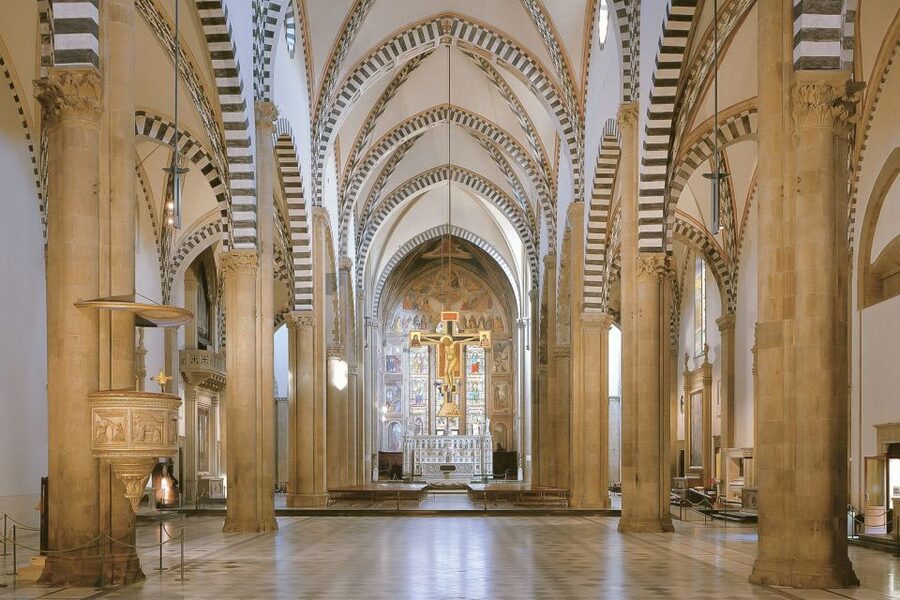
Once inside, begin by taking in the full scale of the church before following the guide. The architecture is easiest to understand when you first see it as a whole, then return to the details named by the tablet.
Santa Maria Novella’s appeal comes from the way its medieval and Renaissance features work together. The church dates from the early decades of the 13th century, after Dominican friars settled in Florence, but the complex continued to expand over several centuries.
The multimedia guide helps turn that long timeline into something manageable. Instead of reading scattered labels and trying to match names with chapels, you can listen while viewing related images on the 7-inch tablet.
The art list is unusually strong for a visit of about an hour:
- Giotto: His work places the church within the development of early Italian painting.
- Masaccio: His art is central to the Renaissance story and rewards attention to space and human form.
- Brunelleschi: His name connects the church with Florence’s great architectural change.
- Paolo Uccello: His work adds another important voice from the Renaissance period.
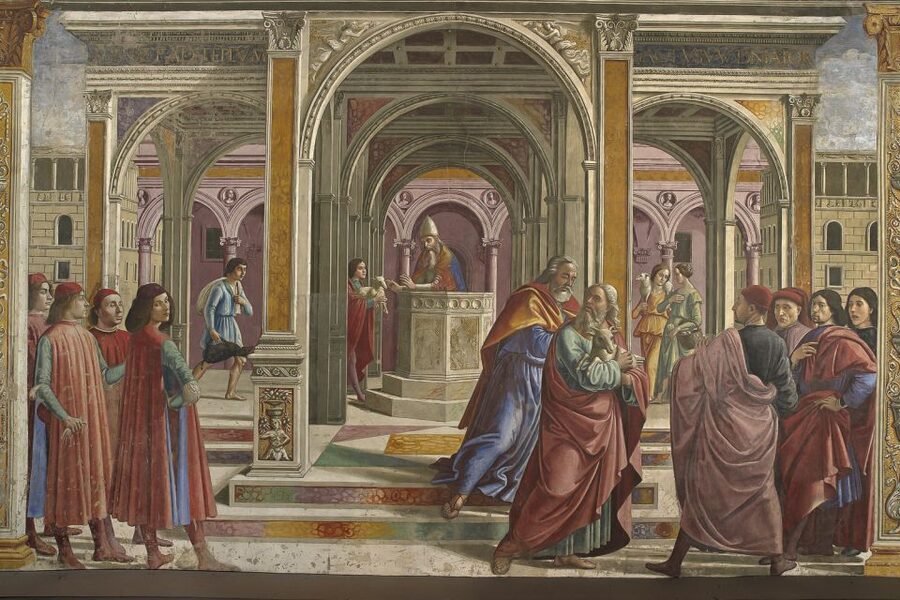
- Domenico Ghirlandaio: His frescoes help show how large-scale Florentine painting developed.
- Filippino Lippi and Vasari: Their work extends the story into later Renaissance art.
The supplied information also highlights Botticelli, so you should pay attention when the guide points out his connection to the complex. You may not get a long lecture on every artist, but the range gives you a useful picture of Florence’s artistic growth.
The multimedia guide: useful content, imperfect controls
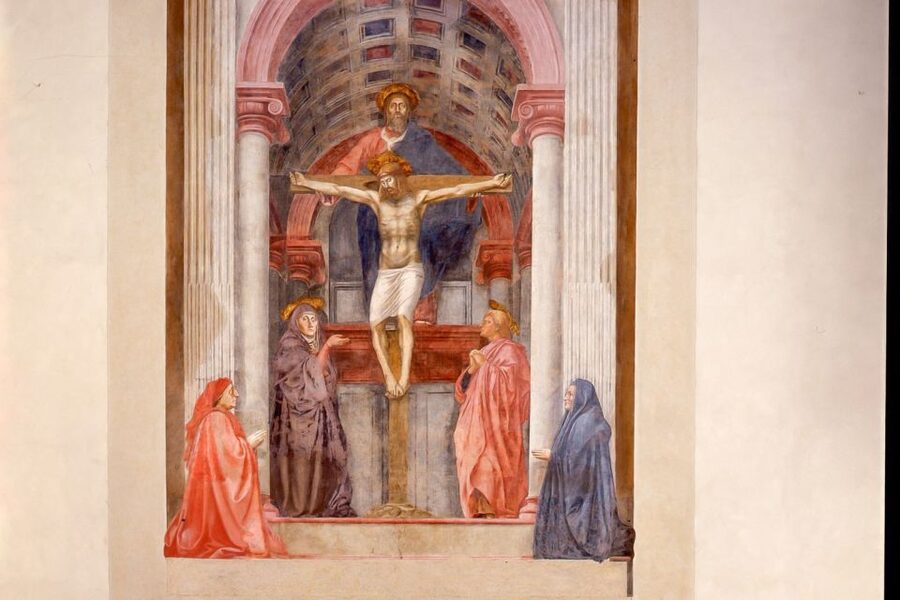
The guide is a 7-inch tablet rather than a person walking beside you. It combines spoken narration with high-definition images and 3D reconstructions. That format is useful when the building’s original appearance or a hard-to-see detail needs explanation.
The available languages are English, Italian, Spanish, French, and German. The main exhibitions use English and Italian information, so the tablet is especially helpful if you want more explanation in another language.
I like the format for independent visitors. You can move at your own speed, pause when a painting catches your eye, and spend less time deciphering labels. The content is described as informative, and a staff guide named Bene is also associated with a particularly strong overview of the site.
The hardware is the weak point. Some people have found the controls difficult, especially when the tablet times out or locks itself. One person barely used the guide because it was too complicated to restart. The audio content can be good while the device itself remains frustrating.
When you receive it, ask the staff to show you how to wake the screen, select a language, and return to the previous section. Do not wait until you are standing in front of a fresco with a crowded schedule. Also remember that the same multimedia guide is used for children and adults, so younger visitors do not receive a separate child version.
More Skip-the-Line Audio Guide Tickets in Italy
- Florence: Uffizi Gallery Reserved Entry Ticket & Audioguide
★ 4.5 · 970 reviews - Florence: Palazzo Vecchio Entry Ticket with Audio Guide
★ 4.4 · 837 reviews - Florence: Duomo Cathedral Timed Entry Ticket & Audio App
★ 3.7 · 472 reviews - Florence: Uffizi Official timed Entry Ticket & Audio Guide
★ 3.9 · 244 reviews
The cloisters and covered walks
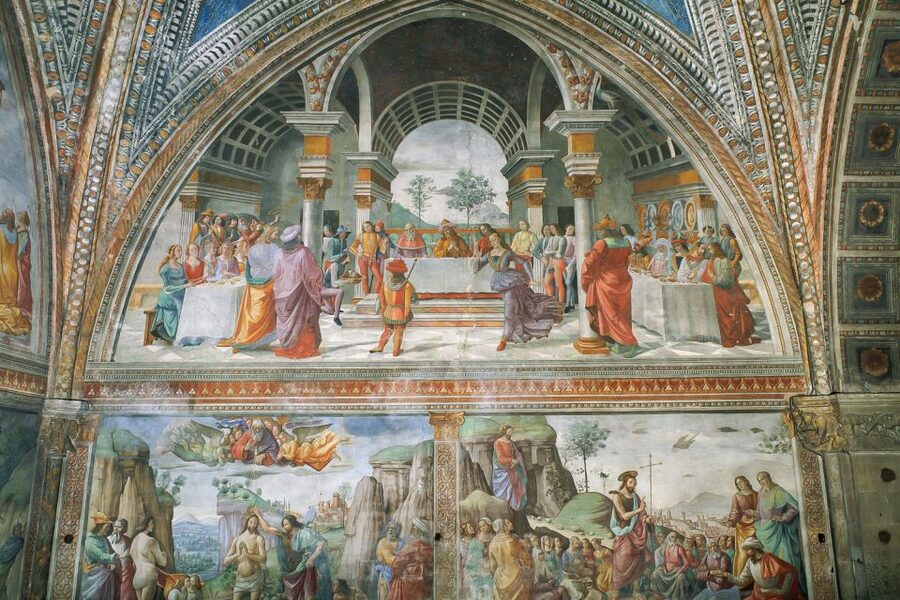
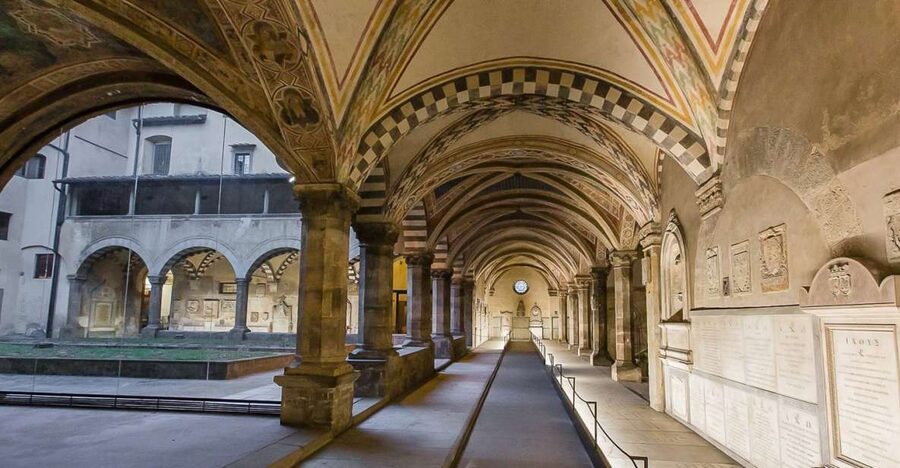
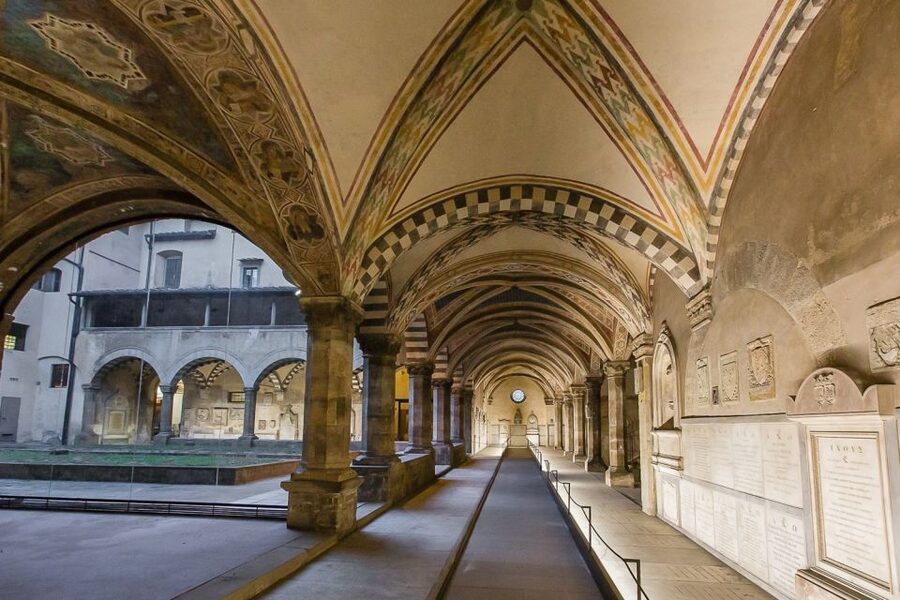
The cloisters are an important part of the visit, not an optional extra. The covered walks give you a different view of the complex, with painted surfaces, murals, and architectural details that are easy to miss if you stay only in the church.
This quieter section also helps explain why Santa Maria Novella was a functioning religious complex rather than just a large basilica. The spaces connect art, worship, movement, and daily monastic life.
You may find part of the museum or grounds closed during your visit. Closures have affected portions of the complex before, and a closed section can reduce the amount you see. Ask at the entrance which areas are open so you can set realistic expectations.
Even with a partial closure, the church and covered walks can make the visit worthwhile. But if every exhibition is essential to your plan, confirm what is accessible before committing to the ticket.
How much time should you allow?
The planned visit lasts about one hour. That is enough for a focused look at the basilica and cloisters, especially if you follow the main audio route without stopping for long periods.
I would allow more than an hour if your schedule permits. The church contains enough frescoes, paintings, and architectural details to slow you down, and the tablet adds listening time. One person expected a short visit but stayed much longer while looking at the frescoes and decorative details.
At the same time, this is not an all-day museum ticket. The activity is valid for one day, but the entry time remains fixed. Think of it as a strong one-hour or ninety-minute appointment, not an open-ended pass.
It pairs well with a morning or afternoon around the station and central Florence. The location makes it practical before a train, but do not book the tightest possible connection. You need time to locate the correct entrance, exchange the voucher, collect the tablet, and return it.
Is the $18 price good value?
At $18 per person, this is a convenience purchase rather than an obvious bargain. The cost includes admission and the multimedia guide, with no live tour guide included.
The price makes sense for you if:
- You want to avoid the ticket line.
- You prefer an audio explanation to reading labels.
- You value a timed reservation in a busy city.
- You want both the basilica and cloisters in one visit.
- You are visiting in a language supported by the tablet.
The price is less attractive if you are happy to buy entry directly at the church. Some ticket holders have found that going straight to the attraction and obtaining an audio guide costs less than booking this package. The difference appears to be tied largely to advance booking and line-skipping convenience.
That convenience can still have real value. Florence’s major sights require planning, and a timed ticket removes some uncertainty. But compare the direct price before booking, especially in a quieter travel period.
There is also an awkward policy involving the tablet. You must leave a valid passport or ID card at the ticket office while using the guide. Some people are uncomfortable surrendering an original document, and that concern is reasonable. Bring an accepted ID and understand that the office keeps it only for the duration of the equipment loan.
What can go wrong, and how to avoid it
The most common practical problems are not about the church itself. They involve finding the entrance, operating the tablet, and arriving at the correct time.
Use these simple precautions:
- Read the meeting directions closely: Start at the right side or rear tourist entrance, not automatically at the main facade.
- Arrive early: The selected time is binding, and late entry may be refused.
- Keep your ID ready: You need it to collect the multimedia guide.
- Ask for a quick demonstration: Learn how to wake the tablet and navigate its sections.
- Check open areas: A part of the museum or grounds may be closed.
- Protect your wallet: Keep bags zipped and close in the piazza.
- Do not overpack the schedule: The tablet pickup and return add a little time around the one-hour visit.
The tour does not include a live guide, so you should not expect someone to lead you from room to room. If you want conversation, questions, and a human explanation tailored to your interests, this is not the right format.
Who will enjoy this visit most?
I recommend Santa Maria Novella to first-time Florence visitors who want serious art without committing half a day to a large museum. The church and cloisters give you a compact look at several important periods and artists.
It also suits independent visitors who like audio tours and want to move alone. The English option is useful, and the visual material can make the frescoes easier to understand.
Families should note that the tablet is the same for children and adults. There is no separate child version listed, so the guide may work best for older children who can follow an art-focused explanation.
Art lovers may want longer than the advertised hour. The complex has enough to reward repeated stops, but closures can affect what is available. If you are choosing between this and another major Florence sight, compare the total price and the amount of time you have.
People on a strict budget should check the direct admission cost first. You may save money by buying at the church, although you give up some advance certainty and possibly the line-skipping benefit.
Should you book Santa Maria Novella?
Book this experience if you want a timed, self-guided visit to a major Florentine church and value the tablet’s audio, images, and 3D material. The architecture is beautiful, the cloisters add real substance, and the concentration of important art makes the visit a smart use of an hour.
I would hesitate only if the $18 price is much higher than direct admission, if you dislike leaving an ID at a ticket office, or if you need a fully guided tour. In that case, buying directly may be better value, while a live guide would better suit your questions.
For most independent visitors, the decision comes down to convenience. Confirm the entrance, arrive early, protect your belongings, and treat the multimedia guide as helpful content on slightly fussy equipment. Do that, and Santa Maria Novella can be one of Florence’s most rewarding short stops.
FAQ
How long does the Santa Maria Novella visit last?
The planned visit to the basilica and cloisters lasts about one hour. You may spend longer if you stop often to study the frescoes, paintings, and architecture.
Is a live tour guide included?
No. The ticket includes admission and a multimedia guide on a 7-inch tablet, but it does not include a live tour guide.
Which languages are available on the multimedia guide?
The guide is available in English, Italian, Spanish, French, and German.
Do I need to bring identification?
Yes. You must leave a valid passport or ID card at the ticket office while you borrow the multimedia guide.
Can I arrive at any time on the booked day?
No. The date and time slot are binding once booked. You can be refused entry if you do not arrive during the allotted time.
Where do I collect the ticket and multimedia guide?
Go to the ticket redemption point on the right side of Santa Maria Novella. Some directions also refer to the tourist office across from the train station and an entrance at the rear or north side, so allow time to locate the correct access point.
Just added around Florence
- Florence: Uffizi Gallery Reserved Ticket & Digital Audio Guide★ 4.5 · 3 reviews
- Around Florence Hills: App‑Guided e‑Vespa Tour + Wine&Food★ 4.5 · 22 reviews
- Florence: Uffizi Gallery Audio Guided Tour led by Tour Leader★ 3.5 · 6 reviews
- Uffizi Gallery: Self-guided App Visit & Optional Accademia Museum★ 4.0 · 19 reviews
- Uffizi Gallery Audio-Guided Visit with optional Accademia Gallery★ 3.5 · 42 reviews
- Florence: Uffizi Gallery Timed Entry Ticket with Audio★ 3.0 · 3 reviews
- Uffizi Combined Ticket:UFFIZI, PITTI, BOBOLI & digital audioguide★ 4.0 · 26 reviews
- Accademia Gallery Skip the line Tickets with Audio Guide★ 4.0 · 10 reviews
Florence Audio Tours, compared.
Florence: Timed Entry to Michelangelo’s David + Audio App
Read our review →
Florence: Uffizi Priority Ticket & Masterpieces Audio App
Read our review →
Florence: Palazzo Vecchio Entrance Ticket & Audioguide
Read our review →
Florence: Uffizi Gallery Timed Entry Ticket & Audio Guide
Read our review →
Florence: Michelangelo’s David Entrance Ticket and Audio App
Read our review →
Florence: Uffizi & Accademia Priority Tickets with Audio App
Read our review →
Florence: Eco-Friendly Golf Cart City Tour with Audio Guide
Read our review →
Florence: Uffizi Gallery Reserved Entry Ticket & Audioguide
Read our review →Browse the lists this tour appears in