
REVIEW · UK AUDIO TOURS
Letchworth Garden City: Self-Guided History Puzzle Walk
Letchworth Garden City turns a history lesson into a walkable game. For about 90 minutes, you follow clues from the railway station through gardens, churches, a cinema, and the former offices of the town’s planners. The subject is serious, but the format is light: part treasure hunt, part outdoor escape game, and part local walking tour.
I like the flexible start time and the fact that the game works offline, so you can pause for coffee or pick it up again later. I also like the small details you are sent looking for, including the chance to spot Letchworth’s famous black squirrels. The main drawback is that you get no human guide, so anyone wanting a flowing story, instant answers, or help with questions will need to rely on the app.
Key points at a glance
- A tour with a puzzle to solve: Each stop gives you a challenge before you move to the next place.
- About 90 minutes on foot: The route links seven locations in central Letchworth Garden City.
- Start when you choose: The activity is available every day from 5:00 AM to 9:00 PM.
- History beyond the headline: You learn about railway changes, Ebenezer Howard’s ideas, local churches, cinema culture, and town planning.
- Private and self-guided: Only your group takes part, with no physical guide or shared tour party.
- Good value for groups: At $5.90 per person, the cost is modest, with group discounts available.
Why Letchworth works so well as a puzzle walk
Letchworth Garden City was the first Garden City in the world, and the town was designed around ideas that still shape its streets and open spaces. That gives this walk a clear theme. You are not simply moving between unrelated sights. You are tracing how a planned community grew around transport, public gardens, religious buildings, entertainment, and carefully designed streets.
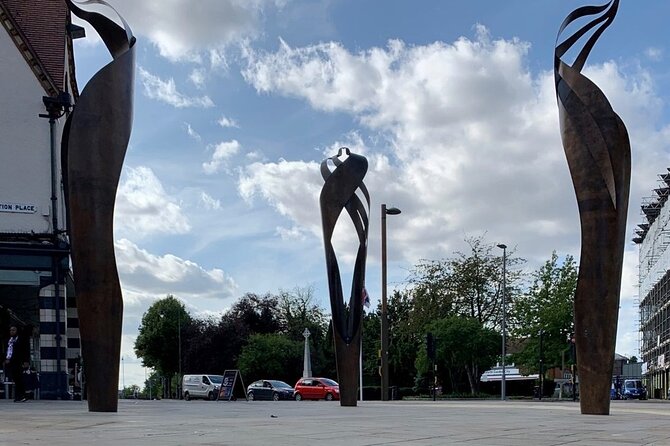
The game begins at Station Place, a useful starting point because the railway helped make Letchworth possible. The first station opened in 1903 with a limited service. Full passenger service began on 15 April 1905, before that station was replaced by a new one on 18 May 1913.
Those dates may sound dry in a guidebook. They become easier to remember when you must look around the station area and find an answer before the app lets you continue. That is the central idea behind the experience: notice the place first, then connect what you see with the town’s past.
I would expect the walk to suit people who enjoy a little direction but do not want to be led in a tight group. The app gives your party a task, and you decide how quickly to work through it. The result is more active than reading plaques, but less demanding than a full escape room.
More Scavenger Hunts in the UK
- Glasgow Ghost Hunt: The Soul That Got Away Exploration Game
★ 4.0 · 71 reviews - Bristol Street Art: Banksy Exploration Game and Tour
★ 3.5 · 39 reviews - Birmingham Ghost Hunt: Haunted Self-Guide Tour & Quest
★ 4.5 · 37 reviews
Station Place and the story of Letchworth’s railway
The railway stop is more than a practical meeting point. It introduces the question of how a new town connected with the wider world.
At this first station, you look around for the answer to the opening challenge. The task is designed to send you onward to the later station location while adding the story of the railway’s development. That change of site gives the first part of the walk a clear sense of movement.
I like this as an opening because it gets you observing straight away. You are not handed every fact in a block of text. Instead, the surroundings provide part of the answer, and the app fills in the context afterward.
The main practical point is to begin with a charged phone and enough time to look carefully. The walk is self-guided, so you do not have a person nearby to keep the group moving or explain a clue in another way. If you rush, you may miss the detail that makes the question work.
Broadway Gardens and Ebenezer Howard’s plan
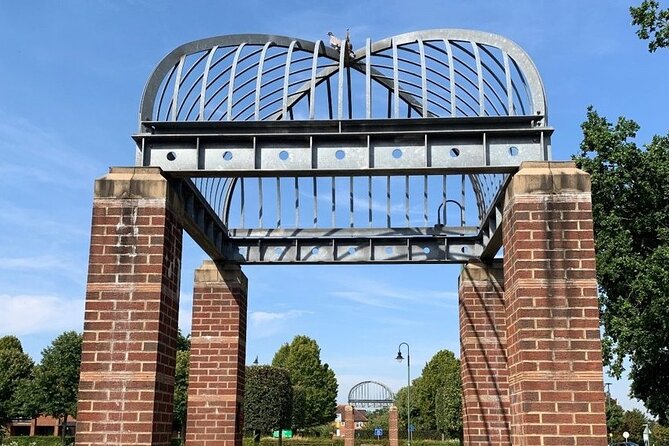
Broadway Gardens and Walk gives the route its most obvious Garden City setting. The gardens were developed with help from a £1 million Heritage Lottery Fund grant, and their layout reflects the original aims of Ebenezer Howard, the thinker behind the Garden City idea.
This is where the town’s design principles become easier to grasp. Howard was concerned with how people lived, worked, and found open space, and the gardens provide a physical example of those ambitions. You can pause here without feeling that you are only looking at an old building or reading a date.
The challenge asks you to inspect the gardens and find a detail that advances the game. That simple task changes your pace. You are encouraged to notice the arrangement rather than treat the gardens as a backdrop between stops.
For families, this may be one of the strongest parts of the route. Children have a reason to search, while adults can explain why the gardens matter. The experience is not only about collecting answers. It gives you a reason to discuss why this town was planned differently from an ordinary suburb.
A school story linked to the Sisters of Charity
One stop introduces the history of a religious order founded in Belgium in 1803 by Canon Triest. The order later developed missions in several countries, and its sisters were already running schools in Devon and Lancashire before finding a site in Letchworth Garden City.
This section adds a human and international thread to the walk. The town’s story was not shaped only by architects and planners. Religious communities, schools, and local institutions also became part of daily life.
The challenge here asks you to look around for a clue connected with the site. You will need to pay attention to the setting and use the information provided by the app to make sense of what you find.
I appreciate this kind of stop because it widens the subject. A Garden City could easily be presented as a neat planning experiment, all diagrams and ideal layouts. The school story shows the town as a lived-in place, with people bringing their work, faith, and educational aims into the new community.
Same place, a different route to walk:
- London: Emirates Stadium Entry Ticket and Audio Guide
★ 4.7 · 5,513 reviews - Westminster Abbey Entrance Ticket Including Audio Guide
★ 4.0 · 661 reviews - London: British Museum Audio Tour & Priority Entrance Ticket
★ 4.5 · 631 reviews - Western Approaches Self Guided Tour
★ 5.0 · 505 reviews
The cinema with a 1936 gala beginning
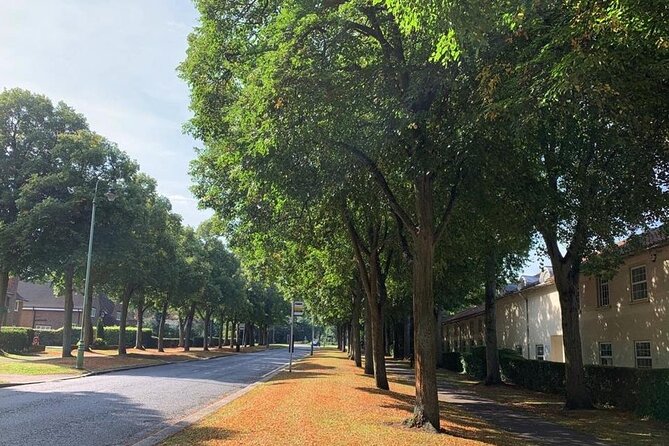
The cinema stop brings a change of mood. The building dates from 1936 and opened with a black-tie gala screening of Follow the Fleet, starring Fred Astaire and Ginger Rogers.
That opening is a fine detail to discover on a walking route. It gives you a strong sense of the period and of the cinema’s role in local life. The venue was built after the nearby Palace Cinema, which opened in 1909, struggled to handle local crowds. The Palace was one of the first purpose-built cinemas in the country.
This stop also shows that Letchworth was not simply a quiet experiment in housing and gardens. People wanted entertainment, and the town needed buildings large enough to serve a growing audience.
The puzzle format works well here because a cinema is easy to pass without considering its age. The challenge makes you stop, inspect, and connect the building with the earlier Palace Cinema and its later replacement. If you enjoy architecture, film history, or small local details, this should be one of the more memorable stops.
St Mary the Virgin and the older village

The Church of St Mary the Virgin provides a link to Old Letchworth. The current church was built in the late 12th century and is a Grade II listed building in the Diocese of St Albans. It was the former Church of England parish church for Old Letchworth.
This is an important contrast with the planned town around it. Letchworth Garden City is associated with early twentieth-century ideas, but the area also contains much older roots. The medieval church reminds you that the Garden City was built near an existing settlement rather than in an empty historical vacuum.
The route asks you to find another answer at or near the church before continuing. That gives you time to take in the building’s age and its place in the local story.
Because this is an active puzzle, the experience does not promise a detailed interior tour or a formal explanation of church architecture. You should treat the stop as a short outdoor introduction. If the church is closed, the game remains focused on finding the required clue rather than entering for a full visit.
The International Garden Cities Institute

The International Garden Cities Institute on Norton Way South is the natural intellectual centre of the walk. It occupies the former offices of Raymond Unwin and Barry Parker, the town-planners and architects who helped shape Letchworth.
Here, the route connects the streets you have already walked with the people who designed them. You can trace the origins of Letchworth’s formation, see how streets and open spaces were planned, and learn how the Garden City idea influenced later developments around the world.
This stop carries more weight than a simple historic address. It helps answer the larger question behind the game: what makes Letchworth a Garden City rather than just another planned town?
The route ends at 296 Norton Way South, close to this institute. That is useful if you want to continue exploring the subject after the game, though the activity itself remains a self-guided outdoor experience. The challenge here asks you to search for one final answer and use it to complete the route.
I would save a few extra minutes for this part rather than treating it as a quick finish. The institute gives the walk its wider context, while the earlier stops provide the local examples.
St Michael’s Church and the final stop
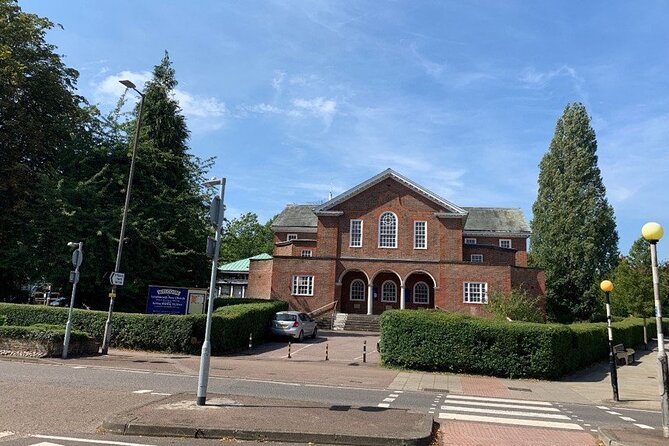
The last location is St Michael’s Church. It was dedicated on 22 February 1908 and designed by Courtenay Crickmer as a mission church to St Mary’s in Letchworth. Its permanent site on Town Square developed between 1966 and 1968.
This final stop continues the contrast between old and new. St Mary’s represents the medieval parish of Old Letchworth, while St Michael’s reflects the needs of the newer Garden City community.
The church’s changes over time also show that planned towns do not remain fixed. Buildings acquire new roles, congregations grow, and spaces are adapted. That is a useful note to end on, since the route has been showing you Letchworth as an evolving place rather than a finished design.
The supplied route information lists seven stops, while the directions place the finish at Norton Way South near the International Garden Cities Institute. In practical terms, you should expect the game to guide you through the church and then toward the final area. Keep the app open and follow its instructions for the exact order.
How the Questo format feels in practice
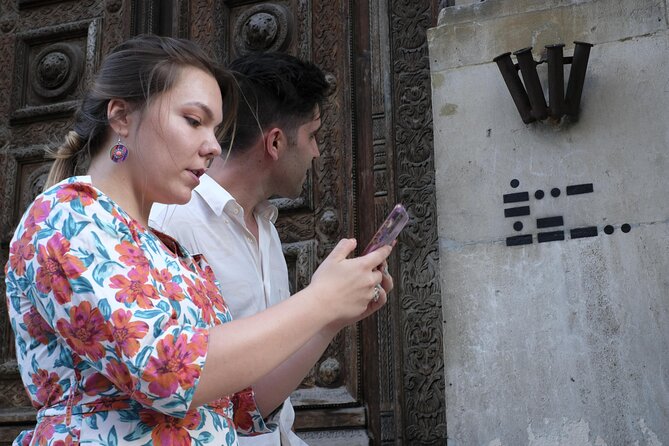
Questo provides the digital game, not a human guide. You use your mobile device to receive clues, enter answers, and move through the route. The activity is offered in English and can be played offline, which matters in a town walk where you may not want to depend on a strong mobile signal.
The flexible setup is a major advantage. You can start at any hour during the stated 5:00 AM to 9:00 PM operating window, take a break, and resume later. That makes it easy to fit around a train arrival, lunch, or another visit.
The private format also keeps the pace in your hands. Only your group takes part, so you do not need to wait for strangers or match the speed of a guide. A group of four adults can work through the clues together, while families can divide up the searching.
The trade-off is that the app cannot replace a person. If a clue feels unclear, hints are available, but you will not get a spontaneous explanation from someone who knows the town. The activity suits independent problem-solving more than passive sightseeing.
Price, timing, and who gets the best value
At $5.90 per person, this is a low-cost way to spend roughly an hour and a half in central Letchworth. The value is strongest if you want both a walk and a reason to pay attention to the buildings around you. You are paying for a structured game and local information, not transport, food, entry tickets, or a guide.
The price also works well for a small group because the experience is private and group discounts are available. Check the final booking price for your party before paying, since the discount may depend on group size.
The route is available Monday through Sunday, with the stated hours of 5:00 AM to 9:00 PM. That wide window is useful, though I would choose daylight for easier clue-finding and a better view of the gardens and buildings.
You can cancel for a full refund up to 24 hours before the start time. Cancellations within 24 hours are not refunded, and changes inside that period are not accepted.
The activity is near public transport, starts at Station Place, and finishes at 296 Norton Way South. Service animals are allowed, and most people can take part. The information does not give a precise distance or detailed step-free route, so anyone with mobility concerns should confirm the walking conditions before booking.
Who should book the Letchworth puzzle walk?
I would recommend it to families, couples, friends, and local residents who want to see familiar streets differently. It is especially good for people who enjoy clues, small challenges, and learning facts through observation.
It also suits visitors who dislike fixed tour times. You can start when convenient, stop when you like, and play only with your own group. The offline option is another practical plus.
I would choose something else if you want a detailed architectural lecture, a guide who can answer follow-up questions, or a tour built around entering historic interiors. The walk is mainly an outdoor game, and its explanations are delivered through the app.
Should you book it?
Book this Letchworth Garden City experience if you want a cheap, flexible way to connect railway history, planned gardens, churches, cinema culture, and town planning. The black squirrel sightings are a pleasant bonus, not a promised part of the game, but they add a bit of local character to the walk.
At $5.90, the risk is small. You get the most from it if everyone in your group is willing to search, discuss answers, and use the surroundings rather than simply follow the phone. For a quiet New Year’s Day outing, a family activity, or a fresh look at your own town, this is a smart pick.
FAQ
How long does the Letchworth Garden City puzzle walk take?
The activity takes approximately one hour and 30 minutes.
Where does the experience start?
It starts at Station Place, Letchworth Garden City, SG6, United Kingdom.
Where does the experience finish?
The stated end point is 296 Norton Way South, Letchworth Garden City, SG6 1SU, near the International Garden Cities Institute.
Do I need to start at a fixed time?
No. You can start at any hour during the operating period, take a break, and resume later.
Does the tour include a physical guide?
No. This is a self-guided mobile experience, and no physical tour guide is included.
Can I play without an internet connection?
Yes. The city game can be played offline after you have access to it through the app.
What is the cancellation policy?
You can cancel at least 24 hours before the experience start time for a full refund. Cancellations or changes made within 24 hours are not accepted and are not refunded.
More History Tours in the UK
- London: Natural History Museum Express Guided Tour & Audio Guide
★ 4.0 · 100 reviews - London: Natural History Museum Express Tour & Audio App
★ 3.6 · 60 reviews - London: Self-Guided History City Tour with an App
★ 4.3 · 21 reviews - Bath : 2 Hour Historic Walking Tour With An App
★ 3.6 · 19 reviews
Just added around the UK
- Inverness Quest: Self Guided City Walk & Immersive Treasure Hunt★ 4.0 · 5 reviews
- Inverness and Outlander Private Self-Guided Walking Tour★ 5.0 · 4 reviews
- Discovering Inverness: A Self-Guided Audio Tour of the Capital of the Highlands★ 4.5 · 19 reviews
- Glasgow Private Self-Guided Tour★ 4.0 · 21 reviews
- Falmouth Tour App, Hidden Gems Game and Big Britain Quiz (1 Day Pass) UK★ 4.5 · 3 reviews
- A Walk through Tudor Ipswich Tour and Exploration Game★ 4.5 · 3 reviews
- The Slow Food Capital of England: A Self-Guided Tour in Ludlow★ 4.5 · 9 reviews
- Highlights from Edinburgh’s Old Town: A Self-Guided Audio Tour★ 5.0 · 4 reviews
UK Audio Tours, compared.

London: Emirates Stadium Entry Ticket and Audio Guide
Read our review →
Westminster Abbey Entrance Ticket Including Audio Guide
Read our review →
London: British Museum Audio Tour & Priority Entrance Ticket
Read our review →
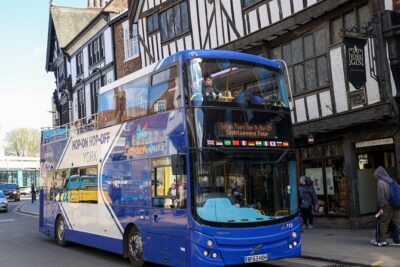
Golden Tours York Hop-on Hop-off Open Top Bus Tour with Audio Guide
Read our review →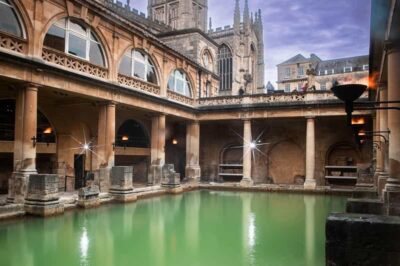
Bath: Roman Baths Entry Ticket with Audio Guide
Read our review →
Canterbury Cathedral: Entry Ticket with Audio Guide
Read our review →Browse the lists this tour appears in