
REVIEW · VIENNA AUDIO TOURS
Vienna: Schlumberger Wine Cellar Guided or Self-Guided Tour
The best part of the Schlumberger experience is beneath an unassuming Vienna building: a maze of old cellar vaults where bottles rest in the dark and sparkling wine is still explained through traditional methods. I like the freedom of the self-guided audio tour, and I like that you can actually try hand-riddling a bottle instead of only looking at displays. The included tasting makes the $15 price especially appealing.
The main catch is location. You are not in central Vienna, and the cellar is about 20 minutes from Stephansplatz by public transport. Bring a jacket, since the underground rooms are cold, and remember that extra glasses cost more than the tasting included with admission.
Key points at a glance
- Carl Ritter von Ghega’s cellar design: Walk through vaults built and designed by the celebrated Austrian engineer.
- A hands-on bottle lesson: Try turning bottles on wooden sloping racks to understand hand-riddling.
- A 60-minute audio tour: Listen at your own pace in English, German, Spanish, Italian, French, Japanese, Russian, or Chinese.
- Three tasting choices: Pick sparkling wines, rosé wines, or a mixed flight after the tour.
- A Vienna-made product: Schlumberger sparkling wine is produced in Vienna and has no connection to the Schlumberger winery in California.
- A cool, adults-only visit: The experience is not suitable for children under 16, and a warm layer is useful.
Entering Vienna’s oldest sparkling-wine cellar
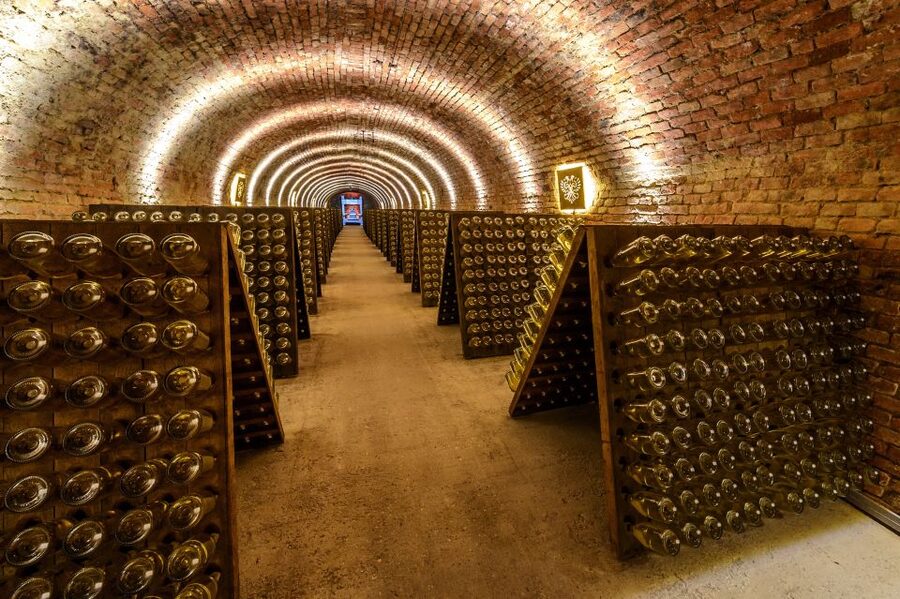
Schlumberger’s cellar gives you a useful change of pace from Vienna’s grand palaces and crowded central streets. Instead of ornate rooms and imperial furniture, you get stone, brick, bottles, and the quiet machinery of traditional sparkling-wine production.
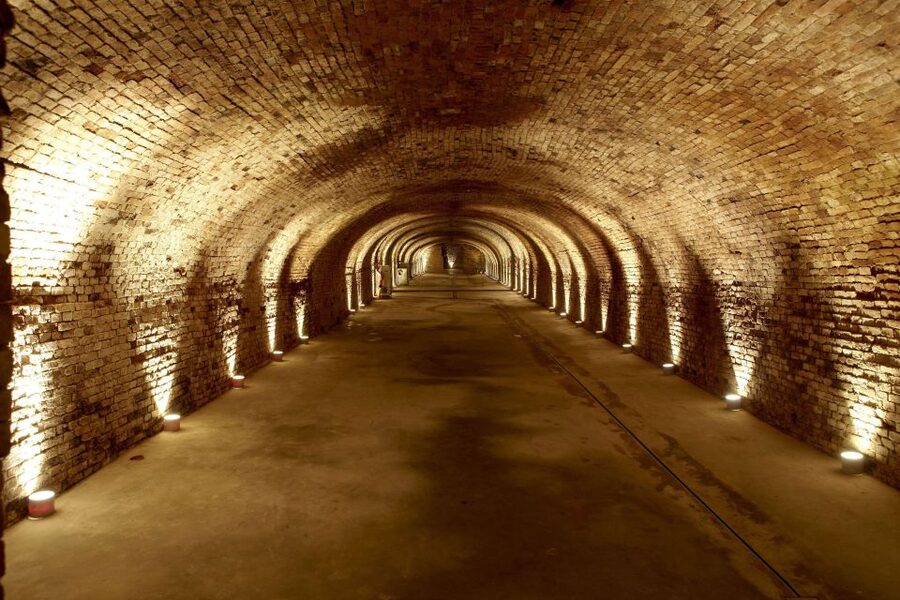
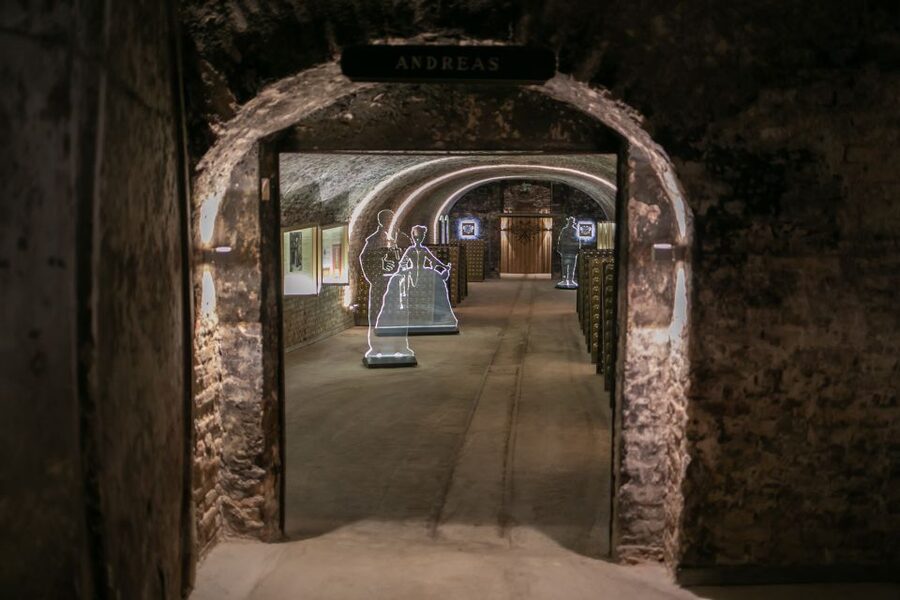
The cellars date to the company’s beginnings in 1842. Their design is linked to Carl Ritter von Ghega, the Austrian engineering genius best known for major nineteenth-century railway work. Here, his name is attached to an underground world of connected vaults that feels far removed from the city above.
I like this setting because it gives the production story a real sense of place. You are not standing beside a generic display of wine equipment. You are walking through the rooms where bottles are stored and where the method has been explained and practiced over generations.
The cellar is also cooler than you may expect. A coat or warm sweater is a smart addition, even if Vienna is mild above ground. You will be walking through underground spaces for much of the visit, so comfortable shoes make sense.
More Wine Tours in Austria:
- Self-Drive Vintage Fiat 500 Tour from Florence: Tuscan Wine Experience
★ 5.0 · 660 reviews - Vothonas: Wine Museum Ticket with Tastings and Audio Guide
★ 4.8 · 360 reviews - Self-Guided Wine Tours by Bike with Lorelle & Greg
★ 5.0 · 304 reviews
What happens during the 60-minute audio tour
The core visit takes about an hour. Rather than following a guide at a fixed pace, you use an audio guide as you move through the cellar and its displays. That format works well if you prefer to pause, replay information, or take a little longer at the parts that interest you.
The audio guide is available in eight languages:
- English
- German
- Spanish
- Italian
- French
- Japanese
- Russian
- Chinese
The explanations begin with the origins of sparkling wine and then move through the production process. You learn how the sparkle develops inside the bottle, why the bottles are positioned in a particular way, and how the wine eventually reaches the glass.
Displays use German and English captions, which helps if you want to read while listening. You may receive a separate audio device, or in some cases use your own phone. One practical complaint is worth noting: if you do not have suitable wired earbuds, you may need to hold the device close to your ear as you walk. Headphones are not included and cost €1.
The self-guided setup is a real advantage for many people. You can take your time with the cellar, stop for photographs where permitted, and avoid being rushed by a group. The tradeoff is that you do not have a live guide standing beside you to answer questions or adjust the explanation to your interests.
Seeing how the bubbles are made
The tour focuses on the traditional method of sparkling-wine production. You will hear how wine changes from its first stage into a bottle with pressure, yeast, and fine bubbles. The purpose is not to turn you into a winemaker in one hour, but the process is explained in a way that connects the equipment and the cellar to what you taste later.
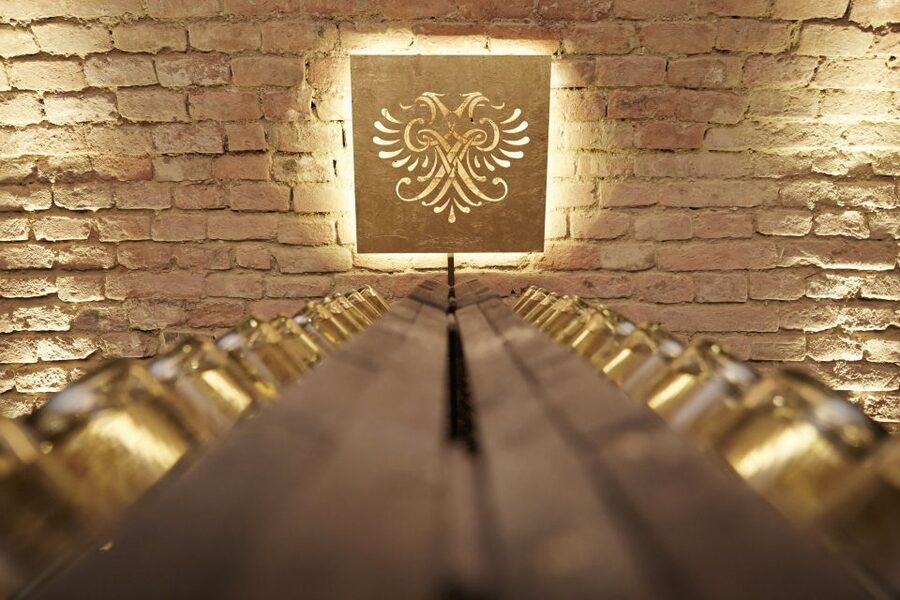
One of the more memorable parts is the wooden sloping rack used for hand-riddling. This is where bottles are gradually turned and tilted so sediment moves toward the neck. You get the chance to try the motion yourself, which makes the process easier to remember than a paragraph on a wall.
The tour also explains disgorging and dosage. Disgorging removes the collected sediment, while dosage helps determine the wine’s final balance after the bottle is cleared. These steps reveal why sparkling wine requires more care than simply adding bubbles to a still wine.
The hand-riddling demonstration is modest but valuable. You are not operating the full production line, and you should not expect a long workshop. Still, it is an unusual chance to handle the basic movement behind an old cellar technique.
Bottles, vaults, and the Schlumberger story
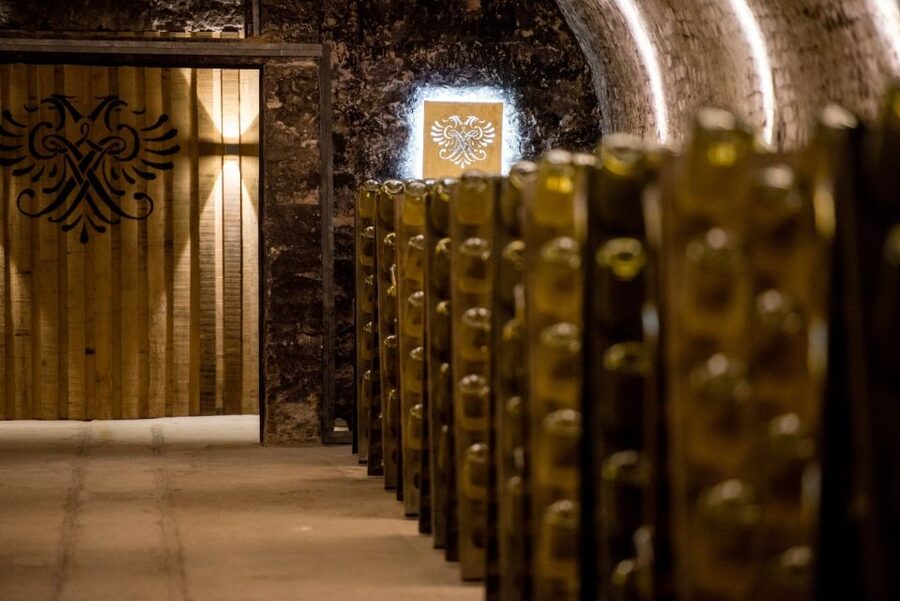
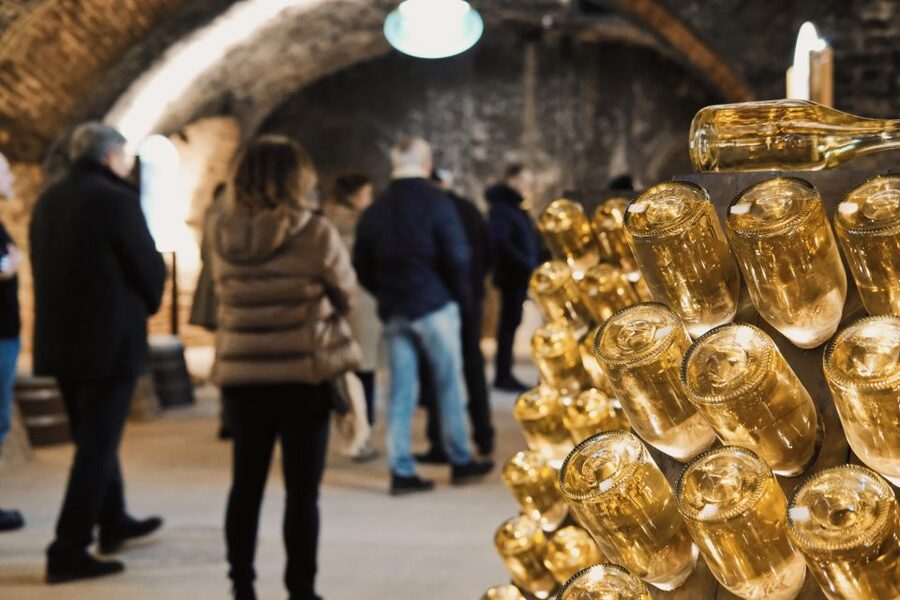
The cellar itself is a major part of the appeal. Countless bottles line the underground rooms, and the combination of low light, old masonry, and narrow passages gives the visit a special atmosphere without needing theatrical effects.
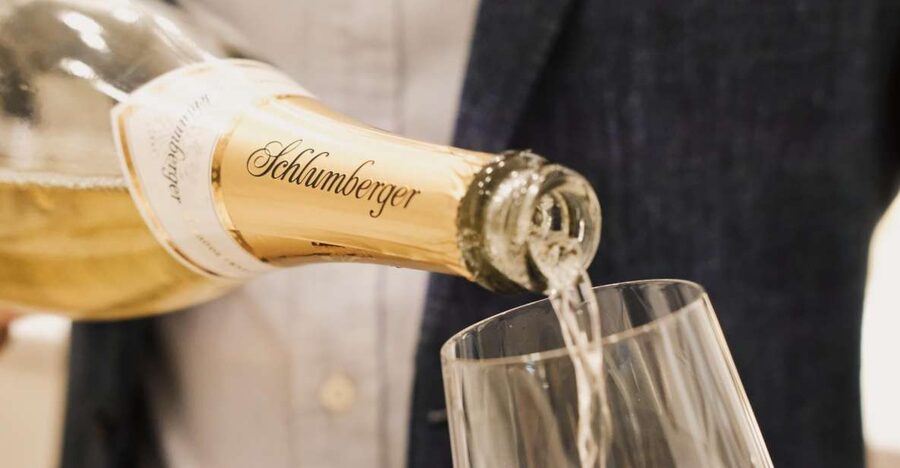
As you walk, the story returns to Schlumberger’s beginnings in 1842 and its place in Austrian sparkling wine. It is worth clearing up one possible source of confusion: this Vienna producer is not connected to the Schlumberger winery in California. The wines served here are made in Vienna.
That local identity adds value to the tasting. You are not simply sampling a familiar international brand in another country. Schlumberger’s sparkling wines are a distinctly Austrian product, and they are not distributed in the United States. If you enjoy them, buying a bottle at the end may be your easiest chance to take one home.
The visit may also include access to a temporary exhibition and a garden, depending on what is operating during your visit. An art gallery upstairs has been an added bonus for some visitors, but the cellar and tasting remain the main reasons to come.
More Audio Tours in Austria:
- Vienna: Tickets for Mozarthaus Vienna with Audio Guide
★ 4.2 · 2,344 reviews - Vienna: New Hofburg Palace Audio-Guided Tour & Entry Ticket
★ 4.1 · 566 reviews - Salzburg: Cathedral Entry Ticket with Audio Guide Option
★ 4.4 · 134 reviews - Vienna: Scavenger Hunt Self-Guided Tour
★ 4.7 · 83 reviews
Choosing your tasting set
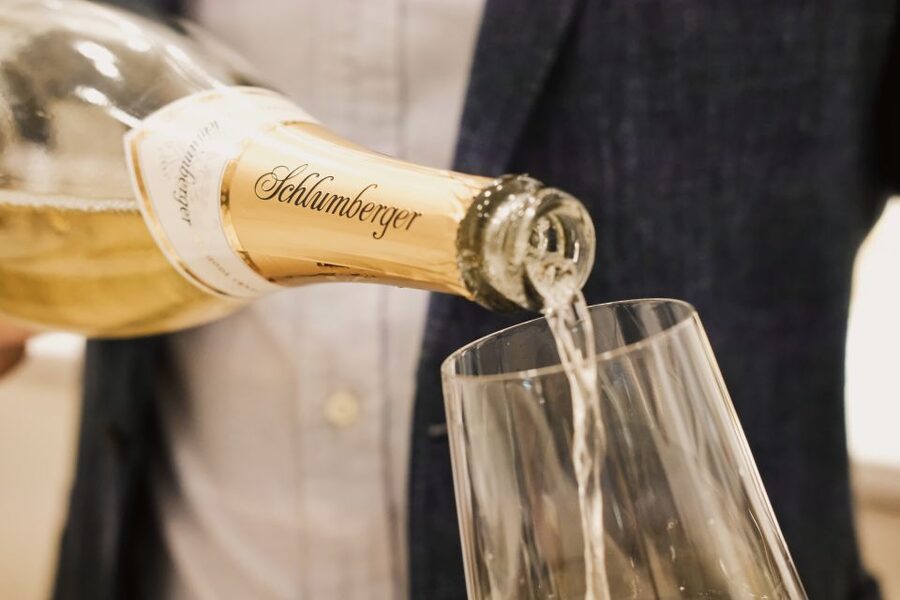
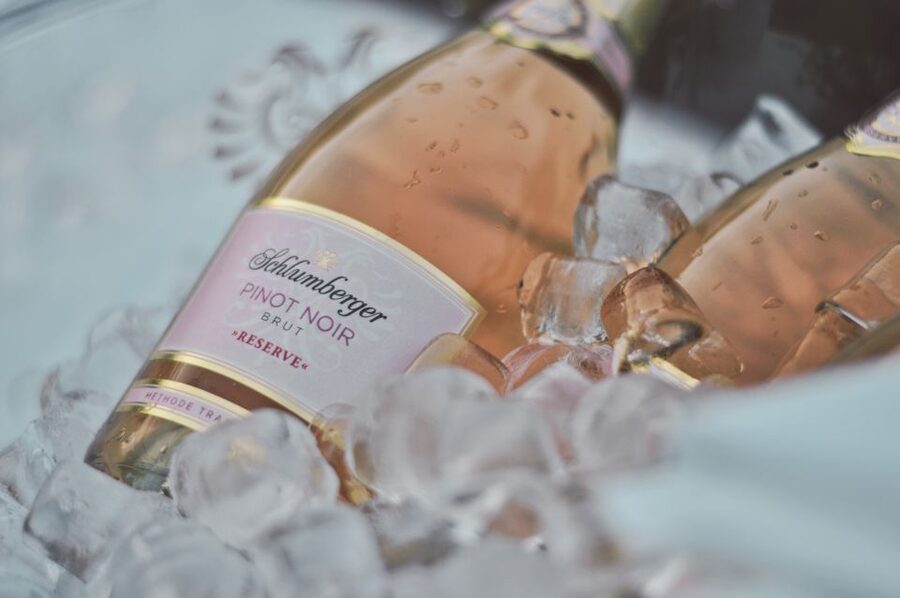
After the audio tour, you choose among three tasting options: sparkling wines, rosé wines, or a mixed set. The exact selection can vary, so think of the choices as different ways to sample the Schlumberger range rather than a fixed restaurant-style menu.
The standard tasting is included in admission. One standard glass is included, while additional glasses cost €3 for a regular pour and €5 for a premium pour. This matters if you arrive expecting a large flight or want to compare every bottle on offer. The $15 price is strong when you treat the tasting as one included sample, but the bill can rise if you add several extra pours.
I would choose the mixed option if you want the broadest introduction. It lets you compare styles and gives you a better idea of whether you prefer classic sparkling wine or rosé. If you already know you like rosé, the rosé set may be the more focused choice.
The tasting room also gives you time to sit with the wine rather than rushing straight back onto the street. Staff can help with choices, and there is no obligation to buy a bottle. Still, the tasting is designed to make a purchase tempting, especially if you discover a style that is difficult to find at home.
How much time to allow
The formal audio tour lasts about 60 minutes. In practice, I would allow around 90 minutes to two hours for the whole visit if you want to move slowly, complete the tasting, browse the shop, or see the exhibition and garden when available.
The cellar opens at noon, according to the practical timing information provided for this experience. Booking an early opening time can help you avoid the larger groups that may arrive later. One useful strategy is to schedule Schlumberger around lunch rather than trying to squeeze it between several central Vienna sights.
The activity is listed as valid for one day, with starting times subject to availability. You can reserve now and pay later, and cancellation is free up to 24 hours before the visit. Those terms are useful if your Vienna plans depend on weather, train schedules, or a changing city itinerary.
Getting there from central Vienna
Schlumberger is not in the immediate sightseeing core. From Stephansplatz, the journey takes about 20 minutes using public transport, so you should allow extra time beyond the cellar visit itself.
That distance is not a serious problem, but it does change the way you plan the day. Pair the tour with nearby stops rather than making a long cross-town trip only for one glass of wine. The experience works well as a midday or afternoon break from central Vienna.
You should also check the opening time before setting out. The cellar does not open first thing in the morning, and arriving before noon will not help you get inside sooner.
Is the $15 price good value?
Yes, for most adults who enjoy wine or industrial history. Admission includes the cellar visit, the audio tour, and a tasting set. That gives you both an attraction and a drink for one modest price, which is good value in a city where museum and palace admissions can add up quickly.
The strongest value comes from the unusual setting and the amount of control you have over the pace. You are not paying only for a quick tasting at a counter. You get a full hour of information, access to the vaults, a hands-on look at bottle riddling, and a chance to compare Schlumberger wines afterward.
The value is less certain if you do not drink alcohol or have little interest in how sparkling wine is made. The cellar is interesting, but the visit is built around wine. It also may not satisfy you if you want a live, highly personal wine lesson from a specialist.
Extra tasting glasses are the main cost to watch. With only one standard glass included, you should decide in advance how much comparison you want. At $15, the basic option is attractive. A long series of additional pours makes the experience less of a bargain.
Who will enjoy this experience most
I would recommend Schlumberger to adults who want a relaxed, self-paced activity with a strong local connection. It suits couples, small groups, solo visitors, and wine fans who prefer an experience with some history rather than a bar tasting alone.
It also works for people who enjoy seeing how things are made. The hand-riddling racks and explanations of disgorging and dosage give the visit a practical focus. You leave with a better idea of why traditional sparkling wine takes time and careful handling.
The experience is less suitable for families with younger children because admission is restricted to visitors aged 16 and over. It may also disappoint anyone expecting a full vineyard visit, since the supplied information centers on an urban cellar in Vienna, not a countryside winery.
If you like audio tours, you will probably appreciate the freedom. If you prefer conversation and questions, a live guided tour would suit you better, but this particular format is self-guided with optional audio support.
Small details that make the visit better
Wear a jacket. The cold cellar is part of the charm, but it can become uncomfortable during a full hour underground.
Bring earbuds if you have them. The €1 headphone charge is minor, yet your own compatible headphones may be more comfortable than holding an audio device beside your ear.
Arrive close to opening time if you want a quieter visit. A large tour group can change the feel of the narrow cellar rooms, and an early start gives you more room to listen and look without crowd pressure.
Choose your tasting before you arrive. The sparkling, rosé, and mixed sets offer different ways to finish the visit, and the mixed option is the safest choice if you are new to the brand.
Do not feel pressured to buy wine. You can purchase a bottle or two if you find a favorite, but buying is optional. Since Schlumberger does not distribute in the United States, taking home a bottle may appeal to American visitors who want something they are unlikely to find in local shops.
Should you book the Schlumberger cellar tour?
Book it if you enjoy sparkling wine, want a Vienna-made product, and like attractions you can explore at your own pace. The combination of old vaults, bottle riddling, a clear audio explanation, and an included tasting gives you plenty for the price.
I would skip it if you want a central Vienna sight, a live guide, or a child-friendly activity. For everyone else, the 20-minute journey from Stephansplatz is a fair trade for an unusual look at Austrian sparkling wine. Reserve an early time, bring a warm layer, and keep a little room in your luggage for a bottle.
FAQ
Where is the Schlumberger Wine Cellar?
The cellar is in Vienna, Austria, outside the immediate city center. It takes about 20 minutes to reach from Stephansplatz by public transport.
How long does the tour last?
The self-guided audio portion lasts about 60 minutes. You should allow additional time for the tasting and any available exhibition or garden access.
Is the tour guided by a person?
The standard experience is self-guided with an audio tour. It does not describe a live guide leading the group through the cellar.
Which languages are available for the audio guide?
The audio guide is available in German, English, Spanish, Italian, French, Japanese, Russian, and Chinese.
Is wine tasting included?
Yes. Admission includes a tasting set of sparkling wine. You can choose from sparkling wines, rosé wines, or a mixed tasting set.
How much do extra glasses cost?
Additional glasses cost €3 for a regular pour and €5 for a premium pour. One standard glass is included with the tasting.
Is the cellar suitable for children?
No. The experience is not suitable for children under 16.
Should I bring a jacket?
Yes. The cellar is cold, so a jacket or warm layer will make the visit more comfortable.
Can I buy Schlumberger wine after the tour?
Yes. You have the chance to purchase bottles after tasting, but buying wine is optional.
Can I cancel my booking?
You can cancel up to 24 hours in advance for a full refund. The reserve-now, pay-later option is also available.
Just added around Austria
- Self-Guided 1,5-hour Tour of Innsbruck: Exciting Stories, Photo Spots & Desserts★ 4.5 · 11 reviews
- Innsbruck Self Guided Sherlock Holmes Murder Mystery Game★ 4.0 · 5 reviews
- Self-Guided Private Tour of Hallstatt. Best photo-points, panoramic views, cafes★ 4.0 · 8 reviews
- Graz Scavenger Hunt and Sights Self Guided Tour★ 4.0 · 9 reviews
- Bregenz Scavenger Hunt and Sights Self-Guided Tour★ 5.0 · 4 reviews
- Palais Lobkowitz Audio Guide Tour★ 4.0 · 3 reviews
- Vienna’s Old Town and Attractions Self-Guided Tour Booklet★ 4.3 · 14 reviews
- Combo ticket: Ernst Fuchs Museum & Otto Wagner Complex with smartphone guide★ 4.3 · 6 reviews
Vienna Audio Tours, compared.
Vienna: Tickets for Mozarthaus Vienna with Audio Guide
Read our review →
Vienna: New Hofburg Palace Audio-Guided Tour & Entry Ticket
Read our review →

Vienna’s Old Town and Attractions Self-Guided Tour Booklet
Read our review →
Combo ticket: Ernst Fuchs Museum & Otto Wagner Complex with smartphone guide
Read our review →

Browse the lists this tour appears in