
REVIEW · VIENNA AUDIO TOURS
Combo ticket: Ernst Fuchs Museum & Otto Wagner Complex with smartphone guide
Otto Wagner’s Vienna is best understood away from the grand Ringstrasse, in the western hills where his former homes lead to the golden-domed Kirche am Steinhof. This combo gives you art, architecture, and a wooded walk in one day, with a smartphone guide filling in the story as you go.
I like the unusual pairing of the Ernst Fuchs Museum with Wagner’s second villa, and I like that the route ends at one of Vienna’s most striking buildings rather than another crowded central attraction. The main catch is the uphill walk: 2.5 kilometers, about 45 minutes, and roughly 150 meters of climbing.
Key points to know before booking
- Otto Wagner Villa I: See the architect’s former home, now filled with the art of Ernst Fuchs.
- Villa Wagner II: Visit Wagner’s final residential villa and compare its more modern, restrained design with Villa I.
- Vienna Woods walk: Reach the Otto Wagner Areal on foot along an easy but uphill route.
- Kirche am Steinhof: See the golden dome and learn why the church is regarded as an early work of modern European architecture.
- Smartphone audio guide: Use your own phone and headset in one of many languages, with no separate app required.
- One-day flexibility: You can spread the experience across a day, but public transport, food, and optional church admission cost extra.
Why this Otto Wagner route is worth your time
Vienna is full of famous palaces, imperial apartments, and museum collections. This experience takes you somewhere quieter and more personal. You begin at the house where Otto Wagner lived and worked, then follow his architectural ideas through the western edge of the city to the Otto Wagner Areal.
That sequence matters. You are not simply looking at separate buildings. You see how Wagner’s private homes changed, how his ideas moved toward a cleaner modern style, and how his work shaped Vienna’s public buildings. The smartphone guide adds dates, background, and explanations without requiring you to join a fixed group.
I especially like the balance between indoor art and outdoor walking. The Ernst Fuchs Museum gives you a concentrated cultural visit, while the route through the Vienna Woods gives your eyes a rest. By the time you reach the church, you have had time to think about the city rather than race between sights.
The price is $28 per person. That is a fair amount if you plan to use both audio guides and spend several hours at the museum and Otto Wagner Areal. It is less compelling if you only want a quick look at the church, since transport and optional interior admission are not included.
More Smartphone App Tours in Austria:
- Rome: Colosseum & Forum with Audio Guide App -Optional Arena
★ 4.2 · 24,770 reviews - Venice: Grand Canal Gondola Ride with App Commentary
★ 4.1 · 23,020 reviews - Florence: Timed Entry to Michelangelo’s David + Audio App
★ 4.6 · 19,496 reviews
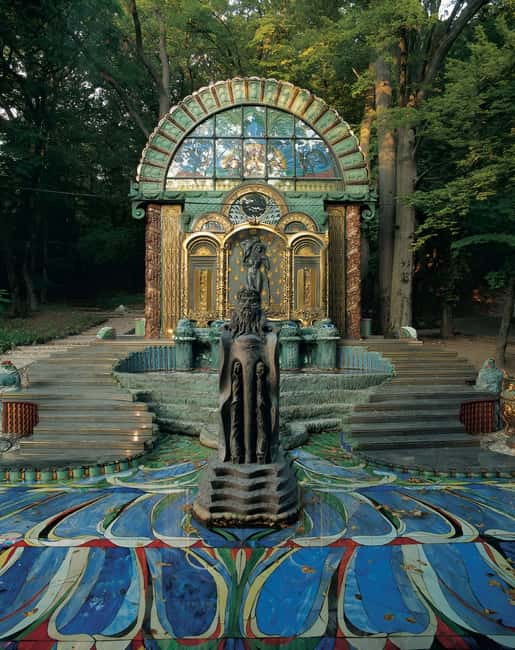
Starting at Villa I and the Ernst Fuchs Museum
The experience begins at Hüttelbergstraße 26, in Vienna’s 14th district. The easiest public transport approach is the U4 subway to Hütteldorf, the line’s western terminus. From there, take bus 52A or 52B to Freyenthurmgasse, then walk uphill for about five minutes.
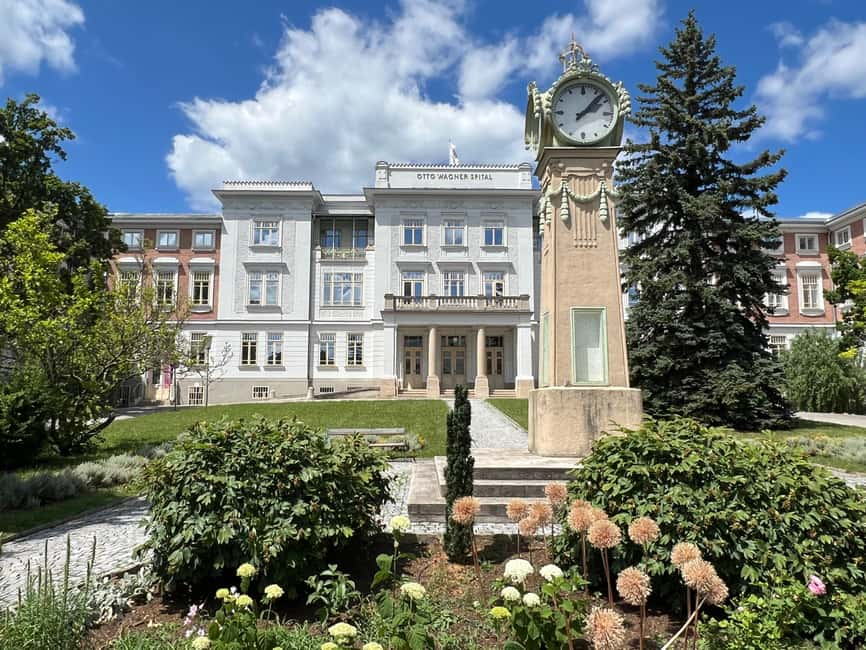
The first stop is Otto Wagner Villa I, a grand former residence that now houses the Ernst Fuchs Museum. Plan about an hour here. The building gives you an immediate sense of Wagner’s early domestic style, while the collection introduces the work and ideas of Ernst Fuchs.
Fuchs is presented through the museum’s audio guide, which helps explain his art in a direct, structured way. The guide is useful because the museum is not just a collection of attractive rooms. It asks you to connect the artwork with Fuchs’s thoughts and creative approach.
You should give this stop your full attention rather than treating it as a quick ticket pickup. The first review supplied for this experience praised the clear explanation of Fuchs’s art and the way the guide helped make his ideas easier to follow. That is important here, since the museum may feel unfamiliar if your main interest is Otto Wagner.
The pairing creates a pleasant surprise. You start with Wagner’s architecture, then encounter Fuchs’s imaginative art inside the same setting. You may find the contrast a little abrupt, but that is also what makes the visit more interesting than a standard architect’s-house tour.
Comparing Villa I with Wagner’s final home
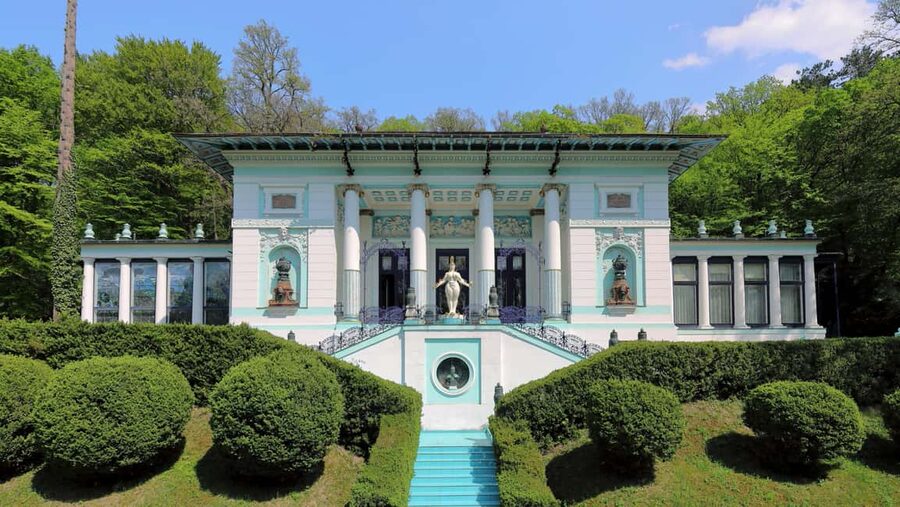
Villa Wagner II is next door and presents a very different mood. It was Otto Wagner’s second and final residential villa, and its design is more modern and minimalist than Villa I.
This comparison is one of the strongest parts of the experience. Instead of learning about Wagner only through a recording, you can look at two homes connected to his life and compare their forms, decoration, and overall feel. The second villa helps show the direction of his thinking as his work moved away from older decorative traditions.
The visit to Villa II is self-guided, so do not expect the same museum format as Villa I. The amount of access and the buildings open along the route can vary, and admission to other museums or buildings is not included unless specifically covered by the combo. Use the smartphone guide to give the stop context, then take time to notice the architectural differences for yourself.
I would not rush through this section. The value lies in the contrast between the two villas. Villa I is tied to the Ernst Fuchs Museum and feels like a formal cultural stop. Villa II is a chance to see a later, quieter stage in Wagner’s residential work.
The 45-minute walk through the Vienna Woods
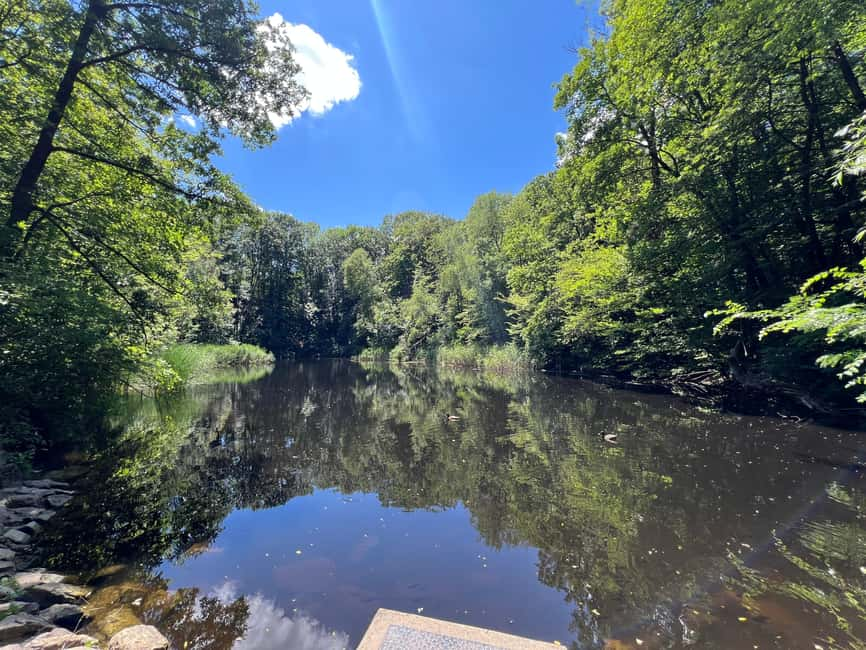
After the villas, you walk toward the Otto Wagner Areal through the green western part of Vienna. The route covers about 2.5 kilometers and climbs roughly 150 meters over around 45 minutes.
The walk is described as easy, but it is not flat. You should wear proper walking shoes, carry water, and be comfortable with steady uphill movement. One of the Austrian reviewers specifically noted that the route includes several meters of climbing and requires a reasonable level of fitness.
This section is valuable because it changes the pace of the day. You are not moving from one indoor room to another. The walk gives you time to listen to the guide, look around, and understand how the Otto Wagner Areal sits within Vienna’s western hills.
Still, be realistic about the physical demand. The route is not suitable for wheelchair users or people with mobility impairments, and the supplied information advises against it for people with heart problems. It is also not recommended for people over 70. That is a broad restriction, so your own fitness matters more than the number alone, but anyone with health concerns should take the warning seriously.
Comfortable clothing makes a difference. Bring a filled water bottle and begin with a charged phone. The guide is accessed through a link, so you do not need to install an app, but your phone still needs enough battery for the museum and the walking route.
More Museum Audio Guides in Austria:
- Paris: Louvre Museum Hosted Entry and Mona Lisa Audioguide
★ 4.6 · 5,235 reviews - Venice: St. Mark Basilica Ticket, Audioguide+History Gallery
★ 3.9 · 4,780 reviews - Rome: Borghese Gallery Skip-the-Line Ticket & Audioguide
★ 4.3 · 4,318 reviews - Rome: Borghese Gallery Ticket + Audioguide or Guided Tour
★ 4.6 · 3,219 reviews
Reaching the Otto Wagner Areal
The Otto Wagner Areal is the main outdoor and architectural section of the experience. Allow about two hours for the walk around the complex and the self-guided material.
The area is connected with Wagner’s architectural vision and Vienna’s urban development. Here, the guide moves beyond biography and helps you understand how his ideas worked on a larger scale. You get a sense of the relationship between buildings, public space, and the city’s changing needs.
This is where the experience becomes more than a visit to two historic villas. Wagner was not only designing elegant private homes. He was developing ideas about how Vienna should function and how architecture could serve modern urban life.
The audio guide is available in English, Italian, French, German, Spanish, Polish, Korean, Chinese, Czech, Portuguese, Hungarian, Russian, Japanese, Greek, Romanian, Turkish, Danish, Dutch, and Hindi. Some content is presented in its original language, so you may occasionally encounter material that is not fully translated or adapted.
You should expect a self-guided visit rather than a live architectural lecture. That gives you freedom to pause, walk at your own speed, and revisit points that interest you. The tradeoff is that you cannot ask a guide a question on the spot.
The supplied experience rating is 4.3 from six reviews, and the strongest praise centers on the combination of culture and outdoor activity. That is a good description of the experience’s real appeal. It is not designed as a single blockbuster sight. It is a slow, connected way to see a less central part of Vienna.
Kirche am Steinhof and the golden dome
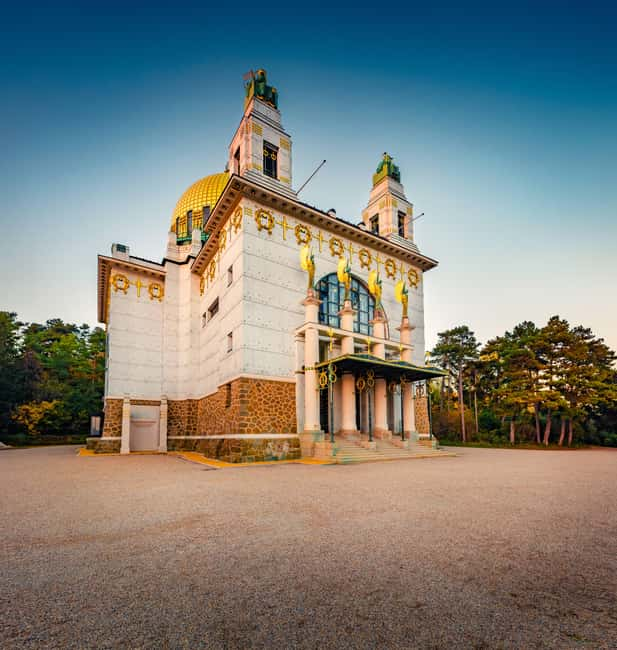
The route finishes at the Kirche am Steinhof, one of Otto Wagner’s best-known works. Its golden dome can be seen above Vienna, and the church is described as the first modern church in Europe.
This is the visual payoff of the day. After seeing Wagner’s homes and walking through the wooded route, you arrive at a building that brings his architectural ideas into public view. The church is known for its bold appearance and for the way it joins practical planning with strong visual design.
The guide explains the church and its place in Vienna’s architectural story. It also connects the building to Wagner’s belief that practical design and beauty should not be treated as opposites. That idea gives the visit a clear theme, rather than leaving you to admire the dome without knowing why it matters.
Admission to the church interior is optional and is not included in this ticket. That detail affects the value. If you want only the exterior and the guided material around the complex, the combo remains straightforward. If seeing the inside is important to you, check the additional admission arrangements before booking and budget for the extra cost.
The official finish is at the Otto Wagner Areal. You are responsible for your return trip, so think about transport before setting off. Since the route begins in the west and ends at the areal, this is not a central Vienna attraction you can casually fold into a short afternoon near the Hofburg.
How the smartphone guide works
The format is simple. You use a link on your smartphone, connect your headset, and follow the material as you move between stops. No separate app is required.
That setup suits independent visitors who dislike fixed tour times. You can pause for photos, spend longer in the museum, or take a short break during the uphill walk. It also means you need to manage your own battery, volume, and navigation.
Bring a headset, since personal equipment is not provided. A power bank is a smart addition, especially if you plan to listen throughout the museum, walk, and areal visit. Downloading or opening the guide before you begin may also help, although the supplied details only confirm that access is through a link.
The audio guide is particularly helpful for the less familiar parts of the experience. Most people recognize Vienna’s Schönbrunn Palace or St. Stephen’s Cathedral. Fewer arrive with a clear picture of Ernst Fuchs, Villa Wagner II, or the Otto Wagner Areal. The explanations give these places a reason to belong on your schedule.
The downside is that you are on your own. If you prefer a live guide, group conversation, or quick answers about architectural details, this format may feel quiet. If you enjoy moving independently and listening only when you want to, it is a strong fit.
Timing, transport, and practical planning
The experience is valid for one day, and the listed program adds up to several hours:
- About one hour at the Ernst Fuchs Museum
- A self-guided visit to Villa Wagner II
- About 45 minutes walking to the areal
- Around two hours at the Otto Wagner Areal
- Additional time for the Kirche am Steinhof
Allow extra time for public transport, pauses, photos, and the return journey. The exact amount depends on how closely you follow the suggested pace.
Start with enough time to enjoy the museum rather than arriving late and trying to compress the route. Since the experience has a fixed starting point but a self-guided format afterward, an early start may make the day feel less hurried.
Public transportation is not included. You pay separately for the U4 and bus connection to Hüttelbergstraße, as well as your return trip from the church and areal. Food and drinks are also excluded, so bring water and plan where you will eat.
Free cancellation is available up to 24 hours in advance for a full refund, and you can reserve now and pay later. Those policies are useful if your Vienna plans are still shifting, but they do not change the physical demands of the walk.
Who will enjoy this experience most
I would recommend this for you if you like architecture, art, city planning, and walks that connect several sights. It suits independent visitors who want a more unusual side of Vienna and are happy to use a phone rather than follow a live guide.
It is also a good match for anyone who finds ordinary museum visits tiring. The route alternates between interiors and open air, and the western setting feels different from Vienna’s central imperial sights.
You may want to choose another experience if your time in Vienna is very limited. This is not a quick stop. Transport takes time, the walk is uphill, and the route ends outside the city center.
It is not suitable for wheelchair users or people with mobility impairments. Anyone with heart problems should avoid it, and the supplied guidance does not recommend it for people over 70. Even for a fit person, sturdy shoes and water are essential.
Should you book the Otto Wagner combo?
Book it if you want a thoughtful half-day or full-day outing built around Vienna’s modern architecture, and if you like the freedom of a self-guided route. At $28 per person, the combination of museum entry, multiple audio guides, two villas, the wooded walk, and the Otto Wagner Areal offers reasonable value.
Skip it if you want a central Vienna attraction, a live guide, or guaranteed access to every building along the route. Remember that public transport, food, personal equipment, and the optional interior admission to Kirche am Steinhof cost extra.
For the right visitor, this is a smart way to see how Otto Wagner’s private designs connect with his larger architectural ideas. Bring walking shoes, charge your phone, and allow the day to unfold at a calm pace.
FAQ
Where does the experience begin?
It begins at the Ernst Fuchs Museum, Otto Wagner Villa I, at Hüttelbergstraße 26, 1140 Vienna.
How do I reach the Ernst Fuchs Museum?
Take the U4 subway to Hütteldorf, then bus 52A or 52B to Freyenthurmgasse. From the bus stop, walk uphill for about five minutes.
How long is the walk to the Otto Wagner Areal?
The walk takes about 45 minutes and covers roughly 2.5 kilometers with around 150 meters of elevation gain.
Is public transportation included?
No. Transport to the museum and the return trip from the Otto Wagner Areal are not included.
Is admission to the inside of Kirche am Steinhof included?
No. Admission to the church interior is optional and costs extra.
What should I bring?
Bring hiking or comfortable walking shoes, water, comfortable clothes, a charged smartphone, and your own headset. A power bank may also be useful.
Just added around Austria
- Self-Guided Private Tour of Hallstatt. Best photo-points, panoramic views, cafes★ 4.0 · 8 reviews
- Graz Scavenger Hunt and Sights Self Guided Tour★ 4.0 · 9 reviews
- Bregenz Scavenger Hunt and Sights Self-Guided Tour★ 5.0 · 4 reviews
- Palais Lobkowitz Audio Guide Tour★ 4.0 · 3 reviews
- Vienna’s Old Town and Attractions Self-Guided Tour Booklet★ 4.3 · 14 reviews
- Austrian Food, Vienna Restaurants Self-Guided Tour Booklet★ 4.9 · 4 reviews
- Austrian Beer Tasting and Self-Guided Tour of Vienna★ 3.5 · 6 reviews
- Vienna: Scavenger Hunt Self-Guided Tour★ 4.7 · 83 reviews
Vienna Audio Tours, compared.
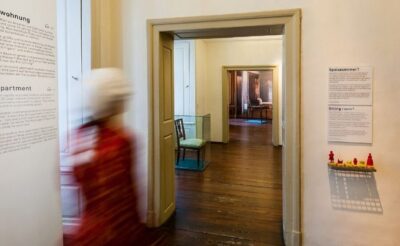
Vienna: Tickets for Mozarthaus Vienna with Audio Guide
Read our review →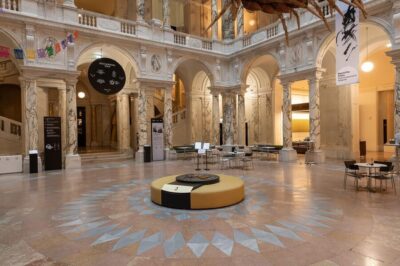
Vienna: New Hofburg Palace Audio-Guided Tour & Entry Ticket
Read our review →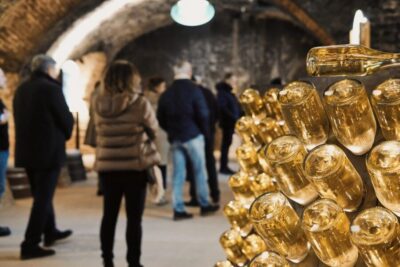
Vienna: Schlumberger Wine Cellar Guided or Self-Guided Tour
Read our review →

Vienna’s Old Town and Attractions Self-Guided Tour Booklet
Read our review →


Browse the lists this tour appears in