
REVIEW · IRELAND AUDIO TOURS
St Patrick’s Cathedral: Self-Guided Cathedral Admission
Saint Patrick’s Cathedral gives you more than a quick look inside an old church. Built in 1220 beside the well where Saint Patrick is traditionally said to have baptized converts, it connects medieval Dublin with the city you see today. Jonathan Swift’s grave and the cathedral’s remarkable stained glass make the visit especially memorable.
I like the freedom to move at your own pace, and I like that the audio guide is included rather than sold as an extra. The touch-screen displays and Discovery Space also help turn a quiet architectural visit into a clearer lesson in Irish history.
The main drawback is that the cathedral can feel crowded at popular times, and there is a lot to take in. If you prefer a printed guide to audio commentary, you may find the lack of a substantial booklet frustrating.
Key points to know before you go

- See Jonathan Swift’s burial place: The author of Gulliver’s Travels served as dean here from 1713 to 1745.
- Look for the Door of Reconciliation: This unusual feature is linked to the Irish expression to chance your arm.
- Study the 39-image Saint Patrick window: It tells the saint’s life in a series of stained-glass scenes.
- Use the audio guide: Commentary is available in English, French, German, Italian, Spanish, and Irish.
- Try the Discovery Space: Touch-screen displays, choir recordings, and brass rubbing make the visit more hands-on.
- Plan for a flexible visit: Admission is valid for one day, and you can explore without being tied to a fixed tour pace.
Why Saint Patrick’s Cathedral matters in Dublin
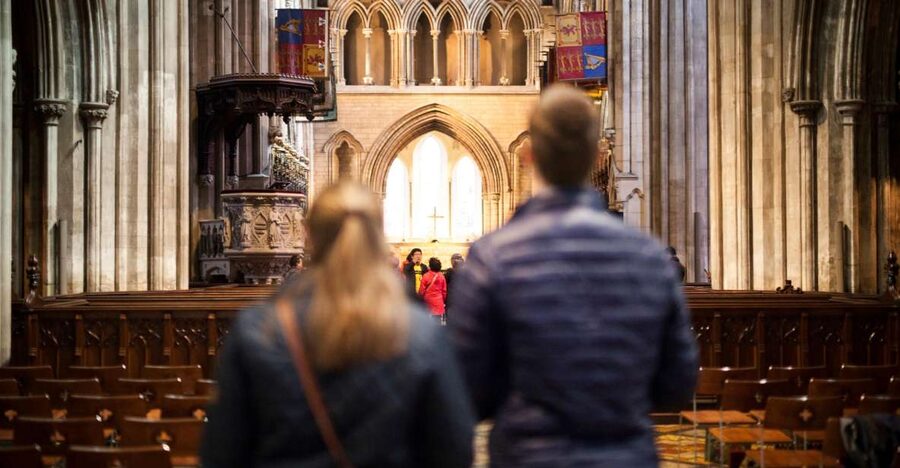
Saint Patrick’s Cathedral is not simply an attractive old building. It is the National Cathedral of the Church of Ireland and has been part of Dublin’s religious and civic life for more than 800 years. The current cathedral was built in 1220, although its importance reaches back to the much older tradition of Saint Patrick baptizing converts at a nearby well.
That connection gives the cathedral a useful sense of place. You are not looking at a church that could be anywhere in Europe. Its story is tied directly to Ireland’s patron saint and to Dublin’s growth through the medieval period, the Reformation, and the centuries that followed.
I find the building most rewarding when you take time to look beyond its size. The stonework, monuments, memorials, and windows each point to a different part of Irish life. Religious devotion is only one thread. Literature, politics, art, education, and local memory all appear inside these walls.
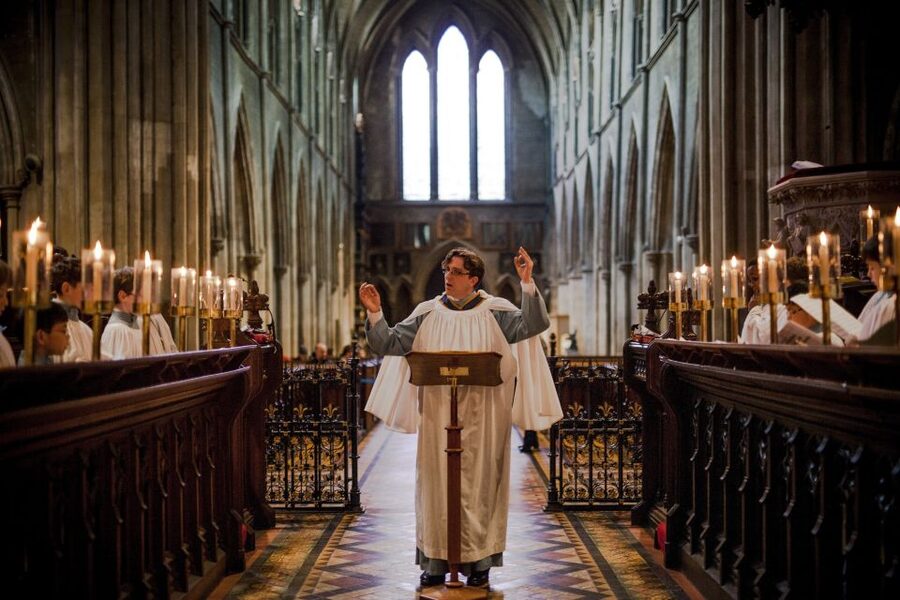
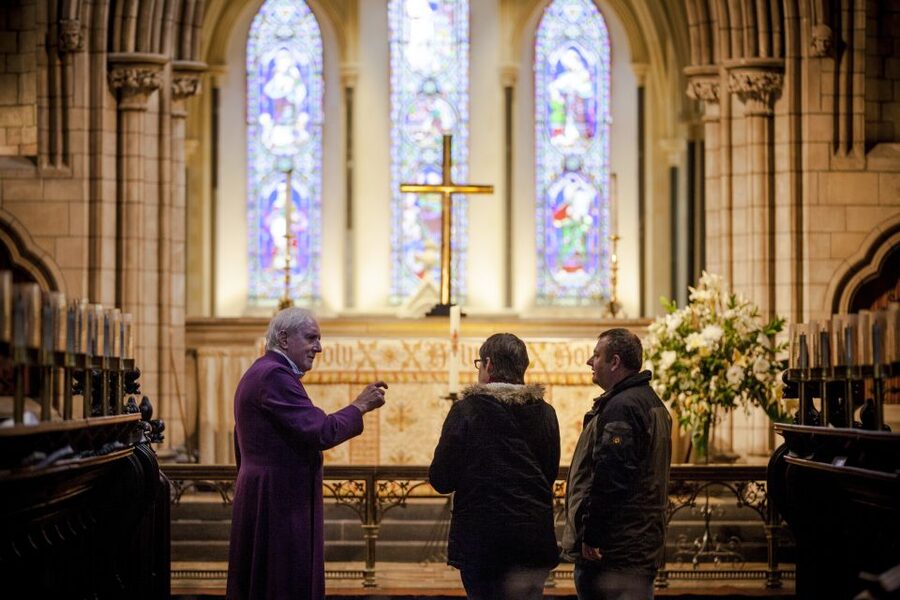
The cathedral still functions as a place of worship. Sung services take place twice daily from Sunday through Friday, so the atmosphere may shift depending on when you arrive. A service can add a genuine sense of purpose to the visit, though it may also mean that some areas are quieter or less accessible at that moment.
More Audio Tours in Ireland:
- Christ Church Cathedral Entrance Ticket & Self-Guided Tour
★ 4.6 · 773 reviews - Self-Guided Bike Tour of Killarney National Park, Muckross Gardens & Waterfall
★ 5.0 · 223 reviews - Cork: City Gaol Tour with Audio Guide
★ 4.8 · 108 reviews
Entering the cathedral and getting oriented
Your visit begins at Saint Patrick’s Cathedral, and the activity ends at the same location. Admission is designed for independent exploration, so you do not need to follow a group from room to room or keep up with a guide.
That flexibility matters in a building filled with details. You can pause at a window, spend extra time with a memorial, or skip an audio stop that does not interest you. I would allow enough time to listen carefully rather than treating the cathedral as a quick photo stop.
The audio guide is available in six languages: English, French, German, Italian, Spanish, and Irish. It gives you a useful framework for the building and its contents, especially if you do not already know much about Irish church history.
The supplied audio units have been praised for being easy to use and detailed. Some visitors found it easier to use their own wired headphones or connect through a phone, so bringing headphones is a sensible tip if the equipment permits it. The key advantage is control: you can listen to only the sections you want and continue at your own speed.
Short guided tours may also be offered at set times, sometimes about every 15 minutes. If one is available when you arrive, it can be a good choice for a quick overview and the chance to ask questions. The self-guided format remains the safer option if you do not want to wait for the next departure.
Gothic stonework, stained glass, and the Saint Patrick window
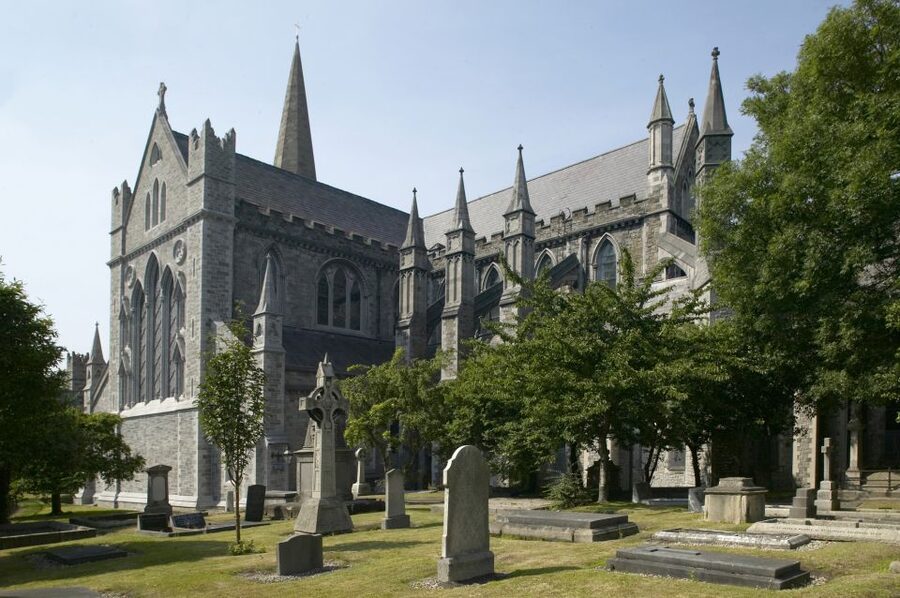
The cathedral’s Gothic architecture is the first thing most people notice. Look up at the height and structure of the building, then bring your attention down to the stone details and memorials. The interior rewards slow looking more than a single sweep through the nave.
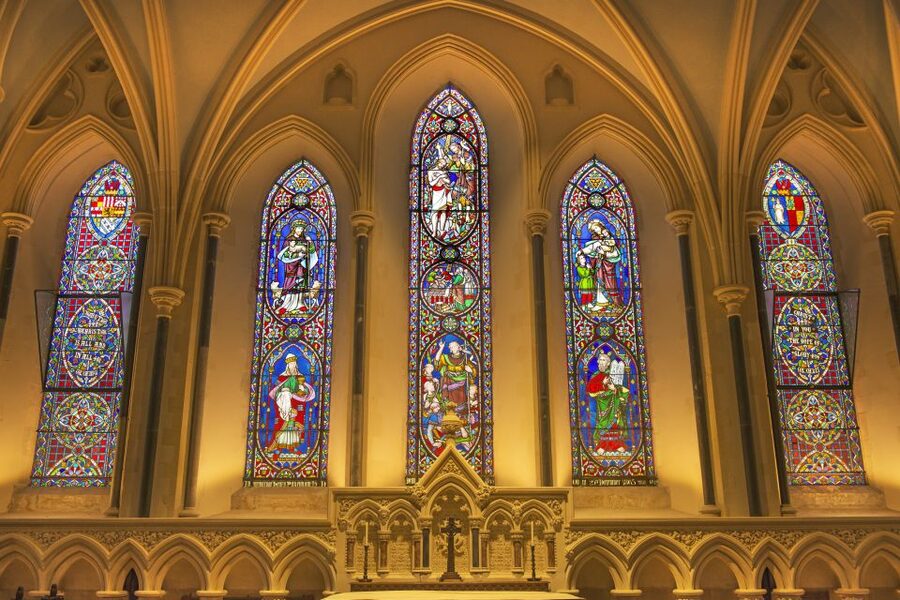
The stained glass is one of the strongest reasons to visit. Among the windows is a sequence showing the life of Saint Patrick in 39 images. That number makes the window worth studying carefully rather than treating it as background decoration.
I would use the audio guide near the glass, then return to the window without listening for a moment. The first pass gives you the story. The second lets you notice color, composition, and the way the scenes are arranged.
Photography may be tempting at every turn, but the cathedral is also a working religious space. Keep your attention on the building itself and allow room for worshippers and services. The setting is at its best when it feels like a church first and an attraction second.
The interior is maintained carefully, which helps the stone, glass, and memorials make their impression. It is a solemn place, but not a difficult one to understand if you use the commentary and take the visit in small sections.
Jonathan Swift’s cathedral
The connection with Jonathan Swift gives Saint Patrick’s Cathedral a special literary importance. Swift, author of Gulliver’s Travels, served as dean from 1713 to 1745 and is buried here.
You can see artifacts connected with his time at the cathedral and learn more about his life and work. For many people, this is the most personally engaging part of the visit. Swift is not presented only as a famous writer. His role as dean places him within the religious and public life of eighteenth-century Dublin.
If you know Gulliver’s Travels, the memorials create a stronger link between the book and the man who wrote it. If you do not, the audio commentary still gives you a useful reason to pause. I would not rush past this section simply because your main interest is architecture.
The Swift connection also shows how the cathedral’s story reaches beyond worship. This building has been connected with writers, church leaders, artists, and civic life. The result is a visit that works well for readers and history fans as well as for people who simply enjoy old buildings.
Same place, a different route to walk:
- Medieval Mile Museum Self Guided Audio Tour
★ 5.0 · 91 reviews - Donegal Coast One Day Self-Guided E-Bike Tour
★ 5.0 · 66 reviews - Dublin Ghost Hunt Exploration Game and Tour
★ 4.0 · 34 reviews - Maria Edgeworth Center-A Self-Guided Audio Tour
★ 5.0 · 21 reviews
The Door of Reconciliation and Irish memory
The Door of Reconciliation is one of the cathedral’s most distinctive features. It is linked to the Irish phrase to chance your arm, giving you a small but memorable piece of language history to take away from the visit.
The door is valuable because it makes a large historical story tangible. Instead of hearing only dates and names, you see a physical object connected with a particular act of reconciliation. The audio guide helps explain the background, while the object itself gives you something concrete to remember.
This is the sort of detail that makes a self-guided visit work. You can pass through a major monument and remember one doorway, one window, or one grave. Those small anchors make the larger story easier to hold onto.
I would pay attention to the less obvious stops as well as the grand architecture. The cathedral’s most famous elements may draw your eye first, but the smaller objects often explain how Irish history was lived by people rather than simply recorded in books.
The Discovery Space and family appeal
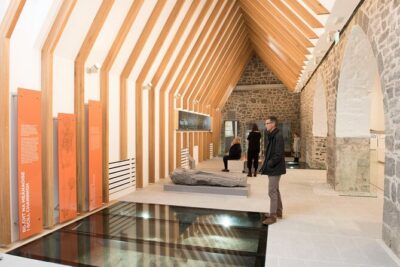
The Discovery Space adds a more modern layer to the visit. Touch-screen technology helps explain the cathedral’s long story, while iPads offer samples of the choir. You can also make a brass rubbing, giving you something hands-on to do instead of only looking and listening.
This area is particularly useful if you are visiting with children. A young person may not spend long studying medieval stonework, but an interactive display or brass rubbing can provide a clear point of entry. Activity sheets may also be available for children.
The Discovery Space does not replace the building itself. It supports it. After looking at a feature in the cathedral, you can use the screens to understand more about what you have seen. That mix of old objects and current technology makes the visit easier to follow for people who do not normally spend time in churches.
For adults, the displays offer a welcome change of pace. A long audio tour can become tiring, especially when the building contains many dates and names. The interactive section lets you reset your attention before continuing.
How much time should you allow?
The ticket is valid for one day, so you are not forced into a short, fixed session. The exact amount of time you need depends on how closely you listen and how much time you spend with the windows and memorials.
If you want only the main highlights, you can make a fairly focused visit. If you listen to much of the audio guide, explore the Discovery Space, and stop at Jonathan Swift’s memorials, you will want considerably longer.
I would avoid scheduling the cathedral between two tightly timed attractions. The audio commentary invites you to pause, and the architecture deserves more than a fast circuit. A flexible visit also helps if a guided tour or sung service is taking place.
The cathedral is easy to combine with other central Dublin sights, but the activity itself begins and ends at Saint Patrick’s Cathedral. You do not need transport as part of the booking, and there is no separate meeting point to find.
Is the $12 admission good value?

At $12 per person, this is a reasonable price for a major Dublin sight, especially because the audio guide is included. You are paying not only to enter the building, but also for interpretation in six languages, interactive displays, and access to a place with more than eight centuries of religious and cultural importance.
The value is strongest if you use the commentary. Without it, you can still admire the Gothic design and stained glass, but some of the cathedral’s best stories may pass unnoticed. The Door of Reconciliation and Swift’s connection are much more meaningful when you understand what you are seeing.
I would not call this the right purchase for someone who wants only a quick look at the exterior or a short photo stop. The price makes better sense when you plan to spend time inside and use the information provided.
The option to reserve now and pay later adds flexibility, and cancellation is available up to 24 hours before the visit for a full refund. Those terms are useful if your Dublin schedule is still shifting, though the main value remains the quality of the visit itself.
Access, timing, and practical points
The cathedral is wheelchair accessible. Under-18s must be accompanied by a parent or guardian.
Check availability for the current starting times before you book, even though the admission is valid for one day. If you want a guided tour, you may need to fit your arrival around its scheduled departure. If you prefer full control, use the self-guided audio option instead.
Crowding can occur, including around early afternoon on a Monday in June. The interior may still be enjoyable at busy times, but it will be harder to stand quietly at every audio stop or take uninterrupted photographs.
An on-site toilet is available in a transportable building outside the cathedral. That is a practical benefit, especially for families, though it is separate from the main historic interior.
The cathedral shop is part of the visit route and offers souvenirs and books. Some people may find its placement slightly at odds with the quiet tone of the church, so treat it as an optional final stop rather than part of the reason to come.
Who will enjoy this visit most?
I would recommend Saint Patrick’s Cathedral to you if you like architecture, Irish history, literature, religious art, or places where a city’s past is still active in the present.
It works particularly well for:
- First-time Dublin visitors who want a major historic site with clear interpretation.
- Readers and literature fans interested in Jonathan Swift.
- Families who can use the Discovery Space and brass-rubbing activity.
- Independent sightseers who dislike being hurried through a fixed route.
- Visitors with limited language confidence who can choose from six audio-guide languages.
- People interested in church music who may encounter choir recordings or a sung service.
It may be less suitable if you want an entirely quiet, empty church or if you have little interest in historic buildings. Crowds, scheduled services, and the amount of information can make the experience feel busy at times.
Should you book Saint Patrick’s Cathedral?
Yes, if you want a self-paced Dublin attraction with real historical weight and more to offer than architecture alone. The best reasons to book are the included audio guide, Jonathan Swift’s connection, the 39-image Saint Patrick window, and the Discovery Space.
I would choose the self-guided admission if you want to decide how long to spend at each stop. If a live guide is available when you arrive, consider joining for an overview, then use the audio material to revisit the details that interest you.
At $12, the visit offers solid value for a central Dublin sight, provided you give it time. Bring headphones if useful, check the timing around services, and do not rush past the windows or Swift’s memorials. This is a cathedral best understood in layers, one story and one detail at a time.
FAQ
Where is Saint Patrick’s Cathedral located?
Saint Patrick’s Cathedral is in Dublin County, Ireland. The activity begins and ends at the cathedral.
How much does admission cost?
Admission costs $12 per person.
How long is the ticket valid?
The admission is valid for one day. Check availability for the current starting times.
Is an audio guide included?
Yes. Audio guides are included with admission.
Which languages are available for the audio guide?
The audio guide is available in English, French, German, Italian, Spanish, and Irish.
Is the cathedral wheelchair accessible?
Yes, Saint Patrick’s Cathedral is wheelchair accessible.
Can children visit without an adult?
No. Anyone under 18 must be accompanied by a parent or guardian.
Can I cancel the booking?
Yes. You can cancel up to 24 hours in advance for a full refund.
Can I reserve now and pay later?
Yes. You can reserve your place and pay later, which keeps your plans flexible.
Just added around Ireland
- Maria Edgeworth Center-A Self-Guided Audio Tour★ 5.0 · 21 reviews
- Ferry ticket – Day return ticket to Inishbofin Island from Cleggan. Self Guided.★ 5.0 · 3 reviews
- Galway by eBike: Must-Do Independent Half-Day Activity!★ 5.0 · 9 reviews
- Galway’s City Centre: A Self-Guided Audio Tour★ 5.0 · 7 reviews
- Turtle Bunbury’s Dublin: A Self-Guided Audio Tour from a Celebrated Author★ 5.0 · 3 reviews
- Dublin Old Town: Famous Pubs Exploration Game and Tour★ 4.0 · 7 reviews
- Marlay Park’s Heritage: A Self-Guided Tour of Dublin’s Playground★ 5.0 · 3 reviews
- A Self Guided Walking Tour of Dublin’s Docklands★ 4.5 · 3 reviews
Ireland Audio Tours, compared.

Christ Church Cathedral Entrance Ticket & Self-Guided Tour
Read our review →
Self-Guided Bike Tour of Killarney National Park, Muckross Gardens & Waterfall
Read our review →



Browse the lists this tour appears in