
REVIEW · SEVILLE AUDIO TOURS
Seville: Hospital de los Venerables Ticket with Audio Guide
The most striking part of this visit is the Baroque church inside the old Hospital de los Venerables. Its painted walls, sculpted details, handsome arches, and quiet sacristy give you a close look at Seville’s grand religious art without the scale and crowds of the city’s biggest monuments. The building also houses the Centro Velázquez, where you can see works by Velázquez and Murillo.
I like the clear audio guide, which helps you understand what you are seeing instead of simply wandering through a pretty old building. I also like the traditional courtyard, with orange trees and old wooden gates that give the place a more human feel. The main drawback is that the visit is more art center and church than hospital museum, so you may find less about the institution’s daily work than expected.
Key points to know before you go
- A 17th-century Baroque setting: Walk through the former charitable home founded by Canon Justino de Neve for elderly priests.
- A strong art stop: See works connected with Diego de Silva y Velázquez, Bartolomé Esteban Murillo, and sculptor Pedro Roldán.
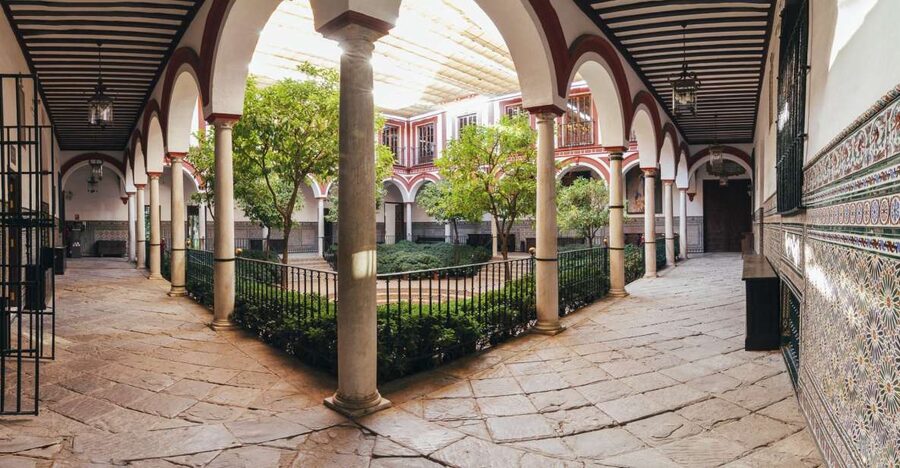
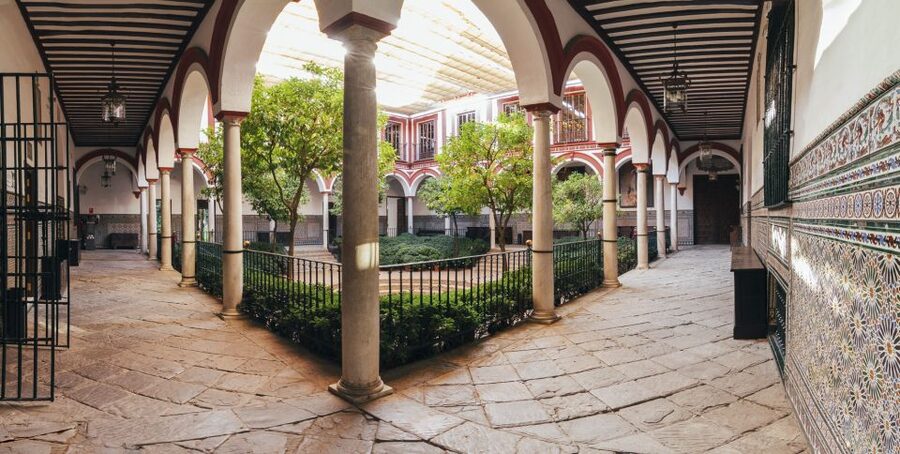
- A beautiful courtyard: Pause among orange trees, arches, and old wooden doors in a traditional Sevillian patio.
- A detailed audio guide: Explore independently with commentary available in Spanish, French, German, and Italian.
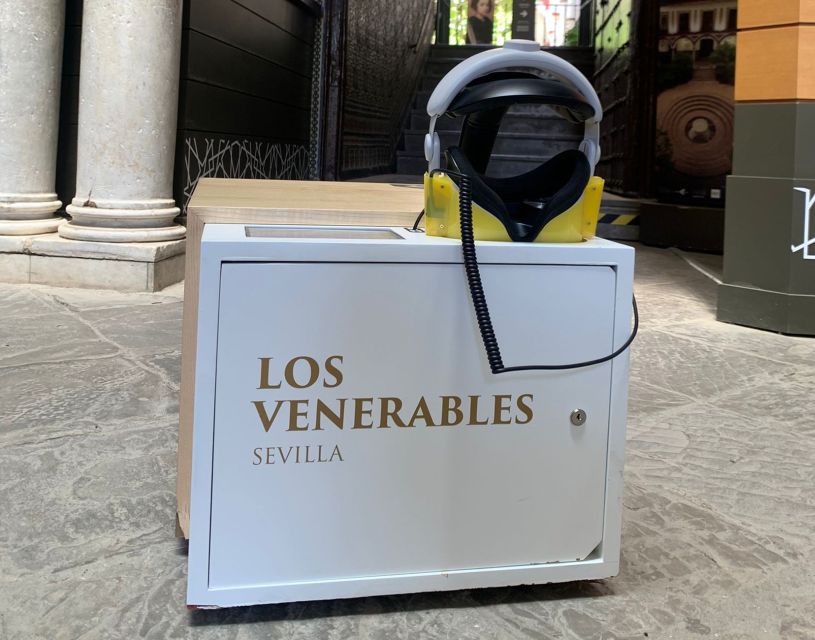
- A new VR360º addition: Use the virtual experience to see the building from a different angle.
- A modest price: At $14, this works best for visitors who want focused art and architecture in a compact visit.
Why the Hospital de los Venerables is worth your time
Seville has no shortage of churches, palaces, and grand courtyards. The Hospital de los Venerables earns its place on your list because it brings several parts of the city together in one manageable stop: a historic charitable institution, a Baroque church, a small art collection, and a classic patio.
The building was founded by Canon Justino de Neve to care for elderly priests. That purpose gives the site a different character from a royal palace or cathedral. You are not entering a residence built to display power. You are entering a place designed for care, worship, and community, later adapted to show important works of art.
I find that distinction useful. It gives the visit a social and religious setting, even though the art is likely to take center stage. The old hospital is not presented as a large medical museum, so keep your expectations in check. You will see the architecture and the art connected with the site, but the main appeal is visual rather than an extensive account of hospital life.
The admission is $14 per person. That is a fair price if you care about Baroque interiors or want to see Velázquez in a quiet, compact setting. It is less compelling if you are looking only for a detailed institutional museum or a long guided tour. At this price, the audio guide, church, sacristy, patio, Centro Velázquez, and VR360º experience give you several distinct things to see.
More Audio Tours in Spain:
- Barcelona: Sagrada Familia Entry Ticket with Audio Guide
★ 4.6 · 105,312 reviews - Barcelona: Casa Batlló Entry with Self-Audioguide Tour
★ 4.7 · 25,359 reviews - Granada: Alhambra Entry Ticket with Audio Guide
★ 4.1 · 5,950 reviews
Entering the old hospital and its Sevillian courtyard
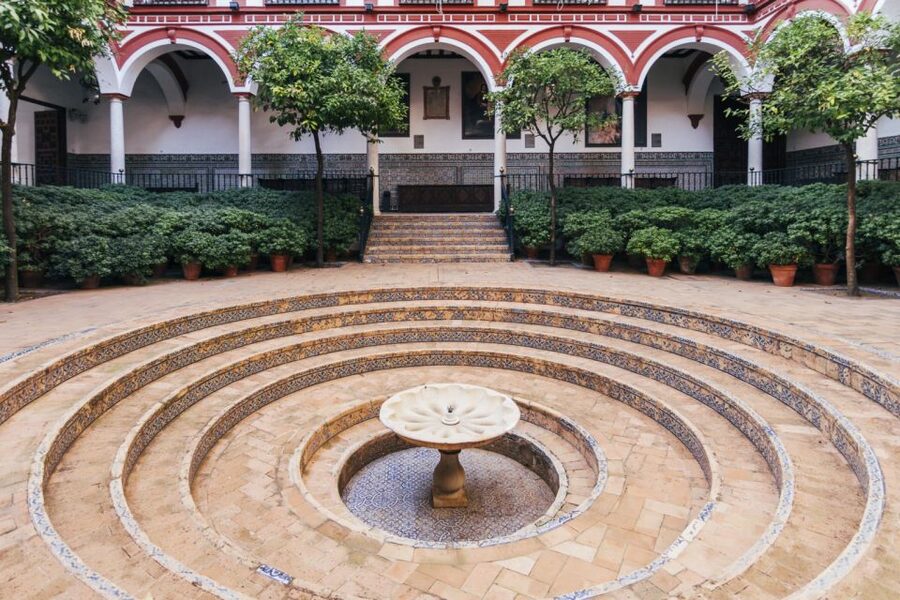
Begin with the courtyard, one of the easiest parts of the visit to appreciate right away. Traditional Sevillian patios are built around light, air, shade, and proportion, and this one gives you a good sense of that design.
Look for the arches and old wooden gates. They are not flashy details, but they create the mood of the building. The orange trees add color and scent when in season, and they soften the hard stone and plaster around them. This is the kind of place where I suggest you slow down for a few minutes before moving on.
The patio has also been used for performances of plays by Miguel de Cervantes and others. That detail helps you picture the courtyard as more than a passageway. Its shape makes sense for theater events and musical performances, and the open center gives the building a welcoming public quality.
You do not need a long explanation to enjoy the space, but the audio guide can help connect the courtyard to the building’s past. Listen before you rush toward the church. The patio is one of the most distinctly Sevillian parts of the visit, and it provides a useful contrast to the formal art rooms.
The Baroque church and Valdés family frescoes
The church is the emotional center of the experience. It dates from the end of the 17th century and uses the visual language of Seville’s Baroque period: elaborate decoration, strong religious imagery, sculpted figures, and painted surfaces meant to draw your eye upward and around the room.
The frescoes on the walls were designed and made by the Valdés family. You can expect painted scenes to cover much of the interior, turning the church into a setting where architecture and art work together. Rather than viewing one painting at a time in a plain gallery, you are surrounded by decoration.
Take a moment to examine the arches and the transitions between wall, ceiling, and altar areas. Baroque churches often reward a slow look because the details compete for attention. The first impression is dramatic, but the second look is when you begin to notice how much has been placed around you.
The church also contains works by sculptor Pedro Roldán. These pieces add a three-dimensional presence to the painted decoration. The combination of sculpture, frescoes, and architecture is what makes this stop stronger than a simple collection of framed pictures.
The church is a good reason to bring the audio guide into the visit. Without commentary, you can still admire the decoration, but you may miss why particular artists and design choices matter. The supplied guide is described as easy to use and detailed enough to give the visit structure. That is especially useful if you do not already know Seville’s Baroque art.
The sacristy, a smaller room with a lasting impression
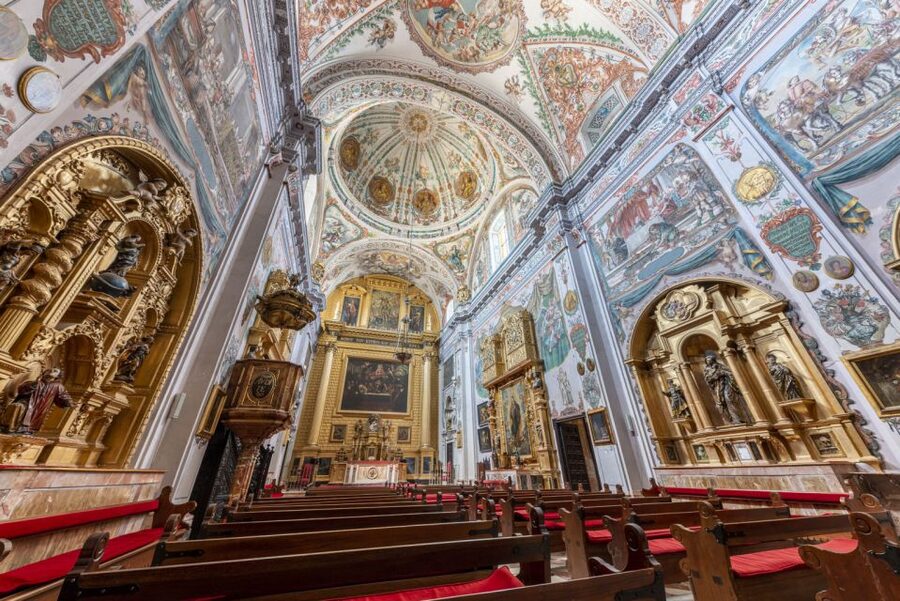
Do not skip the sacristy. It is easy to give it less attention than the church, but the room shows how the building’s architecture continues into a more practical religious space.
You can examine the design at closer range here. The sacristy is not presented as a separate attraction with a long program of activities. Its value comes from seeing another part of the original complex and noticing the care given to rooms beyond the main worship area.
I like this kind of stop because it makes the building feel more complete. A church alone can seem like a single grand stage. Adding the sacristy helps you understand the working side of the institution, even if the visit does not provide a full account of its daily routines.
Allow a few quiet minutes here. The church may catch your eye first, but the sacristy helps round out the architectural visit.
Same place, a different route to walk:
- Barcelona: Palau de la Música Self-Guided Tour
★ 4.6 · 3,603 reviews - Casa Batllo Admission Ticket with Intelligent Audio Guide
★ 4.5 · 3,168 reviews - Madrid: Las Ventas Bullring Tour with Audio Guide
★ 4.6 · 3,154 reviews - Cordoba: Mosque-Cathedral E-Ticket with Audio Guide
★ 4.1 · 2,895 reviews
The Centro Velázquez and Seville’s painters
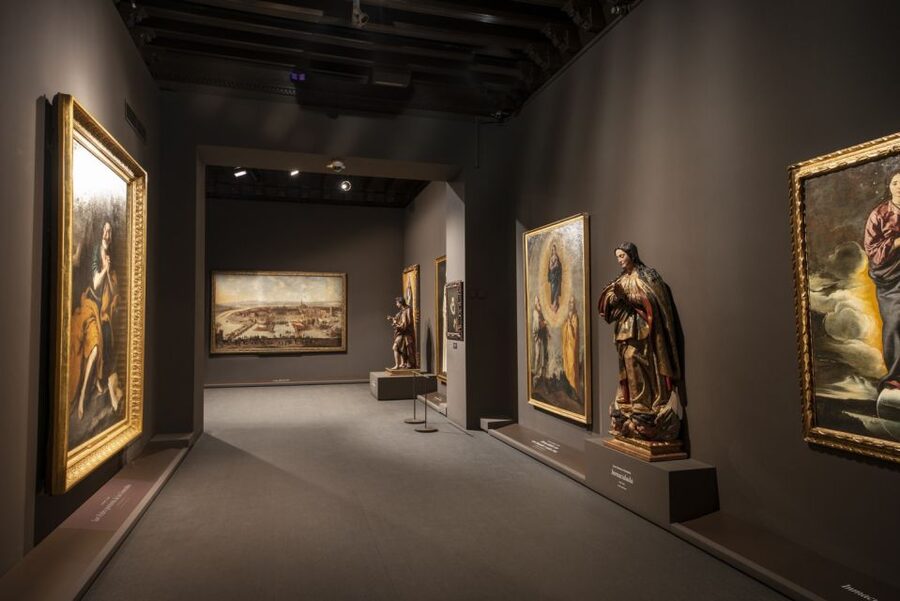
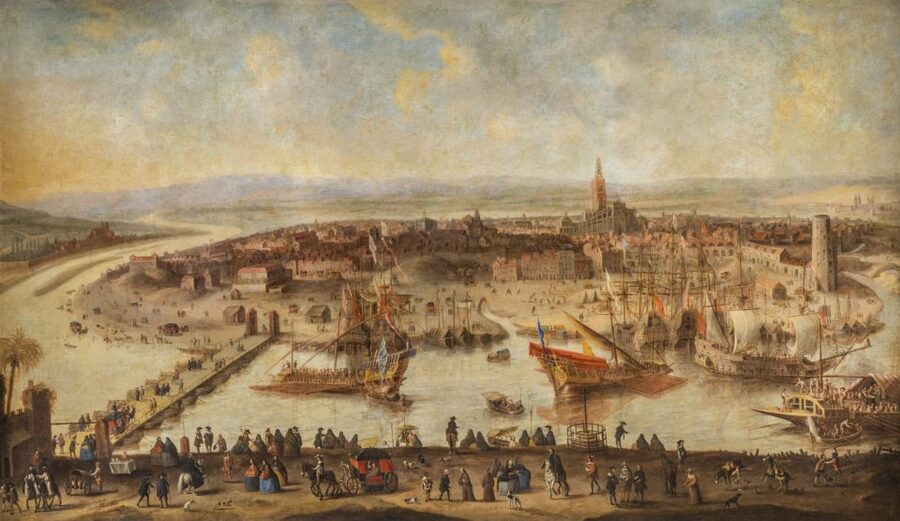
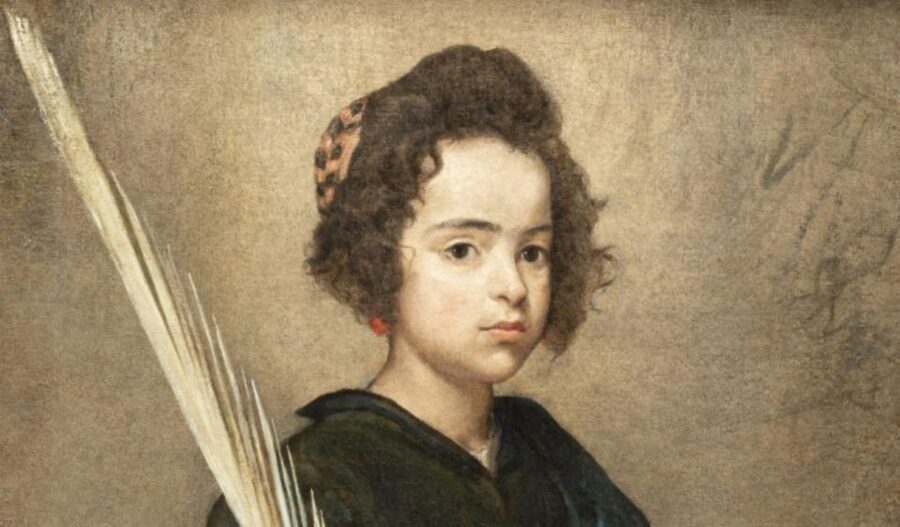
The Centro Velázquez is the museum section of the experience. It presents works by major Sevillian artists, including Diego de Silva y Velázquez and Bartolomé Esteban Murillo.
For many people, Velázquez will be the main draw. Seeing his work in person changes the experience from knowing a name in an art book to looking closely at brushwork, expression, and scale. The collection is not described as a huge museum, and that is part of its advantage. You can give the paintings real attention without needing half a day.
Murillo gives the center a strong local connection. He is closely tied to Seville’s artistic identity, and his work helps you see the city’s religious art within a wider regional tradition. The center is not only about one famous painter. It places Velázquez alongside another major Sevillian figure and the surrounding church art.
This is where expectations matter most. If you want a large survey of Spanish painting, this will feel limited. If you want a focused art stop in a historic building, the center makes good use of your time.
The art center also changes the pace of the visit. The courtyard and church are architectural spaces, while the gallery asks you to stand close and look carefully. I suggest using the audio guide selectively here. Listen to the explanation for works that interest you, then give yourself time to look without commentary.
What the VR360º experience adds
The included VR360º experience is a newer part of the visit. It gives you another way to see the Hospital de los Venerables, rather than simply repeating the physical rooms you have already walked through.
Virtual experiences can be useful in historic buildings because they offer views and angles that are not always easy to get on foot. Here, the 360-degree format may help you understand the overall layout or see the building in a different visual frame.
Treat it as an extra, not the main reason to buy the ticket. The courtyard, church, frescoes, and art are the real substance of the visit. The VR element gives the experience a modern finish and may be especially appealing if you enjoy digital interpretation.
Because the ticket is valid for one day, you have room to fit the visit around your plans. Check the available starting times when booking, since the activity is not described as an open-ended entry at any hour.
How the audio guide changes the visit
This is a self-guided experience with an audio guide included. That means you can move at your own speed, pause when a painting catches your eye, and spend less time on sections that matter less to you.
The guide is available in Spanish, French, German, and Italian. English is not listed among the available languages, so check the language options carefully before booking if you need English commentary.
The audio guide has been praised for being easy to use and detailed. That matters here because the building contains several layers of information: its charitable purpose, its Baroque design, the Valdés family frescoes, the Centro Velázquez, and the works associated with Murillo and Pedro Roldán.
Do not expect the same rhythm as a live guide. You will not be able to ask questions as you walk, and the experience may feel quiet or solitary. On the other hand, you avoid being tied to a group schedule. One booking specifically names Alvaro as an excellent guide, but the standard offer described here is centered on the audio guide, not a guaranteed named host.
Time, access, and who will enjoy it most
The ticket is valid for one day, with starting times based on availability. The supplied details do not give a fixed visit length, so plan around your own pace rather than treating it as a timed tour with a set ending.
You can make the visit fairly focused by concentrating on the church and the Centro Velázquez. If you listen to the audio guide carefully and take time with the paintings, the patio, sacristy, and VR360º experience will give you a fuller outing.
The site is wheelchair accessible, which makes it a practical choice for visitors who need an accessible historic attraction. The ticket includes entry to the church, sacristy, courtyard, and art center, so you do not need to choose between separate sections once inside.
I would recommend this experience to:
- You enjoy religious art and Baroque architecture.
- You want to see Velázquez and Murillo in a smaller setting.
- You prefer an audio guide to a fixed group tour.
- You like historic courtyards and quiet indoor spaces.
- You have already seen Seville’s largest monuments and want a more focused stop.
I would be more cautious if your main interest is the hospital’s social history. You will learn that it was founded to care for elderly priests, but the visit gives more weight to art and architecture than to an extensive museum about the hospital itself.
Is $14 good value in Seville?
At $14, this is a sensible midrange cultural ticket. You are not paying only to enter one church. The price includes the historic complex, courtyard, sacristy, Centro Velázquez, audio guide, and VR360º experience.
The value depends on how you use it. If you walk quickly through the patio, glance at the church, and leave, the ticket may feel less worthwhile. If you listen to the commentary, study the art, and give the Baroque details time, it becomes a well-rounded stop.
The strongest value comes from combining several modest attractions rather than expecting one giant masterpiece. The church supplies atmosphere, the art center supplies famous names, the patio supplies local character, and the virtual experience adds a modern layer.
Compared with the price of major attractions in Seville, $14 is reasonable for a compact cultural visit. It is also a useful choice on a busy sightseeing day because you can enjoy serious art without committing to a full museum afternoon.
Practical tips for a better visit
Check the audio language before paying. The listed choices are Spanish, French, German, and Italian, and English is not included in the stated options.
Give the courtyard more than a passing glance. The orange trees and wooden gates are among the details that make this feel like Seville rather than simply another European church.
Use the audio guide in the church and art center, where names and artistic context matter most. In the patio, you may prefer to pause quietly and look around.
Expect a self-guided visit. If you need conversation, questions, or a personal explanation throughout, a live tour may suit you better. If you prefer independence, the audio format is a plus.
The ticket allows free cancellation up to 24 hours before the visit and lets you reserve now and pay later. Those terms are useful if your Seville plans are still shifting.
Should you book the Hospital de los Venerables?
Book it if you want a compact encounter with Seville’s Baroque art, especially Velázquez, Murillo, the Valdés family frescoes, and Pedro Roldán’s sculpture. The courtyard is attractive, the church is the clear highlight, and the audio guide gives the visit enough context to feel worthwhile.
Skip it if you are expecting a large hospital museum or a long, live-led tour. The building’s original charitable purpose matters, but the emphasis is on the art and spaces you can see today.
For most art-minded visitors, $14 is a fair price. I would place it on a flexible Seville itinerary, ideally when you want a quieter stop between larger monuments. The best reason to go is not one single object. It is the combination of a beautiful patio, a heavily decorated church, a focused collection of Sevillian art, and a modern VR360º finish.
FAQ
What does the Hospital de los Venerables ticket include?
The ticket includes entry to the church, sacristy, traditional courtyard, Centro Velázquez, audio guide, and VR360º virtual experience.
How much does admission cost?
The listed price is $14 per person.
Is the visit guided by a person?
The standard activity includes an audio guide. Spanish, French, German, and Italian are listed as available languages. A named guide is not guaranteed, although some visits may involve a host such as Alvaro.
How long is the ticket valid?
The ticket is valid for one day. You should check availability for the available starting times.
Is the Hospital de los Venerables wheelchair accessible?
Yes. The activity is listed as wheelchair accessible.
Can I cancel the booking?
Yes. You can cancel up to 24 hours in advance for a full refund.
Does the ticket include Velázquez paintings?
Yes. The Centro Velázquez is included, with works by Sevillian artists such as Diego de Silva y Velázquez and Bartolomé Esteban Murillo.
Just added around Spain
- San Antonio Bay Self Drive Boat Rental★ 4.5 · 5 reviews
- Granada’s Realejo District: A Self-Guided Tour of the Old Quarter★ 4.0 · 5 reviews
- Granada Scavenger Hunt and Sights Self-Guided Tour★ 5.0 · 9 reviews
- Entrance to the Alhambra and Generalife with Audio Guide★ 3.5 · 38 reviews
- Gijon Self-Guided Sherlock Holmes Murder Mystery Game★ 3.5 · 4 reviews
- Montsacopa: An audio tour in the Volcano in the Centre of the City★ 4.5 · 3 reviews
- Mosque-Cathedral of Córdoba E-Ticket with Audio Guide★ 3.5 · 15 reviews
- City of Caliphs: A Self-Guided Walking Tour of Córdoba’s History★ 4.5 · 12 reviews
Seville Audio Tours, compared.
Cathedral and Giralda Entry Ticket with Audio Guide
Read our review →
Seville’s Historic Center: Self-Guided Tour + Casa Pilatos Ticket
Read our review →Browse the lists this tour appears in