
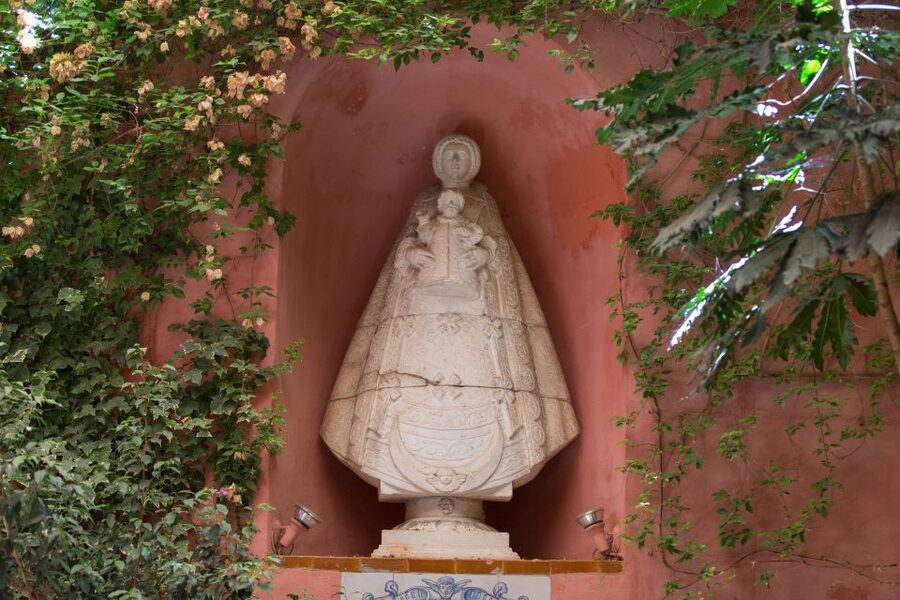
REVIEW · SEVILLE AUDIO TOURS
Casa de Salinas Entry Ticket with Audio Guide
Casa de Salinas gives you a close look at Seville’s private palaces without the crowds and scale of the Alcázar. I like the 16th-century Mudéjar arches and the Roman mosaic showing Bacchanalian scenes, two details that make this small house feel far older and grander than its size suggests. I also like the chance to enter a home still occupied by a family, not just a polished public monument.
The main drawback is its short visit. The audio tour lasts about 25 minutes, so this is a compact stop rather than a half-day attraction. The audio guide keeps the visit focused, but you will have less freedom to linger than you might in a larger palace.
Key points about Casa de Salinas
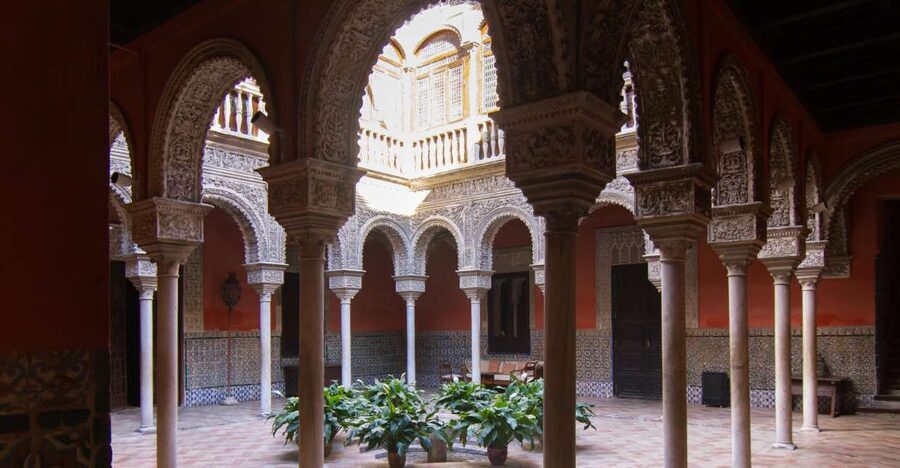
- A private home near Seville Cathedral: Casa de Salinas sits on Calle Mateos Gago, just steps from the cathedral, La Giralda, and the Royal Alcázar.
- Sixteenth-century Mudéjar details: Look for plasterwork arches, original ceramic tiles, and patios that blend Gothic, Renaissance, and Mudéjar design.
- A Roman mosaic indoors: The mosaic depicts Bacchanalian scenes and gives the house a strong connection to Seville’s ancient past.
- A 25-minute audio tour: The guide is available in English, Spanish, French, and Italian.
- A compact alternative to the Alcázar: This is best for adding one more historic interior to your Seville day, not replacing a major palace visit.
- Useful flexible booking terms: The ticket costs $14 per person, is valid for one day, and includes free cancellation up to 24 hours before the visit.
A private mansion in Seville’s old center
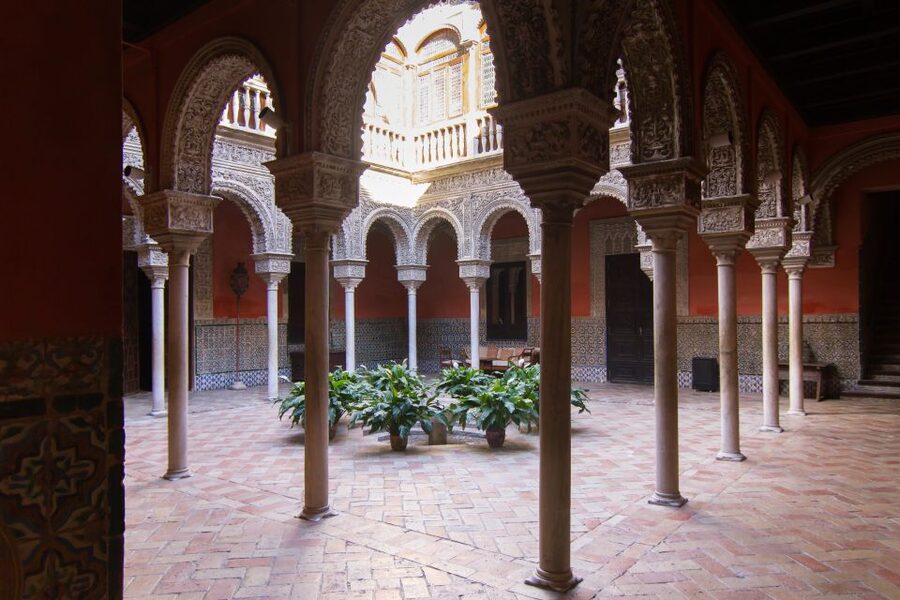
Casa de Salinas sits in Seville’s monumental Old Town, on Calle Mateos Gago at number 39. Its location matters. You can pair it with the cathedral, La Giralda, or the Royal Alcázar without making a special trip across the city.
I like attractions that fit naturally into a walking day, and this one does. After seeing the cathedral’s vast interior or the Alcázar’s formal courtyards, Casa de Salinas offers a smaller, quieter look at how an important Seville family lived.
The house is privately owned, and the Salinas family still resides there. That changes the feel of the visit. You are not walking through an empty royal residence designed only for public display. You are entering a preserved family mansion whose rooms and courtyards still belong to a living household.
You should keep your expectations in check. Casa de Salinas is not another Alcázar in size or range. The comparison works best as a description of its style and detail: it is a small-scale palace experience, with ornate architecture packed into a short route.
More Skip-the-Line Audio Guide Tickets in Spain
- Barcelona: Sagrada Familia Entry Ticket with Audio Guide
★ 4.6 · 105,312 reviews - Granada: Alhambra Entry Ticket with Audio Guide
★ 4.1 · 5,950 reviews - Casa Batllo Admission Ticket with Intelligent Audio Guide
★ 4.5 · 3,168 reviews
Why Seville’s sixteenth century matters here
The house was built during the sixteenth century, when Seville held an unusually important place in Europe. Wealth from the New World arrived through the city’s port before moving onward across the continent.
That money helped turn Seville into a center for major artistic work. Italian and Flemish artists came to the city, and local buildings combined Renaissance design with Gothic and Mudéjar traditions.
Casa de Salinas reflects that mixture. You will not see one clean architectural style repeated from room to room. Instead, you find old Spanish design layered with Renaissance influence, decorative plasterwork, painted wood, tile, and ancient Roman material.
This is one reason the house is worth adding to your plans. The building is not just a handsome set of rooms. It helps explain why Seville’s historic center looks so different from other Spanish cities. Christian, Islamic, Renaissance, and Roman references appear close together.
The original structure changed during its 400-year history, especially around 1900. At the beginning of the twentieth century, the Salinas family took ownership and carried out a careful restoration intended to recover the building’s earlier appearance.
You can think of the current house as a restored sixteenth-century core rather than a building untouched by time. That distinction is useful. Restoration brings back architectural details that had been altered, but it also means the house is a carefully presented version of its past.
The entrance and first impression
Your visit begins at Casa de Salinas, not at a separate meeting point. The address is Calle Mateos Gago, 39, 41004 Sevilla, Spain.
The ticket includes entry and an audio guide. You can skip the ticket line, which is handy in the cathedral district, where the surrounding sights draw large crowds. Check the available starting time when you book, since the ticket is valid for one day but the attraction still uses scheduled availability.
The first thing to understand is the scale. This is a mansion, not a sprawling palace complex. The short route lets you see the main architectural features without committing several hours of your day.
That compact format can be a real advantage. If you have just finished a major sight, you may not want another long tour with a fixed pace. Casa de Salinas gives you a focused look at domestic architecture and decorative art, then returns you to the streets of Seville.
A warm welcome at the entrance helps set the tone. The house is still used by the family, so the experience feels more personal than a visit to a fully public museum.
The patios and Mudéjar plasterwork
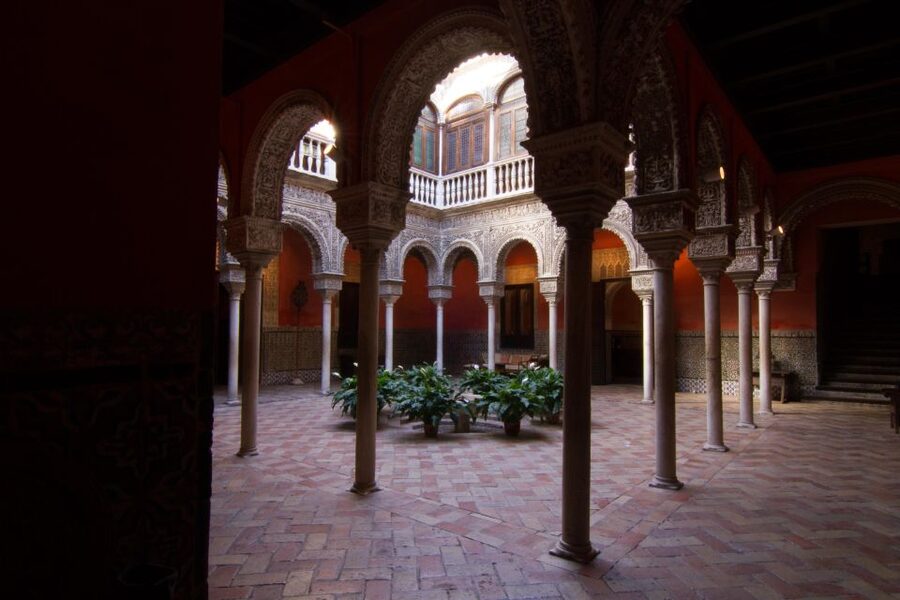
The patios are the architectural heart of the visit. These sixteenth-century spaces show the Mudéjar influence that makes so many Seville buildings distinctive.
Look closely at the plasterwork arches. Their decoration is not merely a background detail. The arches frame the patios, control the movement between spaces, and give the house the delicate, patterned look associated with Mudéjar design.
I like these courtyards because they show how beauty and practical design worked together. A patio gives the house an interior open space, while the arches and plasterwork turn that functional area into something ceremonial.
The word Mudéjar describes Christian buildings that retain or adapt Islamic artistic traditions. In Seville, that mixture is especially visible. Casa de Salinas places those details in a private residential setting, where they feel less monumental than at the Alcázar but no less important.
Take your time with the shapes and surfaces rather than simply walking through. The audio guide lasts only 25 minutes, so you may want to pause the recording briefly if you need longer to inspect an arch or tile pattern.
The patios are also where the house earns its comparison to a miniature Alcázar. You get the same broad family of visual ideas, but in a more intimate setting and with fewer rooms to cover.
Same place, a different route to walk:
- Barcelona: Casa Batlló Entry with Self-Audioguide Tour
★ 4.7 · 25,359 reviews - Barcelona: Palau de la Música Self-Guided Tour
★ 4.6 · 3,603 reviews - Madrid: Las Ventas Bullring Tour with Audio Guide
★ 4.6 · 3,154 reviews - Cordoba: Mosque-Cathedral E-Ticket with Audio Guide
★ 4.1 · 2,895 reviews
The Roman mosaic and ancient Seville
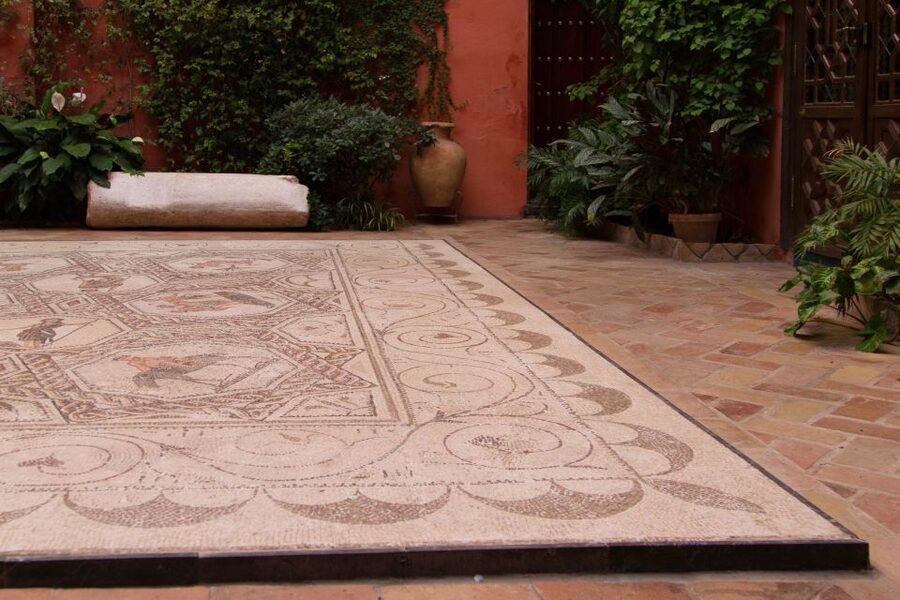
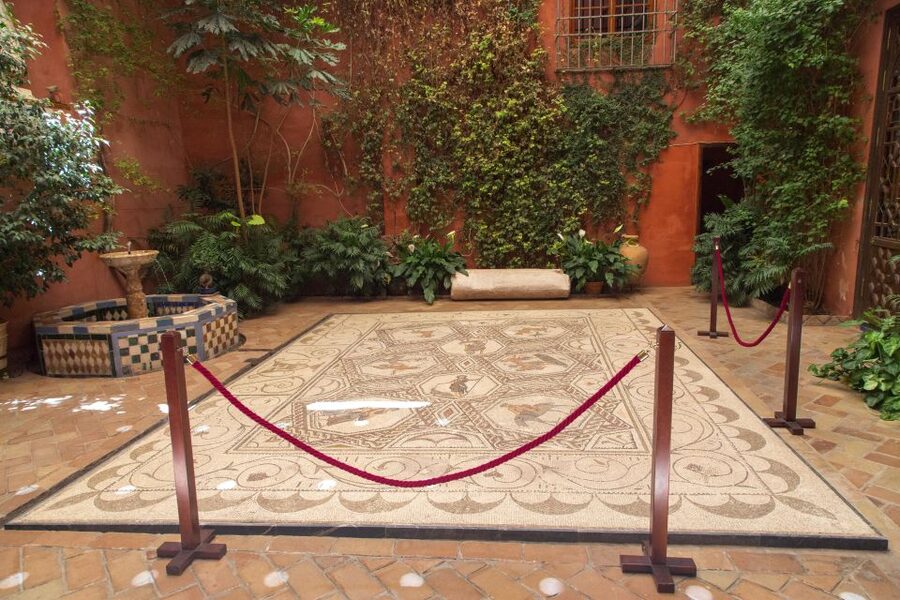
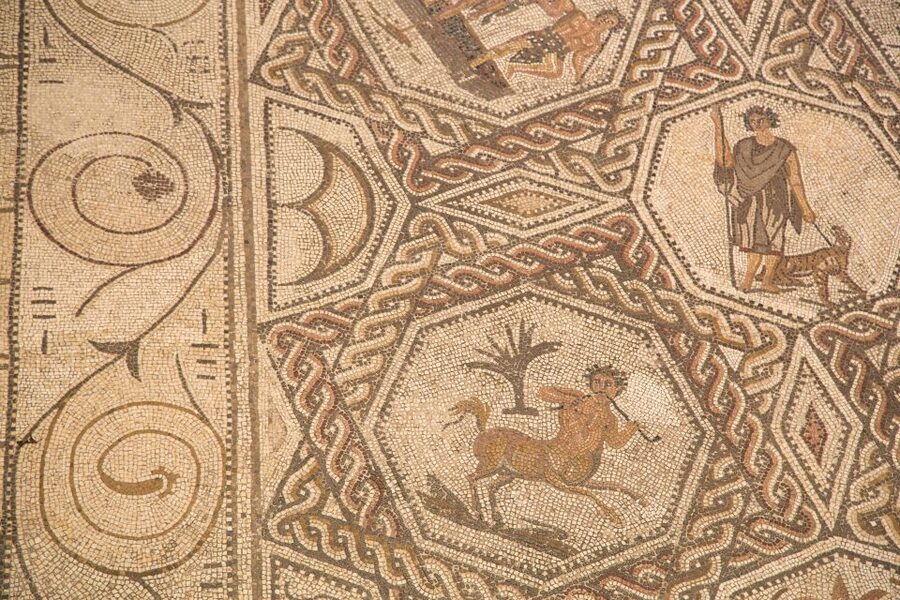
One of the most unusual features is the Roman mosaic showing Bacchanalian scenes. It adds a completely different layer to the house.
The imagery relates to Bacchus, the Roman god associated with wine and celebration. The subject is lively and slightly mischievous, a sharp contrast to the controlled elegance of the surrounding rooms.
A Roman mosaic inside a sixteenth-century mansion also tells you something about Seville itself. The city was built over older layers, and ancient material could be reused, displayed, or discovered within later buildings.
The mosaic room may be one of the stops you remember best because it breaks the visual rhythm of arches, tile, and painted ceilings. If ancient history interests you, give this room extra attention. If you prefer architecture, use it as a reminder that the house’s story begins long before the Salinas family.
The information available about the room is brief, so do not expect a long archaeological presentation. The value is in seeing the mosaic within the house and understanding how several periods meet in one small space.
Painted ceilings, tiles, and family rooms
Inside, Casa de Salinas preserves original ceramic tiles and painted wooden ceilings. These details reward a slower look upward and downward.
Visitors often focus on walls and furniture, but the ceilings are among the strongest decorative features here. The family’s winter and summer drawing rooms have especially ornate painted woodwork.
The distinction between winter and summer rooms is useful. Traditional houses often arranged rooms according to comfort, light, and seasonal use. At Casa de Salinas, those rooms also show how a wealthy Seville family organized formal domestic life.
The drawing rooms are not simply grand reception spaces. They help you picture the house as a home, with different rooms serving different purposes throughout the year.
I find this more revealing than a palace filled only with state rooms. Royal residences show power in public form. A private mansion gives you a closer look at taste, comfort, family life, and the way wealth shaped everyday surroundings.
The original tiles add another layer of detail. In Seville, tile is central to the city’s visual identity, and the Casa de Salinas examples belong to the house’s older decorative fabric.
Do not rush past them. Tile patterns can seem repetitive from a distance, but the color, geometry, and placement often change from one space to the next. The audio guide can supply context, but your own close inspection will add much to the visit.
What the 25-minute audio guide adds
The audio guide is included and available in English, Spanish, French, and Italian. It lasts about 25 minutes, giving you a clear path through the main rooms and features.
I like an audio guide for a small house because it gives structure without requiring a live group to move from room to room. You can learn why the building matters, then look directly at the details being described.
The guide should be treated as an introduction rather than a full course in Seville’s architecture. The house contains several centuries of material, but the visit itself is short. You will receive the main historical and architectural points, not an extended lecture on every tile, arch, or painting.
The audio option also makes the experience easier for independent visitors. You do not need to coordinate with a private guide, and the languages cover English, Spanish, French, and Italian.
A practical tip: listen for the explanation of the restoration and the relationship between the house’s sixteenth-century structure and its later alterations. That context helps you understand why the building looks preserved but not frozen in one exact moment.
The audio guide is a good match for visitors who want facts and direction. If you prefer to wander silently and study every detail at your own speed, the fixed 25-minute format may feel a little brisk.
How the visit fits with the Alcázar and other palaces
Casa de Salinas works best as a supplement to Seville’s major sights. If you have already seen the Alcázar, this gives you another way to look at palace architecture without repeating the same scale and route.
It also pairs naturally with Casa de Pilatos, Palacio de Lebrija, and Palacio de Las Dueñas. Each is a private or formerly private residence with its own mixture of domestic rooms, decorative art, and historic layers.
I would not advise replacing the Alcázar with Casa de Salinas if it is your first visit to Seville. The Royal Alcázar offers much more space and a wider range of courtyards, halls, and gardens.
But the smaller house can be the better choice when your schedule is tight. You can see it in roughly half an hour, then continue through the Old Town. At $14 per person, the price is reasonable if you value historic interiors and want a focused stop near the cathedral.
The value is less clear if you only want Seville’s biggest headline sights. Casa de Salinas is modest in size, and its appeal depends on noticing materials and details rather than collecting a long list of rooms.
Who will get the most from this ticket
I would recommend Casa de Salinas to you if you enjoy architecture, private homes, decorative art, or the way different periods overlap in one building.
It is particularly suited to:
- Independent visitors who prefer an audio guide to a live group.
- Architecture fans interested in Mudéjar, Gothic, and Renaissance details together.
- Short-stay visitors who want a compact attraction near the cathedral.
- Repeat visitors to Seville looking beyond the city’s most famous monuments.
- Families or mixed-interest groups who may not want another long museum visit.
- Visitors who appreciate domestic history more than grand royal ceremony.
You may want to skip it if you have only a few hours in Seville and have not yet seen the cathedral or Alcázar. You may also find it too brief if you expect a large palace complex.
The ticket is wheelchair accessible, which makes it a practical option for visitors who need an accessible historic attraction. Specific features beyond that designation are not provided, so it is sensible to confirm any personal access needs before booking.
Price, timing, and booking flexibility
The price is $14 per person. For a 25-minute audio-guided visit, that is not the cheapest attraction in Seville, but the location and the quality of the architectural details help justify it.
You are paying for access to a privately owned mansion with preserved rooms, patios, tiles, painted ceilings, and a Roman mosaic. You are not paying for a full-day palace experience.
The ticket is valid for one day, and you should check availability for the starting time that suits your schedule. The skip-the-line feature can save some waiting in the busy cathedral district.
You can cancel up to 24 hours in advance for a full refund. You can also reserve now and pay later, which helps if you are arranging a Seville itinerary around several timed sights.
Those terms are useful because Seville plans can shift. The cathedral, Alcázar, and other central attractions often shape the day, so keeping Casa de Salinas flexible lets you place it between larger visits.
My advice for making the most of it
Go for the details, not the size. The patios, plasterwork, mosaic, tiles, and painted ceilings are the reason to visit.
Give yourself a little more time around the attraction than the 25-minute audio program alone suggests. The guide length describes the narration, not necessarily the full time you will spend entering, looking, and moving through the rooms.
If you are planning a palace-heavy day, put Casa de Salinas between larger sights rather than immediately after another small mansion. Its compact route works well as a change of pace after the Alcázar or cathedral.
Listen to the historical setting, then keep your eyes on the building. The most rewarding moments come when the audio explanation connects a visible feature to Seville’s past, such as the blend of Mudéjar arches and Renaissance influence.
Remember that this is still a family home. The atmosphere is more intimate than a public museum, and the house’s private character is part of its appeal. It also means you should approach the visit with the same care and quiet respect you would bring to any occupied residence.
Should you book Casa de Salinas?
Book it if you want a short, well-located look at Seville’s private architecture, especially if the combination of Mudéjar plasterwork, Roman mosaic, original tile, and painted ceilings appeals to you.
Skip it if your Seville schedule is already packed with essential monuments and you have not yet visited the Alcázar. At $14, Casa de Salinas offers good value for a compact historic stop, but it cannot match the scale of the city’s major palaces.
My practical call: add it after the cathedral or Alcázar, not instead of them. You get a different view of Seville, one shaped by family life, careful restoration, and a small house filled with several centuries of design.
FAQ
Where is Casa de Salinas located?
Casa de Salinas is at Calle Mateos Gago, 39, 41004 Sevilla, Spain. It is close to Seville Cathedral, La Giralda, and the Royal Alcázar.
How long does the audio-guided visit last?
The audio-guided tour lasts about 25 minutes. The ticket itself is valid for one day, subject to available starting times.
What languages are available for the audio guide?
The audio guide is available in Spanish, English, French, and Italian.
What does the ticket include?
The ticket includes entrance to Casa de Salinas and the audio guide.
Is Casa de Salinas wheelchair accessible?
Yes, the experience is listed as wheelchair accessible.
Can I cancel or pay later?
You can cancel up to 24 hours in advance for a full refund. Reserve now and pay later is also available.
Just added around Spain
- San Antonio Bay Self Drive Boat Rental★ 4.5 · 5 reviews
- Granada’s Realejo District: A Self-Guided Tour of the Old Quarter★ 4.0 · 5 reviews
- Granada Scavenger Hunt and Sights Self-Guided Tour★ 5.0 · 9 reviews
- Entrance to the Alhambra and Generalife with Audio Guide★ 3.5 · 38 reviews
- Gijon Self-Guided Sherlock Holmes Murder Mystery Game★ 3.5 · 4 reviews
- Montsacopa: An audio tour in the Volcano in the Centre of the City★ 4.5 · 3 reviews
- Mosque-Cathedral of Córdoba E-Ticket with Audio Guide★ 3.5 · 15 reviews
- City of Caliphs: A Self-Guided Walking Tour of Córdoba’s History★ 4.5 · 12 reviews
Seville Audio Tours, compared.
Cathedral and Giralda Entry Ticket with Audio Guide
Read our review →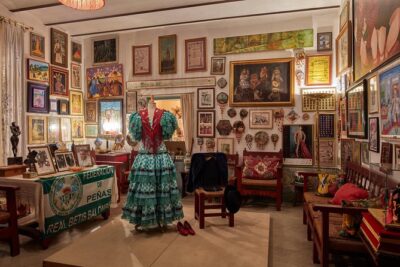
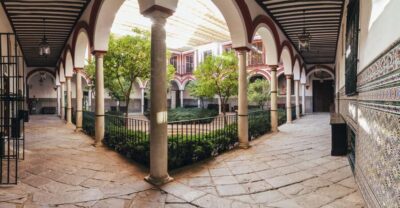
Seville: Hospital de los Venerables Ticket with Audio Guide
Read our review →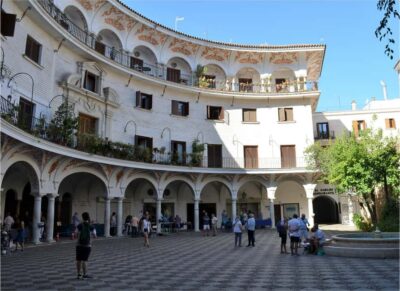
Seville’s Historic Center: Self-Guided Tour + Casa Pilatos Ticket
Read our review →Browse the lists this tour appears in