
REVIEW · SPAIN AUDIO TOURS
City of Caliphs: A Self-Guided Walking Tour of Córdoba’s History
Córdoba’s story unfolds in layers, and this self-guided walking tour connects them well. You move from Roman ruins to Islamic monuments, Jewish heritage, Christian royal sites, flower-filled lanes, and everyday squares without being tied to a group or a fixed speaking schedule. The route begins at the Calahorra Tower and returns there after roughly three to three and a half hours.
I like the GPS guidance, which helps you keep moving through Córdoba’s maze of old streets, and the freedom to pause, take photos, or sit in the shade. I also like the price: at $11.99, it costs little compared with a private guide and gives you lifetime access in English. The main consideration is that you must bring your own smartphone and headphones, and the app may take a little practice if you want to begin halfway through the route.
Key points to know before you book
- Roman Bridge starting point: Begin beside the Guadalquivir River at the Calahorra Tower, then walk into Córdoba’s old town.
- Many sides of Córdoba: The route covers Roman, Islamic, Jewish, and Christian landmarks rather than focusing on only the Mosque-Cathedral.
- GPS audio format: Narration, maps, and location data work offline, so you can explore without using mobile data during the walk.
- Flexible three-hour pace: You can stop and restart, though the app may be less intuitive if you skip ahead to a later site.
- Ben’s narration: The English commentary has a pleasing voice and a useful amount of information, according to the supplied tour feedback.
- Low-cost private experience: Only your group participates, with no transport, food, drinks, smartphone, or headphones included.
Starting beside the Guadalquivir and Roman Bridge
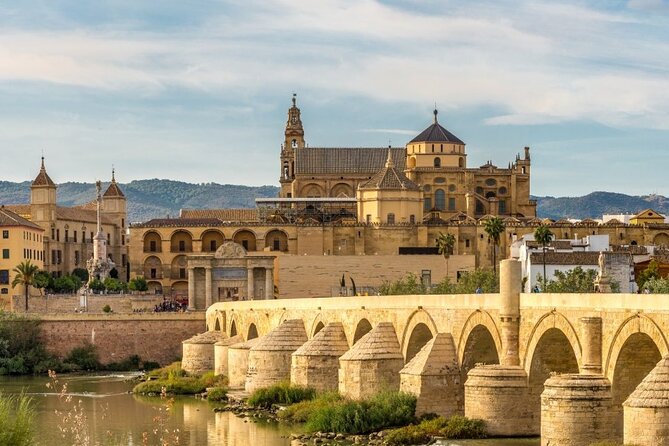
Your route starts at the Torre de la Calahorra, at the southern end of the Roman Bridge. This is a smart place to begin. You get an immediate view of Córdoba’s most famous approach, with the Guadalquivir below and the Mosque-Cathedral visible across the water.
The bridge gives the tour a strong opening. Its long stone span has carried people toward the old city for centuries, and the walk offers a sense of arrival that a taxi ride cannot provide. You also pass the Calahorra Tower, a fortified landmark that once guarded the bridge.
The route information lists the Calahorra Tower twice, but you should treat it as one stop, not two separate visits. The same applies to the general flow of the walk: this is a continuous route, not a collection of independent excursions.
Because you return to the starting point, you do not need to arrange a taxi at the end. That is useful if you are staying near the river or want to continue exploring on foot. The tour does not include transportation, so you should plan to walk the entire circuit.
More Self-Guided Walking Tours in Spain
- Tarragona Walking Tour: An Audio Guide to Tarraco
★ 4.5 · 23 reviews - Alicante’s History and Highlights: Self-Guided Walking Tour
★ 5.0 · 20 reviews - Ronda Old Town Walking Tour with Audioguide on Your Smartphone
★ 4.0 · 20 reviews
The Mosque-Cathedral from the best outside angle
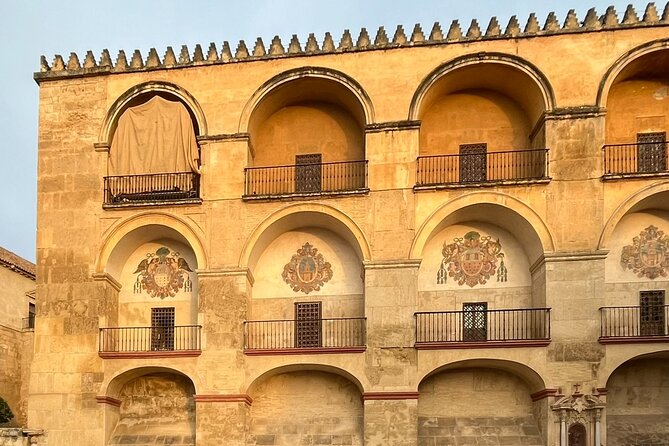
The Mirador Mezquita de Córdoba gives you a broad view of the Mosque-Cathedral before you enter its courtyard area. I like this pause because it lets you see the building as a whole rather than meeting it only from a narrow street.
The Mosque-Cathedral reflects Córdoba’s changing religious and political life. The tour points out the meeting of Islamic and Christian design, giving you a framework for understanding why this building feels unlike a standard cathedral or a typical mosque.
The Orange Tree Courtyard follows later in the route. Its ordered paths, citrus trees, and open space offer a calmer view of the complex. This is also a good place to slow down, since the courtyard gives your eyes a break after the tight lanes of the old town.
The audio tour does not include admission to the interior of the Mosque-Cathedral. The itinerary takes you to viewpoints and the Orange Tree Courtyard, but you should treat an interior visit as a separate plan and expense. If the main purpose of your Córdoba visit is the famous striped-arch interior, check opening times and tickets separately.
The Bell Tower is another pass-by point. You can appreciate its profile and layered design as part of the city’s skyline, but the tour does not promise entry or a tower climb.
Roman remains and Córdoba’s earliest layer
At the Roman Temple, the audio shifts the focus back before the Islamic period. The surviving columns and archaeological remains help you picture Córdoba as an important Roman city, not simply a medieval religious center.
This stop is more about context than a long indoor visit. You see the remains and hear how they fit into the city’s past. That makes it useful early in the walk, because the tour keeps reminding you that Córdoba changed hands, faiths, and architectural styles over many centuries.
The Archaeological Museum is passed as an optional stop. It can add Roman, Islamic, and Christian objects to the outdoor story, but the museum is not presented as part of the included experience. If you want to visit, allow extra time and check its opening arrangements separately.
Patios, Calleja de las Flores, and the pleasure of getting lost
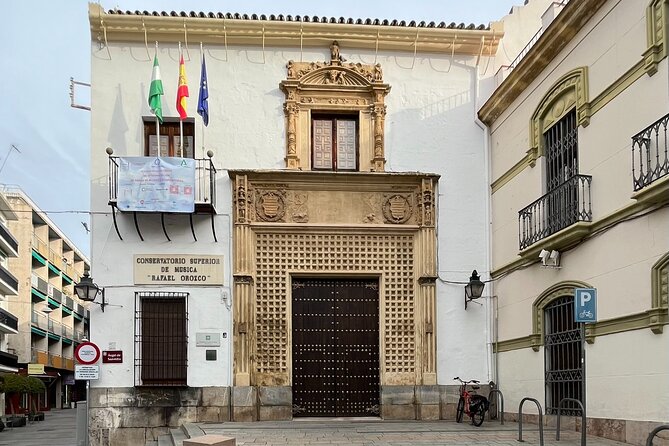
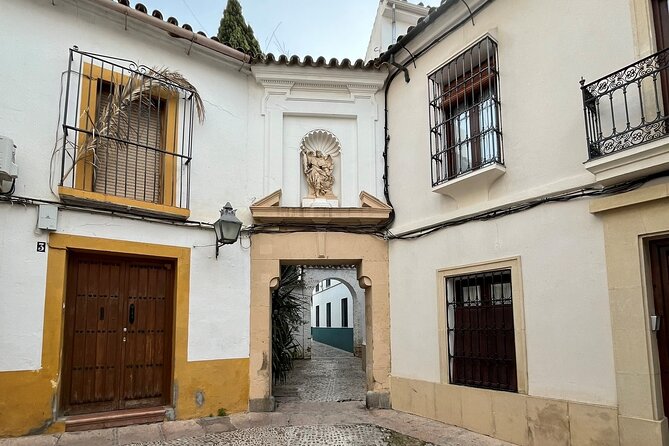
Córdoba’s patios are among the most appealing stops because they show how people shaped daily life around courtyards, plants, light, and shade. The route takes you through the traditional patio culture of the city, where flowers and greenery soften the whitewashed walls.
You then reach Calleja de las Flores, a narrow lane with flower pots and old architecture. It is an obvious photo stop, but the audio commentary gives it more value than a quick picture. You begin to notice how Córdoba’s beauty often comes from small spaces rather than grand monuments.
The patio portion can vary with access and opening conditions, so do not assume every courtyard is a full museum visit. The tour presents the character of the patios as part of the walking route. You should also expect popular lanes to feel tight, especially when other people stop for photos.
The self-guided format works well here. You can pause the narration, look closely at the walls and balconies, and restart once you are ready. A fixed group tour might hurry you along just when you want to stop.
Same place, a different route to walk:
- Barcelona: Sagrada Familia Entry Ticket with Audio Guide
★ 4.6 · 105,312 reviews - Barcelona: Casa Batlló Entry with Self-Audioguide Tour
★ 4.7 · 25,359 reviews - Granada: Alhambra Entry Ticket with Audio Guide
★ 4.1 · 5,950 reviews - Barcelona: Palau de la Música Self-Guided Tour
★ 4.6 · 3,603 reviews
San Basilio and the Andalusian house
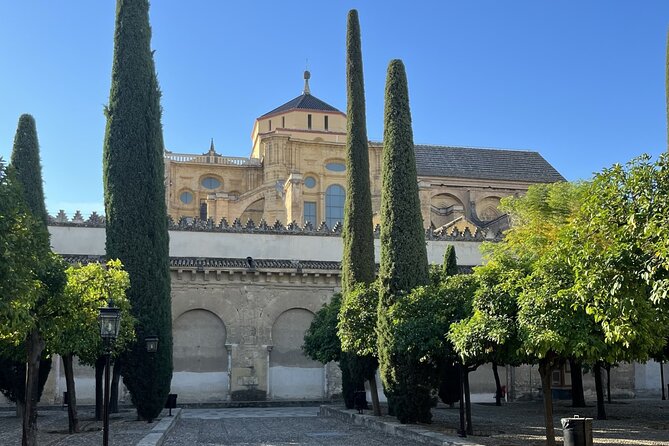
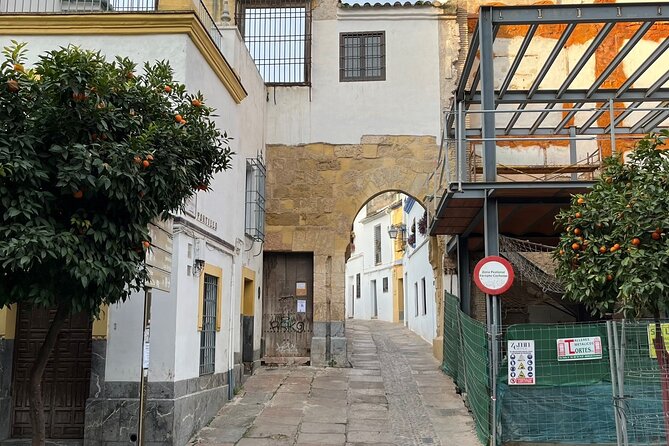
San Basilio brings you into a quieter-feeling district of winding lanes and whitewashed buildings. The neighborhood gives you a chance to see Córdoba as a place where people live, not only as an outdoor museum.
Casa Andalusí adds a closer look at domestic life. This restored medieval house shows Andalusian design through its corridors, rooms, and decorative details. You can picture how a home organized itself around inward-facing spaces, a pattern that connects with the patio tradition elsewhere in the route.
The tour includes the stop as part of the historic walk, but admission details are not specified. If you want to go inside, check the current entry arrangements when you arrive. The audio narration remains useful even if you only see the area from outside.
San Basilio is also a good test of your navigation. Córdoba’s old center has plenty of turns, and the map function is one of the tour’s most practical features. Keep your phone charged and your headphones ready, since the experience depends on the app.
Jewish Córdoba: the Synagogue and House of Sefarad
The Córdoba Synagogue brings the city’s Jewish past into the route. Its architecture and small scale make it different from the grand religious buildings nearby. The tour explains its place in Córdoba’s multicultural story, allowing you to see the Jewish Quarter as more than a set of attractive lanes.
Nearby, the House of Sefarad focuses on Sephardic Jewish culture, traditions, and contributions to Córdoba. This is an important pairing. The synagogue gives you a historic building, while the museum offers a more focused cultural explanation.
The route does not turn this section into a separate guided museum tour. You should check admission and opening details if you want to enter either site. Still, the audio commentary helps you understand why this part of Córdoba deserves time rather than a quick walk-through.
I especially like the balance here. The route does not limit Córdoba’s identity to the Mosque-Cathedral. It gives Jewish heritage a clear place alongside Roman, Islamic, and Christian landmarks.
Caliphal Baths and the transition to Christian power
The Caliphal Baths show how public life worked under Islamic rule. Their arches, tilework, and bathing rooms point to a culture that valued water, rest, and shared spaces. This is one of the tour’s more atmospheric stops, even if you are mainly viewing an archaeological site.
The story then moves toward the Castle of the Christian Monarchs. The fortress began as a Caliphal palace and later became a residence for Christian rulers. Its later connection with the Spanish Inquisition adds another difficult chapter to Córdoba’s past.
That change of use is exactly why the castle matters. You can see how one site gathered new meaning under each ruling power. The tour gives you the broad outline, while an interior visit would provide more time for rooms, grounds, and exhibits.
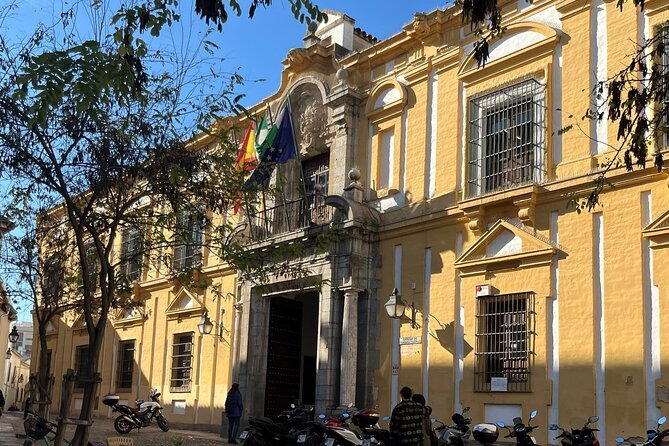
The nearby Episcopal Palace adds another sign of Christian authority. Its architecture reflects the power of the church in the city and helps connect the castle to the wider religious center around the Mosque-Cathedral.
Royal Stables and Andalusian horses
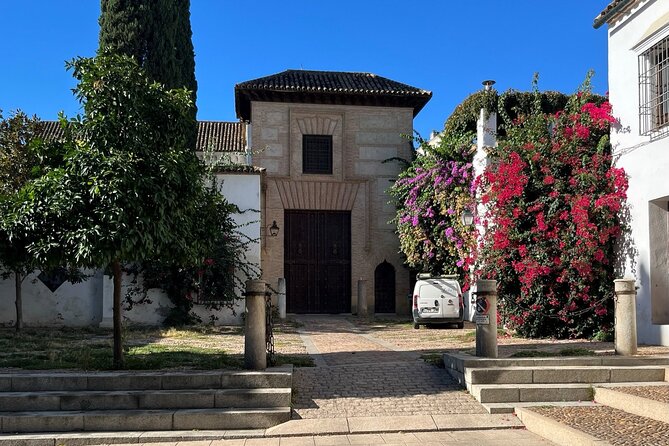
The Royal Stables bring a different kind of history into the walk. Rather than another church, fortress, or archaeological ruin, this site connects Córdoba with Andalusian horses and the long tradition of breeding and training them.
You should think of this as a pass-by or exterior highlight unless current access confirms otherwise. The route points out the stables and their cultural importance, but it does not include a horse show or a scheduled stable visit.
That limitation is worth knowing. The stop adds variety, but it will not satisfy you if you are booking the tour mainly for an extended equestrian experience.
Squares that show everyday Córdoba
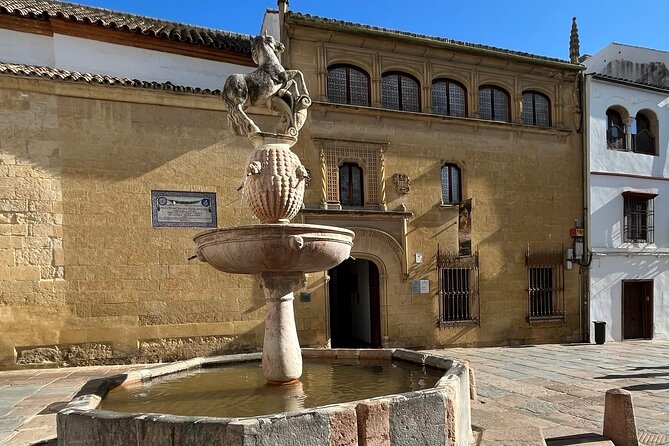
Plaza del Potro gives the route a more social and literary mood. Its setting has inspired artists and writers, and its surrounding buildings help you shift from major monuments to public life. This is a good place to take a short rest or decide if you want a drink, though food and drinks are not included.
Plaza de la Corredera is larger and more formal. Its architecture and open shape make it one of Córdoba’s most recognizable squares. The area has markets and cafés, so it can feel lively at different times of day.
Plaza de las Tendillas offers yet another view of the city. It is the center of Córdoba’s commercial district, with shops, streets, and a more modern urban rhythm. I like that the route includes it because you see how the old city connects to present-day Córdoba.
The walk also passes the Saint Bartholomew Chapel, a fine example of Mudéjar design. Its details show how Islamic and Christian forms could meet in one building. As with several stops, the tour passes by rather than promising a full interior visit.
How the GPS audio format works in practice
The tour includes an Android and iOS app, English audio, maps, and offline geodata. Once the material is available on your phone, you can walk without relying on a live data connection.
The strongest feature is the ability to stop and start. You can take your time in a courtyard, step into a museum, stop for lunch, or escape the heat before continuing. One supplied comment specifically praised this flexibility during very hot weather, and Córdoba’s summer heat makes that a practical advantage.
The app’s GPS also helps return you to the route if you wander. That matters in the Jewish Quarter and around San Basilio, where streets can turn quickly and a paper map may not make the next direction clear.
There is one usability caution. Starting at a later stop may not be straightforward, and moving from the map to your phone camera can cause some confusion when you try to return to the tour. If you want to begin somewhere other than the Calahorra Tower, allow a few minutes to work through the app before setting off.
Bring headphones and a charged smartphone. Those are not supplied, and the audio format will not work well if your device battery is low.
Price, time, and who gets the best value
At $11.99 per person, this is a strong value for an English route lasting about three to three and a half hours. You also receive lifetime access, so you can use the tour again if you return to Córdoba.
The price works best if you want structure without a scheduled guide. You get a clear route and substantial commentary, but you remain responsible for your pace, phone, navigation, and any admission fees.
I would choose this for:
- A first visit when you want a broad introduction to Córdoba
- Independent visitors who dislike fixed group schedules
- People who want to stop often for photos, shade, cafés, or museums
- Couples, families, or private groups who want the route to themselves
- Anyone seeking a low-cost alternative to a private walking guide
I would choose a live guide instead if you want immediate answers, personal recommendations, or help adapting the route on the spot. The audio tour can explain the city, but it cannot respond to a question or solve a phone problem for you.
The service is listed as a private activity, meaning only your group participates. Most people can take part, and service animals are allowed. The starting point is near public transportation, though transportation itself is not included.
Should you book the Córdoba audio walk?
Book it if you want to cover a lot of ground while keeping control of the day. The route brings together the Roman Bridge, Mosque-Cathedral area, patios, Jewish Quarter, Caliphal Baths, royal sites, horse stables, and major plazas in one organized circuit.
The strongest reasons to choose it are the excellent stop variety, the offline GPS support, and the ability to pause whenever you like. The main drawbacks are the need to manage your own phone and the possibility that some app functions feel awkward when you skip ahead.
You can cancel for a full refund if you do so at least 24 hours before the local start time. Cancellations or changes within 24 hours are not refundable. At this price, the tour is an easy choice for independent walkers who want useful direction and context without paying for a full private guide.
FAQ
How long does the Córdoba audio tour take?
The tour takes approximately three to three and a half hours, depending on your walking speed and how long you stop at each location.
What language is the tour offered in?
The audio tour is offered in English.
Where does the tour start?
It starts at the Torre de la Calahorra, beside the Roman Bridge at Puente Romano, s/n, Sur, 14009 Córdoba, Spain.
Where does the tour end?
The activity ends back at the meeting point at the Calahorra Tower.
Is this a guided group tour?
No. This is a private self-guided activity for your group only. Audio narration and GPS directions guide you through the route.
What does the price include?
The price includes lifetime access to the English tour, the Android and iOS app, and offline access to the audio, maps, and geodata.
Do I need to bring anything?
You need to bring a smartphone and headphones. They are not included. Food, drinks, and transportation are also not included.
Can I stop and restart the tour?
Yes. The tour is designed for you to explore at your own pace and pause when needed. Starting at a later point in the route may be less straightforward in the app.
What is the cancellation policy?
You can cancel at least 24 hours before the experience start time for a full refund. Cancellations or changes made less than 24 hours before the start time are not accepted for a refund.
More History Tours in Spain
- Malaga’s Historic Center: A self-guided tour created by an official guide
★ 4.3 · 7 reviews - Ronda’s Historic Center: Self-Guided Tour + Mondragón Palace Ticket
★ 3.4 · 6 reviews - Granada’s historic center: Self-guided tour created by an official guide
★ 3.8 · 6 reviews - Seville’s Historic Center: Self-Guided Tour + Casa Pilatos Ticket
★ 4.0 · 6 reviews
Just added around Spain
- San Antonio Bay Self Drive Boat Rental★ 4.5 · 5 reviews
- Granada’s Realejo District: A Self-Guided Tour of the Old Quarter★ 4.0 · 5 reviews
- Granada Scavenger Hunt and Sights Self-Guided Tour★ 5.0 · 9 reviews
- Entrance to the Alhambra and Generalife with Audio Guide★ 3.5 · 38 reviews
- Gijon Self-Guided Sherlock Holmes Murder Mystery Game★ 3.5 · 4 reviews
- Montsacopa: An audio tour in the Volcano in the Centre of the City★ 4.5 · 3 reviews
- Mosque-Cathedral of Córdoba E-Ticket with Audio Guide★ 3.5 · 15 reviews
- Cadiz: City Walk with Audio Guide in 7 Languages on your Phone★ 4.5 · 7 reviews
Spain Audio Tours, compared.
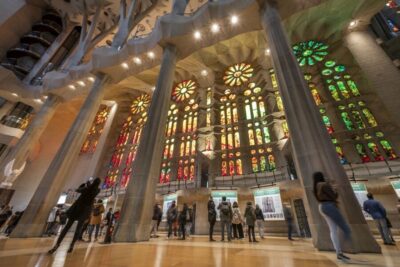
Barcelona: Sagrada Familia Entry Ticket with Audio Guide
Read our review →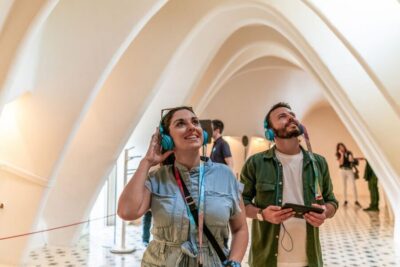
Barcelona: Casa Batlló Entry with Self-Audioguide Tour
Read our review →
Granada: Alhambra Entry Ticket with Audio Guide
Read our review →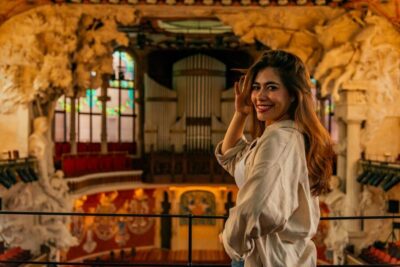
Barcelona: Palau de la Música Self-Guided Tour
Read our review →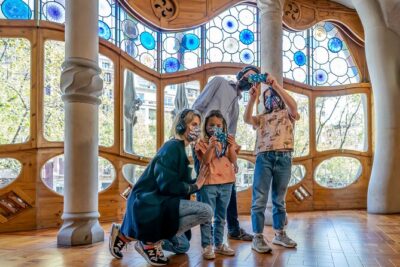
Casa Batllo Admission Ticket with Intelligent Audio Guide
Read our review →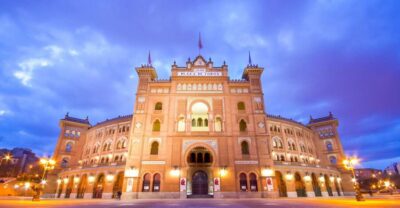
Madrid: Las Ventas Bullring Tour with Audio Guide
Read our review →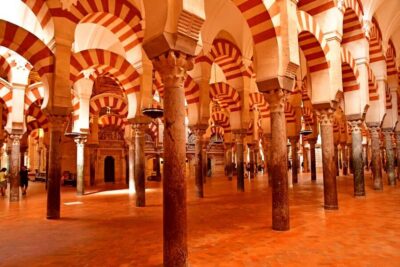
Cordoba: Mosque-Cathedral E-Ticket with Audio Guide
Read our review →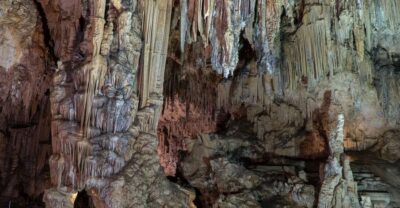
Nerja: Caves of Nerja Entry Ticket with Audio Guide
Read our review →Browse the lists this tour appears in