REVIEW · PARIS AUDIO TOURS
Paris Orsay Museum Entry Ticket with Digital Audio Guide
The best thing about this Musée d’Orsay visit is the chance to enter on a flexible schedule and spend three or four hours with one of Paris’s great art collections. I like the untimed entry and the chance to see Monet, Renoir, Degas, Manet, and Van Gogh in the old railway station without joining a fixed guided group.
I also like that the digital guide covers more than 300 works and comes in 14 languages. The catch is important: the guide is a phone app, not a museum-issued headset, and several people have had trouble getting the code, artwork numbers, or app to work. Bring earphones, download everything early, and treat the guide as a useful extra rather than the reason to buy the ticket.
Key points at a glance
- Flexible entry: Use the ticket on the scheduled date without a fixed entry time, according to the supplied tour details.
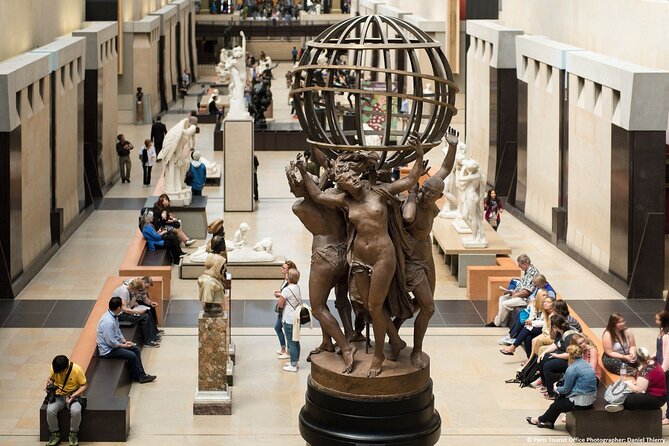
- A former railway station: The building itself is part of the visit, with its huge clock and soaring interior.
- 300-plus audio commentaries: The phone guide covers major works by Monet, Manet, Renoir, Degas, Van Gogh, and more.
- Your own device required: Download the app from the voucher instructions and bring personal earphones or headphones.
- Useful when official tickets sell out: The ticket can be worthwhile when direct museum availability has disappeared, though it costs more than a basic museum ticket in some cases.
- Allow three to four hours: You can rush through the highlights, but the collection rewards a slower visit.
Why Musée d’Orsay deserves a half-day
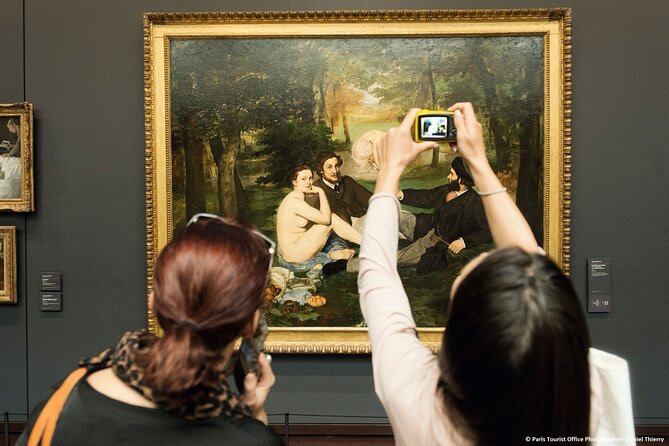
I would put the Musée d’Orsay high on your Paris list if Impressionist and Post-Impressionist art interests you. This is the place to see familiar names in one setting: Monet, Manet, Renoir, Degas, Van Gogh, and many others.
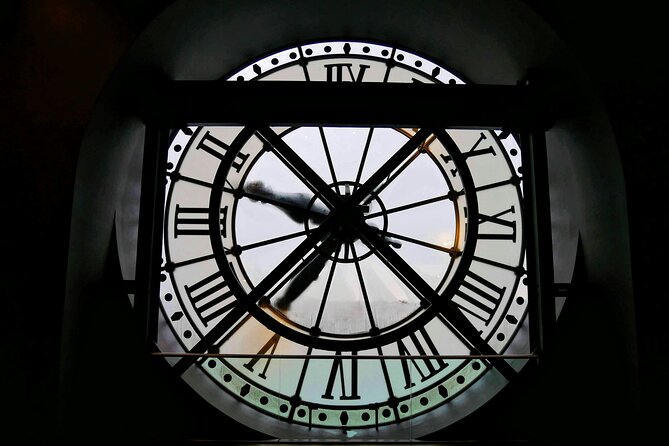
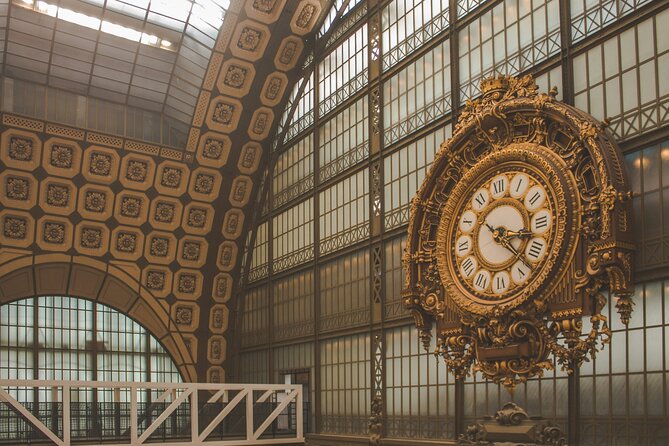
The museum is also memorable because of its building. The galleries occupy a former railway station, and the great clock gives the visit a visual landmark that is as popular as some of the paintings. One of the clocks provides a particularly good photo opportunity. Be patient if you want a clear silhouette in the opening, since the space can become crowded.
You can spend far more than three hours here, but the advertised three to four hours is a sensible first visit. It gives you time for the major paintings, the upper levels, and a pause for the building itself. If you try to see everything, you will leave tired and still feel that you missed something.
The collection can change. Some paintings may be away on loan or temporarily unavailable, so do not build your entire visit around one particular work. A famous painting listed in the digital guide may not be on the wall during your visit.
More Museum Audio Guides in France
- Paris: Louvre Museum Hosted Entry and Mona Lisa Audioguide
★ 4.6 · 5,235 reviews - Paris: Orsay Museum Entry Ticket and Digital Audio Guide App
★ 4.4 · 3,170 reviews - Louvre Museum Timed Entrance Ticket with Audio Guide
★ 3.0 · 453 reviews
What the flexible entry ticket really gives you
The main practical benefit is control over your day. You are not tied to a stated hour, so you can fit the museum around breakfast, another sight, or a late start. The ticket is valid for one entry on the scheduled tour date, so flexible does not mean you can use it whenever you like during your Paris stay.
The entry arrangement has worked especially well for people booking close to the visit date. The museum’s direct tickets can sell out for popular days, and this option may still provide access. It can also put you in a shorter or separate line from people waiting for standard admission.
That benefit is not guaranteed to mean instant entry. One person reported a long wait because the ticket did not show a clear time slot, while others entered quickly through the flexible-ticket line. Your voucher and the entrance procedure matter. Read the instructions carefully before leaving your hotel.
The entrance changes during the stated period. Use the C1 entrance until March 9, 2026. From March 10, 2026 onward, use the Parvis entrance. That detail is easy to miss and can save you a walk around the building.
The visit begins at the Musée d’Orsay on Esplanade Valéry Giscard d’Estaing in the 7th arrondissement. The museum is near public transportation, and the activity ends at the same location because there is no separate tour route or transport service.
Seeing the museum without a live guide
This is an independent museum visit. There is no guide leading you from room to room, no scheduled lecture, and no group commentary. You enter, choose your own route, and decide how long to spend at each work.
That suits me when I want to stop in front of a painting without keeping pace with a group. It also works well if people in your party have different interests. One person can linger over Degas while another heads toward Van Gogh.
The tradeoff is that you must plan your own visit. The museum is not small, and a phone guide does not replace a clear route. I suggest choosing a few priorities before you arrive:
- Impressionist paintings by Monet and Renoir
- Degas’s dancers and related works
- Manet and the transition toward modern painting
- Van Gogh and other Post-Impressionists
- The upper-level galleries and the large clock
The exact works on display may vary, and the supplied guide may mention paintings that have been loaned elsewhere. Use the guide as a prompt, not a promise that every listed work will be in front of you.
The digital guide: useful idea, uneven execution
The digital guide includes more than 300 commentaries and is available in 14 languages. In theory, this gives you a good amount of background without paying extra for the museum’s own audio rental.
In practice, this is the weak point of the experience. The guide arrives as a digital product that you download to your phone using instructions in your voucher. Further app details are sent in an information email one day before the visit. Download the app before you reach the museum, and bring your own earphones.
Several problems can get in the way. The reservation code may return a message saying the reservation cannot be found. The app may ask for a reference code in a way that does not match the instructions. The numbers in the app may not match the numbers beside the paintings, and some important works may have no commentary.
There is also a difference between this product and the museum’s own audio guide. Staff at the audio-guide desk may not accept the third-party voucher as payment for a museum headset. If the phone guide fails, you may need to pay separately for the museum’s equipment. One reported price was €6, though prices and policies can change.
I would not wait until the entrance hall to solve the audio problem. Use the information email, install the app, enter the code, and test a sample commentary before you go. Keep your voucher available offline if possible. If the guide remains unreliable, enjoy the galleries without it or consider the museum’s own audio option at the desk.
The guide can still add value when it works. Background on a familiar painting can help you notice the artist’s choices rather than simply taking a photograph and moving on. Just do not assume that all 300-plus commentaries will line up perfectly with the museum’s current display.
More Museum Audio Guides in Paris
- Paris Louvre Museum Entry Ticket for Self Guided Tour
★ 3.5 · 383 reviews - Paris: Louvre Museum Ticket & Exclusive Immersive AudioGuide
★ 3.5 · 369 reviews - Paris: Louvre Museum Hosted Entry & Masterpieces Audio Guide
★ 4.2 · 281 reviews - Paris: Museum of Decorative Arts Ticket and City Audio Tour
★ 3.3 · 146 reviews
The old station, the clock, and the upper galleries
The building is one of the strongest reasons to visit. You are not walking through a plain modern gallery. You are exploring an old railway station converted into an art museum, with broad interior spaces and the dramatic clock windows.
Make your way to the upper floors for the Impressionist collection. The fifth floor is a favorite target for many first-time visitors because of its well-known paintings and the clock view. The museum also has a fifth-floor place to eat, which can be useful during a longer visit.
The clock is worth seeing even if you are not interested in photography. It gives you a different view of the building and a break from close looking. If you want a picture through the clock, expect other people to have the same idea. Waiting a few minutes may give you a better angle.
Crowds are the other side of the museum’s popularity. September, for example, can be very busy, and the galleries may not be comfortable for slow viewing at peak times. The flexible ticket helps you choose your arrival, but it cannot make a famous Paris museum quiet.
An early arrival is a sensible choice. The stated opening period is Tuesday through Sunday, with entry hours listed from 9:30 a.m. to 4 p.m. Check your voucher for the current instructions and arrive with enough time to pass through entry procedures before your preferred viewing period.
Is $36.02 good value?
At $36.02 per person, this is not the cheapest way to enter the Musée d’Orsay. You are paying for the ticket, advance availability, flexible entry, and a digital guide. The value depends on which of those parts matters to you.
I see the strongest value when the museum’s direct tickets are sold out and you want a confirmed ticket close to your visit. Several people used this option at the last minute and felt the shorter line or guaranteed entry was worth paying extra, especially for a family.
The value is weaker when direct museum tickets are still available. In that situation, you may pay more for a third-party ticket and receive an audio guide that is harder to use than expected. One person arrived when the museum was not crowded and felt a direct purchase would have cost less.
Think of the price as an availability fee, not simply an admission fee. If you need a ticket for a particular date and the official site has no space, the extra cost may protect a key part of your Paris plan. If you are flexible and can buy directly, compare prices before booking.
The ticket is non-refundable and cannot be changed. That makes timing important. Do not purchase until you are confident about your museum date.
Who will enjoy this visit most
I would recommend this option to an independent museum visitor who wants to choose the arrival time and already knows how to use a phone app. It suits people who prefer to stop and start their listening rather than follow a live guide.
It can also suit families or small groups who need flexibility. The maximum group size is 15, but the experience is essentially self-guided, so you are not spending the visit in a tightly managed group.
It is less suitable if you want a dependable, polished audio tour with every major painting clearly labeled. It is also a poor match if you do not plan to bring a phone and earphones. The museum’s own guide may be a better backup, but it costs extra and is not included through this ticket.
Most people can participate, and service animals are allowed. Since the experience is at one museum and near public transportation, the logistics are straightforward, but you should still plan for standing in line and moving through crowded galleries.
How I would plan the visit
I would book this ticket only after checking direct availability and comparing the price. If I needed the museum on a sold-out date, I would value the confirmed entry more heavily.
The day before, I would look for the information email, install the audio app, and test the access code. I would charge my phone, bring personal earphones, and save the voucher where I can open it without relying on a strong signal.
On the day, I would use the correct entrance for the date. I would arrive near opening time if I wanted the best chance at a calmer first hour, or choose a later period if my schedule required it. I would head toward the upper galleries early, then work back through the museum at a comfortable pace.
I would select a few paintings for audio commentary rather than trying to listen to everything. If the numbering fails, I would stop wrestling with the app. The art is the main event, and the museum’s own labels still let you build a worthwhile visit.
Should you book it?
Book this experience if you need a Musée d’Orsay ticket when direct sales are full, or if flexible entry is more valuable to you than the lowest possible price. The collection, the former railway station, the upper-floor galleries, and the clock make the visit worthwhile.
Book with caution if the digital guide is your main reason for choosing this package. The app can work, but the access code, artwork numbering, and missing commentaries create real friction. Bring your own earphones and have a backup plan.
For a confirmed last-minute visit, I can see the value at $36.02. For a relaxed trip with open dates, check the museum’s direct option first.
FAQ
Where does the experience begin?
It begins at the Musée d’Orsay, Esplanade Valéry Giscard d’Estaing, 75007 Paris, France.
Where does the visit end?
The activity ends back at the Musée d’Orsay, at the same meeting point.
How long should I allow?
The visit takes approximately three to four hours, depending on how much time you spend with the collection and exhibitions.
Is the entry time fixed?
The ticket offers flexible entry on the scheduled tour date. You must use the ticket on that date.
Which entrance should I use?
Use the C1 entrance until March 9, 2026. From March 10, 2026 onward, use the Parvis entrance.
Is a live guide included?
No. This is an independent museum visit with a digital audio guide. No live guide is included.
How does the digital audio guide work?
You download the digital guide to your phone using the instructions in your voucher. Additional app and access details are sent by email one day before the visit.
Are earphones included?
No. Earphones or headphones are not included, so bring your own for clearer and more comfortable listening.
How many languages are available?
The digital audio guide is available in 14 languages.
How many artworks have commentary?
The guide includes more than 300 commentaries covering works by artists including Monet, Manet, Van Gogh, and others.
More Skip-the-Line Audio Guide Tickets in Paris
- Barcelona: Sagrada Familia Entry Ticket with Audio Guide
★ 4.6 · 105,312 reviews - Rome: Pantheon Fast-Track Ticket and Official Audioguide
★ 4.5 · 27,353 reviews - Pompeii: Entry Ticket with Audio Guide
★ 4.1 · 13,491 reviews - Venice: La Fenice Opera House Entry Ticket with Audio Guide
★ 4.6 · 11,742 reviews
More Skip-the-Line Audio Guide Tickets in France
- Musée de l’Orangerie Flexible Entrance Ticket in Paris with Audio
★ 3.5 · 153 reviews - Musee d’Orsay Anytime Entry ticket in Paris with Audio
★ 3.5 · 152 reviews - Paris: Rodin Museum Skip-the-line Entry Ticket with Audio
★ 4.0 · 102 reviews - Paris: Grévin Wax Museum Entry Ticket with Audio Guide App
★ 4.3 · 7 reviews
Just added around Paris
- The Tout Paris Private Rickshaw bike Tour with Audio Guide★ 4.6 · 8 reviews
- Seine River Cruise with Free Notre Dame Digital AudioGuide★ 4.2 · 7 reviews
- From Paris: Versailles Palace Self Guided & Gardens tickets★ 4.4 · 1,100 reviews
- Paris: Musee De L’Armee Ticket With Digital Audio Guide★ 4.2 · 39 reviews
- Paris: Rodin Museum Ticket & Optional Digital AudioGuide App★ 4.7 · 56 reviews
- Paris City Center Self-Guided Walking Tour★ 4.5 · 5 reviews
- Paris: Grévin Wax Museum Entry Ticket with Audio Guide App★ 4.3 · 7 reviews
- Paris Audioguide – TravelMate app for your smartphone★ 4.1 · 27 reviews
Paris Audio Tours, compared.
Paris: Illuminations River Cruise with Audio Commentary
Read our review →
Paris: Louvre Museum Hosted Entry and Mona Lisa Audioguide
Read our review →
Paris: Orsay Museum Entry Ticket and Digital Audio Guide App
Read our review →
From Paris: Giverny Day Trip with Audio Guide or Live Guide
Read our review →
Paris: Eiffel Tower Access w/ Audioguide and Optional Cruise
Read our review →
Giverny and Monet’s House Half Day Trip from Paris Guide or Audio
Read our review →
Paris: Catacombs Entry & Seine River Cruise with Audio Guide
Read our review →