
REVIEW · ITALY AUDIO TOURS
Brescia Walking Tour with Audio and Written Guide by a Local
Brescia is the sort of Italian city that rewards a little structure. This self-guided walk leads you from market squares and Venetian architecture to Roman ruins, two very different cathedrals, Santa Giulia Museum, and the castle above town. You use the guide on your own phone, at your own pace, with audio, text, photos, and Google Maps working together.
I like two things right away: the route gives you a clear way to connect Brescia’s scattered sights, and the price is only $7.79 per person. You also get local restaurant suggestions from Matteo Colosio of Walking Cap, which adds a useful food angle to what could otherwise be a basic monument walk.
The catch is that this is not a live walking tour. Some audio sections are very short, and the commentary aims to give you the main facts rather than a full museum-level explanation. If you want detailed art history or a guide beside you, you may find it too light.
Key points to know before you book
- Piazza del Mercato starts the route: You begin in a small central square and learn why Brescia has its nickname.
- The route links many eras: Roman Brescia, Venetian rule, modern Italian history, religious art, and the city’s castle all appear in one walk.
- Google Maps is built in: The digital route helps you move between stops without constantly checking a paper map.
- Santa Giulia is the longest stop: Allow about 1 hour and 40 minutes, but remember that admission is not included.
- Audio and text come in five languages: English, Spanish, Italian, German, and French are available.
- The experience is self-guided: You need a smartphone and an internet connection, and headphones are useful in busy streets.
A low-cost way to meet Brescia
At $7.79, this experience is priced more like a practical city orientation than a full guided excursion. You are paying for a prepared route, commentary, directions, and local suggestions, not for a person leading you through the streets.
That distinction matters. You can pause at a café, spend longer inside a cathedral, skip a stop, or return to a section later. The digital format also lets you preview the route before your trip, which is handy if you want to decide how much time to give Brescia before arriving.
The route is listed at about five hours, though the individual stops add up to longer if you enter the museums, climb around the castle, and linger at the squares. Think of the time as a flexible half-day framework. You will probably need extra time for Santa Giulia and any paid archaeological sites you choose to visit.
I would use the guide in two ways. First, it works as a sightseeing plan for a single day. Second, it can serve as a city introduction before a longer stay, helping you mark the places where you want more detailed information.
More Self-Guided Walking Tours in Italy
- Florence: 2.5 hour Audio Guided Walking Tour led by Host
★ 4.6 · 293 reviews - Verona Walking Tour with Audio and Written Guide by a Local
★ 4.5 · 157 reviews - Renaissance & Medieval Florence Guided Walking Tour plus mobile App
★ 4.0 · 140 reviews
Piazza del Mercato and Piazza della Vittoria
The walk begins at Piazza del Mercato, a small square with a useful opening theme: how Brescia developed and where its nickname comes from. Since the start is compact and central, it gives you an easy first stop without asking you to find a complicated meeting point.
From there, you continue to Piazza della Vittoria. Its architecture looks very different from the older parts of the city, and the commentary connects the square with the last two centuries of Italian history. One unusual detail is the rhinoceros, which gives this stop a lighter, more unexpected edge.
These first two squares are not simply places to pass through. They help you compare different versions of Brescia: the older urban fabric around the market and the more imposing style of the later square. The audio format is useful here because you can look closely at the buildings while listening, rather than trying to read a long paragraph on your phone.
The drawback is that short square stops can feel brief if you are hoping for a long explanation of every building. I would treat them as scene-setting stops, not as full historical lectures.
Piazza della Loggia and Brescia’s difficult past
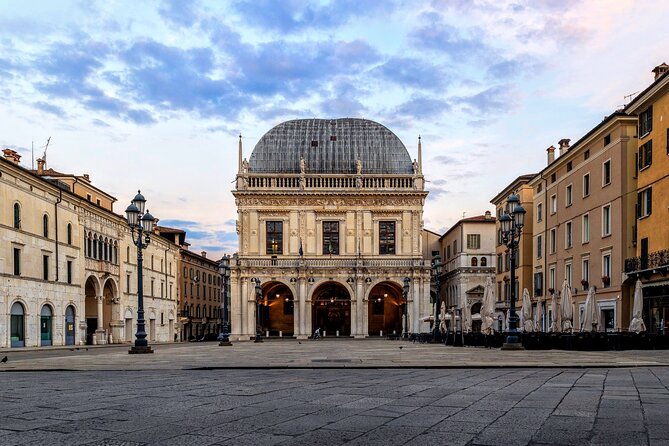
Piazza della Loggia is one of the most important stops on the route. Its Venetian architecture dates from the 15th century, and the square gives you one of the clearest looks at Brescia’s connection with Venetian design and civic life.
The guide also addresses one of the most serious attacks in Italian history. That subject changes the mood of the walk, but it is an important part of understanding the square. Brescia’s public spaces are not only pretty backdrops. They also carry painful memories and modern political history.
I appreciate that the route includes this subject rather than reducing the city to Roman stones and church façades. You can stop, listen, and take in the square at your own pace. If you prefer a detailed account of the event, use the audio as an introduction and plan further reading separately, since the guide is designed to keep you moving through the city.
Piazza Paolo VI and the two cathedrals
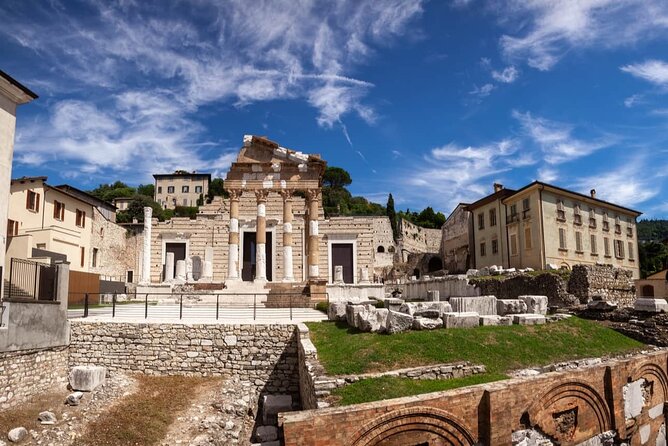
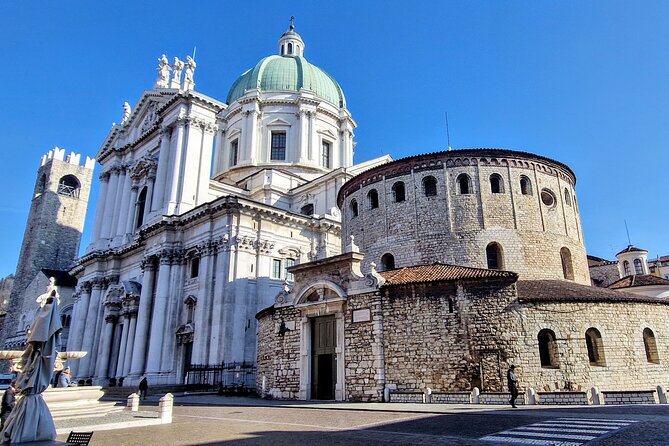
Piazza Paolo VI, also called Piazza del Duomo, is one of the walk’s strongest architectural moments. The square brings together civic life, religious buildings, and the layered look of central Brescia. It is a good place to pause before entering the cathedrals.
The first is the Duomo Vecchio, or Old Cathedral. Its circular form is the key feature. Built in the 11th century, it was inspired by the Holy Sepulchre in Jerusalem, with a large dome and bell tower shaping its profile.
The round plan makes the building feel different from the long, rectangular churches you may have seen elsewhere in Italy. It is worth giving the audio your full attention here, since the structure’s design is easier to appreciate once you understand why it was built in this form.
Next comes the Duomo Nuovo, the New Cathedral. Construction began in the 17th century and took almost two centuries. Its façade uses giant columns and statues, while the interior brings together marble, frescoes, and gilded decoration.
The contrast between the two churches gives the route real value. You are not just visiting two religious buildings. You are seeing how architectural taste changed over several centuries, from the unusual circular Romanesque form of the older cathedral to the larger and more formal later design.
Because the itinerary lists about 20 minutes for each cathedral, you should not expect an exhaustive art tour. The guide gives you a useful first layer. If one church catches your attention, return later with more time.
Same place, a different route to walk:
- Rome: Pantheon Fast-Track Ticket and Official Audioguide
★ 4.5 · 27,353 reviews - Rome: Colosseum & Forum with Audio Guide App -Optional Arena
★ 4.2 · 24,770 reviews - Venice: Grand Canal Gondola Ride with App Commentary
★ 4.1 · 23,020 reviews - Florence: Timed Entry to Michelangelo’s David + Audio App
★ 4.6 · 19,496 reviews
Teatro Grande and a quick look at performance culture
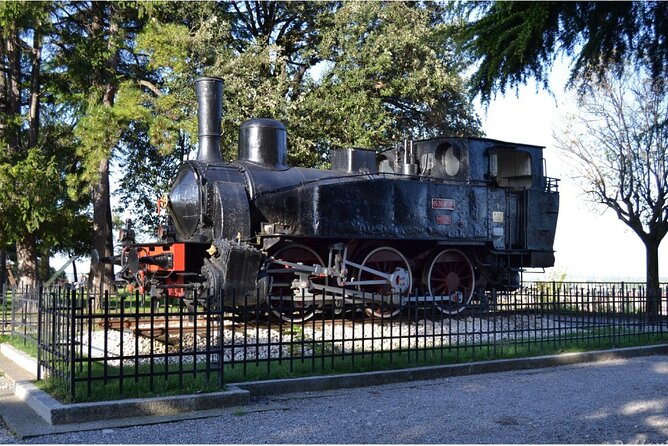
Teatro Grande appears next, though the route views it from outside. The theater is tied to Brescia’s musical and operatic life, and the stop adds a different kind of culture to the route.
Do not plan on an interior theater visit as part of this experience. Admission is not included, and the itinerary specifically focuses on the exterior. That makes this a short stop, listed at about 10 minutes, but it helps break up the sequence of churches and archaeological sites.
For me, this is a good example of the guide’s scope. It gives you a broad look at Brescia rather than spending an hour on one building. You see the theater, hear why it matters, then continue.
Roman Brescia at the Capitolium and Forum
The route then moves into Brescia’s Roman past around the Tempio Capitolino and Piazza del Foro. The street here follows the line of the ancient decumanus maximus, the main east-west road of a Roman city.
That detail helps you read the modern street plan. You are not looking at isolated ruins in a random setting. You are walking through an area where Roman planning still shapes how the center feels.
The Capitolium is one of the paid sights on the wider route, so admission is not included in the $7.79 price. The itinerary also mentions the Roman Theater nearby. The theater was the largest in northern Italy after the one in Verona, making it a major stop for anyone interested in the scale of ancient Brescia.
The Roman section is listed as two stops, each around 15 to 20 minutes. That is enough for orientation and an exterior look, but you should budget extra time if you plan to enter the Capitolium or study the archaeological remains closely. The guide helps explain the setting, while a separate site visit gives you more time with the objects and structures themselves.
Santa Giulia Museum deserves the most time
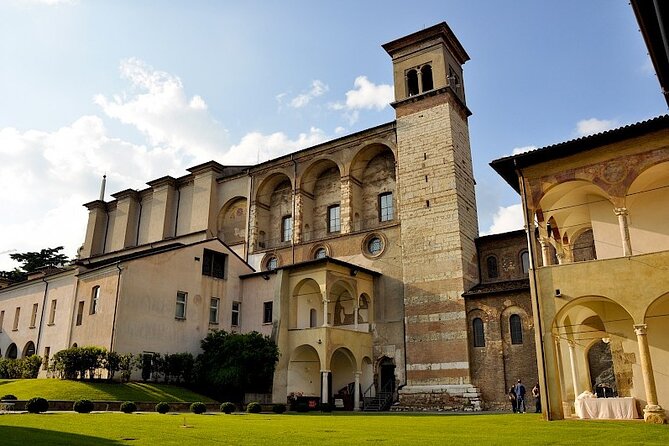
Santa Giulia Museum is the longest stop, at about 1 hour and 40 minutes. That is sensible. The museum covers Brescia from prehistoric times through the 18th century and uses a large exhibition area of about 14,000 square meters.
The museum’s appeal is its range. Instead of focusing on one narrow period, it connects the city’s early settlements, Roman world, religious life, art, and later history. Thousands of works are displayed, with material dating from the 4th millennium BC to the 18th century.
The ticket is not included, so factor that extra cost into your plans. The audio guide can prepare you for the museum, but do not expect it to replace the museum’s own displays or a specialist visit. I would listen to the route commentary before entering, then use the remaining time to follow your own interests inside.
This stop can also make the five-hour estimate feel optimistic. A museum of this size can easily take longer, especially if you read labels or stop for favorite objects. If Santa Giulia is a priority, consider treating the rest of the route as a morning or late-afternoon walk and giving the museum its own generous block.
Climbing to Castello di Brescia
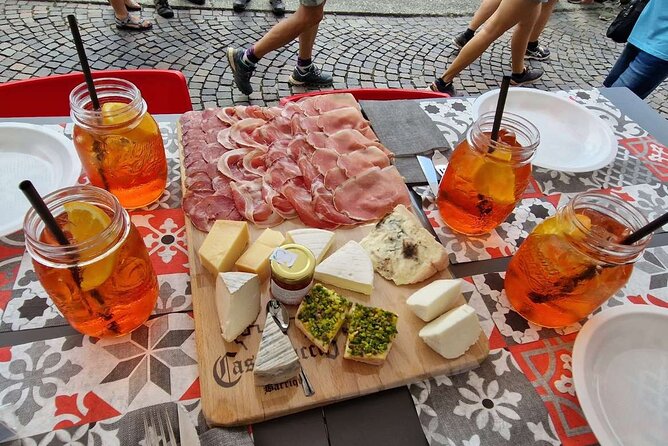
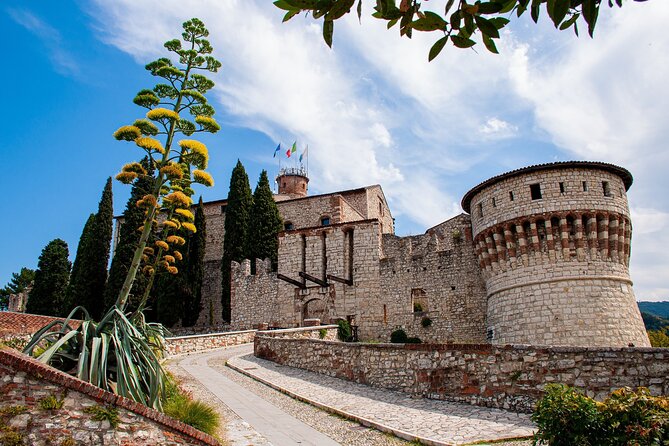
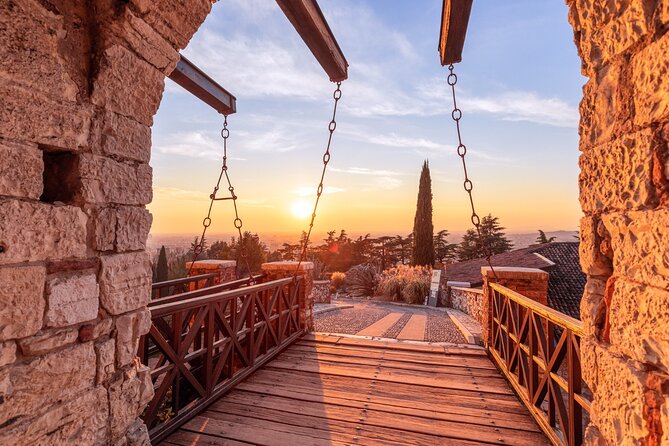
The route ends at Castello di Brescia, a major city symbol and the final high point of the day. The castle provides broad views over Brescia and gives the walk a satisfying finish after the dense streets of the historic center.
The stop is listed at about one hour, with no admission charge noted for the experience. You will hear the castle’s story and have time to enjoy the view. Since the activity ends in a different location from where it begins, plan your onward route from the hill rather than assuming you will return to Piazza del Mercato.
This final stop changes the rhythm of the day. Earlier sections focus on façades, squares, churches, and ruins at street level. The castle lets you look back over the city and understand its position as a whole.
The practical point is simple: wear comfortable shoes and keep enough energy for the last section. The supplied information does not give a detailed route grade or exact walking distance, so I would not assume the climb is effortless. The reward is the outlook and the sense of finishing somewhere memorable.
How the digital guide works in real use
You need a smartphone with an internet connection. Activation instructions arrive with your voucher, so read them carefully before setting out. The guide connects the stops with Google Maps, which is one of its most useful features.
You can listen through your phone’s speaker or use headphones. I recommend headphones if you want to hear the shorter audio sections clearly, especially around traffic or crowded public squares. Keep the volume low enough to remain aware of your surroundings.
The content is available in English, Spanish, Italian, German, and French. The English option makes the experience accessible to many international visitors, while the written text gives you a backup when you do not want to listen.
The digital format also means you control the pace. You can replay a section, stop for coffee, take photographs, or spend extra time inside a church. The tradeoff is that there is no live person to answer a question, adjust the route on the spot, or add a story based on what catches your eye.
The activity allows group bookings and can accommodate up to 99 people, but that does not turn it into a guided group walk. Everyone uses the digital guide independently.
What the price includes and what it does not
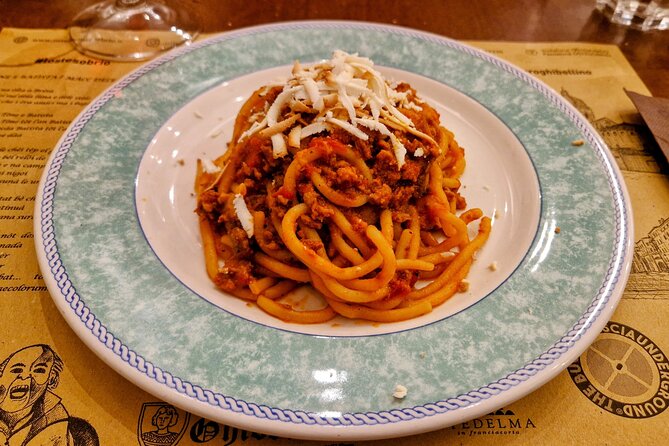
The $7.79 fee covers the self-guided city route, audio and written information, images, Google Maps connections, monument tips, historical notes, curiosities, anecdotes, and local food advice.
It does not include the Santa Giulia Museum ticket or the Capitolium ticket. Teatro Grande is viewed from outside, so do not assume theater admission is part of the experience either.
That is still good value if you want a clear route through Brescia and only basic orientation at each sight. A much more detailed guidebook or private tour would cost more, but it would also give you deeper explanations. This product makes the most sense if you value independence and want to avoid spending heavily on a live guide.
Group discounts are available, which may improve the price for families or larger parties. The activity is open every day from midnight to 11:30 p.m. in the listed operating period, though those broad digital-access hours do not change the opening hours of museums or monuments.
Who should choose this Brescia walk
I would recommend it to you if:
- You want to cover many of Brescia’s main sights in one organized route.
- You prefer walking alone or with your own group.
- You need English, Spanish, Italian, German, or French commentary.
- You like having written information alongside audio.
- You want local restaurant suggestions in addition to monument notes.
- You plan to visit Santa Giulia or the Capitolium independently.
- You want a low-cost way to preview the city before arriving.
I would look elsewhere if you want a live guide, long explanations, detailed art history, or a fixed group schedule. The commentary is intentionally concise. Some audio sections may last only about 30 seconds, so people who want every church and square explained at length may find the format thin.
There is also a small misunderstanding worth avoiding: this is not an escorted tour. The title and format point to a digital guide by Matteo Colosio, not a person meeting you at Piazza del Mercato. Read the activation instructions before you arrive so you are not trying to download the route in the middle of the walk.
Should you book it?
Book this Brescia walking tour if you want a cheap, flexible route with solid city coverage. It connects the market, major squares, cathedrals, Roman remains, Santa Giulia, and the castle in a way that is easy to follow.
Before booking, decide what kind of information you want. If you need a concise introduction plus directions, the $7.79 price is sensible. If your main goal is detailed interpretation inside museums and churches, use this as a framework and add a dedicated guide or extra reading.
The best plan is to reserve enough time for the museum, keep your phone charged, bring headphones, and treat the route as a flexible outline rather than a race. Brescia has more to offer than a quick checklist, and this guide gives you a useful first pass without taking control of your day.
FAQ
Is this a live guided walking tour?
No. It is a self-guided digital experience with audio, written information, images, and Google Maps directions. You explore Brescia independently on your smartphone.
How long does the Brescia walking tour take?
The activity is described as approximately five hours. The itinerary includes about 1 hour and 40 minutes at Santa Giulia Museum and one hour at Castello di Brescia, so you may need more time if you enter sites or stop often.
Where does the route begin?
The route begins at Piazza del Mercato in Brescia.
Where does the experience end?
It ends at a different location from the starting point, at Castello di Brescia according to the route.
Is the Santa Giulia Museum ticket included?
No. Admission to Museo di Santa Giulia is not included.
Do I need a smartphone and internet connection?
Yes. You need a smartphone with an internet connection to use the digital guide. Activation instructions are provided in your voucher.
Which languages are available?
The audio guide and written information are available in English, Spanish, Italian, German, and French.
Just added around Italy
- Genoa Historic Centre Quest: A Self-Guided Puzzle Adventure★ 4.0 · 3 reviews
- Genova Walking Tour with Audio and Written Guide by a Local★ 4.5 · 33 reviews
- Self-Drive (No Licence) Boat Rental in Portofino Gulf★ 5.0 · 12 reviews
- Finance and Nobility: Explore medieval Genoa on a self-guided audio tour★ 4.5 · 7 reviews
- Florence: Uffizi Gallery Reserved Ticket & Digital Audio Guide★ 4.5 · 3 reviews
- Around Florence Hills: App‑Guided e‑Vespa Tour + Wine&Food★ 4.5 · 22 reviews
- Florence: Uffizi Gallery Audio Guided Tour led by Tour Leader★ 3.5 · 6 reviews
- Uffizi Gallery: Self-guided App Visit & Optional Accademia Museum★ 4.0 · 19 reviews
Italy Audio Tours, compared.
Rome: Pantheon Fast-Track Ticket and Official Audioguide
Read our review →
Rome: Colosseum & Forum with Audio Guide App -Optional Arena
Read our review →
Venice: Grand Canal Gondola Ride with App Commentary
Read our review →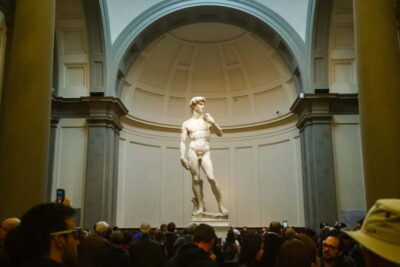
Florence: Timed Entry to Michelangelo’s David + Audio App
Read our review →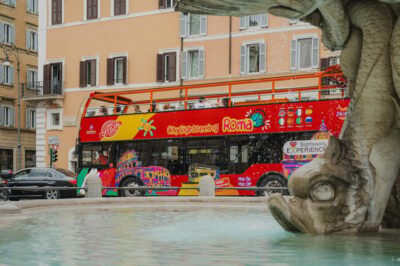
Rome: City Sightseeing Hop-on Hop-off Bus with Audioguide
Read our review →
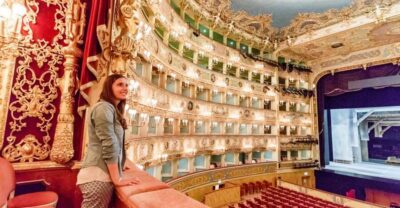
Venice: La Fenice Opera House Entry Ticket with Audio Guide
Read our review →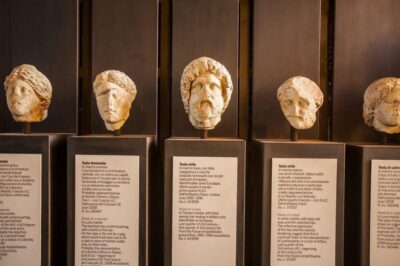
Rome: Colosseum, Forum, Palatine Hill Entry & Audioguide App
Read our review →Browse the lists this tour appears in