
REVIEW · DUBLIN AUDIO TOURS
A Self-Guided Stroll Along Dún Laoghaire’s East Pier
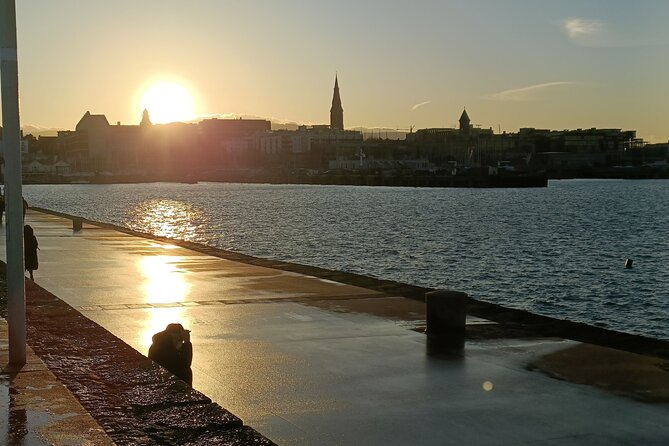
Dún Laoghaire’s East Pier is the star here: a long, open walk with broad views across Dublin Bay and plenty of small historical markers along the way. This self-guided tour links the harbor’s grand maritime story with memorials, railway remnants, a Russian cannon, and the town’s everyday streets.
I like the freedom to walk at your own pace and the offline VoiceMap access, which means you do not need mobile data once the tour is set up. I also like the range of sights packed into about an hour, from St Michael’s Church to the East Pier Lighthouse and the Forgotten Irish Memorial.
The main drawback is simple: you need your own smartphone and headphones, and the tour is non-refundable. The route is easy to manage, but a self-guided audio walk does not offer a person beside you to answer questions or adjust the pace.
Key points about the Dún Laoghaire East Pier walk
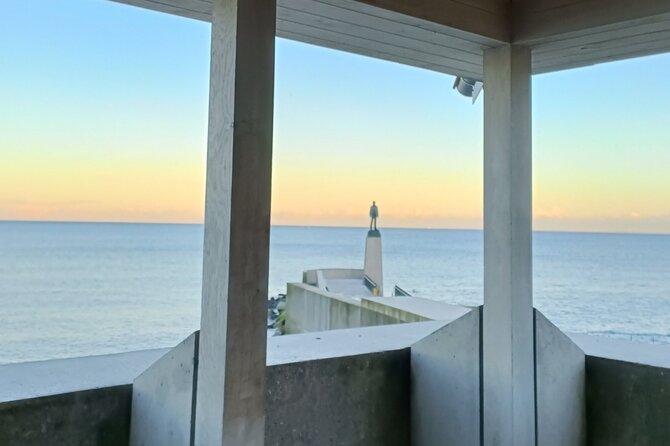
- The East Pier Lighthouse provides the walk’s best views, with Dublin Bay and the city opening out ahead.
- The Metals reveals an older side of Dún Laoghaire, following the remains of the former railway route.
- The RMS Leinster Memorial and Forgotten Irish Memorial add emotional weight to the harbor’s story.
- The Romanov eagle on a Crimean War cannon is an unusual detail, and one of the route’s more unexpected discoveries.
- VoiceMap supplies offline audio, maps, and location data, so you can keep walking without a live connection.
- The tour costs $8.99 per person, a reasonable price if you want a compact introduction to the harbor and nearby landmarks.
Why this short walk works so well
Dún Laoghaire can be easy to reduce to a pleasant seaside stroll. This tour gives the harbor more shape. It shows you how the town grew from a coastal settlement into a major port, then connects that development with railway travel, emigration, war, politics, and public memory.
You begin at St Michael’s Church on Marine Road. From there, the route moves through central Dún Laoghaire before reaching the waterfront. That order matters. You first get the town’s civic and religious setting, then see how the streets connect to the harbor that shaped local life.
The walk lasts about one hour to one hour and fifteen minutes. That is long enough to cover several landmarks without taking over an entire day in Dublin. You can also stop the audio, look around, and continue when ready. Since the tour is private in the sense that only your group uses it, you are not tied to a shared departure time or another group’s walking speed.
The experience is available in English. You receive lifetime access through the VoiceMap app for Android and iOS, along with offline audio, maps, and geodata. Downloading everything before you set out is the sensible move.
More Audio Tours in Dublin:
- Christ Church Cathedral Entrance Ticket & Self-Guided Tour
★ 4.6 · 773 reviews - Dublin Ghost Hunt Exploration Game and Tour
★ 4.0 · 34 reviews - Private Dublin Treasure Hunt Self Guided Tour
★ 4.5 · 14 reviews
Starting at St Michael’s Church and Pavilion Theatre
St Michael’s Church gives the walk a calm, historic beginning. Established in the 1820s, it reflects the growth of the local community during the same broad period when Dún Laoghaire was developing into an important harbor town.
You should take a moment here before starting the audio. The church is not just a meeting point. It helps place the town in time, before the walk shifts toward public buildings, memorials, and the sea.
The next stop is the Pavilion Theatre. Its modern cultural role provides a useful contrast with the older church and harbor structures. Dún Laoghaire is not presented as a preserved museum town. Instead, you see old and new uses sharing the same streets, with contemporary arts activity close to historic monuments.
That contrast is one of the walk’s strengths. You get a sense of a living town rather than a row of isolated attractions. The route does not ask you to admire only the old stones. It shows how the area continues to function as a place where people meet, watch performances, work, and spend time beside the water.
King George IV, the RMS Leinster, and public memory
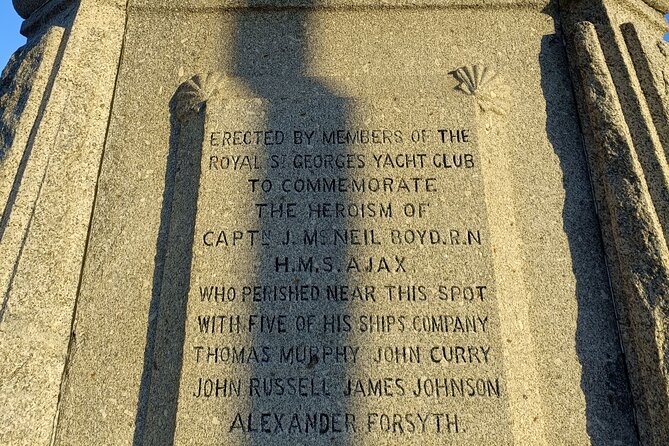
The King George IV Monument brings royal history into the route. It is paired with the RMS Leinster Memorial, which shifts the mood from ceremony to loss.
The RMS Leinster was sunk during World War I, causing one of Ireland’s deadliest maritime disasters. The memorial honors the people who died and reminds you that the harbor was not simply a departure point for pleasure boats or a pleasant place to walk. Its waters were tied to wartime danger and the wider fate of families connected to the port.
I appreciate this kind of stop because it keeps the walk from becoming a string of scenic views. The audio gives the harbor a human cost. You can enjoy the bay, but you also understand why the waterfront carries difficult memories.
The pairing of the King George IV Monument and the RMS Leinster Memorial also shows the range of Dún Laoghaire’s public symbols. One points toward royal connections. The other remembers ordinary people caught in a wartime tragedy. Together, they make the town’s past feel less tidy and more real.
Walking the Metals through Dún Laoghaire

The route then follows the Metals, the remains of an old railway track that have been turned into a promenade. This is one of the most useful parts of the walk for understanding how Dún Laoghaire changed.
A railway line helped connect the harbor and town with the wider area. Today, the route functions as a walking path, but its original purpose still gives it meaning. You are not just taking the most convenient way toward the pier. You are following a physical reminder of the transport network that supported the port.
The audio uses the path to explain the area’s shift from fishing village to major harbor town. That story is important because the harbor’s scale can otherwise seem disconnected from the quieter coastal settlement that came before it.
The Metals are also a practical section of the walk. They offer a change from monuments and plaques. Instead of stopping at one object, you move through a route shaped by earlier travel. Keep your headphones at a volume that lets you remain aware of your surroundings, especially if other people are using the promenade.
Same place, a different route to walk:
- Dublin Walking Tour with Audioguide on Your Smartphone
★ 4.0 · 13 reviews - Dublin Self-Guided Murder Mystery Tour by Temple Bar
★ 3.5 · 12 reviews - Dublin Old Town: Famous Pubs Exploration Game and Tour
★ 4.0 · 7 reviews - Self-Guided Scavenger Hunt: Dublin Adventure
★ 3.5 · 6 reviews
The East Pier Lighthouse and Dublin Bay views
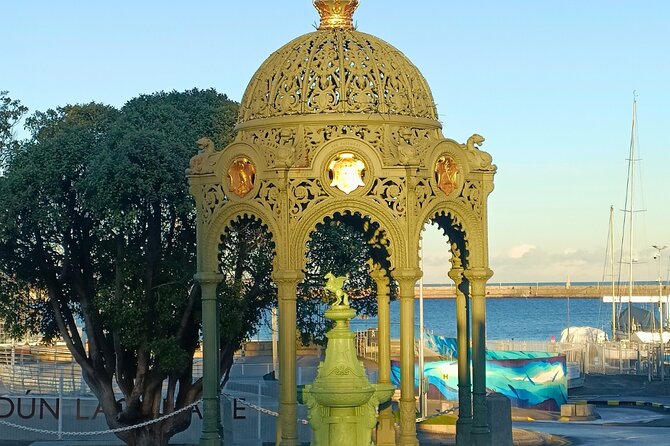
The walk’s main visual reward arrives on Dún Laoghaire Pier, as you head toward the East Pier Lighthouse. Here, the route opens into a broad seafront experience, with views across Dublin Bay toward the city.
This is where I would slow down. The stated walking time is an estimate, not a challenge. You may want extra minutes for photographs, weather watching, or simply looking back at the harbor walls and town.
The audio explains how the harbor was built and why it mattered to Ireland’s development. That context makes the physical structure easier to appreciate. The long pier is not merely a pleasant path over the water. It represents serious engineering, maritime planning, and the growth of a port with national importance.
The views are likely to be the strongest reason to book this walk, but the weather will affect them. The tour operates every day, and it is available at any hour listed in the booking information, yet the experience remains outdoors. A clear afternoon should offer a different feel from a gray, windy morning. Bring appropriate clothing and allow more time if the conditions encourage you to pause.
The East Pier section may not suit someone looking for a tightly guided sightseeing schedule. It is best for people who enjoy walking, listening, and setting their own rhythm. You can move quickly, but you would miss some of what makes the route worthwhile.
Carlisle Pier and the Forgotten Irish Memorial
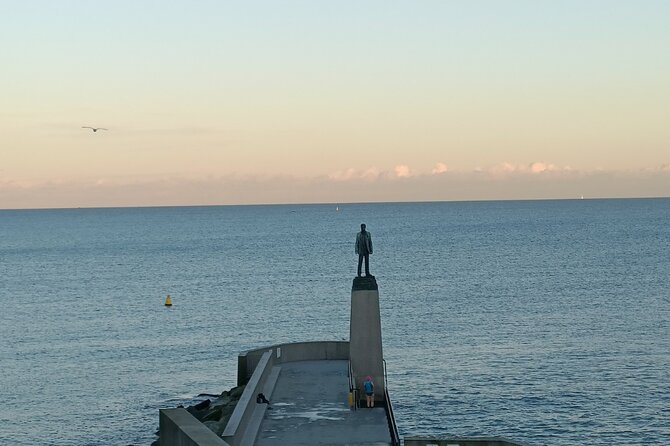
Carlisle Pier takes the story back to the harbor’s working past. Dating from the 1820s, it reflects Dún Laoghaire’s transformation over the centuries and its long connection with ships, passengers, and coastal movement.
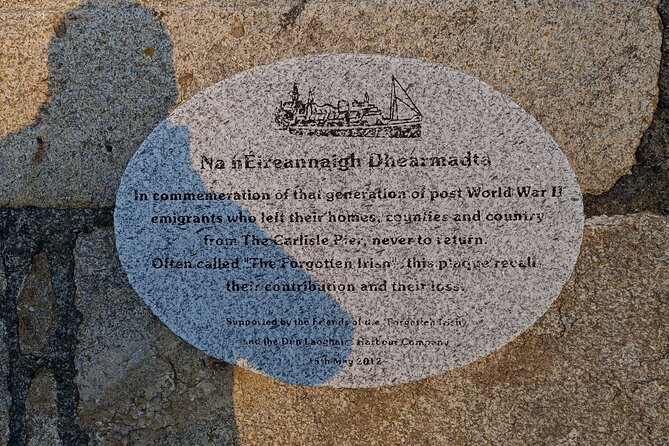
The pier helps you picture the town as a place of arrival and departure. That theme becomes more personal at the Forgotten Irish Memorial, which honors Irish emigrants who left home to seek opportunities elsewhere.
The memorial is a quiet counterpoint to the engineering scale of the harbor. A port can be measured in stone walls, piers, and ships, but its real importance is found in the people who passed through it. The audio places those departures within the larger story of Irish lives shaped by distance and uncertainty.
This section may carry more emotional weight than the earlier monuments. You are asked to think about people leaving home, not simply about the construction of a harbor. It is one reason the walk feels broader than a standard waterfront tour.
The East Pier Bandstand Sun Shelter
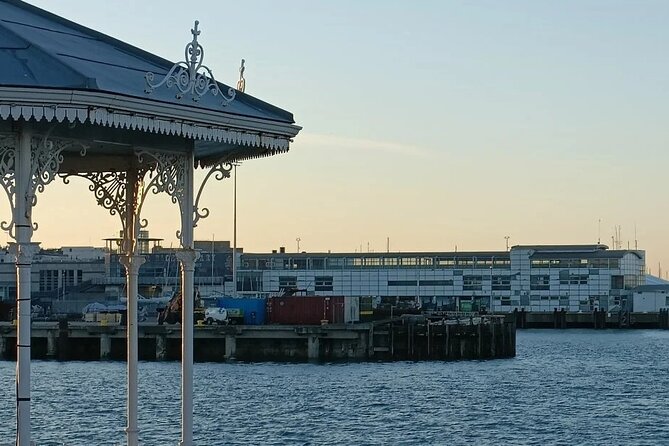
The East Pier Bandstand Sun Shelter adds an architectural detail that could easily be overlooked if you were walking without a route.
Its unusual design gives the pier a social side. Harbors are built for ships, but they also become places for public life, leisure, and shared time outdoors. The shelter helps show how the pier served more than one purpose.
I like stops such as this because they reward close attention. You do not need a famous building at every point. A shelter, bandstand, or decorative feature can tell you how people used the waterfront in ordinary moments.
The route’s audio format is useful here. Without a guide beside you, you might walk straight past the structure. With the location-based commentary, you have a reason to pause and look carefully.
A Russian cannon with a Romanov eagle
One of the tour’s most unusual details is the Crimean War cannon bearing the eagle motif of the Romanov family. Its presence in Dún Laoghaire is an unexpected link between Dublin and Russian imperial history.
This is the kind of small discovery that gives a walking tour personality. The cannon is not as visually grand as the lighthouse or harbor walls, but it invites a question: how did a Russian weapon connected with the Crimean War end up in this Irish setting?
The tour promises to explain that story as you walk. You do not need prior military knowledge to enjoy it. The appeal is the surprise and the sense that public spaces often contain objects with origins far beyond the local streets.
For me, this is a good example of why an audio route can be worth paying for even when the path itself is free. The pier costs nothing to walk, but the explanations help connect separate objects into a larger story.
Ending near the Roger Casement Statue
The route finishes near the Roger Casement Statue, honoring the Irish revolutionary. His presence brings the walk toward the political side of Ireland’s past.
By this point, the route has covered religion, royal associations, transport, maritime disaster, emigration, war, architecture, and Irish nationalism. That is a lot for a walk of roughly an hour. The final location also puts you near eateries, making it easy to continue your time in Dún Laoghaire after the audio ends.
The stated endpoint is back at the meeting point, so check the app instructions carefully as you walk. The route description also places the finish near the Roger Casement Statue. Because the information describes both the statue area and a return to the meeting point, following the VoiceMap map is important rather than relying only on memory.
The end of the walk is not designed as a grand finale with a formal guide or group wrap-up. You simply finish with a better understanding of the town, then decide where to eat or continue exploring.
Price, app access, and what you need
At $8.99 per person, this is a modest purchase for an audio walk with lifetime access. The value is strongest if you want to revisit the route or share the experience with someone in your group at different times. The audio, maps, and geodata can be used offline after setup.
The price is less compelling if you already know Dún Laoghaire well and only want a walk along the pier. The public spaces themselves are free. You are paying for the spoken context, route design, and convenience of having the stops organized for you.
You need to provide your own smartphone and headphones. Food, drinks, and transportation are not included. The route is near public transportation, which makes the starting point practical for a Dublin outing, though no specific transport service or fare is provided.
Service animals are allowed, and most people can participate. Since this is an outdoor walk, you should still consider your own comfort with walking for up to seventy-five minutes and with changing weather.
The tour has a 4.5 rating from six reviews, a promising result but a small sample. One 4 out of 5 comment is heavily auto-translated and expresses a strong sense of discovery, though it offers little practical detail. I would treat the rating as encouraging, not as proof that every part of the audio will suit every listener.
Who should book this Dún Laoghaire audio tour?
I would choose this experience if you want a short, self-paced introduction to Dún Laoghaire rather than a full-day guided excursion. It suits independent visitors who like to stop for photos, pause the narration, or take in a view without keeping up with a group.
It is also a good fit if you enjoy public memorials and local history. The route does not focus only on scenic waterfront views. The RMS Leinster Memorial, Forgotten Irish Memorial, Crimean War cannon, and Roger Casement Statue give the walk several serious themes.
Families may appreciate the flexible format, though the audio is designed for listening rather than games or hands-on activities. People who prefer a live guide, detailed questions, or a more personal conversation should look for a different format.
The non-refundable booking rule deserves attention. Only book when your plans are firm, since cancellations or amendments do not receive a refund.
Should you book the East Pier walk?
Book it if you want to combine Dublin Bay scenery with compact historical storytelling. The price is fair for offline audio and lifetime access, and the route covers more than the pier alone. St Michael’s Church, the Metals, Carlisle Pier, memorials, the Romanov cannon, and the lighthouse give you a varied hour on foot.
Skip it if you want a live guide, transport included, or a flexible refund policy. Also think twice if you dislike listening through headphones or if an exposed waterfront walk sounds unpleasant in poor weather.
For most independent visitors with time in Dún Laoghaire, this is a useful way to give structure to a free public walk. You get the bay views without losing the town’s harder stories, and you can finish near food and continue your day at your own pace.
FAQ
Where does the Dún Laoghaire audio tour begin?
It begins at St Michael’s Church on Marine Road, Dún Laoghaire, County Dublin, Ireland.
Where does the activity end?
The activity information says it ends back at the meeting point. The route also finishes near the Roger Casement Statue, so you should follow the VoiceMap map for the exact final directions.
How long does the self-guided walk take?
The walk takes approximately one hour to one hour and fifteen minutes.
What language is the tour offered in?
The tour is offered in English.
What is included with the booking?
You receive lifetime access to the English tour, the VoiceMap app for Android and iOS, and offline access to the audio, maps, and geodata.
Do I need to bring anything?
You need your own smartphone and headphones. Transportation, food, and drinks are not included.
Just added around Dublin
- Turtle Bunbury’s Dublin: A Self-Guided Audio Tour from a Celebrated Author★ 5.0 · 3 reviews
- Dublin Old Town: Famous Pubs Exploration Game and Tour★ 4.0 · 7 reviews
- Marlay Park’s Heritage: A Self-Guided Tour of Dublin’s Playground★ 5.0 · 3 reviews
- A Self Guided Walking Tour of Dublin’s Docklands★ 4.5 · 3 reviews
- Self-Guided Scavenger Hunt: Dublin Adventure★ 3.5 · 6 reviews
- Dublin Self-Guided Murder Mystery Tour by Temple Bar★ 3.5 · 12 reviews
- Dublin Scavenger Hunt and Highlights Self Guided Audio Tour★ 4.5 · 4 reviews
- The Dublin Incident: Alien, Whiskey & Clues Exploration Game★ 4.0 · 6 reviews
Dublin Audio Tours, compared.

Christ Church Cathedral Entrance Ticket & Self-Guided Tour
Read our review →

Dublin Walking Tour with Audioguide on Your Smartphone
Read our review →
Dublin Self-Guided Murder Mystery Tour by Temple Bar
Read our review →
Dublin Old Town: Famous Pubs Exploration Game and Tour
Read our review →
The Dublin Incident: Alien, Whiskey & Clues Exploration Game
Read our review →
Browse the lists this tour appears in