REVIEW · PARIS AUDIO TOURS
Musée de l’Orangerie Flexible Entrance Ticket in Paris with Audio
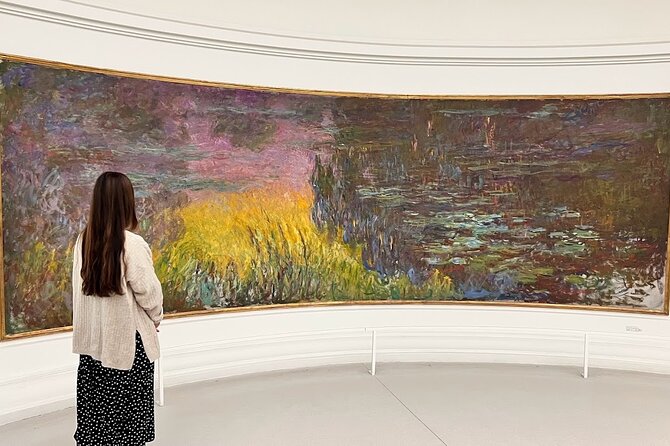
The main reason to visit the Musée de l’Orangerie is Monet’s enormous Water Lilies rooms, where the paintings surround you rather than sit in a single frame on a wall. I like the museum’s smaller size and the freedom to take two or three hours, pause when you wish, and avoid the scale of Paris’s biggest museums.
I also like that the ticket includes an English audio guide for your phone and can fit around a changing Paris schedule. The big caution is the phrase flexible entry: it may not mean walk straight in. At busy times, visitors with non-timed tickets have waited an hour or two in the same line as people still buying admission.
Key points to know before you book
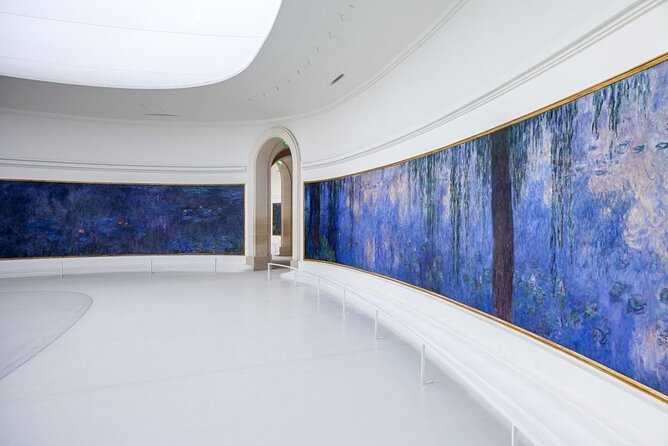
- Monet’s Water Lilies are the main event: The large oval rooms give the famous paintings room to surround you.
- The museum is compact: You can see the collection in roughly two to three hours without giving up an entire day.
- Flexible does not always mean fast: A non-timed ticket may put you in a slower queue than a reserved time slot.
- The audio guide uses your phone: It comes through a separate mobile app, and headsets are not included.
- The real ticket arrives separately: Your Viator confirmation voucher is not accepted at the museum. Look for the PDF ticket in your email or WhatsApp.
- Some artists may be absent: Works by Paul Cézanne and Auguste Renoir are scheduled to travel to Japan until January 2026.
Why the Musée de l’Orangerie is worth your Paris time
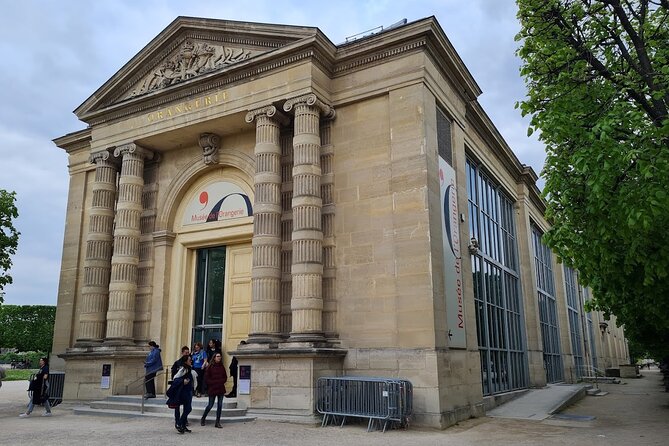
The Musée de l’Orangerie gives you a very different museum day from the Louvre. It is smaller, easier to take in, and built around a few carefully chosen rooms rather than thousands of objects.
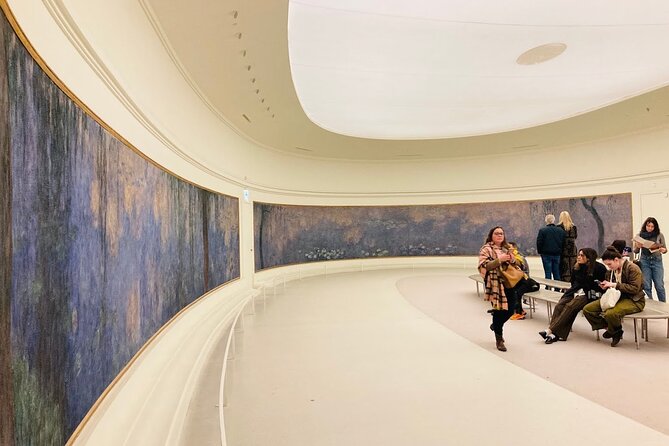
The highlight is Claude Monet’s Water Lilies series. These huge paintings were designed for long, curved walls, so you do not simply inspect one canvas and move on. You sit or stand in the oval rooms and let the changing light, water, and color settle in.
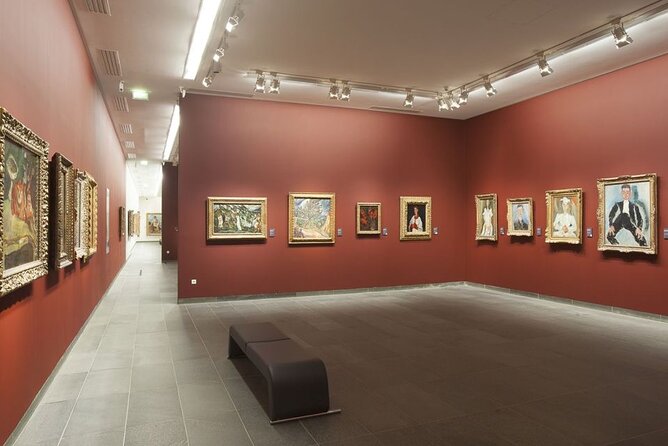
I would not expect the same range of collections you find at the Louvre or Musée d’Orsay. This is a focused visit. If Monet’s paintings do not speak to you, the museum may feel brief. If you enjoy Impressionist art, though, the Water Lilies rooms can be a powerful reason to make the stop.
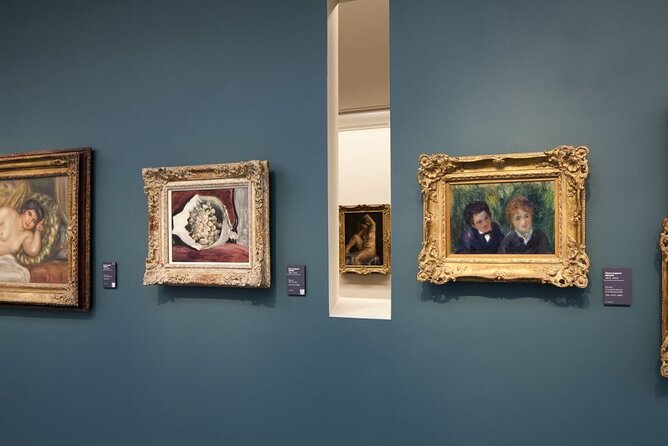
The lower galleries add works by artists including Renoir, Picasso, Mondrian, and Modigliani. The collection shows different approaches to modern European painting, with enough variety to keep the visit from becoming a single-artist appointment.
More Skip-the-Line Audio Guide Tickets in France
- Paris: Orsay Museum Entry Ticket and Digital Audio Guide App
★ 4.4 · 3,170 reviews - Louvre Museum Timed Entrance Ticket with Audio Guide
★ 3.0 · 453 reviews - Paris Louvre Museum Entry Ticket for Self Guided Tour
★ 3.5 · 383 reviews
Monet’s Water Lilies rooms
Begin with the Water Lilies rooms rather than saving them for the end. Their scale is the point. Monet’s pond scenes are not small garden studies to be viewed from a crowded corridor. They are broad fields of color that ask you to slow down.
The paintings can affect people in different ways. Some visitors find the experience hypnotic and peaceful. Others see the rooms quickly and feel that the collection is limited. Both reactions are fair, and you should book this museum for Monet specifically rather than expecting a full survey of Impressionism.
The room design also makes crowd levels matter. A busy gallery can change the mood, especially when people stop in the center or gather close to the paintings. A quieter visit gives you more time to sit with the work, which is one reason a morning or less crowded period may be worth aiming for.
Your ticket does not guarantee a quiet room. It only addresses admission, and a flexible ticket may still require a wait outside before you reach the galleries.
The lower collection: Renoir, Picasso, and more
After Monet, continue through the permanent collection for a broader look at modern art. Renoir and Picasso provide familiar names, while Mondrian and Modigliani add different styles and shapes to the visit.
The collection is not huge, which is part of its appeal. You can give each room attention instead of racing through it. I like this format for a first Paris museum stop, especially if you want an art experience that leaves room for lunch, a walk, or another appointment.
There is an important temporary change to keep in mind. Works by Paul Cézanne and Auguste Renoir are scheduled to travel to Japan for an exhibition until January 2026. If those artists are central to your plan, check the current display before you pay.
The permanent collections will also be closed on February 11, 12, and 13, 2026. On those dates, access is limited to Monet’s Water Lilies. That could suit someone visiting only for Monet, but it is a poor match if you want the full museum.
What flexible entry really means
The ticket is advertised as flexible, anytime entry during opening hours. That sounds ideal, especially in Paris, where a delayed train, long lunch, or sudden rain can change your day.
In practice, flexible entry has a serious limit. A non-timed ticket may place you in the general line, alongside people who have no ticket and need to buy one. Several visitors have reported waits of more than an hour, with some waiting close to two hours during busy periods.
A reserved time ticket is usually the safer choice if the museum offers one for your date. The timed line moves more clearly, while the non-timed queue can be confusing. Signage may not make the distinction easy, and you may need to ask staff where your ticket belongs.
There is also a warning about changing entry rules. During restoration work, the museum has required a specific entrance time on some dates, despite the flexible wording used when the ticket was purchased. If you receive a message asking you to confirm a time, take it seriously and read the instructions before heading to the museum.
The value of flexibility depends on your timing. On a quiet day, it may help you walk in without much trouble. On a crowded day, you are paying for the right to join a queue, not for a guaranteed fast entrance.
More Skip-the-Line Audio Guide Tickets in Paris
- Musee d’Orsay Anytime Entry ticket in Paris with Audio
★ 3.5 · 152 reviews - Paris: Rodin Museum Skip-the-line Entry Ticket with Audio
★ 4.0 · 102 reviews - Paris Orsay Museum Entry Ticket with Digital Audio Guide
★ 3.5 · 93 reviews - Paris: Grévin Wax Museum Entry Ticket with Audio Guide App
★ 4.3 · 7 reviews
The ticket and mobile audio guide
The price listed for this experience is $27.67 per person. That includes flexible admission, booking and service fees, and an English audio guide accessed through a separate mobile app.
At that price, the ticket makes the most sense when convenience matters and the museum’s own timed tickets are unavailable. It is harder to justify if you can buy a cheaper direct ticket or secure a timed entry through the museum.
The audio guide is not a traditional handheld device supplied at the entrance. You use your own phone and download or open the guide through the supplied link. Headsets are not included, so bring your own if you do not want to hold your phone to your ear.
Download the audio content before entering if possible. That reduces dependence on the museum’s signal and lets you check the guide before you are standing in the security area. Also charge your phone. Listening for a long time can use battery, and one practical complaint was that the mobile audio drained a phone quickly even after it had been downloaded.
The museum may also offer an audio option on site for about 5 euros, according to one account. The mobile guide included with this ticket is not necessarily the same as the museum’s in-house audio tour with headphones. If the audio is important to you, confirm exactly what you are receiving before purchase.
Getting the correct PDF ticket

This is the most important booking detail. The confirmation voucher issued immediately after booking is not the admission ticket, and museum staff will not accept it on its own.
You need the actual PDF ticket, usually sent separately by email or WhatsApp. Open it before you leave for the museum and make sure the barcode is visible. Do not wait until you are at the entrance to search through multiple messages or rely only on the Viator app.
Some people have had trouble finding tickets in the app, with the screen redirecting to the home page or showing an access error. Others have received the ticket later than expected. Because the museum may enforce the time printed on a ticket, a late delivery can create a real problem.
I would save the PDF to your phone, take a screenshot of the barcode, and keep the email available. This is simple insurance against weak data service, a dead app, or a crowded entrance where you do not want to spend 20 minutes sorting out documents.
Planning the visit around the queue
The museum is near public transportation, so it is easy to fit into a day of sightseeing. The information supplied for the period from July 18, 2024, through February 5, 2027, lists Monday hours as 9 a.m. to 6 p.m. Check the current schedule for your exact date because opening details can change.
If you have a non-timed ticket, avoid building a tight schedule around the museum. A two-hour queue could make you miss a restaurant booking or another timed activity. This is especially important if you are traveling with children, have mobility concerns, or are trying to cover several Paris sights in one day.
Bring patience for the entrance process. Security checks take place before entry, and even people who have already bought tickets may wait outside. Once inside, the visit itself can be calm and manageable, but the queue is the unpredictable part.
In quieter periods, the same flexible ticket may work well. One person who visited in December found the entry process manageable, while others waited 90 minutes or more in colder weather. The difference is not the artwork. It is the crowd level and whether your ticket has a fixed time.
How long you need inside

Plan on two to three hours if you want to listen to the audio and spend time with the major works. You can move faster if you are visiting only for Monet, since the museum is compact.
Do not treat the two to three hours as a required tour length. The ticket lets you create your own route, and the museum works well as a focused stop between other Paris plans. You might spend an hour with the Water Lilies and another 30 to 60 minutes in the lower galleries.
The audio guide can add structure if you want context. If you prefer looking without commentary, you can skip it and move at your own pace. The guide is a tool, not a requirement.
Who should book this experience
I would consider this ticket for someone who wants Monet’s Water Lilies and values a simple booking process more than the lowest possible price. It can also suit a visitor whose Paris schedule is uncertain, provided they accept the risk of a flexible-entry queue.
It is a weaker choice for anyone who needs a guaranteed entrance time. It is also not ideal if you are price-sensitive, since buying directly from the museum may cost less and may offer a better-defined time slot.
Art lovers should check the temporary collection changes before booking. The museum remains worthwhile for Monet and the other displayed artists, but Cézanne and some Renoir works may be away until January 2026.
This experience suits independent visitors more than people looking for a guided group tour. There is no named in-person guide. Instead, you receive admission and a mobile English audio guide, then explore alone.
Price, value, and the cancellation risk
At $27.67, the ticket is not automatically a bargain. The price includes service fees and the mobile audio guide, but the flexible format may not save time. If you wait in the same long queue as people without tickets, the main benefit may be having your admission arranged in advance.
The ticket becomes more useful when direct museum slots are sold out, when you need some schedule freedom, or when avoiding a ticket-purchase line matters. It becomes poor value when direct admission is much cheaper or a timed ticket is available for a similar price.
The booking is non-refundable and cannot be changed for any reason. That makes the ticket a poor fit for a loose itinerary. Confirm your date, inspect the ticket instructions, and make sure the museum’s collection and opening details match what you want to see before paying.
Should you book it?
Book this experience if Monet’s Water Lilies are high on your Paris list and you can leave plenty of time for the entrance queue. Save the ticket PDF, check your email and WhatsApp, download the audio guide, and bring headphones and a charged phone.
If a timed ticket is available directly from the museum, I would choose that first. The Musée de l’Orangerie itself is a worthwhile, focused art stop, but the flexible ticket is only good value when its convenience outweighs the higher price and uncertain wait.
FAQ
What is included in the Musée de l’Orangerie ticket?
The ticket includes flexible entry to the Musée de l’Orangerie, booking and service fees, and an English audio guide accessed through a separate mobile app.
How much does the experience cost?
The listed price is $27.67 per person.
How long does the visit take?
The expected visit lasts approximately two to three hours, depending on how much time you spend with Monet’s Water Lilies, the lower galleries, and the audio guide.
Can I enter at any time?
The ticket is described as flexible entry during opening hours, but a non-timed ticket may require you to use the general queue. The museum may also require a specific time during restoration work.
What are the listed opening hours?
For the period from July 18, 2024, through February 5, 2027, the supplied information lists Monday hours as 9 a.m. to 6 p.m.
Is the Viator confirmation voucher the admission ticket?
No. The immediate booking confirmation is not accepted by museum staff. You must find the actual PDF ticket sent separately by email or WhatsApp.
Is an audio guide included?
Yes. An English audio guide is included through a separate mobile app. It is not necessarily the same as the museum’s on-site audio tour with headphones.
Are headphones provided?
No. Headsets are not included, so bring your own if you want to listen privately.
Which artists can I see?
The museum includes Monet’s Water Lilies and works by artists such as Renoir, Picasso, Mondrian, and Modigliani. Works by Paul Cézanne and Auguste Renoir are scheduled to travel to Japan until January 2026.
Is the ticket refundable or changeable?
No. The experience is non-refundable and cannot be changed for any reason.
Just added around Paris
- The Tout Paris Private Rickshaw bike Tour with Audio Guide★ 4.6 · 8 reviews
- Seine River Cruise with Free Notre Dame Digital AudioGuide★ 4.2 · 7 reviews
- Paris: Musee De L’Armee Ticket With Digital Audio Guide★ 4.2 · 39 reviews
- Paris: Rodin Museum Ticket & Optional Digital AudioGuide App★ 4.7 · 56 reviews
- From Paris: Versailles Palace Self Guided & Gardens tickets★ 4.4 · 1,100 reviews
- Paris City Center Self-Guided Walking Tour★ 4.5 · 5 reviews
- Paris: Grévin Wax Museum Entry Ticket with Audio Guide App★ 4.3 · 7 reviews
- Paris Audioguide – TravelMate app for your smartphone★ 4.1 · 27 reviews
Paris Audio Tours, compared.
Paris: Illuminations River Cruise with Audio Commentary
Read our review →
Paris: Louvre Museum Hosted Entry and Mona Lisa Audioguide
Read our review →
Paris: Orsay Museum Entry Ticket and Digital Audio Guide App
Read our review →
From Paris: Giverny Day Trip with Audio Guide or Live Guide
Read our review →
Paris: Eiffel Tower Access w/ Audioguide and Optional Cruise
Read our review →
Giverny and Monet’s House Half Day Trip from Paris Guide or Audio
Read our review →
Paris: Catacombs Entry & Seine River Cruise with Audio Guide
Read our review →