

REVIEW · ITALY AUDIO TOURS
Catania Walking Tour with Audio and Written Guide by a Local
Catania’s best sights are spread through a compact historic center, and this self-guided walking tour gives you a clear route without tying you to a group or a fixed pace. You begin at Ursino Castle and finish at the Benedictine Monastery, passing the fish market, cathedral, Roman amphitheater, and Via dei Crociferi.
I like two things right away: the $7.83 price is hard to beat for three to four hours of sightseeing, and the audio, written explanations, history notes, and Google Maps links let you pause whenever you want. The main catch is that you must bring a working smartphone with internet access, and this is not a live tour with a person walking beside you.
Key points to know
- Start at Ursino Castle: The route begins away from Piazza del Duomo, so plan your approach carefully.
- Nine historic stops: You move from a medieval fortress and fish market to Baroque churches, Roman ruins, and a huge monastery.
- Go at your own pace: You can stop, replay audio, eat, shop, or change the route without holding up a group.
- Five language options: Audio and written material are available in English, Spanish, Italian, German, and French.
- Roman amphitheater ticket extra: The route explains the site from outside, but entry costs €4 if you choose to visit.
- Phone and headphones matter: You use your own device and speakers or headphones, which are not supplied.
A smart way to see Catania without a scheduled group

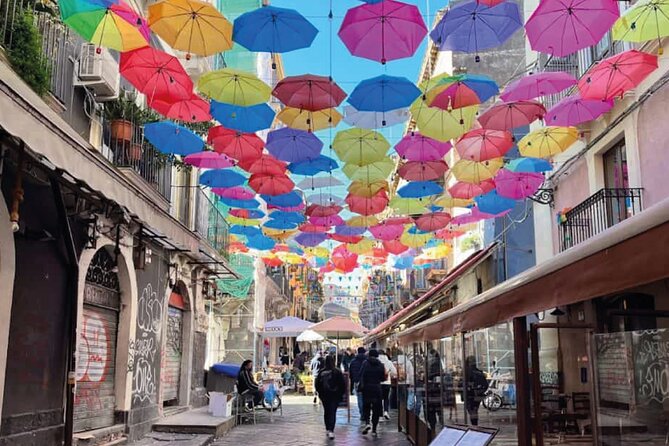
Catania can feel confusing at first. Lava-stone buildings, busy streets, grand squares, and small lanes all meet in the old center. This route gives you an order to the day, which is useful when you want context instead of simply wandering from one landmark to the next.
You receive a digital guide with audio and written material, plus links connected to Google Maps. That means you can read about a place before arriving, listen beside the monument, or stop the audio while you take photographs. If a market, café, shop, or church catches your attention, you can pause the tour and return to it later.
The route is planned for about three to four hours, though the actual time depends on your pace. The listed stop times total more than three hours, and that does not include walking between sites, photo stops, food, or any detours. I would treat the duration as a half-day plan rather than a strict schedule.
The tour is offered in English, Spanish, Italian, German, and French. The written option is useful in noisy places such as the fish market, while audio lets you keep your eyes on the street. You need an internet-connected smartphone, and you should read the voucher carefully for activation instructions. The provider, Walking Cap, sends activation information at booking and again before the activity. Matteo is identified in the support communication, so keep an eye on your messages if you need help getting started.
More Self-Guided Walking Tours in Italy
- Florence: 2.5 hour Audio Guided Walking Tour led by Host
★ 4.6 · 293 reviews - Verona Walking Tour with Audio and Written Guide by a Local
★ 4.5 · 157 reviews - Renaissance & Medieval Florence Guided Walking Tour plus mobile App
★ 4.0 · 140 reviews
Ursino Castle gives the route a strong beginning
The route opens at Ursino Castle in Piazza Federico di Svevia. This is a fine place to begin because it gives you a physical sense of Catania’s defensive past before the walk turns toward markets, churches, and city squares.
The castle was first built close to the sea, surrounded by a moat and protected by defensive works. Its name is not fully certain. The external walls use carefully squared blocks of lava stone, while the inner defensive wall is more irregular. Those details are easy to miss if you only take a quick photograph, so the guide’s explanation adds value here.
The visit time is about one hour, and the listed route includes no admission fee. You should still allow for the fact that you are starting at the edge of the central sightseeing area. One person found that they had already walked past much of the route before reaching the starting point. If you are staying near Piazza del Duomo, use Google Maps to plan the approach and avoid retracing your steps later.
A’ Piscaria shows Catania at work
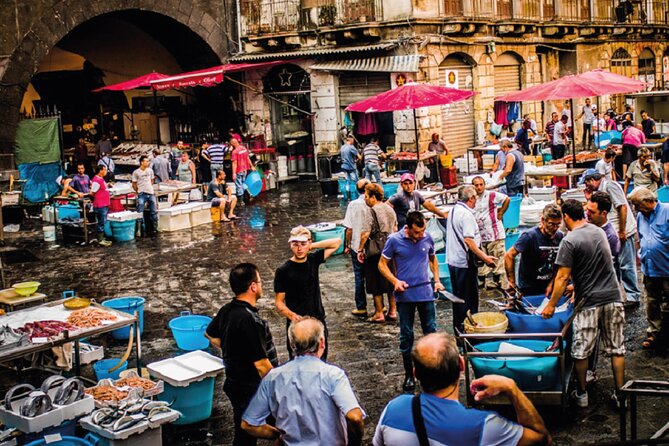
From the castle, the route heads to A’ Piscaria, Catania’s historic fish market. Locals call it Piscarìa, using the Sicilian dialect term. The market sits near Piazza del Duomo and the Fontana dell’Amenano, so this part of the walk quickly shifts from military history to everyday city life.
The planned stop is about 20 minutes. That is enough to look around and understand the setting, but you may want to give yourself extra time if you are interested in local food or market activity. The tour includes advice on authentic restaurants, which can help you make better use of this area after the formal route.
This is one of the tour’s more useful combinations. You are not only moving from monument to monument. You are seeing a working market close to the city’s grandest square, then learning how the two fit together.
Fontana dell’Amenano and Piazza del Duomo

The Fontana dell’Amenano is a short stop, planned for about 10 minutes. Tito Angelini created the Carrara marble fountain in 1867, and it honors the Amenano, the underground river that runs beneath Catania.
The fountain is also a helpful marker between the market and Piazza del Duomo. You will find it near the edge of the square, where the sound and movement of the market give way to Catania’s formal civic center.
Piazza del Duomo receives about 20 minutes in the route. This is the heart of the historic center, with the Cathedral of Sant’Agata and other major monuments gathered around it. The digital guide can help you look beyond the broad view and notice why the square matters to Catania’s identity.
You should not rush this section. The market, fountain, and square are close together, so you can pause the guide, take photographs, and listen again without losing your place.
Same place, a different route to walk:
- Rome: Pantheon Fast-Track Ticket and Official Audioguide
★ 4.5 · 27,353 reviews - Rome: Colosseum & Forum with Audio Guide App -Optional Arena
★ 4.2 · 24,770 reviews - Venice: Grand Canal Gondola Ride with App Commentary
★ 4.1 · 23,020 reviews - Florence: Timed Entry to Michelangelo’s David + Audio App
★ 4.6 · 19,496 reviews
Sant’Agata Cathedral tells the story of rebuilding

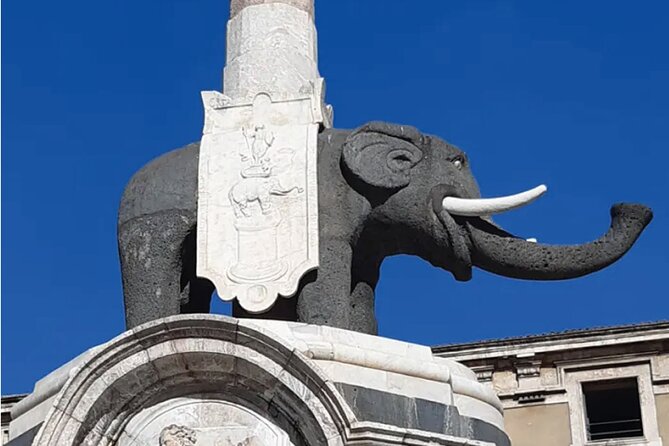
The Cathedral of Sant’Agata is one of Catania’s key Baroque sights. It was originally built in 1090 on the remains of a Roman temple dedicated to Jupiter, then rebuilt after the earthquake of 1693 destroyed much of the city.
The planned visit lasts around 20 minutes, with no ticket included because the listed itinerary treats the stop as an exterior or free visit. If you want to enter and discover that an admission charge applies at the time of your visit, confirm the current conditions locally. The supplied details do not give an interior ticket price.
The important point is the rebuilding story. Catania is not a city where ancient, medieval, and Baroque layers sit untouched in a neat row. Earthquakes and Mount Etna’s eruptions have repeatedly altered the city. The guide’s historical notes help connect the cathedral’s appearance with that larger pattern.
Piazza Università adds local legends to the route
Piazza Università is only a 10-minute stop, but it gives you a different kind of information. The square takes its name from Palazzo degli Studi, also called Palazzo Università. Four bronze lampposts at the corners show figures from Catania legends.
The figures include Gammazita, Cola Pesce, the brothers Anfinomo and Anapia, and the Catania paladin Uzeta. You may pass these lamps without noticing them, especially after the larger monuments around Piazza del Duomo. The audio and written notes give you a reason to stop and look closely.
This is the sort of detail I like in a self-guided route. A live guide might explain it quickly while a group waits. With this format, you can replay the section or read it later, then move on when you are ready.
The Roman amphitheater is an optional €4 addition
Beneath Piazza Stesicoro sits a Roman amphitheater dating from the first century BC. Over the centuries, eruptions from Etna and seismic events covered parts of the site.
The planned stop lasts about 25 minutes, but the tour does not take you inside. You receive the explanation from outside, then decide if you want to visit independently. Entry is listed at €4.
This arrangement keeps the basic tour cheap, but it also means the headline route is not a complete archaeological visit. If Roman sites are a priority for you, budget the extra ticket and add time. If you are mainly interested in Catania’s squares, churches, and street plan, the exterior explanation may be enough.
The amphitheater also gives you a useful pause in the route. You can stop the audio, look at the exposed remains, and decide how much time you want to spend before continuing.
Via dei Crociferi brings the Baroque streetscape together

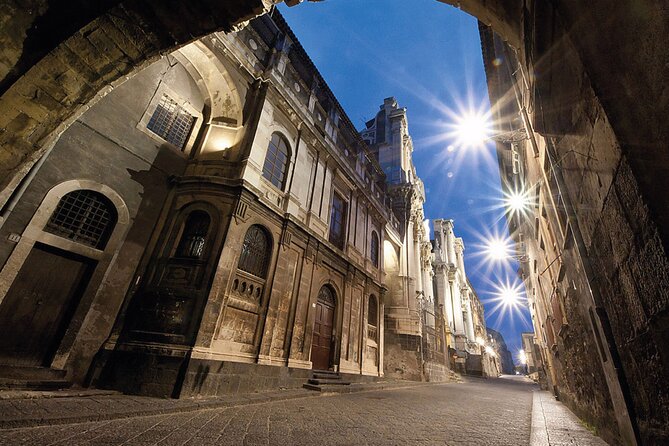
Via dei Crociferi is one of Catania’s oldest and most atmospheric streets. The visit is brief, about 10 minutes, but the street itself deserves attention beyond a quick stop.
It is known for its striking historic setting and has been used as a film location. The guide can point out why the street photographs so well, but you will get the most from it by walking slowly and looking at the facades, churches, and changing views along the way.
This section is also where the route feels less like a checklist. You are moving through a real street rather than arriving at a single object in a square. Since you are not following a group, you can pause for photographs or take a short detour without losing the main route.
The Benedictine Monastery is a fitting finish
The final listed stop is the Benedictine Monastery of San Nicolò l’Arena, with about 30 minutes planned. Located in Piazza Dante, it has been an important part of Catania’s story, especially during the eighteenth century. The monastery is known for its size, elaborate rooms, and the noble background of many monks who lived there.
The route ends here, but the digital format means you are not forced to stop. The stated final destination is only a suggestion. You can decide where your walk ends, use Google Maps to return to your accommodation, or continue exploring after the monastery.
That flexibility is one of the strongest reasons to choose this product instead of a conventional walking tour. You are given a sensible route, but you are not treated as part of a moving line. You can finish early, linger at the monastery, or split the route across two outings.
What the $7.83 price really buys you
At $7.83 per person, the value is clear if you want an orientation to central Catania. You receive audio, written explanations, five language choices, map links, monument notes, historical background, local restaurant advice, and a route covering nine significant stops.
The price is especially good for two or more people who do not need a private guide. Group discounts may also be available. You can share the walking time with your own companions and avoid paying for a full private tour.
The comparison changes if you want live conversation. There is no person walking with you, no opportunity to ask questions at each monument, and no guide managing the route in real time. You are paying for organized information and flexibility, not personal guiding.
For a low-cost first look at Catania, that is a fair trade. One person who used a similar self-guided format found it more useful than a guide-led experience because they could start and stop freely. Another appreciated being able to listen to the information the night before and then use Google Maps during the walk. That is a practical idea: prepare at your accommodation, then spend your sightseeing time looking up rather than wrestling with instructions.
How to make the digital format work well
Before leaving, charge your phone and confirm that you have an internet connection. Read the activation details in the voucher rather than waiting until you reach Ursino Castle. The one poor experience connected to this activity came from a failure to access the download instructions, even though the provider says activation details are sent at booking and before the event.
Bring headphones if you have them. They are not included, and you can also use your phone’s speakers. Speakers may be fine in a quiet square, but headphones are more practical near traffic or in the market.
Start with enough time for the route. The listed opening window runs from midnight to 11:30 p.m. each day, but that refers to access to the digital activity, not guaranteed opening hours for every monument. The Roman amphitheater, cathedral, and monastery may have their own access rules, so check locally if you plan to enter any site.
Most people can take part, and service animals are allowed. The activity is near public transportation, and the maximum listed group size is 104, though a digital guide does not require you to move as one group.
Who should choose this Catania walk?
I would choose it if you like setting your own pace, want a short introduction to the historic center, and already feel comfortable using a smartphone for maps and audio. It also suits couples, families, and friends who prefer not to spend a half-day with a scheduled group.
It is a good fit for a first day in Catania because the route covers the major central landmarks and adds local details such as the legends on Piazza Università’s lampposts and the name Piscarìa for the fish market.
I would look elsewhere if you want a guide to answer questions, manage entrances, or explain small details as you walk. I would also think twice if your phone connection is unreliable or if you dislike handling a device while sightseeing.
Should you book this experience?
Book it if you want strong value, clear directions, and control over your time. The route links Catania’s major historic sights with useful context, and the price leaves room in your budget for food, transport, or the €4 Roman amphitheater ticket.
Use it as a flexible city walk rather than a full guided tour. Activate the guide before you leave, bring headphones, allow at least half a day, and plan your starting route to Ursino Castle. If those conditions suit you, this is an inexpensive and practical way to get your bearings in Catania.
FAQ
How much does the Catania walking tour cost?
The listed price is $7.83 per person. Group discounts are also available.
How long does the walking tour take?
The estimated duration is three to four hours. Your timing can vary because the tour is self-guided and allows you to pause or take detours.
Is this a tour with a guide in person?
No. This is a digital guide that you follow independently using your smartphone.
Where does the route begin?
The route begins at Ursino Castle, at Piazza Federico di Svevia 21 in Catania.
Where does the route finish?
The planned final stop is the Benedictine Monastery of San Nicolò l’Arena at Piazza Dante Alighieri 32. Since the activity is digital, you can choose to finish somewhere else.
Which languages are available?
The audio and written guide are available in English, Spanish, Italian, German, and French.
Do I need a smartphone with internet access?
Yes. You need a smartphone with an internet connection to activate and use the digital guide.
Are headphones included?
No. Headphones are not included. You can listen through your phone’s speakers or use your own headphones.
Is the Roman amphitheater ticket included?
No. The route does not enter the amphitheater. If you choose to visit, the listed ticket price is €4.
Can I cancel for a refund?
Yes. You can cancel at least 24 hours before the experience start time for a full refund. Cancellations within 24 hours are not refunded, and changes during that period are not accepted.
Just added around Italy
- Genoa Historic Centre Quest: A Self-Guided Puzzle Adventure★ 4.0 · 3 reviews
- Genova Walking Tour with Audio and Written Guide by a Local★ 4.5 · 33 reviews
- Self-Drive (No Licence) Boat Rental in Portofino Gulf★ 5.0 · 12 reviews
- Finance and Nobility: Explore medieval Genoa on a self-guided audio tour★ 4.5 · 7 reviews
- Florence: Uffizi Gallery Reserved Ticket & Digital Audio Guide★ 4.5 · 3 reviews
- Around Florence Hills: App‑Guided e‑Vespa Tour + Wine&Food★ 4.5 · 22 reviews
- Florence: Uffizi Gallery Audio Guided Tour led by Tour Leader★ 3.5 · 6 reviews
- Uffizi Gallery: Self-guided App Visit & Optional Accademia Museum★ 4.0 · 19 reviews
Italy Audio Tours, compared.
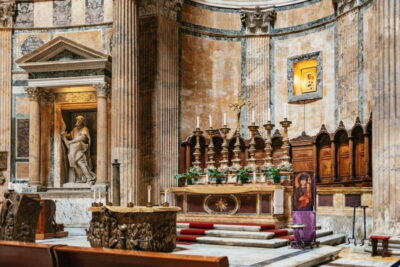
Rome: Pantheon Fast-Track Ticket and Official Audioguide
Read our review →
Rome: Colosseum & Forum with Audio Guide App -Optional Arena
Read our review →
Venice: Grand Canal Gondola Ride with App Commentary
Read our review →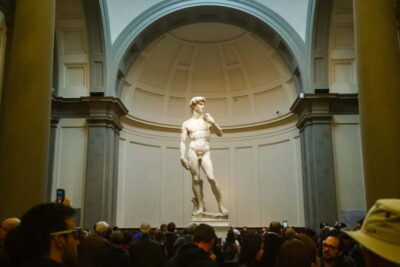
Florence: Timed Entry to Michelangelo’s David + Audio App
Read our review →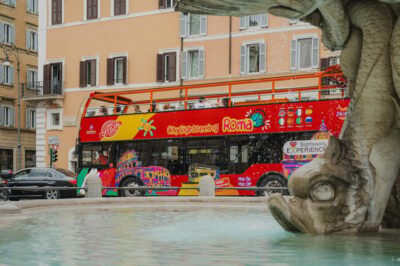
Rome: City Sightseeing Hop-on Hop-off Bus with Audioguide
Read our review →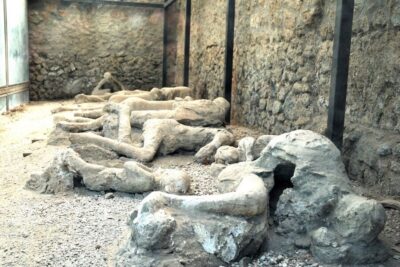
Venice: La Fenice Opera House Entry Ticket with Audio Guide
Read our review →
Rome: Colosseum, Forum, Palatine Hill Entry & Audioguide App
Read our review →Browse the lists this tour appears in