REVIEW · ATHENS AUDIO TOURS
Acropolis Parthenon Entry Ticket and Virtual Reality Audio Tour
The clever part of this Acropolis visit is the VR reconstruction. Instead of looking only at weathered marble, you can use the app to picture how the Parthenon, temples, and theaters may have appeared in ancient Athens. I like the freedom to pause, wander, and follow the route at your own pace. I also like that the digital ticket takes care of admission, so you can focus on the site rather than buying a ticket on arrival.
The trade-off is simple: this is not a live guided tour. You provide the phone and earphones, and the quality of the visit depends on your device, your ability to follow the app, and the crowds around you. At $54.42 per person, it offers useful technology and entry, but it is a better fit for independent visitors than for anyone wanting a personal guide.
Key points to know before you book
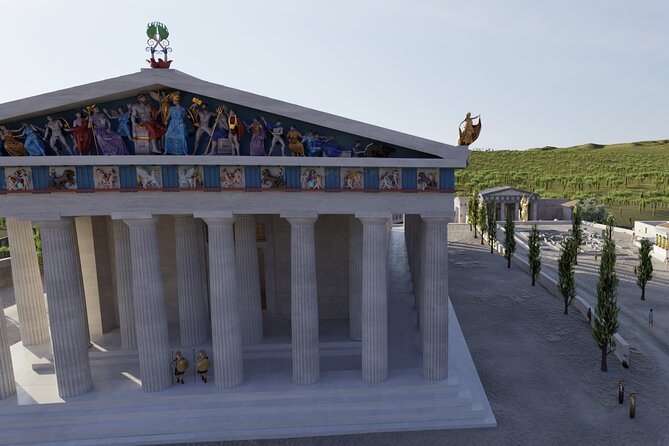
- Ancient Athens with modern visuals: The VR app adds 3D views of the Acropolis monuments and shows how the site may have looked in earlier periods.
- Five major monuments plus two historic performance spaces: You’ll see the Theater of Dionysus, Parthenon, Propylaea, Temple of Athena Nike, Erechtheion, and Herodes Atticus Odeon.
- Self-guided timing: The planned visit lasts about two hours, but you can pause the audio and take time for photos and views.
- Nine audio languages: The application provides information in nine languages, although the booking is offered in English.
- Strong city views: From the Acropolis, you can look across Athens toward the surrounding mountains and the Aegean Sea.
- Bring your own equipment: A mobile phone and earphones are not included, and transportation to the Acropolis is your responsibility.
The Acropolis visit begins on the South Slope
Your meeting point is on Dionysiou Areopagitou at the South Slope of the Acropolis. This location puts you near the archaeological complex and the first part of the route, rather than beginning with a long city transfer.
The experience is designed for independent entry. You receive a digital ticket for the Acropolis and Parthenon, then use the virtual audio guide application as you move between the monuments. There is no live instructor leading a group, so you will need to read the instructions, keep track of the route, and operate the phone yourself.
That arrangement has a real advantage. The Acropolis can feel crowded, and a fixed group pace does not suit everyone. You can stop at a viewpoint, listen to a section twice, or move ahead if a particular explanation is less important to you. The map and route instructions are useful for keeping your bearings among the different structures.
The advertised visit lasts about two hours. That is enough for a focused first look, especially if you want the main monuments and a few good photographs. It is not a leisurely archaeological study session, so you should allow extra time if you plan to linger at every stop or visit the Acropolis Museum afterward.
More Skip-the-Line Audio Guide Tickets in Athens
- Acropolis & Parthenon Entrance Ticket w/optional SG Audio Tours
★ 3.5 · 606 reviews - Athens: Ancient Agora E-Ticket and Audio Tour
★ 3.9 · 413 reviews - Delphi full day V.R audio guided tour with entry ticket
★ 5.0 · 405 reviews
Theater of Dionysus: begin where Greek drama took shape
The Theater of Dionysus is one of the oldest theaters in the world. It is dedicated to Dionysus, the god associated with wine and theater, and it gives you an early sense of how public life and performance worked in ancient Athens.
The theater is more than a quick photo stop. It helps explain that the Acropolis was not only a collection of temples. It was part of a larger civic and religious center where drama, festivals, worship, and public identity met.
The audio guide gives you context as you look across the seating area and performance space. The VR element is useful here because the surviving stone does not immediately show the full scale or atmosphere of an active theater. The digital reconstruction helps you picture the venue when performances drew large crowds.
You will probably spend less time here than at the Parthenon, but do not rush past it. This opening stop gives the rest of the route a human setting. You are not only looking at monuments on a hill. You are following the spaces where Athenians watched plays, honored gods, and gathered for major events.
The Parthenon: the main reason most people come
The Parthenon is the centerpiece of the visit and the place where the VR feature has its greatest value. The temple was dedicated to Athena, the city’s patron goddess, and its design reflects the power and confidence of classical Athens.
You cannot simply recreate the original building with your eyes. Much of what made the Parthenon striking has been lost, damaged, or moved. The VR views help bridge that gap by showing the structure with more of its former appearance and color suggested through digital reconstruction.
I like this approach because it gives you two experiences at once. First, you see the actual ancient remains, with all their cracks, missing sections, and long survival. Then you use the app to consider the building as a complete monument rather than a partial shell.
Take time to look beyond the front columns. The Parthenon also matters because of its position above Athens. From the Acropolis, you can see the city spreading below, with mountains around it and the Aegean Sea visible in the distance. The view connects the temple to the city it was built to represent.
The site can be busy, and the stone surfaces can be slick. Wear comfortable shoes and take water, especially in warm weather. An early morning start is a sensible choice because it can reduce exposure to heat and may make the approach feel calmer.
Propylaea: a grand entrance with an awkward modern reality
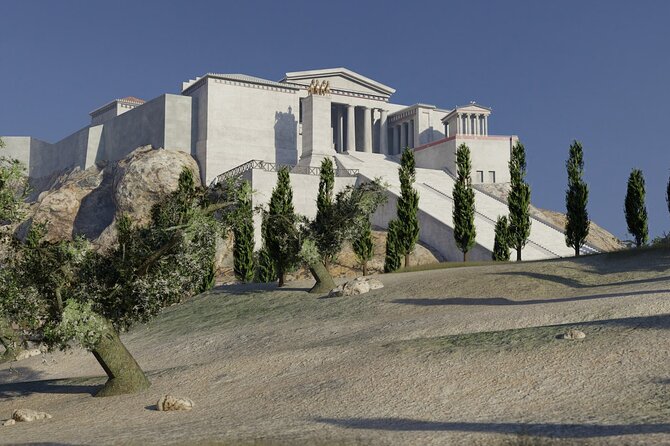
The Propylaea is the monumental gateway to the Acropolis. It was designed to make arrival feel important, and its scale prepares you for the sacred buildings beyond it.
The entrance also reminds you that the Acropolis is a working archaeological site, not a restored ancient city. You will see surviving columns and architectural fragments, but you should not expect a complete gateway that looks exactly as it did in antiquity.
The VR guide helps by supplying the missing visual information. It gives you a clearer idea of the gateway’s intended form and its role in controlling access to the hilltop sanctuary.
The route through the Propylaea can be one of the more memorable moments of the visit because the view opens gradually as you move upward. Follow the app’s directions, but also look up from the screen. It is easy to spend too much time watching the reconstruction and miss the actual stonework in front of you.
More Skip-the-Line Audio Guide Tickets in Greece
- Acropolis & Parthenon Admission Ticket w/ self guided audio tours
★ 3.5 · 172 reviews - Athens: Roman Agora & Ancient Agora E-ticket & 2 Audio Tours
★ 4.1 · 107 reviews - Athens: Acropolis Entry Ticket & VR Audio Guided Tour
★ 3.1 · 75 reviews - Athens National Archaeological Museum E-Ticket with Audio Guide
★ 3.0 · 57 reviews
Temple of Athena Nike: a small monument with a big message
The Temple of Athena Nike is smaller than the Parthenon, but its purpose is easy to understand. It honored Athena as the goddess of victory and carried a message about Athens’ ambitions and resilience.
The temple’s compact size makes it a useful contrast to the large buildings nearby. You can appreciate its proportions and position without needing to cross a broad site. The audio section explains why a city would place a monument to victory at such a prominent point.
The VR reconstruction adds meaning here because the structure’s original setting and appearance are not always obvious from the surviving remains. Instead of treating it as a minor stop, you can see it as a carefully placed symbol at the entrance to the Acropolis.
Expect this part of the route to take about 30 minutes when combined with the Erechtheion area. That timing is enough for the guide’s main explanations and photographs, though the precise pace is yours.
Erechtheion and the famous Caryatids
The Erechtheion is one of the most distinctive buildings on the Acropolis. Its most recognizable feature is the row of Caryatids, sculpted female figures used as architectural columns.
The building is also tied to the myths of Athena and Poseidon. Those stories help explain why the Erechtheion has an unusual plan rather than the simple rectangular form you might expect from a Greek temple.
This is one of the places where an audio guide earns its keep. Without context, the Caryatids can seem like a striking design detail. With the explanation, you can connect the figures, the building’s shape, and the religious stories linked to the Acropolis.
The VR application adds another layer by showing how the building may have appeared in its original setting. You still need to look carefully at the real monument, since the surviving structure is the reason you came. Use the digital view as a comparison, not as a replacement.
Herodes Atticus Odeon: an ancient venue still linked to performance
The Odeon of Herodes Atticus sits on the Acropolis complex and was built as an amphitheater for music and theater. It is still used for performances today, which gives the site an unusual connection between ancient Athens and modern cultural life.
The venue’s design makes more sense when you consider sound. The VR guide explains its acoustic role and helps you picture how a performance space functioned before modern amplification.
You may not enter the theater itself as part of this ticketed route, but you can appreciate its form and setting. The audio section is a good reminder that ancient monuments were built for use. They were not silent museum pieces when first constructed.
This stop is scheduled for about 30 minutes. That gives you time to view the Odeon, listen to the explanation, and take in the slope below the main summit.
What the VR audio app adds, and what it cannot do
The application combines audio commentary with 3D visualizations. The best use of it is comparative: look at the actual remains, then check the digital reconstruction to understand the original scale, form, or decoration.
You also receive route instructions and a map. That matters because the Acropolis includes several separate monuments, and a first visit can feel confusing. The map helps you move in the intended order instead of wandering past a stop or doubling back.
The app provides information in nine languages. The booking is offered in English, but the multilingual audio makes the experience practical for a wider range of visitors. Check the available language options before you start so you are not trying to sort this out on the hilltop.
The limitations are just as clear. There is no live guide to answer a question, point out a detail you have missed, or adjust the explanation to your interests. You also need your own mobile phone and earphones. Neither is included.
A phone battery problem, poor connection, or uncomfortable earphones could make the audio less useful. Bring a charged device and suitable earphones. Keep the screen time under control, too. The Acropolis deserves your attention in three dimensions, not only through a digital reconstruction.
Is $54.42 a fair price?
At $54.42 per person, this is not the cheapest way to enter the Acropolis. The value comes from combining admission with the VR audio application and the convenience of a planned route.
For you, the price makes the most sense if you want historical explanation but do not want to join a live group. You get the freedom to move at your own speed, plus visual help with monuments that are difficult to picture from ruins alone.
The value is weaker if you already plan to use a separate guidebook, museum guide, or live tour. In that case, the VR feature may overlap with information you already have. Since transportation, a phone, and earphones are not included, factor those practical needs into your budget.
The maximum group size is listed as 50, but this is still a self-guided experience rather than a traditional group walk. You are not promised personal attention from an expert. You are paying mainly for entry, the digital route, and the reconstructed views.
Timing, weather, and physical comfort
The advertised duration is about two hours. The Acropolis involves an uphill visit over historic stone paths, so comfortable footwear is essential. The paths can be slick, and the approach is not a place for shoes with poor grip.
Bring water. One of the strongest practical tips for this experience is to go early in the morning to reduce heat and crowds. That timing also gives you a better chance of pausing at the monuments without feeling pressed by the people around you.
The experience requires good weather. If poor conditions cause cancellation, you are offered a different date or a full refund. You can cancel for a full refund up to 24 hours before the scheduled start time. Inside that 24-hour window, changes are not accepted and the payment is not refunded.
The activity is near public transportation, but getting to the South Slope meeting point is not included. Plan that part yourself and arrive ready to begin the route.
Who should choose this Acropolis experience?
I would recommend it most strongly to independent visitors who want structure without a live guide. It suits you if you enjoy listening at your own pace, checking visual reconstructions, and stopping for photographs when the view catches your eye.
It is also a good choice for people who find ancient ruins difficult to interpret. The VR images give you a clearer sense of the original buildings, while the audio explains why each monument mattered.
Families and mixed-interest groups may appreciate the flexibility, provided everyone can use a phone and manage the uphill route. You can pause the guide instead of keeping a whole group on one fixed schedule.
I would look elsewhere if you want detailed conversation, personal recommendations, or an expert who can respond to questions in real time. This product does not include a live guide or instructor. It also may not suit anyone who dislikes using a phone during a major sightseeing stop.
Should you book the Acropolis VR audio tour?
Book this experience if you want the Acropolis’ essential monuments, a digital ticket, and visual help with the ancient appearance of the site. The Parthenon reconstructions, flexible pace, and nine-language app make it more useful than a basic entry ticket for many independent visitors.
Think twice if $54.42 feels high for a self-guided visit or if you already have a strong guidebook and audio source. You must also bring your own phone and earphones, and you will handle the route without a guide.
For a first visit to Athens, I see the best value in using the tour early in the day, carrying water, wearing shoes with a secure grip, and leaving enough time to appreciate the views rather than racing from one audio stop to the next. If you want a clear introduction to the Acropolis with modern visual aids, this is a practical choice.
FAQ
Where does the Acropolis VR audio tour start?
The activity starts at the South Slope of the Acropolis of Athens, on Dionysiou Areopagitou in Athens.
Where does the experience end?
The activity ends back at the meeting point.
How long does the tour last?
The advertised duration is approximately two hours.
Is admission to the Acropolis and Parthenon included?
Yes. The experience includes an entry ticket for the Acropolis and Parthenon.
Is there a live guide?
No. This is a self-guided experience with a virtual audio guide application. A live guide or instructor is not included.
How many languages are available?
The virtual application provides information in nine languages. The experience itself is offered in English.
Do I need to bring my own phone and earphones?
Yes. A mobile phone and earphones are not included, so you need to bring your own equipment for the audio guide.
Is transportation to the Acropolis included?
No. Transportation to the Acropolis is not included. The meeting point is near public transportation.
Can I cancel for a refund?
Yes. You can cancel at least 24 hours before the start time for a full refund. Cancellations or changes made less than 24 hours before the start time are not refunded or accepted. If poor weather causes the activity to be canceled, you will be offered another date or a full refund.
Just added around Athens
- Temple of Olympian Zeus: Self-Guided Audio Tour on your Phone (without ticket)★ 4.0 · 8 reviews
- Athens: Acropolis Museum Ticket with Self-Guided Audio tour App★ 3.5 · 40 reviews
- Self Guided Tour In Athens With 100 Captivating Audio Stories★ 4.0 · 4 reviews
- Athens National Archaeological Museum E-Ticket with Audio Guide★ 3.0 · 57 reviews
- Ancient Agora of Athens: A Self-Guided Audio Tour★ 3.5 · 3 reviews
- Athens Highlights Self guided scavenger hunt and Walking Tour★ 4.5 · 6 reviews
- Athens Hop-On Hop Off w/ Acropolis & Acr.Museum tickets & 3 audio★ 3.0 · 5 reviews
- Shore Excursion: Athens Half Day Self-Guided Tour with Private Driver★ 4.5 · 8 reviews
Athens Audio Tours, compared.

Athens: Cape Sounio & Poseidon Temple Trip with Audio Guide
Read our review →

From Athens: Delphi Full Day V.R. Audio Guided Tour
Read our review →
Athens: Acropolis Museum Ticket with optional Audio Guide
Read our review →
From Athens: Small-Group Delphi, Museum & Arachova Day Trip
Read our review →
Athens: Peloponnese Highlights Day Trip and V.R. Audio Guide
Read our review →
Athens: Acropolis Museum Ticket with Audio Guide
Read our review →