REVIEW · ATHENS AUDIO TOURS
Athens: Roman Agora & Ancient Agora E-ticket & 2 Audio Tours
The most useful feature here is the pairing of two major archaeological sites in one day. You visit the smaller Roman Agora first, then walk to the larger Ancient Agora, using offline audio tours to add context to stones and columns that can otherwise feel hard to read.
I like the flexible self-guided format, since you can pause, replay, and move at your own speed. I also like the practical route planning, with four suggested time slots and clear starting points near Monastiraki and Thissio. The main drawback is the audio quality: the narration may sound automated, and the commentary does not fully reflect current construction changes.
Key points to know
- Start at the Roman Agora: Its Gate of Athena Archegetis and Tower of the Winds make a compact first stop.
- Continue to the Ancient Agora: This larger site includes the Stoa of Attalos, archaeological displays, and broad city views.
- Use the temporary entrance carefully: Construction has closed the main Ancient Agora entrance, so you must approach from Apostolou Pavlou Street near Akamantos Street.
- Bring your own equipment: You need a charged Android or iPhone, headphones, and 200 to 300 MB of storage.
- Choose your ticket time wisely: Suggested pairings run from 8:00 AM to 4:00 PM, with two hours between entries.
- Check discount rules before buying: Reduced and free admission tickets cannot be booked through this product.
Two agoras, two different views of Athens
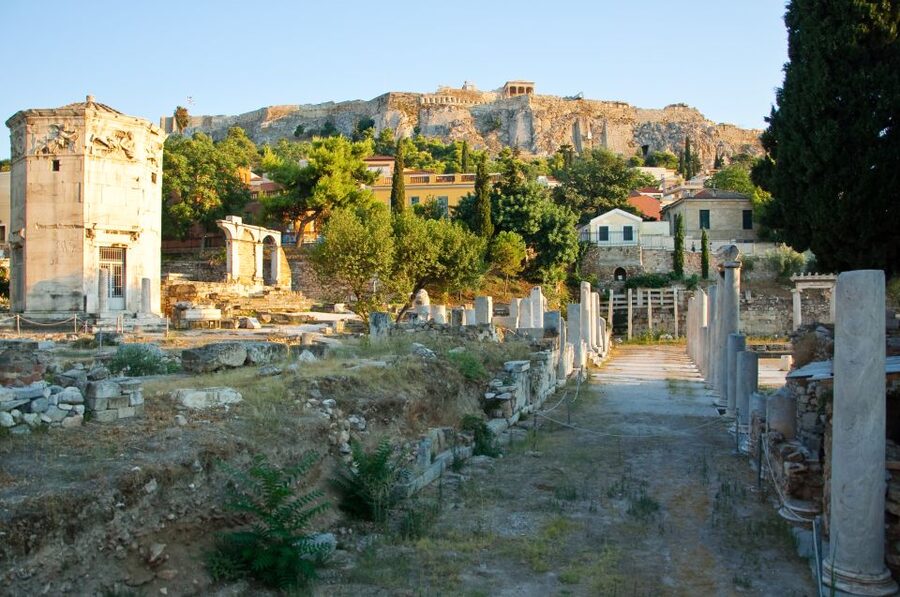
The Roman Agora and Ancient Agora sit close together, but they tell different stories about Athens. The Roman Agora is smaller and more orderly, linked to the city’s later Roman period. The Ancient Agora is broader and more layered, tied to public life, politics, philosophy, commerce, and the development of democracy.
That contrast is what makes this pairing worthwhile. You do not simply see two sets of ruins. You move from a compact Roman-era monument area into the larger civic heart of classical Athens.
The ticket covers one day of entry to both sites, with a timed admission slot for each. There is no guide meeting you at the entrance. Instead, you download the Clio Muse app and the two audio tours before arriving, then follow the route on your own phone.
I would think of this as a history-focused sightseeing tool, not a guided tour. You get structure and explanation, but you also get the freedom to stop for photographs, skip a section, or replay something that did not make sense the first time.
More Skip-the-Line Audio Guide Tickets in Athens
- Acropolis & Parthenon Entrance Ticket w/optional SG Audio Tours
★ 3.5 · 606 reviews - Athens: Ancient Agora E-Ticket and Audio Tour
★ 3.9 · 413 reviews - Delphi full day V.R audio guided tour with entry ticket
★ 5.0 · 405 reviews
Roman Agora first: a compact start near Monastiraki

The suggested route begins at the Roman Agora. You can choose from four pairings:
- 8:00 AM Roman Agora, followed by 10:00 AM Ancient Agora
- 10:00 AM Roman Agora, followed by 12:00 PM Ancient Agora
- 1:00 PM Roman Agora, followed by 3:00 PM Ancient Agora
- 2:00 PM Roman Agora, followed by 4:00 PM Ancient Agora
The site entrance is on Epaminonda 6 to 22, near Monastiraki. From Monastiraki Metro Station, use Areos Street and walk about 230 meters toward the Roman Agora. This is a simple starting point if you are already in central Athens.
The Roman Agora works well as the first stop because it is the smaller of the two sites. You can get your bearings without using up the energy needed for the larger Ancient Agora. One practical tip is to arrive with the audio tour already downloaded. You do not want to be standing outside the entrance trying to find a signal, activate a link, or clear storage from your phone.
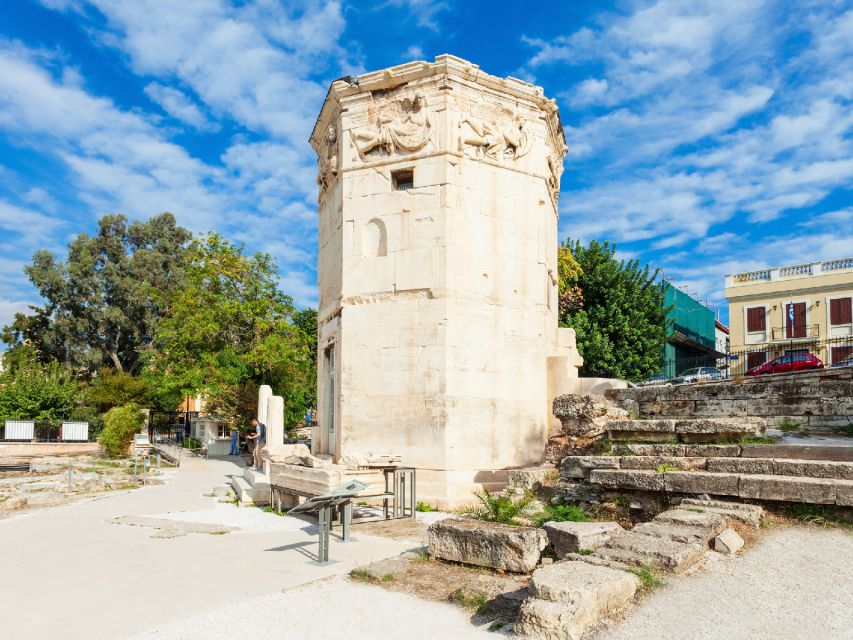
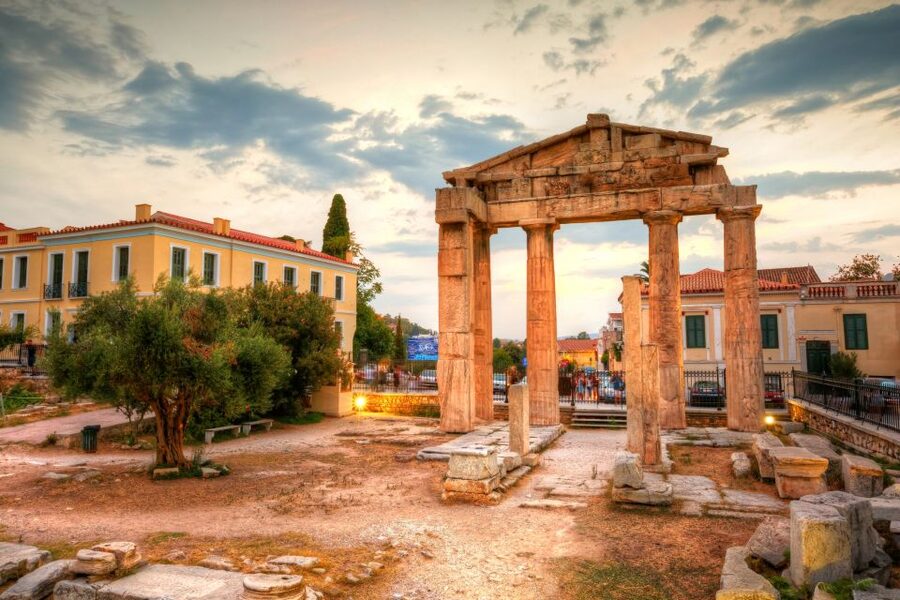
Inside, look for the Gate of Athena Archegetis, one of the most recognizable features of the site. The Tower of the Winds is another major draw. Its carved sides and unusual shape make it more than a pile of old masonry, and the audio commentary can help explain why this structure mattered.
The route ends at the Mosque of the Conqueror, within the archaeological site. That endpoint matters because you should not expect the audio tour to guide you back to Monastiraki. Once you finish, you are on your own for the short walk to the next area.
The Roman Agora may disappoint you if you expect a large, fully reconstructed complex. It is a relatively brief visit, and some parts can feel sparse. I would treat it as an introduction rather than the main event. Its value comes from the specific monuments and its role in showing how Athens changed under Roman influence.
Walking from the Roman Agora to the Ancient Agora
The two sites are close, but this is still a walking day. Your second entry is scheduled two hours after the first, giving you time to finish the Roman Agora, walk through the surrounding central streets, and reach the Ancient Agora entrance.
The Ancient Agora has a temporary entrance because of ongoing construction. The main entrance is closed, so you must use the entrance on Apostolou Pavlou Street, at the level of Akamantos Street. The only stated access route is on foot from Thissio Station.
This is the part of the plan that requires the most attention. Do not simply follow an old map or assume the usual entrance is open. Check the current route before you leave your hotel, and allow time to find the temporary entrance. The audio route may not perfectly match the latest site conditions, so follow staff instructions once you arrive.
The two-hour gap is sensible, but do not treat it as unlimited spare time. Construction, photographs, a snack stop, and a wrong turn can eat into it quickly. If you choose the 8:00 AM start, you have the best chance of enjoying both sites before the strongest afternoon heat. The later slots may suit you better if you prefer a slower morning, but Athens can be hot and bright, especially when you are walking over exposed archaeological ground.
Ancient Agora: the larger and more rewarding visit
The Ancient Agora is the stronger half of this combination for most people. It covers a larger area and connects more directly with the public life of classical Athens. This is where you get a better sense of the Agora as a place where civic business, trade, debate, and daily activity came together.
The site is not a single monument. It is a collection of ruins, pathways, viewpoints, and reconstructed or preserved structures. That makes an audio guide particularly useful. Without context, you may see foundations and columns without understanding what each space once did.
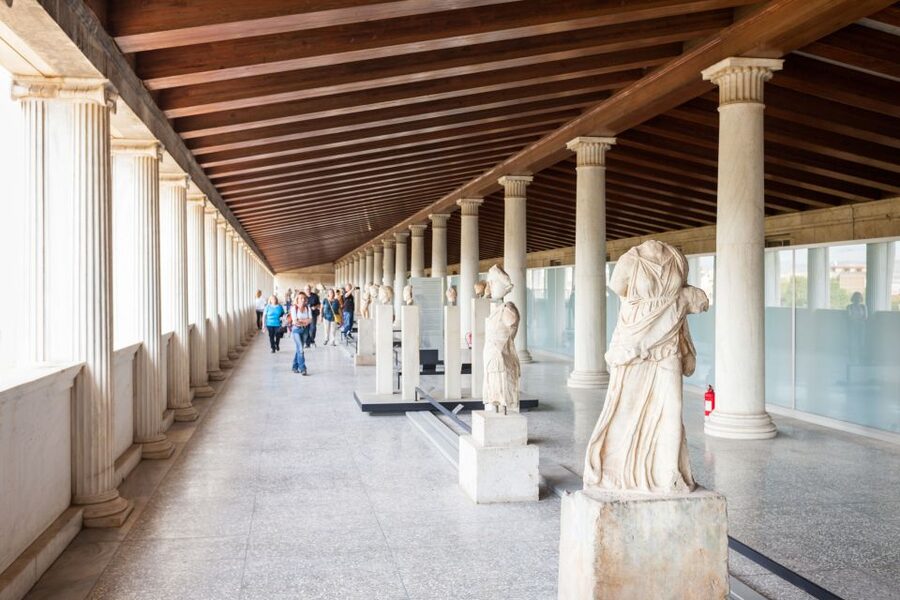
The route ends at the Stoa of Attalos, inside the archaeological site and not far from the entrance. The Stoa is one of the most important parts of the visit because it gives the site a clearer architectural shape. Its museum contains historical exhibits, helping you connect the objects on display with the open-air ruins outside.
I like this indoor and outdoor balance. You can examine archaeological material in the museum, then return to the site and look at the remains with a better sense of place. If the sun is strong, the museum also gives you a useful change of pace.
The Ancient Agora also offers viewpoints over Athens. Bring your phone or camera, but do not let photographs replace the site itself. The best views help you understand the Agora’s setting within the city, while the audio narration helps explain why this ground mattered.
More Skip-the-Line Audio Guide Tickets in Greece
- Acropolis & Parthenon Admission Ticket w/ self guided audio tours
★ 3.5 · 172 reviews - Athens: Acropolis Entry Ticket & VR Audio Guided Tour
★ 3.1 · 75 reviews - Athens National Archaeological Museum E-Ticket with Audio Guide
★ 3.0 · 57 reviews - Acropolis Museum E-Ticket and Multilingual Audio Guide
★ 4.0 · 42 reviews
What the two audio tours actually add
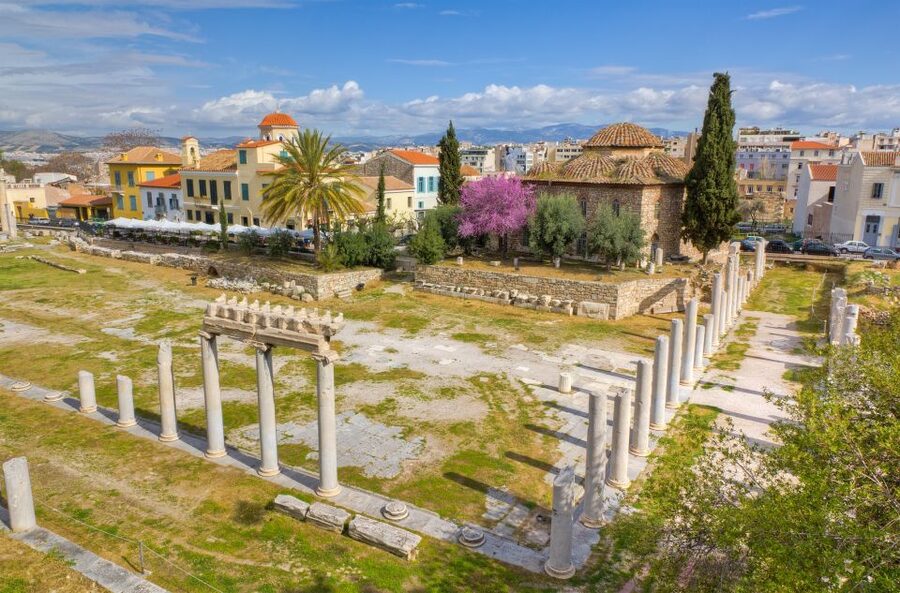
The audio tours are self-guided, smartphone-based, and available in English, Spanish, German, French, and Italian. The content includes text, audio narration, and maps that can be used offline. That offline access is a real advantage because it avoids roaming charges and reduces the need for a strong mobile connection inside the sites.
You receive an activation link by email. Download the app and both tours before your visit. You need an Android phone running version 5.0 or later, or a compatible iPhone. The tours do not work with older devices such as the iPhone 5, iPhone 5C, iPod Touch fifth generation, iPad fourth generation, iPad Mini first generation, or Windows Phones.
You also need 200 to 300 MB of free storage. Check this before leaving your accommodation. A low battery is another avoidable problem, so charge your phone fully and bring headphones.
The narration aims to make the ruins easier to understand through stories and historical explanation. You can replay the audio before or after your visit, which is useful if you want to prepare in advance or review the main points later.
The limitation is that this is not a live guide. The voice and delivery may feel flat, and pronunciation can be imperfect. The audio also cannot react to your questions, adjust the route for construction, or point out something you happen to notice. If you prefer conversation and personal interpretation, you may find the format thin.
Still, a self-guided audio tour can suit you well if you like moving independently. You can pause while taking photographs, skip sections that interest you less, and replay explanations without holding up a group.
Price, ticket rules, and who gets value
The price is $51 per person. That is not a small add-on for two short archaeological visits, so value depends on how much you want the audio explanation and the convenience of prearranged timed entry.
The package makes the most sense if you want both sites and would otherwise need to arrange two separate admissions. The audio tours and offline maps add practical value, especially if you do not want to read every sign or prepare a detailed route yourself.
The price is less attractive if you qualify for free or reduced admission. Discount tickets are not available through this booking and must be obtained at the ticket booth onsite. One important rule is that you book by device, not by participant. If two people plan to share one phone and one set of audio content, check the booking terms carefully before paying for two devices.
Families should pay close attention to this point. A 16-year-old may qualify for free entry at the archaeological sites, but the product does not adjust its price for that kind of discount. Check eligibility at the official ticket office before booking, particularly if your party includes children or other people who may qualify for reduced admission.
The booking is also non-refundable. That makes careful planning more important than usual. Confirm your date, ticket times, phone compatibility, and entrance details before you commit.
Timing, heat, and practical preparation
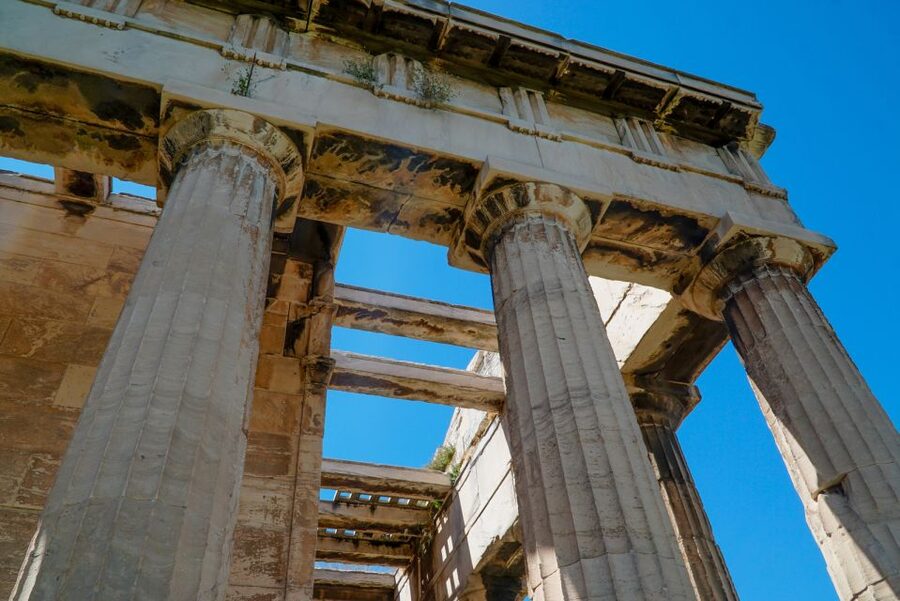
Wear comfortable shoes. The visit involves walking between sites and moving over archaeological ground, where surfaces may not always be smooth. Sunglasses, a sun hat, and sunscreen are sensible, especially for the later time slots.
I would choose the earliest available pairing if you want cooler conditions and more time to think. The morning route also gives you a better buffer if the temporary Ancient Agora entrance takes extra time to locate.
The 1:00 PM and 2:00 PM options are useful if your morning is occupied, but you should prepare for stronger sun. Bring water, though the supplied information does not specify water facilities inside the sites.
Keep your phone charged and your headphones ready. A portable battery can help, but it is not listed as an included item. The tour has no transportation, so you arrange your own way to Monastiraki, Thissio, and the sites on foot.
Site rules can change. Construction or special restrictions may alter the route, and you must follow instructions from archaeological site staff even if the app suggests something different.
Who should book this Athens Agora visit
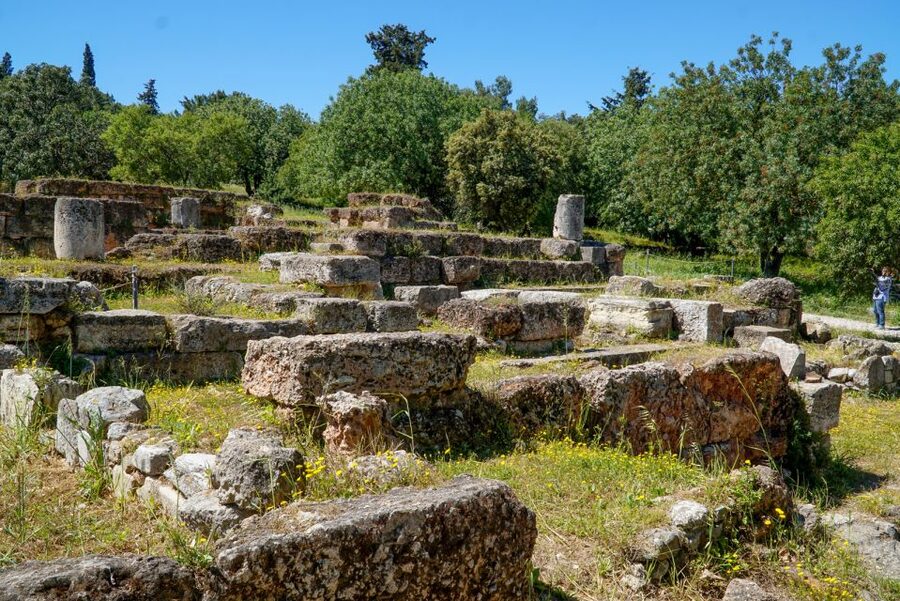
I would recommend this package to an independent visitor who wants clear structure without joining a group. It is also a good match if you enjoy listening while walking and want the freedom to set your own pace.
It suits first-time Athens visitors who plan to see both agoras in one day. The combination gives you a useful contrast between Roman Athens and the older civic center connected with classical public life.
It is less suitable if you want a personal guide, strong storytelling, or help adapting the visit to construction changes. It is also a poor fit if your phone is old, your battery is unreliable, or you need a child or reduced admission ticket.
Should you book the two Agora audio tour?
Book it if you want both archaeological sites, prefer self-guided sightseeing, and are comfortable using your phone as the guide. The Ancient Agora is the stronger reason to go, while the Roman Agora adds a compact look at Athens under Roman rule.
Before paying, confirm the discount rules, check your device, download the content, and note the temporary Ancient Agora entrance. If you do those things, the package offers a practical way to visit two important sites without arranging separate tickets or carrying a guidebook.
If you want human interaction or polished narration, choose a live guide instead. If you value independence and a prepared route, this is a useful, if imperfect, Athens pairing.
FAQ
How long is the activity valid?
The tickets are valid for one day. You select time slots for the Roman Agora and Ancient Agora.
What time combinations are available?
The suggested combinations are 8:00 AM and 10:00 AM, 10:00 AM and 12:00 PM, 1:00 PM and 3:00 PM, or 2:00 PM and 4:00 PM. The Roman Agora comes first in each pairing.
Where does the Roman Agora audio tour start?
It starts at the Roman Agora entrance on Epaminonda 6 to 22 in Athens. The nearest metro station is Monastiraki, followed by a walk of about 230 meters along Areos Street.
Where should I enter the Ancient Agora?
Because of construction, the main entrance is temporarily closed. Use the temporary entrance on Apostolou Pavlou Street at the level of Akamantos Street, approaching on foot from Thissio Station.
Which languages are available for the audio tours?
The audio tours are available in English, Spanish, German, French, and Italian.
Do I need my own smartphone and headphones?
Yes. A compatible Android or iOS smartphone, headphones, and a charged phone are required. The activity does not provide a smartphone or headphones.
Can I use the tickets for a child or reduced admission visitor?
Free and reduced admission tickets must be obtained at the onsite ticket booth and do not include skip-the-line privileges. Check eligibility before booking because this product does not handle those reduced fares.
Just added around Athens
- Temple of Olympian Zeus: Self-Guided Audio Tour on your Phone (without ticket)★ 4.0 · 8 reviews
- Self Guided Tour In Athens With 100 Captivating Audio Stories★ 4.0 · 4 reviews
- Athens National Archaeological Museum E-Ticket with Audio Guide★ 3.0 · 57 reviews
- Athens: Acropolis Museum Ticket with Self-Guided Audio tour App★ 3.5 · 40 reviews
- Ancient Agora of Athens: A Self-Guided Audio Tour★ 3.5 · 3 reviews
- Athens Highlights Self guided scavenger hunt and Walking Tour★ 4.5 · 6 reviews
- Athens Hop-On Hop Off w/ Acropolis & Acr.Museum tickets & 3 audio★ 3.0 · 5 reviews
- Shore Excursion: Athens Half Day Self-Guided Tour with Private Driver★ 4.5 · 8 reviews
Athens Audio Tours, compared.

Athens: Cape Sounio & Poseidon Temple Trip with Audio Guide
Read our review →
From Athens: Delphi Full Day V.R. Audio Guided Tour
Read our review →
Athens: Acropolis Museum Ticket with optional Audio Guide
Read our review →
From Athens: Small-Group Delphi, Museum & Arachova Day Trip
Read our review →
Athens: Peloponnese Highlights Day Trip and V.R. Audio Guide
Read our review →
Athens: Acropolis Museum Ticket with Audio Guide
Read our review →