REVIEW · ATHENS AUDIO TOURS
Athens: Ancient Agora E-Ticket and Audio Tour
The Ancient Agora is where Athens’ great political experiment took shape, and this self-guided visit gives that story a clear thread. You’ll move from the Temple of Hephaestus and the old lawmaking buildings to the Museum, Pnyx, Mars Hill, and the nearby prison associated with Socrates.
I like the offline audio content, since you can listen without mobile data inside the archaeological site. I also like the freedom to pause for photographs, linger in the museum, or move quickly through a less interesting ruin. The tradeoff is that the walking directions can be vague, especially where paths run side by side, and there is no live guide to help you get oriented.
Key points to know before you go
- Democracy is the main theme: Follow the story from Solon’s reforms to the Bouleuterion, popular assembly, and the methods Athens used to protect its political system.
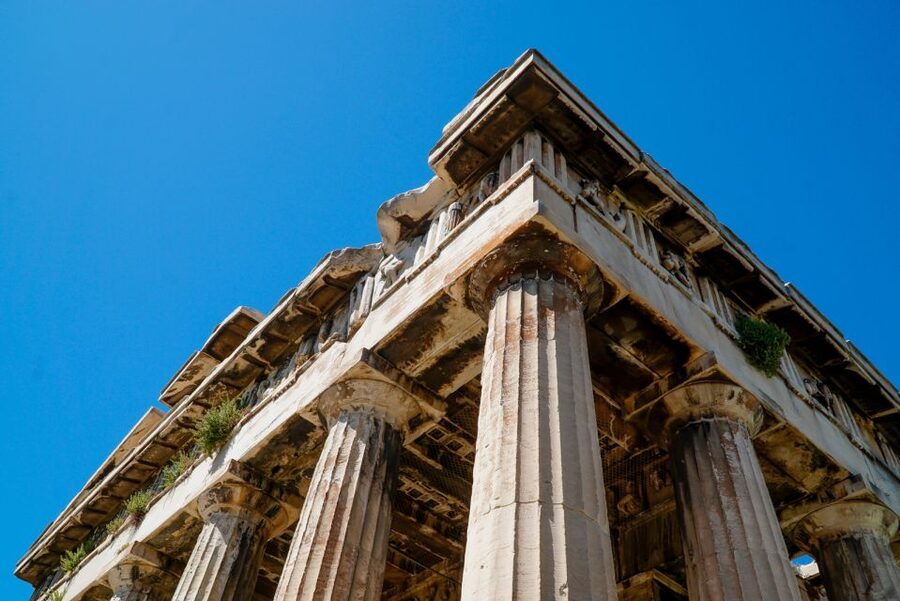
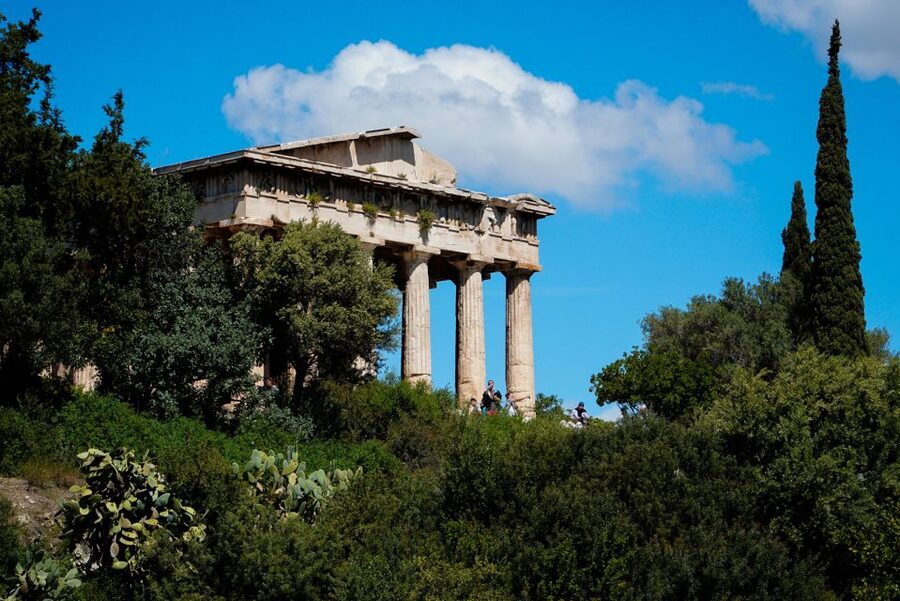
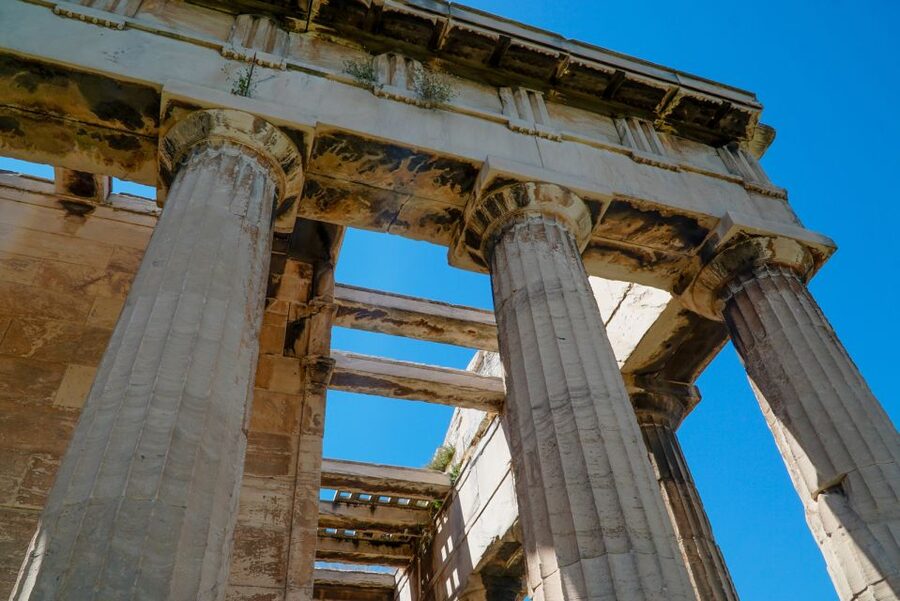
- The Temple of Hephaestus is a major highlight: This remarkably complete ancient temple gives the site an immediate visual anchor.
- The Museum adds useful detail: Its objects explain how daily civic life worked, including the sometimes harsh tools used to defend democracy.
- Pnyx and Mars Hill provide memorable views: You’ll get picture-friendly sights toward the Acropolis from the hills and rocky outcrops.
- The tour reaches Socrates and the Theatre of Dionysus: The route connects political life with philosophy and drama, though some stops are beyond the core Agora grounds.
- Download everything first: The ticket and audio tour arrive separately, and the GetYourGuide voucher alone is not accepted at the entrance.
Why the Ancient Agora deserves your time
The Acropolis gets the famous postcard, but the Ancient Agora explains how Athenian society actually worked below the hill. This was a center for politics, law, trade, religion, public debate, and ordinary social life.
At $30 per person, the experience is most useful if you want more than an entrance ticket. You are paying for admission plus a structured audio story in several languages. The value is good for independent visitors who would otherwise carry a guidebook or wander past ruins without knowing what they were used for.
You should not expect a live historian, a guided group, or constant personal assistance. The audio tour is a tool you use on your own. That makes it flexible, but it also places the responsibility for navigation and timing on you.
The listed visit takes about 90 minutes to two hours. I would allow the longer end if you want to study the museum, take photographs, and follow the extended route toward Pnyx, Mars Hill, Socrates’ prison, and the Theatre of Dionysus.
More Skip-the-Line Audio Guide Tickets in Athens
- Acropolis & Parthenon Entrance Ticket w/optional SG Audio Tours
★ 3.5 · 606 reviews - Delphi full day V.R audio guided tour with entry ticket
★ 5.0 · 405 reviews - Acropolis & Parthenon Admission Ticket w/ self guided audio tours
★ 3.5 · 172 reviews
Entering with the e-ticket
After booking, you receive a separate email from the local partner with your Ancient Agora ticket and instructions for the audio tour. Check your spam folder if the message does not appear quickly.
This detail matters. The booking voucher is not the admission ticket you show at the entrance. You need to print the actual e-ticket or download it to your phone, then use the validating machines at the site.
Download the ticket before you arrive. There is no internet access in the archaeological area, so relying on a live email or an online app connection can leave you stuck at the gate.
The meeting point can vary with the option you book. Read the instructions attached to your ticket carefully, rather than assuming the meeting point is the same for every departure or ticket type.
The entry process is intended to be straightforward, but you should still arrive prepared. Keep the correct ticket open on your phone, and avoid bringing large bags or luggage, which are not allowed.
Starting beside the Temple of Hephaestus
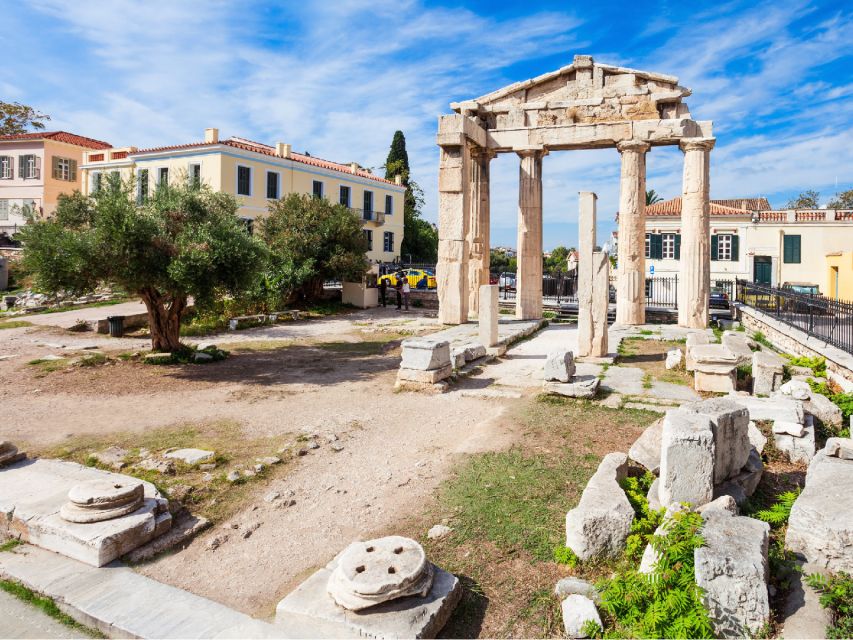
The tour begins with the political changes that made Athenian democracy possible. Solon is an early focus. His legal reforms helped move Athens toward a more organized civic society, giving you a useful starting point before you encounter the physical remains.
The Temple of Hephaestus is an excellent place to begin. It is visually strong, and its position on the hill helps you understand the Agora as more than a flat collection of stones. From here, the audio commentary connects the architecture around you with the people and institutions that shaped Athens.
The temple also gives you a chance to get comfortable with the app. Put on your headphones, check that the audio is playing, and look at the map before walking farther into the grounds.
The commentary is available in English, Italian, Greek, German, Spanish, and French. The English version received particularly strong praise for its clear pace and detailed storytelling, though some of the material assumes you already have a general education in ancient history.
The Bouleuterion and the mechanics of democracy
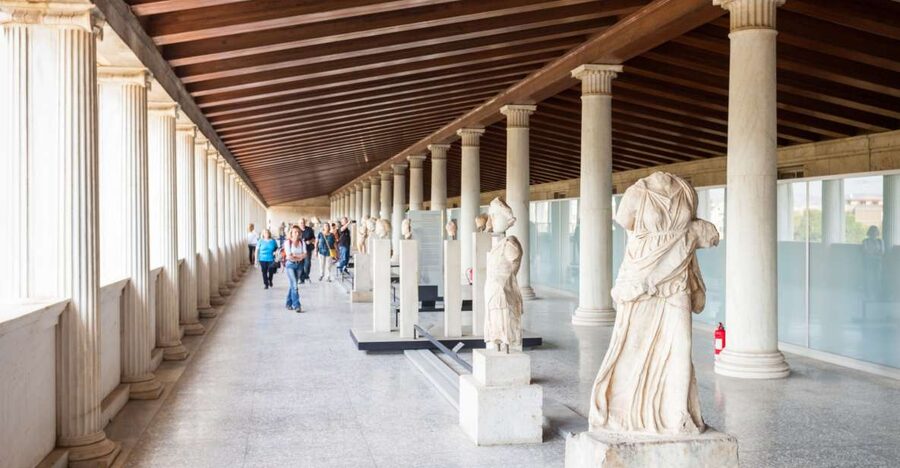
Near the Tholos, you’ll reach the remains of the Bouleuterion. This was where 500 Athenian citizens met to prepare laws and proposals for the popular assembly.
The ruins are not dramatic in the way the Parthenon is dramatic. Their importance comes from what happened there. The audio helps you picture a working political machine, with citizens handling proposals, public business, and decisions that affected the city.
That context is the best reason to choose the audio option. Without explanation, the Bouleuterion can look like another low foundation. With the story, the stones become evidence of a system that depended on meetings, debate, voting, and civic duty.
The audio also introduces figures such as Aristides the Just and Pericles. Anecdotes about these personalities make the political story easier to remember than a list of dates and institutions.
Still, keep an eye on the route. The directions have been described as a little unclear in places, especially where parallel paths are not clearly labeled. If the audio tells you to move to a particular point, compare the map with the ruins around you before setting off.
More Skip-the-Line Audio Guide Tickets in Greece
- Athens: Roman Agora & Ancient Agora E-ticket & 2 Audio Tours
★ 4.1 · 107 reviews - Athens: Acropolis Entry Ticket & VR Audio Guided Tour
★ 3.1 · 75 reviews - Athens National Archaeological Museum E-Ticket with Audio Guide
★ 3.0 · 57 reviews - Acropolis Museum E-Ticket and Multilingual Audio Guide
★ 4.0 · 42 reviews
The Museum of the Ancient Agora
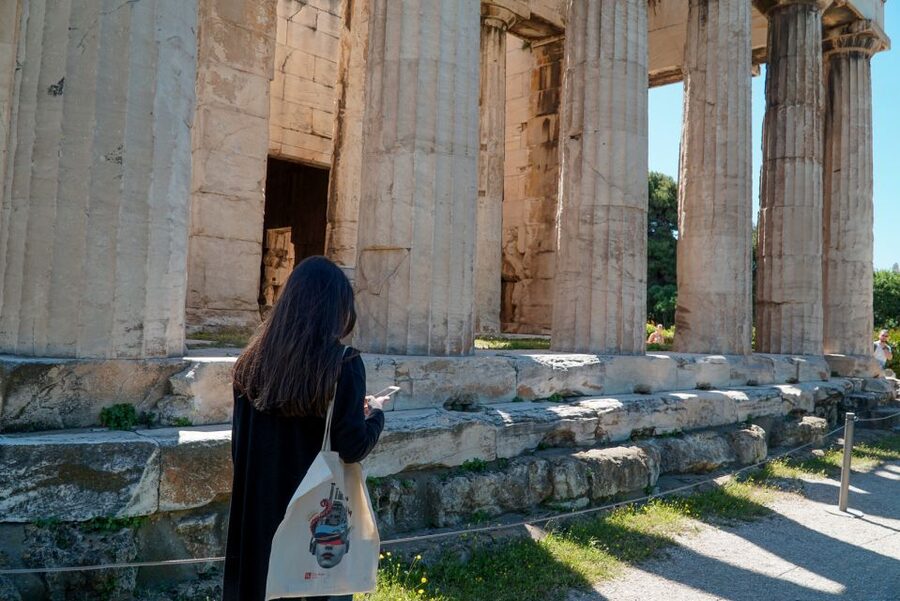
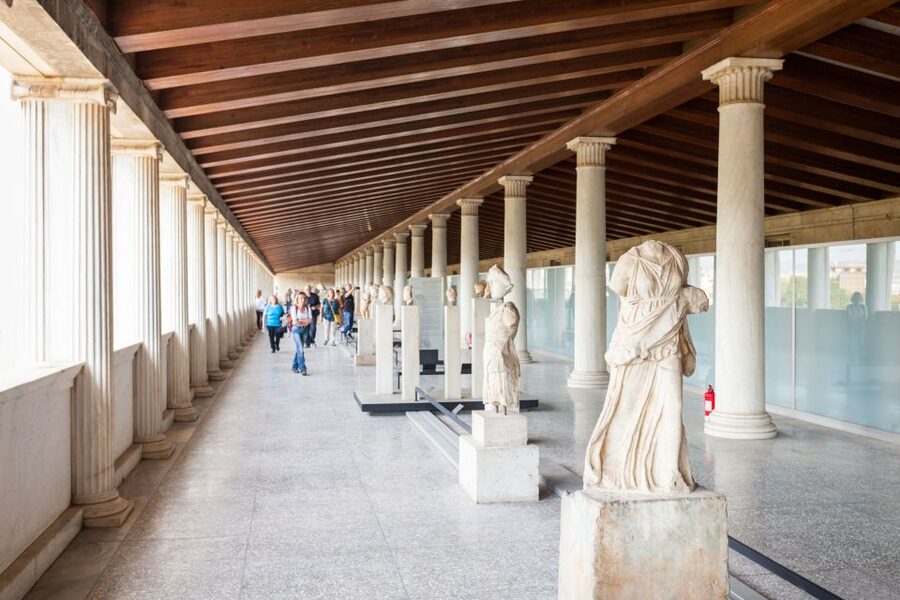
The Museum is one of the most useful parts of the visit. It gives you objects and explanations that the outdoor ruins cannot provide, helping you understand how law, citizenship, voting, and public life worked in practice.
You’ll encounter information about the ways Athenians tried to protect democracy from harmful influence. Some methods were ingenious. Others were severe. This is a good reminder that ancient democracy was not a modern liberal system, and that citizenship was limited and often defended through harsh measures.
Give the museum enough time. A quick pass will miss much of the point of the audio tour, since the indoor displays fill in the social and political details behind the outdoor buildings.
One especially practical tip is to visit the second floor. It offers a different view over the Panathenaic Way, and it is easy to overlook if you treat the museum as a short stop between ruins. The museum is also air-conditioned, which makes it a welcome pause during Athens’ hotter months.
The museum can help break up the heat and walking. If you visit in summer, consider doing the outdoor parts early in the morning or late in the afternoon, with a longer indoor stop during the hottest period.
Pnyx, Mars Hill, and the wider Athenian story
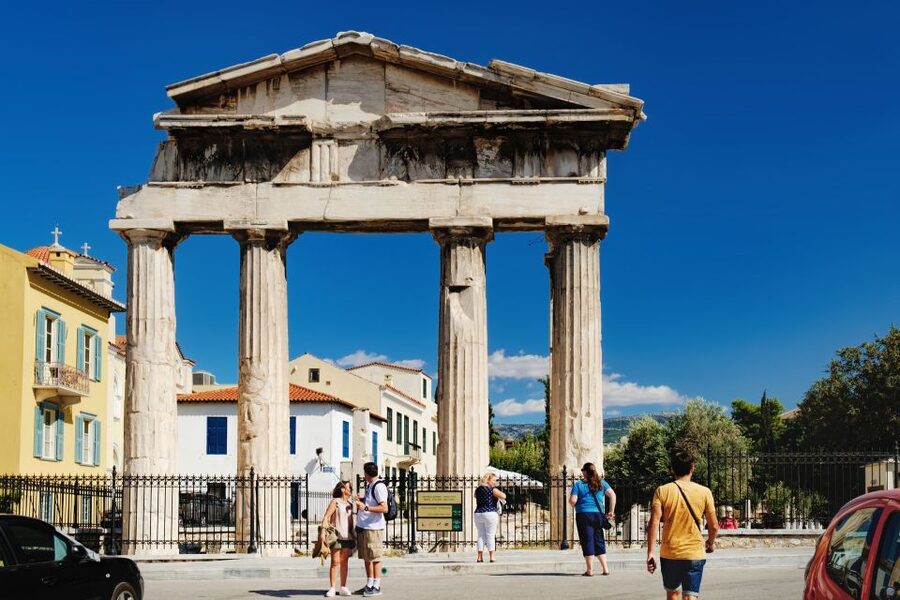
The route continues toward the Pnyx and the Rock of Ares, also known as Mars Hill. These locations offer some of the best views toward the Acropolis included in the experience.
The Pnyx is especially important because it connects the physical setting with public speech and assembly. From its hilltop position, you can imagine citizens gathering to hear arguments and make decisions. The view helps you see how closely Athenian civic life was tied to the surrounding hills and monuments.
Mars Hill adds another viewpoint and another layer of meaning. You’ll want a moment here for photographs, but listen to the commentary first if possible. The audio gives the setting a stronger political and cultural purpose than the view alone.
The walking can be uneven, and some points are not wheelchair accessible. Comfortable shoes are essential. This is not a flat indoor museum visit, and the route may feel more demanding in hot weather.
The navigation is the weak point of the self-guided format. Some paths are similar, and not every ruin is clearly labeled. If you are not comfortable reading a map, allow extra time and stay attentive to the audio instructions.
Finding Socrates’ prison
The route toward the hill of Philopappos includes the place identified as the Prison of Socrates. The site offers a connection to the philosopher’s final days and to the broader question of how Athens treated challenging voices.
The stop is not a grand monument. Its appeal is the story and the setting. The audio gives you useful background on Socrates’ life and death, and one of the more memorable side stories concerns Samuel the Cobbler and his relationship with the philosopher.
This is also where you should keep your expectations in check. The itinerary links several nearby archaeological and historical points, but the exact boundaries between the Ancient Agora route, surrounding hills, and the area near the Acropolis may not always feel obvious on the ground.
The walk is worthwhile if you enjoy linking sites and stories. If you only want the central Agora and museum, you can spend less time on the outer sections. The self-guided format lets you make that choice.
Finishing near the Theatre of Dionysus

The tour ends within easy reach of the Acropolis archaeological area, in front of the Theatre of Dionysus. This is a strong finish because it shifts the story from political debate to performance and public drama.
The theatre is associated with plays by Aeschylus, Sophocles, and Euripides. Seeing the place where those tragedies were staged gives you a direct connection to classical literature, especially after hearing how public life, philosophy, and civic identity shaped Athenian culture.
This ending also helps with sightseeing plans. You can continue toward the Acropolis area after the audio tour, though your admission arrangements for other sites are separate unless you have purchased a different combination ticket.
The route therefore works well as part of a larger day in central Athens. Just watch your energy. The Agora, museum, hills, and theatre area can add up to several hours of walking, especially if you stop often for photographs.
What the audio app does well

The strongest part of the digital tour is its pace. You can listen without keeping up with a group, pause when you want a photograph, and replay information that needs a second hearing.
The commentary gives the site a clear theme rather than treating each ruin as an isolated object. Solon, Aristides, Pericles, the Bouleuterion, the Museum, Pnyx, Socrates, and the Theatre of Dionysus all fit into a wider account of Athenian civic life.
The app works offline after you download the content. That avoids roaming charges and removes the need for a data connection inside the archaeological site.
There are a few technical limits. The audio may stop if you zoom in to take a photograph, so check your playback after using the map or camera. The map is useful, but the walking directions could be more precise.
You need an Android or iOS smartphone and your own headphones. The system does not support Windows phones, iPhone 5 or older models, older iPod Touch devices, or several older iPad models. Charge your phone fully before arriving.
Who should book this experience
I would choose this for an independent visitor who wants structure without joining a group. It suits you if you like to set your own pace, stop for photos, and spend extra time in the museum.
It is also a good option for anyone who wants political context. The Ancient Agora can feel scattered without explanation, while the audio links buildings and hills to the development of Athenian democracy.
Families with older children may also find the stories more engaging than a plain site map, though the intellectual level may feel demanding for young children. The commentary contains a lot of information and is not designed as a simple children’s tour.
I would think twice if you need step-free access, personal help with navigation, or the interaction of a live guide. Some points are not wheelchair accessible, large bags are not allowed, and the activity is not suitable for wheelchair users.
Non-EU students and visitors over 65 may qualify for reduced admission, but they must queue at the ticket office. EU students and minors can enter free with valid identification, though they must queue for a zero-value pass. In those cases, the $30 ticket may not offer the best value.
Should you book it?
Book this Ancient Agora experience if you want a flexible, story-led visit and you already have a charged smartphone. The strongest reasons are the clear democracy theme, the useful museum commentary, the Acropolis views from Pnyx and Mars Hill, and the freedom to explore without a group.
Skip it if you prefer a live guide, need reliable personal directions, or are mainly seeking a quick walk through the central ruins. The route can be unclear, and the ticket instructions require attention because the separate e-ticket, not the booking voucher, is used at the entrance.
For most independent visitors, the $30 price is reasonable when you use the full route and museum. Download everything at home, wear good shoes, bring headphones, and allow two hours if you want the Agora to feel like a story rather than a checklist.
FAQ
How long does the Ancient Agora audio tour take?
The stated duration is 90 minutes to two hours. Allow closer to two hours if you plan to visit the museum, take photographs, and follow the route toward Pnyx, Mars Hill, Socrates’ prison, and the Theatre of Dionysus.
What does the $30 price include?
The price includes an adult e-ticket for the Ancient Agora and a self-guided audio tour for an Android or iOS smartphone. It also includes offline audio content and an interactive offline map.
Is a live guide included?
No. This is a self-guided audio tour, so you explore independently with your smartphone.
Do I need internet access inside the archaeological site?
No internet access is available inside the archaeological site. Download the e-ticket and audio tour before your visit so you can use them offline.
Can I show the booking voucher at the entrance?
No. The GetYourGuide voucher is not accepted as the admission ticket. Use the separate e-ticket sent by the local partner, either printed or downloaded to your phone.
Which languages are available for the audio tour?
The audio tour is available in English, Italian, Greek, German, Spanish, and French.
What should I bring?
Bring comfortable shoes, headphones, and a fully charged smartphone. Large bags and luggage are not allowed.
Is the experience suitable for wheelchair users?
No. Some points of interest are not wheelchair accessible, and the activity is listed as unsuitable for wheelchair users.
Can students or older visitors receive reduced admission?
EU students and minors can enter free with valid identification, but they must queue for a zero-value pass. Non-EU students and visitors over 65 may qualify for reduced tickets, but they must queue at the ticket office.
Just added around Athens
- Temple of Olympian Zeus: Self-Guided Audio Tour on your Phone (without ticket)★ 4.0 · 8 reviews
- Self Guided Tour In Athens With 100 Captivating Audio Stories★ 4.0 · 4 reviews
- Athens National Archaeological Museum E-Ticket with Audio Guide★ 3.0 · 57 reviews
- Athens: Acropolis Museum Ticket with Self-Guided Audio tour App★ 3.5 · 40 reviews
- Athens Highlights Self guided scavenger hunt and Walking Tour★ 4.5 · 6 reviews
- Ancient Agora of Athens: A Self-Guided Audio Tour★ 3.5 · 3 reviews
- Athens Hop-On Hop Off w/ Acropolis & Acr.Museum tickets & 3 audio★ 3.0 · 5 reviews
- Shore Excursion: Athens Half Day Self-Guided Tour with Private Driver★ 4.5 · 8 reviews
Athens Audio Tours, compared.

Athens: Cape Sounio & Poseidon Temple Trip with Audio Guide
Read our review →
From Athens: Delphi Full Day V.R. Audio Guided Tour
Read our review →
Athens: Acropolis Museum Ticket with optional Audio Guide
Read our review →
From Athens: Small-Group Delphi, Museum & Arachova Day Trip
Read our review →
Athens: Peloponnese Highlights Day Trip and V.R. Audio Guide
Read our review →
Athens: Acropolis Museum Ticket with Audio Guide
Read our review →