

REVIEW · ITALY AUDIO TOURS
Alberobello Walking Tour with Audio and Written Guide by a Local
Alberobello’s cone-roofed trulli are easy to admire and surprisingly easy to misunderstand. This self-guided walk gives you the basic story behind their dry-stone construction, leads you through the town’s main districts, and finishes at the unusual two-story Trullo Sovrano.
I like two things here: the price is remarkably low at $7.21, and you can move at your own pace rather than follow a guide’s clock. The audio and written options also help you choose between listening through your phone speaker and reading as you go.
The tradeoff is clear: you are guiding yourself. Directions between stops may require GPS, and the computer-generated audio can mispronounce Italian names. Bring mobile data, patience, and headphones if you want a smoother walk.
Key points to know before you book
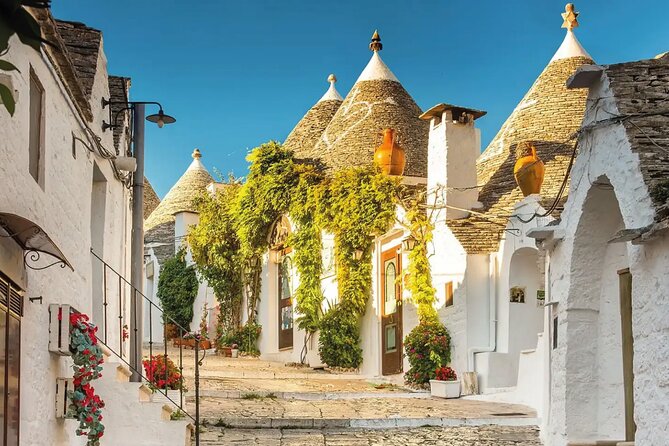
- The route covers Alberobello’s major trulli districts, including Rione Monti and Aia Piccola.
- The tour begins at Sant’Antonio Church and finishes near Trullo Sovrano.
- Audio and written guides are available in four languages, including English.
- The $7.21 price suits families and budget-conscious visitors, especially when a private or in-person tour would cost much more.
- You need your own smartphone with an internet connection to activate and use the guide.
- The walk takes about two to three hours, depending on how long you spend at each stop.
Why the trulli deserve more than a quick photo

Alberobello is famous for buildings that look almost too neat to be practical: round stone walls topped with gray cones. The trulli are not just decorative curiosities. Their walls and roofs were built without mortar, using local limestone blocks and a construction method that helped regulate indoor temperatures.
The guide explains the insulating logic behind the design. Air spaces between the stones help keep interiors cooler in summer and warmer in winter. The conical roofs are made from flat limestone slabs called chiancarelle, laid in tightening circles until they meet at the top.
That explanation matters because a quick walk through Alberobello can otherwise become a parade of attractive façades. Once you understand how the buildings work, you begin looking at the thickness of the walls, the shape of the roofs, and the care needed to build them without supporting frames.
This experience is best viewed as an introduction rather than an expert architectural course. It gives you the main facts, local names, and useful context, but it does not promise long personal stories or a live conversation with a local guide.
More Self-Guided Walking Tours in Italy
- Florence: 2.5 hour Audio Guided Walking Tour led by Host
★ 4.6 · 293 reviews - Verona Walking Tour with Audio and Written Guide by a Local
★ 4.5 · 157 reviews - Renaissance & Medieval Florence Guided Walking Tour plus mobile App
★ 4.0 · 140 reviews
Starting at the Trullo Church of Sant’Antonio
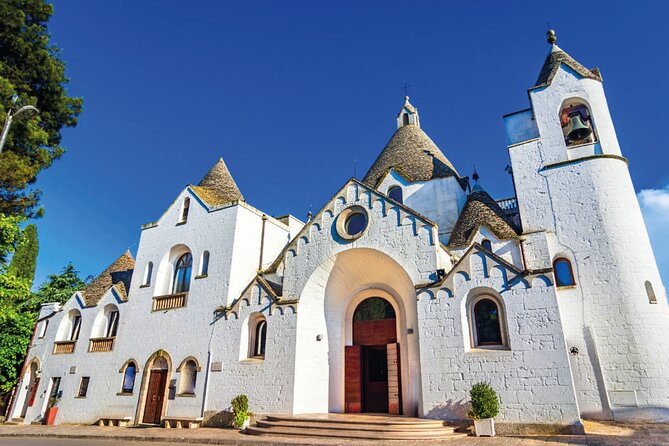
The route opens at the Chiesa Parrocchiale di Sant’Antonio da Padova, often called the Trullo Church. It was built in 1926, when Alberobello was growing and modernizing, yet its design deliberately followed the local trullo tradition.
The church served a practical need. The town’s expanding population had outgrown its dependence on the older Mother Church in the upper part of Alberobello. Here, the religious building itself becomes part of the town’s architectural story.
You get about 20 minutes of commentary at this stop, with free admission. It is a smart starting point because it gives you a clear example of how the trullo form was adapted for a larger public building rather than used only for small homes and farm structures.
Take a moment to orient yourself before moving on. The route is not a fully guided procession, and the audio does not always give precise turn-by-turn instructions. One useful approach is to listen to the stop description first, then use your phone’s map to locate the next point.
Rione Monti and the town’s greatest concentration of trulli

The next part brings you into the Rione Monti district, the southern hill area recognized as a UNESCO World Heritage Site. More than 1,000 trulli occupy this section, spread across fifteen streets near Largo Martellotta.
This is the part of Alberobello most visitors expect to see. The lanes rise and fall among tightly packed whitewashed buildings, and the repeated cones create the town’s famous appearance. The guide helps you understand that this is not one isolated monument but a complete neighborhood shaped by the trullo building tradition.
Largo Martellotta also has a practical connection to daily life. Its name refers to three cisterns dug during the 1800s to collect rainwater. That small detail gives the town a more grounded feel. The trulli were not built simply to look unusual. They were part of a working settlement that needed water, storage, shelter, and homes.
The scheduled commentary here lasts about 15 minutes, but your visit can take longer. If you stop for photographs, browse the area, or pause to inspect roof symbols and stonework, the two-hour estimate can stretch toward three hours.
The two-cone puzzle of Trullo Siamese
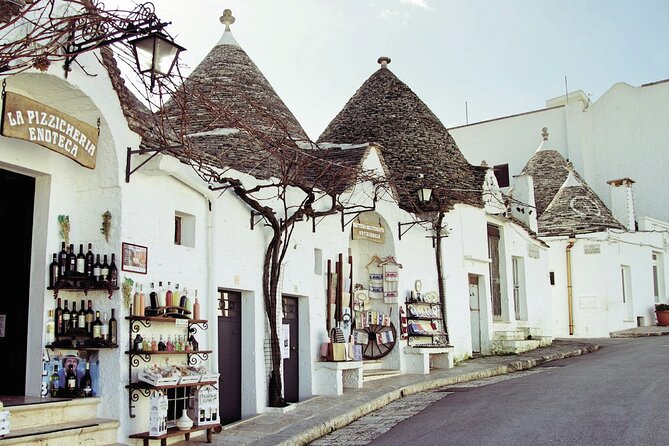
Trullo Siamese offers one of the route’s most memorable architectural oddities. Instead of a single cone, the building has two connected cones sharing a central wall.
The shape is linked to the skill of the local trullaro, or trullo builder. The space between the two cones was filled carefully, producing a building unlike the usual single-domed form. The guide allows about 15 minutes here, enough to understand why this particular structure is worth seeking out.
This is also a good example of where a self-guided walk can work well. The building does not require a long visit, but it benefits from a short explanation before you move on. Without context, you might simply photograph two roofs and continue.
The route’s weak point appears again between stops. You may need to use GPS to find the next location, so keep the map open and do not assume the audio will function as a walking navigator.
Same place, a different route to walk:
- Rome: Pantheon Fast-Track Ticket and Official Audioguide
★ 4.5 · 27,353 reviews - Rome: Colosseum & Forum with Audio Guide App -Optional Arena
★ 4.2 · 24,770 reviews - Venice: Grand Canal Gondola Ride with App Commentary
★ 4.1 · 23,020 reviews - Florence: Timed Entry to Michelangelo’s David + Audio App
★ 4.6 · 19,496 reviews
Aia Piccola, the quieter historic district
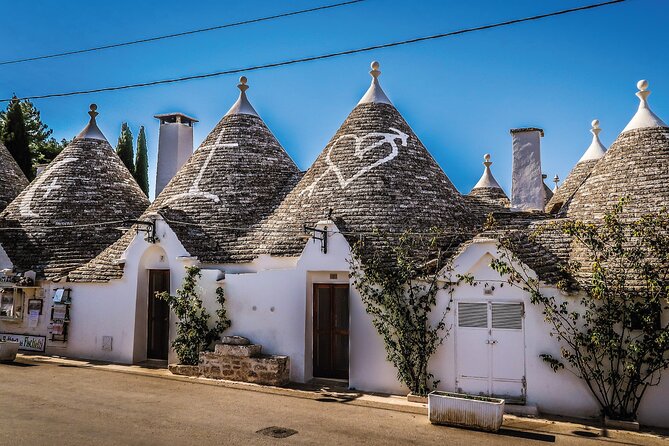
Aia Piccola is described as Alberobello’s oldest and most authentic neighborhood. Its name comes from its earlier role as a working agricultural area connected with the town’s daily labor.
This district offers a useful contrast with Rione Monti. The route presents both areas so you can compare a major concentration of trulli with an older neighborhood tied more closely to agricultural work. The guide gives you about 15 minutes of material here, but you can set your own pace.
I like having Aia Piccola included because it keeps the walk from becoming only a tour of the most photographed streets. The area helps you think about the trulli as homes and work spaces, not just as postcard subjects.
The digital guide also includes written text, which is useful if you are walking with others, if the street is noisy, or if the audio pronunciation distracts you. Italian place names can be mispronounced by the computer voice, so reading along may be the better option for anyone interested in getting the names right.
Casa D’Amore and the end of an old building rule
Casa D’Amore marks an important change in Alberobello’s building history. Constructed in 1797 by Francesco D’Amore, it was the first house in the town built entirely with terracotta and mortar after a royal decree allowed residents to construct houses in that way.
That detail gives the stop real value. The trulli represent a distinctive dry-stone tradition, while Casa D’Amore points to a shift toward more conventional construction. You are not simply seeing another old house. You are seeing evidence of a legal and architectural change.
The stop is allocated about 15 minutes and admission is free. The guide’s written notes are especially useful here because the significance lies less in the building’s shape and more in what its construction meant for the town.
The Mother Church of Saints Cosma and Damiano

The Chiesa Santi Cosma e Damiano is the main church in Alberobello’s historic center. Dedicated to the city’s patron saints, Cosma and Damiano, it dates to 1784.
The church replaced a smaller chapel that could no longer hold the local congregation. That background helps place Alberobello in a period of population growth and changing civic needs. The town’s religious buildings were expanding along with the community.
The guide allows about 20 minutes here, one of the longer stops on the route. Admission is free, and the church provides a change of scale after the compact trulli districts.
A live guide could answer questions about the interior, services, or local traditions. With this audio tour, you receive a prepared explanation and continue when you are ready. That suits independent visitors, but it may feel thin if you want detailed religious art commentary.
Trullo Sovrano, the final and paid stop
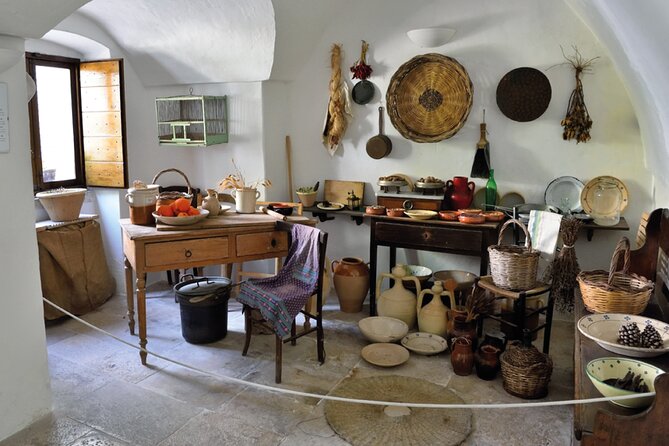
The route ends at Trullo Sovrano on Piazza Sacramento. This is the only two-story trullo in Alberobello, making it a fitting final stop.
Unlike the smaller rural trulli, Trullo Sovrano reflects a more complex design intended for a wealthy family. Its two levels show how local builders adapted the traditional form for greater space and comfort during the 18th century.
Admission is not included, so budget separately if you want to enter. That distinction is important because the other listed stops are free, while Trullo Sovrano is the one place where an extra ticket may be required.
The ending is practical. You finish close to one of Alberobello’s best-known buildings rather than returning to the starting church. If you are planning onward sightseeing, the final location gives you a clear place to stop the audio and continue independently.
What the $7.21 price really buys you
At $7.21 per person, this is a low-cost way to add structure to an independent visit. A family of five could spend roughly $36 on the digital experience, leaving far more of the budget for food or paid attractions than a private guided walk would allow.
The value is strongest if you want three things: basic historical context, a suggested route, and the freedom to pause whenever you like. The written guide and restaurant advice add practical use beyond the audio itself.
The price does not buy personal attention. There is no named in-person guide, no one to lead you around corners, and no one to adjust the commentary for your interests. The product is a digital guide, not a small-group walking tour.
That distinction explains why some people may find it excellent value while others may find it too basic. If your goal is to understand the main sights without spending much, it works well. If you want local anecdotes, spontaneous questions, or polished storytelling, pay more for a live guide.
Using the audio guide without getting lost
You need a smartphone with an internet connection. Activation details are supplied with your voucher, so read those instructions before arriving rather than waiting until you are standing outside the first church.
You can hear the audio through the phone’s speaker or your own headphones. Headphones are not provided. I would bring them, particularly if you are walking with family or friends and do not want to broadcast the narration through the streets.
The route has been described as easy to follow in broad terms, but the links between points are not always fully explained. You may need to use your phone’s GPS to locate the next stop. Downloading or checking the route information before you start may reduce pauses, though the stated requirements still call for internet access.
The maximum capacity is listed as 108 travelers, but this is a digital self-guided product, not a single moving group of 108 people. You should expect to experience the walk on your own schedule.
Who will get the most from this Alberobello walk
I would recommend it for first-time visitors who want a simple introduction to the town’s main trulli areas. It also suits families, couples, and budget-minded visitors who prefer to decide how long to spend at each stop.
It is a good fit if you enjoy reading as well as listening. The English text lets you check details at your own speed, while the audio keeps the walk moving when you do not want to stare at your screen.
You may want something else if you are looking for a warm personal connection to Alberobello. The commentary is described as clear and useful, but it can feel basic, and the computer voice may mispronounce Italian words. The route also offers fewer anecdotes about residents and daily life than a strong local guide might provide.
The experience is offered in English, German, Spanish, and Italian for both written and audio material. It is also suitable for most participants, and service animals are allowed. The route is near public transportation, though no specific transport instructions are supplied.
Booking, timing, and cancellation
The walk takes about two to three hours, depending on how long you stop for photos, churches, and the paid visit to Trullo Sovrano. It is available daily according to the supplied operating schedule, from 12:00 AM to 11:30 PM, so you have broad flexibility in choosing when to begin.
Confirmation is provided at booking. The experience is often reserved about six days ahead, which gives you a useful planning guide, though the digital format may make it easier to fit into a changing schedule.
Free cancellation is available if you cancel at least 24 hours before the local start time. Within 24 hours, you receive no refund, and changes made in that period are not accepted.
Should you book this Alberobello audio tour?
Book it if you want a very affordable route through Alberobello’s essential sights, with enough explanation to make the trulli more meaningful. The combination of written notes, audio, restaurant suggestions, and flexible timing gives you good independence for the price.
Skip it if you know you want a human guide, detailed local stories, or effortless directions from one stop to the next. The small weaknesses are manageable, but they matter: bring mobile data, use GPS, and expect a computer voice rather than a local person.
For a first visit on a tight budget, I think the $7.21 cost is easy to justify. Treat it as a useful walking companion, not a full replacement for a thoughtful guide.
FAQ
How long does the Alberobello audio walk take?
The experience takes approximately two to three hours, depending on your pace and how long you spend at each stop.
Where does the tour begin?
It begins at Chiesa Parrocchiale di Sant’Antonio da Padova, also called the Trullo Church, at Via Monte Pertica 18 in Alberobello.
Where does the tour finish?
The route finishes at Trullo Sovrano on Piazza Sacramento 10 in Alberobello.
Is there an in-person guide?
No. The visit uses a digital audio and written guide, so you explore independently without an in-person guide.
Which languages are available?
Written information is available in English, German, Spanish, and Italian. Audio is available in English, Spanish, Italian, and German.
Do I need a smartphone and internet access?
Yes. You need a smartphone with an internet connection to activate and use the digital guide. Activation details are provided in your voucher.
Are headphones included?
No. You can listen through your smartphone’s speaker or use your own headphones.
Is admission to Trullo Sovrano included?
No. Admission to Trullo Sovrano is not included. The other listed stops have free admission.
Just added around Italy
- Genoa Historic Centre Quest: A Self-Guided Puzzle Adventure★ 4.0 · 3 reviews
- Genova Walking Tour with Audio and Written Guide by a Local★ 4.5 · 33 reviews
- Self-Drive (No Licence) Boat Rental in Portofino Gulf★ 5.0 · 12 reviews
- Finance and Nobility: Explore medieval Genoa on a self-guided audio tour★ 4.5 · 7 reviews
- Florence: Uffizi Gallery Reserved Ticket & Digital Audio Guide★ 4.5 · 3 reviews
- Around Florence Hills: App‑Guided e‑Vespa Tour + Wine&Food★ 4.5 · 22 reviews
- Florence: Uffizi Gallery Audio Guided Tour led by Tour Leader★ 3.5 · 6 reviews
- Uffizi Gallery Audio-Guided Visit with optional Accademia Gallery★ 3.5 · 42 reviews
Italy Audio Tours, compared.
Rome: Pantheon Fast-Track Ticket and Official Audioguide
Read our review →
Rome: Colosseum & Forum with Audio Guide App -Optional Arena
Read our review →
Venice: Grand Canal Gondola Ride with App Commentary
Read our review →
Florence: Timed Entry to Michelangelo’s David + Audio App
Read our review →
Rome: City Sightseeing Hop-on Hop-off Bus with Audioguide
Read our review →
Venice: La Fenice Opera House Entry Ticket with Audio Guide
Read our review →
Rome: Colosseum, Forum, Palatine Hill Entry & Audioguide App
Read our review →Browse the lists this tour appears in