
REVIEW · TOKYO AUDIO TOURS
Tokyo: Open Top Panoramic Sightseeing Bus with Audio Guide
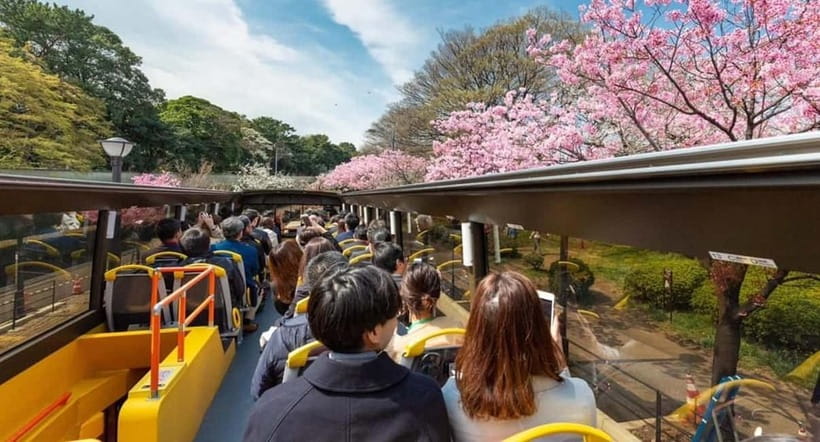
Tokyo looks different from the top deck of a moving bus. You get a broad view of Tokyo Tower, Ginza, Rainbow Bridge, and the city’s tall buildings without spending half the day changing trains. At $11, this is a simple way to get your bearings quickly, especially on a first visit.
I like the choice between the City Course and Bay Course, and I like the GPS audio system, which follows the bus and gives information at the right points along the road. The ride is relaxed, and several staff members have been praised for being kind and helpful.
The main catch is the weather. The roof may close in rain, and the open deck can feel too cold or too hot. You also get limited legroom, and the meeting lounge can feel basic and confusing if you arrive before the permitted waiting time.
Key points to know before booking
- Two different 70-minute routes: Choose central Tokyo sights on the City Course or Rainbow Bridge and Odaiba on the Bay Course.
- Seven audio languages: Commentary is available in Japanese, English, Chinese, French, Korean, Vietnamese, and Thai.
- Strong value at $11: You see a wide stretch of Tokyo without paying for several separate attractions or arranging complex transport.
- Open-top views depend on weather: Rain may mean the roof closes, and hot or cold conditions can make the ride less comfortable.
- Meet near Tokyo Station: The Tokyo VIP Lounge is about five minutes from the Yaesu North Exit, but you should allow extra time to find it.
- Bring suitable headphones: Headphones cost 100 yen if needed, and the socket accepts only a 3.5mm mini plug.
What this Tokyo bus tour actually gives you
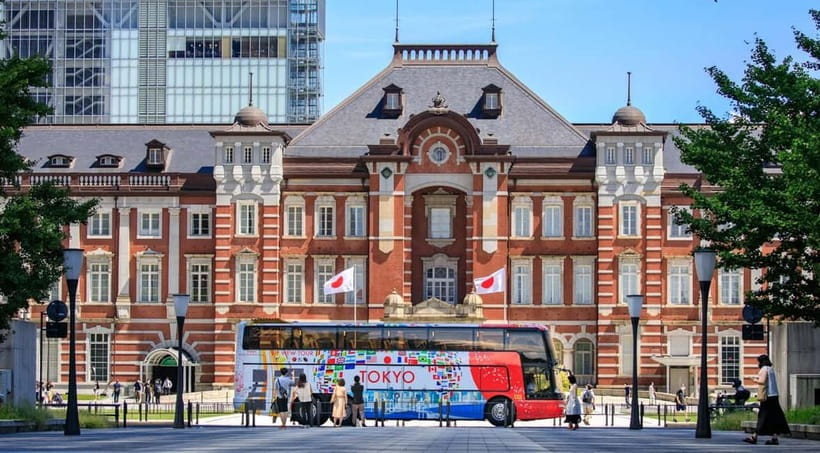
This is a sightseeing loop, not a hop-on, hop-off service. You stay on the bus for about 70 minutes, listen to location-based commentary, and watch Tokyo pass from an unusually open viewpoint.
That distinction matters. You will not get off at Tokyo Tower, Odaiba Seaside Park, or Ginza during the ride. Instead, you note the places that interest you and return later by train or on foot.
For a first day in Tokyo, I find that useful. The city can feel enormous, and the bus gives you a quick sense of how its districts fit together. You see office towers, historic sites, shopping streets, waterfront roads, and major bridges in one outing.
The price is the strongest reason to consider it. At $11 per person, the tour costs less than many city sightseeing rides, yet it covers a large area. You are paying for orientation and views rather than entry to a particular attraction, so the value is best if you want a broad introduction rather than a detailed visit to one site.
More Hop-On Hop-Off Bus Tours in Japan:
- Tokyo: 60min Panoramic Open Top Bus Tour with Audio Guide
★ 4.0 · 40 reviews - Rome: City Sightseeing Hop-on Hop-off Bus with Audioguide
★ 4.0 · 16,045 reviews - Milan: City Sightseeing Hop-On Hop-Off Bus with Audio Guide
★ 4.0 · 6,256 reviews
Picking the City Course or Bay Course
The two routes share a start near Tokyo Station and finish around Ginza, but they offer different versions of Tokyo.
The City Course is the better choice if you want central Tokyo, grand public buildings, parks, upscale districts, and a skyline full of towers. The Bay Course is more varied, with waterfront views, Rainbow Bridge, Odaiba, and several sights that feel quite different from the old center.
If you have only time for one ride, think about what you want from Tokyo. The City Course gives you a stronger look at the capital’s central districts. The Bay Course offers the more distinctive bus experience because it crosses Rainbow Bridge and reaches the waterfront.
You can also take both routes on the same day if the schedule works. One past rider did exactly that and found the evening Bay ride especially enjoyable because of the city lights. The tour does not promise a night-specific experience, so check the departure time carefully if that is important to you.
The City Course from Tokyo Station to Ginza
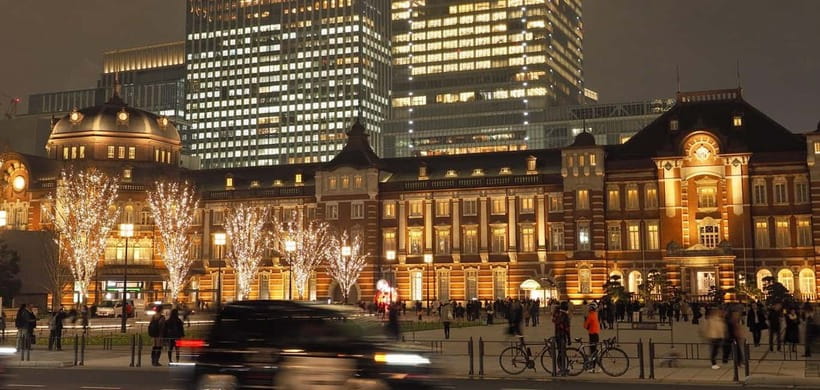
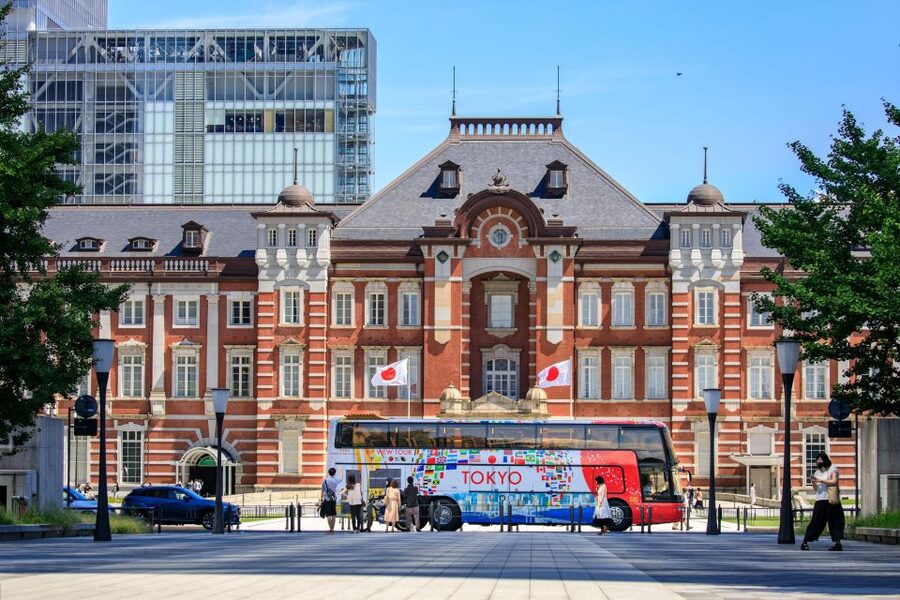
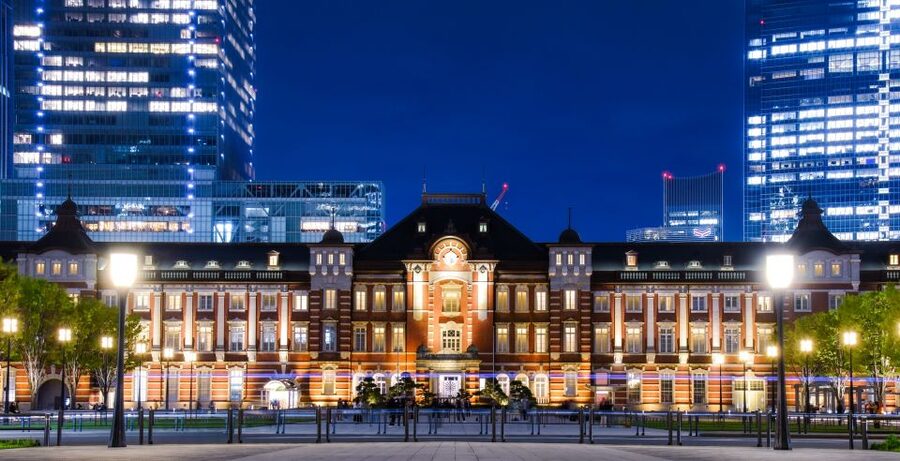
The City Course begins at the Tokyo Station Red Brick Station Building, one of the city’s most recognizable pieces of architecture. The station area combines a grand historic facade with the modern business district of Marunouchi, making it a useful starting point for understanding Tokyo’s mix of old and new.
From Marunouchi, the bus passes toward Chidorigafuchi. This area near the Imperial Palace is known for its greenery and moat, offering a calmer view after the dense office district. You see the palace area from the road rather than entering it, so treat this section as a quick introduction, not a palace visit.
The route continues to the Akasaka State Guest House. Its formal architecture adds a different note to the ride, and the audio guide helps explain what you are seeing. The commentary is mainly factual, so you should not expect a long conversation about daily life in Tokyo or a live guide answering questions.
Next comes Meiji Jingu Gaien, a broad park area known for open space and tree-lined roads. The bus route gives you a pleasant change of pace from the towers of Marunouchi and Roppongi.
The ride then reaches Tokyo Midtown and Roppongi, two districts associated with modern shopping, offices, restaurants, and high-rise buildings. This is one of the better sections for seeing how Tokyo’s central districts are arranged. You remain on the road, but the open deck gives you a higher and wider view than you get from a normal car.
Tokyo Tower is a major highlight. From the bus, you see the orange and white tower as part of the city rather than as an isolated attraction. If Tokyo Tower is a priority, remember that the tour does not include admission or a stop for going inside.
After passing Hibiya, the bus reaches Ginza, Tokyo’s polished shopping district, before returning toward the station area. Ginza works well at the end of the route because its broad streets and tall storefronts are easy to take in from above street level.
The City Course is a good fit for a first look at central Tokyo. Its weakness is that you may want more time at almost every sight. The ride shows you the city’s shape, but it cannot replace visiting the Imperial Palace area, Tokyo Tower, Roppongi, or Ginza on foot.
The Bay Course across Rainbow Bridge
The Bay Course starts in the same Tokyo Station area and travels through Marunouchi toward Zojoji Temple and Tokyo Tower. Zojoji gives the route a strong cultural counterpoint to the office towers and shopping streets around it.
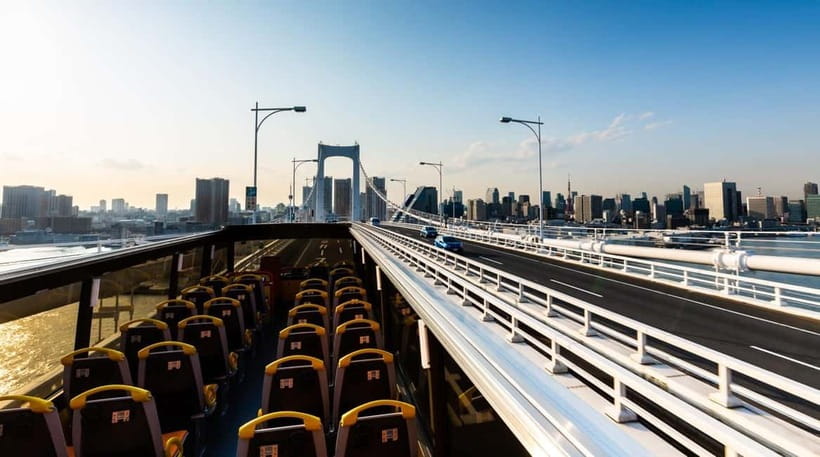
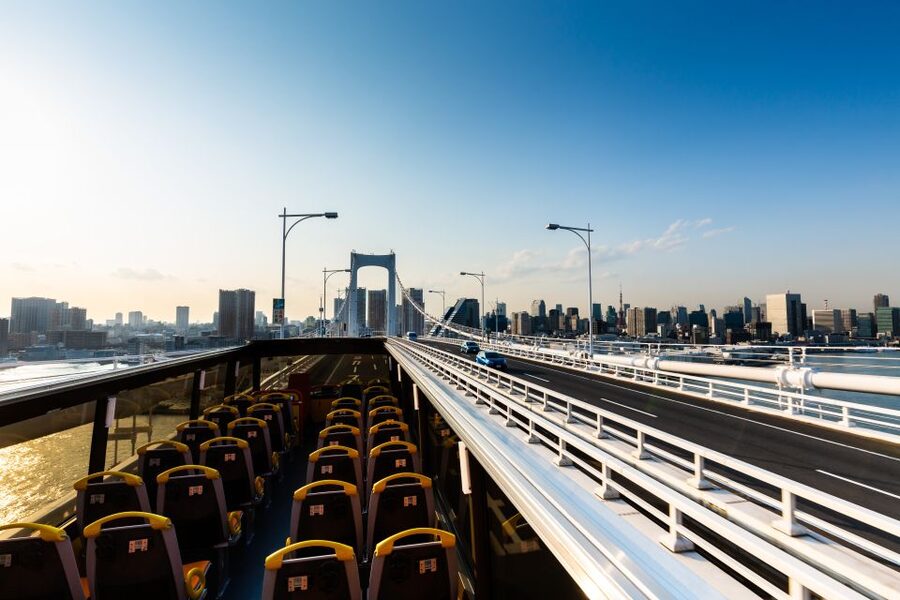
The bus then heads toward Shibaura Rainbow Bridge, first passing along the lower level. This is one of the most memorable parts of the ride because you see the bridge structure from close range before crossing to the waterfront districts.
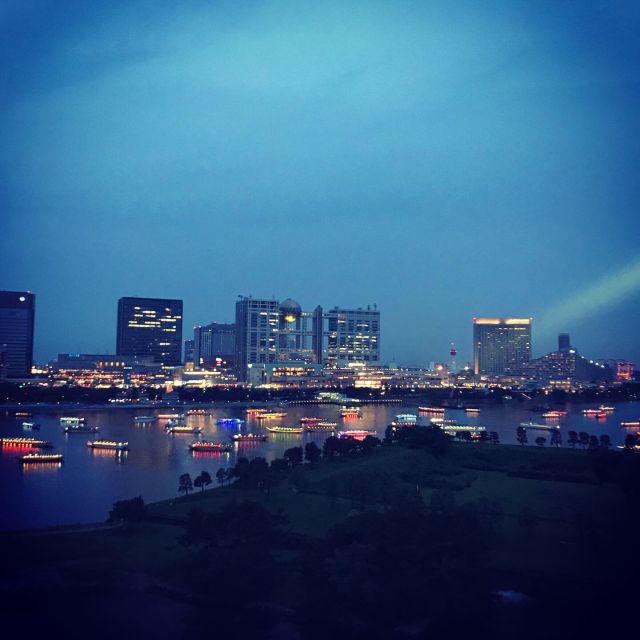
The route continues past the Fuji TV Building, a distinctive Odaiba landmark. The bus also passes the Statue of Liberty replica and Odaiba Seaside Park, where Tokyo’s waterfront opens up. The area feels more spacious than the central city, and the view from the upper deck helps you take in the scale of the bay.
The return crossing uses the second level of Rainbow Bridge. This bridge crossing is the Bay Course highlight. You get a broad view of Tokyo Bay and the surrounding skyline, though the exact experience depends on traffic, weather, and your seat.
After the bridge, the bus travels through Shiodome and returns to Ginza. Shiodome brings you back into a dense modern district, while Ginza provides a familiar finish near the original departure area.
I would choose the Bay Course if you want the ride itself to feel like an outing. The combination of bridge views, waterfront space, Odaiba, and Tokyo Tower gives it more variety than a simple central-city loop.
More City Highlights Audio Tours in Japan:
- Istanbul: Daytime or Sunset Sightseeing Cruise & Audio Guide
★ 4.8 · 14,430 reviews - Rome: Hop-on Hop-off Sightseeing Bus Tour with Audioguide
★ 4.1 · 4,801 reviews - Istanbul: Bosphorus Sightseeing Cruise Tour with Audio Guide
★ 4.6 · 4,704 reviews - Riga: Canal Boat Sightseeing Tour With Audio guide
★ 4.5 · 1,827 reviews
How the GPS audio guide works
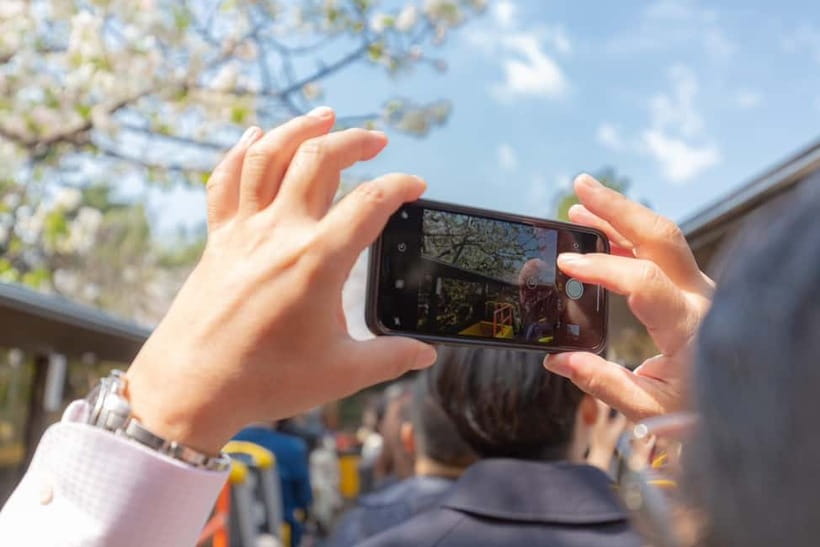
The audio system uses GPS to track the bus and play information linked to your location. It can adjust to road conditions and traffic, so the commentary is designed to arrive as the bus reaches each area rather than playing as a fixed recording from start to finish.
The available languages are Japanese, English, Chinese, French, Korean, Vietnamese, and Thai. The supplied details describe the system as automatic, while the instructor language is Japanese and Japanese-speaking staff are available for assistance.
You should expect recorded commentary, not a personal guide in your chosen language. Several riders found the audio descriptions clear and informative, especially for identifying landmarks and explaining their background.
The audio is not perfect. Music plays between sections, and some riders found it too loud compared with the spoken information. On some departures, a Japanese announcement over the bus loudspeaker made it harder to hear the personal audio. If clear listening matters to you, sit where the audio is easiest to hear and bring compatible earphones.
Headphones are not included. You can buy them for 100 yen, but the audio jack accepts only a 3.5mm mini plug. If your device or earphones use a different connection, prepare before boarding.
What the open top adds, and what it does not
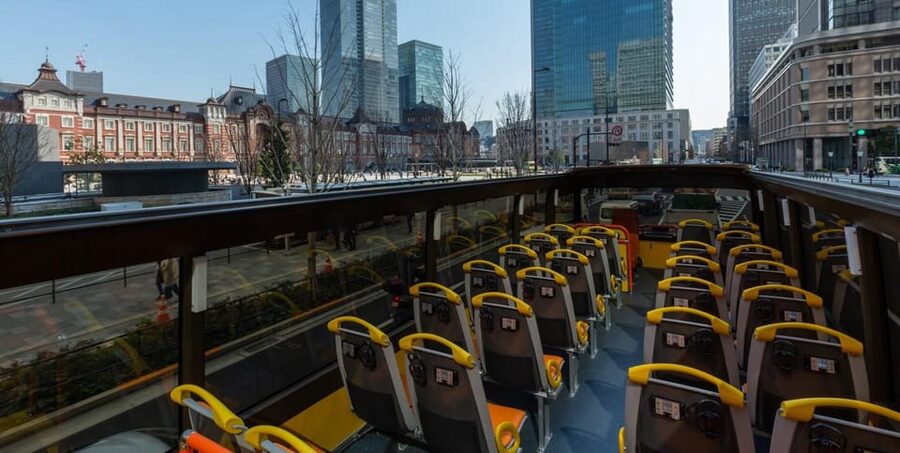
The open deck is the reason to choose this tour instead of simply taking a regular city bus. You get a higher viewpoint, more open sightlines, and a stronger sense of Tokyo’s scale.
It is especially useful for looking up at towers and bridges. Tokyo’s streets can be crowded at eye level, while the upper deck lets you see architecture above shopfronts and traffic.
Still, an open-top bus is exposed. In summer, you may find the sun and heat tiring. In cooler weather, wind can make the ride uncomfortable. One rider specifically noted the limited knee space as well as the difficulty of being at the mercy of the weather.
The tour runs in rain unless conditions become extreme, such as a typhoon. If it rains, the open top may be closed. That means the trip can continue, but the experience may feel closer to a standard covered bus ride.
Do not bring an umbrella, food, or a selfie stick. Smoking is also prohibited. These rules are easy to follow, but the umbrella restriction matters on a wet day because the open deck cannot be treated like a normal outdoor viewing platform.
Finding the Tokyo VIP Lounge
The meeting point is the Tokyo VIP Lounge, on the second and third floors of a building with Family Mart on the ground floor. It is about a five-minute walk from Tokyo Station’s Yaesu North Exit.
This is the part where you should be practical. Tokyo Station is large, and the lounge is not inside the main station building. Check the map before you leave your hotel, allow time for the walk, and do not rely on finding the correct entrance at the last second.
Arrive 20 to 40 minutes before departure. The facility is shared with other users, and open-top bus customers can use it free from 40 minutes before departure. Outside that period, a facility charge may apply.
The lounge itself is basic rather than luxurious. Early arrivals have found the waiting arrangements unclear, and the shared space may not feel like a private VIP room. Staff are Japanese-speaking, and some have limited English, but the on-site help has also been described as kind and well organized.
After check-in, staff may provide a map and lead you on a short walk to the bus. That small escort is useful because it removes the worry of searching for the vehicle around Tokyo Station.
The bus leaves on time and does not wait for late arrivals. Arriving at the wrong location or missing departure does not qualify for a refund, even if you contact the operator before the scheduled time. Also keep in mind that the contact number may not respond outside Monday to Saturday, 9:30 AM to 6 PM Japan time.
The level of service to expect
This is not a luxury coach with a full-time English guide. It is a low-cost sightseeing ride supported by an automatic audio system and Japanese-speaking staff.
That said, the human help at check-in can make a real difference. Friendly staff have assisted with maps, boarding, and basic questions, and one particularly helpful team member walked the group from the lounge to the waiting bus.
The quality of the live announcements can vary. Japanese commentary may be made over the speaker while you are listening to the GPS audio, which can create a frustrating overlap. I would treat the staff as boarding support rather than expect a continuous personal tour.
The experience is generally orderly and safe, with careful driving noted as a positive part of the outing. The main service issue is communication, especially if you need detailed help in English outside the lounge’s staffed hours.
Who will get the most from this ride
I would recommend the tour to first-time visitors who want a quick introduction before choosing which districts to explore in depth. It is also useful if you have a short stay, a free hour near Tokyo Station, or children who would enjoy the novelty of sitting on an open deck.
It suits you if you prefer to look and listen rather than rush between several indoor attractions. The 70-minute length is manageable, and you do not need to plan transfers between each sight.
The Bay Course is a good pick for bridge and waterfront views. The City Course is better if the Imperial Palace area, Roppongi, Tokyo Midtown, Hibiya, and Ginza are higher on your list.
I would think twice if you need a fully guided tour in English, want to stop and explore each landmark, or dislike exposure to heat, rain, or cold. You may also find the ride cramped if you need generous knee space.
Price, cancellation, and timing
At $11, this tour offers good value for a panoramic introduction to Tokyo. You are not paying for entry tickets, meals, or a live guide, but you are getting a large amount of sightseeing in a short period.
Free cancellation is available up to 24 hours before departure for a full refund. You can also reserve and pay later, which helps if your Tokyo schedule is still changing.
Departure times can shift slightly because of weather, traffic, or other unexpected conditions. Check availability for the exact start time, and check the forecast before you go. The route may operate in poor weather, but the open deck may not.
Should you book the Tokyo open-top bus?
Book it if you want a cheap, easy overview of Tokyo and understand that the ride is about seeing, not stopping. I would lean toward the Bay Course for the most distinctive views, especially if Rainbow Bridge and Odaiba appeal to you.
Choose the City Course if you want a more central introduction to the Imperial Palace area, Roppongi, Tokyo Tower, and Ginza. If your schedule allows, taking both routes gives you a much fuller sense of the city.
Skip it if you expect a polished luxury lounge, a detailed live guide in English, or guaranteed open-air seating in every kind of weather. For most first-time visitors with realistic expectations, the price, route coverage, and elevated views make this a sensible first-day Tokyo activity.
FAQ
How long is the open-top Tokyo bus tour?
The tour lasts 70 minutes.
Where does the tour meet?
You meet at the Tokyo VIP Lounge, located on the second and third floors of a building with Family Mart on the ground floor. It is about a five-minute walk from Tokyo Station’s Yaesu North Exit.
How early should I arrive?
You should arrive 20 to 40 minutes before the scheduled departure time. The bus leaves promptly and cannot wait for late arrivals.
What routes are available?
You can choose the Bay Course or the City Course. The Bay Course includes Tokyo Bay, Rainbow Bridge, Fuji TV Building, the Statue of Liberty, Odaiba Seaside Park, Shiodome, and Ginza. The City Course includes the Imperial Palace area, Chidorigafuchi, Akasaka State Guest House, Meiji Jingu Gaien, Tokyo Midtown, Roppongi, Tokyo Tower, Hibiya, and Ginza.
Is the audio guide available in English?
Yes. The GPS audio guide is available in English, Japanese, Chinese, French, Korean, Vietnamese, and Thai.
Is there a live guide?
No. The tour uses an automatic GPS audio guide. Japanese-speaking staff are available to assist with the experience.
Are headphones included?
No. Headphones can be purchased for 100 yen. The headphone jack supports only 3.5mm mini plugs.
Does the tour operate in the rain?
The tour operates rain or shine unless extreme weather, such as a typhoon, causes cancellation. If it rains, the open top may be closed.
Can I bring an umbrella or food?
No. Umbrellas and food are not allowed in the vehicle. Smoking and selfie sticks are also prohibited.
Can I cancel for a refund?
You can cancel up to 24 hours before departure for a full refund. Reserve and pay later is also available.
Just added around Japan
- Tokyo: Pre Japan Planning Kit: Itineraries, Food & Survival★ 4.9 · 18 reviews
- Tokyo: Sumo Keiko Training Tour with Audio Guide & Photo★ 4.8 · 5 reviews
- Hakone: Self Guided Trip to Mt. Fuji // Made by Local Guides★ 4.6 · 7 reviews
- [Self-Drive] Tokyo & Daikoku Custom Car Driving Tour★ 4.9 · 25 reviews
- One Day Private Customized Self-Guided Tour in Kyoto★ 4.2 · 11 reviews
- One Day Private Customized Self-Guided Tour in Wakayama★ 3.5 · 4 reviews
- Kyoto/Osaka: Nara Customizable Self-Guided Tour with Driver★ 5.0 · 5 reviews
- Tokyo Drift Self Driving Private Lesson w/ OG Teacher Japan★ 5.0 · 15 reviews
Tokyo Audio Tours, compared.
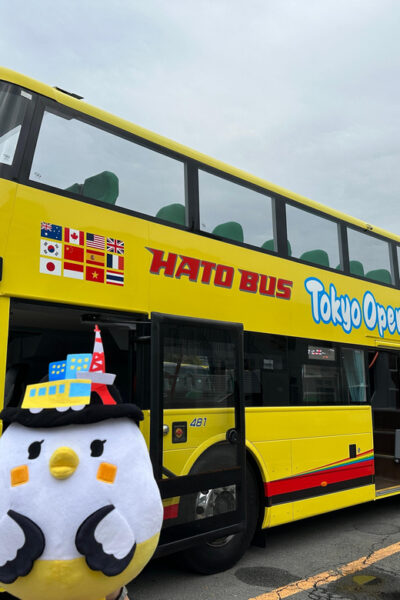
Tokyo: 60min Panoramic Open Top Bus Tour with Audio Guide
Read our review →
Private Drifting Lesson w/ OG Pro Instructor Tokyo Drift Japan
Read our review →![[Self-Drive] Tokyo & Daikoku Custom Car Driving Tour](https://img.audioguidetrips.com/wp-content/uploads/self-drive-tokyo-daikoku-custom-car-driving-tour-400x400.jpg)
Tokyo: Pre Japan Planning Kit: Itineraries, Food & Survival
Read our review →
Akihabara: Self-Guided Tour with a special brochure
Read our review →
Hakone: Self Guided Trip to Mt. Fuji // Made by Local Guides
Read our review →
Tokyo: Sumo Keiko Training Tour with Audio Guide & Photo
Read our review →Browse the lists this tour appears in