
REVIEW · TOKYO AUDIO TOURS
Tokyo: 60min Panoramic Open Top Bus Tour with Audio Guide
Tokyo looks different from the upper deck of a moving bus, especially when the route crosses Rainbow Bridge with the bay breeze around you. In one hour, this ride links central Tokyo, the waterfront, Ginza, and Tokyo Tower without asking you to navigate trains or walk long distances.
I like the low $14 price and the simple route from Tokyo Station. I also like the eight-language GPS guidance, which lets you follow along in English, Chinese, Korean, Spanish, French, Thai, Indonesian, or Vietnamese. The main catch is weather: rain can close the roof or cancel the trip, and the bus does not stop for sightseeing.
Key points to know before you ride
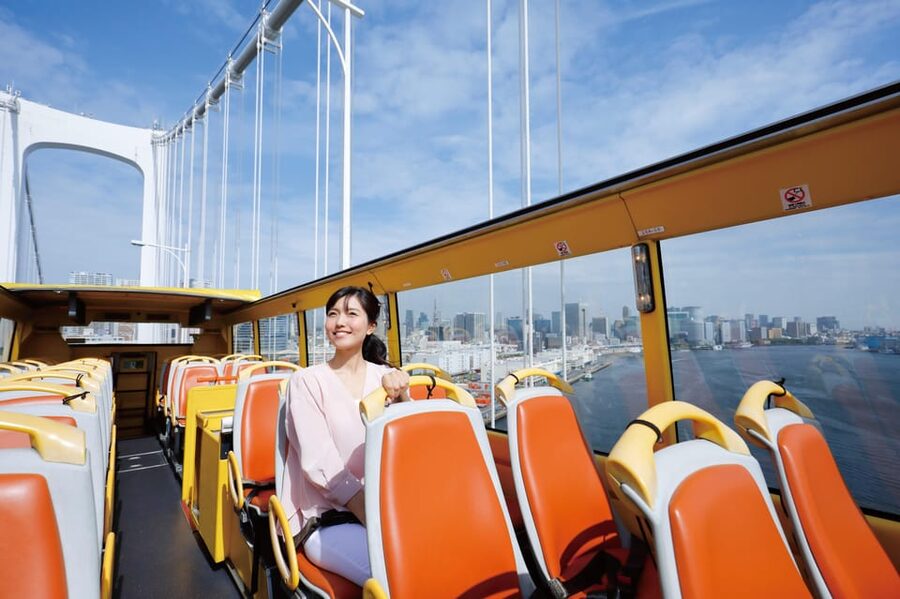
- Rainbow Bridge is the visual high point: The open deck gives you a clear look toward Tokyo Bay and the surrounding city.
- You cover a lot in 60 minutes: The route links Tokyo Tower, Odaiba, Toyosu, Tsukiji, Kabuki-za, and Ginza.
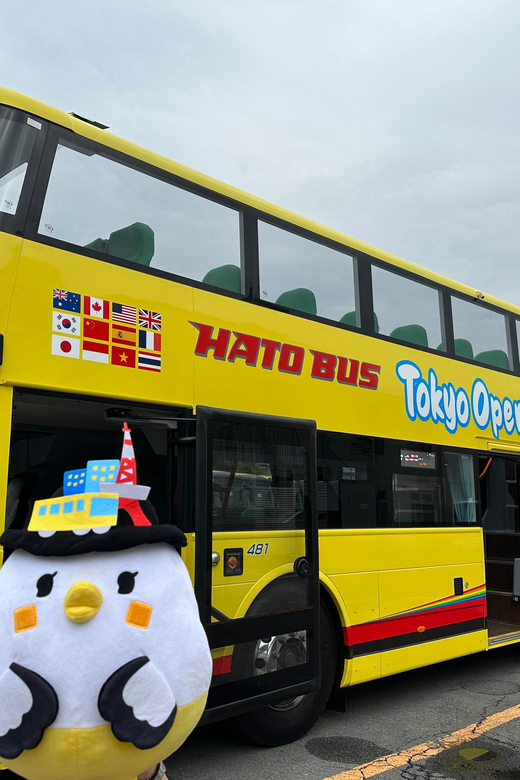
- The bus leaves from Tokyo Station: Find the yellow Hato Bus stop near the Marunouchi South Exit.
- Your phone matters: GPS commentary requires a smartphone that works in Japan and your own earphones.
- The roof depends on the weather: Rain may mean a closed roof, while heavy rain or poor conditions can cancel the ride.
- This is a scenic loop, not transport: You cannot hop off at Tokyo Tower, Odaiba, or Ginza during the tour.
Why this one-hour Tokyo bus ride works
This is a sightseeing sampler, not a full day of Tokyo exploration. You stay on the bus for the entire circuit, looking down on streets and up at landmarks from an open upper deck. That makes it useful on a first day, when you want a quick sense of the city before choosing where to return.
The route also gives you a mix that is hard to arrange on foot. In a single hour, you pass government buildings, commercial streets, a famous tower, waterfront districts, a market area, and a traditional theater. You will not have time to explore any of them, but you will see how central Tokyo and the bay districts fit together.
At $14 per person, the value is strongest if you treat the ride as an orientation tour. A taxi over a similar distance could cost much more, while ordinary public transport rarely gives you the same uninterrupted view. The tradeoff is depth. You pay for a moving panorama, not entry to a landmark or a guided walk.
The experience is led in Japanese by a live guide, with GPS-based commentary in eight languages. That arrangement matters. You get a real person handling the tour, but you do not need to depend on Japanese for the basic explanations. The audio system is free, though you must bring your own smartphone and earphones. The operator does not provide them for rent.
More Hop-On Hop-Off Bus Tours in Japan:
- Tokyo: Open Top Panoramic Sightseeing Bus with Audio Guide
★ 3.8 · 254 reviews - Rome: City Sightseeing Hop-on Hop-off Bus with Audioguide
★ 4.0 · 16,045 reviews - Milan: City Sightseeing Hop-On Hop-Off Bus with Audio Guide
★ 4.0 · 6,256 reviews
Starting near Tokyo Station
The meeting point is the Hato Bus Tokyo Office near the JR Tokyo Station Marunouchi South Exit. After leaving the station, turn left and walk straight for about two minutes. Look for the yellow Hato Bus stop.
Tokyo Station is large, so allow extra time if you are arriving on a train, especially with luggage or from another part of the station complex. The supplied coordinates are 35.678964, 139.765781, which can help if you use a map app.
The start and finish at the same place is practical. You can pair the ride with a visit to the Marunouchi area before or after the tour, though the bus itself does not include hotel pickup or drop-off. Since this is a fixed loop, check the departure time carefully and arrive at the correct yellow bus stop.
Hibiya Park and the National Diet Building
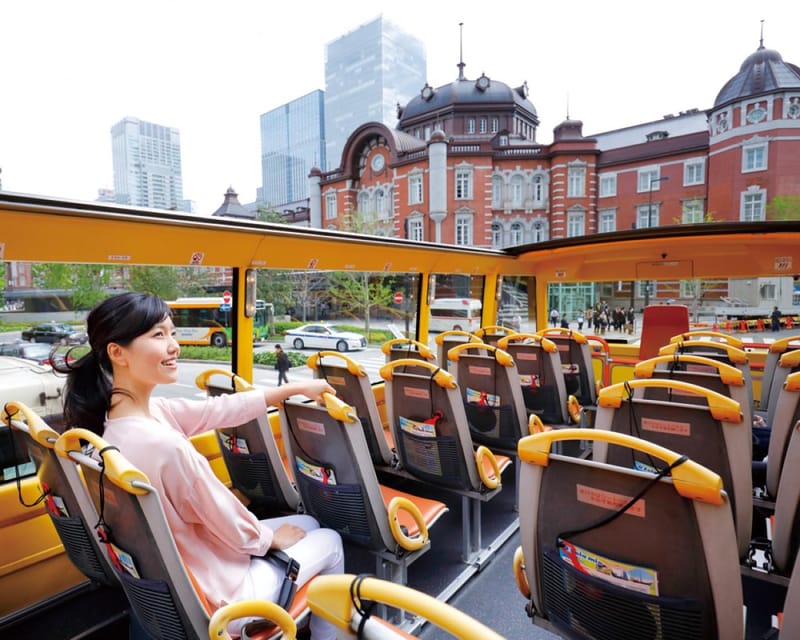
The first part of the route passes Hibiya Park and the National Diet Building. You will not get off, so think of these as quick visual introductions rather than stops.
Hibiya Park gives you an early change of pace from the station district. From the upper deck, you can watch Tokyo shift from the grand railway and office center into broad avenues and formal public spaces.
The National Diet Building is one of the route’s more official sights. It helps explain the government quarter around central Tokyo, but the pass-by format means your view may be brief. Keep your camera ready, and do not expect a photo stop or a close walk around the grounds.
Toranomon and the first Tokyo Tower views

The bus continues through Toranomon, an area known in the route for its central business setting, before reaching Tokyo Tower. The approach matters as much as the tower itself. From a moving open deck, you can see the red structure from changing angles instead of from one fixed viewing platform.
One of the strongest points in the available feedback was the chance to see Tokyo Tower from several angles. That is a real benefit of a road tour. The views are not the same as going up the tower, but you get a sense of how it sits among the surrounding streets and buildings.
The limitation is timing. The bus keeps moving, and traffic can affect exactly how long a particular view lasts. If Tokyo Tower is your main goal, this ride should supplement a separate visit rather than replace it. If you simply want a quick look without paying for an observation deck, the bus gives you a useful alternative.
More Audio Tours in Japan:
- Tokyo: Daikoku Self-Drive R35 GT-R Custom Car Experience
★ 4.9 · 129 reviews - [Self-Drive] Tokyo & Daikoku Custom Car Driving Tour
★ 4.9 · 25 reviews - One Day Private Customized Self-Guided Tour in Kyoto
★ 4.2 · 11 reviews - Akihabara: Self-Guided Tour with a special brochure
★ 3.7 · 11 reviews
Crossing Rainbow Bridge toward Tokyo Bay
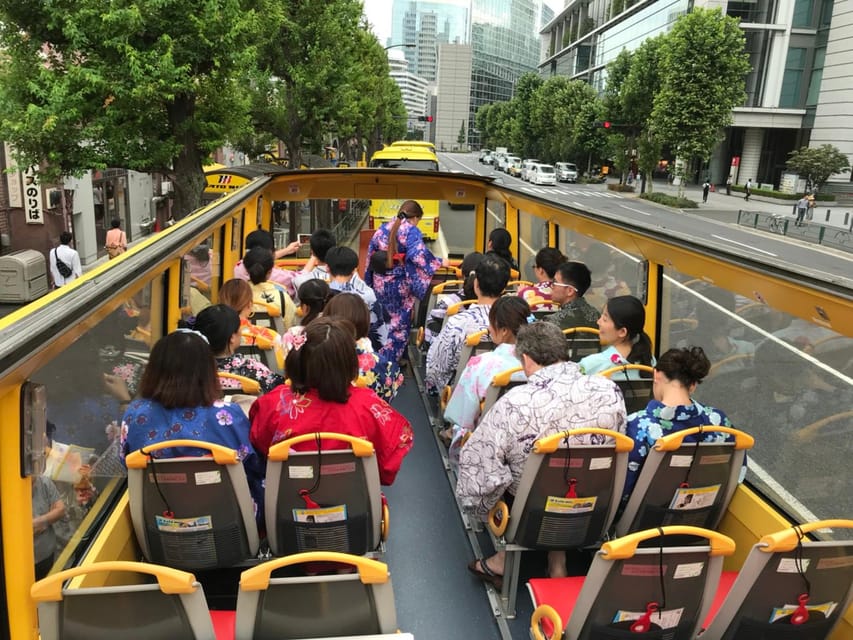
The route’s most distinctive section is the crossing of Rainbow Bridge. This is where the open-top design earns its keep. You can feel the Tokyo breeze and look across the bay without window reflections blocking the view.
A bridge crossing also gives the hour a clear sense of movement. You are leaving the dense center and heading toward the newer waterfront districts. Depending on conditions, you might find the bay views more memorable than the individual buildings because the scene opens up around you.
This is also the part most vulnerable to bad weather. Rain can force the roof closed, which changes the experience from open-air sightseeing to a more enclosed bus ride. Heavy rain may cancel the tour altogether. Check the forecast before booking, and keep your expectations flexible during unsettled weather.
Odaiba and Toyosu from the upper deck
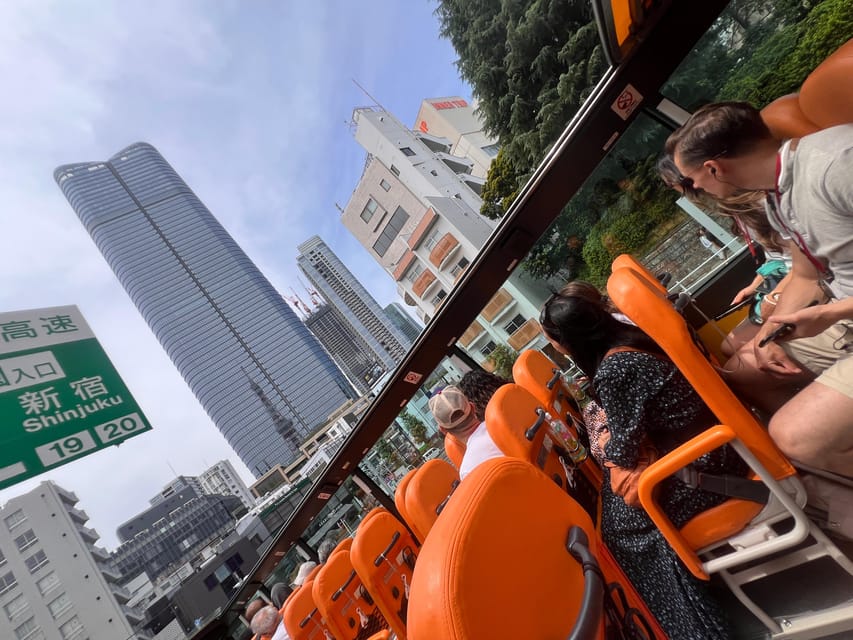
After Rainbow Bridge, the bus passes Odaiba and Toyosu. These areas feel different from Ginza or the government district, and the bus gives you a quick way to compare them.
Odaiba is viewed from the road rather than explored on foot. You will not have time to visit its attractions or pause along the waterfront, but the elevated seat can help you take in the broad scale of the area. Toyosu adds another waterfront section to the route and continues the shift away from old central Tokyo.
The benefit here is range. Many short city tours stay in the historic center. This one makes room for the bay, which gives you a wider picture of Tokyo’s geography. The downside is that Odaiba and Toyosu receive only passing attention. If you want shopping, museums, food, or a long waterfront walk, plan a separate visit.
Tsukiji Outer Market and Kabuki-za
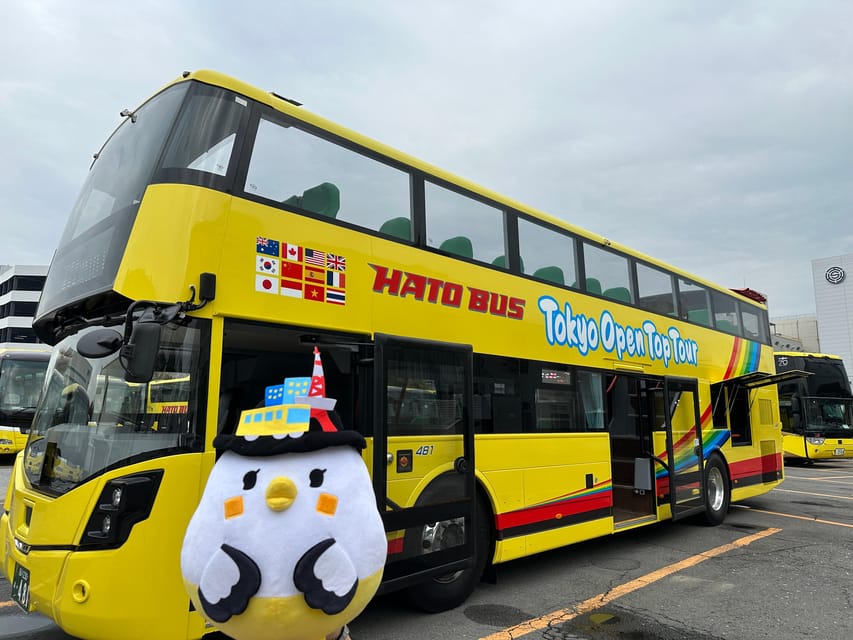
The return route passes the Tsukiji Outer Market and Kabuki-za. These are two culturally important names, but the bus does not include food, a market walk, or a theater visit.
Tsukiji Outer Market is best known as a place to browse food stalls and small shops. Seeing it from the bus may encourage you to return later when you have time to walk. The tour itself is not a food experience, and eating is not allowed on the bus.
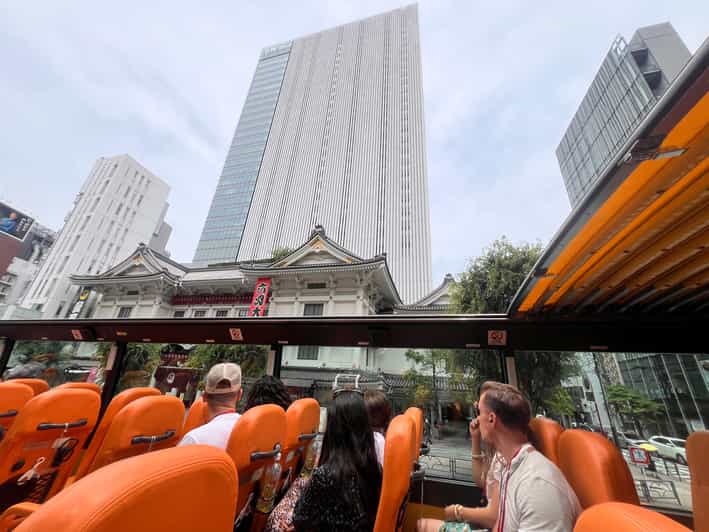
Kabuki-za brings a different note. Its presence on the route points toward Tokyo’s theater and traditional performance culture, even though you will see the building only as the bus passes. If you are interested in kabuki, use this as a reminder to research a separate visit rather than expecting an introduction during the ride.
The pass-by format can feel rushed at this stage, particularly if you want detailed commentary on each place. Still, these views help tie the modern bay route back to central Tokyo.
Ginza and the return to Tokyo Station
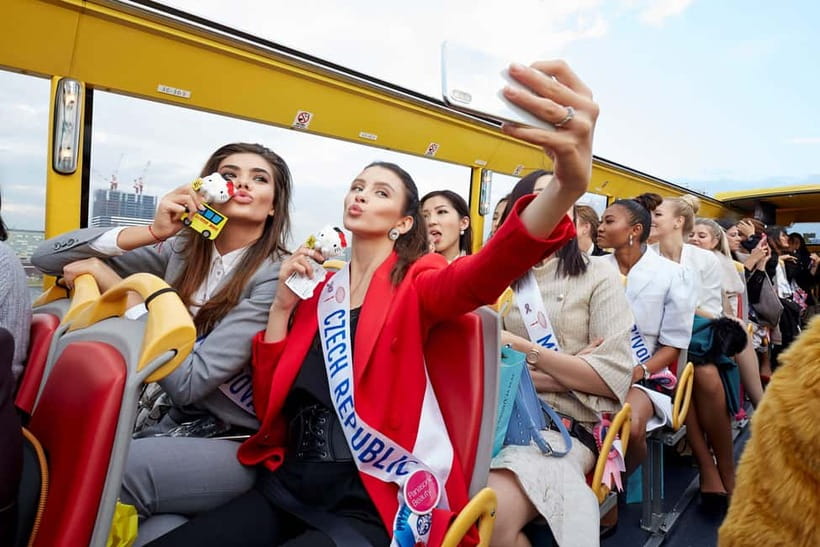
Ginza is the final major district before the bus returns to the Hato Bus office. The area is associated with major shops, polished streets, and Tokyo’s high-end commercial side.
From the upper deck, you can watch the city change again as the route leaves the waterfront and heads back toward the station. Ginza works well near the end of the tour because it gives you one last central-city contrast after the open spaces around Rainbow Bridge and Toyosu.
The bus finishes where it began, near Tokyo Station. That makes it easy to continue your day without arranging another transfer. You could combine the ride with the Marunouchi district, Ginza, or another central Tokyo plan, but remember that the exact departure and return time can be affected by road traffic.
The audio guide and what you need to bring
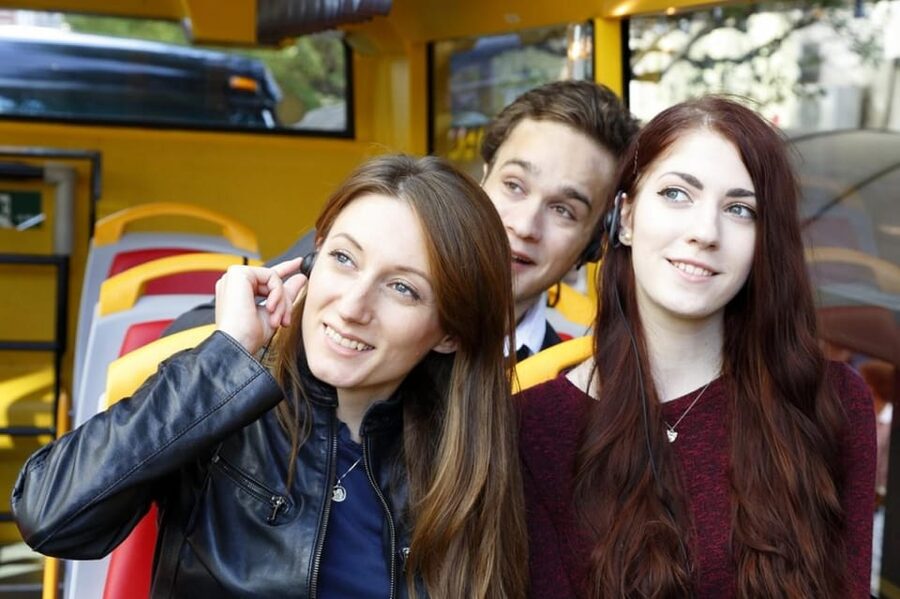
The Japanese-speaking guide handles the live tour, while GPS audio is available in eight languages: English, Chinese, Korean, Spanish, French, Thai, Indonesian, and Vietnamese.
You need two things for the multilingual system:
- A smartphone that can be used in Japan
- Your own earphones
GPS guidance depends on your phone, so this is not the right choice if you are traveling without mobile access or do not want to use a personal device. The GPS system and earphones are not supplied for rental. The audio service is free, but technical problems or earphone malfunctions do not qualify for a refund.
That arrangement keeps the ticket price low, but it puts a little responsibility on you. Test your phone and earphones before boarding, and bring enough battery for the tour. The supplied information does not promise Wi-Fi or charging facilities, so do not rely on either.
Open deck comfort, food rules, and weather
The upper deck provides the best views, but an open bus also exposes you to the conditions outside. Bring clothing suited to the forecast, particularly on a cool or windy day. The route description highlights the Tokyo breeze, and that breeze can be welcome in warm weather but less comfortable when temperatures drop.
Food is not allowed on the bus. Plastic-bottle drinks are permitted, so you can carry water, but avoid bringing a meal or anything that could spill. This is a one-hour ride, so the restriction should be easy to manage.
In rain, the roof may be closed. That protects the ride from wet weather, but it reduces the open-air effect and may make photography less satisfying. Heavy rain or other bad weather can lead to cancellation. You can cancel up to 24 hours before departure for a full refund, and the reserve-now, pay-later option keeps your plans flexible.
Who gets the most from this tour
I would choose this ride for a first visit, a short stay, or a day when you want to rest your feet while still seeing a broad slice of Tokyo. It also suits families and older visitors who prefer not to make several train changes or long walks during their first look at the city.
It is a good fit if you value:
- A quick overview instead of a detailed guided visit
- Outdoor views and city photography
- Tokyo Tower from several road angles
- A simple departure point near Tokyo Station
- Multilingual guidance through your own phone
- A low-cost way to include Rainbow Bridge and the bay
I would be more cautious if your priority is time at a specific attraction. You cannot get off at the National Diet Building, Tokyo Tower, Odaiba, Toyosu, Tsukiji, or Ginza. The bus passes them all, so you need separate plans for markets, shopping, theaters, museums, or observation decks.
Children under six can ride free without their own seat, with one child per adult. If a child needs a seat, the supplied information does not state the specific child-seat policy, so check the booking conditions before committing.
Should you book the Tokyo open-top bus?
Book it if you want an inexpensive, neatly packaged introduction to Tokyo with a strong waterfront section. The combination of Tokyo Tower, Rainbow Bridge, Odaiba, Toyosu, Tsukiji, Kabuki-za, and Ginza gives you plenty to look at in 60 minutes, and the price makes the limited time easy to accept.
Skip it if you want to explore rather than observe. This is not a hop-on hop-off service, and the short duration means every sight passes quickly. For the best experience, choose a dry day, bring a Japan-ready phone and earphones, and think of the ride as a city orientation with excellent bridge and tower views, not as a substitute for visiting Tokyo’s major districts.
FAQ
Where does the Tokyo open-top bus tour start?
It starts at the Hato Bus Tokyo Office near the JR Tokyo Station Marunouchi South Exit. After leaving the exit, turn left and walk straight for about two minutes to the yellow Hato Bus stop.
How long is the tour?
The tour lasts one hour.
Does the bus return to Tokyo Station?
Yes. The tour begins and ends at the Hato Bus Tokyo Office near Tokyo Station.
Is this a hop-on hop-off bus?
No. You stay on the bus for the full route and cannot get off at the sights along the way.
Which languages are available for the audio guide?
GPS-based audio guidance is available in English, Chinese, Korean, Spanish, French, Thai, Indonesian, and Vietnamese. The live guide speaks Japanese.
Do I need to bring my own earphones?
Yes. You must bring your own earphones and a smartphone that can be used in Japan. GPS devices and earphones are not provided for rental.
Can I eat or drink on the bus?
Eating is not allowed. Drinks in plastic bottles are permitted.
What happens if it rains?
The roof may be closed in rainy weather. The tour may be canceled in cases of bad weather or heavy rain.
Can children under six ride for free?
Children under six can ride without a seat for free, with one child per adult. The supplied information does not specify the policy when a child requires a seat.
Just added around Japan
- Tokyo: Pre Japan Planning Kit: Itineraries, Food & Survival★ 4.9 · 18 reviews
- Tokyo: Sumo Keiko Training Tour with Audio Guide & Photo★ 4.8 · 5 reviews
- Hakone: Self Guided Trip to Mt. Fuji // Made by Local Guides★ 4.6 · 7 reviews
- [Self-Drive] Tokyo & Daikoku Custom Car Driving Tour★ 4.9 · 25 reviews
- One Day Private Customized Self-Guided Tour in Kyoto★ 4.2 · 11 reviews
- One Day Private Customized Self-Guided Tour in Wakayama★ 3.5 · 4 reviews
- Kyoto/Osaka: Nara Customizable Self-Guided Tour with Driver★ 5.0 · 5 reviews
- Tokyo Drift Self Driving Private Lesson w/ OG Teacher Japan★ 5.0 · 15 reviews
Tokyo Audio Tours, compared.
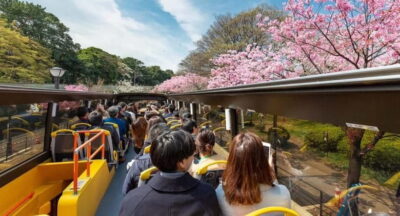
Tokyo: Open Top Panoramic Sightseeing Bus with Audio Guide
Read our review →
Private Drifting Lesson w/ OG Pro Instructor Tokyo Drift Japan
Read our review →![[Self-Drive] Tokyo & Daikoku Custom Car Driving Tour](https://img.audioguidetrips.com/wp-content/uploads/self-drive-tokyo-daikoku-custom-car-driving-tour-400x400.jpg)
Tokyo: Pre Japan Planning Kit: Itineraries, Food & Survival
Read our review →
Akihabara: Self-Guided Tour with a special brochure
Read our review →
Hakone: Self Guided Trip to Mt. Fuji // Made by Local Guides
Read our review →
Tokyo: Sumo Keiko Training Tour with Audio Guide & Photo
Read our review →Browse the lists this tour appears in