REVIEW · ATHENS AUDIO TOURS
Athens: Roman Agora E-Ticket and Audio Guide
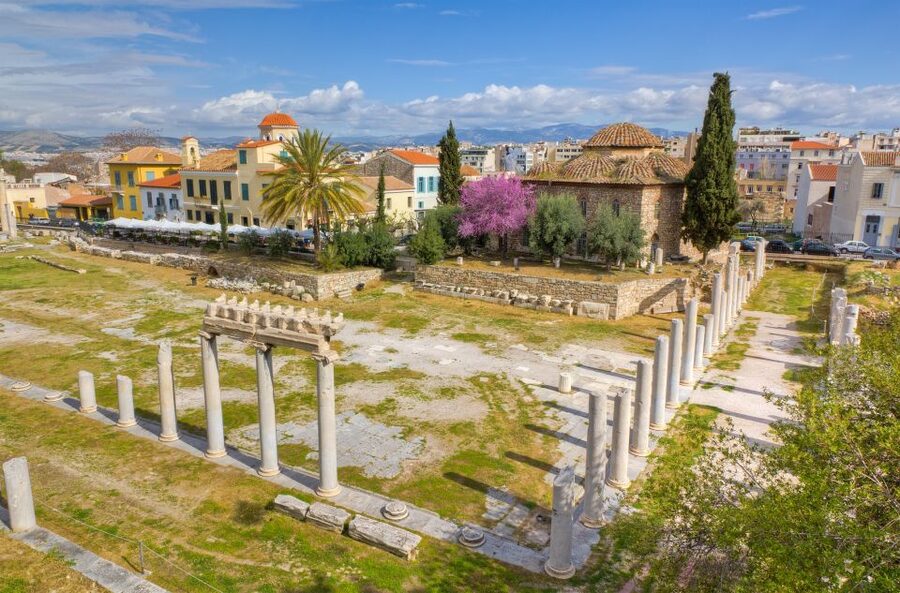
The Roman Agora is a small site with a surprisingly wide story. In less than an hour, you can move from classical Athens to Roman rule, then on to later Byzantine and Ottoman chapters, while the Tower of the Winds and Acropolis provide the setting. The audio tour adds useful context to stones that can otherwise look like a jumble of ruins.
I like two things here. First, you can explore at your own speed instead of following a group. Second, the downloadable content works offline, so you do not need mobile data once the tour is on your phone. The main drawback is that $18 can feel high for a 45-minute to one-hour visit, especially since the site is compact and a standard ticket may be easy to buy on the spot when it is quiet.
Key points to know before you book
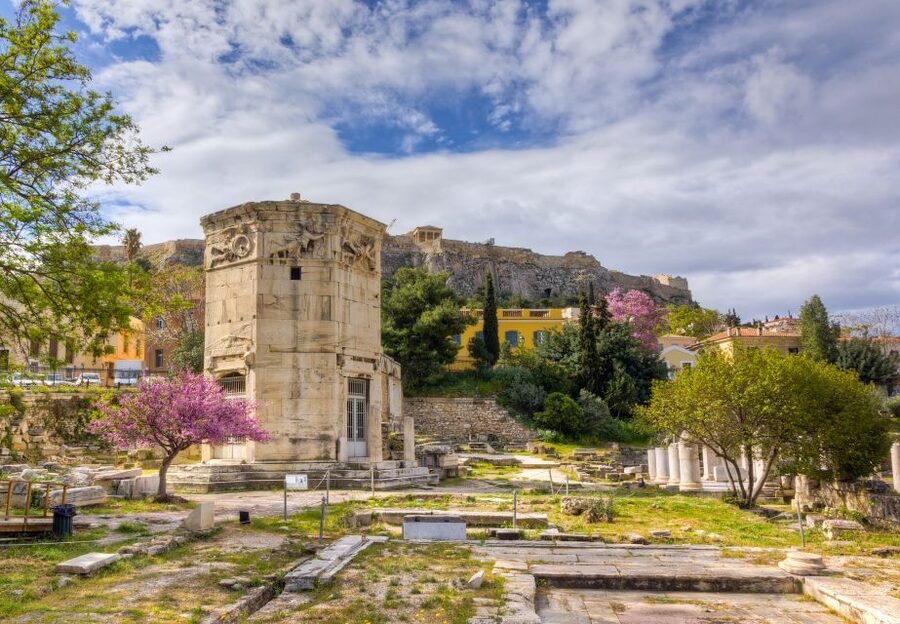
- The Tower of the Winds is the star attraction: This unusual ancient structure helps explain how Greeks observed and measured the weather.
- The visit is compact: Plan on 45 minutes to one hour, with time to pause at the main monuments and take in the Acropolis view.
- The audio works offline: Download the app, tour, maps, and narration before arriving to avoid roaming charges.
- You explore without a live guide: This suits independent visitors, but the phone-based directions may take some attention.
- The ticket covers one device: Book according to the number of phones that will use the audio tour, not simply the number of people.
- Bring the basics: You need a charged Android or iPhone, headphones, and about 100 to 150 MB of free storage.
What the Roman Agora adds to an Athens visit
The Roman Agora is easy to fit into a day in central Athens. It is not a sprawling archaeological complex, and that is part of its appeal. You can see the main features without giving up half a day, yet the site covers several layers of city life.
Athens was famous for philosophy, drama, politics, and architecture long before Roman control. The Roman Agora shows a more practical side of the city: trade, public facilities, weather observation, water, shops, and daily routines. The audio narration is designed to connect these plain functions with the people who used them.
I find this kind of site most useful after you have seen a grand monument such as the Acropolis. The Acropolis can overwhelm you with scale and symbolism. Here, the focus shifts to how a city worked. You get a closer look at the machinery of ordinary urban life.
The visit also gives you a different view of Athens itself. From the Roman Agora, the Acropolis rises nearby, but you are not standing on the main hill or in a large museum. The setting lets you compare the grand religious center with the smaller, practical spaces that supported city life below it.
More Skip-the-Line Audio Guide Tickets in Athens
- Acropolis & Parthenon Entrance Ticket w/optional SG Audio Tours
★ 3.5 · 606 reviews - Athens: Ancient Agora E-Ticket and Audio Tour
★ 3.9 · 413 reviews - Delphi full day V.R audio guided tour with entry ticket
★ 5.0 · 405 reviews
Starting with the Gate of Athena Archegetis
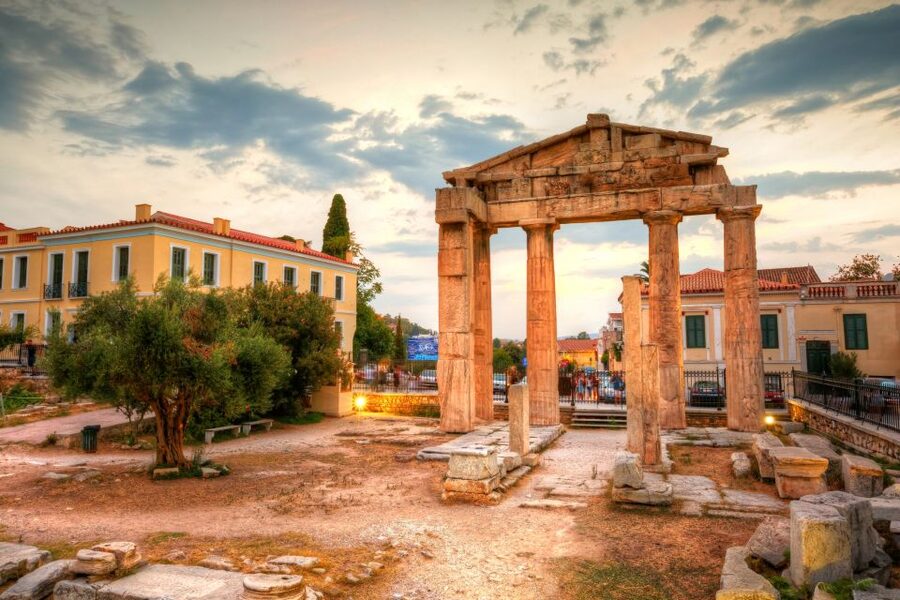
The Gate of Athena Archegetis is one of the first major features to look for. Its columns make a strong visual introduction to the site, and the audio guide explains why the gateway mattered rather than leaving you to admire it as a freestanding ruin.
This is where the tour’s storytelling earns its keep. Without context, a gate can be just a row of worn columns. With the narration, you get a better sense of movement through the ancient city and the way public architecture marked important spaces.
Take a moment here before rushing toward the Tower of the Winds. The Roman Agora is compact enough that you might be tempted to walk straight through it. The short audio segments encourage you to stop, look up, and match the story to the structure in front of you.
The experience is not a live tour, so you will need to manage your own pace and orientation. That freedom is convenient, but it also means you should glance at the map before starting and keep the audio track matched to the correct stop.
Meeting the Tower of the Winds

The Tower of the Winds is the site’s most memorable building. It is an octagonal structure with carved wind figures, and its purpose links architecture with weather, time, and observation.
The audio guide presents the tower as more than an attractive ancient shell. You learn about the winds and the practical ingenuity behind the building. This is one of the places where the narration can turn a quick photo stop into a more thoughtful visit.
Look closely at the exterior details, but do not expect a long indoor experience or a large collection of objects. The tower’s value is in its form, position, and surviving decoration. You are looking at a building that once helped people make sense of the natural world.
The Tower of the Winds is also a good example of why the site works well for history-minded visitors. It combines a clear visual object with a story you can understand in a few minutes. You do not need specialist knowledge to appreciate the point, and the audio adds detail without requiring a long lecture.
From public facilities to everyday routines
The tour also covers the fountain house, the Vespasianae, and the shops. These are less famous than the gate and tower, but they may be the most revealing parts of the visit.
The fountain house points to the basic need for water in an urban center. The Vespasianae, or public toilets, give you a glimpse of the unglamorous infrastructure behind city life. Ancient Athens was not only temples and marble columns. It needed places to buy things, collect water, and handle everyday routines.
The shops help you picture the Roman Agora as an active commercial area rather than a silent archaeological enclosure. The remains may be fragmentary, so the audio narration matters here. It supplies the human scale that the stones alone cannot always provide.
This is also where the site may appeal most to families and casual sightseers. Stories about shopping, water, and public facilities are easy to follow. They offer a break from a succession of grand dates and famous names.
Still, keep your expectations measured. The Roman Agora is not a reconstructed ancient town. You will see surviving structures and foundations, not a full scene with furnished shops or reconstructed crowds. The experience depends on your willingness to use the audio and your imagination.
More Skip-the-Line Audio Guide Tickets in Greece
- Acropolis & Parthenon Admission Ticket w/ self guided audio tours
★ 3.5 · 172 reviews - Athens: Roman Agora & Ancient Agora E-ticket & 2 Audio Tours
★ 4.1 · 107 reviews - Athens: Acropolis Entry Ticket & VR Audio Guided Tour
★ 3.1 · 75 reviews - Athens National Archaeological Museum E-Ticket with Audio Guide
★ 3.0 · 57 reviews
The mosque and later layers of Athens
The Mosque of the Conqueror adds another period to the site. Its presence reminds you that the Roman Agora continued to matter after the ancient Greek and Roman eras had passed.
This later building helps prevent a narrow reading of Athens. The site is not frozen in one classical moment. It was used, changed, and understood by different communities over time. The audio guide connects the mosque with the long sequence of changes that shaped the area.
For some visitors, this may be a quick stop compared with the Tower of the Winds. I would not skip it. The mosque broadens the story and gives the visit a more honest sense of time. Athens is not simply an ancient city preserved for modern eyes. It is a living capital built over many earlier versions of itself.
The available information does not promise interior access or a detailed architectural tour of the mosque, so treat it as one part of the open-air route. The value comes from seeing its place within the Roman Agora and hearing how the site changed.
How the self-guided audio tour works
Before you go, you receive an email with instructions and an activation link. Download the app and audio tour to your smartphone before reaching the entrance. Check your spam folder if the message does not appear promptly.
The content includes audio narration, text, and maps. Once downloaded, it can be used offline, which is helpful if you do not have a Greek data plan. It also means you can replay sections before or after your visit.
The audio is available in English, Spanish, German, French, Italian, and Greek. Choose the language that lets you follow historical details without effort. You will get more from the site if you can listen carefully while looking at the architecture.
Bring your own headphones. The ticket does not include a smartphone or earphones, and you will need a charged phone with enough storage. The required space is about 100 to 150 MB.
The app supports Android version 5.0 and later and iOS, but it does not work with Windows phones. It also excludes older devices such as the iPhone 5 and 5C, older iPod Touch and iPad models, and the first iPad Mini.
One important point is easy to miss: the booking is based on the device used for the tour. If two people want to listen independently on two phones, plan accordingly. Sharing one phone is possible in principle, but it is less comfortable and makes it harder for both people to look around while listening.
Orientation is the main weakness
A self-guided visit gives you control, but it also puts the navigation work on you. The Roman Agora is small, yet audio stops can still be confusing if you start the wrong track or move ahead before the narration finishes.
I recommend downloading everything at your hotel, opening the map, and checking that the audio plays before you leave. At the site, pause at each named monument and compare what you see with the app. That simple habit should reduce the risk of hearing about one feature while standing beside another.
The audio content is built from researched material and short original stories. That format suits a compact site. You are not committing to a long lecture, and you can repeat sections if a detail catches your attention.
But the experience will not suit you if you want a guide pointing out every detail in real time. There is no live guide, no group leader, and no personal answer service. You are responsible for keeping the phone charged, wearing headphones, and following the route.
One recent French-language assessment found the audio very hard to follow for orientation, while another French-speaking visitor found the narration effective and strongly recommended it for understanding the past. Those two reactions point to the real issue: the storytelling can be useful, but the map and route instructions may not feel effortless to everyone.
Is $18 fair for less than an hour?

At $18 per person, this is not the cheapest short attraction in Athens. The Roman Agora is compact, and you may finish the main visit in 45 minutes. If you only want to walk around and take a few photographs, buying the ticket on site could make more financial sense when the entrance is quiet.
The price becomes easier to justify if you value the audio content, multilingual access, offline maps, and the convenience of arranging admission before your visit. You are paying for a prepared interpretation as well as entry.
The value also depends on how you travel. If your schedule is tight, a prearranged ticket saves a small amount of planning. If you already use audio tours often and enjoy exploring alone, you are more likely to feel that the cost is worthwhile.
One useful comparison comes from the site’s compact size. You are not booking a full-day excursion, transport, or a live guide. The fee is for a focused archaeological stop. I would consider it reasonable for someone who wants context and convenience, but less appealing for a budget visitor who is comfortable buying a basic ticket at the entrance.
The activity is non-refundable, so double-check your date and phone compatibility before paying. Free and reduced admission tickets must be obtained at the on-site ticket booth and do not receive the skip-the-line benefit included with this product.
Who will get the most from this visit?
I would choose this experience for independent visitors who want a short historical stop between larger Athens sights. It is especially useful if you prefer to read and listen at your own pace rather than join a set group.
History fans will appreciate the range of subjects: classical architecture, Roman urban life, weather observation, public facilities, commerce, and later Ottoman-era use. The site gives you small, concrete details that balance the usual focus on temples and political history.
It also works for visitors who need a flexible schedule. The tour lasts about 45 minutes to one hour, and the audio can be used before or after your entrance. You can prepare in advance or replay parts later.
I would hesitate to recommend it to someone who wants a live conversation, detailed personal guidance, or a major archaeological complex. The site is not large, and the digital route requires some self-management. It is also only partially accessible, so check current conditions if mobility is a concern.
My practical plan for using the ticket
Download the app and audio before leaving your accommodation. Confirm the activation link, language, map, and playback, then charge your phone fully.
Wear comfortable shoes. The visit is short, but you will be walking and standing while looking between your screen, the monuments, and the Acropolis view. Keep your headphones handy, but pause the narration when you want to concentrate on a photograph or conversation.
Allow a full hour even though some people will finish sooner. That gives you time to listen without rushing, study the Gate of Athena Archegetis, spend a few minutes with the Tower of the Winds, and notice the fountain house, public toilets, shops, and mosque.
Do not rely on a meeting point. The experience does not provide a live meeting arrangement, and the meeting details can vary by booking option. Follow the email instructions carefully and treat the digital ticket as the key part of your preparation.
Should you book the Roman Agora audio tour?
Book it if you want a short, independent history stop with an audio guide in your own language, offline access, and prearranged entry. The Tower of the Winds, Acropolis view, and everyday-life stories give the Roman Agora more substance than its small footprint suggests.
Skip it if you only want a quick look at the ruins, are watching every euro, or strongly prefer a live guide. At $18, the audio and convenience need to matter to you.
My advice is simple: prepare the app before you arrive, use the map carefully, and give the smaller features as much attention as the famous tower. That is where the Roman Agora makes its best case.
FAQ
How long does the Roman Agora visit take?
The suggested duration is 45 minutes to one hour.
Is a live guide included?
No. This is a self-guided audio tour on your smartphone, with no live guide.
Which languages are available?
The audio guide is available in English, Spanish, German, French, Italian, and Greek.
Do I need internet access at the site?
The audio narration, text, and maps can be downloaded for offline use, so you can avoid roaming charges after downloading the content.
What should I bring?
Bring comfortable shoes, headphones, and a charged smartphone.
Which phones work with the audio guide?
You need an Android phone running version 5.0 or later or a compatible iPhone. The app does not support Windows phones, iPhone 5 or 5C, older iPod Touch models, or older iPad models listed in the activity information.
How much storage does the app need?
You should have about 100 to 150 MB of free storage on your phone.
Can I buy a reduced admission ticket with skip-the-line access?
No. Free and reduced admission tickets must be obtained at the ticket booth on site and do not include skip-the-line privileges.
Just added around Athens
- Temple of Olympian Zeus: Self-Guided Audio Tour on your Phone (without ticket)★ 4.0 · 8 reviews
- Athens National Archaeological Museum E-Ticket with Audio Guide★ 3.0 · 57 reviews
- Athens: Acropolis Museum Ticket with Self-Guided Audio tour App★ 3.5 · 40 reviews
- Self Guided Tour In Athens With 100 Captivating Audio Stories★ 4.0 · 4 reviews
- Ancient Agora of Athens: A Self-Guided Audio Tour★ 3.5 · 3 reviews
- Athens Highlights Self guided scavenger hunt and Walking Tour★ 4.5 · 6 reviews
- Athens Hop-On Hop Off w/ Acropolis & Acr.Museum tickets & 3 audio★ 3.0 · 5 reviews
- Shore Excursion: Athens Half Day Self-Guided Tour with Private Driver★ 4.5 · 8 reviews
Athens Audio Tours, compared.

Athens: Cape Sounio & Poseidon Temple Trip with Audio Guide
Read our review →
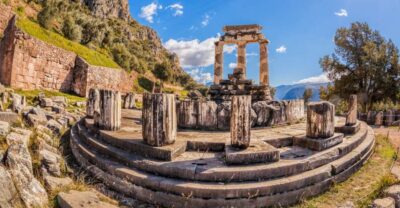
From Athens: Delphi Full Day V.R. Audio Guided Tour
Read our review →
Athens: Acropolis Museum Ticket with optional Audio Guide
Read our review →
From Athens: Small-Group Delphi, Museum & Arachova Day Trip
Read our review →
Athens: Peloponnese Highlights Day Trip and V.R. Audio Guide
Read our review →
Athens: Acropolis Museum Ticket with Audio Guide
Read our review →