
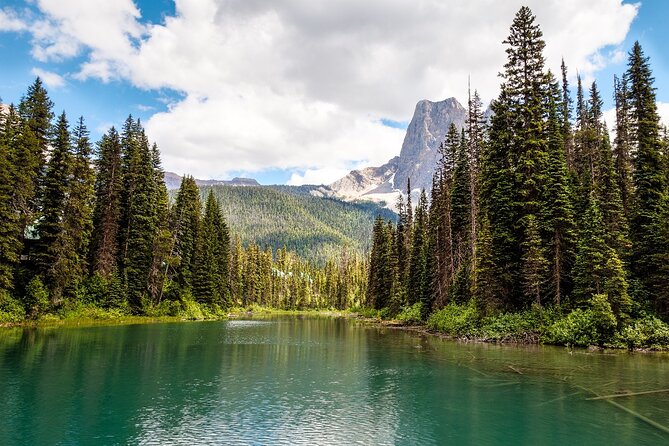
REVIEW · CANADA AUDIO TOURS
Yoho National Park Self-Guided Driving Audio Tour
Yoho National Park packs huge mountain views, glacial lakes, waterfalls, fossils, and railway history into a surprisingly compact drive. This self-guided tour turns the road from Lake Louise to Emerald Lake into a moving story, with more than 27 audio stops spread across over 50 miles.
I like the hands-free GPS audio and the freedom to stop for photos, hikes, or a snack without waiting for a guide. I also like the price: $14.99 covers a carload of up to four people, not four separate tickets.
The main caution is simple: this is an app, not a person. You must download the tour before leaving reliable service and connect your phone to the car stereo. One customer had trouble getting it to work, so test the app before reaching the park.
Key points to know before you go
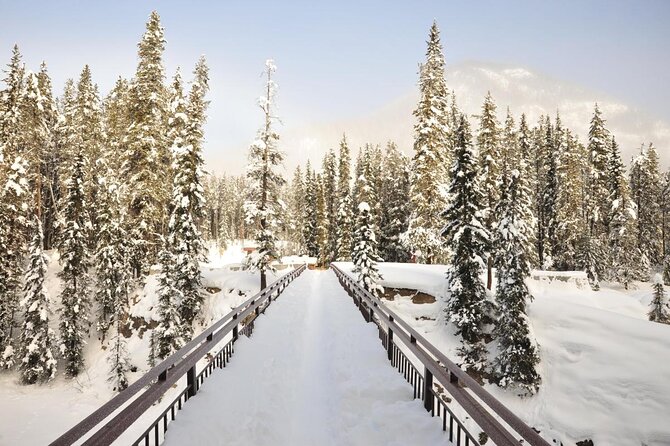
- Kicking Horse Pass starts the story: Learn how an old First Nations travel route became a key railway crossing and gained its unusual name.
- The route links major Yoho sights: Hear stories at Sherbrooke Lake, the Spiral Tunnel viewpoint, Takakkaw Falls, Wapta Mountain, Burgess Shale, Natural Bridge, and Emerald Lake.
- GPS triggers the narration: Stories begin as you reach each point, so you can keep your eyes on the road.
- Takakkaw Falls requires a seasonal detour: The access road is open from July through September, with about 15 minutes each way.
- One purchase covers your group: The $14.99 price is for up to four people in one vehicle.
- Offline access matters: Download the tour and setup information over strong Wi-Fi or cellular service before heading into the mountains.
A road trip with a story attached
Yoho is smaller than many Canadian national parks, but it is not a quick postcard stop. The park covers more than 500 square miles, and the road reveals something different every few minutes: a steep mountain pass, a railway engineering feat, a high waterfall, or a river cutting through stone.
That makes an audio tour a good fit here. You are not being led from one fixed meeting point to another. Instead, you drive your own car and listen as the route unfolds. The app uses your location to start the next story, allowing you to focus on traffic and scenery rather than watching a screen.
The standard route begins near Lake Louise in Alberta and finishes at Emerald Lake Road near Field, British Columbia. The drive takes about one to two hours if you simply follow the main route, though the experience can take much longer once you add photo stops, short walks, and the Takakkaw Falls detour.
I would treat the stated duration as the audio route time, not the total time you need for the day. Yoho rewards a slower pace.
More Self-Guided Driving Tours in Canada
- Icefields Parkway: a Smartphone Audio Driving Tour
★ 4.0 · 118 reviews - Cabot Trail: a Smartphone Audio Driving Tour
★ 4.5 · 118 reviews - Sea to Sky Highway: a Smartphone Audio Driving Tour
★ 4.0 · 32 reviews
What the $14.99 price really buys you
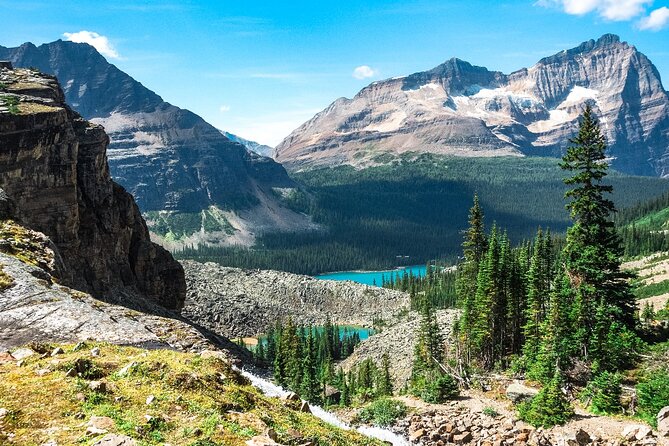
At $14.99 per group of up to four, this is inexpensive compared with a private guide or a bus excursion. A family or small group can split the cost, making it only a few dollars per person. You also avoid the fixed schedule that comes with an organized tour.
The value comes from the combination of narration and flexibility. You can pause the tour for lunch, stop at a viewpoint, take a side trip, or skip a story that does not interest you. You can also return to a story later if the road is busy or the scenery demands your attention.
The purchase is described as usable for one year in the tour summary, while the access information also says lifetime access with no expiry. Since those statements do not match perfectly, I would confirm the current access period before booking if repeat use is important to you. Either way, the product is designed for more than one quick listen and can be used over multiple days.
The park entrance pass is not included. You need a separate pass for Yoho National Park, purchased online or at the park entrance. Add that cost to your budget before deciding that the audio tour is your only expense.
Kicking Horse Pass and Yoho’s opening chapter
The first stop is Kicking Horse Pass, where the tour sets up the human story of the region. The Kootenay people used this mountain crossing long before modern roads and railways existed. The narration then asks how the pass received its memorable name.
That is a smart way to begin. Instead of opening with a list of facts, the audio starts with a question tied to the very road beneath your tires. You get a sense of how people moved through the mountains before the railway changed the route.
The first story takes about 10 minutes according to the stop timing. You do not need to leave the vehicle to follow it, but you will want to allow extra time for viewpoints and photos. This is also the point where you should make sure the audio is playing clearly through your car stereo.
Sherbrooke Lake for a quieter side trip
The Sherbrooke Lake trailhead offers a useful choice. The lake sits at the base of two mountains and is described as a quieter alternative to the park’s better-known sights. The trail is six miles long and takes at least two hours.
That distance matters. Sherbrooke Lake is not a quick leg stretch between audio stories. If you plan to hike it, set aside a good part of your day and consider pausing the tour before leaving the car.
I like that the route includes this option even though the main audio drive can be completed much faster. It reminds you that Yoho is more than a chain of roadside lookouts. You can stay with the car-based itinerary or use the narration as a framework for a longer visit.
The possible drawback is that the tour does not turn this into a guided hike. You receive the location and basic context, but the product remains a driving audio tour. Bring your own planning, timing, and trail judgment.
More National Park Audio Tours in Canada:
- Joshua Tree National Park Self-Guided Driving Audio Tour
★ 4.5 · 762 reviews - Ultimate Acadia National Park Self-Guided Driving Audio Tour
★ 4.0 · 521 reviews - Self-Guided Ebike Tours of Acadia National Park Carriage Roads
★ 5.0 · 427 reviews - Great Smoky Mountains National Park Self-Guided Driving Tour
★ 4.0 · 292 reviews
The Lower Spiral Tunnel viewpoint and a railway problem
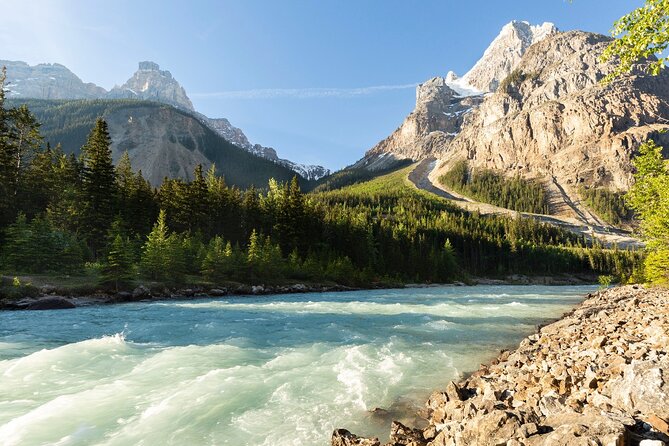
At the Lower Spiral Tunnel viewpoint, the subject changes from old travel routes to one of the great engineering challenges of the Canadian Rockies. In the 1880s, Prime Minister John Macdonald and the Canadian Pacific Railway faced a stubborn question: how could a steam train pulling roughly 20 cars climb mountains reaching around 10,000 feet?
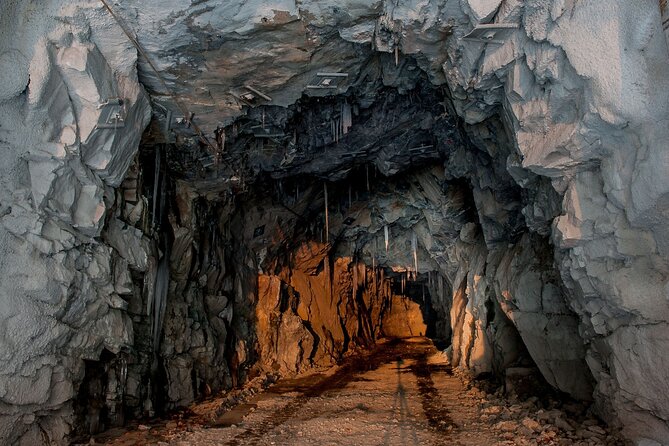
The solution was the Spiral Tunnels. The railway line winds through the mountain rather than attacking the slope in a straight climb. From the viewpoint, the story becomes easier to understand because you can connect the engineering idea to the actual terrain around you.
This is one of the tour’s most useful stops for families and curious first-time visitors. A railway line can look like a simple track until you understand what it took to carry a long steam train across these mountains. The audio gives the view a purpose without asking you to read a plaque while standing in the cold.
The stop is also a good example of why the GPS format works. You reach the viewpoint, hear the relevant story, and can decide how long to stay. Just remember that the narration is not a substitute for safe parking or careful driving. Follow posted rules and the speed limit.
Takakkaw Falls and the seasonal detour
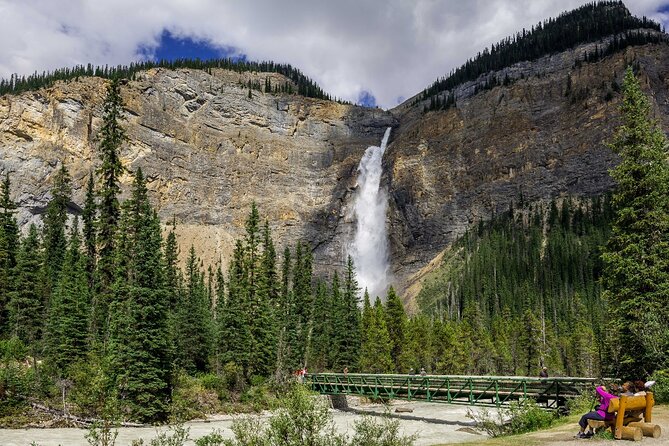
Takakkaw Falls is the biggest optional detour on the route. The road takes about 15 minutes each way, and the access road is open from July through September. The waterfall drops roughly 1,200 feet, and the route brings you surprisingly close to the falling water.
This is the stop I would plan around. If you are visiting during the open season, check the road status and allow enough time for the side trip. If you are visiting outside that window, do not assume the detour is available just because it appears in the audio route.
The tour treats Takakkaw Falls as an option, which is helpful. You are not forced into a fixed schedule, and you can decide based on weather, road conditions, and how much time you have. The tradeoff is that a one to two hour estimate no longer applies once you add the detour and time near the falls.
The waterfall is also a reminder to bring practical clothing. The supplied information does not specify facilities, trail conditions, or current access details, so check official park information before setting out.
Wapta Mountain and a First Nations name
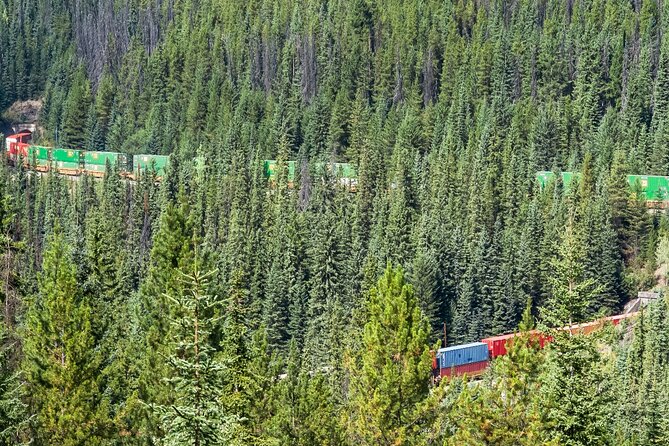
Wapta Mountain rises to 9,114 feet and gives the narration another chance to correct a common assumption about the Rockies. Many peaks in this region have European names, but Wapta comes from the Nakoda language.
The audio asks what the name means, turning a mountain view into a small listening challenge. That kind of prompt helps break up a long drive. You are not simply hearing a string of measurements and dates. You are asked to notice the peak and think about the names people gave it.
The story also touches on the first recorded climb by clergyman James Outram and J.H. Scattergood with a Swiss guide in 1901. You get a glimpse of early mountaineering without needing to undertake a climb yourself.
For me, this is the sort of short story that works best from the passenger seat. The driver should keep attention on the road while another person watches for the mountain and handles the app if needed.
Burgess Shale, where the rock holds fossils
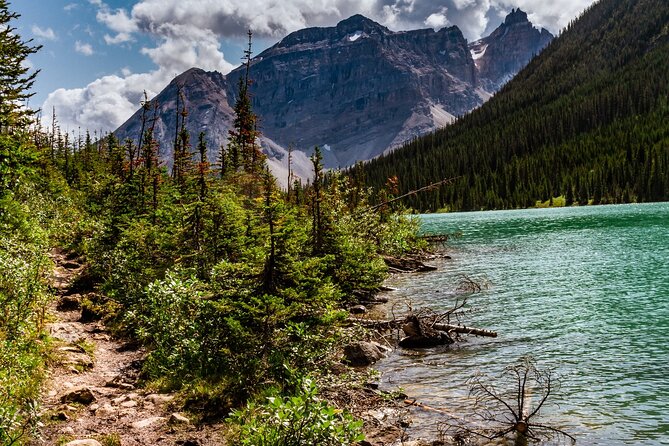
Mount Field is home to the Burgess Shale, one of Canada’s major fossil discoveries. The sedimentary shale contains a large number of fossils, giving the drive a strong geology stop in addition to its scenery and railway history.
The value here is context. You might look at a mountain and see only rock, snow, and trees. The story points out that the rock can preserve evidence of life from a much earlier period. That changes how you read the view.
The audio does not turn the stop into a museum visit, and no fossil walk is included in the tour. Think of this as an introduction. If Burgess Shale is a main reason for your visit, you will need separate information about access, guided hikes, and current rules.
Natural Bridge and the force of the Kicking Horse River
Natural Bridge is one of the clearest examples of the park’s geology at work. A rock bridge crosses the Kicking Horse River, and the story explains how the river helped shape it.
Near Field, the river flows over flatter ground at a slower pace. Here, it begins a steeper descent toward the Amiskwi River. Gravity speeds the water and makes it rougher, allowing the river to cut into the rock.
You can appreciate the stop quickly, but it deserves more than a passing glance. The bridge is not just a strange shape beside the road. It shows what moving water can do over time. The audio gives you a reason to look closely at the river instead of snapping a photo and driving on.
As with every stop, the app gives you the story, not crowd control or on-site supervision. Use marked areas and obey park signs.
Emerald Lake closes the route
The route ends at Emerald Lake, with a return to the story of Tom Wilson. Wilson is described as the first European settler to see the glacial lake, and he gave it its name.
Ending at the lake works well because it gives the drive a clear destination rather than leaving you at a random roadside pullout. You can stop the audio there, continue exploring independently, or use the location as the end of this particular route.
The final stop also ties the trip together. The tour begins with earlier routes through the mountains and finishes with the arrival of a European explorer who helped bring one of Yoho’s most famous sights to wider attention. The story gives the lake a human connection without taking away from the view.
You should not expect the tour to provide a guided walk around Emerald Lake. It is still a self-guided driving product. Use the lake as your finishing point and plan any additional activities separately.
Using the Action app without losing patience
The tour requires the separate Action’s Tour Guide app. After booking, you receive setup instructions and a password by email and text. Search your messages for audio tour if the instructions are not easy to find.
Download the app and the tour while you have strong Wi-Fi or cellular service. The tour works offline after downloading, but that does not help if you wait until you are already in an area with weak reception.
The basic process is:
- Download the Action’s Tour Guide app.
- Enter the password sent by email and text.
- Select the version with your planned starting point and direction if more than one appears.
- Go to the start near Lake Louise.
- Launch the tour at the first story point.
- Let the GPS trigger the next stories as you drive.
You can connect the phone to your car with Bluetooth, USB, or AUX. The audio works with Apple CarPlay, while Android Auto support is described as forthcoming. An iPhone with iOS 15 or later, an Android device with version 9 or later, or an iPad or tablet with GPS and cellular service is recommended.
I would preview the tour before your visit. One poor experience came from the guide never working, while other use of the product depended on the audio starting at the right locations. Testing it at home can save a frustrating start in the mountains.
Who should choose this tour?
I would choose this for a couple, family, or small group already driving between Lake Louise and Emerald Lake. It suits people who want background on the places they pass but do not want a scheduled guide sitting in the car.
It also works well for repeat visits. The flexible access lets you pause, restart, skip stories, and return to the route over more than one day. The low group price makes it especially appealing when four people share one car.
I would think twice if you dislike phone-based tours or have unreliable mobile service and no chance to download the content ahead of time. It is also not the best choice if you want someone to answer questions in real time, manage the day, or guide a hike.
Cancellation is free if you cancel at least 24 hours before the local start time. Changes or cancellations inside that window are not refunded.
Should you book the Yoho audio tour?
Book it if you want a low-cost way to add stories to a scenic drive and you are comfortable setting up an app before leaving town. The strongest features are the location-triggered narration, offline access, and freedom to spend five minutes or half a day at a stop.
I would not buy it as a substitute for a park pass, trail planning, or current road information. Treat it as an audio companion. Download it early, test the sound, bring the right park pass, and leave room in your schedule for Natural Bridge, Emerald Lake, and the seasonal Takakkaw Falls detour.
For $14.99 per car, it offers solid value, especially when shared by a group. The product is best for independent visitors who want the road to remain their own while the stories fill in what the views cannot explain.
FAQ
How much does the Yoho National Park audio tour cost?
The tour costs $14.99 per group, covering up to four people.
How long does the tour take?
The driving route takes approximately one to two hours, but stops, hikes, photo breaks, and the Takakkaw Falls detour can make the visit much longer.
Where does the tour start and finish?
It starts near Lake Louise, Alberta, at the listed starting point on Kicking Horse Avenue, and ends at Emerald Lake Road near Field, British Columbia.
Is a park pass included?
No. You need a separate entrance pass for Yoho National Park. Passes can be purchased online or at the park entrance.
Does the tour include a live guide?
No. This is a private, self-guided audio tour. No one meets you at the starting point.
Does the audio work without cell service?
Yes, after you download the tour. You must download it while you have strong Wi-Fi or cellular service.
When is the Takakkaw Falls detour open?
The Takakkaw Falls access road is open from July through September, according to the tour information.
What device do I need?
An iPhone running iOS 15 or later, an Android device running version 9 or later, or an iPad or tablet with GPS and cellular connectivity is recommended.
Can I cancel for a full refund?
Yes, if you cancel at least 24 hours before the experience start time. Cancellations made within 24 hours are not refunded.
More National Park Trips in Canada
- Arches National Park Self-Guided Driving Audio Tour
★ 4.5 · 288 reviews - Yellowstone National Park Self-Guided Driving Audio Tour
★ 4.5 · 249 reviews - Abel Tasman National Park: Sailing and Self-Guided Walk
★ 4.8 · 238 reviews - Self-Guided Bike Tour of Killarney National Park, Muckross Gardens & Waterfall
★ 5.0 · 223 reviews
Just added around Canada
- Smartphone Audio Driving Tour between Huntsville & Toronto★ 4.5 · 4 reviews
- Halifax Explosion Smartphone Audio Walking Tour★ 4.0 · 3 reviews
- Explore Halifax with 3 Unique Smartphone Audio Walking Tours★ 4.0 · 16 reviews
- Smartphone Audio Driving Tour between Collingwood and Toronto★ 4.5 · 3 reviews
- Self Guided Audio Driving Tour of the North Shore of PEI★ 4.0 · 24 reviews
- Charlottetown Audio Walking Tour★ 5.0 · 7 reviews
- A 7th-Gen Local’s View of Downtown Charlottetown: An Audio Tour★ 4.5 · 27 reviews
- The Sights of Canmore: a Smartphone Audio Walking Tour★ 4.0 · 4 reviews
Canada Audio Tours, compared.

Vancouver Bike or Ebike Rental – Self Guided Map provided
Read our review →
Mont-Tremblant: Treetop Observatory and Self-Guided Walk
Read our review →

Vancouver to Whistler Seaplane Day Trip: Self-Guided Adventure
Read our review →Browse the lists this tour appears in