
REVIEW · NEW ZEALAND AUDIO TOURS
Volcanic Valley Self Guided Walking and Hiking at Waimangu
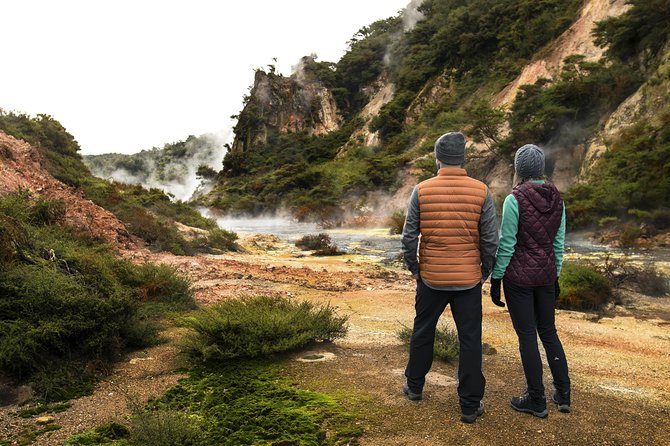
Waimangu is where Rotorua’s volcanic power feels most natural. You walk through native bush and open grassland while hot springs bubble below, steam drifts across the trail, and vivid lakes appear between the trees. Frying Pan Lake and Inferno Crater Lake give you the big visual moments, but the smaller vents and steaming streams make the walk feel alive.
I like the freedom here: you set the pace, choose how far to go, and can use the shuttle instead of walking back uphill. I also like the quiet, non-commercial feel and the paper guide, which gives the strange sights a useful story. The main caution is the terrain and timing. Some sections are steep or uneven, and a late afternoon start can leave you rushing for the final bus.
Key points at a glance
- Waimangu is the world’s youngest geothermal system, shaped by the 1886 Tarawera eruption.
- Inferno Crater Lake and Frying Pan Lake are the walk’s major sights, with steaming pools, vents, brooks, and vivid water along the way.
- You choose the length, with routes suited to about one hour, two hours, or longer outings depending on energy and trail choices.
- The internal shuttle runs from the lower trail area, saving you the uphill walk back to the entrance.
- The Wanderer Guide and free Waimangu App explain the geothermal features, Tarawera eruption, plants, and wildlife.
- The walk suits moderately fit visitors, but uneven ground, stairs, steep stretches, and changing weather require sensible shoes and clothing.
Walking into Waimangu’s volcanic past
Waimangu Volcanic Valley sits south of Rotorua on Waimangu Road, at 587 Waimangu Road. This is not a staged collection of bubbling mud pools beside a car park. You follow a real valley through forest, wetlands, grassland, and volcanic ground, with the sights spread along a walking route.
The valley was shaped by the Tarawera eruption, one of New Zealand’s major volcanic events. Your guide sheet connects what you see today with that eruption and with the Pink and White Terraces, which are now hidden. That background matters because the walk is not only about taking pictures of colorful water. You are seeing a place still shaped by active geothermal forces.
At check-in, you collect the Wanderer Guide. You can also download the free Waimangu App. The guide is useful because the sights do not always explain themselves. A steaming pool may look like a small feature from the path, but the notes help you understand its heat, acidity, or connection to the wider volcanic system.
The setting is one of the best reasons to choose Waimangu. Geothermal attractions appear among native plants and birdlife rather than in a heavily built-up park. You may hear birds in the bush, see steam lifting through ferns, and notice how quickly the vegetation changes around the hot ground.
More Self-Guided Walking Tours in New Zealand:
- Abel Tasman National Park: Sailing and Self-Guided Walk
★ 4.8 · 238 reviews - Rotorua: Waimangu Volcanic Valley Ticket & Self-Guided Walk
★ 4.8 · 104 reviews - Abel Tasman National Park: Self-Guided Walk & Sailing
★ 4.7 · 30 reviews
The first section gives you the strongest sense of place
The route begins at the visitor center and heads through the upper part of the valley. The walking is generally downhill, which makes the start comfortable for many people but creates an important practical point: you will need either to walk back uphill or use the internal shuttle later.
Early sections introduce the mix of woodland, open areas, steaming ground, and volcanic water. You can stop at marked viewpoints and benches rather than treating the walk as a race. The path is described as easy to follow, but it is not flat throughout. A moderate level of fitness is the sensible expectation.
I like this gradual beginning because Waimangu does not reveal everything at once. You move from ordinary-looking bush into a setting where steam rises beside the trail and the smell and sound of geothermal activity become more noticeable. The contrast between green vegetation and hot, active ground is what gives the walk its character.
The route is suitable for different energy levels. You can make a shorter outing, continue through more of the valley, or stop at one of the shuttle points when you have seen enough. That flexibility helps if you are visiting with children or with a mixed-age group.
Frying Pan Lake and Inferno Crater Lake
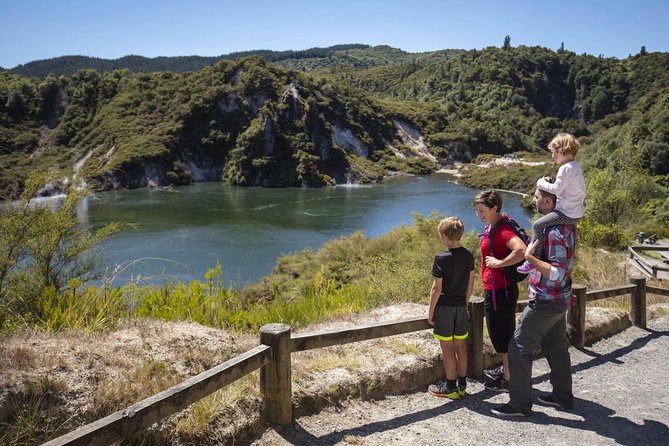
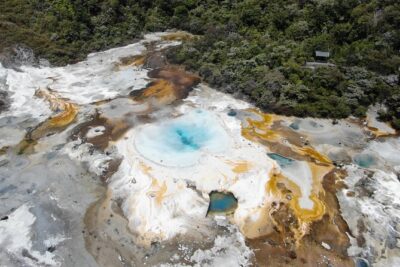
Frying Pan Lake is one of the key sights in Waimangu. The name tells you what to expect: a broad geothermal lake with steam and active water. It is a reminder that the valley is not simply an old volcanic site. Heat and movement are still present.
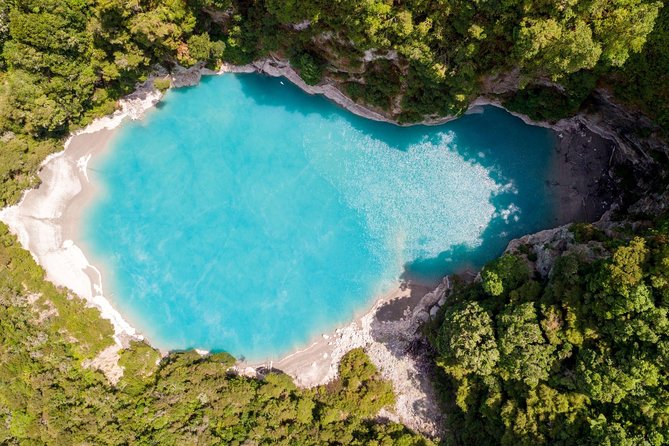
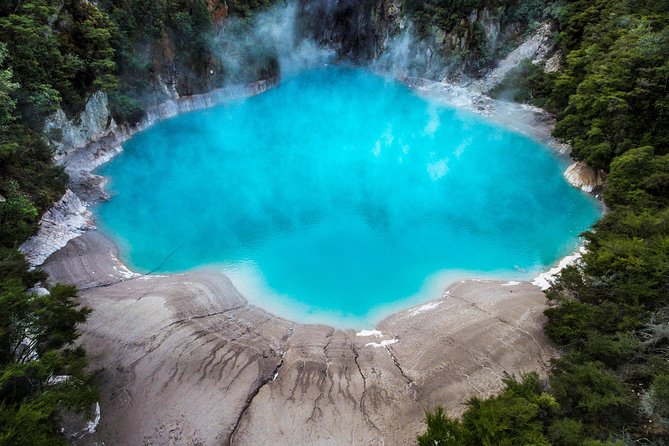
Inferno Crater Lake provides a different visual effect. Its striking blue color has become one of Waimangu’s signature views, particularly when the weather allows the color to show clearly. The lake is not just a pretty stop. Your guide explains the geothermal conditions that create this unusual feature and helps you understand why the water behaves differently from an ordinary lake.
These viewpoints are where many people pause for photographs, but do not hurry away after taking one. The best part is often the surrounding detail: steam shifting across the water, hot brooks running through the valley, and the sound of geothermal activity beneath the quiet.
Weather can change how much you see. Cool conditions may make steam more visible, while mist, rain, or cloud can soften the views. The walk operates in all weather, so bring suitable clothing rather than relying on a clear Rotorua forecast to carry the day.
Forest, wetlands, and smaller geothermal features
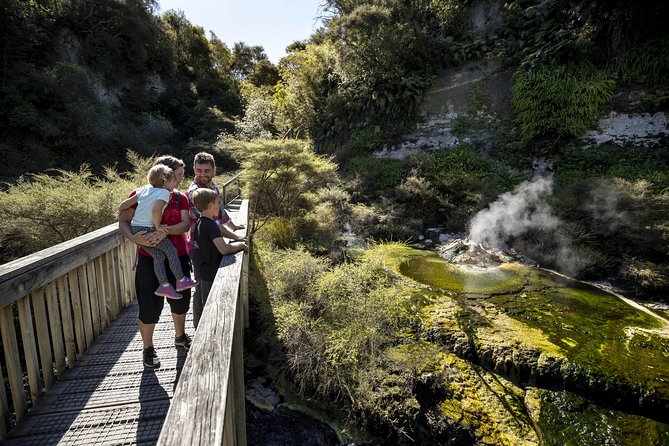
The walk’s appeal goes beyond the two famous lakes. You pass through native woodland and wet areas, with hot springs, fissures, steaming streams, and small pools appearing along the route. These less dramatic features help you appreciate the valley as a whole.
I particularly like the way the geothermal activity shares space with plant life. In one stretch, you may be looking at a steaming lake; in another, the trail passes through greenery and bird habitat. This gives Waimangu more variety than a short stop at a single crater or mud pool.
The guide sheet also points out plant and animal life. That is useful for anyone who tends to focus only on the colorful water. Slow down occasionally and listen. The quiet sections can be just as memorable as the main viewpoints, especially when there are not many people on the route.
Some trail sections include stairs or steeper ground. One practical note from the walk is that a route marked A to E can include a tall, demanding stair section, and you may prefer to skip it if you want an easier outing. The exact effort depends on which paths you choose, but the park gives you options rather than forcing every visitor onto one long route.
More Hikes and Treks in New Zealand:
- Queen Charlotte Track: Cruise & Self-Guided Hike from Picton
★ 4.8 · 383 reviews - Funchal: Pico do Arieiro Sunrise Transfer Self-guided Hike
★ 4.9 · 2,798 reviews - Rabaçal: 25 Fontes & Risco Levada Transfer Self-guided Hike
★ 4.8 · 841 reviews - Caldeirão Verde: Queimadas PR9 Transfer and Self-Guided Hike
★ 4.9 · 668 reviews
Lake Rotomahana and the lower valley
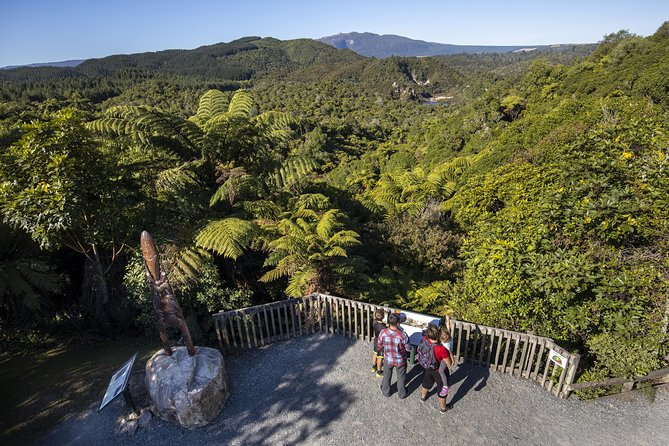
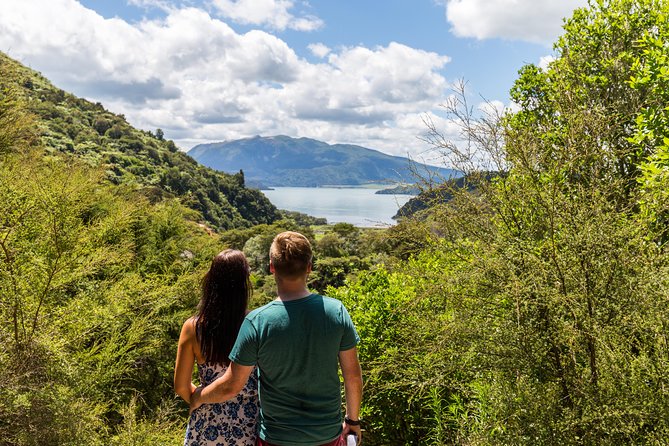
As you continue downhill, the valley opens toward Lake Rotomahana. This is an important part of the Waimangu story because the eruption changed the area’s lakes, craters, and terraces. The guide helps place Lake Rotomahana within that wider volcanic history.
The lower section is a good reason to allow more than a quick one-hour visit. If you have the energy and the weather is pleasant, continuing gives you a fuller sense of the valley’s changing scenery. You see more than a single thermal attraction, and the route moves between open views, water, vegetation, and steaming ground.
A standard visit often takes about two hours, but the stated duration can range from one to four hours. That range is realistic because you may walk only part of the route, stop often for photos, read the guide in detail, or continue farther before taking the shuttle.
The internal bus is included and runs from the lower trail area. It brings you back toward the start, so you do not have to repeat the uphill walk. This is a major part of the value, especially after a warm day or a longer walk. Check the final departure time when you arrive. If your entry is at 3 p.m. and the last bus from a lower stop leaves around 4:35 p.m., you may need to shorten your visit.
How the self-guided format works
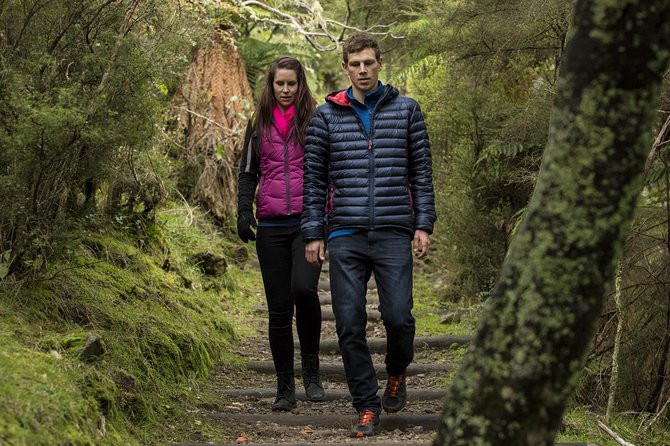
This is a good choice if you prefer to stop when you want rather than stay beside a group guide. You can spend several minutes at Inferno Crater Lake, pause on a bench, or move quickly through a section that interests you less.
The trade-off is that the guide does not narrate the walk in real time. You need to read the Wanderer Guide or use the app and pay attention to signs. I see that as a fair exchange because you control the pace, but anyone wanting a constant spoken explanation may prefer a guided excursion.
The route is designed for independent walking, and the group size is limited to a maximum of 15 people for the activity. That does not turn it into a private walk, but timed entry helps keep the trail from feeling crowded. You still have room to pause without holding up a large tour group.
The driver on the return shuttle may add a short explanation during the ride. Treat that as a pleasant extra rather than the main source of information. The printed guide and app are what make the walk work.
Price, food, and what you actually get
At $46.54 per person, the price is reasonable if you use the shuttle and spend two to four hours exploring. Your admission includes the self-guided walk, the guide sheet, the internal shuttle, and an air-conditioned vehicle. You are paying for access to a large geothermal valley rather than a brief viewing platform.
The value is weaker if you arrive late, rush through the route, or see only the upper section. Time your visit so you can walk at a comfortable pace and still catch the shuttle. A morning visit can also be appealing because cooler conditions may make steam more visible.
Food and drinks are available to purchase, but they are not included. Alcoholic drinks are also extra. Transport to Waimangu is not included, so you must arrange your own way to the meeting point.
Some visitors pair the valley walk with a boat cruise on Lake Rotomahana. A boat trip is not part of the self-guided walking admission, and availability may vary, including during maintenance or renovations. If that option matters to you, confirm it separately instead of assuming it comes with the walk.
Who should choose this walk?
I would choose Waimangu if you want geothermal scenery with a strong sense of place and enough time to look around. It works especially well for people who enjoy walking, photography, plants, birds, and natural forces without a constant stream of commentary.
Families can do well here because there are different stopping points and shuttle stops, but children must stay with an adult. The walk is not a playground, and hot ground and uneven surfaces require attention.
You should have moderate physical fitness. The trail is manageable for many people, yet steep sections, stairs, and uneven surfaces mean it is not recommended for people with walking disabilities. A pram may manage parts of the walkway, but the route is not uniformly smooth, so the exact path you choose matters.
Wear sturdy walking shoes and dress for the weather. The park operates in rain and other conditions, and wet or cool weather can alter both comfort and visibility. Allow extra time for rests if you are unsure about the hills.
Booking, timing, and cancellation
You receive confirmation when you book. Children must be accompanied by an adult, and the activity has a maximum of 15 participants.
The cancellation policy is generous if your plans remain uncertain: cancel at least 24 hours before the local start time for a full refund. Cancellations or changes made within 24 hours are not accepted for a refund.
The most important booking decision is your start time. A late entry can work, but only if you check the last shuttle departure and accept that you may not complete the full route. For the best chance to walk slowly, read the guide, and stop for photos, give yourself at least two hours and avoid cutting it close to the final bus.
Should you book Waimangu?
Yes, if you want Rotorua geothermal scenery in a natural setting and prefer to explore independently. The combination of forest, steaming lakes, native life, and the free return shuttle makes this more than a quick stop for one colorful pool.
I would skip it only if you dislike walking, need completely level paths, or want a guide speaking throughout the visit. For everyone else, Waimangu offers a flexible half-day outing with strong scenery and useful context. Book an earlier time if possible, wear shoes you trust, and save enough energy to reach the lower valley before taking the bus back uphill.
FAQ
Where does the Waimangu walk start?
The activity starts at Waimangu Volcanic Valley, 587 Waimangu Road, Bay of Plenty Region 3073, New Zealand.
How long does the walk take?
The stated duration is about one to four hours. A typical walk takes around two hours, depending on the route, stops, and walking speed.
Is the walk guided?
No. This is an independent self-guided walk. You receive a Wanderer Guide and may also download the free Waimangu App.
What geothermal features can I see?
The route includes Frying Pan Lake, Inferno Crater Lake, Lake Rotomahana, hot springs, steam vents, brooks, fissures, forests, grasslands, and wetlands.
Is a shuttle included?
Yes. An internal shuttle bus is included and can return you from the lower trail area toward the starting point.
Is transport to Waimangu included?
No. Transport to and from the attraction is not included. You must make your own way to the Waimangu Road meeting point.
Is the walk suitable for children?
Yes, children can take part, but they must be accompanied by an adult. The walk includes uneven ground and some steeper sections.
What happens if the weather is poor?
The activity operates in all weather conditions. You should dress appropriately for rain, cool temperatures, or other changing conditions.
Just added around New Zealand
- Hawkes Bay Wineries Self-Guided Electric Bike Tour★ 5.0 · 42 reviews
- Self-Guided Milford Track Day Walk – Milford Sound★ 5.0 · 17 reviews
- Milford Sound Nature Cruise and Self-Guided Scenic Track Walk★ 5.0 · 4 reviews
- Explore Dunedin: Self-Guided Audio Tour Adventure★ 3.5 · 3 reviews
- A Remarkable Scavenger Hunt: Digging Up Canterbury’s Treasure★ 3.5 · 3 reviews
- Morning Guided with Afternoon Self-Guided Biking Wine Tour★ 5.0 · 30 reviews
- Explore Auckland: Self Guided Audio Tour★ 4.5 · 12 reviews
- A Self-Guided Walking Tour of Auckland’s Hidden Stories★ 4.5 · 15 reviews
New Zealand Audio Tours, compared.

Queen Charlotte Track: Cruise & Self-Guided Hike from Picton
Read our review →
Self-Guided Wine Tours by Bike with Lorelle & Greg
Read our review →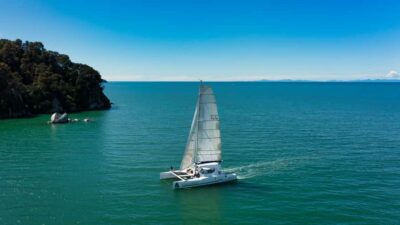
Abel Tasman National Park: Sailing and Self-Guided Walk
Read our review →
Marlborough: Full-Day Self-Guided Biking Wine Tour
Read our review →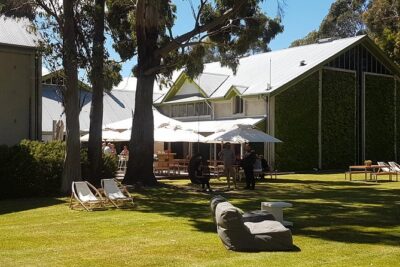
Self-Guided Biking Wine Tour (full day) in the Marlborough Region.
Read our review →
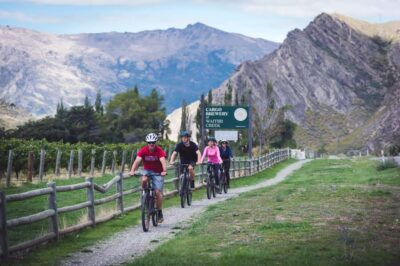
Queenstown: Self-Guided Gibbston Valley Wineries Bike Tour
Read our review →Browse the lists this tour appears in