
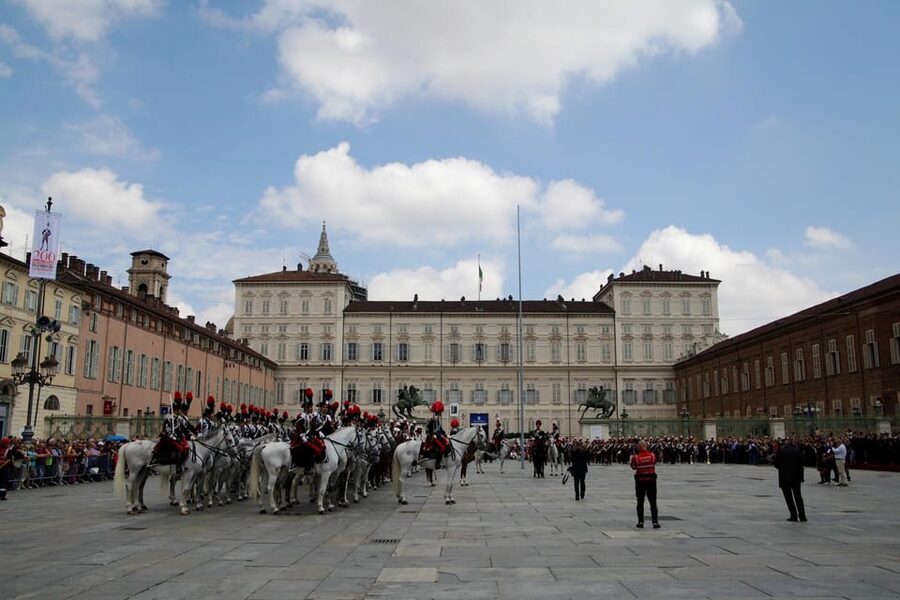
REVIEW · ITALY AUDIO TOURS
Turin: Entrance ticket for Palazzo Reale & audioguide
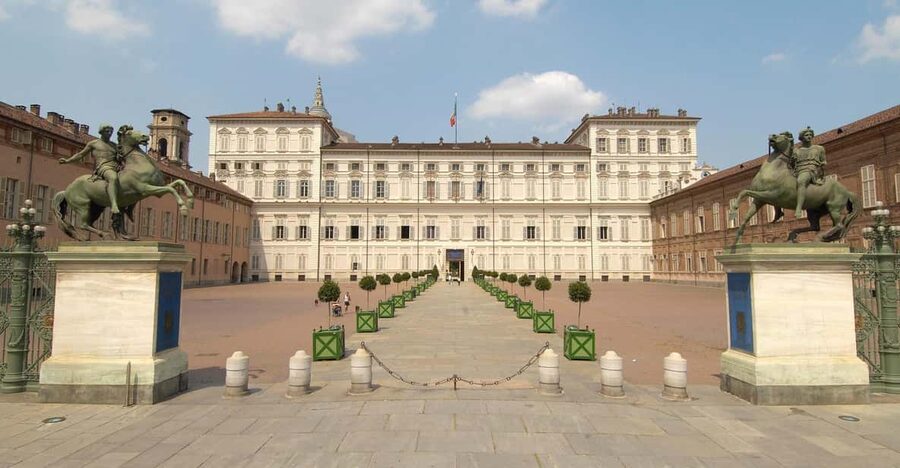
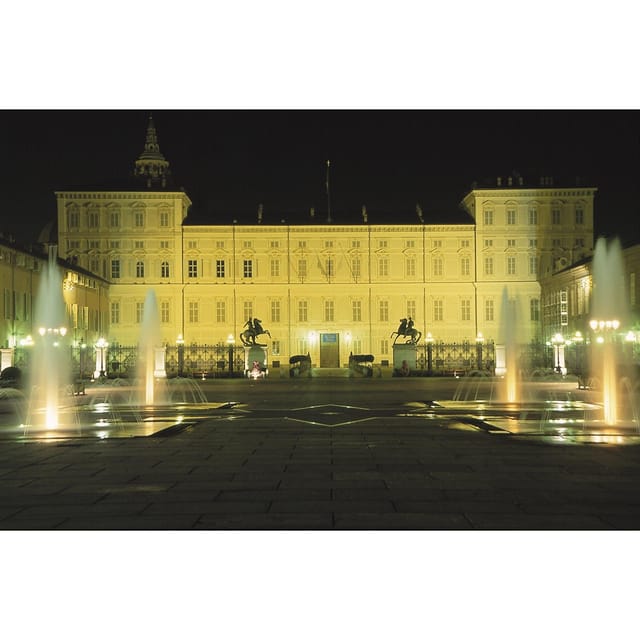
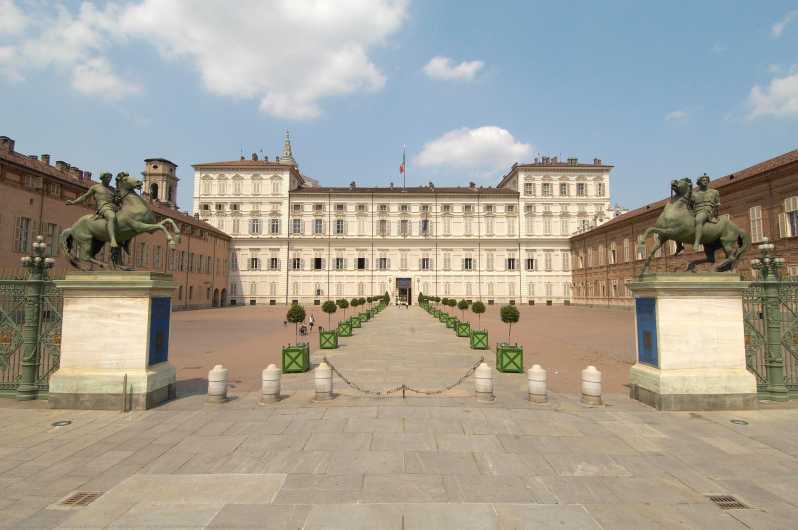
The grandest part of this experience is the Royal Palace of Turin, where Savoy kings received visitors, dined, slept, and displayed their power. You’ll walk through ceremonial rooms, private apartments, a remarkable marble staircase, and a Royal Armoury filled with centuries of weapons and armour.
I like the easy combination of palace admission and city audio guide, and I like the freedom to move at your own pace in seven languages. The main concern is important: the audio content may focus more on Turin than on the palace itself, and access to the digital guide can be awkward.
Key points to know before booking
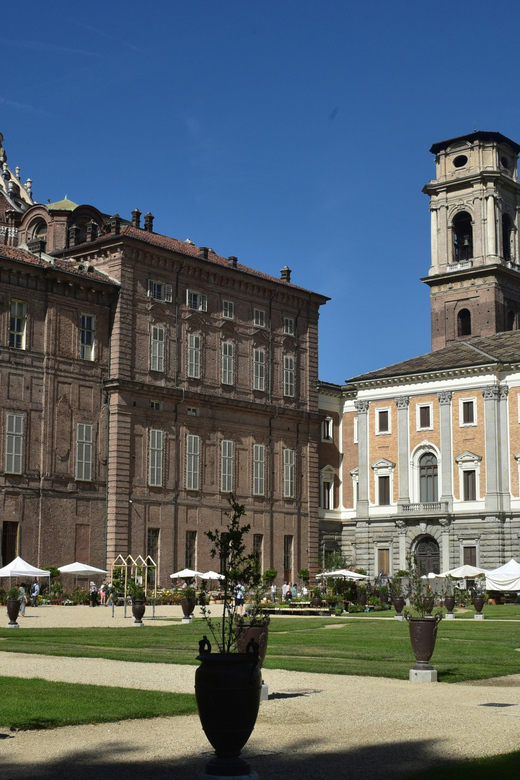
- Savoy royal rooms: See the Piano Nobile, Chinese Cabinet, throne rooms, ballroom, and private apartments.
- Juvarra’s marble staircase: The Scala delle Forbici is one of the palace’s most memorable architectural details.
- Royal Armoury included: View historic armour and Napoleonic objects, including a sword associated with Bonaparte.
- Seven audio languages: Choose Italian, English, French, German, Spanish, Russian, or Traditional Chinese.
- Bring your own headphones: Headphones are not included, and you need a smartphone for the audio guide.
- Check the palace audio carefully: The digital content may provide only a short Turin introduction rather than a detailed room-by-room palace tour.
A royal palace at the heart of Turin
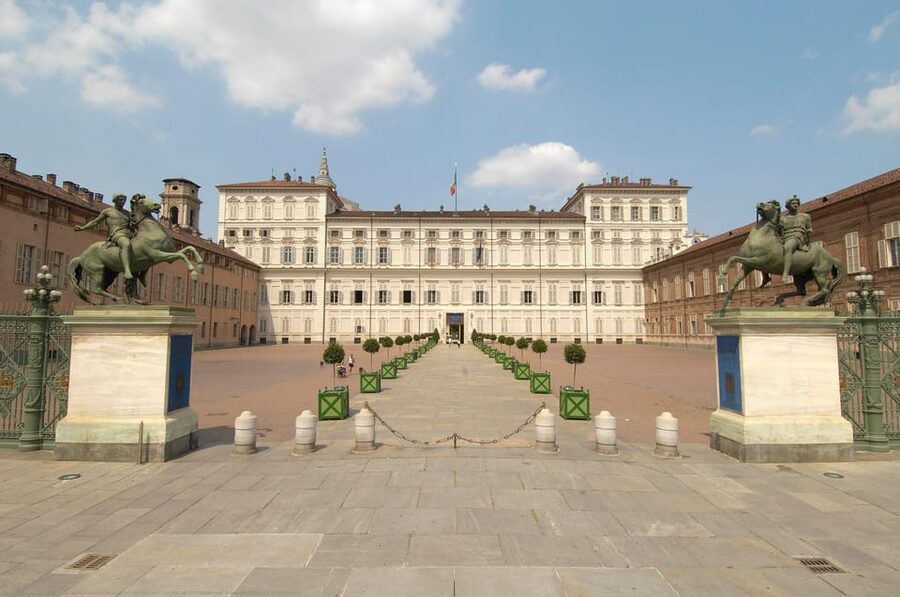
Turin’s Royal Palace is not a small historic house tucked away on a side street. It is a grand seat of the Savoy dynasty, the ruling family that shaped Piedmont and later played a central role in Italian unification.
The palace is part of the UNESCO-listed group of Savoy residences in Piedmont. That status makes sense once you enter the formal rooms. The building was designed to project order, wealth, and royal authority, with long sequences of rooms arranged for ceremony rather than casual living.
You begin on the Piano Nobile, the main ceremonial floor. This is where the palace makes its first impression. The rooms were intended for public business, formal visits, and court life, so expect decorated interiors rather than a simple collection of furnishings.
I like this kind of visit because the building itself explains how a royal court worked. You are not just looking at paintings or furniture in isolation. You are moving through rooms built to control who could approach the ruler, where guests waited, and how the monarchy presented itself.
The experience is self-guided, so you are not tied to a group’s pace. You can pause in a room, read the labels, or continue when you are ready. That flexibility suits visitors who want a quiet look at the palace rather than a tightly timed guided walk.
More Skip-the-Line Audio Guide Tickets in Italy
- Rome: Pantheon Fast-Track Ticket and Official Audioguide
★ 4.5 · 27,353 reviews - Pompeii: Entry Ticket with Audio Guide
★ 4.1 · 13,491 reviews - Venice: La Fenice Opera House Entry Ticket with Audio Guide
★ 4.6 · 11,742 reviews
The Piano Nobile and Chinese Cabinet
The Piano Nobile contains the palace’s representative rooms and some of its most important decorative spaces. The Chinese Cabinet is a special stop here, with an interior style that reflects the European court fascination with Asian art and design.
This room is useful for understanding that the palace was meant to impress guests from every angle. A royal residence was also a display case. Decorative choices signaled taste, international connections, and the resources available to the court.
The audio guide is supposed to add cultural context as you go. If the content is clearly matched to each room, it can help you notice details you might otherwise pass without a second look. If it does not match the palace sequence, the printed information inside the rooms may be more useful.
That is the biggest practical issue with this booking. One visitor reported difficulty reaching the audio download site and found that the audio did not correspond to the rooms. Another said the audio amounted to about ten minutes of introductory material about Turin rather than a proper Royal Palace narration.
I would treat the audio as a bonus, not the main reason to pay for this experience. The palace admission is the dependable part. Before leaving the entrance area, test the guide, confirm that the Royal Palace content is available, and check whether the track refers to the room where you are standing.
The Scala delle Forbici and the upper rooms
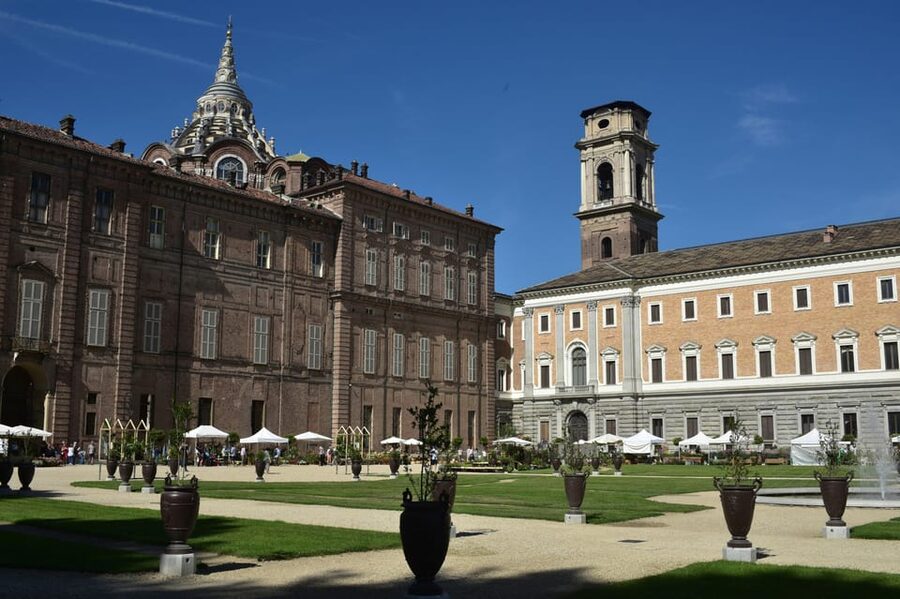
You reach the second floor by way of the Scala delle Forbici, designed by Filippo Juvarra. The name refers to the staircase’s scissor-like design, and its appearance is more graceful than you might expect from such a large marble structure.
The staircase is imposing, but it does not feel heavy. Its curves and open form create a sense of movement. This is one of the palace’s architectural highlights, and it gives the visit a welcome change from room after room of furnishings.
The staircase also shows why the Savoy residences are worth seeing as architecture, not only as royal history. Juvarra was one of the leading architects associated with Piedmont’s court, and the Scala delle Forbici gives you a clear example of how practical circulation could become a work of art.
From here, the route continues into the King’s Private Apartments. These rooms were renovated in the nineteenth century at the direction of King Charles Albert. Earlier furniture and fittings were retained in places, so the apartments reflect more than one period of royal use.
That mixture is worth keeping in mind. The rooms are not frozen in one perfect moment from the eighteenth century. They show how later rulers changed and reused an older palace while preserving parts of its earlier character.
For you, the main appeal is the contrast between public and private spaces. The ceremonial rooms were built for presentation. The private apartments reveal how the king’s daily environment was arranged, though the palace still presents these rooms through a formal museum display.
Daniel’s Gallery and the Queen’s Apartments
The line of rooms is interrupted by Daniel’s Gallery, one of the best-preserved Baroque interiors in the palace. The name refers to Daniel Seiter, whose work is associated with this grand decorative setting.
A gallery like this was not simply a hallway. It was a place for display and movement, with decoration meant to impress people as they passed through. Look up and around rather than only at eye level. The ceiling and overall arrangement are part of the effect.
The route then moves into the Queen’s Apartments. These rooms give the visit another point of view on court life, although the experience remains focused on interiors, furnishings, and ceremony rather than personal storytelling.
You will also see the dining room and the Alcove Room. The latter is linked to the former wedding bed, which gives the room a more intimate connection to royal life. It is a small but useful reminder that palaces were not only offices of state. They were homes for royal families, even when every private moment was shaped by protocol.
The dining room helps you picture the palace in use. Meals in a royal residence were part of court routine, and the arrangement of these spaces shows how eating, receiving guests, and formal appearances overlapped.
At this stage, the audio guide could be especially helpful if it explains how the rooms were used. Without that context, you can still appreciate the decoration, but some of the spaces may blur together. I recommend using the room labels as your backup and saving the audio for subjects it handles clearly.
Same place, a different route to walk:
- Rome: Colosseum & Forum with Audio Guide App -Optional Arena
★ 4.2 · 24,770 reviews - Venice: Grand Canal Gondola Ride with App Commentary
★ 4.1 · 23,020 reviews - Florence: Timed Entry to Michelangelo’s David + Audio App
★ 4.6 · 19,496 reviews - Rome: City Sightseeing Hop-on Hop-off Bus with Audioguide
★ 4.0 · 16,045 reviews
Throne Room, Ballroom, and the end of the palace route
The final two rooms in the palace have a more solemn tone: the Queen’s Throne Room and the Ballroom.
The Throne Room represents the public authority of the monarchy. Its purpose was ceremonial, and the design reflects that. This is where the palace’s political role becomes most obvious. The room was not simply furnished for comfort. It was arranged to make the institution of monarchy feel formal and permanent.
The Ballroom offers a different kind of grandeur. It was built for court occasions, so imagine it as a space for movement, music, and carefully managed social life rather than a quiet sitting room.
I like the way these rooms bring the palace visit back to its public purpose. You begin among representative rooms, pass through apartments and galleries, and finish in spaces designed for authority and spectacle. The route gives you a fairly clear sense of the court’s layers.
The exact length of time you spend in each room is up to you. The stated duration is three hours, which is generous enough for a measured visit to the palace and some Turin audio content. If you stop to study every label, you may want to focus on the palace first and use the city material later.
The Royal Armoury and Napoleonic objects
The visit ends in the Royal Armoury, one of the strongest reasons to consider this ticket. It contains armour from several centuries and is described as one of the richest collections of its kind in the world.
Armour displays can sometimes feel repetitive, but this collection gives the palace visit a different finish. After rooms filled with textiles, furniture, and decoration, the armoury brings you face to face with military power and royal identity.
You may also see objects connected with the Napoleonic period, including a sword associated with Bonaparte. That detail gives the collection a direct link to one of Europe’s most eventful eras.
The armoury also helps place the Savoy court within a broader political setting. A royal family collected and displayed arms not only for practical reasons, but also to connect itself with military tradition, dynastic prestige, and past victories.
If you have limited time inside the palace, do not rush this final section. It is one of the places where the collection can feel most immediately memorable. The combination of armour, weapons, and personal associations gives you a stronger sense of historical drama than a general audio introduction to Turin may provide.
What the audio guide really adds
The digital guide covers Turin and its monuments in Italian, English, French, German, Spanish, Russian, and Traditional Chinese. That range is helpful if you do not read Italian comfortably, and it lets you explore the city after the palace visit without joining a group.
The concept is simple. You download the content to your smartphone, select the Turin or Royal Palace material, and listen as you go. Since no transportation is included, you can use the city guide independently before or after your palace entry.
The problem is that the palace portion needs to be checked rather than assumed. The description promises content about the Royal Palace, but the available experience may be closer to a short Turin introduction. A ten-minute overview of the city is not the same as a detailed explanation of the Chinese Cabinet, Daniel’s Gallery, or the Queen’s apartments.
You should also bring your own headphones. They are not supplied. Headphones matter here because you may want to listen without holding your phone to your ear, and palace interiors are better enjoyed without constantly looking down at a screen.
The access instructions require attention. Your actual palace tickets and audio guide codes are sent by email within the day before the visit. The booking confirmation itself does not permit entry to the palace. If the email does not arrive, you are instructed to call the provider.
That timing makes it wise to check your inbox before heading out. Do not wait until you reach the palace entrance to discover that you only have a booking confirmation and not the required entry ticket.
Price, timing, and practical value
The listed price is $46 per person, although one booking experience describes paying about €45. The value depends almost entirely on what you want from the audio guide.
If you only need Royal Palace admission, buying a palace ticket directly may be cheaper. One person specifically compared the package price with a direct entrance price of about €15. Prices can change, but the comparison shows the central value question: you are paying a large premium for the digital city and palace content.
That premium may be reasonable if you want seven-language access and plan to use the Turin monument guide beyond the palace. It is less attractive if the audio gives you only a short city introduction and little room-specific information inside the palace.
At three hours, the activity can fill a useful part of your day without requiring a full-day commitment. The palace itself is the main anchor. The city audio can extend the experience, but the package does not include transportation, a human guide, or headphones.
The activity is wheelchair accessible. Food and drinks are not allowed inside, and pets are not permitted, although assistance dogs are allowed.
Cancellation is flexible enough for normal planning: you can cancel up to two days in advance for a full refund. That is useful if your Turin plans are still changing.
Who should book this experience
I would consider this option if you want a self-guided palace visit, need audio content in one of the seven listed languages, and value having Turin monuments gathered in one smartphone guide.
It can work well for independent visitors who dislike fixed group schedules. You can linger over Juvarra’s staircase, move quickly through rooms that interest you less, and spend extra time in the Armoury.
Families should read the ticket details carefully. For the child category covering ages 10 to 17, an audio guide is provided but no palace ticket is included. That means you need to confirm how the child will enter before booking.
I would be more cautious if your main goal is a detailed explanation of the palace. The supplied information does not identify a live guide, and the audio content has been reported as difficult to access, poorly matched to rooms, or limited to a short Turin introduction.
Should you book the Royal Palace and audio guide?
Book it if the palace itself is your priority and you like the freedom of a self-guided visit. The Savoy apartments, Scala delle Forbici, throne rooms, ballroom, and Royal Armoury give you plenty to see, even if the audio proves less useful than expected.
Before paying $46, compare the direct palace admission price and decide how much the seven-language city guide is worth to you. If you want detailed palace interpretation, consider an alternative that clearly promises a dedicated Royal Palace narration.
My practical advice is to treat this as a Royal Palace entry ticket with extra digital content, not as a guaranteed full audio tour of every room. Confirm the emailed tickets, download the guide early, bring headphones, and use the palace labels as your reliable guide if the app content does not line up.
FAQ
How long does the experience last?
The stated duration is three hours. You can use that time for the Royal Palace and the Turin city audio content.
What languages are available for the audio guide?
The audio guide is available in English, French, German, Russian, Spanish, Italian, and Traditional Chinese.
Is Royal Palace admission included?
Yes, palace entry is included for the standard ticket. For the child ticket covering ages 10 to 17, the audio guide is provided but no palace ticket is included.
What rooms can I see inside the Royal Palace?
The route includes the Piano Nobile, Chinese Cabinet, Scala delle Forbici, King’s Private Apartments, Daniel’s Gallery, Queen’s Apartments, dining room, Alcove Room, Queen’s Throne Room, Ballroom, and Royal Armoury.
Are headphones included?
No. You need to bring your own headphones for the smartphone audio guide.
Can I enter with the booking confirmation?
No. The booking confirmation does not allow entry by itself. Your palace tickets and audio guide codes are sent to your email within the day before the visit.
Is the experience wheelchair accessible?
Yes, the activity is listed as wheelchair accessible. Food and drinks are not allowed, and pets are not permitted except for assistance dogs.
Just added around Italy
- Genoa Historic Centre Quest: A Self-Guided Puzzle Adventure★ 4.0 · 3 reviews
- Genova Walking Tour with Audio and Written Guide by a Local★ 4.5 · 33 reviews
- Self-Drive (No Licence) Boat Rental in Portofino Gulf★ 5.0 · 12 reviews
- Finance and Nobility: Explore medieval Genoa on a self-guided audio tour★ 4.5 · 7 reviews
- Florence: Uffizi Gallery Reserved Ticket & Digital Audio Guide★ 4.5 · 3 reviews
- Around Florence Hills: App‑Guided e‑Vespa Tour + Wine&Food★ 4.5 · 22 reviews
- Florence: Uffizi Gallery Audio Guided Tour led by Tour Leader★ 3.5 · 6 reviews
- Uffizi Gallery: Self-guided App Visit & Optional Accademia Museum★ 4.0 · 19 reviews
Italy Audio Tours, compared.
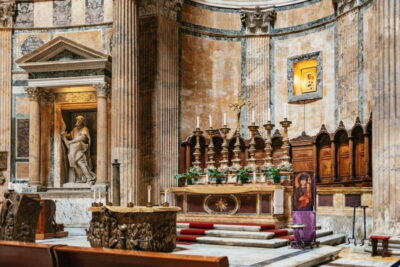
Rome: Pantheon Fast-Track Ticket and Official Audioguide
Read our review →
Rome: Colosseum & Forum with Audio Guide App -Optional Arena
Read our review →
Venice: Grand Canal Gondola Ride with App Commentary
Read our review →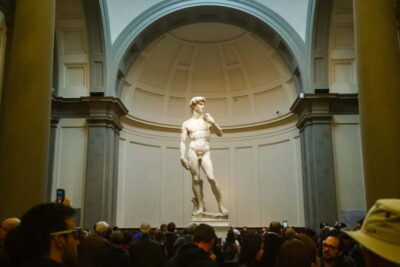
Florence: Timed Entry to Michelangelo’s David + Audio App
Read our review →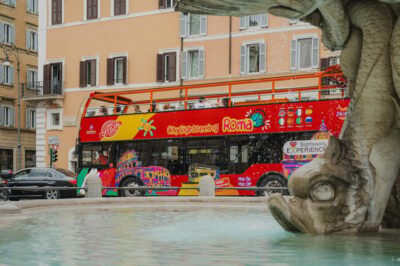
Rome: City Sightseeing Hop-on Hop-off Bus with Audioguide
Read our review →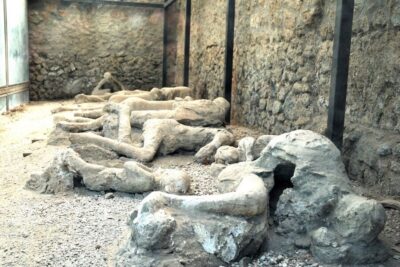
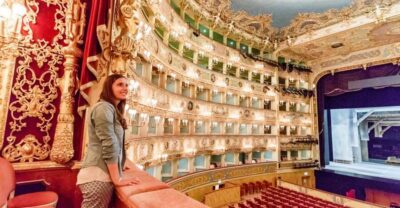
Venice: La Fenice Opera House Entry Ticket with Audio Guide
Read our review →
Rome: Colosseum, Forum, Palatine Hill Entry & Audioguide App
Read our review →Browse the lists this tour appears in