
REVIEW · CANADA AUDIO TOURS
Smartphone Audio Driving Tour between Kamloops and Vancouver
The best thing about this experience is that it turns a long drive into a moving lesson about British Columbia. As you pass rivers, mountain passes, railway sites, lakes, and small towns, the audio points out what you are seeing and adds short stories, trivia, and local facts. You set the pace, stop when you like, and can travel east or west.
I like the low group price, just $8.22 per vehicle or group of up to 15, and I like the offline function, which matters on a mountain highway where mobile service may drop. The main caution is the sound design: one reviewer found a sudden semi-horn effect so startling that the tour had to be switched off. Keep the volume modest and let the driver handle the controls.
- One purchase covers up to 15 people, making this far cheaper than a private guide.
- The route works from Kamloops to Vancouver or Vancouver to Kamloops, so you can use it in either direction.
- Offline playback needs no signal or data, a useful feature on the Coquihalla Highway.
- Stops include Harrison Hot Springs, Hope Slide, Coquihalla Canyon, Merritt, and Nicola Lake.
- You can stop anywhere and return to the tour later, with lifetime access.
- Audio effects add humor but may be too loud or abrupt for some drivers.
A road trip with a local soundtrack
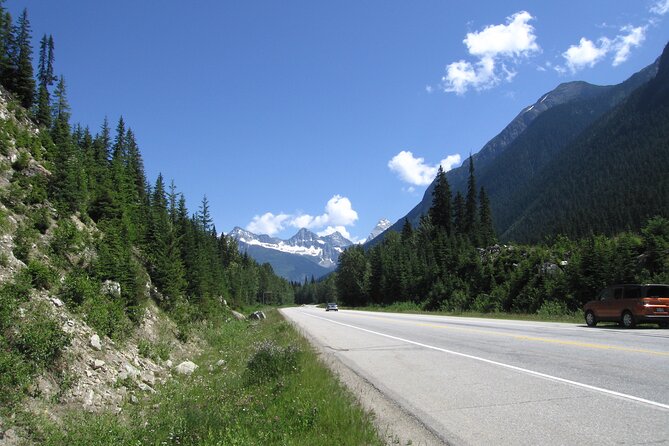
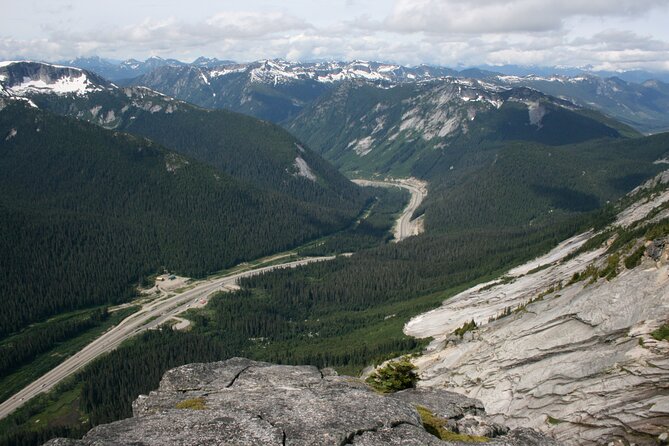
The drive between Vancouver and Kamloops already gives you plenty to watch. The Fraser Valley opens into long river views, then the road climbs through the Coquihalla region before dropping toward Merritt and the Thompson River country. Without context, some of those places pass in a blur.
This audio tour gives the drive a bit of structure. It points out towns, bridges, rivers, parks, animals, historic routes, and possible side trips. You are not joining a bus group or following a fixed schedule. You use your own vehicle, listen through your smartphone or tablet, and stop when a place catches your eye.
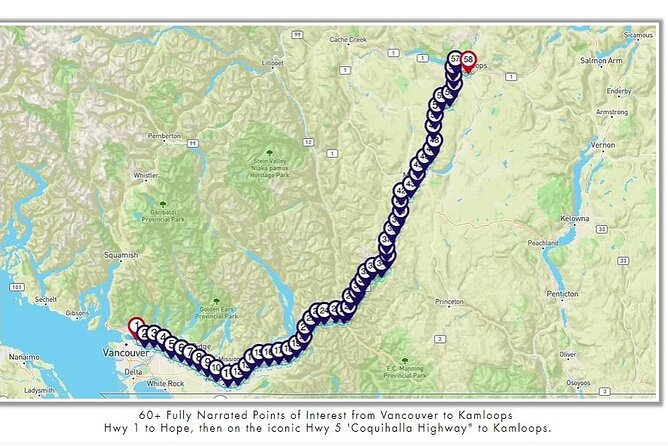
The supplied route details describe dozens of audio points, with 43 numbered points appearing in the full stop list, while the headline description refers to 28 points of interest. Treat the exact count as approximate. The useful fact is that the tour covers the full corridor and gives you frequent prompts along the way.
The advertised audio portion lasts about one to two hours, but the drive itself takes much longer. That distinction matters. You should not expect a two-hour guided transfer from one city to the other. Think of this as audio content attached to a road trip, with the freedom to pause it, stop for an attraction, and continue later.
From Coquitlam to the Fraser Valley

The opening section covers the built-up end of the journey. Near Coquitlam, the audio introduces the Coast Salish people who originally lived in the area. That is a welcome start because it places the modern suburbs in a much older cultural setting.
The Port Mann Bridge receives its own point, along with information about Surrey. You then travel near the Serpentine River before passing Langley. These are not major sightseeing stops, and you may not want to pull over, but the commentary gives meaning to places you might otherwise treat as highway scenery.
Fort Langley gets two separate mentions. One explains the difference between the community called Fort Langley and the historic site itself. Another points out Fort Langley National Historic Site, which may prompt you to plan a proper visit. Attraction admission is not included, so any stop here is your own choice and expense.
The audio also covers Abbotsford, one of British Columbia’s important cities, and points south toward Mount Baker in Washington. The mountain can dominate the view from the highway even though it is across the border. This is a good example of the tour’s approach: not every point is a stop, but many help you notice something already in front of you.
Burnaby Village Museum also appears in the commentary. The museum recreates a town from roughly 1890 to 1920 and has operated for more than 50 years. It may be closed or inaccessible at some times of year, so consider the audio mention a suggestion rather than a promise of entry.
More Self-Guided Driving Tours in Canada
- Icefields Parkway: a Smartphone Audio Driving Tour
★ 4.0 · 118 reviews - Cabot Trail: a Smartphone Audio Driving Tour
★ 4.5 · 118 reviews - Sea to Sky Highway: a Smartphone Audio Driving Tour
★ 4.0 · 32 reviews
Lakes, farms, and old water routes
The Sumas Lake point explains what happened to a lake that once occupied part of the Fraser Valley. That sort of story gives the route a stronger sense of place than a simple list of towns.
You pass Chilliwack next, with an explanation of its unusual name. The tour also adds guessing games about well-known people from British Columbia. These quiz sections break up the factual material and give passengers something to discuss. They may be less useful to a solo driver, since you should not be fiddling with the phone while moving.
Harrison Hot Springs is one of the more practical prompts. The commentary points out the road toward the hot springs and explains their popularity. You can make this a genuine side visit, but allow extra time and check access before setting out. Recommended attractions can close or become inaccessible because of the season or other conditions.
Bridal Falls is another possible detour. You pass through the community of Bridal Falls, but the actual falls are nearby rather than directly on the highway. The audio encourages you to make the turn, which is helpful, but it does not include entry to any attraction.
The Fraser River then becomes a major character in the journey. You drive alongside it for a time and hear about the river itself, followed by information about historic sockeye salmon runs. These sections help connect the road to the region’s wildlife, food systems, and settlement patterns.
Sasquatch Provincial Park adds a lighter note. The commentary plays with the park’s famous furry namesake, while still pointing out a real provincial park you may want to explore. The humor is part of the design, and special guest characters are included to make the audio less formal.
Hope Slide and the road toward the Coquihalla
The Hope area brings a sharper historical turn. The Hope Slide was one of the region’s worst natural disasters, and the audio explains why. This is not simply a scenic viewpoint or a funny roadside fact. It gives you a reason to pay attention to the mountain terrain and the hazards that have shaped travel here.
The town of Hope receives its own explanation, including the origin of its name. Cultus Lake is another major recreational point, with information about why people visit the lake and surrounding area. The route also includes another guessing game about a notable British Columbian.
From there, the audio turns toward the Coquihalla River and the Coquihalla Highway. The highway is a major engineering and transport route, and the commentary explains something about its creation. You will spend a long time on this road, so this is one of the most useful sections for making the miles feel connected.
The Coquihalla Summit Recreation Area receives attention for both its setting and recreational value. Britton Creek follows, with a story tied to gold. Coldwater River Provincial Park brings facts about steelhead fish, while Murray Lake is presented as a fishing and recreation spot.
These are mostly passing points. You may not see a clear pull-off for every one, and the audio cannot replace road signs or current highway information. Keep your attention on traffic, especially around curves, heavy trucks, and changing weather.
Railway stories near Brookmere and Hope
The route gives unusual attention to railway remains and trails. You pass a few kilometres from Brookmere, a small community with an interesting past. The Kettle Valley Railway Trail is described as a popular place for hikers, and the Kettle Valley Steam Railway explains the railway that once ran where the trail now sits.
Coquihalla Canyon Provincial Park is one of the more appealing suggested detours. The audio points out the park and mentions activities available there, including its notable railway tunnels. This is the kind of stop that can turn a plain transfer into a half-day outing, but you need to allow time beyond the audio program.
The nearby Ladner Creek Bridge is another quick detour. Its old trestle design gives you a strong visual link to the region’s railway past. Again, do not assume every recommended site is open. The tour specifically warns that suggested attractions may be closed or inaccessible.
Near Merritt, the audio changes tone again. You hear facts about cougars, including a recording of the animal’s frightening call, then information about Godey Creek Trail and mountain biking in the area. Merritt itself is presented as a musical town, and Nicola Lake is praised as a scenic place worth visiting even though the highway passes several kilometres away.
More Smartphone App Tours in Canada:
- Kelowna: Wine Tasting by E-bike, Smartphone Guide & Lunch
★ 4.8 · 30 reviews - The Bay of Fundy Smartphone Audio Driving Tour
★ 4.0 · 28 reviews - Smartphone Audio Driving Tour between Banff and Calgary
★ 4.0 · 25 reviews - Halifax Churches, Gardens & Graveyards: a Smartphone Audio Walking Tour
★ 4.5 · 25 reviews
Merritt, the Thompson Plateau, and the final approach
The later points cover Monck Provincial Park, the Thompson Plateau, and the Cascade Range. These explain the geography around the road and help you understand the change from the Fraser Valley into the higher interior.
Timber Lake brings back the local-person guessing game. Inks Lake Road introduces yellow-bellied marmots, an animal with an amusing name and a real connection to the area. The audio then discusses the Thompson River, which you pass a few kilometres south of just west of Kamloops.
Walloper Lake Provincial Park is the final named point in the supplied route details. The commentary also identifies three nearby parks. This gives you options for extending the trip, especially if you are not trying to reach Kamloops or Vancouver on a tight schedule.
The route includes many unnamed pass-by points as well. These are not formal stops, and you can spend as much time at nearby places as you like. That wording is important: the tour supplies prompts, not a managed sightseeing program. You remain responsible for navigation, parking, road conditions, opening hours, and safe stops.
What the $8.22 price really buys
At $8.22 for a group of up to 15, this is inexpensive even if only two people use it. One booking covers the vehicle, so the cost per person can become tiny for a family or larger group. It is not a replacement for a private guide, but it does provide a layer of commentary at a very small price.
You are paying for convenience and access to stories, not attraction admission or transportation. You supply the car, smartphone or tablet, and any food, fuel, parking, or entry fees. The low price also makes it easier to accept the tour’s limits. If a few sections do not interest you, you have not spent much.
Lifetime access adds value if the route fits your plans more than once. You can use it going east or west and can pause along the way. The free cancellation policy allows a full refund when you cancel at least 24 hours before the start time. Changes or cancellations within 24 hours are not refundable.
Sound effects and safe use in the car

The strongest practical warning concerns the audio effects. One piece uses a loud semi-horn sound when a new site opens. On a mountain road with real trucks and bends, that can be more than annoying. It can startle the driver.
I would set the volume before leaving, keep the phone mounted where the driver does not need to touch it, and let a passenger manage pauses. The tour is meant to entertain, but road safety comes first. If the effects bother you, the information may still be useful with the sound turned down or the tour stopped at busy sections.
One review also wished for music between points. That tells you what this product is not: it is not a continuous radio program or a polished musical soundtrack. Expect spoken commentary, trivia, character voices, and gaps between points.
Who will get the most from it
I would choose this for an independent road trip, a family sharing one car, or anyone who wants a few facts without committing to a scheduled guide. It is especially useful if you are unfamiliar with the corridor and want reminders about side trips such as Harrison Hot Springs, Bridal Falls, Coquihalla Canyon, or the Kettle Valley Railway area.
It may be less suitable if you want deep interpretation at every stop, live conversation, or a calm audio program without sound effects. It also demands a driver who can ignore the phone and stay focused on the highway.
The experience is private, and most people can participate. Service animals are allowed. English is the only listed language, so this is not a good match if you need commentary in another language.
Should you book it?
Book it if you already plan to drive between Kamloops and Vancouver and want a cheap way to notice more along the route. The offline access, two-way flexibility, pause-anywhere design, and one-booking-per-vehicle price make it an easy add-on.
Skip it if you want a fully guided sightseeing day or if sudden sound effects would make driving stressful. For most independent drivers, the price is low enough that the main decision is not cost. It is your tolerance for app-based audio and playful effects. Set it up before moving, keep the driver’s hands off the phone, and use the commentary as a helpful companion to the road rather than as your only source of directions.
FAQ
How much does the audio driving tour cost?
The listed price is $8.22 per group, with up to 15 people covered by one booking.
Can I take the tour from Vancouver to Kamloops?
Yes. The audio works in both directions, so you can travel from Vancouver to Kamloops or from Kamloops to Vancouver.
How long does the experience last?
The listed audio duration is approximately one to two hours. You can pause the tour and spend as much time as you like at places along the route, so your full road trip can take much longer.
Do I need mobile data or a signal?
No. Offline functionality is included, so the tour can be used without a mobile signal or data connection.
Do I need to provide my own transportation?
Yes. Transportation is not included, and you use your own vehicle.
Are attraction tickets included?
No. Entry to places such as parks, museums, historic sites, or other attractions is not included.
What is the cancellation policy?
You can receive a full refund by cancelling at least 24 hours before the experience start time. Cancellations or changes made within 24 hours are not accepted for a refund.
Just added around Canada
- Kelowna E-Bike Bee Tour, Tastings, Organic Lunch & Audio Guide★ 5.0 · 9 reviews
- Smartphone Audio Driving Tour between Kamloops & Revelstoke★ 3.5 · 8 reviews
- Jasper National Park Self-Guided Driving Audio Tour★ 4.0 · 4 reviews
- Icefields Parkway Self-Guided Driving Audio Tour★ 4.5 · 16 reviews
- Smartphone Audio Driving Tour between Huntsville & Toronto★ 4.5 · 4 reviews
- Halifax Explosion Smartphone Audio Walking Tour★ 4.0 · 3 reviews
- Explore Halifax with 3 Unique Smartphone Audio Walking Tours★ 4.0 · 16 reviews
- Smartphone Audio Driving Tour between Collingwood and Toronto★ 4.5 · 3 reviews
Canada Audio Tours, compared.

Vancouver Bike or Ebike Rental – Self Guided Map provided
Read our review →
Mont-Tremblant: Treetop Observatory and Self-Guided Walk
Read our review →

Vancouver to Whistler Seaplane Day Trip: Self-Guided Adventure
Read our review →Browse the lists this tour appears in