
REVIEW · ITALY AUDIO TOURS
Skip the Line: Pavarotti Museum – Official Ticket + Audioguide
The most moving part of Casa Museo Luciano Pavarotti is not a grand theater costume or a glittering award. It is the chance to enter the private home of one of opera’s biggest stars, including rooms such as the kitchen, living room, and bedroom. His paintings, piano, photographs, letters, and everyday objects make the visit feel personal rather than purely historical.
I like two things especially: the self-guided audio tour, which lets you set your own pace, and the mixture of public achievement with ordinary domestic life. You see costumes and international awards, but also furnishings, handkerchiefs, family details, and reminders of his charitable work. The main drawback is location. The house is outside central Modena and can be difficult to reach without a car or taxi.
Key points to know before you go
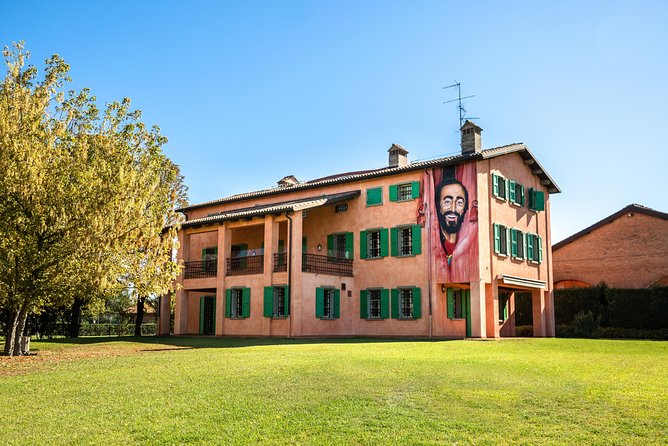
- Pavarotti’s actual home: Walk through the house he built in his beloved hometown, with several rooms preserved in a domestic setting.
- Personal objects beside major awards: See opera costumes, paintings, letters, photographs, Grammys, Emmys, and other career memorabilia.
- English audio guide included: Explore independently and listen to the story without being tied to a group schedule.
- Plan for 60 to 90 minutes: An hour covers the main rooms, but you may want longer if you stop for music, photographs, and detailed displays.
- Outside the city center: A car or taxi is the practical choice, and the trip can add time and cost to this inexpensive admission.
- Good value at $14.51: The ticket includes admission, the mobile ticket format, skip-the-line access, and the audio guide.
Entering Pavarotti’s private world
Casa Museo Luciano Pavarotti gives you something a standard celebrity exhibition cannot: a sense of place. You are not simply looking at objects behind glass in an anonymous gallery. You are moving through the home where Pavarotti lived, worked, entertained friends, and spent his final years.
That distinction matters. The house retains a domestic character in places, especially in the kitchen, living room, and bedroom. You can picture the man behind the famous voice, not just the performer under stage lights. The effect is intimate, and you should approach it with the quiet respect you would bring to any preserved private home.
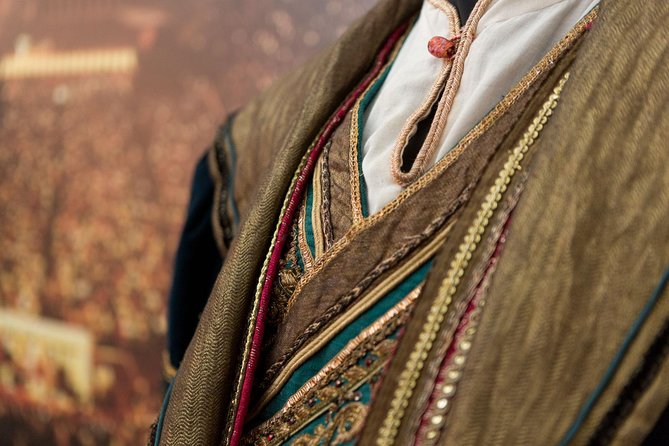
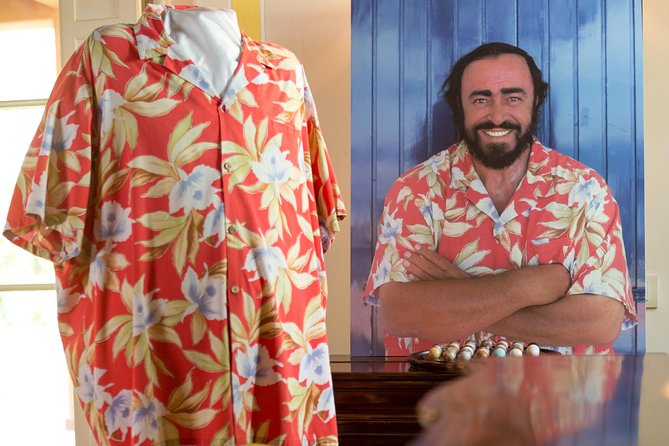
The museum also avoids making Pavarotti’s life seem small or purely domestic. Other areas have been adapted into exhibition rooms, with costumes, awards, photographs, letters, paintings, and objects from his long artistic career. The contrast works well. One room may show the surroundings of daily life, while the next reminds you that this was a world-famous tenor whose career reached far beyond Italy.
The visit is especially effective for people who know Pavarotti mainly through a few famous arias. The displays help fill in the person behind the voice. Even if opera is not your usual choice, you can still find plenty here about celebrity, family, friendship, charity, and the practical life of a performer.
More Museum Audio Guides in Italy
- Venice: St. Mark Basilica Ticket, Audioguide+History Gallery
★ 3.9 · 4,780 reviews - Rome: Borghese Gallery Skip-the-Line Ticket & Audioguide
★ 4.3 · 4,318 reviews - Rome: Borghese Gallery Ticket + Audioguide or Guided Tour
★ 4.6 · 3,219 reviews
What you see across the two floors
The museum is arranged over two levels, with an elevator available. That makes the visit easier for people who do not want to manage stairs, though the supplied information does not describe every accessibility feature, so you should confirm any specific mobility needs before booking.
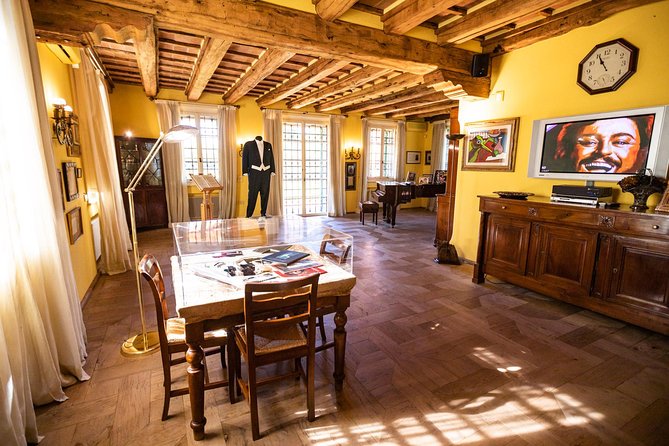
The lower rooms offer some of the strongest personal details. The kitchen and living spaces are presented as part of the home rather than stripped-down museum sets. You may notice furnishings, paintings, photographs, and small personal objects that say as much about Pavarotti’s character as his formal awards do.
The kitchen is a particularly useful reminder that Pavarotti was not only a voice on a stage. It places the famous figure in an ordinary setting, with the warmth and humor associated with the home he shared with family and friends. The display does not need much decoration because the room itself carries the story.
The bedroom can feel more solemn. It is connected with the final part of Pavarotti’s life, and the knowledge that he died there gives the room an emotional weight. This is one of the moments when the museum asks you to slow down rather than hurry from display to display.
Upstairs, the focus shifts more clearly toward his public career. You can see stage costumes, hats, scarves, awards, photographs, letters, and other memorabilia gathered over decades. Some pieces show the scale of his international success, while others reveal the affection people had for him personally.
A Steinway piano is among the objects associated with his musical life. His paintings are also displayed around the house. They help create a fuller picture of a man who was not defined by singing alone.
The audio guide keeps the visit flexible
The included audio guide is one of the best reasons to choose this ticket. You do not have to wait for a scheduled group or follow a guide who moves at a fixed speed. Instead, you can spend extra time in the kitchen, pause at a costume, or move on when a display does not interest you.
The guide is offered in English. That is important because many of the objects need context. An award may look impressive, but the audio explanation can tell you where it fits in Pavarotti’s career. A photograph may show a familiar face, but the story behind the friendship can make it more meaningful.
You may also hear Pavarotti’s voice during the visit, particularly on the upper level. This changes the feel of the rooms. His singing is not just a soundtrack added for decoration. It connects the objects to the person who used them and gives the museum an emotional center.
I would not rush through the audio stops. Allow time to listen fully, especially if Pavarotti’s voice matters to you. The planned duration is about one hour to one and a half hours, but the pace is yours. A serious fan could easily stay beyond the basic hour.
Cost and value at $14.51

At $14.51 per person, this is a reasonably priced museum visit, particularly because the admission includes the official ticket and audio guide. You are paying for access to a private home with original belongings, rather than a general exhibition assembled from borrowed objects.
The value is strongest for Pavarotti fans and people interested in music history. The costumes, awards, photographs, letters, and recordings give you plenty to examine. The house setting adds something that a larger career retrospective may lack.
The calculation changes slightly if you need a taxi from Modena. The museum is outside the city center, and reaching it without a car can be difficult. A taxi may cost more than the museum ticket, so treat transportation as part of the day’s budget. One account described a taxi ride of about 20 minutes, but the exact time will depend on where you start and traffic conditions.
That extra journey does not make the visit poor value. It simply means this is not a quick museum stop between Modena’s central sights. Plan it as a separate outing. If you are already using a car, the decision is easier. If you are relying on public transport, check the latest local options before setting out, since access has been a concern and routes may change.
More Skip-the-Line Audio Guide Tickets in Italy
- Rome: Pantheon Fast-Track Ticket and Official Audioguide
★ 4.5 · 27,353 reviews - Pompeii: Entry Ticket with Audio Guide
★ 4.1 · 13,491 reviews - Venice: La Fenice Opera House Entry Ticket with Audio Guide
★ 4.6 · 11,742 reviews - Rome: St. Peter’s Basilica & Dome Entry Ticket & Audio Tour
★ 4.2 · 7,537 reviews
Getting there and planning your time
The museum is open daily from 10 a.m. to 6 p.m. for the period stated in the booking information. A morning arrival may give you a quieter visit, and the museum can sometimes feel wonderfully intimate at that hour.
The mobile ticket is useful because you can keep confirmation on your phone instead of collecting a paper ticket. Skip-the-line access should help reduce waiting at admission, although it does not turn the museum into a timed private visit. You still need to allow enough time for the journey and opening procedures.
I would set aside at least 90 minutes door to door inside the museum area if you want to listen carefully and look at the smaller objects. The advertised visit length is one to one and a half hours, but the lower end suits a quick visit, while the longer end is better for anyone who wants the full story.
Photography is allowed according to the information provided. That is useful because the house contains many visual details, from costumes and paintings to rooms that still feel personal. Follow any instructions given on site, especially around delicate objects.
Service animals are allowed, and most people can take part. If you have particular access requirements, contact the museum before booking rather than relying only on the general participation note.
The human side of Pavarotti’s story
The collection is not limited to fame and success. A notable part of the museum presents Pavarotti’s charitable efforts, especially his support for poor children and people affected by war. This gives the visit a wider purpose and keeps it from becoming a simple display of celebrity possessions.
His international friendships also appear through photographs and letters. The material includes correspondence connected with prominent figures, including Princess Diana. Such items show how far his personal circle extended, but the house keeps the focus on relationships rather than gossip.
The paintings add another layer. They are not merely decorative pieces placed around the museum. They show an expressive side of Pavarotti that many people may not know. Along with the kitchen, piano, photographs, and personal notes, they help build a picture of a lively and generous character.
This balance is important. The museum honors a famous artist without reducing him to a list of awards. You see the public figure, but you also get reminders of his humor, family life, friendships, and concern for others.
Who will appreciate this visit most
Pavarotti fans should make a strong effort to come. The chance to stand in his home, see his clothes and awards, and hear his voice in the rooms is far more personal than watching a documentary or visiting a conventional music museum.
Opera lovers will find plenty of material tied to his stage career. The costumes and awards give the performance world a physical presence, and the audio guide helps explain the significance of what you are seeing.
You do not need to be an opera expert. The museum also suits anyone interested in Italian culture, famous musicians, private homes, or the story of a performer who became an international household name. The home setting makes the experience accessible to people who may not know the technical side of opera.
Families can also find points of interest, especially in the visual displays and domestic rooms. The emotional tone may be too serious for very young children, and the visit is built around looking and listening rather than interactive activities. Still, older children and teenagers with an interest in music or famous personalities can get a lot from it.
Small drawbacks to keep in mind
The main weakness is transport. The museum is not a convenient central Modena stop, and a car or taxi may be necessary. If you are planning a packed day around the city center, the extra journey can make the schedule awkward.
The experience is self-guided, so you will not have a staff member walking with you to answer every question. For many people, that freedom is an advantage. If you prefer live interpretation and conversation, the audio guide may feel less personal.
The emotional content also deserves a mention. Seeing the bedroom connected with Pavarotti’s death can be powerful, but it may not suit someone looking for a light entertainment stop. The museum treats the house with respect, and the mood can become reflective.
Finally, the English offering is useful, but anyone hoping for a wide choice of audio languages should confirm what is available before purchase. The stated option is English.
Cancellation and booking details
The ticket can be canceled for a full refund up to 24 hours before the experience’s start time. Cancellations made inside that 24-hour window are not refundable, and changes during that period are not accepted. The cut-off follows local time in Italy.
The experience is commonly booked around 15 days ahead. That does not mean you must reserve exactly two weeks in advance, but it suggests that planning ahead is sensible, especially if your Modena schedule is fixed.
Should you book Casa Museo Luciano Pavarotti?
Book it if you want more than a display of costumes and trophies. The real strength is the combination of home and museum: a kitchen, bedroom, piano, paintings, and personal objects on one side, then international awards and stage clothing on the other.
I would especially recommend it to Pavarotti admirers, music fans, and anyone willing to spend extra time getting outside central Modena. At $14.51, admission is fair, but remember to include taxi or car costs in your budget.
Skip it if you have only a short stop in Modena and no practical way to reach the house. Also skip it if you want a live guide, interactive exhibits, or a fast central-city attraction. For everyone else, the English audio guide, flexible pace, and unusually personal setting make this a thoughtful and worthwhile visit.
FAQ
Where is Casa Museo Luciano Pavarotti?
Casa Museo Luciano Pavarotti is in Modena, Italy, outside the central city area. The information provided indicates that reaching it can be difficult without a car or taxi.
How much does the ticket cost?
The listed price is $14.51 per person.
How long does the visit take?
The expected duration is approximately one hour to one and a half hours.
Is an audio guide included?
Yes. The ticket includes an audio guide, and English is the stated language offered.
Is the tour guided by a person?
No live guide is specified. The experience is self-guided, allowing you to explore the house and displays at your own pace.
What can I see inside the museum?
You can see Pavarotti’s former private home, personal objects, paintings, photographs, letters, costumes, awards, memorabilia, a Steinway piano, and rooms including the kitchen, living room, and bedroom.
Is the ticket available on a mobile phone?
Yes. A mobile ticket is included.
Is the museum open every day?
The stated opening hours are Monday through Sunday, from 10 a.m. to 6 p.m., for the booking period shown.
Can I cancel for a refund?
Yes. You can cancel at least 24 hours before the start time for a full refund. Cancellations made less than 24 hours before the start time are not refundable.
Just added around Italy
- Genoa Historic Centre Quest: A Self-Guided Puzzle Adventure★ 4.0 · 3 reviews
- Genova Walking Tour with Audio and Written Guide by a Local★ 4.5 · 33 reviews
- Self-Drive (No Licence) Boat Rental in Portofino Gulf★ 5.0 · 12 reviews
- Finance and Nobility: Explore medieval Genoa on a self-guided audio tour★ 4.5 · 7 reviews
- Florence: Uffizi Gallery Reserved Ticket & Digital Audio Guide★ 4.5 · 3 reviews
- Around Florence Hills: App‑Guided e‑Vespa Tour + Wine&Food★ 4.5 · 22 reviews
- Florence: Uffizi Gallery Audio Guided Tour led by Tour Leader★ 3.5 · 6 reviews
- Uffizi Gallery: Self-guided App Visit & Optional Accademia Museum★ 4.0 · 19 reviews
Italy Audio Tours, compared.
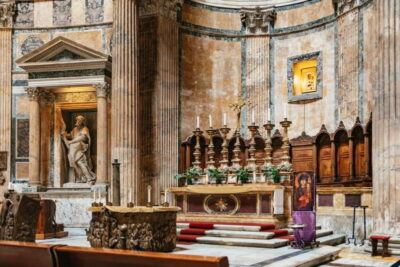
Rome: Pantheon Fast-Track Ticket and Official Audioguide
Read our review →
Rome: Colosseum & Forum with Audio Guide App -Optional Arena
Read our review →
Venice: Grand Canal Gondola Ride with App Commentary
Read our review →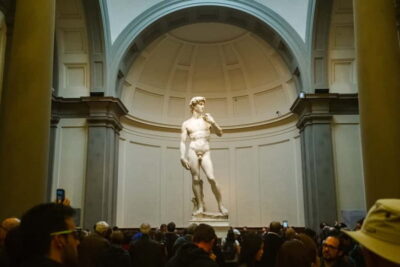
Florence: Timed Entry to Michelangelo’s David + Audio App
Read our review →
Rome: City Sightseeing Hop-on Hop-off Bus with Audioguide
Read our review →
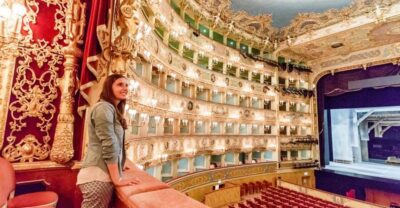
Venice: La Fenice Opera House Entry Ticket with Audio Guide
Read our review →
Rome: Colosseum, Forum, Palatine Hill Entry & Audioguide App
Read our review →Browse the lists this tour appears in