
REVIEW · GREECE AUDIO TOURS
Santorini: Akrotiri Entry Ticket and Audio Guide
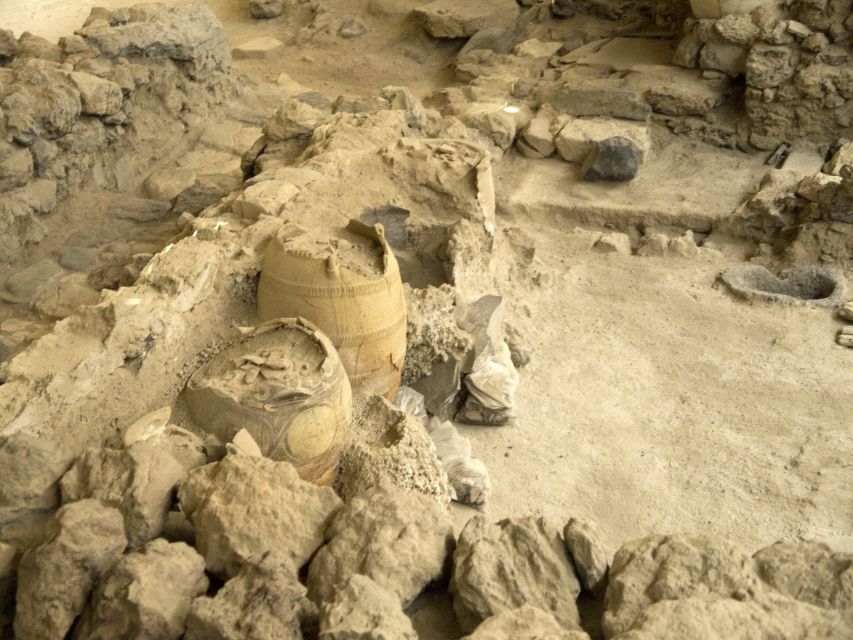
Akrotiri is Santorini’s most revealing archaeological site: a Bronze Age town buried under volcanic ash, with streets, homes, and traces of daily life still visible. The settlement is often compared with Pompeii, but it is roughly 1,000 years older and gives you a rare look at an advanced prehistoric community before its people fled the volcano.
I like the freedom to pause, rewind, and explore without keeping up with a group. I also like that the downloaded audio includes maps and text, so you can use it without roaming charges. The great shelter over the ruins provides shade and makes Akrotiri a smart stop on a hot Santorini day.
The main weakness is the audio tour’s navigation. Some recordings do not match the current walking route or clearly identify where you should stand, especially when sections are closed. You will get more from it if you read the signs, check the map, and treat the narration as background rather than a perfectly choreographed tour.
Key points to know before visiting
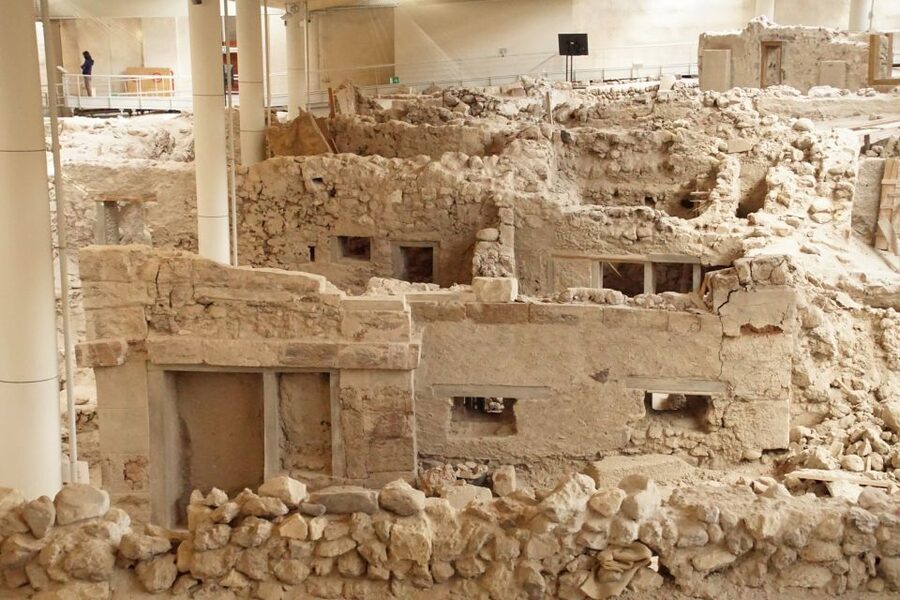
- A town frozen by volcanic ash: See the remains of a sophisticated Cycladic settlement preserved beneath layers of ash.
- The route is self-guided: You enter on your own and listen through an app on your smartphone, with no live guide or meeting point.
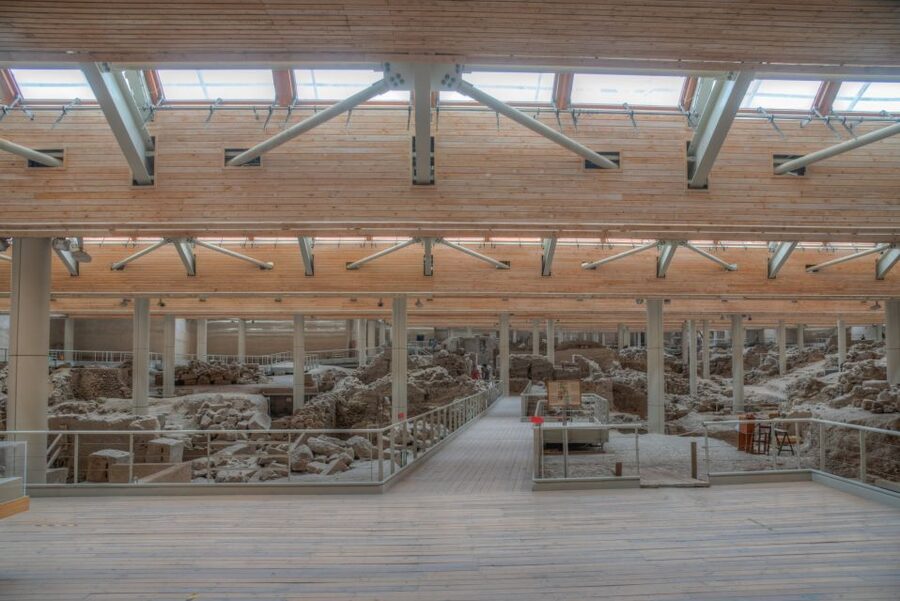
- The shelter is a major advantage: The archaeological area sits beneath a large covered structure, providing shade throughout the visit.
- The audio adds useful context: It explains the Xeste residences, daily life, architecture, and famous areas such as the Square of the Double Horns and House of the Ladies.
- Navigation can be imperfect: Closed walkways and changed exhibits may make some audio instructions hard to follow.
- Prepare your phone first: Download the content before arriving, allow 100 to 150 MB of storage, and bring charged headphones and a charged smartphone.
Why Akrotiri deserves time on a Santorini itinerary
Santorini is famous for white villages and sunset views, but Akrotiri tells you what came before the postcard scenery. This was a substantial prehistoric settlement connected to the Cycladic world, and the remains show planning, multi-story homes, decorated interiors, and a society with impressive building skills.
The settlement was buried after a major volcanic eruption. Ash covered the town and helped preserve its buildings, much as volcanic material preserved Pompeii, though Akrotiri is far older. The comparison is useful, but do not arrive expecting a huge open-air city on the scale of Pompeii. Akrotiri is smaller and much of what archaeologists found has been removed, studied, or transferred to museums in Fira and Athens.
What remains is still powerful. You can look down into streets and rooms and see the layout of a place where people lived, worked, stored goods, and eventually left as the volcano became more threatening. The absence of large numbers of human remains supports the idea that the population had time to escape, though the full story of where everyone went remains uncertain.
That uncertainty gives the site some of its appeal. You are not just walking among old walls. You are trying to picture a community making difficult decisions as the ground shook and the volcano grew more dangerous.
More Skip-the-Line Audio Guide Tickets in Greece
- Crete: Knossos Palace Entry Ticket with Optional Audio Guide
★ 3.9 · 2,251 reviews - Crete: Palace of Knossos E-Ticket and Audio Guide
★ 3.8 · 1,540 reviews - Rhodes: Lindos Acropolis Entry Ticket & Optional Audio Guide
★ 4.4 · 1,285 reviews
Entering beneath Akrotiri’s enormous shelter
The archaeological site is protected beneath a large shelter, often described as a climate-controlled covering. This matters in practical terms. Santorini can be fiercely sunny, but the main ruins are shaded throughout the visit, making Akrotiri easier to enjoy than an exposed outdoor site.
You start the audio tour inside Akrotiri. There is no live guide, group leader, or arranged transportation. Your ticket provides entry for an adult, while the audio content arrives through an activation link and app for Android or iOS.
Download everything before you leave your hotel. The area around Akrotiri may have weak phone service, and the audio is designed to work offline once the content is stored on your device. Give yourself enough space for the approximately 100 to 150 MB download, then check that the recordings, text, and maps open properly.
At the entrance, take a moment to orient yourself before pressing play. This small step can save you trouble later. The site’s route and the audio’s sequence do not always line up perfectly, and some areas may be roped off or temporarily unavailable. If you begin listening immediately while walking in the wrong direction, you may spend the rest of the visit trying to catch up.
Reading the town through its streets and buildings
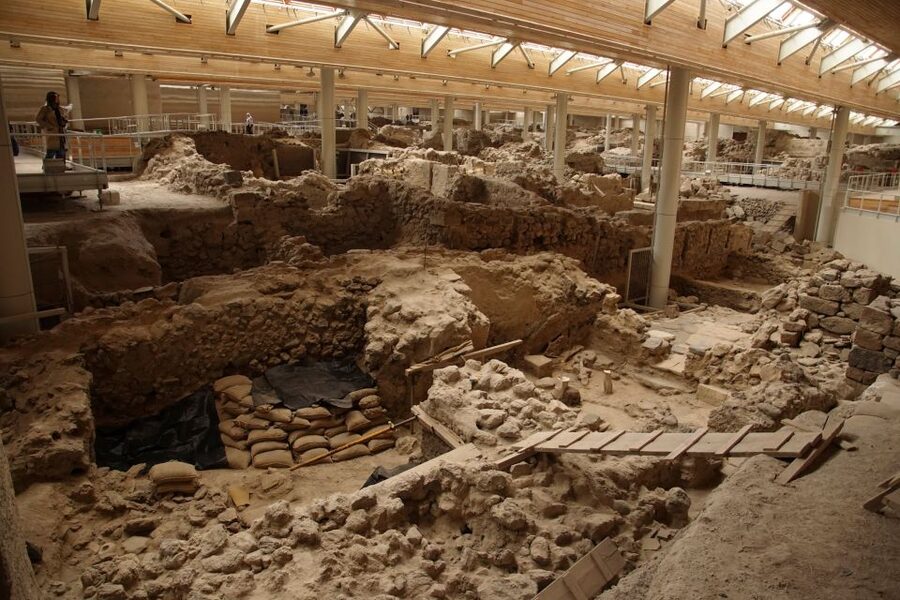
The most rewarding part of Akrotiri is the town plan. Rather than seeing one isolated ruin, you look over a network of streets, buildings, stairways, and rooms. The layout helps you understand that this was a functioning settlement, not a collection of unrelated walls.
The audio points out the homes known as Xeste. These were substantial residences, and their size and construction suggest that Akrotiri had an affluent class and a well-organized society. The narration also tries to move beyond architecture by explaining how people may have used different rooms and what everyday life might have looked like before the eruption.
That extra context is valuable because ruins can be hard to read on your own. A wall may look like a simple pile of stone until you understand its place in a house, street, or larger neighborhood. The app’s short stories and anecdotes are intended to give those remains a human frame.
The site’s information panels are also available in English, and they can help when the audio points toward something that is difficult to locate. I would use both. The signs may be brief, but they offer a useful check when the narration refers to an object or area no longer visible from the current route.
The Square of the Double Horns and the House of the Ladies
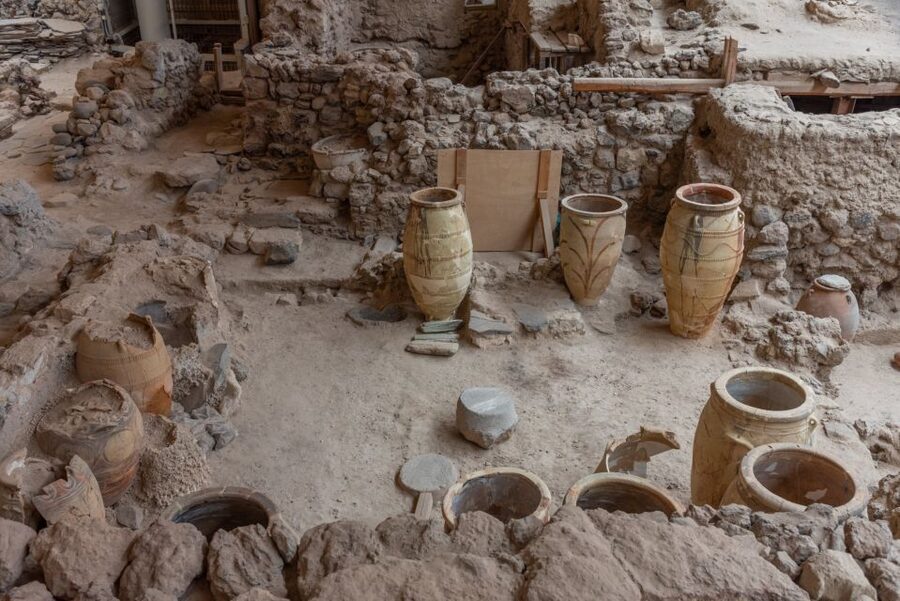
The Square of the Double Horns is one of the named areas highlighted by the tour. Its value lies in helping you picture the settlement as a connected urban space, with open areas and routes between buildings rather than only private rooms.
The House of the Ladies offers another look at the homes of Akrotiri. The audio explains the building and the people who may have lived there, adding social detail to the stones and plaster. This is where the self-guided format can work well. You can stop for a closer look, replay a section, or compare the narration with the site map without waiting for a group to move on.
Do not expect every famous artwork discussed in the audio to be in front of you. Some discoveries and decorated scenes have been transferred to museums in Fira or Athens. That can be confusing if the narration sounds as though you are about to see an object on site.
The better approach is to treat the audio as a guide to the wider excavation and its discoveries, not only to the objects currently visible. If a section refers to a painting or artifact that has been moved, you still gain useful background, but you should not waste time searching every corner for it.
Same place, a different route to walk:
- Athens: Acropolis Ticket with Optional Audio or Live Guide
★ 4.2 · 11,055 reviews - Athens: Cape Sounio & Poseidon Temple Trip with Audio Guide
★ 4.4 · 4,521 reviews - Athens: Acropolis Ticket with Audio Guide
★ 4.0 · 3,575 reviews - From Athens: Delphi Full Day V.R. Audio Guided Tour
★ 4.6 · 3,028 reviews
What the audio guide does well
The strongest part of the audio is its explanation of what the ruins mean. Without it, you can walk through the exhibit, read the shorter signs, and see the impressive scale of the excavation. With it, you get more information about the residents, their homes, their buildings, and the events that led to the town’s abandonment.
You can stop and start the narration as you like. You can also rewind a passage, which is especially useful when the subject becomes technical or when you are sharing one device with another person. The content is available in English, French, Italian, and German.
The narration is delivered in short sections rather than as one long lecture. That makes it possible to skip ahead or revisit a room without losing an entire tour. The text and maps provide another way to follow the material if the spoken instructions are hard to understand.
The audio is also reusable. You can listen before visiting to get a basic introduction, use it at the site, and revisit sections afterward. That flexibility is one reason the ticket can make sense for visitors who prefer independent sightseeing.
Where the audio guide falls short
The audio is not a substitute for a live guide. You cannot ask questions, clarify a confusing building, or get an immediate explanation when a display has changed. If you are fascinated by archaeology and want a conversation, a live guide would serve you better.
The route instructions are the bigger issue. Some parts of the site have been closed or altered, while older versions of the audio appear to refer to a different order. At times, the narration may describe a feature that is behind a barrier or point toward an area that is difficult to identify.
Several things help:
- Read the site signs before starting the next audio section.
- Use the app map and the physical route together.
- Pause the recording if you cannot find the feature being discussed.
- Do not assume every section must be completed in the stated order.
- Keep an eye on the current walkway, especially where roped areas change the route.
The audio may also feel dense or technical to some listeners. If you prefer a simple story with clear stop numbers, this format may frustrate you. If you enjoy detail and do not mind doing some orientation yourself, it provides useful material that the short signs cannot cover.
How much time should you allow?
The ticket is valid for one day. The selected time slot applies to entrance to the museum area, while the archaeological site can be entered at any time on the selected date according to the supplied instructions. Because the tour is self-guided, you are not locked into a group schedule once you are inside.
The exact visit length is not specified, so I would avoid planning it as a rushed stop. You need time to walk the route, listen to the audio, read the signs, and pause when a building or street catches your attention. The ability to stop and rewind is useful only if you give yourself room to use it.
If you are short on time, focus on the overall town layout, the Xeste houses, the Square of the Double Horns, and the House of the Ladies. Then use the audio for the sections that best explain the eruption and the lives of the residents.
Is the $41 price good value?
At $41 per person, this is not a cheap walk-in ticket. The value depends on how much help you want interpreting the archaeology and whether you already plan to pay for entry separately.
The ticket combines adult admission with the smartphone audio tour, offline text, and maps. If you would otherwise buy entry and then seek a separate guide, the package is convenient. It is also useful for couples or families who prefer to move at different speeds, though the booking instruction says to book per device rather than per participant. That means you may not need one audio purchase for every person if you are comfortable sharing a phone and headphones.
The price is harder to justify if you mainly want a quick look at the ruins. The site has English information panels, and some people may find those sufficient. You could also consider a broader archaeological ticket if available for your dates, since a three-site ticket covering three days may offer better value for someone planning several ancient sites.
This experience earns its price when you care about context, especially the story of the settlement, the Xeste residences, and how daily life is reconstructed from the remains. It is less compelling if you dislike app-based tours or expect every audio stop to match the exact spot in front of you.
Practical preparation for a smooth visit
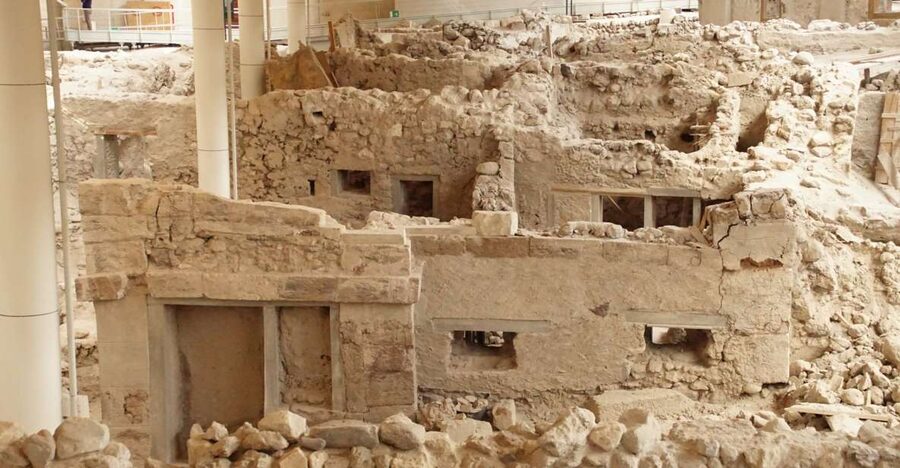
Bring comfortable shoes, although the fully covered setting means you do not need extreme hiking footwear. Sunscreen is still sensible for the journey and any outdoor portions around the entrance, but the excavation itself is shaded beneath the shelter.
Bring:
- A charged Android or iOS smartphone
- Headphones
- Enough storage for the download
- The ticket and audio instructions from your email
- A little patience for finding the correct audio section
The app is not compatible with Windows phones, iPhone 5 or 5C and older models, older iPod Touch devices, iPad 4th generation and older, or iPad Mini 1st generation. Check your phone before booking.
Look for the email with the activation link, and check the spam folder if it does not appear. Do not wait until you reach the site to download the app. Weak signal can turn a simple setup into an irritating start.
The site is wheelchair accessible, which makes the protected route useful for visitors with mobility concerns. Follow the site’s current instructions, since access to individual sections can change.
Who will enjoy this Akrotiri visit most?
I recommend it to independent visitors who want more than a quick walk through the ruins but do not need a live guide. History fans, architecture enthusiasts, and anyone curious about Bronze Age life should find the audio worthwhile.
It also suits couples and families who want to move at their own pace. You can pause for photos, replay an explanation, or skip material without holding up a group.
I would be more cautious if you expect a polished, point-by-point route. The audio can be hard to match with the displays, and closed walkways may interrupt the intended sequence. Visitors who prefer a clear conversation with an expert should look for a live guide instead.
Should you book the Akrotiri audio guide?
Book it if you want the convenience of admission and a self-guided explanation in one purchase, and if you are willing to prepare your phone before arrival. The shelter, the remarkable town layout, and the extra detail about ancient homes make Akrotiri one of Santorini’s best cultural stops.
Skip this version if you want a perfectly marked audio route or a chance to ask questions. In that case, basic admission with the site signs may be enough, or a live guide may be the better use of your money.
My practical choice would be to book the audio option for a first visit, download it in advance, and use it flexibly. Listen for the historical story, but let the current route and signs lead you physically through the site.
FAQ
What does the Akrotiri ticket include?
It includes an adult entry ticket to the prehistoric site of Akrotiri and a self-guided smartphone audio tour. Offline text, audio narration, and maps are included through the app.
Is there a live guide?
No. This is a self-guided audio tour, and no live guide or group meeting point is provided.
Which languages are available?
The audio guide is available in English, French, Italian, and German.
Do I need my own smartphone and headphones?
Yes. You need a compatible Android or iOS smartphone, headphones, and enough battery power. The phone and headphones are not included.
Can I use the audio guide without mobile data?
Yes. You should download the app and tour content before your visit. The offline content is intended to help you avoid roaming charges and problems caused by weak signal.
Is Akrotiri wheelchair accessible?
Yes. The site is wheelchair accessible.
Does the selected time slot apply to the archaeological site?
The selected time slot is binding for entrance to the museum area. You may enter the archaeological site at any time on the selected date, according to the supplied instructions.
Just added around Greece
- Jeep exploration 4X4 self drive★ 5.0 · 3 reviews
- Knossos Palace & Archeological Museum: E-Tickets with Audio Tours★ 4.0 · 18 reviews
- E-Ticket to Heraklion Archaeological Museum with Audio Guide★ 4.5 · 26 reviews
- Full-Day 4×4 Self-Drive Safari in East Crete with Lunch★ 5.0 · 8 reviews
- Kasos Audio-Tour from Karpathos by Art and Walk★ 4.5 · 4 reviews
- Delphi: Self-guided Audiovisual Tour with 3D Representations★ 5.0 · 5 reviews
- Delphi Self-guided Audio Tour on Your Phone (no ticket)★ 3.5 · 10 reviews
- Delphi: Archaeological Site & Museum Ticket with Audio★ 3.5 · 24 reviews
Greece Audio Tours, compared.

Athens: Acropolis Ticket with Optional Audio or Live Guide
Read our review →
Athens: Cape Sounio & Poseidon Temple Trip with Audio Guide
Read our review →
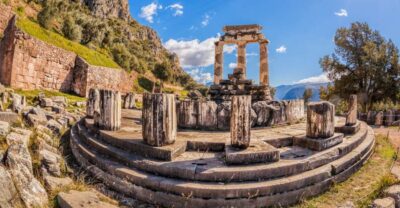
From Athens: Delphi Full Day V.R. Audio Guided Tour
Read our review →
Athens: Acropolis Museum Ticket with optional Audio Guide
Read our review →
Athens: Acropolis Ticket & Optional Self-Guided Audio Tours
Read our review →
From Athens: Small-Group Delphi, Museum & Arachova Day Trip
Read our review →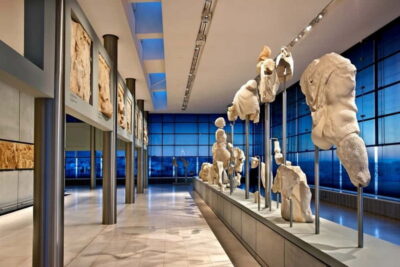
Parthenon & Acropolis Museum with Audio or Live Tour Option
Read our review →Browse the lists this tour appears in