
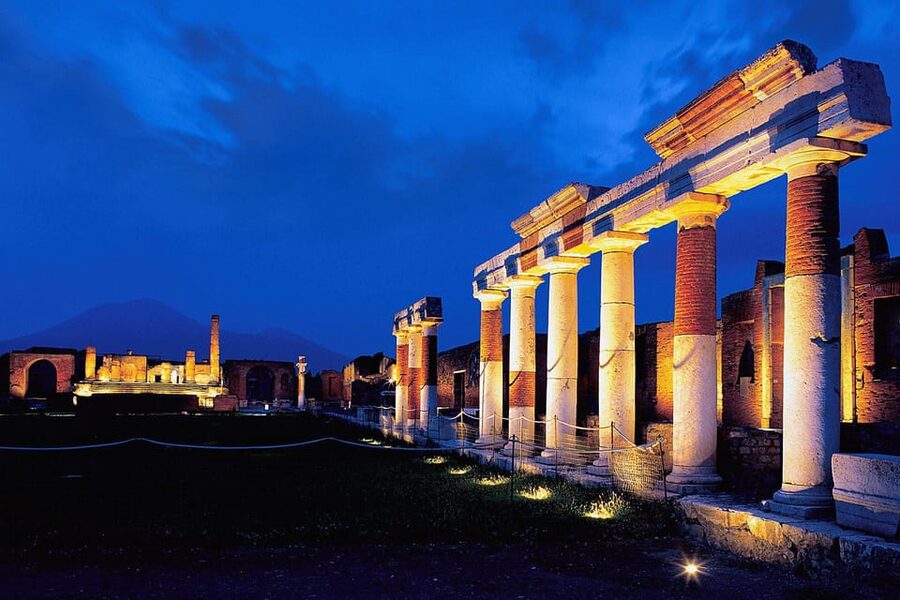
REVIEW · POMPEII AUDIO TOURS
Pompei: Audio guide of the archeological site
Pompeii’s power comes from its ordinary details: streets, villas, temples, bathhouses, markets, and household paintings preserved beneath volcanic ash. This 50-minute audio guide gives those remains a clear story, so you are not left looking at broken walls without knowing what they meant.
I like the low $5 price and the freedom to explore at your own pace. I also like the downloadable file, which works offline and remains available after your visit. The main drawback is that the entrance ticket and earphones are not included, and one review described the route as misguided, so you should keep the map handy.
- A 50-minute route through Pompeii’s streets, villas, temples, and bathhouses
- A downloadable audio file with unlimited offline access
- A map designed to help you follow the suggested path
- English and Italian narration, with an Italian or English host or greeter
- Two days of validity, useful if you do not want to rush the ruins
- Only $5 per person, but the archaeological site ticket is extra
Pompeii in 50 Minutes: What This Audio Guide Adds

Pompeii is not a single monument. It is a large ancient city with streets leading past homes, public buildings, shops, religious sites, and places of daily work. Without some direction, it is easy to see a wall or painted room and move on before understanding why it mattered.
This audio guide gives you a 50-minute narrative to follow as you walk. It focuses on the city as a lived-in Roman community, not only as a disaster site. You hear about daily routines, architecture, public spaces, household decoration, and the final destruction caused by volcanic ash.
That focus is useful because Pompeii can feel scattered. One corner may show a grand villa, while the next reveals an intimate household room. The guide helps connect those spaces to the people who used them.
The format is self-guided. You are not tied to a group, a guide’s walking speed, or a fixed meeting point. You can pause the recording, look more closely, take a break, or continue later during the two-day validity period.
Following the Map Through Ancient Streets
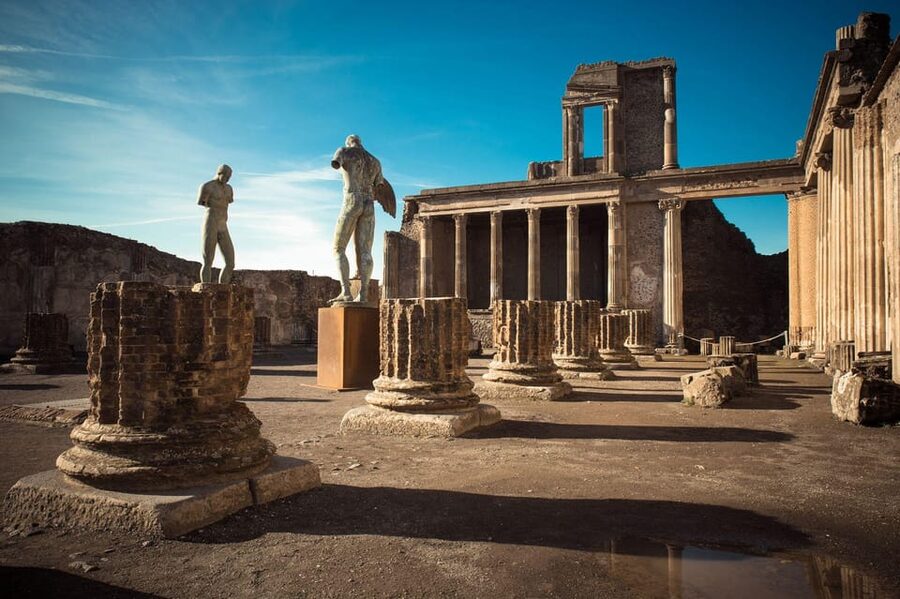
The included map is more important than it may first appear. Pompeii’s ruins cover a large area, and the audio guide is meant to be followed as a route rather than played at random. A map gives you a basic sense of where to go next and helps you avoid losing the thread.
One of the strongest practical details is that the map is included with the digital materials. A note from a visitor specifically praised having it available to follow the path. I would treat it as essential, especially if you are exploring without a separate printed guide or site orientation.
The guide’s navigation is described as clear, but the one-star comment about being misguided is worth taking seriously. Digital routes can be harder to follow when you are surrounded by similar stone streets and several possible turns. Keep the map open, listen for location clues, and do not assume that every nearby building is the next stop.
The route appears designed for a broad introduction rather than a specialist inspection of every corner. That makes it a sensible first layer for a visit, especially if you want the main story without reading a long book before arriving.
More Audio Tours in Pompei Campania:
- Pompeii: Skip-the-line Entry Ticket with Audio Guide & Map
★ 3.9 · 3,153 reviews - Pompeii: Skip-the-Line Entry Ticket with Digital Guide App
★ 4.1 · 770 reviews - Pompeii: Skip-the-Line Entry & Audioguide
★ 3.8 · 225 reviews
Markets, Villas, and Public Buildings
The audio guide moves through the parts of Pompeii that reveal how the city functioned. Markets and commercial areas help you picture the exchange of food and goods. Villas show the differences between public rooms and private spaces. Temples and bathhouses point to the social and religious life that shaped the day.
The value here is interpretation. Ruins often reduce a living city to foundations and columns. A good explanation helps you picture how rooms were used, who might have entered them, and why a building was placed where it was.
The guide also covers household frescoes. These smaller details may be more affecting than the grand structures because they connect directly to domestic life. Painted walls show that decoration was part of the home, not only a feature of public monuments.
You should expect a broad sweep rather than a full academic lecture. The advertised recording lasts 50 minutes, so it cannot explain every building in the archaeological site. Think of it as a focused route that gives context to selected places.
The Human Story Behind the Ash

Pompeii is often presented as a frozen moment, but the most useful way to see it is as a city that had a life before its destruction. The guide places attention on residents, homes, work, public bathing, worship, and the design of the city.
That approach keeps the visit from becoming a parade of ruins. You can listen for how the narration explains the contrast between grand public buildings and modest household spaces. The city’s story becomes more understandable when you move from the scale of streets and temples to the scale of rooms and painted walls.
The volcanic disaster remains central, of course. The audio guide explains Pompeii’s tragic fate while also giving attention to what was lost: a functioning Roman community with routines, ambitions, decoration, and social divisions.
I appreciate that balance. A visit focused only on the eruption can turn the site into a grim spectacle. A visit focused only on architecture can feel dry. This format aims to connect the disaster with the life that came before it.
Audio Quality, Language, and Personal Pace
The guide is available in English and Italian. You should select the language that lets you listen without effort, since the value of an audio guide depends on being able to follow the narration while walking and looking around.
There are no named specialist guides attached to this experience. The host or greeter support is listed in Italian and English, while the main product is a digital audio file rather than a live tour.
That distinction matters. You are paying for recorded interpretation, not conversation with an archaeologist or a guide who can answer questions on the spot. If you enjoy setting your own pace and prefer not to join a group, this is a plus. If you want personal explanations or help adapting the route, it is a limitation.
The file can be used offline, which is helpful inside a large archaeological site where you may not want to rely on a steady connection. You receive a link to the audio file and can access it without an internet connection after downloading it. The stated unlimited access also means you can listen again after returning home.
Bring your own earphones. They are not supplied, and the experience loses much of its purpose without them. If you are visiting with another person, you may need to decide whether to listen together or use separate devices.
Same place, a different route to walk:
- Pompeii: Skip-the-Line Ticket with Audio Guide and Map
★ 4.0 · 117 reviews - From Pompeii: Vesuvius Entry with Transfer and Audioguide
★ 4.2 · 74 reviews - Pompeii & Herculaneum: Skip-the-line & Digital Guide App
★ 4.0 · 35 reviews - Herculaneum and Pompeii in one day: Audioguides + Tkts (art)
★ 3.7 · 22 reviews
What the $5 Price Really Buys You
At $5 per person, this is an inexpensive way to add structure to a Pompeii visit. The price is not paying for admission, transport, a live guide, or a private tour. It pays for the audio material, map, photo, and documentation that help you understand what you are seeing.
I see the best value here for independent visitors who already plan to enter Pompeii and want more guidance than a bare walk through the ruins. The file is especially useful if you want to review the visit afterward, since access continues beyond the day itself.
The value is weaker if you expect an all-in-one ticket. You must buy the archaeological site entrance separately, and the cost of admission is not covered by this product. You also need to provide your own earphones.
At this price, the audio guide does not need to replace every other source of information to be worthwhile. It only needs to make selected buildings clearer and help you follow a sensible path. The high ratings praising its usefulness, map, and general ease suggest that it can do that for many people, though the low rating about navigation shows why you should not rely on the audio alone.
How the Two-Day Validity Helps
The experience is valid for two days, subject to available starting times. That gives you room to divide the visit instead of trying to absorb every street, room, and explanation in one push.
A two-day window is useful if you want to spend the first session following the main route and the second session returning to places that caught your attention. You can also pause the audio when a particular building needs more time.
The guide itself is only 50 minutes, but your visit does not have to last only 50 minutes. The recording provides a core route. You can stop to study architecture, examine frescoes, rest, or continue beyond the narrated sections.
Do check the validity details before booking because the activity page asks you to check availability for starting times. The supplied information does not give a precise schedule, so you should confirm the option that fits your Pompeii entry plans.
Who Will Get the Most From It
I would recommend this for a first visit when you want a simple explanation of Pompeii’s main themes without committing to a live group. It suits history fans, curious first-time visitors, and anyone who prefers to read and listen at their own speed.
Families and mixed-interest groups may also find the format useful because you can pause when needed. The two-day validity gives you more flexibility than a fixed 50-minute appointment, although each person will still need a way to hear the recording.
It is less suitable if you want a detailed specialist tour, a personal guide, or help with every turn inside the site. The navigation criticism means you should be comfortable checking the map and taking responsibility for your route.
It may also disappoint anyone who assumes the $5 price includes entry. It does not. Think of this as an add-on for Pompeii, not as a complete admission package.
Booking and Preparing for the Visit
Before you go, download the file while you have a reliable connection. Confirm that it opens properly, save the map where you can reach it quickly, and bring charged devices and earphones.
Keep the entrance ticket separate in your plans. Since it is not included, you need to arrange site admission independently. The same applies to earphones, which are specifically excluded.
The cancellation policy is forgiving: you can cancel up to 24 hours in advance for a full refund. You can also reserve now and pay later, which helps if your Campania plans are still changing.
The experience is offered in English and Italian. The listed host or greeter languages are also English and Italian, so choose the audio language carefully when booking.
My Verdict: A Cheap and Useful Pompeii Companion
I would book this audio guide if I wanted a low-cost way to give a Pompeii visit a clear shape. The strongest features are the modest price, the offline file, the map, and the chance to use the material across two days rather than racing through a fixed tour.
I would not book it as a substitute for admission or for a live expert. Bring your own earphones, download everything in advance, and use the map actively because the route may not feel obvious in every section.
For $5, this is a practical companion for an independent visit. The deal is simple: you get context and direction, while you supply the entrance ticket, equipment, and a little patience with the navigation.
FAQ
How long is the Pompeii audio guide?
The audio guide provides about 50 minutes of narration. Your full visit can take longer because you can pause, explore, and spend extra time at the ruins.
How long is the experience valid?
The experience is valid for two days. You should check availability for the starting times offered when you book.
Is the Pompeii entrance ticket included?
No. The entrance ticket to the archaeological site is not included in the $5 price.
Are earphones provided?
No. Earphones are not included, so you need to bring your own.
Which languages are available?
The audio guide is available in English and Italian. The listed host or greeter languages are also English and Italian.
Can I use the audio guide offline?
Yes. You receive a link to the audio file for offline access, and the file can be used again after your visit.
Can I cancel for a full refund?
Yes. You can cancel up to 24 hours in advance for a full refund. The experience also offers a reserve now and pay later option.
Just added around Pompei Campania
- Pompeii Tour_Skip the line ticket + audioguide★ 4.7 · 17 reviews
- Pompeii, skip-the-line ticket with smartphone audio guide on App★ 3.0 · 4 reviews
- Pompeii: Skip-the-Line Ticket with Audio Guide and Map★ 3.9 · 5 reviews
- Pompeii: Skip-the-Line Ticket with Audio Guide and Map★ 4.0 · 14 reviews
- Pompeii: Pre-reserved ticket with audio guide★ 3.2 · 15 reviews
- Pompeii: Skip The Line Entrance Tickets + Audioguides★ 3.2 · 4 reviews
- Pompeii Skip-the-Line Ticket and Audioguide★ 4.2 · 7 reviews
- Pompeii: Skip the Line Ticket + Audioguide★ 3.3 · 13 reviews
Pompeii Audio Tours, compared.

Pompeii: Skip-the-line Entry Ticket with Audio Guide & Map
Read our review →
Pompeii: Skip-the-Line Entry Ticket with Digital Guide App
Read our review →

Pompeii: Skip the line ticket (art) + audioguide + map
Read our review →
Pompeii: Skip-the-Line Ticket with Audio Guide and Map
Read our review →
From Pompeii: Vesuvius Entry with Transfer and Audioguide
Read our review →
Pompeii & Herculaneum: Skip-the-line & Digital Guide App
Read our review →
Herculaneum and Pompeii in one day: Audioguides + Tkts (art)
Read our review →Browse the lists this tour appears in