
REVIEW · POMPEII AUDIO TOURS
Herculaneum and Pompeii in one day: Audioguides + Tkts (art)
Pompeii and Herculaneum tell two very different stories of the same volcanic disaster. Pompeii gives you broad streets, public buildings, villas, and a sense of a whole Roman town. Herculaneum is smaller, but its houses, mosaics, frescoes, and wooden details often feel startlingly close to daily life.
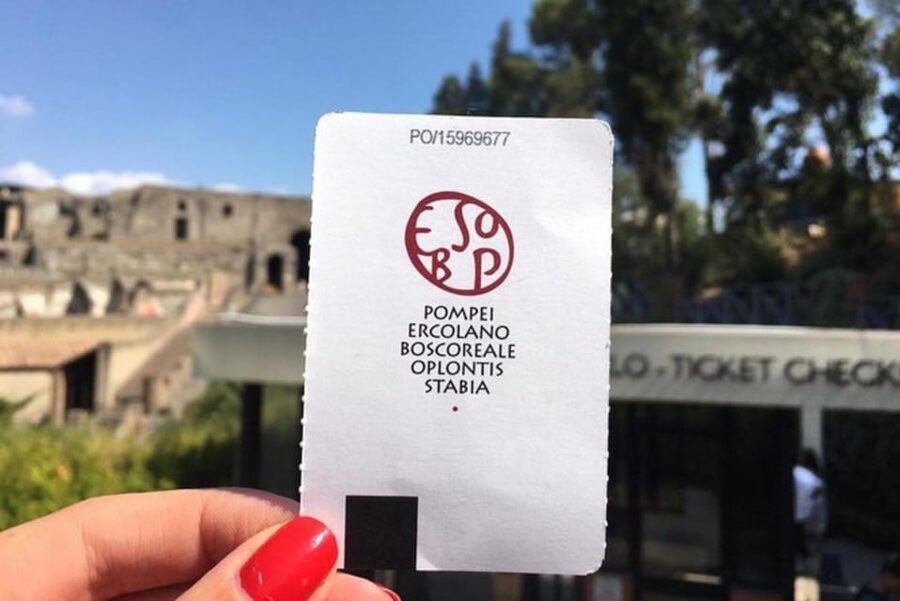
I like the freedom to choose your starting point, and I like having an official audioguide rather than wandering past buildings with only a map. The dedicated Pompeii entry can also save time, though you must first exchange your voucher at the Tempio Travel office.
The catch is that six hours is a brisk schedule for two large archaeological parks, especially once you add the train ride and the separate audio-device pickups. The package is useful, but only if you plan your route carefully and return both devices before closing.
Key points to know before booking
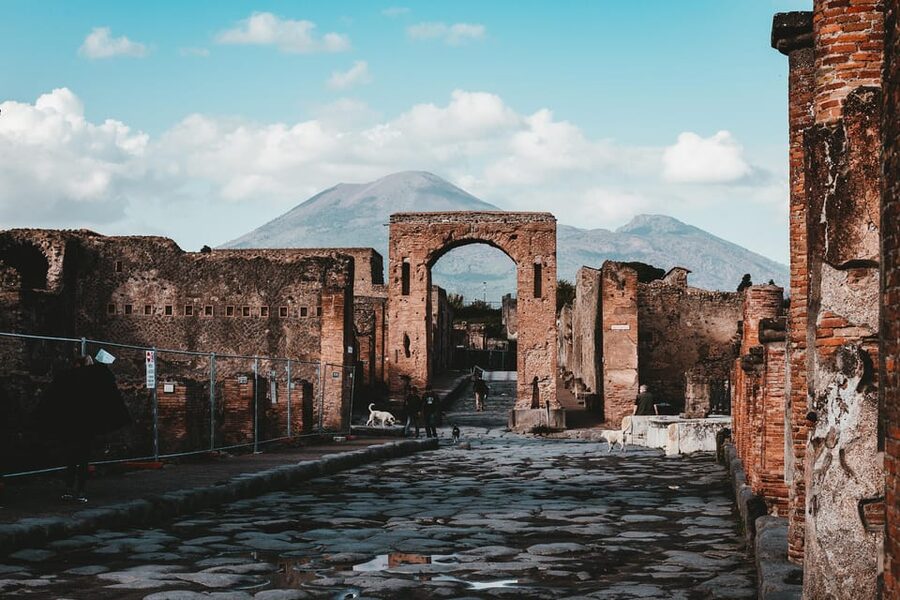
- Two ancient cities in one day: Compare Pompeii’s wide urban plan with Herculaneum’s more intimate, unusually preserved houses.
- Start where it suits you: You can begin at Pompeii or Herculaneum, a helpful option when your train or hotel location favors one site.
- Pompeii has a separate entry route: Exchange your voucher at the first-floor office at Via Villa dei Misteri 1, then walk to Porta Marina Inferiore in Piazza Esedra.
- The audio devices are official: Use the numbered stops on the device, with commentary in five languages. Headphones are not supplied.
- The train is not included: Circumvesuviana links Pompei Scavi Villa dei Misteri and Ercolano Scavi, generally with a change at Torre Annunziata.
- Allow time for handoffs: You need an ID as a deposit, and each device must be returned before the relevant office closes.
Why seeing both sites changes the story
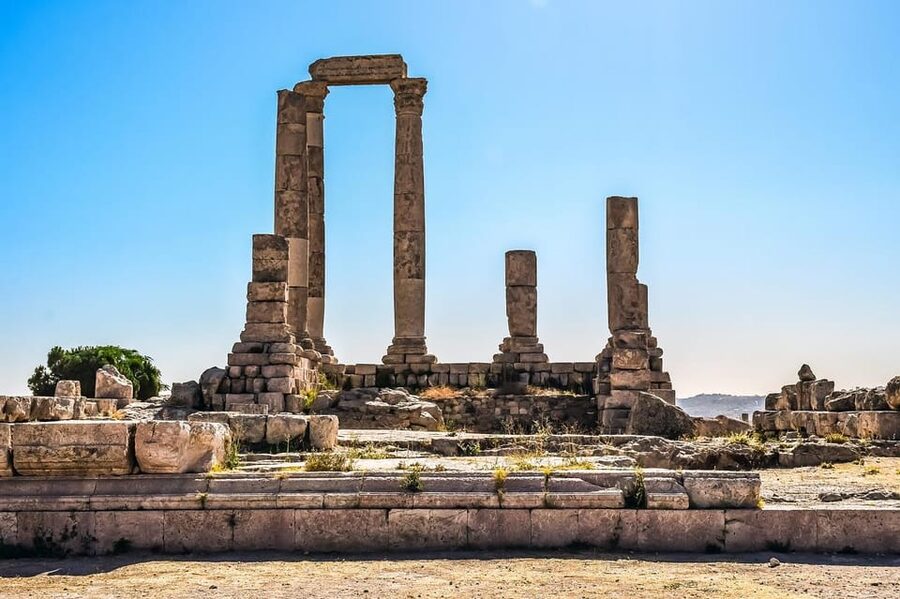
Many people visit Pompeii and stop there. That is understandable. Pompeii is much larger and offers the sweeping sense of an entire Roman settlement interrupted by the eruption of Mount Vesuvius. Yet Herculaneum adds something Pompeii cannot quite provide: a close look at domestic life, with remarkably preserved building materials and household spaces.
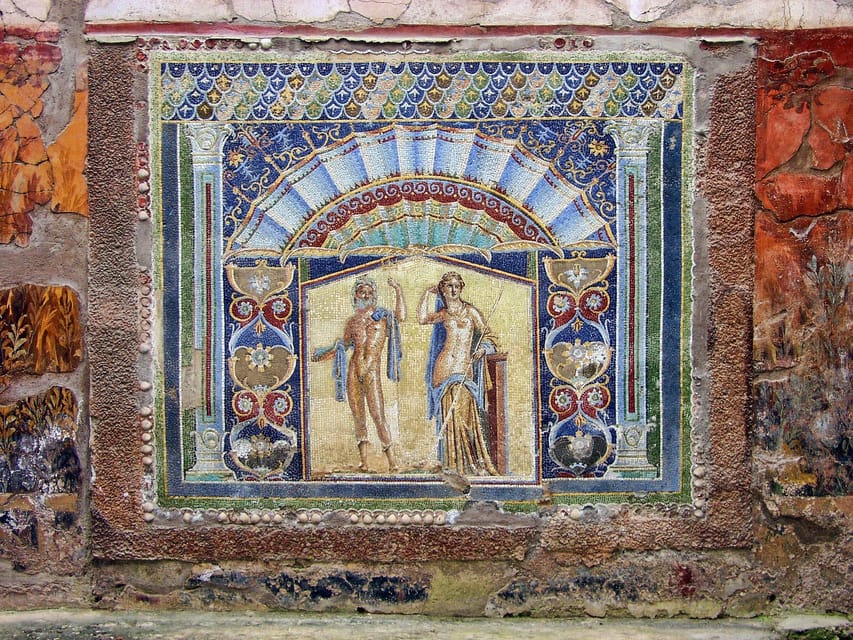
At Pompeii, you can follow streets through a city with forums, villas, shops, and public architecture. The scale helps you picture how Roman life worked in public. At Herculaneum, you spend more time looking closely at houses, mosaics, painted walls, and wooden structures protected under volcanic material for centuries.
The contrast makes the combined ticket worthwhile. Pompeii shows the city as a system. Herculaneum shows the home as a lived space. The audio commentary helps connect those pieces, especially if ancient architecture is not already familiar to you.
This is not a guided walking tour with a person leading you from room to room. You carry the device, enter the numbered stop, and listen at your own speed. That means you can pause, skip a section, or spend longer in a building that catches your eye.
More Day Trips in Pompei Campania:
- From Athens: Small-Group Delphi, Museum & Arachova Day Trip
★ 4.8 · 2,476 reviews - From Paris: Giverny Day Trip with Audio Guide or Live Guide
★ 4.3 · 2,372 reviews - Athens: Peloponnese Highlights Day Trip and V.R. Audio Guide
★ 4.5 · 1,425 reviews
Pompeii entry, voucher exchange, and the Porta Marina route
If you begin at Pompeii, do not go straight to the archaeological park expecting to exchange your voucher at the entrance. First visit the Tempio Travel office on the first floor of the EAV Circumvesuviana station at Via Villa dei Misteri 1.
After receiving your entry materials and audioguide, walk several hundred meters to the dedicated access line at Porta Marina Inferiore, in Piazza Esedra. The separate entry is a useful feature, but it is not quite as simple as the words skip the line may suggest. The voucher exchange is a required step, and one poorly understood handoff can cost you time.
This is the main practical weakness of the Pompeii arrangement. The Herculaneum audioguide desk is inside the park and is easier to identify from the directions provided. At Pompeii, the office and the archaeological entrance are separate, and the site itself is large enough to make an avoidable detour annoying.
I would save the confirmation on your phone, note the office address before arriving, and head to the station office first. Do not assume that the person at the park entrance can issue the audio device or replace the exchange process.
Pompeii, where scale tells the story
Pompeii deserves the larger share of your energy. Its streets and buildings give you room to understand how a Roman town functioned, from public spaces to private homes. The size can also work against you. Without a plan, you may spend your first hour simply getting oriented.
Use the site map as a tool rather than treating it as a souvenir. Mark the major places you want to see, then let the audioguide fill in the details. The numbered system is direct: find the matching stop, enter it on the device, and listen.
The commentary is available in English, Italian, French, Spanish, and German. It includes historical explanations and less obvious details, which is especially useful when a wall, doorway, or floor looks simple at first glance.
One limitation is the language used in some explanations. Terms such as atrium may appear without enough help for people who do not know Roman house design. If you hear an architectural term you do not recognize, pause and use the map or the surrounding building to work out what the feature means. The audio is fuller than a bare list of dates, but it is not always written like an introduction for a complete beginner.
Site conditions can also change. Conservation work may remove or shift a barrier, sign, or other visual marker mentioned in recorded directions. If an instruction refers to a feature you cannot see, use the numbered map and ask staff rather than wasting time searching for an old reference point.
Herculaneum, smaller scale and sharper detail
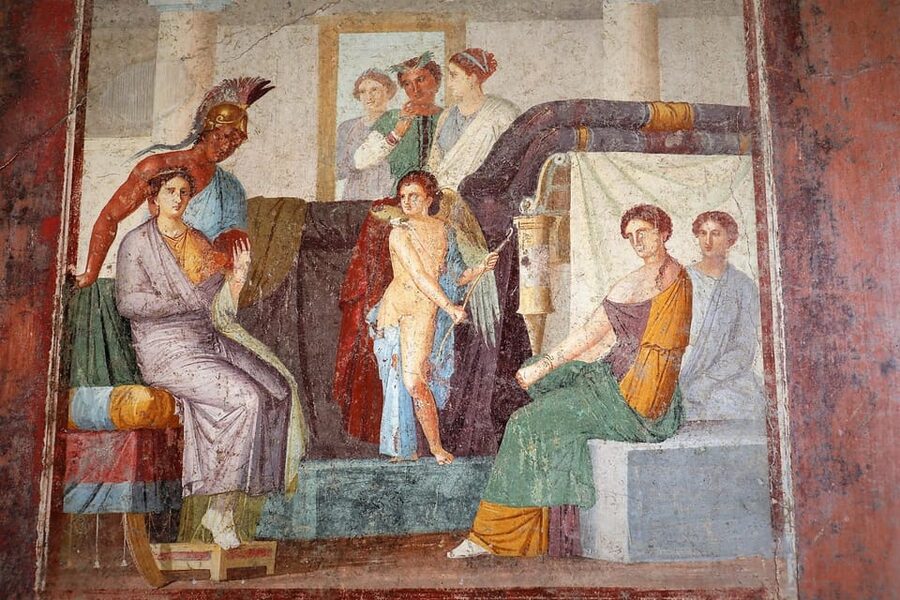
Herculaneum works well as either the first or second stop. Its entrance is at the Archaeological Park, where you look for the audioguide desk and show your booking confirmation. The device is collected inside the park, not at the Pompeii office.
The site offers a different kind of visit. Instead of relying mainly on Pompeii’s broad urban scale, you look closely at preserved houses, mosaics, frescoes, and wooden elements. Volcanic material protected parts of Herculaneum in ways that give its domestic spaces an unusually direct feel.
That does not mean Herculaneum is simply a smaller Pompeii. It has its own rhythm. You may spend longer examining a single house or decorative detail, and the audio commentary gives context to what you are seeing. For me, this is where the self-guided format makes sense: you can stop listening for a few minutes, look carefully, then restart at the next numbered explanation.
Herculaneum can also be the smarter first stop if you want a more contained visit before tackling Pompeii. Starting there may help you understand Roman homes and decoration before you face Pompeii’s much wider street plan. If your transport plans place you near Pompei Scavi first, reverse the order.
More Audio Tours in Pompei Campania:
- Pompeii: Skip-the-line Entry Ticket with Audio Guide & Map
★ 3.9 · 3,153 reviews - Pompeii: Skip-the-Line Entry Ticket with Digital Guide App
★ 4.1 · 770 reviews - Pompeii: Skip-the-Line Entry & Audioguide
★ 3.8 · 225 reviews - Pompeii: Skip-the-Line Ticket with Audio Guide and Map
★ 4.0 · 117 reviews
The six-hour schedule requires honest planning
The listed duration is six hours, but that does not mean six full hours inside the ruins. You must allow time for:
- Picking up the Pompeii device and exchanging the voucher
- Walking between the Pompeii office and entrance
- Traveling between the two archaeological parks
- Collecting or returning the second device
- Finding your way through large sites
The Circumvesuviana is the practical link between Pompei Scavi Villa dei Misteri and Ercolano Scavi. The package does not include those train tickets. The usual route involves a change at Torre Annunziata, so check the current departure information at the station and keep extra time in hand.
Because the schedule is tight, avoid treating both sites as equal-length visits. Give Pompeii the longer block if you want to understand its overall plan, then use Herculaneum for a focused visit. Or begin with Herculaneum and finish at Pompeii if you prefer to end with the larger site.
The key is to enter as soon as practical. Pompeii and Herculaneum generally open at 9:00. From October 15 through March 15, the stated closing time is 17:00, with last entry at 15:30. In the longer season, Pompeii is listed as open until 19:00 with last entry at 17:30 from March 16 through October 15, while Herculaneum is listed until 19:00 with last entry at 17:30 from March 16 through October 14.
Those date ranges overlap at October 15 in the supplied schedule, so confirm the hours for your exact date before setting out. Most important, do not leave the audio-device return until the last possible moment.
What the audioguide does well, and where it falls short
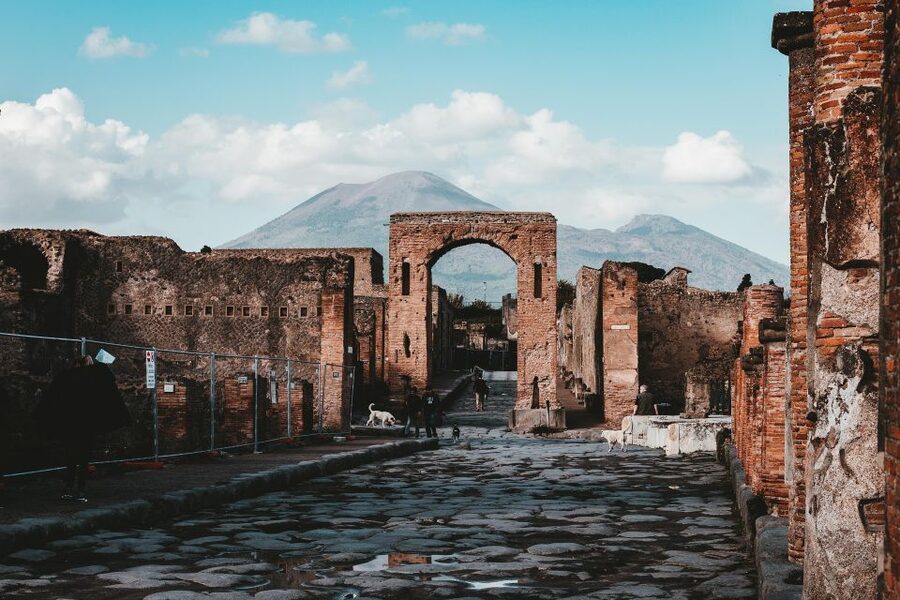
The strongest part of this package is the authorized audioguide system. The devices are approved for tour operators by the Pompeii Archaeological Park, and the numbered commentary is designed to match the archaeological sites. That gives you a more reliable framework than an informal recording or a generic phone app.
You can use the devices hands-free or connect standard headphones with a jack. Personal headphones are not included, so bring your own if you prefer not to hold the unit. A valid passport or ID card is required as a deposit and is returned when you bring the device back.
The audio content is generally useful and interesting, with material about architecture, ancient life, and individual sites. It suits people who want substance but do not want to join a fixed group. You can listen in English, Italian, French, Spanish, or German.
The weak point is ease of use. Some commentary uses technical architectural language without explaining every term. Some directions may refer to site features that have changed during conservation work. A human guide can point, adjust the explanation, and answer a question on the spot. This device cannot.
There have also been problems with audio units not working. Test the device before walking far into either park. If it fails, return to the desk promptly rather than hoping it will begin working later.
Is $88 a fair price?
At $88 per person, this is not a budget entry ticket. The value depends on how much you want from the day.
You are paying for two archaeological-site admissions, two audioguide devices, a site map, multilingual support at the Pompeii office, and a dedicated access arrangement at Pompeii. If you plan to visit both parks anyway and want structured commentary without paying for a private guide, the package can make sense.
The price is less attractive if you only want admission or if you are comfortable arranging tickets directly and using your own guidebook. The voucher exchange also reduces some of the time benefit promised by skip-the-line access. A poor handoff at Pompeii can lead to a queue or confusion before you even reach the dedicated entrance.
You also pay separately for the Circumvesuviana, food, drinks, personal headphones, and any private transfer. The Plus entrance ticket for Pompeii is not included. Free parking may be available from April 1 at Osteria Nonna Cherubina on Via Andolfi 46 in Pompei, but it is not gated and depends on availability and the property being open.
I would choose this package for the convenience of combining both parks and the official audio content. I would not choose it solely because of the phrase skip the line.
Who will like this self-guided format
This works best for independent visitors who want to control the pace. You can spend more time on a favorite house, skip a stop that does not interest you, and choose the order that fits your transport plans.
It is also a good match for people who want more explanation than a basic entry ticket provides but do not want a guide speaking continuously. Families and mixed-interest groups may appreciate the ability to separate briefly and regroup without holding up a tour.
You should think twice if you want a relaxed day. Two archaeological parks, a train connection, two audio handoffs, and Pompeii’s size create a demanding schedule. A private transfer is available on request, but it is not part of the package and the normal recommendation is the local train.
The supplied information also contains a contradiction about mobility. It says the activity is wheelchair accessible, but it separately lists wheelchair users among those for whom it is not suitable. Contact the provider before booking if accessibility is important to you, rather than relying on the general label.
The same caution applies to hearing access. People with hearing impairments are listed among those for whom the experience is not suitable, and the main commentary is delivered through audio devices.
Small details that can save your morning
Bring your passport or ID card, comfortable shoes, and practical clothing. You need the ID as a deposit for the audio units, not just as general travel paperwork.
Bring standard jack headphones if you want to use your own. Food and drinks are not included, so plan around the six-hour schedule rather than assuming refreshments are part of the package.
Keep your booking confirmation easy to reach at Herculaneum. At Pompeii, remember the order: station office first, archaeological entrance second. This simple distinction prevents the most avoidable delay.
If an audio unit is lost, stolen, or damaged, you are responsible for repair or replacement costs. Return every device before the office closes, following the archaeological parks’ schedule.
Free cancellation is available up to 24 hours before the visit, and you can reserve now and pay later. Those policies help if your Campania plans are still moving, but they do not solve the time pressure on the day itself.
Should you book this Pompeii and Herculaneum package?
Book it if you want both sites, prefer to explore independently, and value official commentary in your own language. The combination gives you Pompeii’s broad Roman city and Herculaneum’s close look at preserved homes, making the two-site plan far more rewarding than visiting either one without context.
Skip it if you want a leisurely visit, dislike handling vouchers and audio equipment, or would rather have a live guide explain the ruins and adjust the pace. If you book, start early, confirm the opening hours, test both devices, and treat the six hours as a carefully managed day rather than a loose suggestion.
FAQ
Can I visit Pompeii and Herculaneum on the same day?
Yes. The package includes two full entrance tickets and audioguide devices for both archaeological parks.
Can I choose which site to visit first?
Yes. You can begin at Pompeii or Herculaneum, depending on your plans.
Where do I collect the audioguide at Pompeii?
First exchange your voucher at the Tempio Travel office on the first floor of the EAV station at Via Villa dei Misteri 1. The Pompeii entrance is then at Porta Marina Inferiore in Piazza Esedra.
Where do I collect the audioguide at Herculaneum?
Go to the entrance of the Archaeological Park of Herculaneum and look for the Audioguide Desk. Staff will have your reservation.
Is transport between Pompeii and Herculaneum included?
No. The recommended connection is the Circumvesuviana train between Pompei Scavi Villa dei Misteri and Ercolano Scavi, generally with a change at Torre Annunziata. Train tickets are not included.
Are headphones provided?
No. You can use the device hands-free or connect standard headphones with a jack, but personal headphones are not included.
Which languages are available on the audioguides?
The audioguides are available in English, Italian, French, Spanish, and German.
Do I need to bring identification?
Yes. A valid passport or ID card is required as a deposit for the audioguide devices. It is returned when the devices are brought back.
What happens if I lose or damage an audioguide?
You are responsible for repair or replacement costs if a device is damaged, lost, or stolen. Both devices must be returned before the office closes.
Just added around Pompei Campania
- Pompeii Tour_Skip the line ticket + audioguide★ 4.7 · 17 reviews
- Pompeii, skip-the-line ticket with smartphone audio guide on App★ 3.0 · 4 reviews
- Pompeii: Skip-the-Line Ticket with Audio Guide and Map★ 3.9 · 5 reviews
- Pompeii: Skip-the-Line Ticket with Audio Guide and Map★ 4.0 · 14 reviews
- Pompeii: Pre-reserved ticket with audio guide★ 3.2 · 15 reviews
- Pompeii: Skip The Line Entrance Tickets + Audioguides★ 3.2 · 4 reviews
- Pompeii Skip-the-Line Ticket and Audioguide★ 4.2 · 7 reviews
- Pompeii: Skip the Line Ticket + Audioguide★ 3.3 · 13 reviews
Pompeii Audio Tours, compared.

Pompeii: Skip-the-line Entry Ticket with Audio Guide & Map
Read our review →
Pompeii: Skip-the-Line Entry Ticket with Digital Guide App
Read our review →

Pompeii: Skip the line ticket (art) + audioguide + map
Read our review →
Pompeii: Skip-the-Line Ticket with Audio Guide and Map
Read our review →
From Pompeii: Vesuvius Entry with Transfer and Audioguide
Read our review →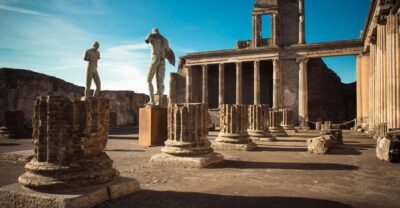
Pompeii & Herculaneum: Skip-the-line & Digital Guide App
Read our review →
Browse the lists this tour appears in