REVIEW · BARCELONA AUDIO TOURS
Colonia Guell & Gaudi’s Crypt Admission Ticket with Audioguide
Gaudí’s Crypt is the main reason to make the trip to Colònia Güell. Its sloping arches and spiraling columns show the architect testing ideas that would later appear in the Sagrada Família, but the setting feels quieter and less showy than Barcelona’s famous basilica. I like the chance to see the crypt alongside the workers’ village that gave it a purpose, rather than viewing Gaudí’s work in isolation.
I also like the self-guided format, which lets you set your own pace and pause for photos. The audio guide and map make the visit easy to follow, though the site is outside central Barcelona, and you need to plan for the train rather than the metro. That extra travel time may feel like too much if your main interest is only Gaudí.
Key Points At A Glance
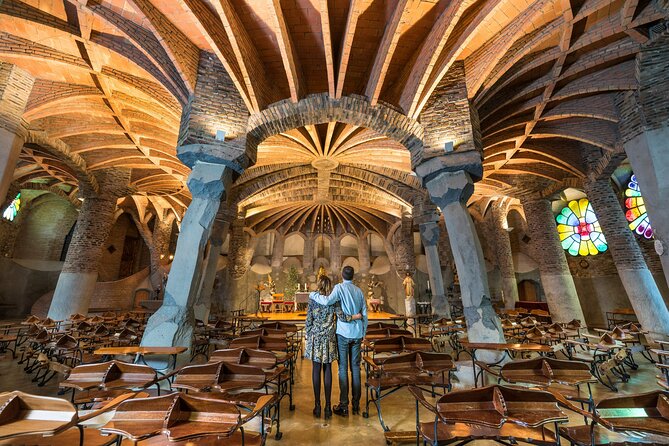
- Gaudí’s working laboratory: The UNESCO-listed Crypt let Antoni Gaudí test architectural ideas later used in the Sagrada Família.
- A complete industrial village: See terraced worker housing, gardens, a school, shops, administrative buildings, and the old textile mill.
- A quiet self-guided visit: Pick up the audio guide and map, then explore without a group schedule.
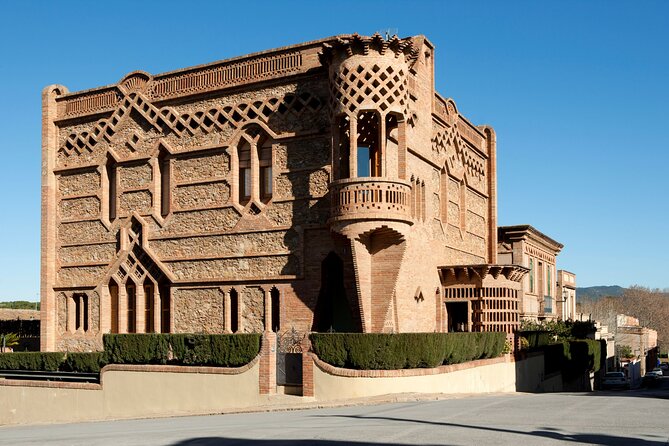
- Modernisme beyond central Barcelona: Look for turrets, Catalan folk details, and trencadís mosaic decoration across the village.
- About two hours on site: The audio tour ends after roughly two hours, but you can stay longer in the area.
- Low-cost Gaudí access: At about $12.07 per person, the ticket offers a useful alternative to Barcelona’s costlier major sights.
Why Colònia Güell Is Worth The Short Trip
Colònia Güell was not built as a tourist attraction. Eusebi Güell created it as a planned settlement for workers at his nearby textile mill. That gives the visit a practical heart: you are not only looking at pretty buildings, but also seeing how an industrial employer tried to shape daily life around work, housing, education, and community.
The village includes terraced houses, gardens, a school, shops, co-operative buildings, administrative offices, and the historic factory. As you walk, the audio guide explains how Güell commissioned modernist architects to design the estate. The result mixes local Catalan building traditions with the more playful forms linked to Barcelona’s Modernisme movement.
I find that context important. The houses and public buildings make more sense when you understand their original use. A turret or mosaic is not just decoration. It belongs to a planned village made for families connected to one mill.
The site also gives you a different view of Gaudí. In central Barcelona, his work often appears as a finished spectacle. At Colònia Güell, you can see a church project that remained incomplete, yet still reveals the experiments behind his later work. The crypt feels less like a polished monument and more like a place where ideas were being worked out in stone, brick, light, and weight.
More Skip-the-Line Audio Guide Tickets in Barcelona
- Barcelona: Sagrada Familia Entry Ticket with Audio Guide
★ 4.6 · 105,312 reviews - Casa Batllo Admission Ticket with Intelligent Audio Guide
★ 4.5 · 3,168 reviews - La Pedrera-Casa Mila Admission Ticket with Audioguide
★ 4.5 · 1,032 reviews
Starting At The Information Center
You make your own way to the Colònia Güell information and visitor center. There, you pick up the admission ticket materials, audio guide, and keepsake guidebook. A map of the village helps you find the main buildings before you set off.
This arrangement suits people who dislike being tied to a tour group. You choose one of the available start times, collect what you need, and then walk at your own speed. You can stop for photographs, spend longer at the crypt, or move quickly through parts of the village that interest you less.
The trade-off is that you need to manage the visit yourself. There is no guide leading you from one stop to the next, and no one waiting to gather the group. The audio guide provides structure, but you should pay attention to the route and allow enough time to reach the crypt.
The information center is also where the visit begins and ends from a practical point of view. Keep the map with you. The village is not a single building with one obvious entrance and exit, so the printed guide helps you connect the separate sights.
Walking Through The Workers’ Village
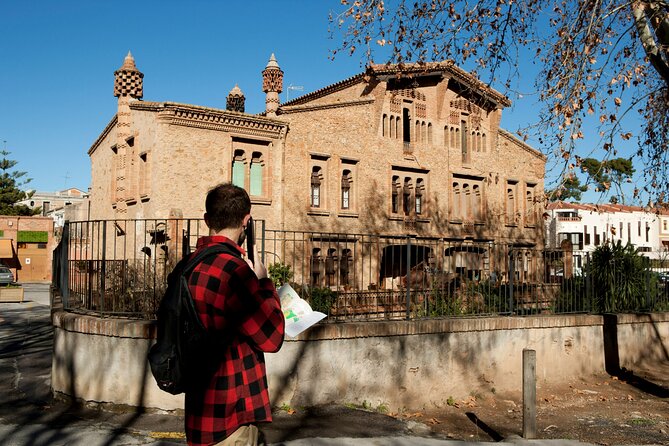
Start with the village buildings before heading to the crypt. This order gives you a better sense of what Gaudí’s church was meant to serve. You will pass terraced worker houses, gardens, the school, shops, and co-operative buildings, along with the historic mill and administrative offices.
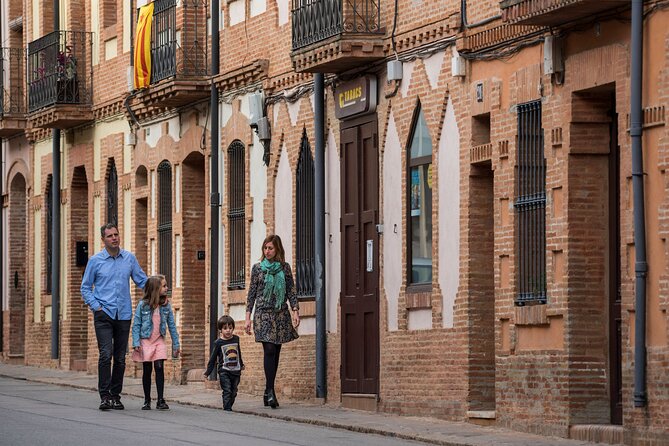
The worker housing is especially useful for understanding the settlement’s scale. These were not grand residences for wealthy patrons. They were homes connected to a factory community. The gardens and shared facilities point to a planned way of living, with daily needs placed close to the workplace.
Look closely at the details as you walk. The architecture combines familiar Catalan forms with modernist touches such as turrets and trencadís mosaic tiling. Trencadís uses irregular pieces of ceramic or tile to create a broken, textured surface. It is one of the easiest details to spot, and it helps tie Colònia Güell to the wider Modernisme style found across Barcelona.
The village also includes Ca L’Espinal, described as the masterpiece of architect Joan Rubió. It is worth paying attention to this building rather than treating the estate as a simple walk toward Gaudí’s Crypt. The architecture here is not all by Gaudí, and that is part of the point. Güell’s larger project brought several modernist architects into one industrial community.
The audio guide explains the ideals behind the village and the lives of the workers who lived there. That makes the walk more than a photo stop. You begin to see the settlement as a social and economic project, not just a collection of attractive façades.
Still, keep your expectations sensible. The village is spread across an ordinary working area, and the attraction is not a long list of grand interiors. Much of the experience comes from walking between buildings, studying exterior details, and listening to the historical explanation.
Inside Gaudí’s Crypt
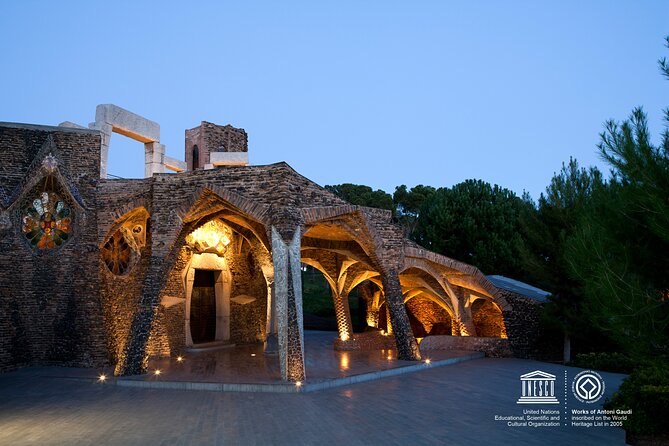
The crypt is the highlight, and its design explains why the trip appeals so strongly to Gaudí enthusiasts. Gaudí began work on the church in 1882, using the project to test ideas for the larger church that became the Sagrada Família.
The church was designed to fit the hillside. Its two naves sit at different levels, and the structure works with the slope rather than forcing a flat platform onto it. Inside, the effect comes from the combination of arches, columns, and changing levels.
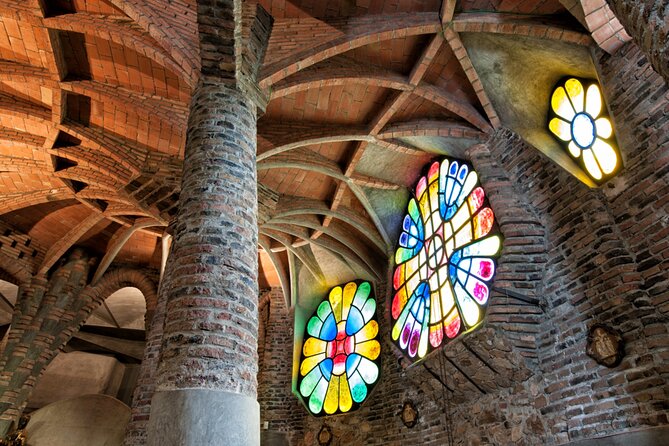
The columns are among the most memorable features. Their forms twist and spread in ways that make the structure feel both engineered and organic. The arches are not merely decorative either. They show Gaudí working out how weight and support could shape the interior.
You can also look for mosaics and the way the materials relate to the surrounding setting. The crypt has a darker, more intimate atmosphere than the open spaces of the village. That change in mood is part of its appeal. After walking through worker housing and public buildings, you enter a church where structure, light, and hillside are treated as one design problem.
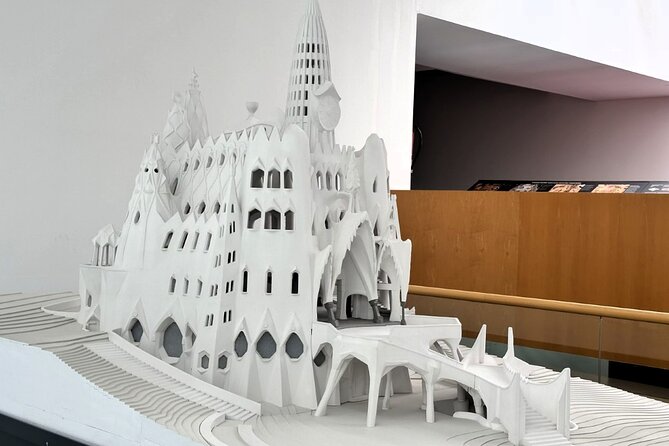
The crypt was never completed as Gaudí first imagined it. That unfinished story adds useful context, but it also means you should not expect a full church interior comparable to the Sagrada Família. What you get is more focused: a compact place where you can study the ideas behind a much larger project.
Photography is possible from outside, where you can take in the building’s shape before entering. Inside, the architecture rewards a slower look. The audio guide helps explain what you are seeing, especially if you do not already know how the crypt connects to Gaudí’s later work.
More Skip-the-Line Audio Guide Tickets in Spain
- Gaudi´s Casa Vicens Skip the Line Ticket with Audioguide
★ 4.5 · 685 reviews - Erotic Museum Admission Ticket with Audioguide
★ 5.0 · 527 reviews - Palau de la Musica Catalana Admission Ticket with Audioguide
★ 4.5 · 246 reviews - Barcelona: Casa Batllo Timed Entrance Ticket with Audio Guide
★ 4.0 · 12 reviews
What The Audio Guide Adds
The audio guide keeps the visit accessible without turning it into a fixed lecture. It covers the village, its workers, the role of Eusebi Güell, the architects involved, and Gaudí’s design process.
I would use it selectively rather than playing it nonstop. Listen closely around the village’s key buildings, then pause when you want to take in a façade or garden. At the crypt, give the explanations time, since the relationship between this church and the Sagrada Família is the central reason to come.
The audio tour lasts about two hours. After it finishes, you are free to remain in the area, so the stated duration is not a hard closing time for your visit. That flexibility is helpful if you prefer a slow walk or want to take more photographs.
There is no children’s audio guide included. Families can still participate, since most people can take part, but younger children may get less from the historical material unless you explain the buildings as you go. Comfortable shoes are a sensible choice because the experience involves walking around the village. The instructions also advise formal clothes, so dress neatly rather than treating the visit as a casual hike.
Getting There From Barcelona
The location outside Barcelona is the main practical point to plan carefully. This is not a central-city attraction that you can fit between nearby Gaudí buildings. You make your own way to Colònia Güell, then begin at the information center.
A train is the key transport detail. Do not assume the Barcelona metro is the right option. The location is outside the city limits, and one useful warning is to plan for the Barcelona train instead of relying on the metro.
That extra journey changes how you should schedule the visit. The audio portion takes about two hours, and you need to allow time on both sides for transport. I would not place it in a tight gap between timed reservations elsewhere in Barcelona.
The site is near public transportation, and the experience is suitable for most people. Even so, wear shoes you can walk in and keep the map handy. The village setting means you are moving between separate sights rather than entering one compact museum.
Is $12.07 A Good Price?
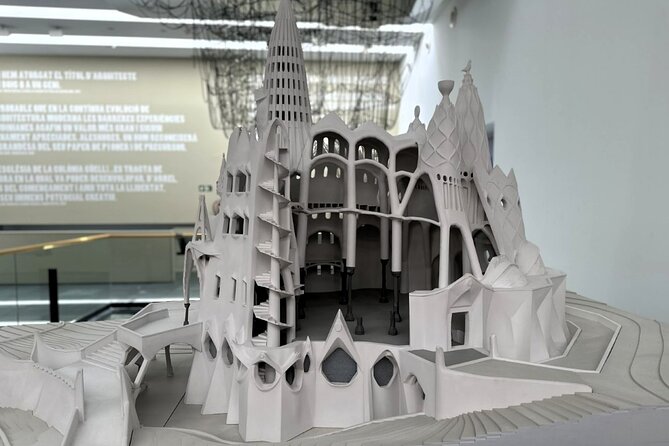
At roughly $12.07 per person, the admission is fairly priced for a visit that combines a UNESCO-listed Gaudí site, an audio guide, a map, and access to a historic industrial village. You are paying for more than a single church interior.
The value is strongest if you care about architecture or want to understand Gaudí’s process. The crypt gives you a specific connection to the Sagrada Família, while the village adds the social setting behind the commission. For that combination, the price is modest.
The value is weaker if you want a large, spectacle-heavy attraction. The village is a quiet walk, and the crypt is smaller than Barcelona’s famous basilica. You also have to spend time getting outside the city center. If your schedule is packed, the transport may matter more than the low ticket price.
The self-guided format helps keep the cost down and gives you control. You are not paying for a private guide or a long organized excursion. In return, you need to supply your own attention and timing.
Who Will Enjoy This Visit Most
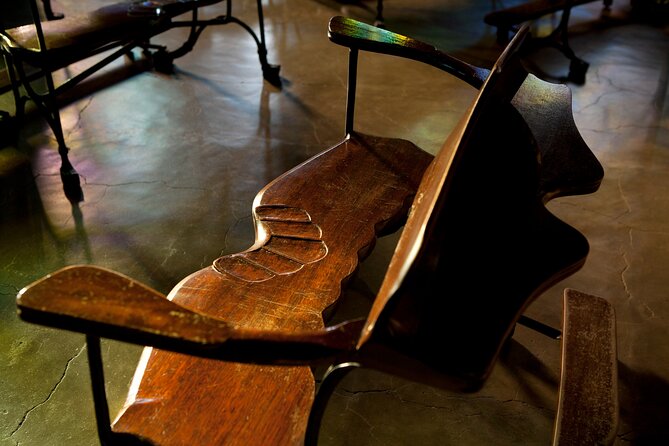
I would choose this experience for anyone who already plans to see the Sagrada Família and wants a clearer picture of Gaudí’s working methods. The crypt lets you spot ideas in an earlier form, especially in the arches, columns, levels, and relationship between structure and hillside.
It also suits visitors who enjoy social history. The village shows how a textile mill shaped housing, education, administration, and community life. You get a fuller story than you would from a stand-alone Gaudí building.
Independent sightseers will appreciate the flexible format. You can listen, walk, pause, and move on without keeping up with a group. The visit also works for people who like modernist architecture beyond the most famous Barcelona addresses.
I would think twice if you have only a short stay and no special interest in Gaudí. One direct assessment is that the crypt is the memorable part, while the wider village may feel less rewarding if you are not interested in the estate’s history. In that case, the journey outside Barcelona may not justify the time.
Booking, Timing, And Cancellation
Several departure times are available, so choose one that leaves room for the train journey and a relaxed return. The experience is commonly booked about eight days ahead, which suggests that planning in advance is sensible, especially if you have a fixed Barcelona schedule.
Your confirmation arrives when you book, and the ticket is mobile. The admission includes the Colònia Güell and Gaudí Crypt ticket, the audio guide, the town map, and a keepsake guidebook. Children’s audio material is not included.
Free cancellation is available until 24 hours before the start time for a full refund. Cancellations or changes made within 24 hours are not refunded or accepted. The cut-off uses local time, so check the timing before making a late change.
Should You Book Colònia Güell?
Book it if you want a quieter, more focused Gaudí experience and have enough time to leave central Barcelona. The crypt is the real prize, but the village makes it more meaningful by showing the workers, buildings, and industrial purpose behind the project.
Skip it if you want a fast central attraction or if your Gaudí plans already fill your schedule. At $12.07, the ticket is good value, but the train ride and self-guided format demand a little effort.
For architecture fans, the connection between this incomplete church and the Sagrada Família makes the choice easy. For everyone else, go only if the idea of a planned textile village, modernist details, and an atmospheric crypt sounds better than adding another crowded city sight.
FAQ
Where does the experience take place?
It takes place at Colònia Güell, outside Barcelona, Spain. You make your own way to the Colònia Güell information and visitor center.
How long does the visit take?
The audio tour lasts about two hours. After it ends, you are free to spend more time in the area.
What is included in the ticket?
The ticket includes admission to Colònia Güell and Gaudí’s Crypt, an audio guide, a map of the town, and a keepsake guidebook.
Is the tour guided by a person?
No. It is a self-guided visit. You collect the audio guide and explore the village and crypt independently.
What will I see at Colònia Güell?
You can see terraced worker houses and gardens, a school, shops, the historic factory, co-operative buildings, administrative buildings, and Ca L’Espinal.
Why is Gaudí’s Crypt important?
Gaudí designed the church in 1882 and used it to test ideas for the Sagrada Família. The crypt is a UNESCO-listed World Heritage site.
How should I get there from Barcelona?
The site is outside Barcelona’s city limits. Plan to use the Barcelona train rather than the metro.
Can I cancel for a refund?
Yes. You can cancel at least 24 hours before the experience start time for a full refund. Cancellations or changes made within 24 hours are not refunded or accepted.
Just added around Barcelona
- Self-Guided Audio Tour – Legends of the Gothic Quarter★ 4.5 · 6 reviews
- Self-Guided Audio Tour-The Surrealist Barcelona of Dalí and Gaudí★ 3.5 · 8 reviews
- Love in the Gothic Quarter Barcelona: Self-Guided Romantic Walk★ 4.5 · 9 reviews
- Self-Guided Tours Barcelona: 150+ Captivating Audio Stories★ 5.0 · 4 reviews
- Montjuïc Cable Car Entry Voucher with Audio Tour on Your Phone★ 3.5 · 37 reviews
- Barcelona Self-Guided Audio Tour★ 3.0 · 6 reviews
- Montjuic Park Walking Tour with Audioguide on Your Smartphone★ 3.0 · 4 reviews
- Barcelona Gothic Quarter Self-Guided Tour: Hidden Skull Route★ 5.0 · 10 reviews
Barcelona Audio Tours, compared.
Barcelona: Sagrada Familia Entry Ticket with Audio Guide
Read our review →
Barcelona: Casa Batlló Entry with Self-Audioguide Tour
Read our review →
Barcelona: Palau de la Música Self-Guided Tour
Read our review →
Casa Batllo Admission Ticket with Intelligent Audio Guide
Read our review →
La Pedrera-Casa Mila Admission Ticket with Audioguide
Read our review →
Gaudi´s Casa Vicens Skip the Line Ticket with Audioguide
Read our review →