
REVIEW · BARCELONA AUDIO TOURS
Barcelona Self-Guided Audio Tour
Barcelona’s big advantage is variety, and this self-guided audio tour gathers much of it in one flexible plan. You can start near Sants, Montjuïc, Plaça de Catalunya, or anywhere else that suits your day, then follow the map toward Gaudí buildings, Gothic churches, markets, parks, museums, and Camp Nou.
I like two things right away: the low $9 price and the freedom to skip sights that do not interest you. I also like that you can split the route over several days instead of racing through 25 stops. The catch is important: this is an audio guide, not an admission package or a personal guide, and some buyers have mistaken it for a ticket to Sagrada Familia or another landmark.
Five things to know before you book
- Twenty-five stops cover a wide sweep of Barcelona, from Sants and Montjuïc to Casa Vicens, Sagrada Familia, and Camp Nou.
- The audio guide works through private SoundCloud links, while a Google My Maps link shows each stop and connects it to the matching commentary.
- You choose your own route and pace, with a stated use period of up to six days.
- Entry fees are not included, including admission to Sagrada Familia, Casa Batlló, Casa Milà, the cathedral, museums, and other paid sights.
- You need your own phone, headphones, internet access, and a full battery to use the tour comfortably.
- The tour has no fixed meeting point or group, so you arrange your own transport between distant areas.
What the $9 Barcelona audio tour really provides
Think of this as a portable set of short history talks, paired with a city map. Before your selected travel date and starting time, you receive two access links. One opens the audio content in SoundCloud. The other opens a Google My Maps route with all 25 attractions.
At each stop, you select the matching map point and play its audio. You can also listen to the material before setting out, which helps you decide what deserves your time. The stated audio duration is about 20 minutes per stop, but the full outing takes roughly three to nine hours depending on how many places you visit, how long you linger, and how much time you spend moving across the city.
That range is the key to using it well. Listening to all 25 commentaries in one day would mean a long, scattered outing. I would treat the route as a menu. Choose Montjuïc for one half-day, the Gothic Quarter and waterfront-side sights for another, then reserve a separate stretch of time for Gaudí’s major buildings.
The product is private and independent. No guide walks with you, and no group waits while you take photos. That saves money and gives you control, but it also means you must watch the map, manage your battery, and make your own decisions about tickets and transport.
More Audio Tours in Barcelona:
- Barcelona: Sagrada Familia Entry Ticket with Audio Guide
★ 4.6 · 105,312 reviews - Barcelona: Casa Batlló Entry with Self-Audioguide Tour
★ 4.7 · 25,359 reviews - Barcelona: Palau de la Música Self-Guided Tour
★ 4.6 · 3,603 reviews
From Sants to Montjuïc’s grand monuments
The route begins at Sants, Barcelona’s transportation hub. The audio places this modern working district in the context of its industrial past and changing city life. It is a practical start if you arrive by train or stay nearby, though you do not need to begin there.
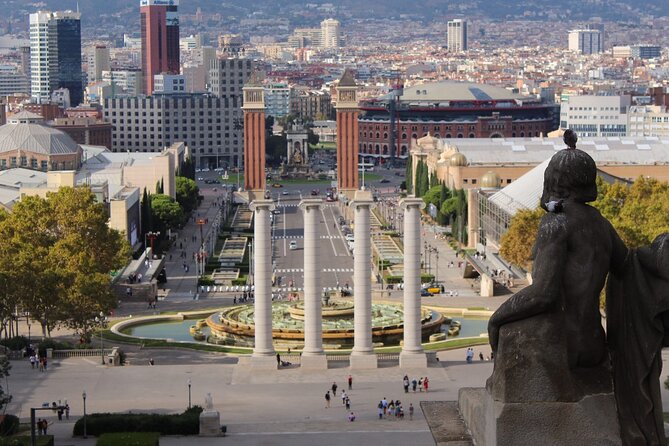
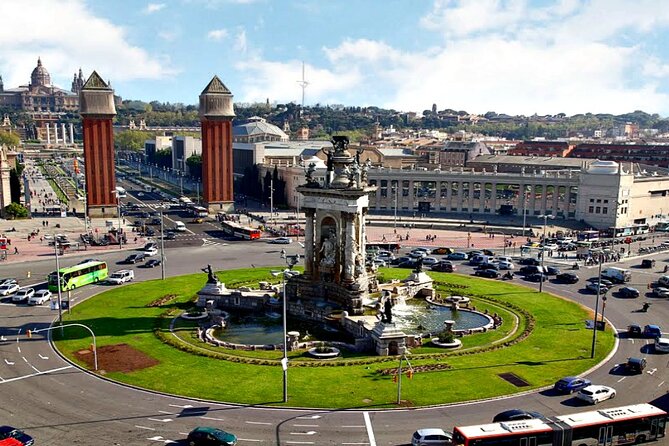
Plaça d’Espanya is a natural next stop. Built for the 1929 International Exhibition, the broad square brings several major roads together beneath monumental architecture. Give yourself time to look beyond the traffic and notice how the space leads toward Montjuïc.
The Magic Fountain is next. Its water displays were created by Carles Buïgas for the 1929 exhibition and became one of Barcelona’s best-known public spectacles. The audio can explain the engineering and design, but the fountain’s actual displays depend on operating schedules, so do not assume the water show will be running when you arrive.
The Museu Nacional d’Art de Catalunya occupies the grand former exhibition palace above the square. Its collection includes major Romanesque art, and the building itself is one of the most imposing sights on Montjuïc. Admission is extra, so you can listen outside and move on, or buy entry if the collection fits your interests.
Parc de Montjuïc gives the route breathing room. The hill combines gardens, cultural sites, Olympic associations, and old military defenses. The supplied information describes it as a place where ancient settlement, sport, and plant life meet, making it a useful pause from Barcelona’s dense central streets.
Montjuïc Castle crowns the hill. Its walls and position explain why this was a strategic military point, while the audio covers episodes of resistance, revolution, and political conflict. Entry is not included. Because the castle is separated from the central sights, plan transport and do not confuse the audio stop with a reserved castle visit.
Central Barcelona, from Plaça de Catalunya to La Boqueria
Plaça de Catalunya is the logical center of the route. Nine streets meet here, and the square links the old city with the Eixample. I would use it as a planning point rather than linger only for the commentary. It is an easy place to begin a central walking sequence.
Palau Güell is an early Gaudí work built for his patron, Eusebi Güell. The building offers a useful look at Gaudí before his later works became more famous, with inventive details packed into a city palace. Admission is extra, and the audio guide does not replace a timed entry ticket.
Nearby Plaça Reial has arcades, a formal layout, and a strong evening identity. It is a pleasant contrast to the narrow lanes around it, and the commentary explains its neoclassical design. The square is free to view, though cafés and restaurants are separate expenses.
Mercat de la Boqueria brings food into the route. The market grew from older trading traditions and now offers a colorful display of Mediterranean produce and prepared foods. The audio can give the market context, but you will get more from this stop if you allow time to look, smell, and browse rather than treating it as a quick photo point.
The Gothic Quarter follows. Roman foundations, medieval lanes, and Gothic buildings make this one of the city’s most rewarding areas for an audio walk. Here, the map is especially useful because the streets can turn confusing quickly. Keep the commentary paused when crossing roads or navigating busy lanes.
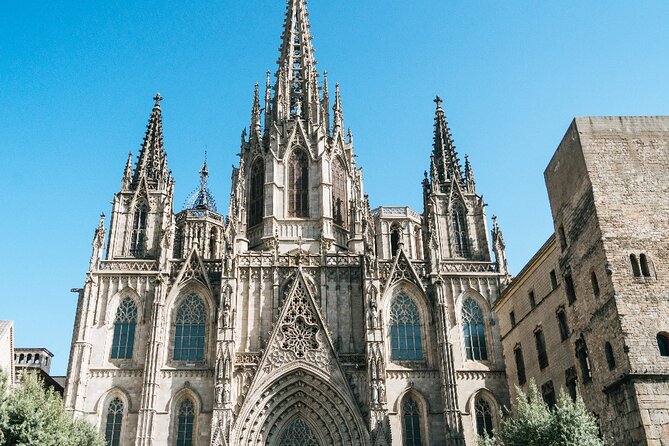
Barcelona Cathedral is one of the main paid stops. Dedicated to Saint Eulalia, the city’s patron saint, it represents the Gothic religious center of old Barcelona. Check the current admission arrangements separately, since the audio access does not include entry.
MUHBA, the Barcelona History Museum, takes the city story below street level. Its archaeological displays show urban development over about 2,000 years, including Roman remains beneath the present city. This is another paid attraction where the commentary helps you decide if the museum deserves a longer visit.
Santa Maria del Mar and the city’s eastern parks
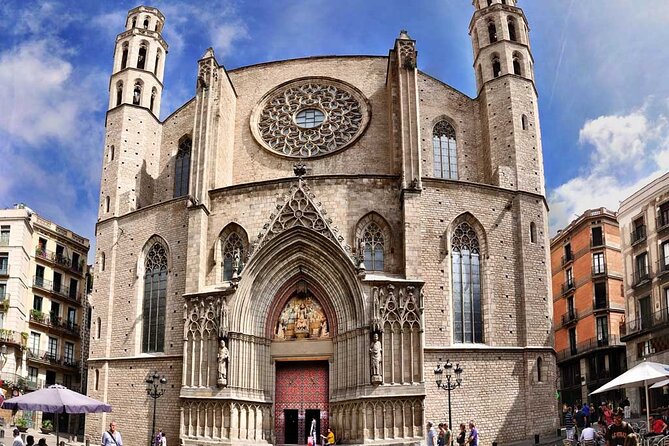
Basilica de Santa Maria del Mar is known as the Cathedral of the Sea. Built for Barcelona’s merchant community, it is admired for its clear Gothic form, tall columns, and colored windows. The basilica is listed as a free stop, though opening arrangements can change, and worship always takes priority over sightseeing.
Parc de la Ciutadella offers a change of pace after the stone streets. It began as a military complex and later became Barcelona’s first public park, with cultural and recreational uses tied to the city’s growth. The audio gives the park a historical frame, while you decide how long to spend beneath the trees and around its open spaces.
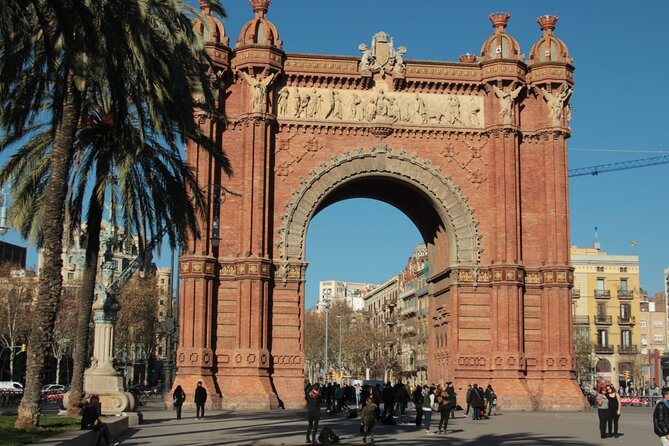
The Arc de Triomf was built for the 1888 Universal Exhibition. Its decoration refers to Barcelona’s cultural achievements rather than a battlefield victory, which makes it different from many triumphal arches in Europe. It is an easy exterior stop and pairs naturally with Ciutadella.
The Palace of Catalan Music is one of the route’s strongest architectural stops. Lluís Domènech i Montaner designed this Art Nouveau concert hall with mosaics, sculpture, and stained glass. Admission is extra, and an exterior look only gives you part of the story, so consider a separate visit if music and design matter to you.
Same place, a different route to walk:
- Casa Batllo Admission Ticket with Intelligent Audio Guide
★ 4.5 · 3,168 reviews - La Pedrera-Casa Mila Admission Ticket with Audioguide
★ 4.5 · 1,032 reviews - Gaudi´s Casa Vicens Skip the Line Ticket with Audioguide
★ 4.5 · 685 reviews - Erotic Museum Admission Ticket with Audioguide
★ 5.0 · 527 reviews
Passeig de Gràcia and four Gaudí landmarks
Passeig de Gracia is Barcelona’s grand modernist boulevard. It links the old center with the Eixample and brings together shops, apartment blocks, and some of the city’s best-known façades. The audio helps you read the street as a whole rather than seeing each building as an isolated attraction.
Casa Batlló is Gaudí’s imaginative renovation for textile industrialist Josep Batlló. Ceramic surfaces and unusual forms give the building a fantastical quality, but entry costs extra. If you plan to go inside, buy or arrange admission separately. The audio tour itself provides commentary only.
Casa Milà, also called La Pedrera, pushes Gaudí’s sculptural approach even further. Its stone exterior appears to flow rather than follow conventional straight lines, and the building remains one of his most debated works. It is another paid stop, so budget for several admissions if you want interiors across the Gaudí section.
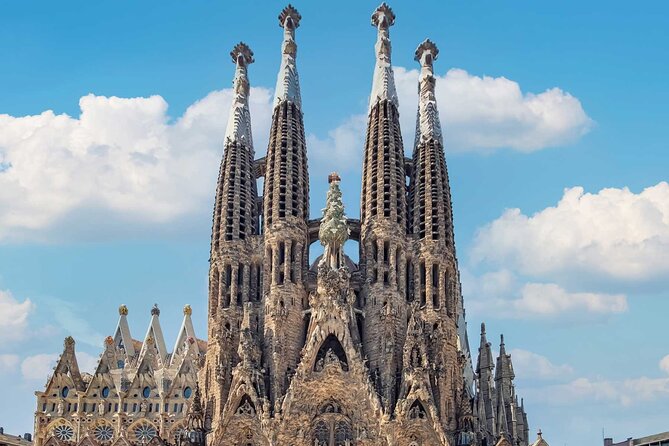
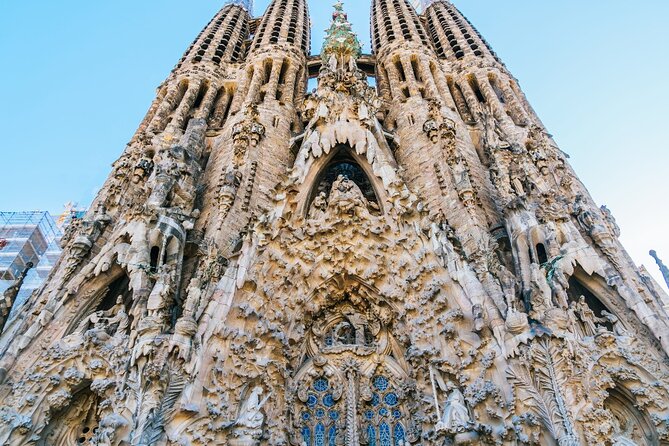
Sagrada Familia is the tour’s headline attraction. Gaudí’s basilica combines religious purpose with an unfinished, continuing building project, and its design is unlike any ordinary church. Admission is not included. This point needs special attention because two poor experiences were tied to the mistaken expectation that confirmation of the audio tour guaranteed entry to the basilica. It does not. You must arrange a separate ticket, and the audio guide cannot control opening times, access rules, or closures.
Recinte Modernista de Sant Pau is a short distance from Sagrada Familia and offers another view of Catalan modernism. Lluís Domènech i Montaner designed the former hospital complex around the idea that beautiful surroundings could support healing. Entry is extra, and the site deserves more time than a quick exterior glance if you choose to pay.
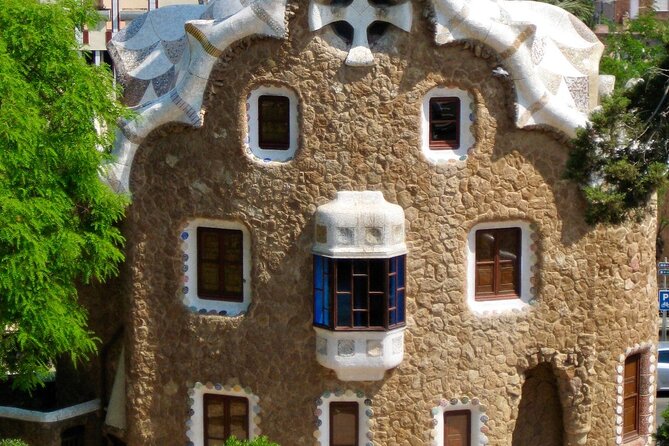
Casa Vicens shows Gaudí at the beginning of his career. Built when he was 31, the house uses colorful ceramic decoration and playful design to announce ideas he would develop later. Admission is not included, so this is best for visitors who want to study Gaudí’s progress rather than collect a fast list of famous façades.
Two special-interest stops beyond the usual center
CosmoCaixa Museum of Science adds a different subject to a day otherwise dominated by architecture and city history. Interactive exhibits make science accessible to different ages, and the museum occupies a former building adapted for its present use. Admission is extra, and its location means you should group it with another northern Barcelona plan rather than make a long trip for one short audio segment.
Spotify Camp Nou appeals most to football followers and to anyone interested in FC Barcelona’s place in Catalan identity. The stadium’s motto, More than a Club, points to the cultural meaning attached to the team. Entry is not included, and access arrangements may matter, so treat this as a separate paid attraction rather than an automatic part of the walk.
These final stops show both the strength and weakness of the route. You get a broad picture of Barcelona, but the 25 points are spread across a large area. The map helps, yet the audio guide does not provide pickup, drop-off, or transportation. You will need to arrange your own movement by public transport, taxi, or walking.
How to plan the route without wasting your day

I would split the experience into sections:
- Montjuïc section: Sants, Plaça d’Espanya, Magic Fountain, the national art museum, the park, and the castle.
- Old city section: Plaça de Catalunya, Palau Güell, Plaça Reial, Boqueria, the Gothic Quarter, the cathedral, MUHBA, and Santa Maria del Mar.
- Park and music section: Ciutadella, Arc de Triomf, and the Palace of Catalan Music.
- Gaudí section: Passeig de Gràcia, Casa Batlló, Casa Milà, Sagrada Familia, Sant Pau, and Casa Vicens.
- Special-interest section: CosmoCaixa and Camp Nou.
You do not need to follow this order. Start closest to your hotel or arrival point, and use the map to build a sensible day. The access links are valid for up to six days, which makes the split-route approach practical.
Download or open the links before leaving, and bring headphones, a fully charged smartphone, and internet access. Since the audio is delivered through web links, do not wait until you are standing at a landmark to discover that your phone has no battery or connection.
The $9 value and the important limits
At $9 per person, this is inexpensive for 25 audio commentaries. It can replace the cost of a formal guide when you want basic historical orientation and do not need someone beside you. It is especially useful for independent visitors who prefer to stop for coffee, enter only two or three attractions, or change plans during the day.
The price is less impressive if you expect admission tickets, transport, or personal assistance. Paid entries can quickly cost far more than the audio guide, particularly if you visit Sagrada Familia, Casa Batlló, Casa Milà, the cathedral, museums, and Sant Pau. Add those expenses before setting your total budget.
There is also no refund if you cancel or request a change. Select your language carefully at booking because it cannot be changed after confirmation. If your preferred language is not available, contact the provider at least 48 hours ahead so it can be prepared if possible.
Who should book this experience?
I would choose it if you like making your own route, want a low-cost introduction to Barcelona, and are comfortable using a phone map. Families and mixed-interest groups may also like the ability to split up, skip a museum, or pause the audio while someone shops or eats.
I would not choose it if you want a person to answer questions on the spot, a fixed walking route with transport, or guaranteed access to major landmarks. For Sagrada Familia or any paid site, arrange admission separately and think of this product as commentary only.
Final verdict: a useful map and audio layer, not a sightseeing ticket
Book this Barcelona audio tour for its low price, broad coverage, and flexible six-day use. The strongest value comes from the city orientation: you can connect Montjuïc, the old center, modernist architecture, parks, and football without committing to a group schedule.
Just keep the boundaries clear. You receive audio links and an interactive map, not entry tickets, transport, or a live guide. If you plan around that fact, the tour can be a handy companion for building your own Barcelona days. If you expect admission to Sagrada Familia or another landmark, choose a separate ticketed experience instead.
FAQ
Where can I start and finish the audio tour?
You can choose your own starting and ending points because the experience is self-guided. There is no fixed meeting point.
How long does the experience take?
The estimated duration is about three to nine hours. Your actual time depends on how many of the 25 stops you visit and how long you stay at each one.
How many attractions are included in the audio guide?
The package includes private access links for 25 attractions, with a separate audio guide connected to each point on the map.
Are admission tickets included?
No. Entry fees are not included. This applies to paid attractions such as Sagrada Familia, Casa Batlló, Casa Milà, Barcelona Cathedral, MUHBA, the Palace of Catalan Music, and several others.
Does the tour include transportation?
No. Pickup, drop-off, and transportation are not included. You arrange your own movement between stops.
How do I access the audio content?
You receive a private SoundCloud web link for the audio and a private Google My Maps link showing the attractions. Each map point connects to its matching audio guide.
How long are the access links valid?
The private access links are valid for up to six days.
What should I bring?
Bring headphones or earphones, a fully charged smartphone, and internet access.
Can I choose the audio guide language?
Yes. You select your preferred language during booking. The language cannot be changed after confirmation, so contact the provider at least 48 hours ahead if your preferred language is not available.
Just added around Barcelona
- Self-Guided Audio Tour – Legends of the Gothic Quarter★ 4.5 · 6 reviews
- Self-Guided Audio Tour-The Surrealist Barcelona of Dalí and Gaudí★ 3.5 · 8 reviews
- Love in the Gothic Quarter Barcelona: Self-Guided Romantic Walk★ 4.5 · 9 reviews
- Montjuïc Cable Car Entry Voucher with Audio Tour on Your Phone★ 3.5 · 37 reviews
- Self-Guided Tours Barcelona: 150+ Captivating Audio Stories★ 5.0 · 4 reviews
- Barcelona Gothic Quarter Self-Guided Tour: Hidden Skull Route★ 5.0 · 10 reviews
- Montjuic Park Walking Tour with Audioguide on Your Smartphone★ 3.0 · 4 reviews
- Sagrada Familia External Audio Tour – The 3 Iconic Facades★ 5.0 · 3 reviews
Barcelona Audio Tours, compared.
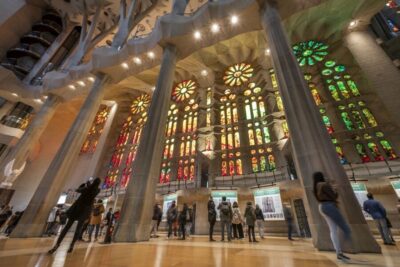
Barcelona: Sagrada Familia Entry Ticket with Audio Guide
Read our review →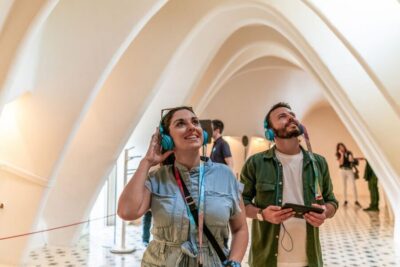
Barcelona: Casa Batlló Entry with Self-Audioguide Tour
Read our review →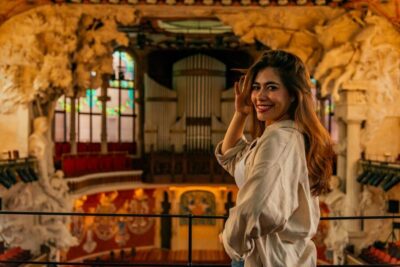
Barcelona: Palau de la Música Self-Guided Tour
Read our review →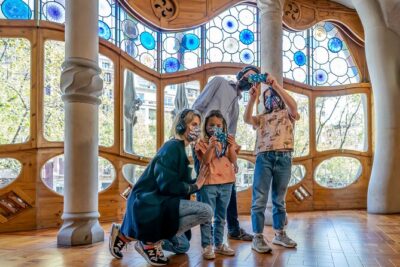
Casa Batllo Admission Ticket with Intelligent Audio Guide
Read our review →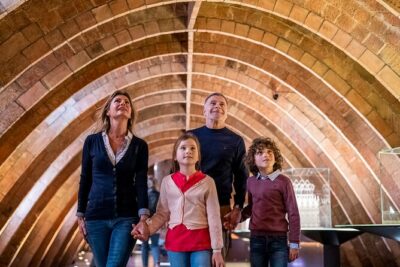
La Pedrera-Casa Mila Admission Ticket with Audioguide
Read our review →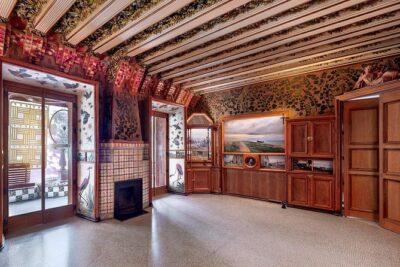
Gaudi´s Casa Vicens Skip the Line Ticket with Audioguide
Read our review →
Barcelona: Mies van der Rohe Pavilion Ticket and Audio Guide
Read our review →Browse the lists this tour appears in