
REVIEW · BARCELONA AUDIO TOURS
Barcelona’s El Raval and the Gothic Quarter: A Self-Guided Audio Tour
Barcelona’s oldest streets tell some wonderfully odd stories. This self-guided audio walk leads from Font de Canaletes through El Raval and the Gothic Quarter, linking a former red-light district, a medieval food market, Roman ruins, Picasso’s inspiration, and the city’s grand cathedral.
I like the freedom to stop and pause whenever you wish, and I like the offline audio and map, which keep the tour useful without burning mobile data. The $11.99 price also makes sense for families or small groups sharing one phone, though you must bring your own smartphone and headphones.
The main drawback is navigation. GPS can wobble among narrow lanes and tall buildings, and one technical review found the app confusing enough to require Google Maps. Download everything before you start and keep an eye on the route map.
Key points at a glance
- Roman Barcino to modern Barcelona: Follow the city’s growth from a fortified Roman settlement to the capital you see today.
- El Raval’s darker past: Hear about its former overcrowding, red-light district, and the House of Mercy’s baby drop-off hole.
- Food and coffee stops: Enter La Boqueria and pass Can Culleretes and Meson del Cafe.
- Art in the streets: See El Gato de Botero, Palau Güell, Picasso’s Carrer d’Avinyo, and the El Peto kissing mural.
- Classic Gothic Quarter sights: Walk through Plaça de Sant Jaume, Plaça Nova, Plaça Sant Felip Neri, the cathedral, and Pont de Bisbe.
- Repeatable and private: Use lifetime access in English, at your pace, with no fixed group or live guide.
Starting at Font de Canaletes on La Rambla
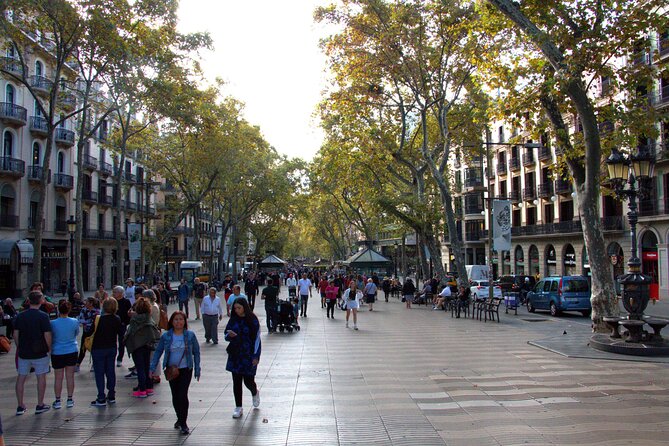
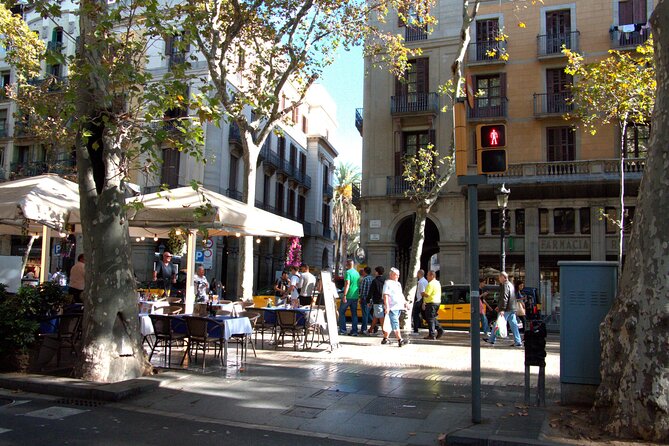
The walk begins at Font de Canaletes, at La Rambla 133. This is a useful starting point because La Rambla is easy to locate, central, and close to the first sights in the old city.
Before moving, I would give yourself a few minutes to open the VoiceMap app, check the map, and confirm that the audio and route have downloaded. The tour includes offline access to the audio, map, and location data, which is one of its best practical features. It means you can keep your phone in airplane mode or avoid using much of your data.
The stated duration is about 1 hour 15 minutes to 1 hour 30 minutes. That is the walking and listening time, not necessarily the time you will spend inside the market, pausing for coffee, or entering any attraction. If you stop often, the outing will take longer. That is a good thing here. The route works best as a flexible introduction, not a race to finish every audio segment.
The app is designed to play as you walk, with directions and commentary tied to your position. That removes the need to keep checking a guidebook. Still, GPS is not perfect in Barcelona’s narrow streets. Tall buildings can affect your position, so use the map as a backup and read the next turn before setting off.
More Audio Tours in Barcelona:
- Barcelona: Sagrada Familia Entry Ticket with Audio Guide
★ 4.6 · 105,312 reviews - Barcelona: Casa Batlló Entry with Self-Audioguide Tour
★ 4.7 · 25,359 reviews - Barcelona: Palau de la Música Self-Guided Tour
★ 4.6 · 3,603 reviews
El Raval and the stories behind the streets
After leaving La Rambla, the route enters El Raval. This neighborhood once had the highest population density of any urban area in Europe, according to the tour’s historical account. That fact gives the first section some weight. El Raval was not simply a pretty old quarter. It was crowded, poor, and rough around the edges, with a reputation as Barcelona’s red-light district.
The audio walk focuses on the people who lived here, not only on grand buildings. One particularly grim story concerns the House of Mercy, where destitute mothers could leave unwanted babies through a hole in the wall. It is a difficult detail, but it helps you understand the hardship that shaped this part of the city.
I appreciate this kind of context because it changes the way you read the streets. Instead of seeing only old stone and narrow lanes, you begin to picture the social pressures behind them. The story is brief enough for a walking tour, but memorable enough to stay with you.
El Raval is also a good reminder that Barcelona’s old center is not a single postcard scene. You will pass through areas with different moods, and the audio helps connect them. You can pause if a street catches your attention, then continue when ready.
La Boqueria, Botero, and Palau Güell
One highlight is Mercat de la Boqueria, the famous food market just off La Rambla. The market has operated since the 1100s, giving it a much longer story than its current fame as a place to browse food stalls.
The tour gives you the opportunity to step inside, but admission to attractions and food purchases are not included. Treat La Boqueria as an optional pause rather than a guaranteed sit-down meal. Opening conditions and crowd levels can affect how easy it is to move around, and the short audio route does not leave unlimited time for shopping.
I would keep the market visit simple. Walk in, look around, and decide if you want to buy something. If you stop for food, expect the total outing to run beyond the advertised 75 to 90 minutes.
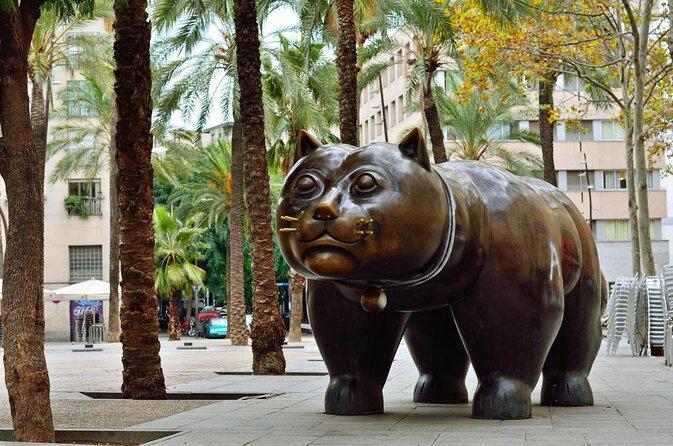
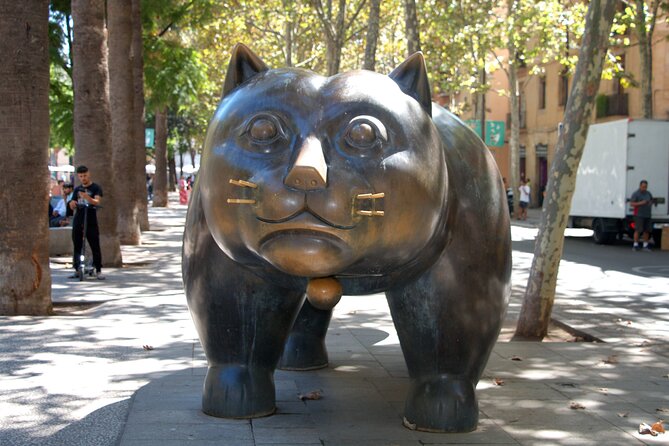
Outside, the route brings you to El Gato de Botero, Fernando Botero’s large, rounded cat sculpture. You will have the chance to rub the cat’s crown jewels, a playful Barcelona custom that gives this stop a lighter tone after El Raval’s more serious stories.
The next major sight is Palau Güell, or Güell Palace, one of Gaudí’s more restrained buildings. The tour calls attention to its understated character, which is useful because visitors often expect every Gaudí building to explode with color and decoration. You can admire it from the route, but any entrance ticket is separate.
This mixture of market, sculpture, and architecture is one of the walk’s strengths. You are not asked to spend the whole time looking at one style of building. The route keeps changing its subject, which makes the audio easier to follow.
The Gothic Quarter’s squares and narrow lanes
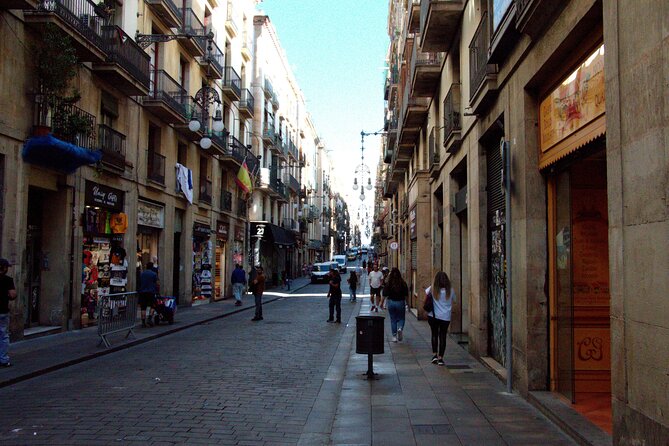
From El Raval, the walk continues into the Gothic Quarter. Here the route uses narrow lanes, small alleys, and several important squares to show how the old city fits together.
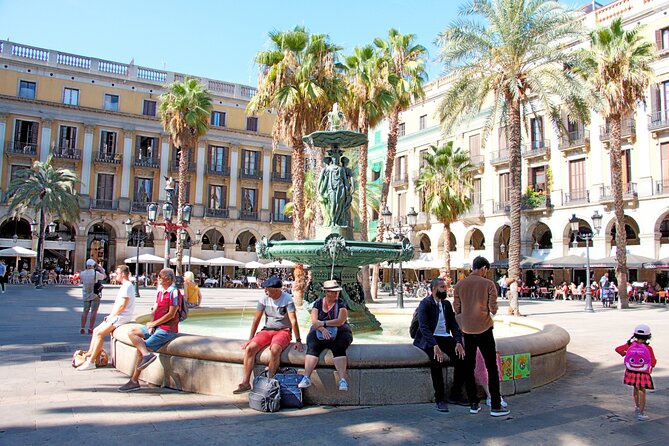
Plaça de Sant Jaume is one of the major stops. Plaça Nova and Plaça Sant Felip Neri offer a different scale, with smaller spaces that reward a slower look. These squares are part of the walking experience rather than simple points to photograph. The route encourages you to notice how the city opens and closes as you move through it.
The Gothic Quarter can be confusing, especially when several lanes look alike. That is where the map matters most. The tour’s directions were praised for keeping pace with the walker, but another user had trouble with the app’s orientation and GPS. I would not rely on the audio alone. Glance at the map when you reach each square, especially if you have paused for photos or gone inside a market.
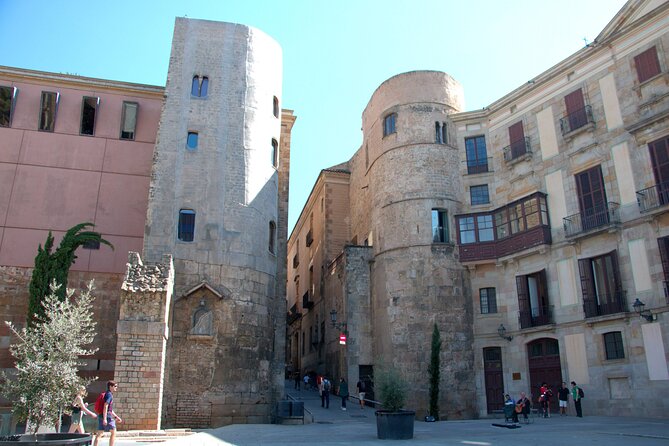
The route also introduces Barcelona’s Roman beginnings. You will learn how Barcino developed from a small fortified village into the city around you. The tour points out where tombs once lined the ancient village wall. That detail links the modern streets to the Roman settlement beneath them.
You do not need to be a Roman-history enthusiast to enjoy this section. The story is useful because it explains why Barcelona’s old center feels layered. Medieval lanes, Roman traces, and newer buildings occupy the same compact area.
Same place, a different route to walk:
- Casa Batllo Admission Ticket with Intelligent Audio Guide
★ 4.5 · 3,168 reviews - La Pedrera-Casa Mila Admission Ticket with Audioguide
★ 4.5 · 1,032 reviews - Gaudi´s Casa Vicens Skip the Line Ticket with Audioguide
★ 4.5 · 685 reviews - Erotic Museum Admission Ticket with Audioguide
★ 5.0 · 527 reviews
Can Culleretes, Carrer d’Avinyo, and local character
Food history appears again at Can Culleretes, one of the historic restaurants along the route. The audio tells two different origin stories for the restaurant and lets you decide which version seems more believable.
That small touch suits the format. A live guide might spend more time debating the detail, but an audio tour can give you the story and let you carry on without a long stop. You can also return later if the restaurant interests you, though meals are not part of the tour price.
The route then takes a shortcut through Carrer d’Avinyo. This street is linked to Picasso’s Les Demoiselles d’Avignon, one of the best-known works associated with the artist’s early modern period. The walk does not turn the street into an art lecture. Instead, it gives you a clear reason to look at an otherwise easy-to-miss lane.
You will also have the opportunity to visit Meson del Cafe. The audio presents it as a place for some of the city’s best coffee and mentions the possibility of encountering the mayor. Those details give the stop a more personal, local flavor, though coffee and any other purchase are your responsibility.
These food and café references help break up the architecture. You get stories about places people used, not only buildings designed by famous names. That makes the route feel more connected to daily life.
The cathedral, Pont de Bisbe, and neo-Gothic Barcelona
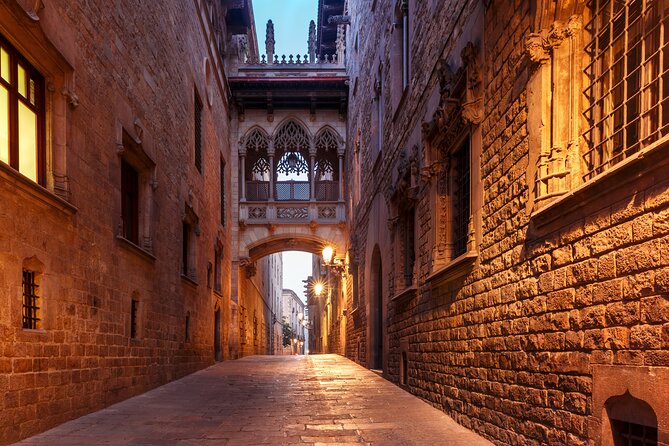
The Gothic Quarter section includes the Cathedral of Barcelona and Pont de Bisbe, the Bishops Bridge. Both are major visual stops, but the tour makes an important distinction by describing them as neo-Gothic attractions.
That distinction matters. Much of the Gothic Quarter looks ancient, yet some of its most famous features were built or altered later in a Gothic style. The audio gives you a more careful way to read what you see instead of treating every stone as untouched medieval fabric.
You can admire the cathedral and bridge from the walking route. Entrance fees to museums or other attractions are not included, so plan to view the walk mainly as an exterior tour unless you choose to pay separately for an interior visit.
Pont de Bisbe is especially suited to a short stop. It is a compact architectural feature, and the audio provides context without asking you to spend a long time there. The cathedral offers more visual weight and may deserve extra time if you want to study the façade or enter.
The route’s pace is yours, which is valuable in this part of Barcelona. You can stop when a square is quiet, wait for a clearer view, or let other foot traffic pass before continuing. A live group would not offer that same control.
El Peto and the city’s public art
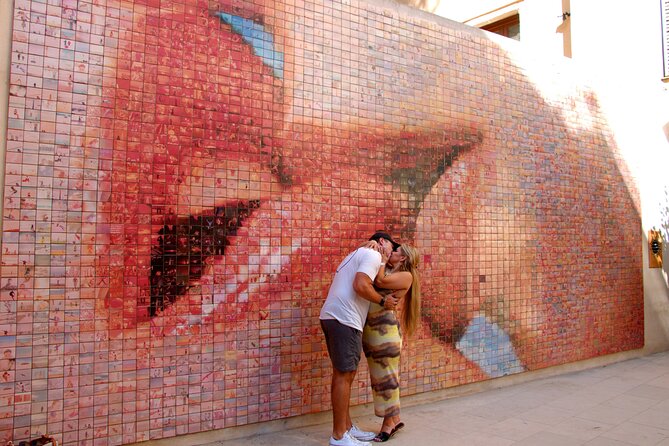
The walk also reaches El Peto, the kissing mural made from 4,000 photographic images of freedom donated by members of the public. It is a large public artwork with a simple idea: many individual images combine to form one larger scene.
This is a welcome change from the historical buildings. You are not only looking backward at Roman and medieval Barcelona. You are also seeing how the city presents itself through public art and shared contributions.
The mural makes a good pause because the subject is immediately clear, even if you know nothing about Barcelona’s art history. The audio gives you the background, then lets you look. I would take a moment to examine the small photographs rather than treating the mural as a quick photo stop.
Together with Botero’s cat and the Gaudí palace, El Peto shows the range of the route. It includes famous names, public spaces, architecture, food, and stories of ordinary hardship. That variety is one reason families found the walk enjoyable, and it helps prevent the historical information from becoming a long string of dates.
What the app does well, and where it needs help
VoiceMap provides lifetime access to this English-language tour on Android and iOS. You can take it again whenever you like, which gives the $11.99 price more value than a single-use audio file.
The private format is another advantage. Only your group participates, and there is no fixed live group to join. You can walk early, pause for lunch, or repeat a section without worrying about holding up strangers.
The strongest points are the pacing and freedom. The audio keeps moving with you, and you can stop whenever you want. A family of three can share the experience without arranging a private guide, and a solo visitor can listen without joining a group.
The weak point is the user experience when navigation goes wrong. One person found the GPS confusing and used Google Maps for much of the route. The provider advises using the on-screen map when buildings interfere with GPS, and that is sound advice.
To make the app work better:
- Download the audio, map, and geodata before leaving.
- Bring headphones and a fully charged smartphone.
- Check the route map before starting and after every long pause.
- Use Google Maps as a backup if your phone loses orientation.
- Leave room for La Boqueria, coffee, photos, and attraction entrances.
There is no transportation included, and you do not need transportation during the walk itself. Food, drinks, entrance tickets, a phone, and headphones are also separate.
Who will get the most from this $11.99 walk
I would choose this tour if you want a broad introduction to the old city without committing to a live guide. It suits independent visitors, couples, families, and anyone who likes to stop often.
The price is particularly fair for a small group sharing one phone. A live private tour would normally cost much more, while this gives you historical commentary, directions, offline access, and lifetime use for $11.99 per person.
It is less suitable if you want a guide who can answer questions, adjust the route in real time, or solve every navigation problem for you. The app provides a set experience. You control the pace, but you also handle the technology.
Most people can participate, and the activity is described as suitable for most travelers. Still, the route passes through narrow lanes and public squares, and the supplied information does not give detailed accessibility notes. If that matters to you, confirm the route conditions before booking.
The booking terms are strict. This experience is non-refundable and cannot be changed after purchase, so check your dates and phone setup first.
Should you book it?
Book this self-guided walk if you want Barcelona’s old center explained through a mix of history, art, food, architecture, and unusual human stories. The House of Mercy, Picasso’s Carrer d’Avinyo, Botero’s cat, El Peto, and Roman Barcino give the route more character than a simple highlights stroll.
I would especially recommend it for a first visit or for a return visit when you want to wander without a group. Just prepare the app before starting and keep a second map available.
Skip it if you need a live expert, flawless GPS, or included entry to the cathedral, Palau Güell, or other attractions. For an independent walker who values control, repeat access, and a low price, it is a useful way to spend about 75 to 90 minutes in Barcelona’s oldest neighborhoods.
FAQ
How long does the audio tour take?
The walk takes approximately 1 hour 15 minutes to 1 hour 30 minutes. Additional time is needed if you stop at La Boqueria, pause for coffee, take photos, or enter an attraction.
Where does the tour start?
It starts at Font de Canaletes, La Rambla 133, Ciutat Vella, Barcelona.
Where does the tour end?
The activity ends back at the meeting point.
Is the tour guided by a person?
No. This is a self-guided audio tour accessed through the VoiceMap app.
What languages are available?
The tour is offered in English.
Does the app work offline?
Yes. Offline access includes the audio, maps, and geodata.
Do I need to bring my own phone and headphones?
Yes. A smartphone and headphones are not included.
Are entrance fees included?
No. Tickets or entrance fees for museums and other attractions along the route are not included.
Can I take the tour more than once?
Yes. The purchase includes lifetime access to the English-language tour.
Can I cancel or change my booking?
No. The experience is non-refundable and cannot be changed for any reason.
Just added around Barcelona
- Self-Guided Audio Tour – Legends of the Gothic Quarter★ 4.5 · 6 reviews
- Self-Guided Audio Tour-The Surrealist Barcelona of Dalí and Gaudí★ 3.5 · 8 reviews
- Love in the Gothic Quarter Barcelona: Self-Guided Romantic Walk★ 4.5 · 9 reviews
- Self-Guided Tours Barcelona: 150+ Captivating Audio Stories★ 5.0 · 4 reviews
- Montjuïc Cable Car Entry Voucher with Audio Tour on Your Phone★ 3.5 · 37 reviews
- Barcelona Self-Guided Audio Tour★ 3.0 · 6 reviews
- Barcelona Gothic Quarter Self-Guided Tour: Hidden Skull Route★ 5.0 · 10 reviews
- Montjuic Park Walking Tour with Audioguide on Your Smartphone★ 3.0 · 4 reviews
Barcelona Audio Tours, compared.
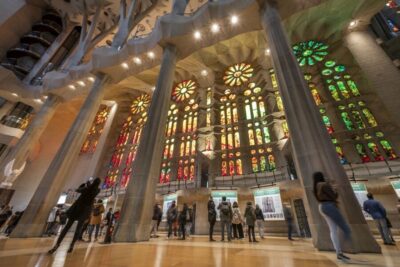
Barcelona: Sagrada Familia Entry Ticket with Audio Guide
Read our review →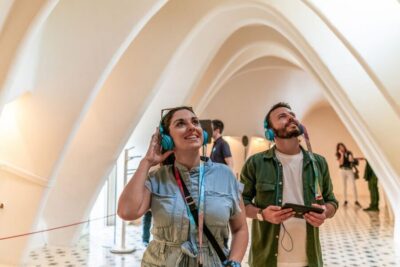
Barcelona: Casa Batlló Entry with Self-Audioguide Tour
Read our review →
Barcelona: Palau de la Música Self-Guided Tour
Read our review →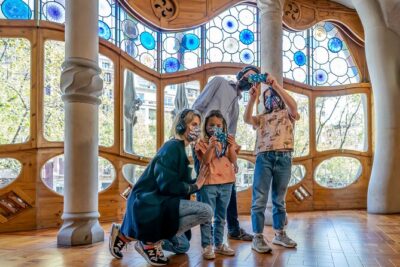
Casa Batllo Admission Ticket with Intelligent Audio Guide
Read our review →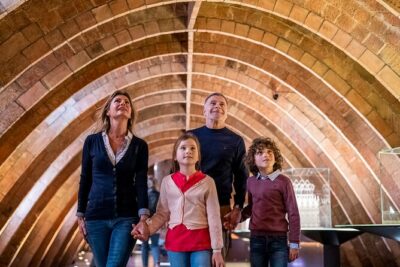
La Pedrera-Casa Mila Admission Ticket with Audioguide
Read our review →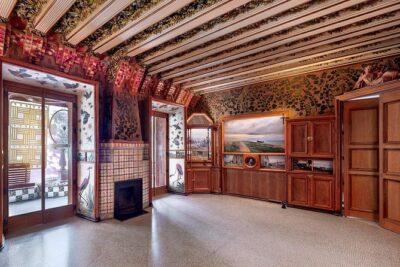
Gaudi´s Casa Vicens Skip the Line Ticket with Audioguide
Read our review →
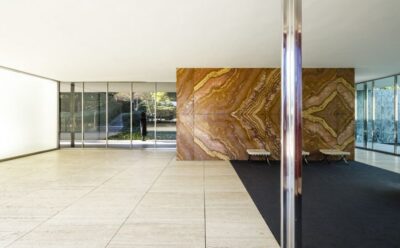
Barcelona: Mies van der Rohe Pavilion Ticket and Audio Guide
Read our review →Browse the lists this tour appears in