
REVIEW · BANGKOK AUDIO TOURS
Bangkok Chinatown: Self-Guided Mystery Puzzle Quest
Bangkok Chinatown becomes your game board in this self-guided quest. You follow clues through old drink shops, temples, markets, and Chinese shrines, solving puzzles that reveal the next stop and explain why each place matters. It is part walking tour, part treasure hunt, and part outdoor escape game.
I like the $6.99 price, especially for a private group, and I like the freedom to start at any hour, pause for food, and continue later. The app also works offline, a useful touch when you are weaving through busy streets and do not want to depend on a steady connection.
The catch is simple: you are on your own. One reported experience found the instructions confusing and several map points inaccurate, making the quest tiring enough to abandon. Bring patience, read each clue carefully, and treat the game as a flexible Chinatown walk rather than a perfectly polished guided tour.
Key things to know before you play

- Wat Traimit is the headline stop: See the temple known for its 5.5-tonne seated Buddha, said to date from the 13th century.
- The route uses real local businesses: Kan Kee Nam Tao Thong and Eiah-Sae coffee shop add old-fashioned food and drink stops to the puzzle.
- You play without a guide: The Questo app supplies directions, challenges, and place-based stories for your private group.
- The game can work around your schedule: Start any time, stop for a break, and resume later.
- Offline play is included: You do not need an internet connection while exploring.
- The route ends near Pom Prap: The listed finish is at 586 Charoen Krung Road, while the app guides you from the Rong Muang starting area.
A Chinatown walk with a puzzle in every corner
This experience takes a familiar sightseeing idea and gives it a job to do. Instead of simply walking behind a guide, you look around for signs, details, names, and clues that help you move forward. Each solved challenge reveals the next location and provides a short story about the place you have just found.
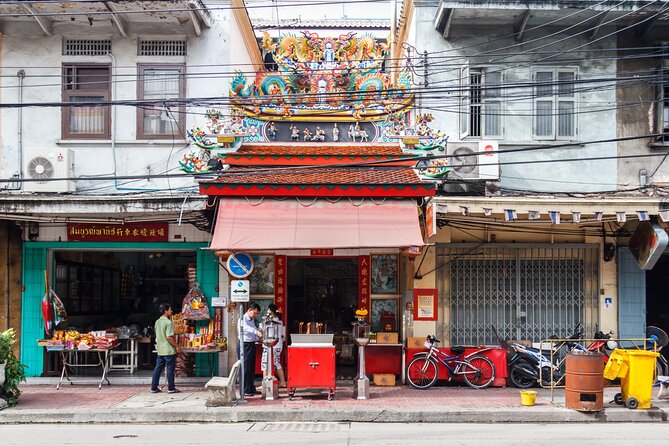
That format works well in Chinatown, where the streets hold temples, food shops, market lanes, and small religious sites close together. You are not only checking off attractions. You are watching for details in the surroundings, which can make you more alert to the neighborhood.
The expected playing time is about one hour and 30 minutes. That is an estimate, not a race. Your group may move faster, stop for food, or spend extra time at Wat Traimit and the shrines. Since the app allows breaks, you can also split the route into two parts if the heat, crowds, or your own energy call for it.
You receive step-by-step directions on your phone. There is no physical guide, and only your group takes part. That gives you privacy and control, but it also means nobody is present to explain a confusing clue or replace a wrong turn with local knowledge.
More Scavenger Hunts in the world:
- Hamburg: Scavenger Hunt Self-Guided Tour for Children
★ 4.5 · 319 reviews - An Epic Scavenger Hunt: New York City Central Park Adventure
★ 4.5 · 244 reviews - Dresden: Old Town Self-Guided Scavenger Hunt Tour
★ 4.5 · 151 reviews
Starting near Rong Muang
The listed starting area is Rong Muang in Pathum Wan. From there, the Questo app guides you step by step toward the first location. The meeting information also refers to a Wedding store as the place you should reach by following the app, so it is wise to open the instructions before setting off and make sure your phone is ready.
The experience is available every day of the year, from midnight to 11:30 p.m. In practical terms, that gives you plenty of choice. A morning start may be more comfortable for walking, while an afternoon or evening start can fit around other Bangkok plans. The listing does not promise a particular atmosphere at each time, so your experience will depend on when you choose to play.
I would give yourself a few extra minutes at the beginning. Check your battery, read the first instructions fully, and make sure every member of your group can access the game on a smartphone. One person can buy access for the whole group by selecting the correct number of people, or each person can purchase an individual ticket.
Kan Kee Nam Tao Thong and the taste of old Chinatown
One early stop is Kan Kee Nam Tao Thong, a Chinese herbal drink shop with about a century of family history. It is known for making traditional Chinese herbal drinks, and the challenge asks you to look around the business for the answer that moves the game forward.
This is a good example of what the quest does best. A standard sightseeing route might lead you past a small shop without asking you to notice it. Here, the shop becomes part of the story. You may also have the chance to sample a local drink or food along the way, although purchases are not listed as included in the price.
Keep your expectations practical. This is not a tasting tour, so the $6.99 covers access to the game rather than food and drinks. If you enjoy trying local shop specialties, carry some Thai baht and allow a little extra time.
Wat Traimit and the Golden Buddha
Wat Traimit is the major temple stop. It is known for a seated Buddha statue made of gold, weighing about 5.5 tonnes and measuring nearly five meters high. The sculpture is dated to the 13th century, and the temple sits in Chinatown roughly 450 meters west of Hualampong Railway Station.
The app asks you to inspect the area and find the answer to a challenge. That approach can make the visit more memorable because you are looking closely rather than simply taking a quick photograph. The story connected to the site is released as you solve the task.
This is also where the activity begins to feel like a sightseeing route rather than a simple phone game. Wat Traimit gives you a major landmark, a strong visual focus, and a chance to connect Chinatown with Thailand’s Buddhist traditions.
Your time here may vary. The game gives you a puzzle to solve, but it does not set out a full temple tour or promise a guide inside the complex. If Wat Traimit is a priority for you, consider treating the challenge as an introduction and allowing additional time to look around.
More Audio Tours in the world:
- Barcelona: Sagrada Familia Entry Ticket with Audio Guide
★ 4.6 · 105,312 reviews - Rome: Pantheon Fast-Track Ticket and Official Audioguide
★ 4.5 · 27,353 reviews - Barcelona: Casa Batlló Entry with Self-Audioguide Tour
★ 4.7 · 25,359 reviews - Rome: Colosseum & Forum with Audio Guide App -Optional Arena
★ 4.2 · 24,770 reviews
Eiah-Sae coffee shop and a more everyday side of the route

Eiah-Sae is an almost century-old coffee shop passed down through generations. It is known for keeping a homey, noisy atmosphere, which makes it a useful contrast to the larger temple stops.
The challenge again asks you to look around and find the detail that sends you onward. That means the shop is not just a refreshment stop. It is part of the puzzle and part of the neighborhood story.
I like this change of pace. Temples can provide grandeur, but old cafés show how a district is used day after day. The experience gives you a reason to notice the ordinary places that help define Chinatown.
Food and coffee are not included. You can decide for yourself if you want to stop and buy something, but your purchase will add both cost and time. The route is flexible enough to make that choice without turning the whole plan upside down.
Wat Lokanukroh beside Sampeng Market
Wat Lokanukroh is described as one of Bangkok’s smallest temples. No monks live there, yet people still come to pray and hold ceremonies. Its location in the heart of Sampeng Market puts a quiet religious site right beside one of Chinatown’s commercial centers.
That contrast is one of the more interesting parts of the route. You move from shops and market activity to a place used for prayer, then back into the streets. The game asks you to search for a clue, so you will need to pay attention to the temple and its surroundings.
This stop may appeal to you if you prefer smaller, less formal places to major monuments. At the same time, the lack of a guide matters here. The app provides a story when you solve the challenge, but it cannot answer follow-up questions about ceremonies, customs, or local practice.
Leng Buai Ia Shrine and Chinese commercial traditions
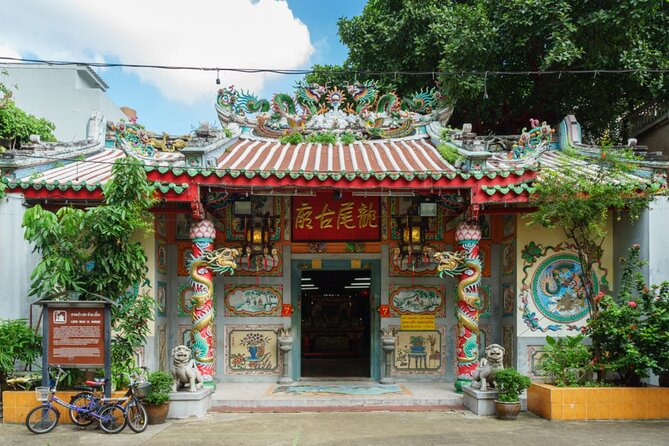
Leng Buai Ia Shrine is described as an ancient Teochew shrine and the oldest Chinese shrine in Thailand. It was built in 1658 during the Central Ayutthaya period. Chinese businesspeople came here for refuge and prayed for prosperity, giving the shrine a clear connection to the commercial life of the community.
The building uses a traditional Chinese architectural style. That detail helps tie together several parts of the quest. You have already visited an old herbal drink shop and a long-running coffee shop. At Leng Buai Ia, the route connects those living businesses with older Chinese religious customs.
The information provided does not specify a separate puzzle instruction for this stop, so follow the app closely when you arrive. The route may ask you to identify a detail or simply use the shrine as one part of the story. Either way, be respectful. This is a functioning religious place, not a set built for a game.
Wat Mangkon Kamalawat and the final temple setting
The last temple described is Wat Mangkon Kamalawat, originally opened as Wat Leng Noei Yi in the 1870s. It helped introduce Mahayana Buddhism in Bangkok and was later renamed by King Chulalongkorn.
The temple is decorated with animal, floral, and Chinese dragon motifs. Its ordination hall contains a gold-colored Buddha. For you, this is a visually strong way to finish a route through Chinatown’s Chinese religious traditions.
The app again gives you a challenge to solve and a story to read before sending you onward. Look carefully at the decorative details, but remember that the quest is not a substitute for a full temple explanation. If you want a longer visit, plan for it before starting or after completing the game.
The listed end point is at 586 Charoen Krung Road in Pom Prap. The directions say the app will guide you there step by step. Because map accuracy has been a concern for at least one person using the experience, I would keep the final address available and avoid rushing through the last instructions.
How the app format changes the experience
The app gives you three things: directions, puzzles, and short place-based stories. Each answer reveals the next location, so the route has a clear purpose. You are not deciding what to see next from a long list.
That structure suits people who enjoy small challenges. It is also useful for families, couples, and friends who want to share an activity rather than listen quietly to a guide. A group can play together on its smartphones after one person buys access for everyone.
The trade-off is that the quality of your day depends on the clarity of the instructions. A human guide can point out a sign, explain a clue in different words, or adjust the pace when the streets get confusing. The app cannot do that.
The experience includes offline play, which is helpful in theory and removes one common phone problem. Still, offline access does not solve every practical issue. You need your phone charged, and you need to follow the screen carefully. If a clue seems unclear, reread it before moving on rather than guessing.
Price, timing, and who gets the best value
At $6.99 per person, this is inexpensive for a private, self-guided activity. The value is strongest when a group shares one purchase, since everyone can play on their own phones while the group moves together. You are paying for the route and app access, not for transport, temple admission, food, drinks, or a guide.
The average booking lead time is about 24 days, though the activity itself is available all year and at nearly any hour. That suggests you can plan it well ahead, but the flexible operating hours also make it useful as a spare activity during a Bangkok trip.
I would allow more than 90 minutes if you want to stop at the coffee shop, sample a drink, spend time at Wat Traimit, or take photographs. If you only want to solve the clues and keep moving, you may finish sooner.
The activity is private, and most people can participate. Service animals are allowed, and the route is near public transportation. The supplied details do not describe the exact walking distance, step-free access, restroom access, or temple entry requirements, so do not assume those details are covered.
The main drawback: directions need your attention
The clearest warning is about navigation. One person found the instructions confusing and several locations inaccurate on Google Maps, eventually giving up because the quest became exhausting.
That does not erase the good idea behind the experience, but it changes how I would approach it. Download or open the game before you begin, keep the start and end addresses handy, and check each direction against the screen before walking away from a location. If you are already tired, hot, or short on time, a self-guided puzzle with a wrong turn can become more work than fun.
I would also avoid scheduling an important appointment immediately afterward. The listed duration is 90 minutes, but breaks, food stops, and navigation issues can stretch the outing.
Should you book the Chinatown Mystery Puzzle Quest?
Book it if you want a low-cost, private way to see several Chinatown temples, old shops, and shrines while doing something more active than following a standard route. It suits independent people who like puzzles, flexible timing, and the freedom to stop when they want.
Skip it if you need a polished explanation at every stop, dislike phone-based activities, or want guaranteed map accuracy and a human guide. For the right group, $6.99 buys a clever walking framework and access to places you might otherwise pass without noticing. Just treat the app as a helpful tool, not an infallible guide.
Free cancellation is available if you cancel at least 24 hours before the scheduled start time. Cancellations within 24 hours are not refunded, and late changes are not accepted.
FAQ
How long does the Bangkok Chinatown puzzle quest take?
The estimated duration is about one hour and 30 minutes. You may take longer if you stop for food, drinks, temple visits, or breaks.
Is there a physical tour guide?
No. This is a self-guided activity using the Questo app. The app supplies directions, challenges, and stories.
Can I start at any time?
Yes. The experience is available every day of the year, with listed hours from 12:00 a.m. to 11:30 p.m.
Do I need an internet connection while playing?
No. The experience is designed to work offline while you explore.
Can one person buy access for a group?
Yes. One person can purchase access for the whole group by selecting the total number of participants. Each group member can then play on a smartphone.
Where does the activity start?
The listed starting area is Rong Muang, Pathum Wan, Bangkok 10330. The Questo app provides step-by-step directions to the first location.
Where does the activity end?
The listed end point is 586 Charoen Krung Road, in Pom Prap, Bangkok. The app guides you to the ending location.
Can I cancel for a full refund?
Yes, if you cancel at least 24 hours before the scheduled start time. Cancellations made within 24 hours are not refunded.
Just added around the world
- Dolmabahce Palace Skip the Ticket Line Entry with Audio Guide★ 4.0 · 6 reviews
- Istanbul Bosphorus Sightseeing Cruise with Audio Guide★ 5.0 · 67 reviews
- Basilica Cistern Skip-the-Ticket-Line Entry with Audio Guide★ 4.0 · 4 reviews
- Hagia Sophia Skip-the-Line Ticket with Audio Guide★ 5.0 · 4 reviews
- Cistern of Theodosius Entry Ticket & Audio Guide★ 3.5 · 6 reviews
- Maria Edgeworth Center-A Self-Guided Audio Tour★ 5.0 · 21 reviews
- Self-Guided Tour of Ísafjörður: Art, History, and Architecture★ 5.0 · 23 reviews
- Inverness Quest: Self Guided City Walk & Immersive Treasure Hunt★ 4.0 · 5 reviews
Bangkok Audio Tours, compared.
Bangkok: Tuk Tuk Day Pass App & Boat Chao Phraya River
Read our review →
Private ‘Breeze & Pleased’ Canal Boat Ride – 2hrs (self-guided)
Read our review →
Bangkok: Audio guides for Bangkok, Ayutthaya & Chiang Mai
Read our review →
Bangkok Grand Palace & Emerald Buddha Flexible Pass w/ Audio
Read our review →
Bangkok: Grand Palace & Emerald Buddha Entry with Audioguide
Read our review →

Grand Palace Self-Guided Walking Tour (entry not incl.)
Read our review →Browse the lists this tour appears in