
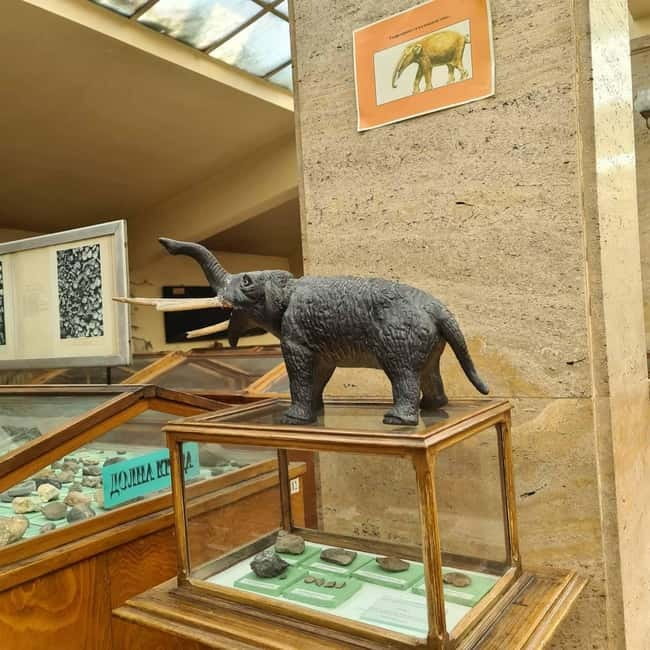
REVIEW · SOFIA AUDIO TOURS
Audio Guide for Museum Paleontology and Historical Geology
The star here is a 7-meter Deinotherium skeleton, rebuilt with more than 90 percent authentic bones. It is an arresting sight, especially because you see it beneath the dome of Sofia University’s northern wing, not in a large modern museum hall.
I like two things right away: the audio guide costs only $4.12 per person, and it lets you explore at your own pace in four languages. I also like the setting. Reaching the museum means walking through the corridors of Bulgaria’s oldest university, which adds a real sense of place.
The catch is that the museum admission is extra, listed as €1 or 2 BGN. You also need mobile internet and a charged phone, since the guide plays online and does not come with a download or app.
Key points to know before you go
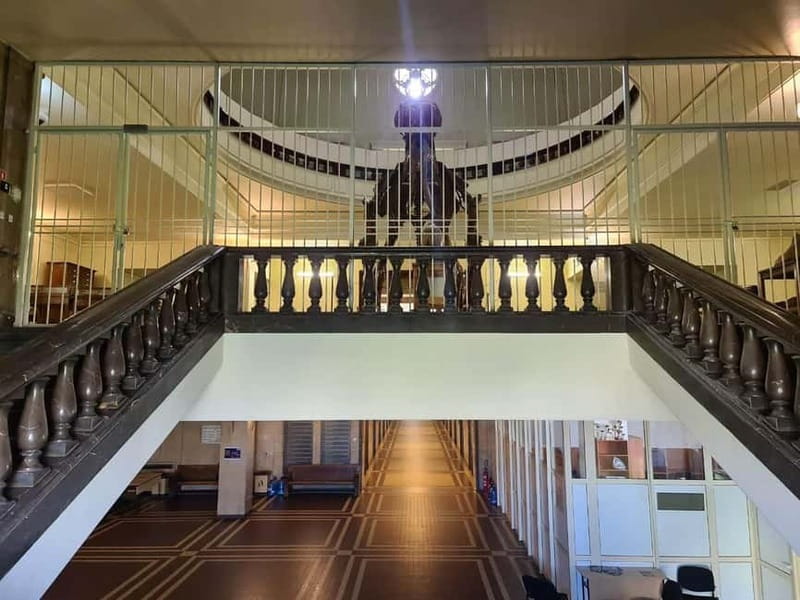
- The Deinotherium is the main event: The restored skeleton is 7 meters long, 4.20 meters high, and built with more than 90 percent original bones.
- The collection is far larger than the central display: More than 200,000 fossils, rock samples, and geological maps cover Bulgaria and nearby territories.
- The audio guide is phone-based: After payment, you receive a link by email. It opens in your browser, so there is no app to install.
- You visit Sofia University itself: The museum is on the fifth floor of the large Kliment Ohridski building.
- You get 24 hours of access: The link becomes active on your selected visit day and remains valid for 24 hours.
- The total cost stays low: The audio guide is $4.12 per person, with a separate admission charge of €1 or 2 BGN.
A giant Deinotherium beneath Sofia University’s dome
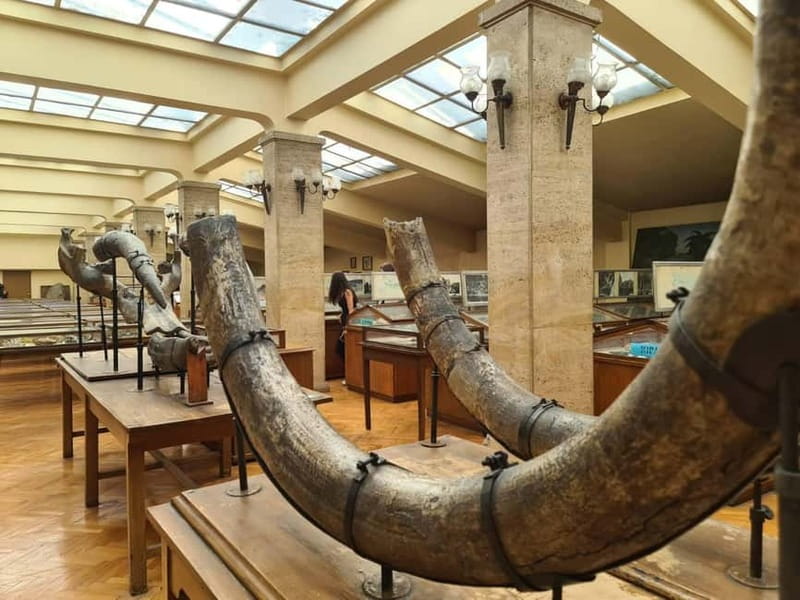
The museum’s central display gives you a strong reason to visit. Directly opposite the entrance is the restored skeleton of Deinotherium thraciensis Nikolov, an extinct relative of modern elephants.
The measurements help you grasp its size. At 7 meters long and 4.20 meters high, the skeleton fills the space in a way that smaller fossil displays cannot. The more important detail is its authenticity: more than 90 percent of the bones are preserved originals.
That combination makes the exhibit more than a large reconstruction. You are looking at a specimen assembled from genuine remains, with the scale of the animal made clear by its height and length. The skeleton is the museum’s visual anchor, so even a short visit has one memorable centerpiece.
I would begin here before looking at the smaller displays. The skeleton gives you a frame of reference for the museum’s subject: immense spans of geological time, vanished creatures, and the physical evidence left behind.
The species name, Deinotherium thraciensis Nikolov, also connects the display to the region. This is not simply a generic prehistoric animal placed in Sofia. It is presented as a point of pride for paleontology and as a notable part of Bulgaria’s scientific heritage.
More Museum Audio Guides in Bulgaria:
- Plovdiv: Old Town Guided Walking Tour & Audioguide & Museum
★ 4.1 · 17 reviews - Paris: Louvre Museum Hosted Entry and Mona Lisa Audioguide
★ 4.6 · 5,235 reviews - Venice: St. Mark Basilica Ticket, Audioguide+History Gallery
★ 3.9 · 4,780 reviews
Walking through Bulgaria’s oldest university
The museum sits on the fifth floor of Sofia University’s Kliment Ohridski building. The university is very large, so finding the correct entrance and floor takes some attention. A PDF guide with directions and photographs is provided, and you should use it before setting out.
The route through the building is part of the experience. You are not entering a purpose-built tourist attraction with a simple lobby, prominent signs, and a straight path to the exhibits. You are walking through the corridors of Bulgaria’s oldest university before reaching a specialist museum under the northern wing’s dome.
That setting gives the visit a more personal feel, but it also creates the main practical challenge. Allow time to locate the entrance, study the photos in the PDF, and reach the fifth floor. I would not rely on finding the museum by chance once inside a large academic building.
For many visitors, the university setting will be almost as interesting as the collection. It places geology and paleontology in an active academic environment rather than separating them from the rest of Sofia’s intellectual life.
More than 200,000 specimens in a compact visit
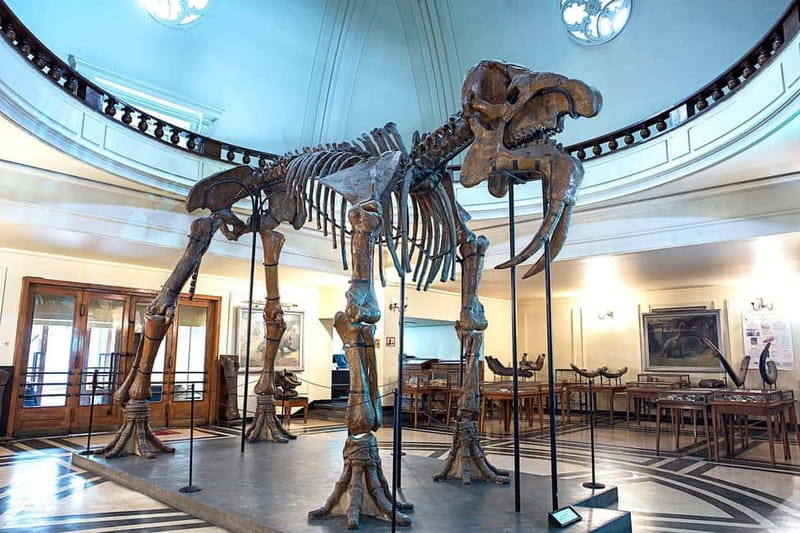
The museum houses more than 200,000 fossil specimens, rock samples, and geological maps from Bulgaria and neighboring territories. That number tells you that the Deinotherium is only the most visible part of a much larger collection.
You should not expect to inspect every item in one visit. Instead, treat the museum as a focused introduction to the geological record of Bulgaria and the surrounding region. Fossils show past life, rocks record the material history of the earth, and maps help place that evidence in a geographic setting.
The collection’s range is useful for visitors who want more than a single prehistoric skeleton. If your interest is in fossils alone, the central display may be your main reason to come. If you enjoy seeing how paleontology connects with rocks, maps, and regional geology, the wider collection gives the visit more substance.
The available information does not provide a full room-by-room route or a complete list of individual exhibits. That means you should think of the audio guide as a way to add structure and context rather than as a promise of a fixed tour with named stops.
How the audio guide works on your phone
After payment, a link to the audio files is sent to your email. On the day you choose to visit, the link becomes active and remains valid for 24 hours.
The guide plays through your phone. You need mobile internet, but the traffic use is described as minimal. The audio opens at once in your browser, with no download and no separate app.
This is a simple setup, but it has a few practical consequences. Check that you can access the email containing the link, bring a charged phone, and make sure mobile data works before entering the university. Headphones may also make listening easier, although they are not listed as included equipment.
The 24-hour validity gives you flexibility. You do not have to finish the museum at one exact hour, and the guide does not expire as soon as you leave the building. Still, the activity itself is described as valid for one day, so check the available starting times and choose your visit date carefully.
The guide is offered in English, Bulgarian, Italian, and Spanish. That makes the low-cost option useful for international visitors who want more than labels, while local visitors can listen in Bulgarian.
One limitation is that the guide is not described as a live host or a guided group tour. You will be responsible for opening the link, managing the playback, and moving through the museum yourself. That suits independent visitors, but anyone looking for personal conversation or direct questions should know what they are booking.
More History Tours in Bulgaria:
- Maltese Islands History Audio-Visual Show and La Sacra Infermeria Tour
★ 4.0 · 344 reviews - Valletta: Self-Guided Historical Walking Tour (Audio Guide)
★ 3.7 · 251 reviews - Nizwa Heritage & Culture Full Day Tour with Audio Guiding
★ 4.3 · 213 reviews - Matera: Sassi di Matera Historical Self-Guided Audio Tour
★ 3.6 · 183 reviews
What your visit can look like from entrance to exit
Start by using the PDF directions to locate the university entrance. The building is large, and the museum is on the fifth floor, so do not leave the navigation until you arrive at Sofia University.
Once inside, make your way through the university corridors toward the museum. The walk gives you a sense of the building’s scale and academic character. It also makes the experience feel different from a standard museum visit in a dedicated exhibition hall.
At the museum entrance, open the audio link on your phone. Since the guide becomes active on the chosen day and lasts for 24 hours, you can begin listening when you are ready rather than racing to meet a narrow departure time.
Go first to the Deinotherium skeleton directly opposite the entrance. Its central position makes orientation easy, and its scale is best understood before you examine the other specimens.
Then use the audio guide to move through the rest of the collection. Look for the connections among fossil specimens, rock samples, and geological maps. The museum’s value is not only the large skeleton, but also the way those different materials help explain geological ages and the territory of Bulgaria and nearby areas.
The visit is described as lasting one day because the audio access remains active for 24 hours, not because you must spend an entire day inside the museum. You can make the experience a short cultural stop or give the collection more time, depending on your interest.
Is the $4.12 audio guide good value?
At $4.12 per person, the audio guide is inexpensive for a self-guided museum experience. You also pay the separate entrance fee, listed as €1 or 2 BGN, so include both charges in your budget.
The value comes from the combination of low price and flexible access. You receive commentary in one of four languages, and the link stays available for 24 hours on your selected day. There is no app to install, and mobile data use is minimal.
That said, the price does not include a personal guide, transport, or admission. It also does not remove the need to find the university entrance yourself. If you want a completely managed visit, these details may feel like extra work.
For independent visitors, the balance is favorable. The museum’s main object is unusually large and authentic, the admission charge is modest, and the audio guide gives you more help than simply walking through without context.
Who will enjoy this museum most?
I would recommend this experience to anyone interested in fossils, prehistoric animals, geology, or scientific collections. The Deinotherium alone gives the visit a clear focus, while the wider collection rewards people who want to see rocks, maps, and specimens connected to Bulgaria.
It also suits visitors who like unusual places in Sofia. The museum is inside a university, on the fifth floor, and reached through the building’s corridors. That setting feels more distinctive than a standard city museum route.
Families may find the skeleton especially easy to appreciate because its size is immediately clear. The audio guide’s language options also help mixed-language groups, although the available information does not specify a special children’s program.
This is less suitable if you want a long, highly staged attraction with many visitor services. The museum is a specialist collection, and the experience depends on your interest in the subject and your willingness to use your own phone.
Useful planning details for a smoother visit
Book for a day when you can access your email and use mobile internet. The audio link is sent after payment, so keep that message easy to find.
Read the PDF directions before you go. The university is large, and the fifth-floor location is specific. The photographs in the guide are intended to help you identify the correct entrance.
Budget for the separate admission fee of €1 or 2 BGN. The audio guide price and the museum admission are different charges.
Give yourself time to reach the museum rather than arriving at the building just before a fixed appointment. The guide has 24-hour validity on your chosen day, which reduces pressure once you are inside.
Finally, charge your phone. The audio is browser-based, requires mobile internet, and does not download for offline use.
Should you book the Sofia paleontology audio guide?
Book it if you want an affordable, independent museum stop with one genuinely striking object. The 90 percent original Deinotherium skeleton is specific, memorable, and hard to confuse with a routine fossil display.
The experience is also a good choice if you enjoy academic settings and want to walk through Sofia University, Bulgaria’s oldest university, on the way to the collection. The four language options and 24-hour audio access add useful flexibility.
Skip it if you need a live guide, a carefully managed route, or a museum with simple entrance logistics. You will need to navigate the large university, pay admission separately, and use your own phone with mobile internet.
For most visitors with an interest in natural history, the low cost makes the decision easy. Plan the entrance in advance, allow time for the fifth-floor walk, and make the Deinotherium your first stop.
FAQ
Where is the Museum of Paleontology and Historical Geology?
The museum is in Sofia University, Kliment Ohridski, on the fifth floor. It is located in the building’s northern wing, beneath the dome.
What is the main exhibit?
The main exhibit is a restored skeleton of Deinotherium thraciensis Nikolov. It is 7 meters long, 4.20 meters high, and made with more than 90 percent authentically preserved bones.
How much does the audio guide cost?
The audio guide costs $4.12 per person. Museum admission is not included and is listed as €1 or 2 BGN.
Is museum admission included?
No. The admission ticket must be paid separately. The listed admission price is €1 or 2 BGN.
How do I access the audio guide?
After payment, you receive an email with a link to the audio files. The link opens through your phone’s browser, with no download or app required.
How long is the audio guide valid?
The link becomes active on the day you select for your visit and remains valid for 24 hours.
Which languages are available?
The audio guide is available in Bulgarian, English, Italian, and Spanish.
Just added around Bulgaria
- Self-Guided Sand Festival in Burgas★ 3.5 · 9 reviews
- Self-Guided Tour of Rila Mountains and Seven Rila Lakes★ 3.5 · 3 reviews
- Perperikon Self-Guided★ 3.5 · 3 reviews
- Plovdiv: Old Town Guided Walking Tour & Audioguide & Museum★ 4.1 · 17 reviews
- Plovdiv: Old Town Self-Guided Audio Tour★ 3.6 · 24 reviews
- Nessebar: Audio Guide Tour Nessebar + visit to the Winery★ 3.7 · 30 reviews
- From Sofia: Rila Monastery and Plovdiv Self-Guided Trip★ 4.9 · 13 reviews
- From Sofia: The Seven Rila Lakes Full-Day Self-Guided Tour★ 4.9 · 33 reviews
Sofia Audio Tours, compared.
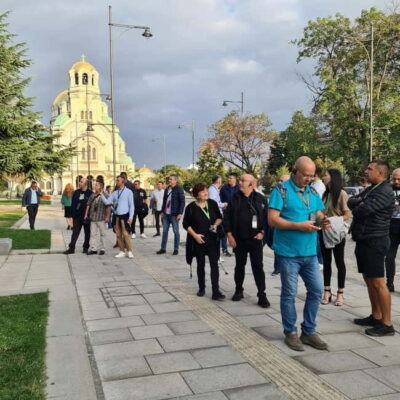
Sofia: City Monuments Guided Walking Tour with Audio Guide
Read our review →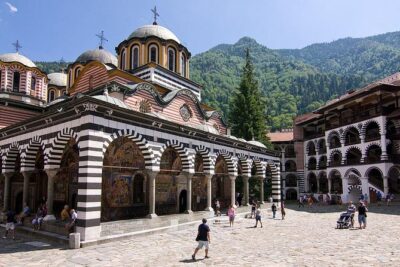
Rila Monastery and 7 Rila Lakes Self-Guided Shared Trip from Sofia
Read our review →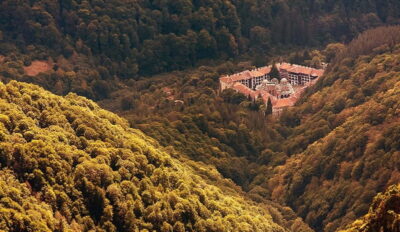
Sofia: Rila Monastery & Boyana Church – Audio guided tour
Read our review →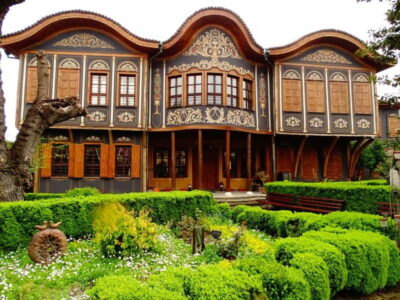
From Sofia: Plovdiv with audio guide + free pick-up
Read our review →
From Sofia: The Seven Rila Lakes Full-Day Self-Guided Tour
Read our review →
From Sofia: Rila Monastery and Plovdiv Self-Guided Trip
Read our review →Browse the lists this tour appears in