REVIEW · ITALY AUDIO TOURS
Alghero: Anghelu Ruju Necropolis with Audio Guides
Anghelu Ruju is not a grand ruin with towering walls. It is a quiet cemetery cut into the earth, where Sardinia’s prehistoric people shaped small underground tombs to resemble houses. I like the $10 price and the freedom to move at your own pace. I also like the chance to see carved bull heads and other ritual symbols in their original setting, rather than only reading about them in a museum.
The main drawback is the self-guided setup. You receive an audio guide and a map, but no personal guide walks you from tomb to tomb. Finding the site can also be difficult, and the numbering is not always easy to spot. Bring your phone, headphones, and a little patience.
Key points to know before you go
- The tombs date from the Neolithic and Copper Age, giving you a glimpse of Sardinia several thousand years ago.
- Domus de janas means fairy houses, a local name for the underground burial chambers.
- The audio guide is available in five languages: Italian, English, French, German, and Spanish.
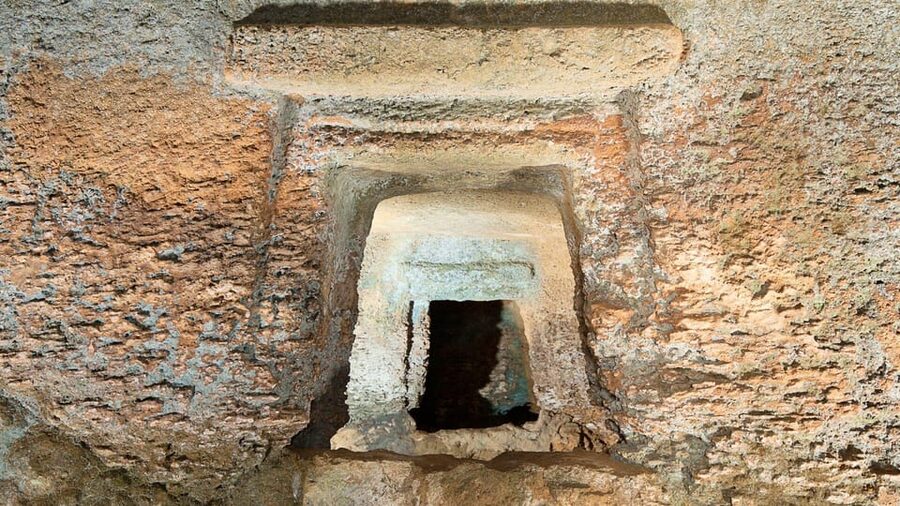
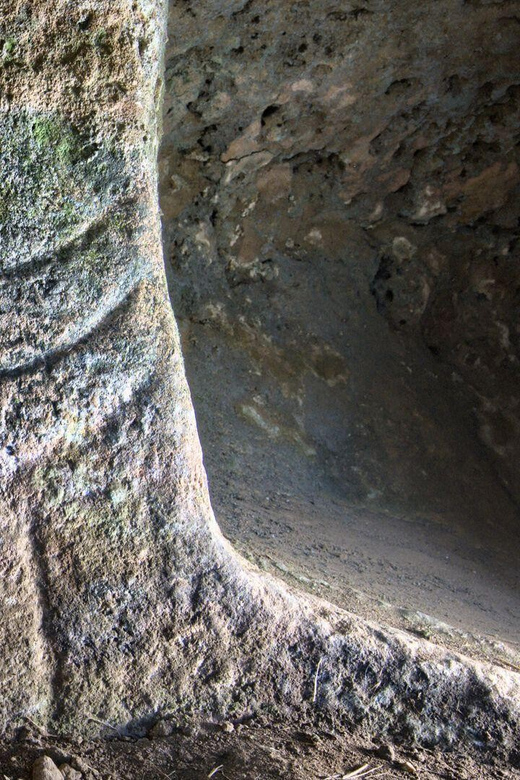
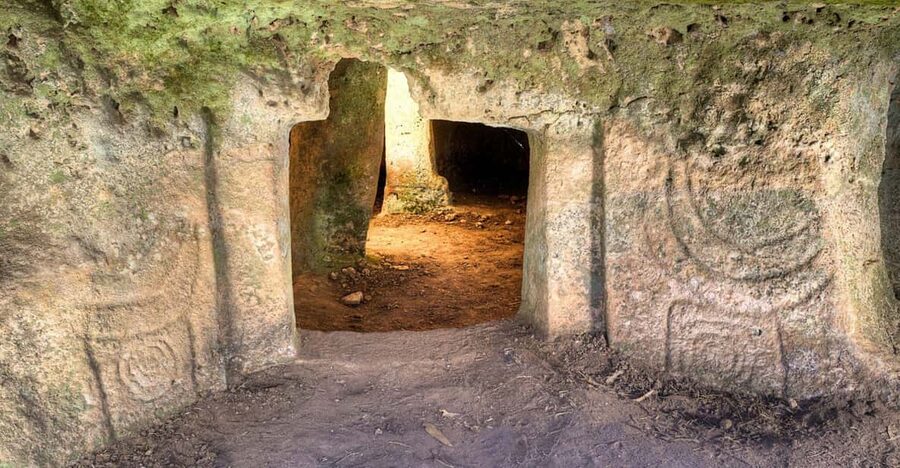
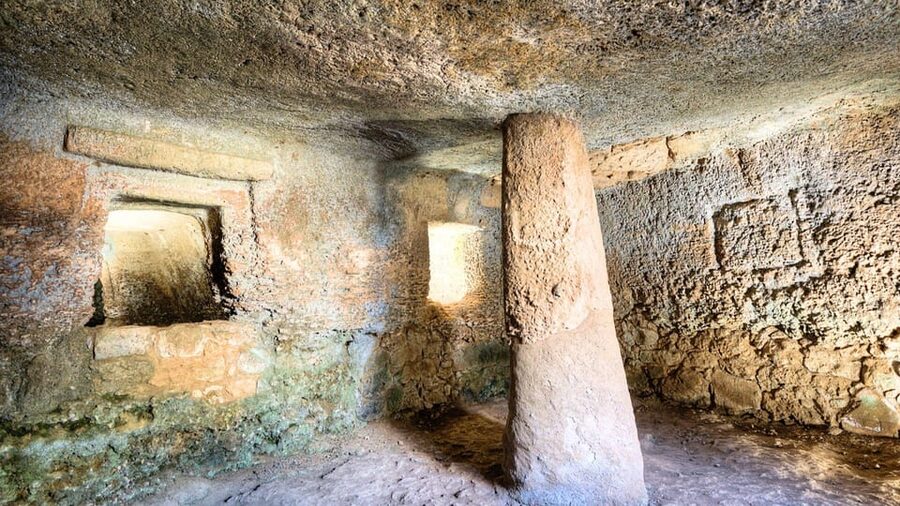
- The tomb interiors copy homes of the living, with pillars, steps, cornices, false doors, and false windows.
- The visit lasts about 45 minutes, though the self-guided format lets you pause at the numbered stops.
- Bring headphones and sun protection, since you will walk between exposed archaeological areas.
Why Anghelu Ruju is worth your time
Anghelu Ruju gives you a direct look at prehistoric Sardinian beliefs. The site contains underground chambers carved into the rock, made for the dead but designed with familiar features from everyday homes. That detail matters. These were not simply holes in the ground. The tombs were shaped as symbolic houses for people who had died.
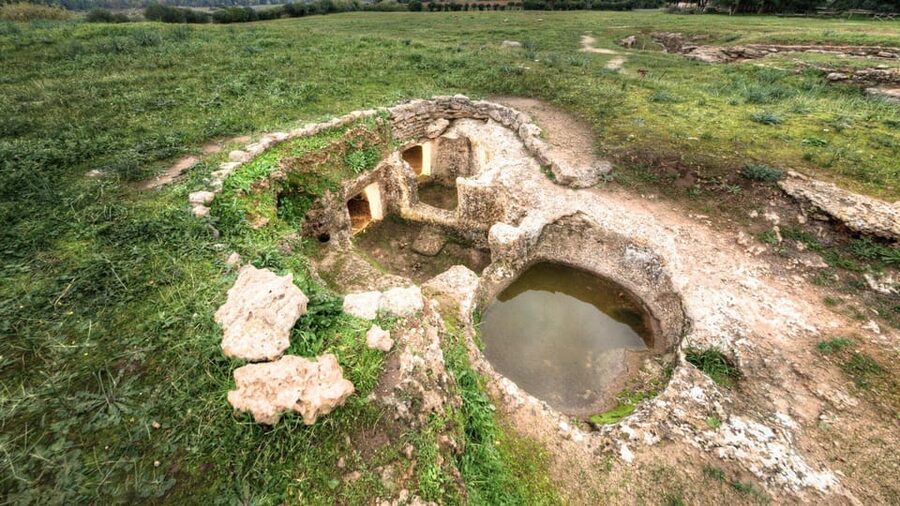
The cemetery dates from the Neolithic and Copper Age, periods that reach far back before Sardinia’s better-known Nuragic monuments. You will not find a long sequence of standing structures here. Instead, you will look down into rock-cut chambers and study the marks, forms, and layout left by ancient communities.
I like this kind of archaeological visit because it asks you to look closely. A pillar may seem simple at first, but it shows that the builders copied parts of a domestic interior. A false door suggests a symbolic passage. A carved bull’s head points toward beliefs connected with power, fertility, nature, or ritual. The audio guide helps connect these details to the people who made them.
The site is also one of the largest prehistoric cemeteries in Sardinia. That scale gives the visit more weight than a single isolated tomb. You can compare simpler chambers with more monumental examples and see that burial practices were not all the same.
More Audio Tours in Italy:
- Rome: Pantheon Fast-Track Ticket and Official Audioguide
★ 4.5 · 27,353 reviews - Rome: Colosseum & Forum with Audio Guide App -Optional Arena
★ 4.2 · 24,770 reviews - Venice: Grand Canal Gondola Ride with App Commentary
★ 4.1 · 23,020 reviews
Arriving at the archaeological site
Your visit begins at the ticket office, where staff provide the entrance ticket, a multilingual audio guide, and a detailed map. You also receive a QR code and password so you can download the audio tracks directly to your phone.
This is an important practical step. Do not rush away from the ticket office before checking that the audio works. Bring your own headphones, since the site specifically recommends them for comfortable listening. Phone speakers may be awkward in small chambers, and headphones let you hear the narration without disturbing other people.
The map shows the route and identifies the numbers for the audio stops. You use it to move around independently, stopping at the matching tomb or feature before playing the correct track. The map must be returned when you leave.
The self-guided design works well if you like controlling your pace. You can pause, replay a section, and spend more time at a tomb that interests you. It is less helpful if you expect someone to point out every entrance or explain the site as you walk.
Following the numbered tomb route
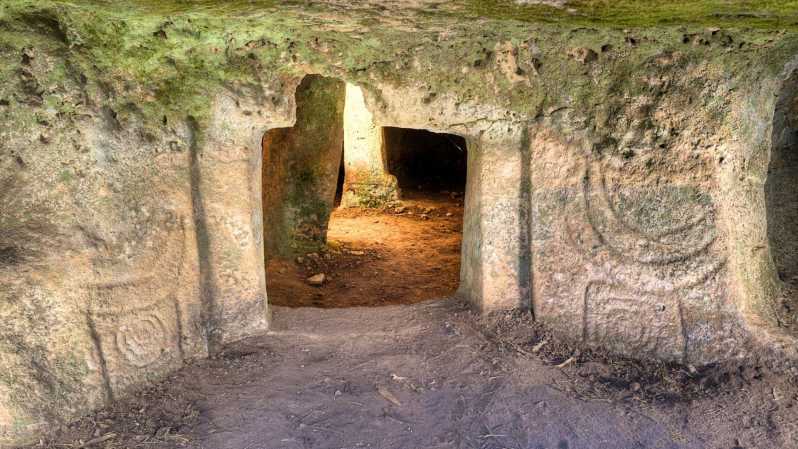
Once you leave the ticket office, the map becomes your main tool. The experience is not a guided walk with a named archaeologist or tour leader. You follow the indicated route and match each location with its audio track.
Take a moment to get your bearings before starting the first recording. One practical weakness is that tomb numbers may not always be obvious in the field. If you hear instructions for a particular number but cannot see it clearly, stop and compare the map with the signs around you instead of guessing.
Some visitors have found the numbering hard to follow, and one useful adjustment would be to give every person a separate map. If you are visiting with others, keep the map in your own hand or take a clear photo of it before setting off. The QR code and audio tracks are on your phone, but the paper map remains central to the route.
The walk is short enough for most people to manage in 45 minutes. Still, the ground may not feel like a smooth city pavement, so comfortable shoes are sensible. Comfortable clothes, a hat, and sunscreen also make the outdoor portions easier, especially from April through October when the site is open until 6 pm.
Inside the domus de janas
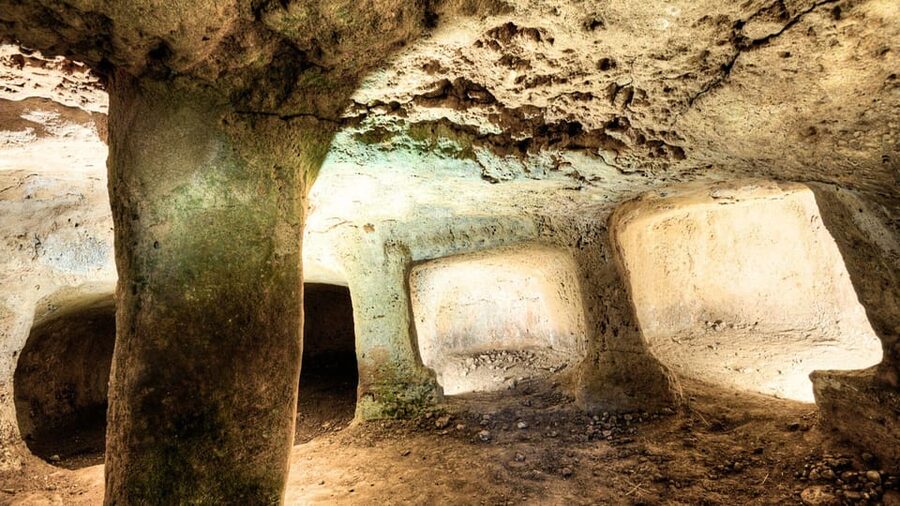
The name domus de janas is often translated as fairy houses. It is a charming name, but these chambers were burial places, not homes for mythical creatures. The phrase reflects local tradition and the mysterious appearance of small rooms cut into the rock.
Inside, look for features that imitate ordinary houses. You may see steps, pillars, cornices, false lintels, false doors, and false windows. These details show how the builders imagined the relationship between life and death. The dead were placed in spaces that recalled the world they had known.
The chambers vary in size and design. Some are simple. Others are more monumental. That contrast helps you understand the cemetery as a place used across a long period, by people with different resources or social roles.
The audio guide is especially useful here because the rooms are compact and their meaning is not always obvious at a glance. A pillar could look like plain decoration until the narration explains its connection to domestic architecture or ritual practice. A false door may seem like a blocked entrance, but it carries a symbolic meaning tied to passage and the boundary between worlds.
Do not expect every chamber to be large enough for a group to gather comfortably. These are small cells, and you may need to listen from outside or take turns entering. The experience rewards patience rather than speed.
Same place, a different route to walk:
- Florence: Timed Entry to Michelangelo’s David + Audio App
★ 4.6 · 19,496 reviews - Rome: City Sightseeing Hop-on Hop-off Bus with Audioguide
★ 4.0 · 16,045 reviews - Pompeii: Entry Ticket with Audio Guide
★ 4.1 · 13,491 reviews - Venice: La Fenice Opera House Entry Ticket with Audio Guide
★ 4.6 · 11,742 reviews
Bull heads and ancient ritual symbols
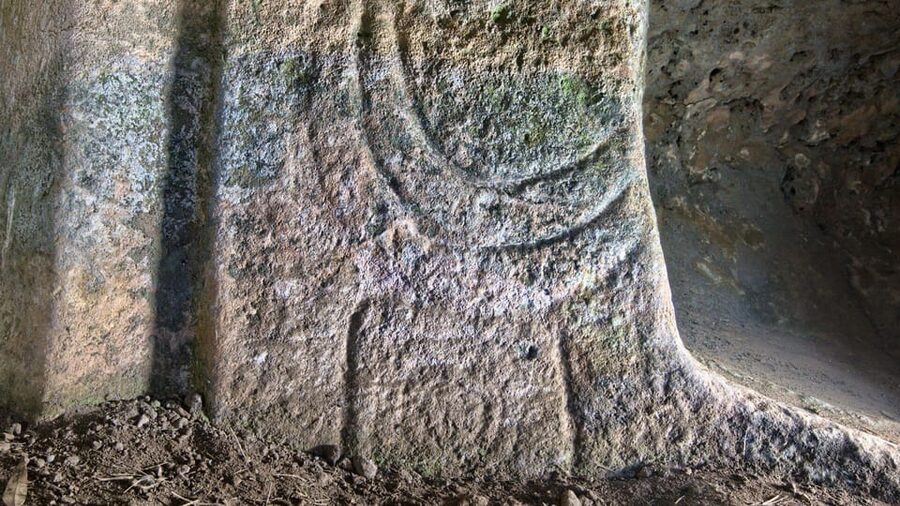
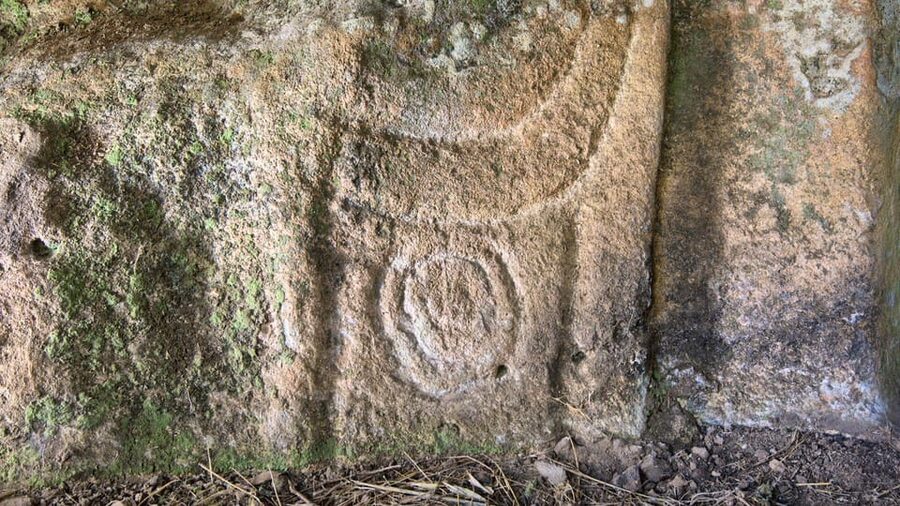
One of the most memorable features is the presence of bull-head designs and other enigmatic symbols. These images belong to the religious world of ancient Sardinia and to wider Mediterranean traditions of the period.
The bull was not simply an animal carved for decoration. Within prehistoric ritual settings, it could represent strength, fertility, protection, or the forces of nature. The supplied information identifies these images as part of magical and propitiatory rites, meaning rituals intended to gain favor or protection.
You will not receive a full written explanation at every tomb, so use the relevant audio track before moving on. The guide helps you consider why a symbol appears where it does and how it relates to the burial space.
I find these symbols more interesting when viewed alongside the architecture. The bull’s head, the false door, and the house-like interior all point to a belief system in which the dead remained connected to the natural and human world. The site does not give you every answer, but it gives you enough evidence to ask good questions.
The meaning of burial objects
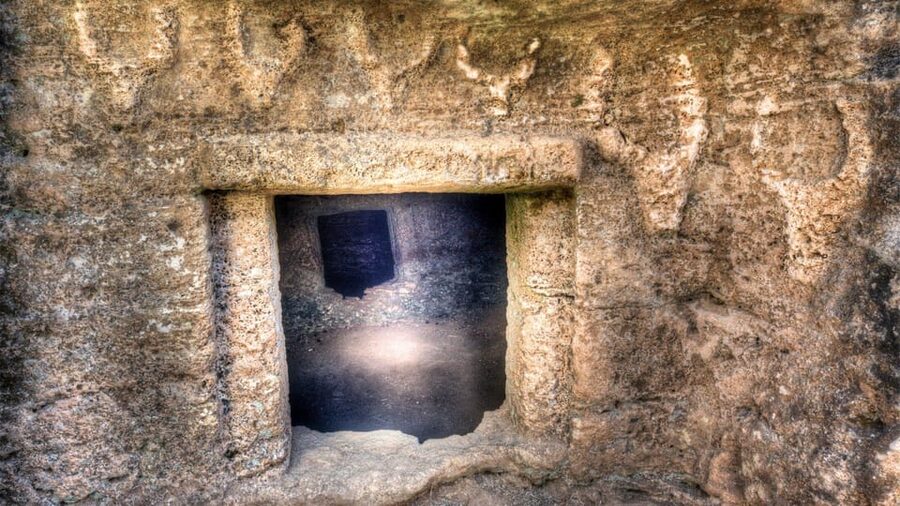
The ancient Sardinians buried the dead with objects that had been useful or dear during life. The information provided does not list specific surviving objects for you to see during this visit, so you should not expect a display of household goods in every chamber.
What matters is the idea behind the practice. Burial objects suggest that death was not treated as a complete break from the person’s former life. The tomb offered a familiar setting, and the objects helped carry personal meaning into the next stage of existence.
This is one reason the house-like design matters. The chambers are not only practical burial spaces. They reflect a view of death that included memory, identity, and continued respect for the individual.
The audio guide can help you make sense of that connection. Without explanation, the tombs may appear repetitive. With the cultural context, the repeated features become clues to a wider belief system.
How the audio guide affects the visit
The audio guide is included in the entrance price and comes in Italian, English, French, German, and Spanish. You download the tracks to your phone using the QR code and password given at the ticket office.
This arrangement gives you independence, but it also creates a few responsibilities. Your phone must have enough battery, and you need to be comfortable using the download link. Headphones are strongly recommended. If you forget them, the visit may be less comfortable, particularly if you want to listen carefully at each stop.
There is no personal guide included. You will not have someone beside you to answer questions, adjust the pace, or solve a wrong turn. I would choose this format if you like quiet visits and basic historical explanation. I would choose a guided tour instead if you want detailed conversation or help with every tomb number.
The audio format also means you can spend less time at simple chambers and more time at the monumental ones. That flexibility is a real benefit for independent visitors.
Timing, opening hours, and planning
The experience lasts 45 minutes, and you select an available starting time. The site is open from 10 am to 2 pm from November through March. From April through October, it is open from 10 am to 6 pm.
The seasonal schedule affects how easily you can fit Anghelu Ruju into your day. In winter, the shorter hours mean you should avoid arriving near closing time. In the warmer months, you have more room to combine the visit with other plans in the Alghero area.
The archaeological site is outdoors, so plan for sun. A hat, sunscreen, comfortable clothes, and comfortable shoes are listed as recommended items. The visit itself is short, but walking between the tombs and stopping to listen can make the time pass quickly.
There is one toilet for men, women, and disabled visitors. Pets are allowed with a muzzle and leash. Small dogs may enter with a leash alone.
The site is wheelchair accessible, according to the activity information. Because this is a prehistoric archaeological area with tombs and outdoor paths, you may still want to confirm the exact route with staff when you arrive if you have specific mobility needs.
Is $10 a fair price?
At $10 per person, the experience is inexpensive for an archaeological visit that includes both admission and an audio guide. You are paying for access to one of Sardinia’s larger prehistoric cemeteries and for enough explanation to make the tombs meaningful.
The value depends on what kind of visit you want. If you are happy to guide yourself, the price is easy to justify. You get a map, audio tracks, and the freedom to explore without joining a fixed group.
The price feels less satisfying if you expect hands-on guidance from a local expert. There is no personal guide, and the site can be confusing if the tomb numbers are difficult to find. In that case, the low cost comes with a tradeoff: you save money but take on the work of navigation.
Free cancellation up to 24 hours before the visit and the option to reserve now and pay later add flexibility. Those terms are useful if your Alghero plans may change, though they do not solve the basic need to arrive with enough time to orient yourself.
Who should book this visit?
I would recommend Anghelu Ruju to visitors who enjoy archaeology, prehistoric cultures, and quiet places with a strong sense of age. It suits independent people who are comfortable using a phone, reading a map, and moving at their own pace.
Families with older children may also find the fairy-house name and underground chambers appealing. The symbols give younger visitors something concrete to look for, while the audio guide provides the background adults usually want.
I would be more cautious if you need a polished, fully guided experience. The arrival can be difficult, the tomb numbering may not always be clear, and no personal guide is included. You should also allow extra time to locate the correct entrance rather than planning to arrive at the last minute.
FAQ
How long does the Anghelu Ruju visit take?
The stated duration is 45 minutes. You follow the map and listen to the audio tracks at the numbered points around the cemetery.
What languages are available for the audio guide?
The audio guide is available in Italian, English, French, German, and Spanish.
Is a personal guide included?
No. The visit is self-guided. Staff at the ticket office provide the audio guide, QR code, password, and site map, but no personal guide accompanies you.
What should I bring?
Bring comfortable shoes, comfortable clothes, a hat, sunscreen, and headphones for your phone. Headphones are especially useful for listening to the audio tracks along the route.
When is the site open?
From November through March, the available hours are 10 am to 2 pm. From April through October, the available hours are 10 am to 6 pm.
Is Anghelu Ruju wheelchair accessible?
The activity information lists the site as wheelchair accessible. There is also one toilet for men, women, and disabled visitors.
Are pets allowed?
Pets are allowed with a muzzle and leash. Small dogs may enter with a leash only.
Should you book Anghelu Ruju?
Book it if you want a low-cost, short visit focused on Sardinia’s prehistoric burial customs, house-shaped tombs, and ancient symbols. The audio guide gives you useful context, and the $10 price makes the site easy to add to an Alghero itinerary.
Before going, prepare for a self-guided visit. Save time for finding the entrance, bring headphones, and study the map carefully at the ticket office. If you want a personal guide to lead you from tomb to tomb, this is not the right format. If you like setting your own pace and looking closely at unusual archaeological details, Anghelu Ruju offers a memorable glimpse into Sardinia’s distant past.
Just added around Italy
- Genoa Historic Centre Quest: A Self-Guided Puzzle Adventure★ 4.0 · 3 reviews
- Genova Walking Tour with Audio and Written Guide by a Local★ 4.5 · 33 reviews
- Self-Drive (No Licence) Boat Rental in Portofino Gulf★ 5.0 · 12 reviews
- Finance and Nobility: Explore medieval Genoa on a self-guided audio tour★ 4.5 · 7 reviews
- Florence: Uffizi Gallery Reserved Ticket & Digital Audio Guide★ 4.5 · 3 reviews
- Around Florence Hills: App‑Guided e‑Vespa Tour + Wine&Food★ 4.5 · 22 reviews
- Florence: Uffizi Gallery Audio Guided Tour led by Tour Leader★ 3.5 · 6 reviews
- Uffizi Gallery: Self-guided App Visit & Optional Accademia Museum★ 4.0 · 19 reviews
Italy Audio Tours, compared.
Rome: Pantheon Fast-Track Ticket and Official Audioguide
Read our review →
Rome: Colosseum & Forum with Audio Guide App -Optional Arena
Read our review →
Venice: Grand Canal Gondola Ride with App Commentary
Read our review →
Florence: Timed Entry to Michelangelo’s David + Audio App
Read our review →
Rome: City Sightseeing Hop-on Hop-off Bus with Audioguide
Read our review →
Venice: La Fenice Opera House Entry Ticket with Audio Guide
Read our review →