
REVIEW · NAPLES AUDIO TOURS
Herculaneum: Skip-the-Line Entry Ticket with Audio Guide
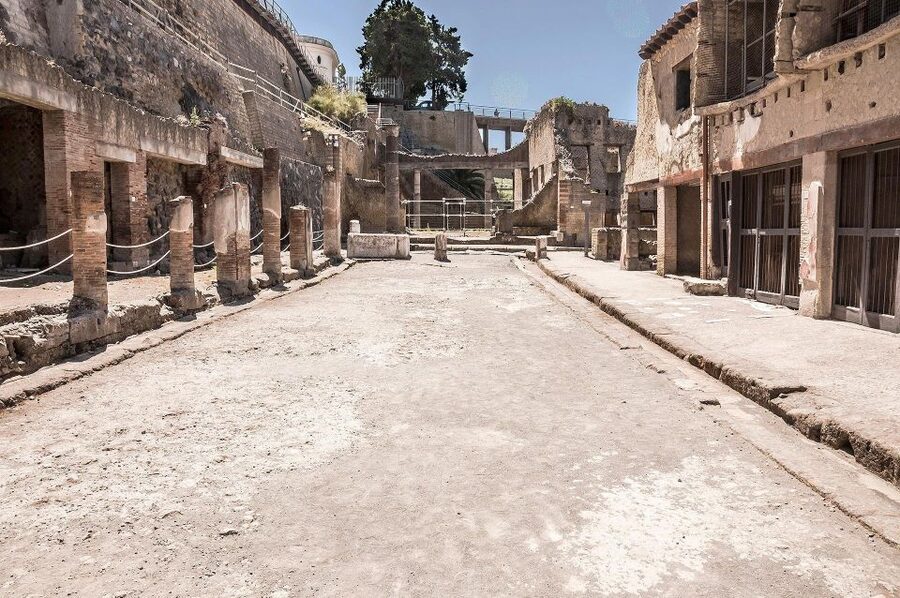
Herculaneum gives you one of the clearest glimpses of Roman daily life anywhere near Naples. Unlike Pompeii, this smaller archaeological park lets you study wooden doors, painted walls, mosaics, and intact villas without needing several days to cover the ground.
I like the freedom to choose your own route and the audio guide’s detailed explanations. I also like the price, about $15 per person when the entry ticket is included, for an outing that can easily fill two to four hours. The main catch is that you must check exactly which ticket option you book, and the audio numbering can be confusing once you are inside.
Key points:
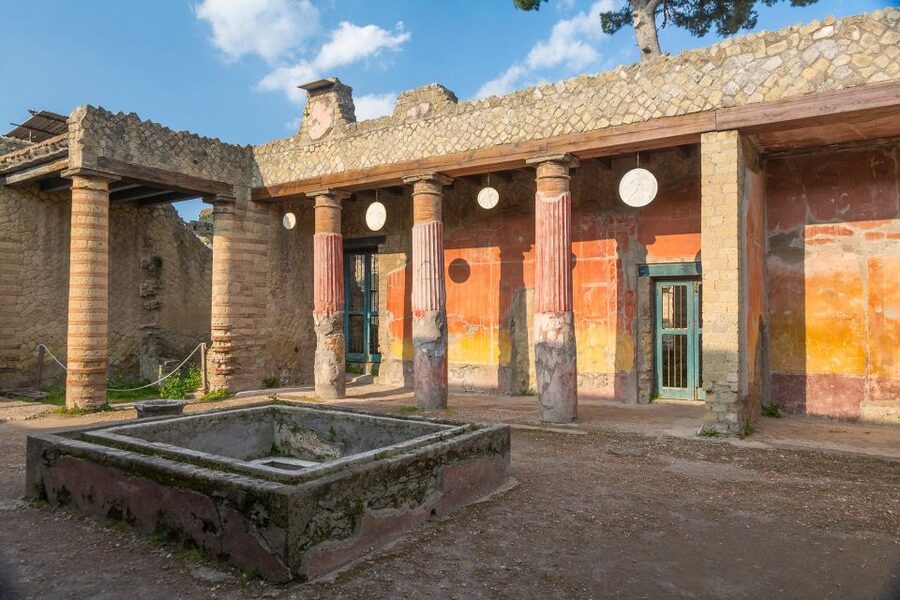
- Exceptionally preserved Roman homes: See frescoes, mosaics, doors, furniture, and wooden details that rarely survive at ancient sites.
- A quieter alternative to Pompeii: Herculaneum is smaller and easier to cover, though several areas may be closed.
- Self-guided flexibility: Follow the map and audio at your own pace rather than sticking to a group schedule.
- Poignant eruption story: The boat and shoreline chambers show the human cost of the disaster in 79 AD.
- Useful but imperfect audio system: The commentary is detailed, but site numbers do not always match the device.
- Allow at least two to three hours: You can move quickly, but a slower visit gives the buildings time to make sense.
Why Herculaneum Feels Different From Pompeii
Herculaneum was buried by the eruption of Mount Vesuvius in 79 AD, but the material that covered it helped preserve many wooden and painted features. At Pompeii, you often see broad streets and large open ruins. Here, the buildings feel more intimate, with rooms, shops, stairways, wall decoration, and household details still close together.
I find this makes Herculaneum especially good for understanding ordinary life. You can compare the modest rooms assigned to enslaved people with the larger, decorated spaces of wealthy Romans. You can also see how homes opened onto streets, where fountains, shops, and public buildings served the town.
The park is more compact than Pompeii, but compact does not mean brief. Most people should plan on two to three hours, while anyone who enjoys archaeology can stay four hours or even longer. One visitor spent a full day taking the site slowly, with time to sit, study the buildings, and stop for lunch.
Arriving at the Herculaneum Ticket Office
Your meeting point is the Herculaneum Archaeological Park ticket office. Bring the ticket on your phone, and also bring a passport or identity card. The audio device may require you to leave identification as security. An insurance card has also been accepted in place of a passport by some visitors, but your passport or ID is the safest choice.
The ticket process can be less tidy than the phrase skip-the-line suggests. At quiet times, there may be no meaningful queue at all. At busier times, you may be sent between the ticket office, an audio-guide desk, and another service point. Some people have had to collect the audio device first and then return for the entry ticket.
Look for clear directions before joining a line. The skip-the-line arrangement is not always obvious, and other people waiting may think you are cutting ahead. The system works best when you confirm which desk handles your booking before taking your place.
One important booking detail deserves careful attention. Some options cover the entry ticket and audio guide, while another option is an audio guide without the ticket, with entry selected as an extra. At around $15, the package can be excellent value, but read the option name and inclusions before paying. A low headline price can be misleading if admission is not included.
More Skip-the-Line Audio Guide Tickets in Italy
- Mount Vesuvius: Skip-the-Line Ticket and Smart Digital Guide
★ 4.2 · 2,780 reviews - Pompeii: Skip-the-Line Entry Ticket with Audio Guide or Tour
★ 4.1 · 1,364 reviews - Naples: Royal Palace Entry Ticket with Digital Audio Guide
★ 4.1 · 146 reviews
The First View Into the Buried City
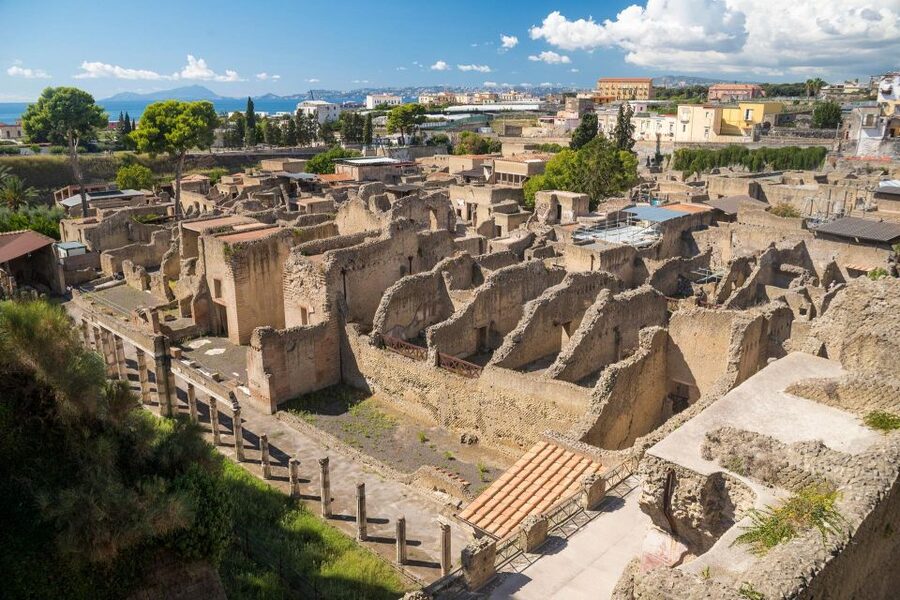
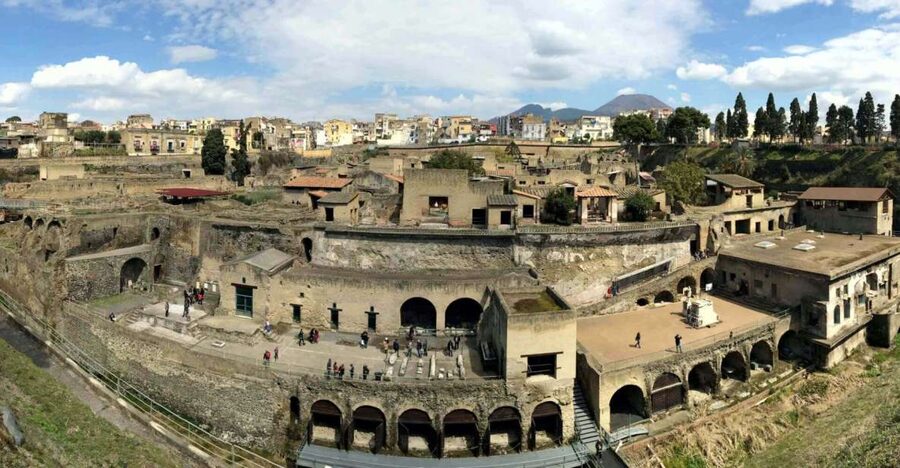
Once inside, you look down into the excavated town from above. The park sits below modern Herculaneum, and this first view helps you understand the scale of the disaster. Streets, homes, and public buildings are arranged below the level of the present-day town.
Start slowly. The first few minutes are useful for learning the site’s layout and testing the audio device. You will walk over uneven cobblestones and handle some steep steps, so comfortable shoes matter. There are places to sit, which helps on hot days or when you want to spend time looking closely at a room.
The site is easier to navigate than Pompeii because it is smaller, but the route is not always obvious. The supplied map helps, and the audio device includes a map as well. Ask for a paper map if one is not offered. It makes it easier to see where you are and plan a route without constantly checking the phone or device.
Homes, Frescoes, and Original Wooden Details
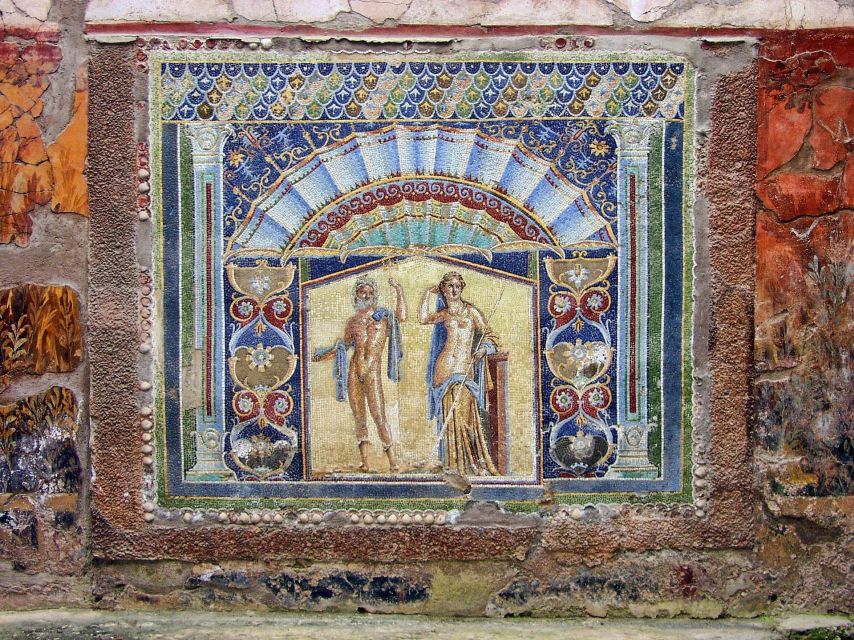
The private houses are the heart of the visit. Herculaneum’s volcanic burial preserved features that usually vanish in ancient ruins, including wooden beams, doors, fittings, and parts of upper floors. The painted walls and mosaics give you a strong sense of how Roman homes were decorated.
The audio guide explains what you are seeing and places the rooms in the context of Roman life. You can pause at a house, listen to the commentary, and continue only when you are ready. That freedom is a real advantage over a fixed group tour, particularly if one room catches your attention.
Some interiors are temporarily closed, and not every marked building is open. Even when a building is accessible, it may not be obvious which feature the commentary is describing. Take the audio as a companion rather than a perfect turn-by-turn system. Look first, then use the explanation to add meaning.
Several houses contain colorful wall paintings, detailed floors, and household spaces that make the town feel personal rather than abstract. You may find yourself spending more time in a small room than in a large public building because the preserved details are easier to connect with.
The Market, Fountains, and Public Life
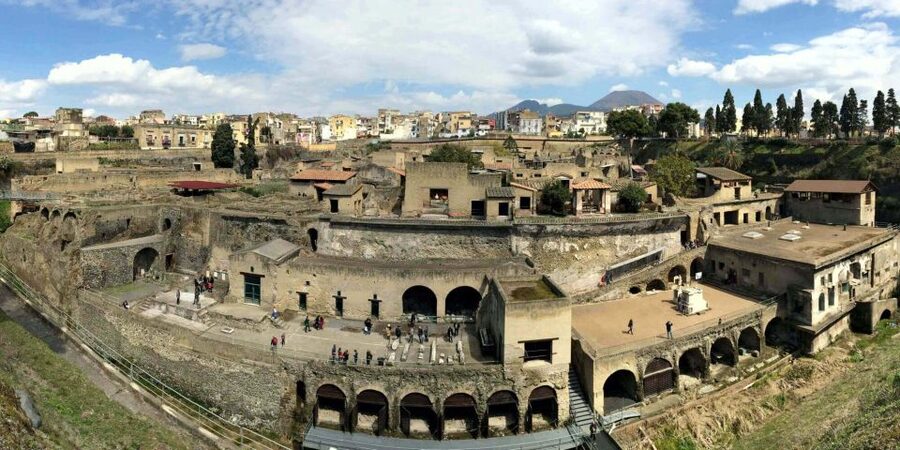
The route also takes you through commercial and public parts of the town. The ancient market shows the practical side of Roman life, while public fountains point to the systems that supported daily routines. These stops help balance the grand houses, since most people in Herculaneum were not living in large decorated villas.
The theatre and temples add another layer. At the temples, you can look at depictions of ancient gods and consider how religion shaped public life. The theatre is one of the key places to include if it is open during your visit, though access to individual areas can change.
The audio commentary is most useful here because it explains how each space functioned. Without it, you might see a wall, doorway, or platform without understanding its purpose. With it, the market becomes part of a working town rather than just another set of stones.
More Skip-the-Line Audio Guide Tickets in Naples:
- Vesuvius National Park Skip-The-Line Ticket and Audio Guide
★ 3.4 · 141 reviews - Naples: Herculaneum Entry Ticket with Digital Audio Guide
★ 4.0 · 14 reviews - Barcelona: Sagrada Familia Entry Ticket with Audio Guide
★ 4.6 · 105,312 reviews - Rome: Pantheon Fast-Track Ticket and Official Audioguide
★ 4.5 · 27,353 reviews
The Shoreline Chambers and the Human Cost
The most moving part of the visit is near the former shoreline. Around 300 people died while waiting for rescue from the sea, and the preserved remains in the chambers make the eruption feel painfully immediate.
This section can be difficult, especially after the lighter details of houses and shops. Give yourself time here. The boat and related displays help explain the final moments of the town and show why Herculaneum is more than a collection of attractive ruins.
The site’s Antiquarium, near the entrance or exit area, adds useful context. It contains artifacts, furniture, and objects connected with the eruption. The displays help fill in details that are no longer visible inside the buildings, and they are worth including rather than treating them as an optional afterthought.
How the Audio Guide Works in Practice
The audio guide is available in English, French, German, Italian, and Spanish. It is designed for independent touring, so you can choose which places to hear about and move at your own pace. The commentary is generally detailed and informative, and some sections include 3D or 360-degree views showing how objects or spaces may have looked before the eruption.
The weak point is the numbering system. The numbers on the device or app do not always match the numbers you see at the site. In some sections, the physical route and audio sequence appear out of order. The commentary may also jump to another building or begin partway through a description.
Here is the simplest way to use it:
- Check the map before entering a building.
- Match the audio number with the clearest nearby marker.
- If the description seems wrong, stop and check your position rather than walking farther.
- Use the map to choose your own order.
- Ask staff for help if the device skips or the numbers do not make sense.
The unit is a handheld smartphone-style device. Some people have used their own headphones or earbuds, but Bluetooth connections may not be available, so do not assume your wireless earbuds will work. The audio can also be quiet in places. If you have difficulty hearing, stand away from noisy groups and ask staff whether another device or listening method is available.
Walking Conditions, Heat, and Breaks
Herculaneum is not a polished museum floor. Expect cobblestones, uneven surfaces, and some steep steps. Comfortable walking shoes are essential, and a hot afternoon can make the exposed sections tiring.
There are places to sit and pause. You can also find a café and a place to buy snacks and drinks, with restaurants near the entrance. A packed lunch is practical if you plan to stay several hours, though the toilet facilities have received poor marks and are not a reason to linger.
Opening time is a smart choice if your schedule allows it. The site is often calmer early in the day, and you can listen to the audio without as much background noise. The park gradually becomes busier, so arriving early also gives you a better chance of enjoying the small rooms without a crowd at the doorway.
How Much Time Should You Allow?
For a brisk visit, allow about two hours. That gives you time for the principal houses, public areas, shoreline chambers, and the museum displays, but not much room for lingering.
Three hours is a better target for most people. You can listen to the main audio stops, look at the frescoes and mosaics, and pause when you find a room worth studying. If you have a strong interest in Roman architecture or daily life, four hours is reasonable.
You do not need to follow the audio in numerical order. In fact, the current layout may make that difficult. A flexible route works better: begin with the buildings that are open, then return to the sections you want to hear in more detail.
Is the $15 Price Good Value?
If the entry ticket and audio guide are both included, the price is strong. You receive access to a major archaeological park and several hours of self-guided interpretation for about the cost of a casual meal. The compact site also means you are less likely to pay for a ticket and then realize you need another full day to finish it.
Value depends on the option you select. The booking information includes an audio-guide-only choice, with the Herculaneum entry ticket added separately. Confirm this before booking so you can compare the final total with the official admission price.
A live guide can add more human explanation and help you understand the route. Some visitors were offered an upgrade to a guided tour, including tours led by Tony, Fabio, and Amara. Fabio was praised for stopping at key sites and explaining them at a steady pace, while Tony adjusted the pace during hot weather. Those upgrades are separate from this audio-guide product and should not be assumed to be included.
Who Will Enjoy This Experience Most?
This is a good choice if you want to set your own pace, dislike being hurried, or prefer to spend extra time inside a house that interests you. It suits families, history enthusiasts, and anyone visiting Pompeii who wants a smaller site with more preserved domestic details.
It also works well for a short visit near Naples, especially if you have only a few hours. The town is compact enough to fit into a half-day plan, but substantial enough to reward a slower visit.
I would think twice if you need a perfectly clear audio route with GPS guidance. The map and numbering can take time to understand, and some sections may be closed. If you want a smooth narrative with no route confusion, a live guide may suit you better.
Should You Book the Herculaneum Audio Guide?
Book it if you want to see one of Italy’s best-preserved Roman towns at your own speed and are willing to manage a slightly imperfect audio system. The frescoes, mosaics, wooden features, ancient boat, and shoreline chambers make this a powerful visit, not just a smaller version of Pompeii.
Choose the ticket-inclusive option, arrive early, bring ID and comfortable shoes, and ask for a paper map. If the audio numbers seem wrong, do not let that spoil the visit. Use the guide for background, but let the buildings themselves set the pace.
FAQ
Does this experience include the Herculaneum entry ticket?
It can, but you must select the correct option. The listed inclusions distinguish between a ticket-inclusive package and an audio-guide-only option with the entry ticket added separately.
Is a live guide included?
No. This experience includes an audio guide and map, not a live guide. Separate guided-tour upgrades have sometimes been offered, but they are not part of the standard audio-guide package.
What languages are available for the audio guide?
The audio guide is available in English, French, German, Italian, and Spanish.
How long should I spend at Herculaneum?
Allow at least two to three hours for the main archaeological area and museum displays. You can stay longer if you want to listen to more commentary or examine the houses carefully.
What should I bring?
Bring your passport or identity card and comfortable shoes. Identification may be held as security when you collect the audio device.
Is the site easy to walk around?
The park is compact and generally easy to navigate with the map, but the ground includes cobblestones, uneven surfaces, and some steep steps. You should expect a walking-heavy visit.
Can I cancel the booking?
You can cancel up to 24 hours before the activity for a full refund. The reserve-now, pay-later option is also available, subject to the booking conditions.
Just added around Naples
- Naples: Monuments and Historic District Self-Guided Tour★ 4.0 · 50 reviews
- National Archaeological Museum synchronized audioguided tour without QR or app★ 4.0 · 4 reviews
- Naples:Pompeii SkiptheLine Ticket audioguide Round-Trip Bus★ 4.1 · 18 reviews
- Naples from Above: Castel Sant’Elmo Ticket & Audio Guide★ 4.0 · 53 reviews
- Naples: daily/weekly transport ticket, map and audio guide★ 4.8 · 4 reviews
- Naples Audioguide – TravelMate app for your smartphone★ 4.6 · 7 reviews
- Naples: Herculaneum Entry Ticket with Digital Audio Guide★ 4.0 · 14 reviews
- Campania: Pompei+Herculaneum+Vesuvius audio guide★ 3.6 · 10 reviews
Naples Audio Tours, compared.

Mount Vesuvius: Skip-the-Line Ticket and Smart Digital Guide
Read our review →
Pompeii: Skip-the-Line Entry Ticket with Audio Guide or Tour
Read our review →
From Naples: Caserta Palace Ticket and Train with Audioguide
Read our review →
Naples: National Archaeological Museum Tour & Digital Guide
Read our review →
Self-Guided Island Tour: CLEAR/Standard Kayak, SUP-Bonita Springs
Read our review →
Naples: National Archaeological Museum audio guide
Read our review →
Naples: Royal Palace Entry Ticket with Digital Audio Guide
Read our review →Browse the lists this tour appears in