
REVIEW · NAPLES AUDIO TOURS
Naples: National Archaeological Museum audio guide
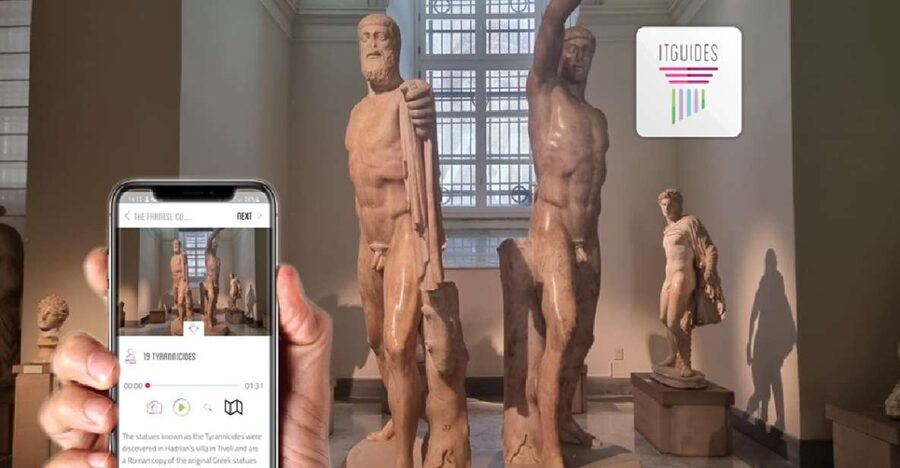
The three-meter-tall resting Hercules is a fine reason to visit Naples’ National Archaeological Museum, but the museum is far too large to appreciate by simply wandering from room to room. This app-based guide gives you a route through 85 important works, including the Venus Callipigia, Pompeii mosaics, Egyptian displays, and the secret cabinet of erotic art.
I like two things right away: you can download the material and use it offline, and the guide includes text, photos, audio, and a map rather than just a string of recordings. At $4.70, it is also a sensible buy when the museum’s own audio devices are unavailable or offer less coverage.
The main catch is preparation. You must activate the guide online before entering, and the app can take time to understand. An interactive map is not provided, and some visitors found it hard to search for a work by its museum number. Bring a fully charged phone, download the content on Wi-Fi, and allow time to learn the app before your visit.
Key points at a glance
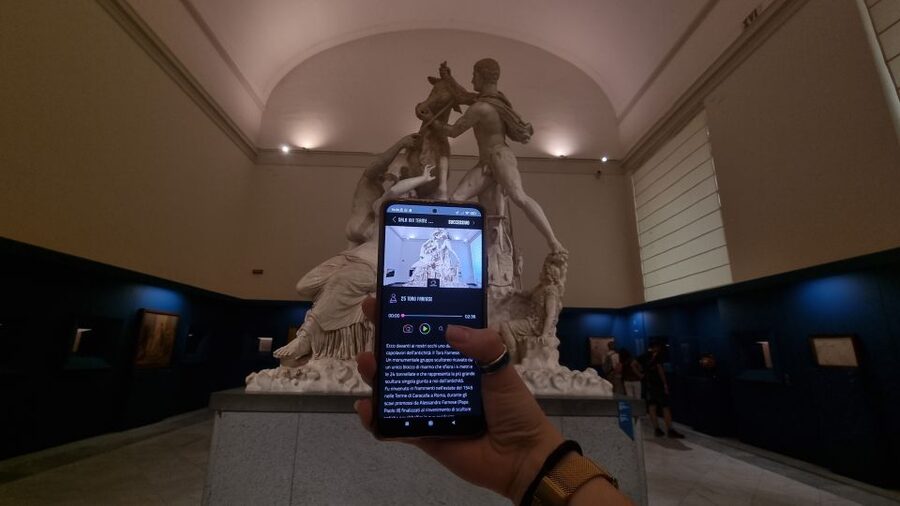
- 85 points of interest: Follow major works across the museum’s Greek, Roman, Egyptian, Pompeii, Magna Grecia, and Campania Romana collections.
- Three-hour plan: The suggested duration gives you a useful first visit without asking you to listen to every detail in the building.
- Offline listening: Download the audio and other content before arrival so you are not relying on a museum signal.
- Five language choices: Use the guide in Italian, English, French, German, or Spanish.
- Ticket not included: Buy museum admission separately, and activate the digital guide before you arrive.
- Strong value for phone users: At $4.70, it costs less than many traditional museum audio rentals and can be shared by two people using headphones.
Why an audio guide helps in this huge museum
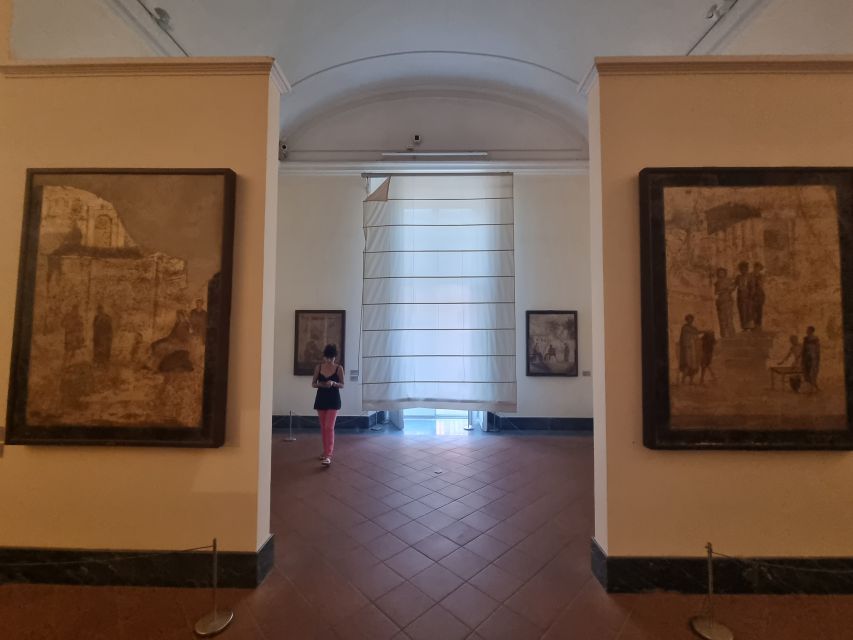
Naples’ National Archaeological Museum is not a small, tidy collection that you can understand from a few wall labels. It brings together major finds from Pompeii and Herculaneum, large Greek and Roman sculptures, mosaics, Egyptian objects, and other collections that can feel disconnected without a plan.
That is where this guide earns its keep. Each point combines audio with photos and written material, so you can listen when standing in front of an object, then glance at the image or text if the room is noisy. The collection-by-collection organization also gives you a framework for the building.
I would treat the three-hour duration as a useful outline, not a strict appointment. If you listen to all 85 points in detail, you may want longer. If you focus on the most famous works, three hours gives you a manageable visit with time to look closely.
The guide is especially useful because some rooms have limited explanations beside individual works. It fills those gaps without forcing you to join a group or keep to someone else’s pace. You can pause, skip, or return to a piece that catches your eye.
More Museum Audio Guides in Italy
- Naples: National Archaeological Museum Tour & Digital Guide
★ 4.2 · 177 reviews - National Archaeological Museum synchronized audioguided tour without QR or app
★ 4.0 · 4 reviews - Venice: St. Mark Basilica Ticket, Audioguide+History Gallery
★ 3.9 · 4,780 reviews
Start with the major sculpture rooms
Begin with the famous resting Hercules, a statue roughly three meters tall. Its scale is impressive, but the audio is useful because it gives you a reason to look beyond size and surface. Take time to examine the figure’s pose and the way the sculpture presents physical power at rest rather than in action.
The Venus Callipigia offers a very different mood. Her pose is graceful and deliberately erotic, making her one of the museum’s memorable works. The guide helps place the statue within the wider collection so the room does not become a quick parade of beautiful bodies without context.
These early sculptures are good tests for the app. Listen to one or two points, check the related photo, and make sure your headphones and volume work before you move too far into the museum. If you are visiting with another person, sharing one phone through Bluetooth headphones can keep the cost down, although you will need to stay close together.
The guide does not replace looking. Use the audio for a minute or two, then pause and study the details yourself. A museum like this rewards slow attention, especially when a crowded room makes it tempting to move on.
Follow the mosaics from Pompeii
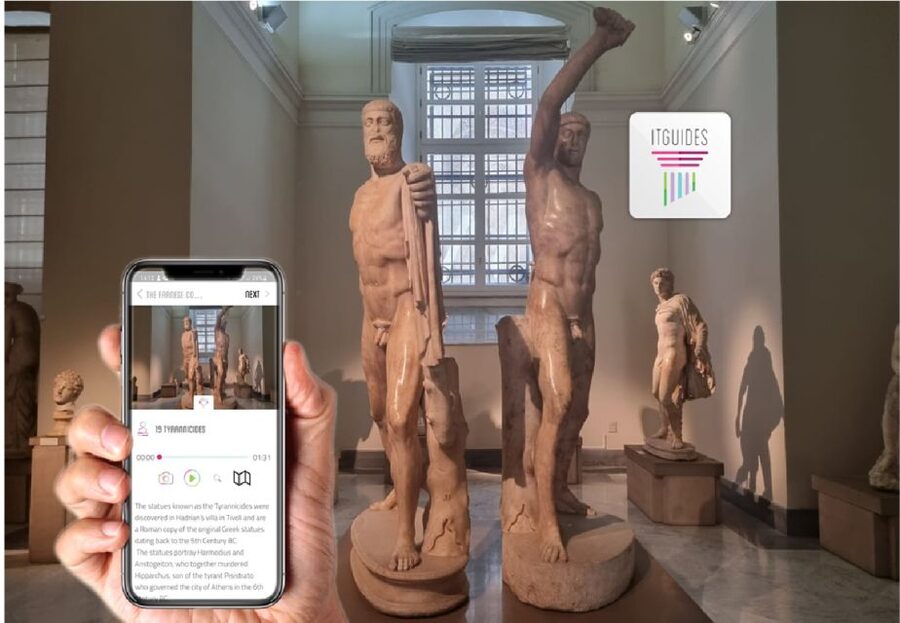
The mosaics from the House of Fauno are among the strongest reasons to use a guide here. Their small pieces of colored stone create scenes with movement, character, and fine detail that can be easy to miss from a distance.
The famous battle mosaic showing Alexander fighting the Persian king deserves time. Instead of seeing it as a large decorative floor image, you can use the audio to follow the figures and the action. Look for the tension in the scene, the expressions, and the way the composition directs your eye across the surface.
This is one area where photos in the app matter. A large mosaic can be difficult to take in all at once, while a phone image and written description can help you return to a particular figure. Keep your phone use focused, though. The real reward is standing in front of the original.
The Pompeii material also gives the museum a human scale. You are not just looking at isolated ancient objects. You are seeing decoration and art connected to actual homes, rooms, and daily life. The guide’s collection structure helps connect the objects rather than presenting them as unrelated masterpieces.
Make time for Egypt and Magna Grecia
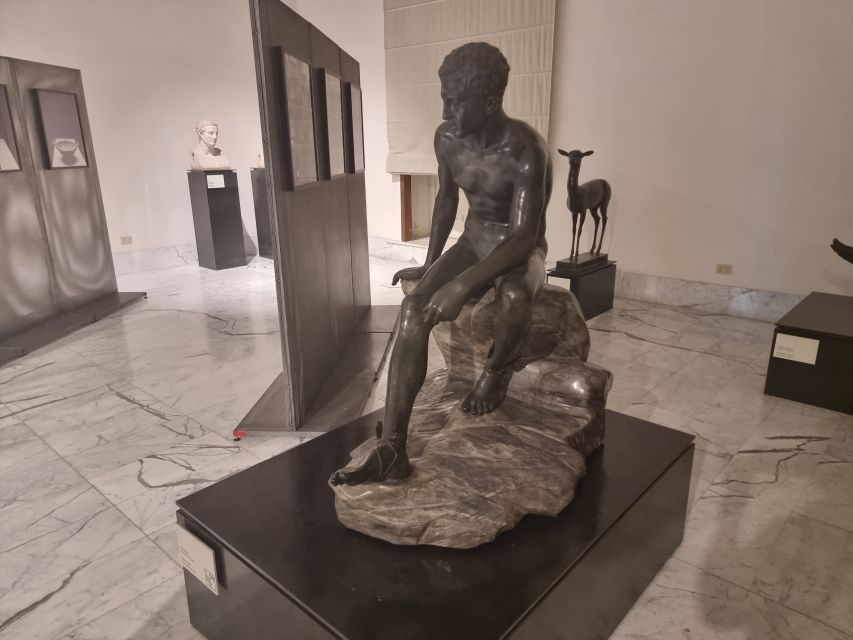
Do not stop after the Greek and Roman sculpture. The Egyptian collection adds a different visual language and broadens the museum beyond the finds associated with Pompeii and Herculaneum.
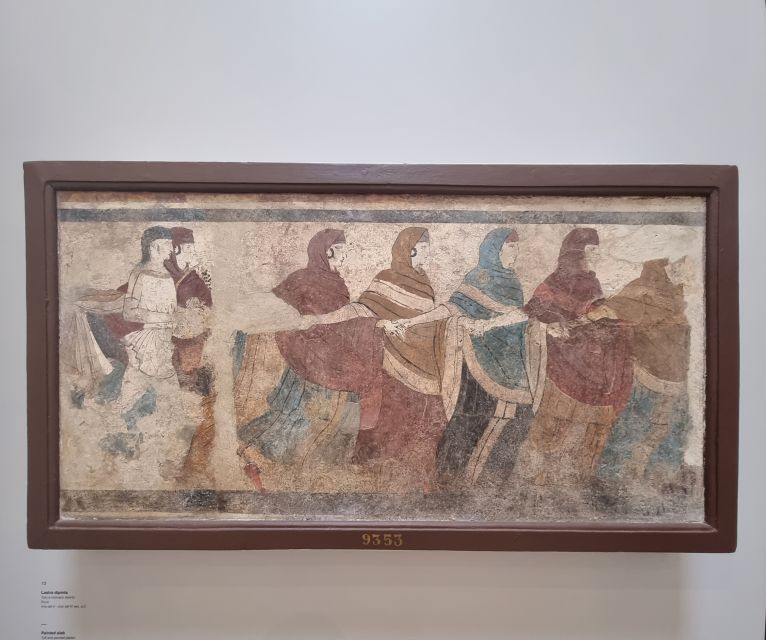
The Egyptian section can be easy to skip if you are following only the most famous names. Here, the audio points you toward objects that may not have large labels or obvious explanations. The guide includes descriptions for this collection, giving you a better reason to spend time there.
The Magna Grecia collection is also included. That matters because it is not always covered by the audio device sold at the museum ticket office, according to the information supplied for this experience. If you have an interest in Greek culture in southern Italy, this section gives the visit a wider regional frame.
You may find that the app works best when you browse by collection before entering a room. That lets you see what interests you and decide how much time to reserve. The lack of a fully interactive map means you should not expect the app to guide you turn by turn.
More Museum Audio Guides in Naples:
- Paris: Louvre Museum Hosted Entry and Mona Lisa Audioguide
★ 4.6 · 5,235 reviews - Rome: Borghese Gallery Skip-the-Line Ticket & Audioguide
★ 4.3 · 4,318 reviews - Rome: Borghese Gallery Ticket + Audioguide or Guided Tour
★ 4.6 · 3,219 reviews - Paris: Orsay Museum Entry Ticket and Digital Audio Guide App
★ 4.4 · 3,170 reviews
Visit the Gabinetto Segreto with some context
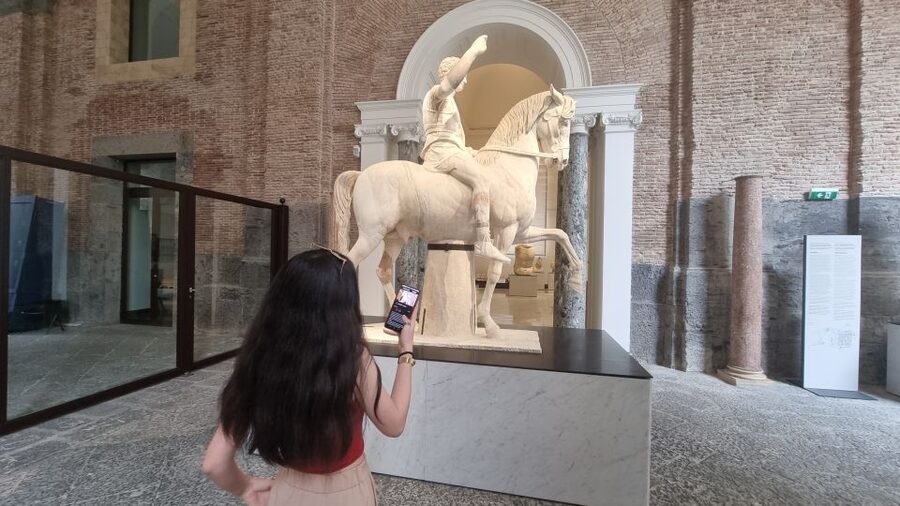
The Gabinetto Segreto, or secret cabinet, is one of the museum’s most talked-about areas. It contains erotic art and objects from the ancient world, much of it connected with Pompeii and Herculaneum.
The name alone can make the room seem like a novelty stop. The guide gives it more context by explaining the objects rather than leaving you with a collection of amusing images. You can decide how much detail you want, and the written material is useful if you prefer to read quietly.
This section may not suit every child or every family visit, so keep the collection in mind when planning your route. The experience data does not specify age restrictions or special access rules, so check current museum information if that matters to your group.
How the ITGUIDES app works
This is a digital product, not a device handed to you at the entrance. After buying it, you receive instructions for the ITGUIDES app and activate the content online. Support is provided through digital messages, including WhatsApp instructions in the supplied information.
Do this before you reach the museum. The guide can be started before your visit, and that is a real advantage. You can browse the collections, read descriptions, and learn the layout instead of trying to set everything up in a busy entrance area.
Download all audio, photos, and text on reliable Wi-Fi or with a strong cellular signal. The material is intended to work offline after downloading, but the initial activation is online. A fully charged phone is essential, and a power bank is a smart extra for a three-hour visit.
The app is available in Italian, English, French, German, and Spanish. Select your language before you begin so you do not waste time changing settings in the museum.
The main weakness is navigation. The guide includes a map, but it is not an interactive map that automatically leads you from one work to the next. You may not be able to search directly by the number printed beside a piece. One practical approach is to choose a collection, read the available points, and use the physical room layout to find the next work.
Some descriptions may contain small errors. That is not unusual with a digital guide, but it is a reason to use the app as a helpful companion rather than as the final word on every object.
Is $4.70 good value?
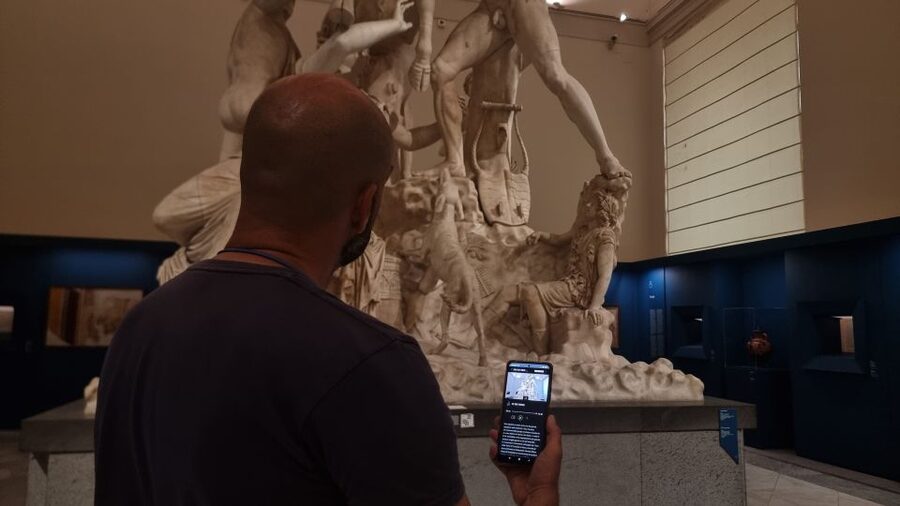
At $4.70 per person, this is inexpensive for a guide covering 85 points. The value is strongest if you want more than short labels and are comfortable using your own phone.
The guide can also be economical for two people. One supplied experience suggests using Bluetooth headphones together, which can reduce the cost if you do not need separate audio streams. You will need to remain near one another, and sharing audio is less flexible than carrying individual devices.
The comparison with the museum’s own audio guide is less straightforward. A traditional device may be simpler at the door, while this app lets you prepare before arrival, keep the material offline, and use it again for reference. The supplied information also says the digital guide covers Campania Romana and Magna Grecia, including a recently opened Campania Romana section that may not appear on the ticket-office version.
On the other hand, you are paying for the guide separately from admission. This product does not include the museum ticket, and there is no meeting point or staff member waiting to lead you inside. If you prefer a human guide or do not like handling your phone during a museum visit, this will feel less convenient.
Plan your three hours wisely
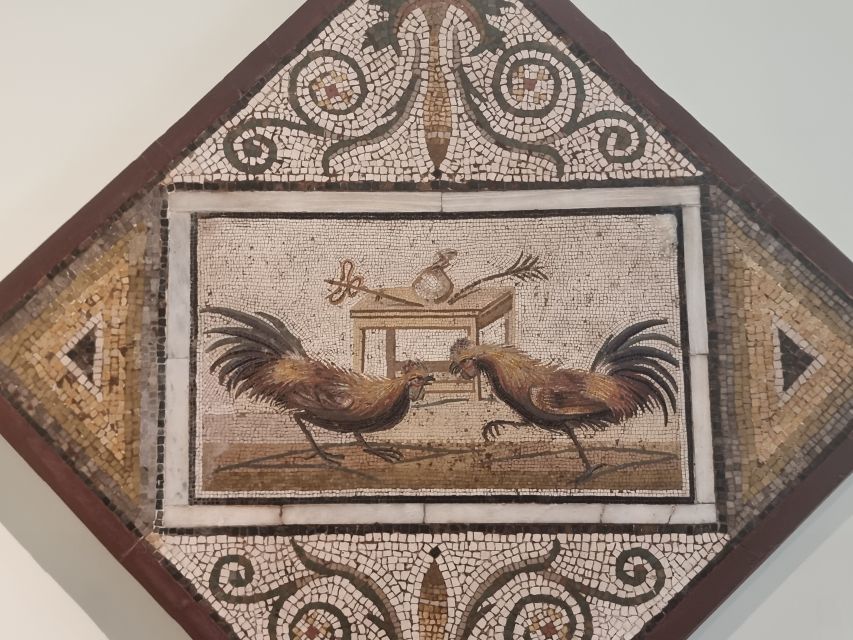
Wear comfortable shoes and clothes. The museum is large enough that tired feet can change your priorities halfway through. A three-hour plan works best if you choose a few main collections instead of trying to hear every word.
Here is a practical order:
- Start with the major sculpture rooms and the Hercules.
- Continue to the Venus Callipigia and other important classical works.
- Spend serious time with the House of Fauno mosaics and the Alexander battle scene.
- Visit the Egyptian collection and Magna Grecia.
- Finish with the Gabinetto Segreto if it suits your group and interests.
Use the map as a general aid, not a guaranteed route. If you cannot find the next number, look at the collection title and nearby room signs. The app’s organization follows the museum’s collections, but not every exhibit is covered, so you will occasionally need to orient yourself without audio.
I would also avoid trying to listen continuously. Pause the recording when a room is crowded, when you want to read, or when a particular detail catches your eye. The best museum audio guides support your attention. They should not turn the visit into a test of how many tracks you can complete.
Who should buy this guide?
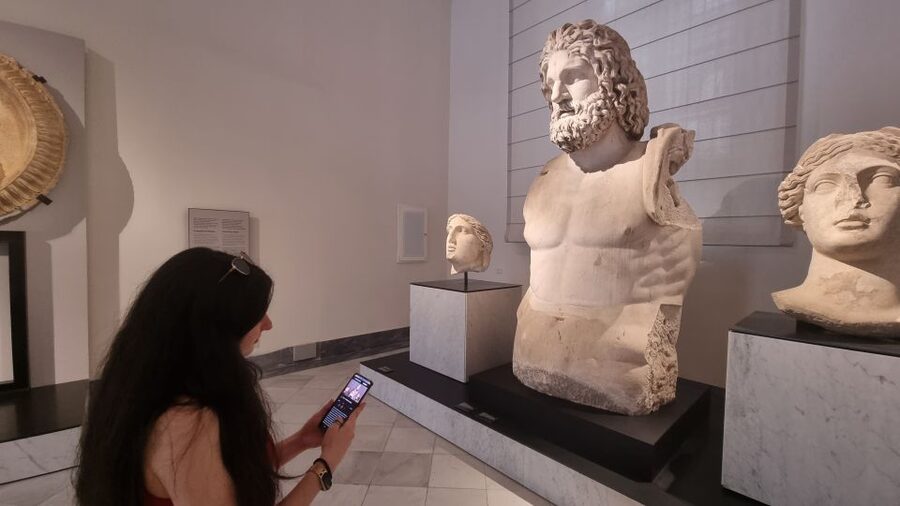
This is a good fit if you want a self-guided visit, prefer your own pace, and enjoy having both audio and written information. It is particularly useful for first-time visitors who want to see the famous works but also hope to understand the less obvious collections.
It also suits people visiting on a budget. The price is low, and the downloadable content gives you more preparation than a quick rental at the entrance. If museum audio devices are sold out, this may be the easiest alternative.
I would be more cautious if you are not comfortable with smartphone apps. The need for online activation, the battery demand, and the imperfect search system all require preparation. A visitor who arrives without downloading the content may spend valuable time sorting out the app instead of looking at art.
Cancellation is available up to 24 hours before the booked time for a full refund, and you can reserve now and pay later. The guide has a three-hour duration, but you should check availability for the current starting times.
Should you book the Naples museum audio guide?
Yes, if you want a low-cost digital companion and are willing to prepare before entering. The coverage of the Hercules, Venus Callipigia, House of Fauno mosaics, Alexander battle scene, Egyptian collection, Magna Grecia, Campania Romana, and Gabinetto Segreto gives you a strong first visit plan.
Buy it at least a day ahead if possible. Activate it online, download everything on Wi-Fi, charge your phone, and read through the map before you arrive.
Skip it if you want a live guide, a fully interactive route, or a device with no setup. For most independent visitors, though, $4.70 is a fair price for a phone-based guide that helps bring order to one of Italy’s largest and most demanding museums.
FAQ
Is the museum entry ticket included?
No. The audio guide is included, but you must purchase the National Archaeological Museum entry ticket separately.
How long does the audio guide visit take?
The stated duration is three hours. You can listen to the guide at your own pace and spend more or less time in each collection.
Which languages are available?
The guide is available in Italian, English, French, German, and Spanish.
Can I use the guide offline?
Yes. Download the content in advance with a good Wi-Fi or cellular connection, and you can use the downloaded material offline inside the museum.
Do I need to activate the guide before visiting?
Yes. The guide can only be activated online, so complete that step before going to the museum. It is not the same as the audio device sold at the museum ticket office.
Do I need a smartphone?
Yes. The guide works through the ITGUIDES app, so you need a charged smartphone. A power bank is also useful.
Is there a meeting point?
No. This is a self-guided experience, so there is no meeting point or in-person guide.
Just added around Naples
- Naples: Monuments and Historic District Self-Guided Tour★ 4.0 · 50 reviews
- National Archaeological Museum synchronized audioguided tour without QR or app★ 4.0 · 4 reviews
- Naples:Pompeii SkiptheLine Ticket audioguide Round-Trip Bus★ 4.1 · 18 reviews
- Naples from Above: Castel Sant’Elmo Ticket & Audio Guide★ 4.0 · 53 reviews
- Naples: daily/weekly transport ticket, map and audio guide★ 4.8 · 4 reviews
- Naples Audioguide – TravelMate app for your smartphone★ 4.6 · 7 reviews
- Naples: Herculaneum Entry Ticket with Digital Audio Guide★ 4.0 · 14 reviews
- Campania: Pompei+Herculaneum+Vesuvius audio guide★ 3.6 · 10 reviews
Naples Audio Tours, compared.

Mount Vesuvius: Skip-the-Line Ticket and Smart Digital Guide
Read our review →
Pompeii: Skip-the-Line Entry Ticket with Audio Guide or Tour
Read our review →
Herculaneum: Skip-the-Line Entry Ticket with Audio Guide
Read our review →
From Naples: Caserta Palace Ticket and Train with Audioguide
Read our review →

Naples: National Archaeological Museum Tour & Digital Guide
Read our review →
Self-Guided Island Tour: CLEAR/Standard Kayak, SUP-Bonita Springs
Read our review →
Naples: Royal Palace Entry Ticket with Digital Audio Guide
Read our review →Browse the lists this tour appears in