
REVIEW · SPAIN AUDIO TOURS
Granada: Sacromonte Abbey Entry Ticket with Audio Guide
The most unusual part of Sacromonte Abbey lies below ground. Its sacred caves connect the monument to Granada’s early Christian traditions and to the city’s Romani community. Above them, churches, courtyards, cloisters, and exhibition rooms tell a story that stretches across four centuries.
I like the calm of the cloisters and the freedom of a self-guided visit. The leaden tablets that helped spark the abbey’s construction give the place a strange, memorable focus. The main caution is practical: opening hours can be confusing, and the ticket office closes one hour before the monument.
Key points before you go
- The caves are the most distinctive stop: You get more than a standard church visit, with underground spaces tied to Sacromonte’s religious story.
- The leaden tablets explain the abbey’s origins: These discoveries in 1594 helped lead to the building of the complex.
- The audio guide keeps the visit flexible: Commentary is available in Spanish, English, Italian, French, and German.
- The cloisters offer a quiet pause: The silence and simple architectural rhythm provide a welcome break from Granada’s busier sights.
- The hilltop views are part of the reward: From Mount Valparaiso, you can look across Granada from a high point.
- Check the hours before setting out: The ticket office closes one hour before the monument, and midday closures may affect your plan.
Why Sacromonte Abbey feels different from Granada’s usual sights
Granada is famous for the Alhambra, but Sacromonte Abbey gives you a different way to understand the city. Here, the focus is not royal power or palace decoration. It is the meeting of faith, archaeology, local tradition, and community life.
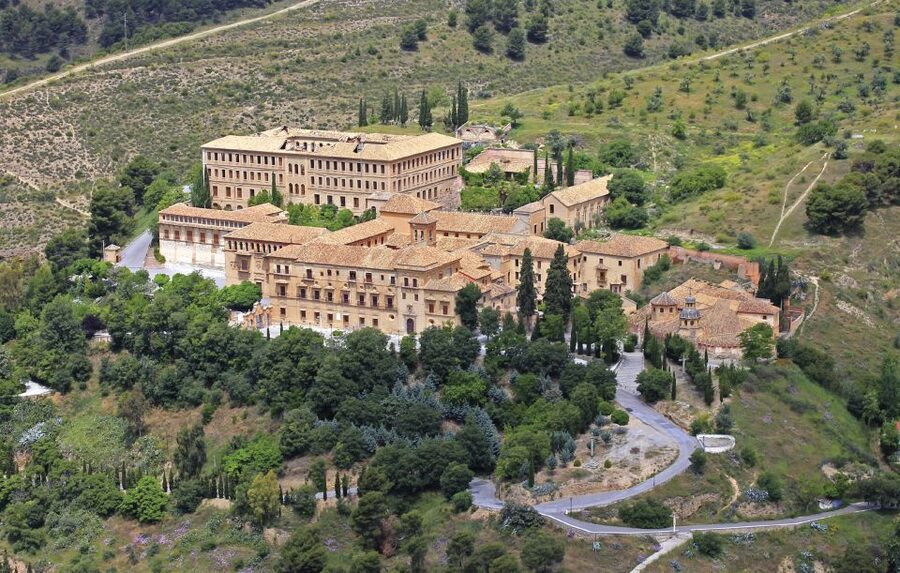
The abbey sits on Mount Valparaiso in the Sacromonte area. Its position matters. You are visiting a religious complex built around discoveries that were treated as important relics, while also looking down over the city that grew around them.
The site was developed over the 17th and 18th centuries, though its story begins earlier. In 1594, relics and leaden tablets were discovered in the area. Those finds helped set the building project in motion and gave Sacromonte a special place in Granada’s Christian identity.
I find that context useful because it changes how you read the buildings. The churches and courtyards are not isolated decorations. They are parts of a complex created to honor discoveries that shaped the religious life of the city.
More Skip-the-Line Audio Guide Tickets in Spain
- Barcelona: Sagrada Familia Entry Ticket with Audio Guide
★ 4.6 · 105,312 reviews - Granada: Alhambra Entry Ticket with Audio Guide
★ 4.1 · 5,950 reviews - Casa Batllo Admission Ticket with Intelligent Audio Guide
★ 4.5 · 3,168 reviews
Starting with the sacred caves
Plan to give the caves your full attention. They are the part of the visit most likely to feel unlike anything else on your Granada schedule.
The caves are tied to the origin story of Sacromonte and to the long connection between the abbey and Granada’s Romani community. The spaces are more intimate than the main religious buildings, and their plain surfaces help you focus on the story rather than on grand decoration.
You should expect the caves to be meaningful rather than extensive. This is not a large underground attraction with a long route. Instead, the caves are one important section of a wider religious complex, and their value comes from the traditions and discoveries associated with them.
The audio guide is useful here because the setting alone cannot explain why these spaces matter. It gives you the historical frame as you move through the site. English, Spanish, Italian, French, and German are available, but Dutch is not listed among the languages.
Wear comfortable shoes. The ticket information specifically recommends them, and that advice makes sense for a visit involving religious buildings, courtyards, and cave areas on a hilltop site.
Following the story of the 1594 tablets
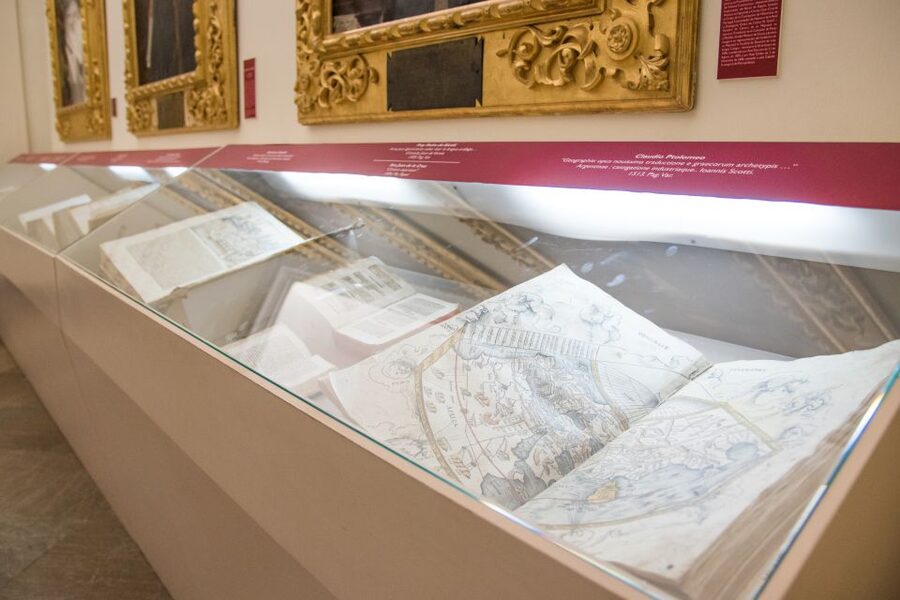
The leaden tablets are the key historical clue at Sacromonte Abbey. Their discovery in 1594 helped inspire the construction of the abbey, so you should look for them as you move through the complex and its exhibitions.
They are important because they connect the physical buildings to the beliefs and debates of the period. Without that story, the abbey could seem like a collection of churches and rooms. With it, the site becomes a place built around relics believed to have great religious importance.
The permanent exhibition is included with your ticket, as is any temporary exhibition open during your visit. These displays give you more context than you would get from simply walking through the cloisters.
I would not rush this section. At only $8 per person, the exhibitions add real value, especially if you like history that depends on objects and documents rather than only on architecture. The ticket is inexpensive compared with major Granada attractions, yet it gives you access to several parts of the complex.
Churches, courtyards, and four centuries of building
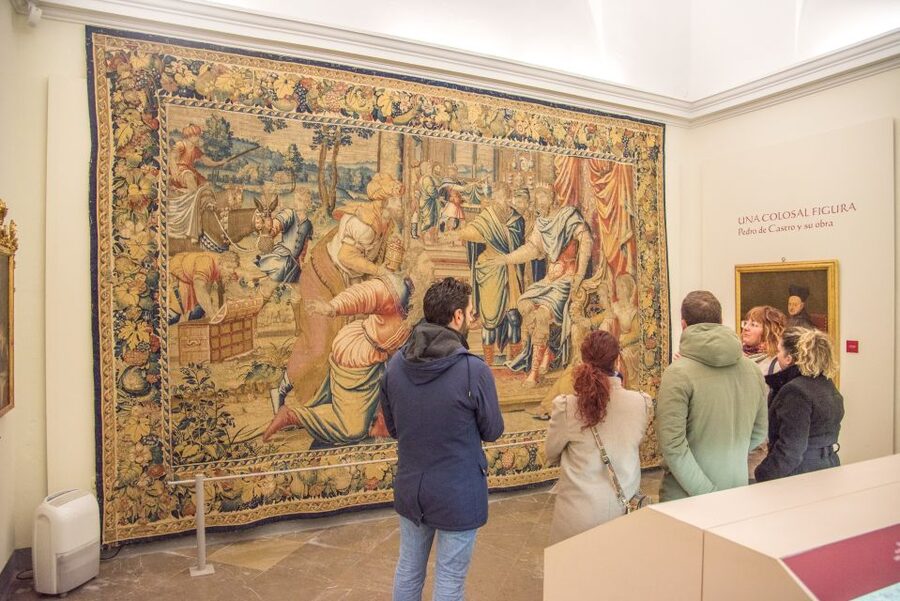
The abbey is not one single room or church. It is a group of religious buildings completed across the 17th and 18th centuries. You move between churches, courtyards, exhibition areas, and monastery spaces, with each section adding another piece to the story.
That variety helps keep the visit from feeling repetitive. One moment you are considering the caves and relics, then you are in a courtyard or a quieter interior space. The buildings show how the site developed over time rather than appearing as one perfectly planned monument.
You will not find a fixed, guide-led schedule here. The ticket is valid for one day, and the audio guide lets you set your own pace. That works well if you want to pause for photographs, spend extra time with the exhibits, or sit quietly in the cloisters.
The tradeoff is that a self-guided visit requires a little attention. You need to follow the audio commentary and make sense of the sequence yourself. If you prefer a live guide who responds to questions, this ticket does not provide that kind of personal explanation.
Same place, a different route to walk:
- Barcelona: Casa Batlló Entry with Self-Audioguide Tour
★ 4.7 · 25,359 reviews - Barcelona: Palau de la Música Self-Guided Tour
★ 4.6 · 3,603 reviews - Madrid: Las Ventas Bullring Tour with Audio Guide
★ 4.6 · 3,154 reviews - Cordoba: Mosque-Cathedral E-Ticket with Audio Guide
★ 4.1 · 2,895 reviews
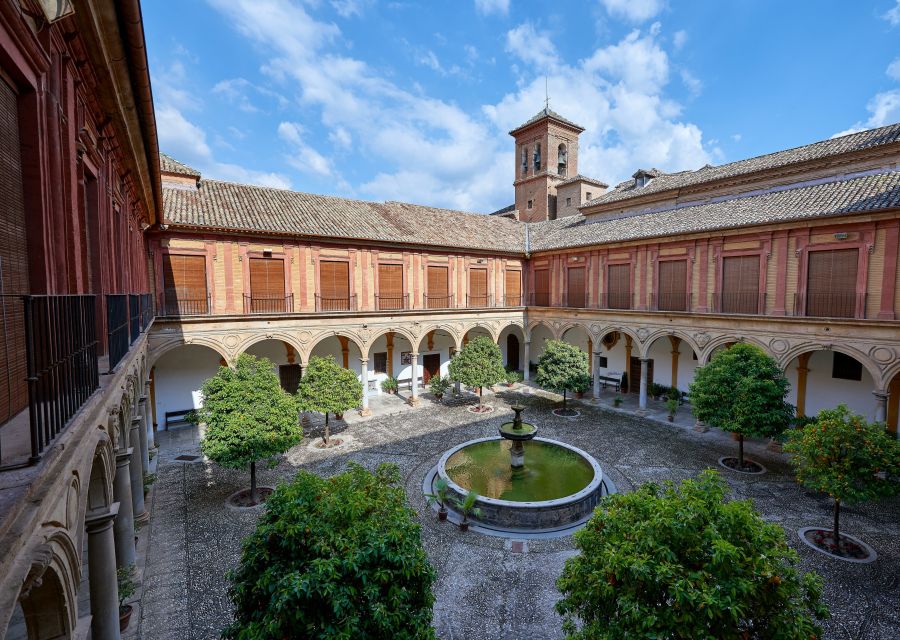
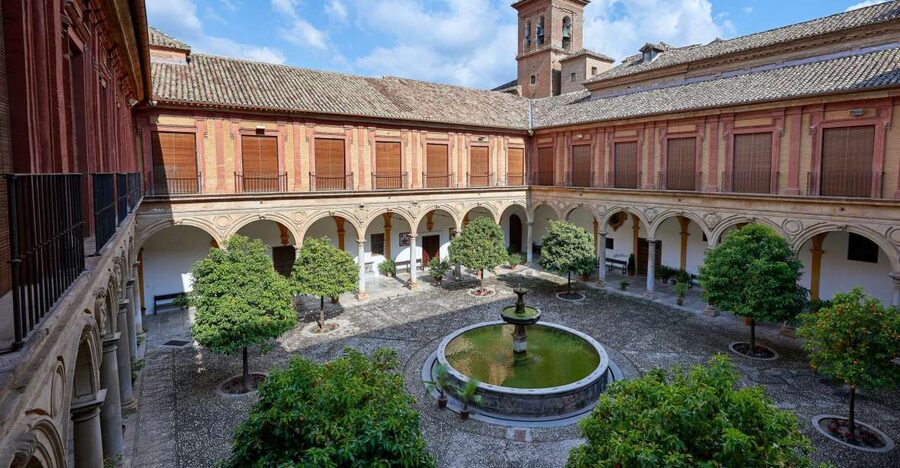
The cloisters are the quiet heart of the visit
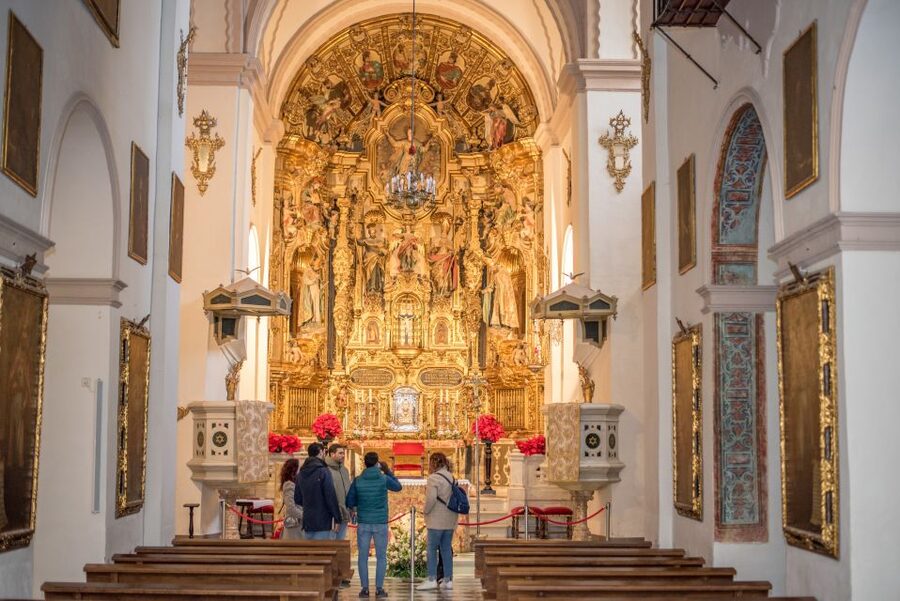
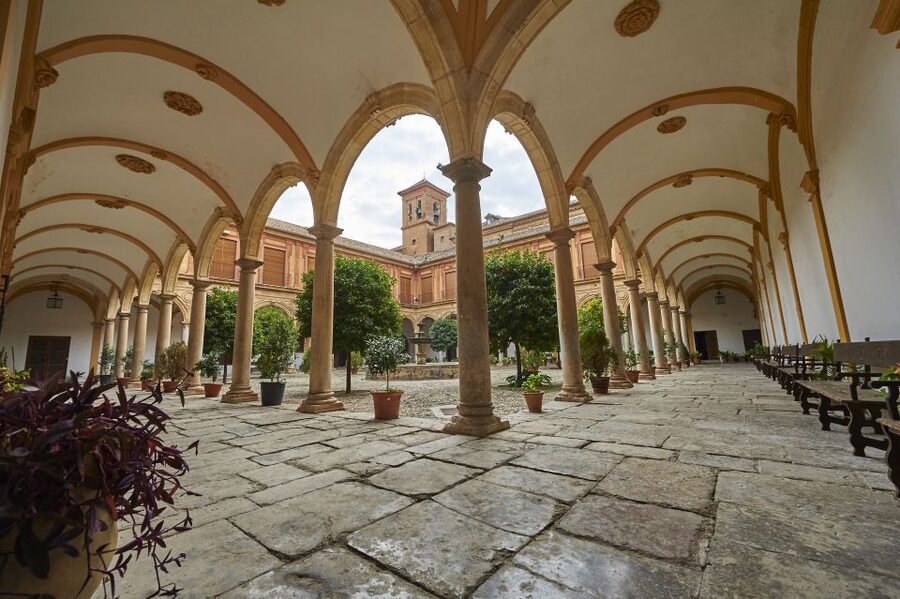
The cloisters provide a welcome change of pace. Granada’s major sights can involve crowds and constant movement, but the abbey’s cloisters invite you to slow down.
Their appeal is not just visual. The quiet helps you notice the scale and purpose of the monastery. You can pause beneath the covered walkways, take in the courtyard, and let the audio guide lead you through the religious setting without rushing from one display to the next.
I especially like this part for travelers who need a calmer hour between larger attractions. You do not have to turn every stop into a checklist. The cloisters are a place to listen, look, and let the site’s atmosphere do some of the work.
The visit is still an active historical experience, not a meditation retreat. You will be moving through several buildings and learning about the abbey’s origins. But the quiet spaces give the overall visit a better rhythm.
Understanding the abbey’s connection to Granada’s Romani community
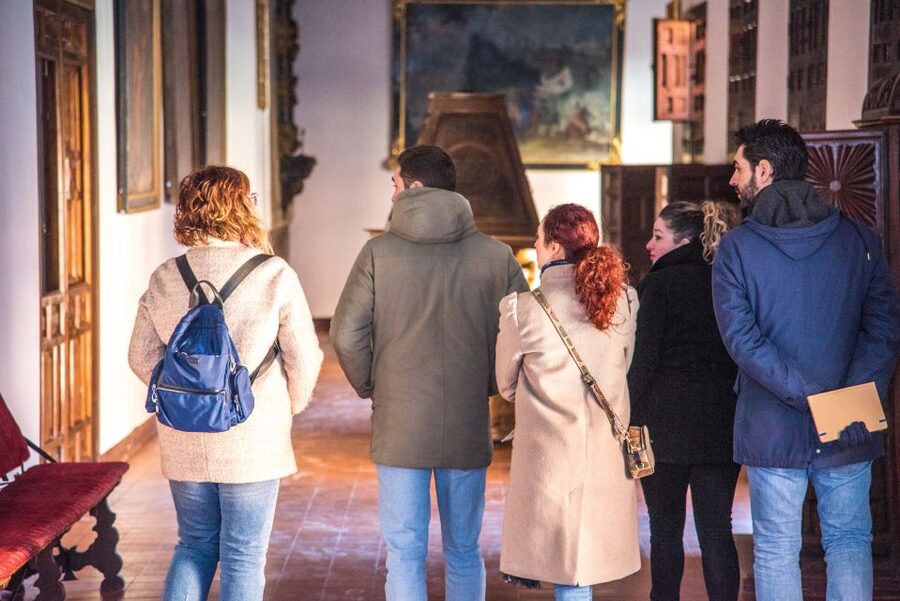
Sacromonte Abbey matters beyond its religious buildings. It also has a lasting connection to Granada’s Romani community, which gives the site a contemporary and local dimension.
That connection is important because it stops the visit from becoming only a story about distant religious events. Sacromonte has meaning in the life of Granada, and the caves are part of that broader identity.
The information provided for the visit does not promise a separate performance or a dedicated cultural program. You should come for the abbey, caves, history, and exhibitions, while paying attention to the explanation of the community’s role in Sacromonte.
I value this kind of context because it makes the place feel less like an isolated monument. You are not only seeing old stone and religious objects. You are learning why this hill and these spaces continue to matter to Granada.
Taking in Granada from Mount Valparaiso
Save time for the high point of the abbey. From Mount Valparaiso, you get panoramic views across Granada.
The view gives you a useful sense of the city’s setting. After spending time inside churches, caves, and cloisters, you can step back and see how the abbey sits above the urban center.
Do not treat the viewpoint as a quick photo stop only. It helps connect the site to the rest of your Granada visit. The abbey’s position on the hill explains its sense of separation and gives the religious complex a strong visual relationship with the city below.
The view is also one reason to avoid rushing in and out. Your ticket is valid for one day, so you have room to take your time during the visit. The experience is better when you allow a quiet pause outside rather than treating the abbey as a short indoor stop.
What the $8 price really gives you
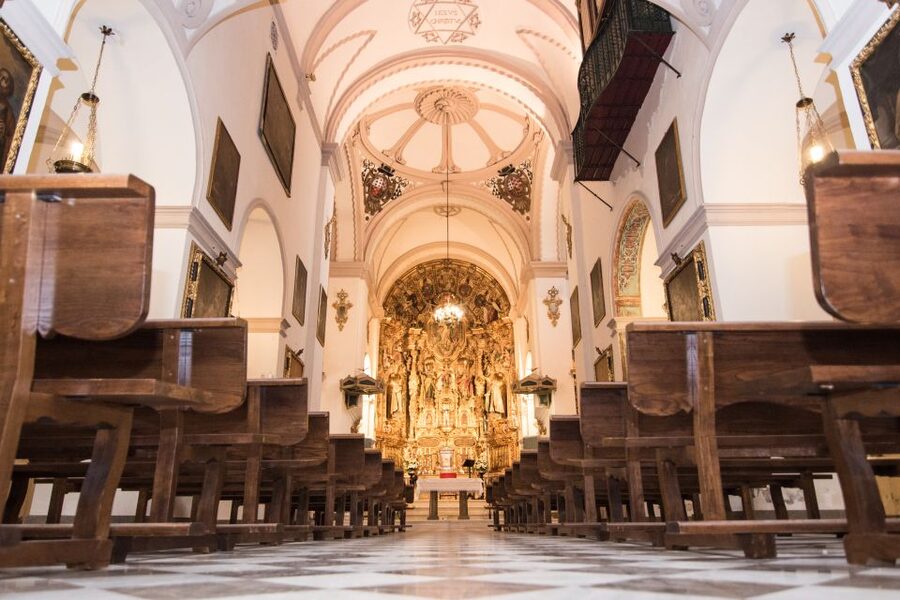
At $8 per person, this is a modestly priced cultural visit. The admission covers the entrance fee, the audio guide, and access to both the permanent and temporary exhibitions.
That combination makes the ticket good value if you want more than a quick look at a church. You are paying for access to a complete religious complex, including the caves, courtyards, monastery areas, exhibitions, and viewpoint.
The price is especially reasonable for independent visitors. You do not need to pay for a private guide, and you can use the audio commentary in one of five listed languages: Spanish, English, Italian, French, or German.
The value depends on your interests. If you only want a famous panoramic view, the abbey may feel like more history than you need. If you enjoy religious architecture, unusual sites, local culture, and objects linked to a place’s origin story, the admission gives you plenty to explore.
Food, drinks, and transfers are not included. Plan for those separately, and do not expect this ticket to solve transportation or refreshment needs.
Timing matters more than the one-day validity suggests
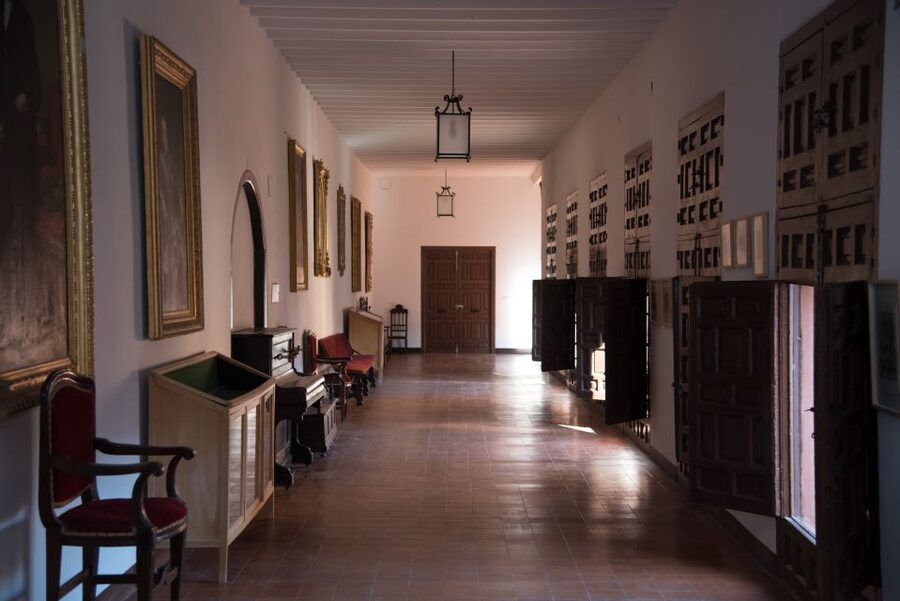
The ticket is valid for one day, but that does not mean you can arrive at any hour. You need to check the available times and the current opening schedule before setting out.
The ticket office closes one hour before the monument closes. Arriving late can leave you with too little time or prevent entry altogether.
There is also a practical warning about changing or unclear hours. A midday closure has been reported, with the site closing around 1 p.m. and reopening later in the afternoon, around 3:30 p.m. Treat that as a reason to verify the schedule for your specific date rather than assuming the hours shown elsewhere are current.
I would plan the abbey as a deliberate stop, not as something to squeeze in at the end of a long day. Give yourself enough time for the caves, audio guide, exhibitions, cloisters, and viewpoint.
A separate entrance is available for skipping the line. That can save time, though it does not remove the need to check opening hours or arrive before the ticket office closes.
Making the audio guide work for you
The audio guide is included, which is one of the strongest practical features of this ticket. It lets you explore without waiting for a scheduled group or following someone else’s pace.
Use it selectively if you have limited time. Focus on the caves, the 1594 discoveries, the leaden tablets, the Romani connection, and the main religious buildings. If you have more time, listen through the exhibition sections and pause in the cloisters between stops.
The guide is offered in Spanish, English, Italian, French, and German. Dutch is not available, so Dutch-speaking visitors should plan around that limitation.
Because there is no guide’s name provided, you should think of this as an audio-led visit rather than a personal tour. That means you gain flexibility but lose the chance to ask follow-up questions or receive tailored explanations.
For me, that tradeoff works well at a site where quiet and personal pacing are part of the appeal. You can stop the commentary, look more closely at an object, or spend longer at the view without holding up a group.
Who should book this Sacromonte visit?
I would recommend it to you if you enjoy unusual religious sites, local history, underground spaces, and self-guided sightseeing. It also suits anyone who has already seen Granada’s best-known attractions and wants a quieter place with a different story.
Families may appreciate the caves and the freedom to move at their own pace, though comfortable shoes remain important. History-minded visitors will get the most from the leaden tablets, relic story, exhibitions, and changing role of the abbey over four centuries.
You should think twice if you want a live guide, a food stop, or included transportation. None of those is part of the ticket. You also need to be comfortable checking the schedule carefully, since the hours may not match every online source.
Smoking indoors, pets, alcohol, and drugs are not allowed. Bring a passport or identity card, along with shoes suitable for walking around the complex.
Should you book the Sacromonte Abbey ticket?
Book it if you want a reasonably priced, flexible visit with caves, cloisters, exhibitions, and a major city view in one historic complex. The 1594 leaden tablets give the abbey a clear story, while the Romani connection adds local meaning beyond the religious architecture.
Skip it if your schedule is already packed with large monuments and you prefer a live guide or a tightly organized tour. The visit rewards patience and attention, and its changing hours require planning.
For $8, I think this is a smart Granada add-on, especially when you want a calm counterpoint to the city’s grander sights. Check the current hours, arrive well before the ticket office closes, and leave enough time for the caves and the view.
FAQ
How much does entry to Sacromonte Abbey cost?
The listed price is $8 per person.
How long is the Sacromonte Abbey ticket valid?
The ticket is valid for one day.
Is an audio guide included?
Yes. An audio guide is included with admission.
Which languages are available for the audio guide?
The audio guide is available in Spanish, English, Italian, French, and German.
Are the caves included in the ticket?
Yes. The ticket provides entry to Sacromonte Abbey, including its sacred caves.
Are the exhibitions included?
Yes. Entry to the permanent exhibition and temporary exhibition is included.
Does the ticket include transportation?
No. Transfers are not included.
Is food or drink included?
No. Food and drinks are not included.
What should I bring?
Bring a passport or identity card and comfortable shoes.
Can I cancel the booking?
Yes. You can cancel up to 24 hours in advance for a full refund.
Just added around Spain
- San Antonio Bay Self Drive Boat Rental★ 4.5 · 5 reviews
- Granada’s Realejo District: A Self-Guided Tour of the Old Quarter★ 4.0 · 5 reviews
- Granada Scavenger Hunt and Sights Self-Guided Tour★ 5.0 · 9 reviews
- Entrance to the Alhambra and Generalife with Audio Guide★ 3.5 · 38 reviews
- Gijon Self-Guided Sherlock Holmes Murder Mystery Game★ 3.5 · 4 reviews
- Montsacopa: An audio tour in the Volcano in the Centre of the City★ 4.5 · 3 reviews
- Mosque-Cathedral of Córdoba E-Ticket with Audio Guide★ 3.5 · 15 reviews
- City of Caliphs: A Self-Guided Walking Tour of Córdoba’s History★ 4.5 · 12 reviews
Spain Audio Tours, compared.
Barcelona: Sagrada Familia Entry Ticket with Audio Guide
Read our review →
Barcelona: Casa Batlló Entry with Self-Audioguide Tour
Read our review →
Granada: Alhambra Entry Ticket with Audio Guide
Read our review →
Barcelona: Palau de la Música Self-Guided Tour
Read our review →
Casa Batllo Admission Ticket with Intelligent Audio Guide
Read our review →
Madrid: Las Ventas Bullring Tour with Audio Guide
Read our review →
Cordoba: Mosque-Cathedral E-Ticket with Audio Guide
Read our review →
Nerja: Caves of Nerja Entry Ticket with Audio Guide
Read our review →Browse the lists this tour appears in