
REVIEW · ITALY AUDIO TOURS
From Lucca to Pisa: Self-Guided Bike Tour
The best part of this experience is that Pisa becomes the finish line for a scenic 33-kilometer ride, not simply another stop on a crowded Italian day trip. You leave Lucca by bike, pass through fields and small towns, follow the Serchio River, and arrive at the Leaning Tower with a real sense of having crossed Tuscany under your own power.
I like the well-kept e-bikes and helpful setup at the shop just outside Lucca train station. I also like the quiet route, which uses country roads, cycle paths, gravel tracks, and only a few busier crossings. The main caution is navigation: the app can drain your phone battery, and some sections require care at roundabouts, on main roads, or over rougher surfaces.
Key points before you book
- 33 kilometers to Pisa: Plan on two to four hours of riding, before stops and sightseeing.
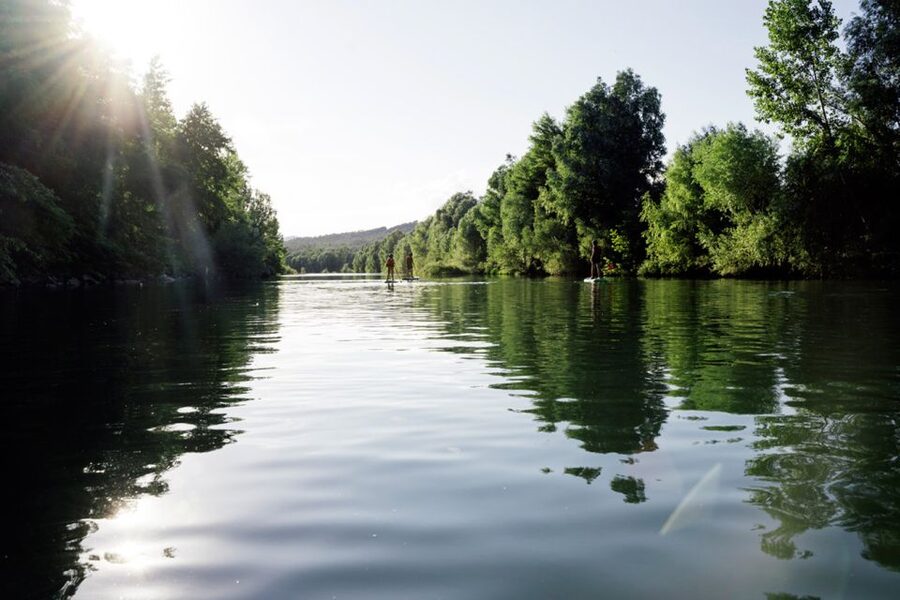
- A different view of Tuscany: The route follows the Serchio River and passes fields, villages, gravel tracks, and small roads around the Monti Pisani.
- E-bikes are worth considering: The route is mostly manageable, but heat, distance, and mixed surfaces make electric assistance useful.
- San Giuliano Terme is the natural break: After about 20 kilometers, stop in the central square for a drink near the spa.
- The return takes planning: Cycle back on a separate route, or take a roughly 25-minute train ride from Pisa.
- Protect your phone battery: Download the route offline if possible, and bring a charged power bank if you plan to ride both ways.
Why this Lucca to Pisa ride is worth your day
Lucca and Pisa are close on a map, but the usual train trip gives you little sense of the countryside between them. This ride fills that gap. You begin near Lucca train station, pick up your bike, and gradually leave the city behind.
The route is designed for independent riding rather than a guided group. You get a trekking bike or e-bike, a handlebar phone holder, a lock, a repair kit, and access to a route app. That combination keeps the day simple while still giving you room to stop whenever a view or village catches your eye.
At $34 per person, the experience offers good value if you enjoy active sightseeing. The price covers the bike and the route tools, but not your return train, food, or drinks. Add those costs before booking. The tour makes especially good financial sense if you use the bike to reach Pisa and then take the train back, since you get a full day of scenery without paying for a private guide or vehicle.
I would not treat this as a quick transfer between two cities. The ride to Pisa alone can take two to four hours. Add a café stop, time around the Leaning Tower, and the return journey, and you have a full day.
More Self-Guided Bike Tours in Italy:
- Private Self-Guided E-Bike Ride in Tuscany with Vineyard Visit
★ 5.0 · 775 reviews - Pisa Self-Guided Bike Tour: Leaning Tower & Square of Miracles
★ 5.0 · 105 reviews - Self-guided Bike Tour from Lucca to Pisa
★ 4.5 · 99 reviews
Starting beside Lucca train station
The meeting point is just outside Lucca train station, on the left side of the square. That is convenient if you arrive by train, and it keeps the first part of the day easy to manage.
Allow time for fitting the bike and learning the controls. This matters most if you have never used an e-bike. The shop staff explain how the bikes work, provide helmets according to the experience arrangements described by riders, and help set up the app. Gianluca, the owner mentioned by name in the experience, has also been praised for taking time with bike instructions and practical advice.
The bikes are fitted with phone holders, so you can follow the GPS route without keeping your phone in your hand. Download the route before leaving if you can. One useful detail is that the app may work better after being set up offline at the shop. You should still begin with a full phone charge, since continuous GPS use can consume power quickly.
The trekking bikes suit riders over 150 centimeters tall. E-bikes are available for riders over 155 centimeters and over 14 years old. The bicycle frames are rated for up to 130 kilograms. No child seat, trailer, or tag-along can be attached, so this is not a good choice for families who need those additions.
Leaving Lucca through the Tuscan countryside
The ride begins with Lucca itself, then moves into quieter roads beyond the city. You will see several kinds of riding surface during the day: paved streets, cycle paths, hard-packed dirt, gravel, and ordinary country roads.
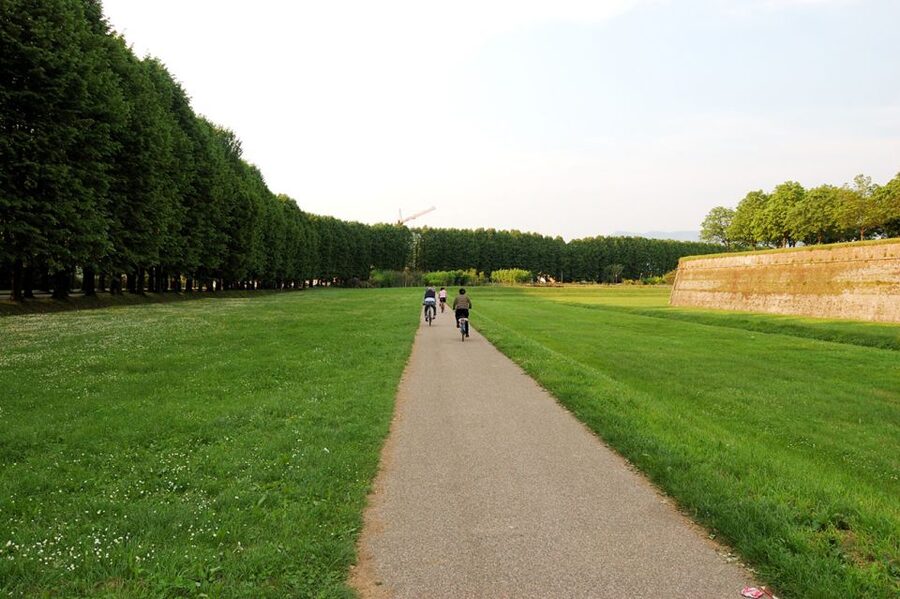
That variety is part of the appeal. You are not locked onto a single cycle path with the same view for hours. Instead, the ride changes pace as it moves past fields, small settlements, and the foothills around the Monti Pisani.
The outward route is the more adventurous direction. The app leads you along secondary roads and tracks, sometimes through open fields. Most of the way feels calm and suitable for ordinary cyclists, but you should not expect a fully separated bike trail from Lucca to Pisa.
There are a few sections on busier roads and several roundabouts. Cars have generally been described as respectful, but you still need to watch traffic and make confident turns. If you are nervous in traffic, stay close to your group and take the road crossings slowly.
The route app is useful, but it is not perfect. It can be slow on some phones, and switching between route screens may take a little practice. Pay attention when approaching a junction rather than relying only on a quick glance at the map. The route back is different from the outward route, so make sure you know how to open both directions before leaving Lucca.
The Serchio River and the 20-kilometer mark
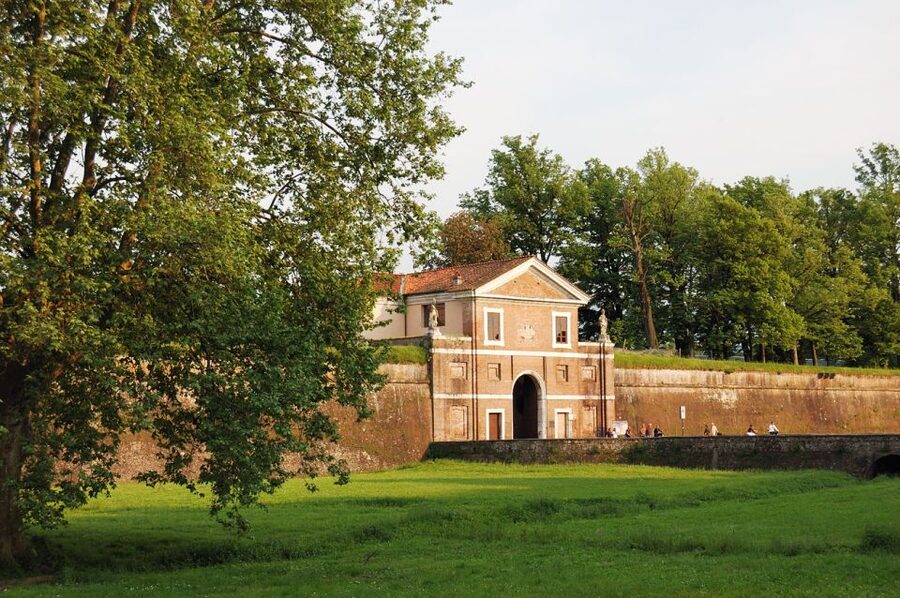
Following the Serchio River gives this ride its best sense of place. You get open views, a breeze, and a softer rhythm than you would find on a direct road between the two cities.
The river section also helps break up the distance. You are not simply counting kilometers to Pisa. The route passes through a mixture of country scenery and small towns, with the Monti Pisani providing a backdrop as you continue south.
After about 20 kilometers, San Giuliano Terme makes a sensible refreshment stop. Its central square, near the spa, is a good place to pause for a cold drink before the final stretch. Food and beverages are not included, so carry water and budget for a café stop.
This is also the point where you will appreciate the e-bike most if the weather is warm. Several rides took place in temperatures around 30 to 31 degrees Celsius, and electric assistance helped keep the day comfortable. The route is not described as a major mountain ride, but heat and distance can be tiring on a standard bike.
More Audio Tours in Italy:
- Rome: Pantheon Fast-Track Ticket and Official Audioguide
★ 4.5 · 27,353 reviews - Rome: Colosseum & Forum with Audio Guide App -Optional Arena
★ 4.2 · 24,770 reviews - Venice: Grand Canal Gondola Ride with App Commentary
★ 4.1 · 23,020 reviews - Florence: Timed Entry to Michelangelo’s David + Audio App
★ 4.6 · 19,496 reviews
Reaching Pisa and Piazza dei Miracoli
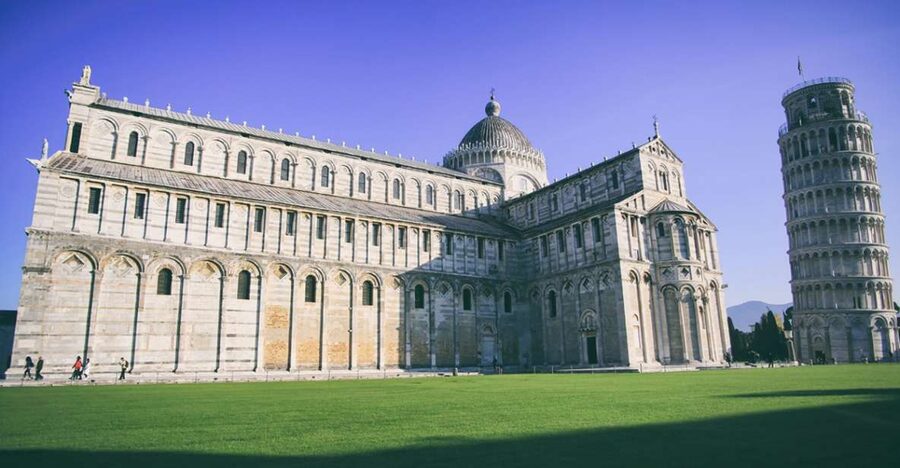
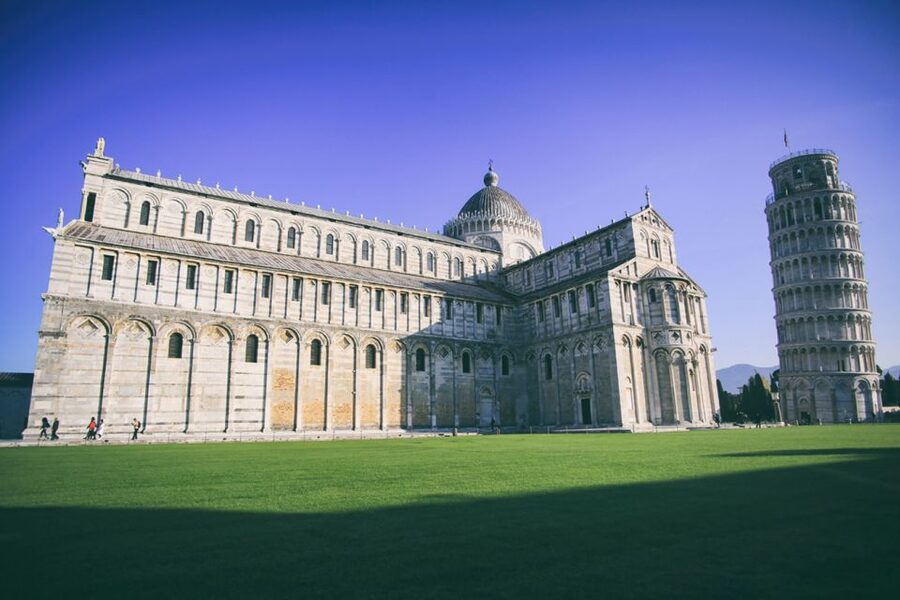
The itinerary ends at Piazza dei Miracoli, directly in front of the Leaning Tower. That is a satisfying finish. You have traded the usual arrival by train or bus for a final approach through the city on two wheels.
Leave enough time for Pisa itself. The ride is not a guided visit to the tower, cathedral, or baptistery, so admission tickets and sightseeing are your responsibility. If you plan to go up the Leaning Tower, leave a generous gap between bike pickup and your timed entry. A useful planning margin is two and a half to three hours from collecting the e-bike to any tower ticket, since the ride, stops, and navigation can take longer than expected.
The final approach is also when you need to think about the bikes. You cannot leave them unattended at the tower. The simplest plan is to return by train with them, using the bike storage wagons. The train ride back to Lucca takes about 25 minutes, and tickets can be purchased in advance with help from the local partner.
Some riders have also arranged to leave the bikes at a partner shop near Pisa train station for an extra charge. That can make sense if you are continuing to Florence or another destination from Pisa. Confirm this option and its cost when you collect the bike, rather than assuming the basic price includes it.
Returning by train or riding back
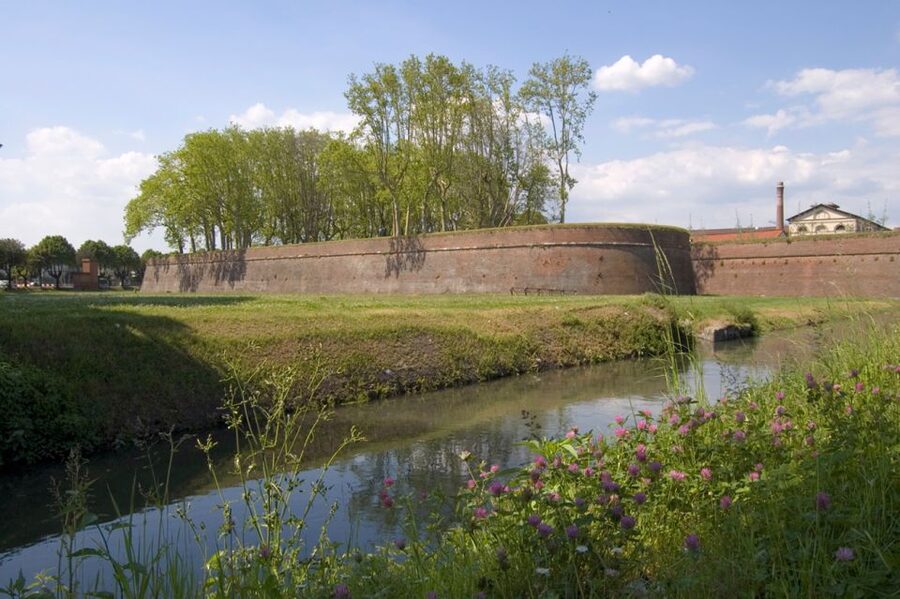
The train is the practical choice for many people. It saves energy for Pisa and avoids turning a pleasant day into a long endurance ride. Remember that the return ticket is not included.
Handling the bikes at the stations requires some muscle. The bikes are full-size models and may not fit in a station elevator. At Lucca, you may need to carry the bike down from the train platform area, although a ramp helps when leaving the station. If that sounds awkward, ask for assistance and allow extra time.
Cycling back gives you more value and another view of the countryside. The return route is more direct and has been described as easier to follow than the outward route. It still adds another 33 kilometers, so the full round trip is roughly 66 kilometers, or about 41 miles, depending on the exact path used.
If you want to ride both ways, start early. You need time for the journey, a drink in San Giuliano Terme, Pisa sightseeing, and bike return before the shop closes. A power bank is especially important for this option. The app can use a phone battery rapidly over several hours.
Standard bike or e-bike?
A trekking bike is suitable if you are comfortable cycling for several hours and handling dirt tracks, paved roads, and occasional traffic. The route is often fairly flat, and fit riders have completed it without electric assistance.
Still, I would choose the e-bike for most visitors. The cost difference is worth considering against the heat, distance, and mixed surfaces. Electric assistance lets you enjoy the river, towns, and views without arriving in Pisa too tired to explore the square.
The e-bike is not a substitute for cycling ability. You still need to steer, brake, manage junctions, and handle the bike on gravel. The first-time riders who had a proper explanation at the shop found the controls manageable, but take the setup seriously and ask questions before setting off.
This activity suits teenagers over the stated age limit, couples, families with older children, and small groups of reasonably fit adults. It does not suit anyone looking for a short, fully guided excursion or a ride with child trailers and seats.
What can make the day frustrating
The biggest weakness is the navigation system. Most of the time it should guide you well, but the app may be slow, unclear at a junction, or hungry for battery power. A second phone or a portable charger is sensible, especially for a round trip.
The outward route also has more surface changes than a casual city cycle. You may ride on hard-packed dirt, rougher tracks, paved roads, and short stretches of busier road. One section around a railway crossing has caused confusion, and careful map reading can help you choose the better approach.
Weather is another factor. The route offers little protection from heat in summer, and sudden rain is possible. Carry water and a light rain layer. The ride can still be enjoyable in changing weather, but your comfort depends on being prepared.
Finally, the distance can be easy to underestimate. The headline idea of Lucca to Pisa sounds simple, but this is a substantial one-way ride. If your group has mixed fitness levels, book e-bikes and decide in advance that you will take the train back.
Who should book this experience?
I would book this if you want to see rural Tuscany without renting a car, and if you like the idea of making Pisa the reward at the end of an active day. It is a strong choice for anyone staying in Florence who wants a break from city streets and a chance to see fields and smaller towns.
The experience also works well for independent visitors. You get structure from the GPS route but keep control of your pace. Stop for a drink, take photographs, or spend extra time in Pisa without following a guide’s timetable.
I would skip it if you dislike navigation, cannot comfortably cycle for several hours, or need a fully separated cycleway. I would also think twice about riding back unless your group is fit and starts early.
Final verdict: a memorable route with a few practical traps
This Lucca to Pisa bike ride gives you something a train cannot: a gradual change from city streets to river paths, fields, villages, and the famous square in Pisa. The well-maintained bikes, convenient starting point, and flexible train return make the day easy to arrange.
Book the e-bike if you are unsure about the distance. Download the route, charge your phone, carry water, and decide in advance how you will return. With those details handled, the $34 starting price buys an unusually personal way to connect two of Tuscany’s best-known cities.
FAQ
How long is the bike ride from Lucca to Pisa?
The one-way route is approximately 33 kilometers. The ride takes about two to four hours, depending on your pace and stops.
Can I return to Lucca by train?
Yes. You can return by bike or take a direct train that takes about 25 minutes. The return train ticket is not included, and the bikes fit into the train’s storage wagons.
Is the ride suitable for beginners?
The route is described as easy to intermediate and is suitable for many reasonably fit cyclists. It includes dirt, gravel, paved roads, cycle paths, some busier roads, and roundabouts, so you need to be comfortable handling different surfaces and traffic points.
Should I choose a trekking bike or an e-bike?
A trekking bike can work if you are reasonably fit. An e-bike is a sensible choice for the 33-kilometer distance, warm weather, and mixed surfaces. E-bikes are available for people over 155 centimeters and over 14 years old.
Is food included?
No. Food and beverages are not included. San Giuliano Terme, about 20 kilometers into the route, is a suitable place to stop for a drink.
Can I attach a child seat or trailer?
No. A seat, trailer, or tag-along cannot be connected to the trekking bikes or e-bikes.
What equipment is provided?
You receive a trekking bike or e-bike, bike lock, route app, handlebar phone holder, and repair kit. You should bring a charged phone, and a power bank is useful because GPS navigation can use the battery quickly.
Just added around Italy
- Genoa Historic Centre Quest: A Self-Guided Puzzle Adventure★ 4.0 · 3 reviews
- Genova Walking Tour with Audio and Written Guide by a Local★ 4.5 · 33 reviews
- Self-Drive (No Licence) Boat Rental in Portofino Gulf★ 5.0 · 12 reviews
- Finance and Nobility: Explore medieval Genoa on a self-guided audio tour★ 4.5 · 7 reviews
- Florence: Uffizi Gallery Reserved Ticket & Digital Audio Guide★ 4.5 · 3 reviews
- Around Florence Hills: App‑Guided e‑Vespa Tour + Wine&Food★ 4.5 · 22 reviews
- Florence: Uffizi Gallery Audio Guided Tour led by Tour Leader★ 3.5 · 6 reviews
- Uffizi Gallery: Self-guided App Visit & Optional Accademia Museum★ 4.0 · 19 reviews
Italy Audio Tours, compared.
Rome: Pantheon Fast-Track Ticket and Official Audioguide
Read our review →
Rome: Colosseum & Forum with Audio Guide App -Optional Arena
Read our review →
Venice: Grand Canal Gondola Ride with App Commentary
Read our review →
Florence: Timed Entry to Michelangelo’s David + Audio App
Read our review →
Rome: City Sightseeing Hop-on Hop-off Bus with Audioguide
Read our review →
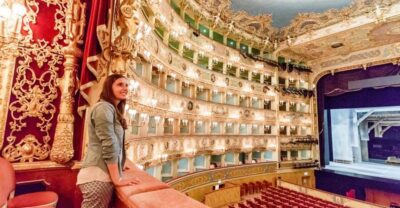
Venice: La Fenice Opera House Entry Ticket with Audio Guide
Read our review →
Rome: Colosseum, Forum, Palatine Hill Entry & Audioguide App
Read our review →Browse the lists this tour appears in