
REVIEW · ITALY AUDIO TOURS
Agrigento – Valley of the Temples – audio guide
The most useful thing about this Valley of the Temples audio guide is its GPS map. The ancient site is spread across a large open area, and the app helps point you toward the right temple instead of leaving you to guess which ruin you are looking at. You listen on your own phone, at your own speed, with no meeting point and no fixed group.
I like two things in particular: the guide covers myths, rites, and local customs, not only dates, and the 11 descriptions are short enough to fit into a walking visit. The main drawback is that the explanations may feel thin if you want a full guided tour. One user found some sections barely a minute long, while another found them clear and complete.
Key points to know
- GPS guidance: The app uses geolocated points to direct you around the archaeological area.
- 11 listening stops: You receive an introduction plus descriptions of 11 places along the route.
- Five languages: Choose English, Italian, French, Spanish, or German.
- Use it before arrival: Read the introduction and view the photos and illustrations before you visit.
- Bring your own entry ticket: The €4.70 price covers the digital audio guide, not admission to the site.
- Download on Wi-Fi: Load the material before you go, since mobile coverage may not be dependable everywhere.
What this €4.70 guide actually provides

This is a small digital product designed to add structure to an independent visit. After buying it, you use the ITGUIDES app on your smartphone and enter the code supplied at purchase. There is no guide waiting at the entrance, no group to join, and no set departure time.
The price is low compared with a private guide or a formal group tour. At €4.70 per person, it can be good value if you mainly want help identifying the monuments and a little context as you walk. It is less convincing if you expect long, dramatic storytelling or detailed archaeology at every stop.
The guide is valid for 365 days and does not expire. That makes it useful if your plans change, or if you want to prepare at home before arriving in Sicily. You can listen to the introduction in advance, check the route, and decide how much time you want to give the site.
The overall rating is 3.9 out of 5 from 43 ratings. That tells you exactly what to expect: the app works well for some people as a simple orientation tool, but the depth of the commentary does not suit everyone.
More Audio Tours in Italy:
- Rome: Pantheon Fast-Track Ticket and Official Audioguide
★ 4.5 · 27,353 reviews - Rome: Colosseum & Forum with Audio Guide App -Optional Arena
★ 4.2 · 24,770 reviews - Venice: Grand Canal Gondola Ride with App Commentary
★ 4.1 · 23,020 reviews
Starting with the introduction to Agrigento
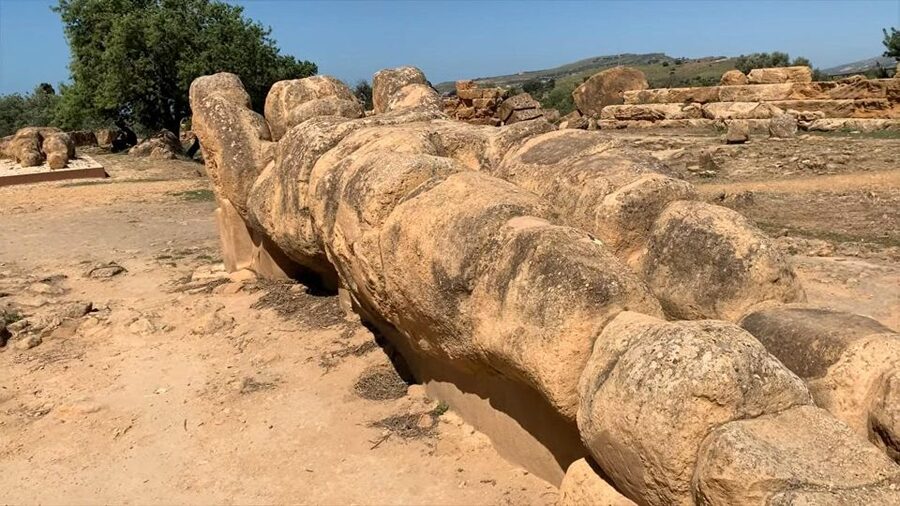
The first recording gives you a broad introduction to the archaeological area and its ancient Greek setting. This matters because the Valley of the Temples is easier to appreciate when you understand that you are not simply looking at a few isolated ruins. The temples belong to a much larger ancient setting, shaped by religion, public life, and ritual.
The introduction is also the best part to hear before you arrive. You can use it to put the site in context instead of spending your first few minutes at the entrance trying to work out how the app functions.
I would listen to this section at home or on the way to Agrigento, then save your attention for the individual sites. The app also includes photographs and illustrations. Those images can help you compare what you see today with the way a building or feature is understood from surviving evidence.
The limitation is that the supplied information does not identify the 11 stops by name. You should therefore think of this as a guided route through selected points rather than a detailed temple-by-temple academic course.
Following the 11 GPS-marked points
The central feature is a set of 11 descriptions tied to locations on the site. When you approach one of the marked points, the app helps you identify where you are and directs your attention to the correct place.
That is especially handy in a large archaeological area. Ruins can blur together when you are looking at several ancient structures in one walk. A geolocated map gives each stop a purpose, and it reduces the chance that you will listen to a description while standing in front of the wrong monument.
You can pause, replay, or skip sections as you like. There is no need to keep pace with a guide or wait for other people to finish taking photographs. If a temple interests you, you can linger nearby. If a short description is all you need, you can move on.
The 11 stops also create a useful sense of progress. You can see how much of the selected route remains, which helps if you are visiting in hot weather or have limited time. Still, do not confuse 11 stops with 11 long lectures. The audio sections are deliberately compact. One rating praised the concise format and the useful legends, while another judged the descriptions too brief to justify the cost.
What the commentary covers beyond stones and dates
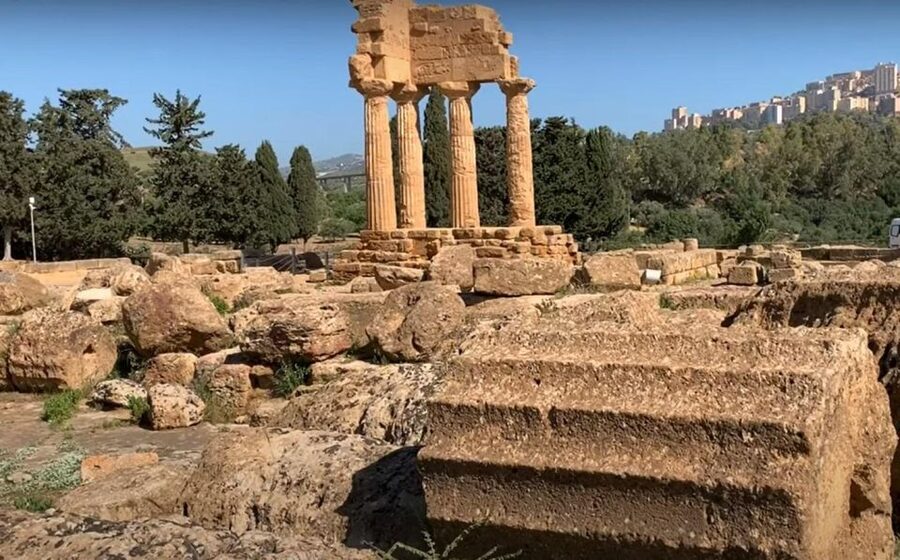
The strongest part of the content is its effort to explain more than architecture. You hear about ancient deities, rites, myths, legends, and customs connected with the site.
That material gives the temples a human purpose. A column or broken wall is hard to read on its own. A short explanation of the god worshipped there, or the ritual attached to a sacred space, can make the remains easier to understand.
The descriptions also include curiosities and legends. I like that balance. A visit to an archaeological site should give you solid facts, but a little story helps you remember what you heard once you are back in town.
The guide does not appear to aim for a full archaeological lecture. You will not get an extended discussion of every technical question, nor a long account of the site’s development at every stop. If you want detailed specialist commentary, you may find the recordings too light.
For many visitors, that is not a serious problem. A short explanation works well when you are walking outdoors, looking around, taking photographs, and sharing the visit with family. The key question is how much detail you want from your audio guide.
Same place, a different route to walk:
- Florence: Timed Entry to Michelangelo’s David + Audio App
★ 4.6 · 19,496 reviews - Rome: City Sightseeing Hop-on Hop-off Bus with Audioguide
★ 4.0 · 16,045 reviews - Pompeii: Entry Ticket with Audio Guide
★ 4.1 · 13,491 reviews - Venice: La Fenice Opera House Entry Ticket with Audio Guide
★ 4.6 · 11,742 reviews
Using the map without losing the view
A smartphone guide can either improve a visit or make you stare at a screen. The GPS map is most useful when you check it briefly, get your direction, and then look up at the ruins.
The app’s geolocation is designed to guide you toward the correct point. One particularly positive assessment praised the map for making orientation easier across the site. Another Italian user liked that it directed the listener toward the right location instead of forcing a search.
You should download the audio, map material, photos, and illustrations while you have a strong Wi-Fi connection or good mobile data. This is one of the most important practical tips. The instructions specifically recommend downloading everything in advance, and that is sensible for any open-air archaeological visit.
Bring headphones if you want to hear every word clearly, but keep the volume low enough to remain aware of your surroundings. The guide is meant to support your walk, not replace your view of the temples.
The app code and setup process are described as simple. Even so, do not wait until you are standing at the entrance to install everything. Preparation at your accommodation gives you time to enter the code, select your language, and check that the recordings play.
Choosing among English, Italian, French, Spanish, and German
The guide is offered in English, Italian, French, Spanish, and German. The recordings are presented as mother-tongue versions, which is useful if you absorb spoken information more easily in your first language.
The language choice matters here because the content is short. When an explanation lasts only a few minutes, you want to understand it without mentally translating every sentence. Select your language before setting out and test one recording while you still have a reliable connection.
No individual guide or narrator is named in the supplied information. This is an app-based experience rather than a personal tour led by a named person. That means the quality of your visit depends less on the personality of a guide and more on how well the audio, map, and written information suit your style.
If you enjoy asking questions, this format has a clear limit. The app cannot respond to follow-up questions or adjust the explanation to your interests. If you prefer privacy and freedom, that same limit becomes an advantage.
Walking conditions, sun, and sensible preparation
The archaeological area is outdoors, and the practical advice from the experience is simple: wear light shoes and bring a hat when the sun is strong. Those tips are worth taking seriously.
Comfortable footwear will make it easier to move from one point to another while listening. A hat is useful because you may spend long stretches in direct sunlight. Carry water and plan your pace around the weather, though the supplied information does not specify shade, seating, or the total walking distance.
A sunset visit can be especially appealing if the opening hours and your entry ticket allow it. The low light can make the ruins more atmospheric, and one French-language assessment specifically recommended visiting at sunset. Do check the practical details for your chosen date, since this audio guide does not include admission or control the site’s hours.
The app itself does not provide transport. There is no meeting point and no arranged taxi service. One poor experience involved difficulty finding or calling a taxi, but that problem was separate from the audio commentary. If you need transport after the visit, arrange it independently rather than expecting the app to help.
What the €4.70 price means in practice
At €4.70, this is inexpensive for a self-guided aid. The cost works best when you want basic orientation, a few clear facts, and the freedom to stop whenever you choose.
The value becomes stronger if two things apply to you:
- You are visiting without a live guide.
- You want explanations in one of the five available languages.
- You appreciate a route map more than a long lecture.
- You plan to return within the 365-day validity period.
- You want to prepare before entering the site.
The value becomes weaker if you already plan to read every sign or use a printed guidebook. One Canadian user felt the audio added little beyond information available at the site. Another Italian user considered the short recordings a waste of money.
That difference is not surprising. The guide is a modest add-on, not a replacement for expert interpretation. I would buy it when I want help finding my way and a spoken introduction to the temples. I would skip it if I expect a rich, lengthy narrative at every monument.
Remember that admission is not included. Add the entry ticket to your budget, and do not treat the €4.70 as the full cost of visiting the Valley of the Temples.
Who will get the most from this self-guided visit
This audio guide suits independent visitors who like to set their own pace. You can start early, pause for photographs, skip a stop, or repeat a section without affecting anyone else.
It is also a good fit for couples or families who do not want to stay beside a guide for the whole visit. The short recordings can give everyone a shared point of reference, then you can continue exploring on your own.
The format is less suitable for someone who wants a specialist explanation of ancient Greek architecture, a long chronological account, or the chance to ask questions. It may also disappoint you if you judge value by the length of each recording rather than by the convenience of the map.
I would be especially comfortable recommending it to a first-time visitor who has not prepared much in advance. The introduction, illustrations, and GPS points give you a simple framework without requiring hours of research.
Booking, cancellation, and phone preparation

You can cancel up to 24 hours in advance for a full refund. The reserve-now, pay-later option lets you keep plans flexible and pay nothing at the time of booking.
The experience is valid for 365 days, with availability and starting information shown during booking. Since there is no fixed meeting time, the important step is to redeem the code in the ITGUIDES app and download the content before you arrive.
Use Wi-Fi or strong data coverage for the download. After that, the guide is designed to accompany you on site through geolocated points. The entry ticket remains separate, so purchase or arrange that independently.
Should you book the Agrigento audio guide?
Book it if you want a low-cost way to organize your visit, hear about gods and ancient rites, and move around the Valley of the Temples without joining a group. The GPS map is the best reason to choose it, and the five language options make it practical for many visitors.
Skip it if you want long recordings or expert-level archaeology. The 11 descriptions are concise, and the value depends on whether you see that as efficient or too slight.
My advice is simple: at €4.70, this is a reasonable small purchase for a self-guided visit, especially if you download it before leaving your hotel and pair it with comfortable shoes and a hat. Just keep your expectations in proportion. It is a helpful route companion, not a full personal guide.
FAQ
Where does the audio guide take place?
It takes place at Agrigento’s Valley of the Temples in Sicily, Italy.
Is there a meeting point?
No. This is a self-guided activity, so you go directly to the archaeological area on your own.
Is the entry ticket included?
No. The entry ticket is not included in the €4.70 audio guide price.
How many listening points are included?
The guide includes an introduction and descriptions of 11 points of interest.
Which languages are available?
You can use the guide in English, Italian, French, Spanish, or German.
How do I access the guide?
Download the ITGUIDES app on your smartphone and enter the code provided at the time of purchase.
Can I use the guide before visiting?
Yes. You can begin using it before you arrive, which lets you prepare for the places you want to see.
Does the audio guide expire?
No. The audio guide does not expire, and the booking is listed as valid for 365 days.
Should I download the content before arriving?
Yes. Download all content using Wi-Fi or strong data coverage before you reach the site.
Can I cancel the booking?
Yes. You can cancel up to 24 hours in advance for a full refund.
Just added around Italy
- Genoa Historic Centre Quest: A Self-Guided Puzzle Adventure★ 4.0 · 3 reviews
- Genova Walking Tour with Audio and Written Guide by a Local★ 4.5 · 33 reviews
- Self-Drive (No Licence) Boat Rental in Portofino Gulf★ 5.0 · 12 reviews
- Finance and Nobility: Explore medieval Genoa on a self-guided audio tour★ 4.5 · 7 reviews
- Florence: Uffizi Gallery Reserved Ticket & Digital Audio Guide★ 4.5 · 3 reviews
- Around Florence Hills: App‑Guided e‑Vespa Tour + Wine&Food★ 4.5 · 22 reviews
- Florence: Uffizi Gallery Audio Guided Tour led by Tour Leader★ 3.5 · 6 reviews
- Uffizi Gallery: Self-guided App Visit & Optional Accademia Museum★ 4.0 · 19 reviews
Italy Audio Tours, compared.

Rome: Pantheon Fast-Track Ticket and Official Audioguide
Read our review →
Rome: Colosseum & Forum with Audio Guide App -Optional Arena
Read our review →
Venice: Grand Canal Gondola Ride with App Commentary
Read our review →
Florence: Timed Entry to Michelangelo’s David + Audio App
Read our review →
Rome: City Sightseeing Hop-on Hop-off Bus with Audioguide
Read our review →

Venice: La Fenice Opera House Entry Ticket with Audio Guide
Read our review →