

REVIEW · GREECE AUDIO TOURS
Chania: Archaeological Museum Entry Ticket and Audio Guide
The most memorable part of this visit is the chance to meet Chania’s past through small, vivid objects: a Master Impression clay sealing, a painted larnax, and the strange Discs for the Weighing of Souls. The museum is compact enough to handle at your own speed, and the audio guide gives these pieces a useful human story instead of leaving you to read labels in silence.
I like the offline audio content, which saves you from relying on museum Wi-Fi or mobile data, and I like the freedom to pause, skip, or replay sections. The main catch is value: at $28 per person, this costs much more than the direct museum admission reported by one visitor, and the English voice has an American accent that may bother some listeners.
Key points to know before you book

- Kydonia necklaces and Roman mosaics give you an immediate look at both personal adornment and domestic life in ancient Chania.
- The audio guide works on your own smartphone, with downloadable text, narration, and maps for offline use.
- No live guide or meeting point is provided, so you go directly to the museum entrance at Skra 15.
- The museum is wheelchair accessible, with interior spaces free of architectural barriers.
- The $28 price includes convenience and narration, but direct admission may be much cheaper if you do not need an audio tour.
- Download everything before arrival, and bring a charged Android or iPhone plus headphones.
What the Chania museum visit is really like

This is not a group tour with a guide waving a flag outside the door. It is a museum admission ticket paired with a self-guided audio tour from Clio Muse Tours. You receive an activation link by email, download the app and tour, then begin at the entrance of the Archaeological Museum of Chania on Skra 15.
That setup suits me when I want to stop for a closer look or move quickly past objects that do not catch my eye. You are not tied to a schedule once inside, and the audio can be used again before or after your museum visit. The ticket is valid for one day, so you should plan to see the museum within that period rather than treating it as an open-ended pass.
The tradeoff is simple: you must manage the technology yourself. There is no person explaining how the app works at the door, and the package does not provide a phone or headphones. I would download the content at your accommodation, check that the audio plays, and bring a fully charged phone.
More Museum Audio Guides in Greece
- Athens: Acropolis Museum Ticket with optional Audio Guide
★ 4.4 · 2,652 reviews - From Athens: Small-Group Delphi, Museum & Arachova Day Trip
★ 4.8 · 2,476 reviews - Parthenon & Acropolis Museum with Audio or Live Tour Option
★ 4.1 · 2,446 reviews
Starting with Chania’s archaeological collection
The museum’s displays cover several periods and types of objects, so the audio guide helps you build a path through them. Instead of treating each case as a separate puzzle, you get short stories and historical notes tied to selected objects.
That is especially useful if you are not already familiar with Cretan archaeology. The audio does not turn the museum into a lecture hall. It gives you enough background to understand why an item matters, then lets you return to the display and examine it.
The experience is best for an independent visitor who wants some guidance but does not want a fixed 90-minute walk through the building. You can listen carefully to the featured stops, read other labels at your own pace, and take a break if the information starts to pile up.
The necklaces from Kydonia

The Necklaces from Kydonia are among the most approachable objects on the route. Jewelry gives you a quick connection to the people behind the archaeology. You can think about craftsmanship, personal style, and the way small decorative objects survived long after the people who wore them were gone.
The audio guide adds context that a brief display label may not provide. I like having a story attached to an object as small as a necklace, since scale can make ancient collections feel remote. These pieces bring the focus back to individual lives.
If you have children or impatient companions, jewelry is also a good early stop. It is visually clear, easy to discuss, and less demanding than a long sequence of pottery or fragments. You do not need specialized knowledge to appreciate it.
The House of Dionysus mosaics
The mosaics from the House of Dionysus shift the visit from personal objects to the decoration of a home. A mosaic can tell you about taste and status, but it also shows how much effort went into an ordinary living space.
The audio guide points you toward the stories and imagery behind the designs. You may find that this is where the museum begins to feel less like a collection of isolated artifacts and more like a record of daily surroundings.
Do not rush past the larger floor pieces. Mosaics reward a little time, since the overall scene is only one part of the appeal. Look at the arrangement, repeated patterns, and details around the central image. The museum visit is self-paced, so you can replay the narration while standing in front of the work.
More Skip-the-Line Audio Guide Tickets in Greece
- Crete: Knossos Palace Entry Ticket with Optional Audio Guide
★ 3.9 · 2,251 reviews - Crete: Palace of Knossos E-Ticket and Audio Guide
★ 3.8 · 1,540 reviews - Rhodes: Lindos Acropolis Entry Ticket & Optional Audio Guide
★ 4.4 · 1,285 reviews - Acropolis & Parthenon Entrance Ticket w/optional SG Audio Tours
★ 3.5 · 606 reviews
The House of Poseidon and Amymone mosaic
The mosaic from the House of Poseidon and Amymone is another major visual stop. Its mythological subject gives the audio guide room to explain the story and the way ancient artists used familiar myths in domestic settings.
This is a useful contrast with the Kydonia necklaces. One object feels intimate and wearable. The other belongs to a larger household setting and connects decoration with mythology. Moving between these displays helps you see that the collection is not only about dates and dynasties. It is also about how people decorated their homes and expressed ideas through art.
The limitation is that the audio tour focuses on selected objects, not every case in the museum. If you want a full explanation of the entire collection, this package may feel selective. I would treat it as a guided route through important highlights, then use the museum labels to fill in the gaps.
The Master Impression clay sealing
The Master Impression clay sealing is one of the more unusual stops. A seal can look modest beside a large mosaic, but its purpose opens a window onto administration, ownership, and the handling of goods or documents.
The audio storytelling is particularly helpful here. Without explanation, you might walk past a small piece of clay without understanding why it deserves attention. The guide makes the object easier to place in its wider setting and gives you a reason to inspect its surface closely.
This is a good example of why an audio tour can add value even in a well-presented museum. You are not simply receiving a translation of a label. You are being directed toward details that might otherwise disappear in a case full of objects.
The larnax from Chania
The larnax from Chania offers a different kind of encounter. This type of container connects archaeology with burial customs and the way communities treated the dead. Its shape and decoration carry meaning, even before you hear the explanation.
The audio narration gives you a route into that meaning without requiring a specialist vocabulary. I would listen once, then look at the larnax again without the phone in front of your face. Museum audio can become a distraction if you focus only on finishing the track. Here, the object deserves a quiet second look.
For many people, this will be one of the more serious moments in the visit. The museum does not present the past only through beautiful objects. It also shows beliefs, rituals, and loss.
The Discs for the Weighing of Souls
The Discs for the Weighing of Souls are a particularly memorable subject. Even the name raises questions, and the audio guide uses that curiosity to explain the object and the ideas connected with it.
This is the sort of exhibit that benefits most from narration. A visitor can see the discs but may not know how to interpret them. The guide provides the basic historical information and the unusual detail that makes the display stick in your mind after you leave.
I would save extra time for this stop if ancient beliefs interest you. It is also a strong choice for families, since the idea of weighing souls gives younger listeners a clear starting point for questions about death, judgment, and mythology.
How the smartphone audio guide works
The guide is available in English through a downloadable app for Android and iOS. You need Android version 5.0 or later or a compatible iPhone. It does not work with Windows phones, iPhone 5 or 5C, older iPod Touch models, iPad 4 or older, iPad Mini 1, or other listed older devices.
The audio, text, and maps take about 100 to 150 MB of storage. That is not a large file by current standards, but you should check your available space before downloading. A charged phone is essential, and headphones are required for a comfortable visit.
Offline access is a real advantage. Once the content is downloaded, you do not need to spend mobile data while moving through the museum. It also means you can listen without worrying about a weak signal inside the building.
The narration is in English only. I would also set your expectations about the voice. The English narration uses an American accent, and pronunciation of Chania has bothered some English-speaking visitors. That does not make the information unusable, but if you strongly prefer a local voice or a live explanation, this may not be your ideal format.
Price: convenience versus direct admission
The advertised price is $28 per person. That includes adult entry to the museum, the audio tour, the activation link, and offline content. There is no transport, food, hotel pickup, smartphone, or headphones included.
One visitor found that direct museum admission had cost 6 euros, which points to the central price question. You are paying a large premium for pre-arranged access and the self-guided audio, not simply for entry. If the museum sells its own audio guide at a similar price, this package may be more attractive. If you only want to see the exhibits, buying admission at the museum could be better value.
I would book this option when convenience matters, when you want an English explanation ready on your phone, or when you prefer to prepare before you arrive. I would skip it when you already know the collection, have your own guidebook, or are comfortable reading labels without narration.
Free or reduced admission tickets are acquired on-site, so this package may not suit visitors who qualify for those rates. The ticket is also non-refundable, which makes checking your phone compatibility and plans before purchase especially important.
Timing, access, and practical planning
The activity is valid for one day, with availability shown when you select a time. There is no organized meeting point. Go to the museum entrance at Skra 15, Chania 731 33, and begin the self-guided route there.
You can reach the museum by car, but transportation is not included. Since the activity ends at the same entrance, you arrange your own way back. There is no hotel pickup or drop-off.
The interior spaces have no architectural barriers, and the activity is listed as wheelchair accessible. The course of the visit can change, and museum rules or temporary restrictions may affect how you move through the displays. Follow staff instructions on the day.
Bring:
- A charged Android or iOS smartphone
- Headphones
- Enough storage for 100 to 150 MB
- The activation email, downloaded before you arrive
Book one audio device for each phone you plan to use. The instruction is based on devices, not simply the number of people in your party. If two people want to listen separately, plan on two devices and two sets of headphones.
Who should choose this museum ticket?
I think this package fits independent visitors who like to set their own pace but still want a clear explanation of the important exhibits. It also works well for couples or families who do not want to join a group and for anyone who prefers preparing an attraction before arrival.
It is less suitable if you want a personal conversation with a local guide. There is no live guide, and the audio tour cannot answer questions or adjust its explanation to your interests.
The museum itself is the stronger part of the purchase. The building has been praised for its appearance, and the displays are presented in a clear, attractive setting. There is also a coffee shop with views and a gift shop, useful if you want a short break or a museum-related souvenir.
Should you book the Chania Archaeological Museum audio tour?
Book it if you value a ready-made English route, offline listening, and the freedom to pause at the Necklaces from Kydonia, the two major mosaics, the clay sealing, the larnax, and the Discs for the Weighing of Souls. Download the app before you go and check your device carefully.
Think twice about the $28 cost if admission is available directly for much less and you do not need narration. In that case, the audio guide must be worth the extra money to you. For a first visit to Chania’s archaeological collection, I find the stories useful. For a quick, low-cost museum stop, direct admission is likely the better choice.
FAQ
Where does the audio tour begin?
The self-guided tour begins at the entrance of the Archaeological Museum of Chania at Skra 15, Chania 731 33.
Is there a meeting point?
No. This is a self-guided visit, so you go directly to the museum entrance.
Is a live guide included?
No. The package includes a downloadable self-guided audio tour in English, not a live guide.
What does the $28 price include?
It includes an adult museum entry ticket, the English audio tour, an activation link, and offline text, audio narration, and maps.
Do I need my own phone and headphones?
Yes. You must bring a charged compatible smartphone and headphones. A phone and headphones are not supplied.
Which phones support the audio guide?
The app supports Android version 5.0 and later and iOS devices, with several older Apple devices excluded. It is not compatible with Windows phones.
Do I need mobile data inside the museum?
No. You can download the audio, text, and maps in advance and use them offline, avoiding roaming charges.
Is the museum wheelchair accessible?
Yes. The interior spaces are described as free of architectural barriers, and the activity is wheelchair accessible.
Just added around Greece
- Jeep exploration 4X4 self drive★ 5.0 · 3 reviews
- Knossos Palace & Archeological Museum: E-Tickets with Audio Tours★ 4.0 · 18 reviews
- E-Ticket to Heraklion Archaeological Museum with Audio Guide★ 4.5 · 26 reviews
- Full-Day 4×4 Self-Drive Safari in East Crete with Lunch★ 5.0 · 8 reviews
- Kasos Audio-Tour from Karpathos by Art and Walk★ 4.5 · 4 reviews
- Delphi: Self-guided Audiovisual Tour with 3D Representations★ 5.0 · 5 reviews
- Delphi Self-guided Audio Tour on Your Phone (no ticket)★ 3.5 · 10 reviews
- Delphi: Archaeological Site & Museum Ticket with Audio★ 3.5 · 24 reviews
Greece Audio Tours, compared.

Athens: Acropolis Ticket with Optional Audio or Live Guide
Read our review →
Athens: Cape Sounio & Poseidon Temple Trip with Audio Guide
Read our review →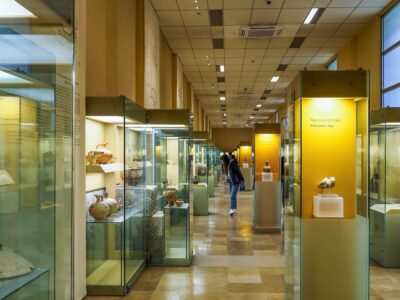

From Athens: Delphi Full Day V.R. Audio Guided Tour
Read our review →
Athens: Acropolis Museum Ticket with optional Audio Guide
Read our review →
Athens: Acropolis Ticket & Optional Self-Guided Audio Tours
Read our review →
From Athens: Small-Group Delphi, Museum & Arachova Day Trip
Read our review →
Parthenon & Acropolis Museum with Audio or Live Tour Option
Read our review →Browse the lists this tour appears in