

REVIEW · NEW YORK CITY AUDIO TOURS
Cathedral of St. John the Divine: Self-Guided Tour
The first thing that hits you inside the Cathedral of St. John the Divine is scale. This is the world’s largest Gothic cathedral, and its huge interior gives you a rare sense of Medieval Europe in the middle of Manhattan. I like the carved stone and shimmering stained glass, and I like the unusual range of art, from 15th-century masters to a Keith Haring altarpiece. The catch is simple: this is self-guided, not a tour with a live guide.
You get about an hour to wander at your own pace for $15. Bring patience for the small written displays, which can be hard to read in the dim interior. One visitor found the text contrast weak enough to need a flashlight, so your phone light may come in handy if permitted. The cathedral is beautiful and instructive, but if you have just seen Rome’s grand churches, its impact may feel less immediate.
Key points to know before you go

- The scale is the main event: The vast Gothic interior is difficult to grasp from photographs alone.
- You set the pace: This is a self-guided admission visit, with no live guide included.
- Art covers many centuries: Look for stained glass, sculpture, tapestries, 15th-century works, and a Keith Haring altarpiece.
- Plan for airport-style security: You must pass through screening before checking in at the Visitor Center.
- One hour is enough for a focused visit: You can see the main interior and displays without turning this into a half-day stop.
- The location fits an Upper West Side day: The cathedral is near restaurants, parks, and subway connections, and it is only minutes from Times Square.
Why this cathedral feels different from other New York sights
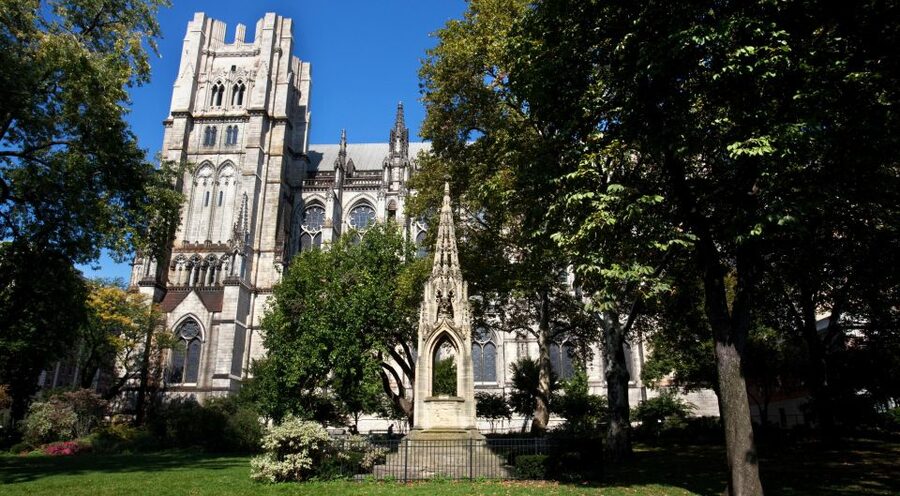
New York has no shortage of famous buildings, but St. John the Divine offers a quieter kind of spectacle. It is not a lookout tower, a museum of celebrity objects, or a fast-moving attraction. You walk through a sacred public space and let the building reveal itself slowly.
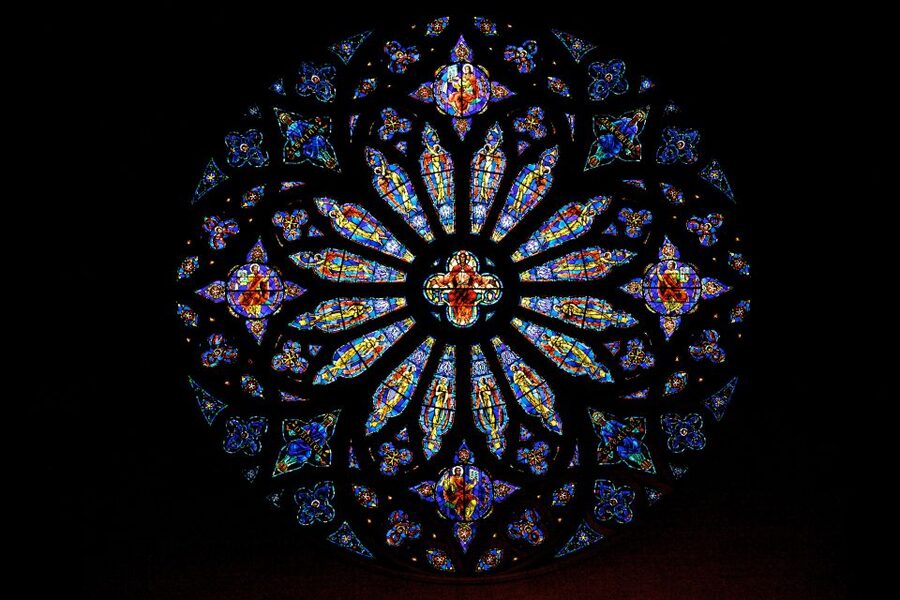
The first impression comes from the height and width of the nave. Carved stone gives the interior its weight, while colored windows soften the light. The effect is a meeting of engineering and art. You may feel transported to Medieval Europe, though the cathedral remains firmly part of modern New York, with public programs and services continuing throughout the year.
I like that the visit does not force you through a fixed route or a tightly timed presentation. You can spend longer with the windows, pause at a sculpture, or move quickly through an area that does not interest you. That freedom matters in a place where the building itself is the main attraction.
The tradeoff is that the experience depends on your own attention. A guide would help explain the art, architecture, and religious setting. Since no guide is included, you should arrive ready to read, observe, and make your own connections.
More Audio Tours in the USA:
- Fort Sumter Admission and Self-Guided Tour with Roundtrip Ferry
★ 4.5 · 3,343 reviews - San Francisco: Alcatraz Ticket, Ferry, & Self-Guided App
★ 4.5 · 2,460 reviews - Los Angeles: Hop-On Hop-Off Bus Tour with Audio Guide
★ 3.7 · 2,030 reviews
Starting at the Visitor Center
Your visit begins at the Visitor Center, but not before security. All visitors pass through airport-style screening, so allow a little extra time before your one-hour visit. After security, you exchange your voucher for an admission sticker.
This process is straightforward, but it is worth knowing in advance. If you are squeezing the cathedral between other plans, do not treat the stated one-hour duration as the total time from subway exit to departure. Security and check-in come first.
The admission sticker is your practical sign that you are ready to explore. From there, you are on your own. There is no named guide to meet and no group to follow, which keeps the visit flexible but also means you need to manage your own route.
First impressions inside the Gothic interior
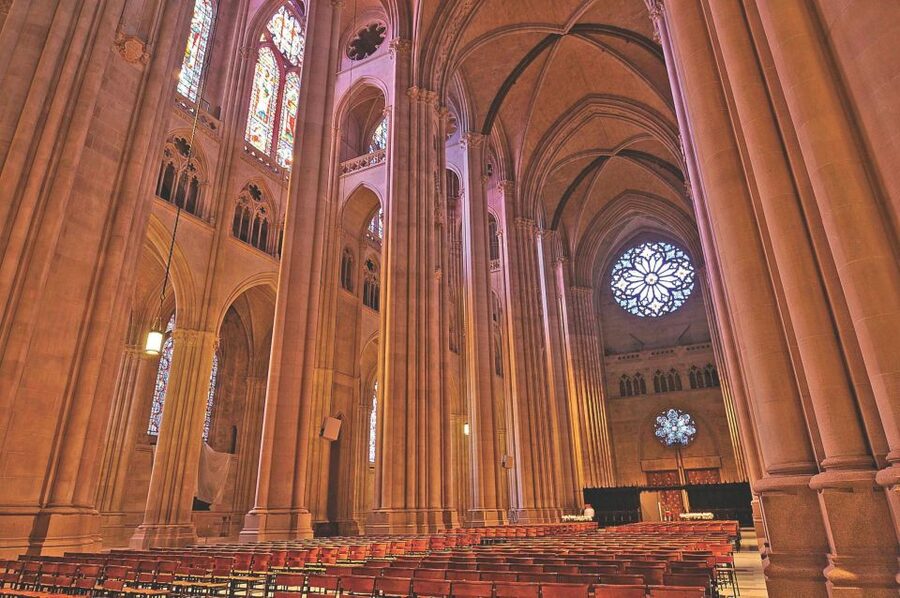
Once inside, take a moment before chasing individual works of art. The cathedral’s size is the point. Look upward, then across the full length of the space, and notice how the stonework, windows, and empty air work together.
The interior may remind you of European churches, but the experience has a New York setting and rhythm. You are not stepping into a preserved medieval town. You are entering a living cathedral on Manhattan’s Upper West Side, one that serves as a cultural and religious space.
Scale can be hard to photograph. A picture may capture a window or a carved detail, but it rarely conveys the height and volume of the full interior. Give yourself a few quiet minutes with no checklist. That pause will help you understand why the cathedral receives such strong reactions for its size and beauty.
The light also changes how you see the building. Stained glass adds color, while the stone can make some written information less easy to read. If you want to study every display, allow extra time and be prepared for small or low-contrast text.
Finding the art beyond the architecture
The cathedral is not only an architectural stop. Its collection moves across a wide period, from 15th-century masters to Keith Haring. That range gives the visit an appealing twist. You can begin with the visual language of Gothic stone and stained glass, then encounter more recent art that speaks in a very different style.
The Keith Haring altarpiece is especially useful for understanding the cathedral as a living cultural place rather than a building frozen in the past. You do not need to know Haring’s work in detail to notice the contrast between modern graphic forms and the traditional setting.
The collection also includes sculpture, tapestries, and stained glass. Since the visit is self-guided, you can decide whether you want to focus on individual objects or treat the building as one large work of art.
I recommend dividing your attention into two parts. First, study the structure: arches, stone surfaces, height, and windows. Then look at the individual artworks. If you jump straight to the objects, you may miss how strongly the space shapes your response to them.
Same place, a different route to walk:
- City Sightseeing Hop-On Hop-Off Bus Tour with Audio Guide
★ 3.0 · 1,083 reviews - Medieval Torture Museum Ticket with Audio Guide and Ghost Hunting
★ 5.0 · 962 reviews - Gettysburg Battlefield Self-Guided Driving Audio Tour
★ 4.5 · 910 reviews - Ryman Auditorium Self-Guided Tour with Souvenir Photo Onstage
★ 4.5 · 903 reviews
How to use your one hour well
An hour is a reasonable amount of time for a first visit. It gives you enough room to appreciate the interior without requiring a major commitment in an already busy New York day.
A practical approach would look like this:
- Spend the opening minutes taking in the full interior and its scale.
- Walk slowly through the main space, looking at the carved stone and stained glass.
- Seek out the sculpture, tapestries, and historic art displays.
- Make time for the Keith Haring altarpiece and note how it changes the mood of the visit.
- Return to any window or architectural detail you want to see again.
- Leave a few minutes for the written information, especially if you want more context.
That is not a required route. You can wander freely. The point is to avoid spending the entire hour trying to read every panel. One visitor praised the content but found the text contrast weak, with a flashlight needed for comfortable reading. The cathedral itself is easier to enjoy when you balance reading with looking.
What self-guided really means here
The phrase self-guided needs to be clear. You do not receive a personal guide, and no guide’s commentary is included. You exchange your voucher for admission and explore independently.
That arrangement works well if you prefer freedom, quiet, and your own pace. It also suits you if you already know something about Gothic architecture or religious art and want time to look without a group waiting.
It is less suitable if you want a detailed story for every major feature. The building is large, and a guide could help you notice details that are easy to miss. If you book this visit expecting a guided tour, you may feel shortchanged. One low rating came from exactly that misunderstanding.
This is best viewed as a museum-style admission with room to wander, not a narrated tour. Set your expectations correctly and the format makes more sense.
Comparing the cathedral with European churches
The cathedral’s size and Gothic design invite comparison with Europe. That can be helpful, but it can also affect how much you enjoy the visit.
If you have recently visited major churches in Rome, you may find St. John the Divine less overwhelming at first. Rome offers centuries of famous art and a dense concentration of monumental churches. One visitor who had just come from Rome felt the New York cathedral made a weaker impression by comparison.
That does not make the cathedral unworthy. It tells you how to frame the visit. Come for the combination of New York setting, enormous Gothic space, and broad art collection, rather than expecting the same atmosphere as a Roman basilica.
The cathedral also offers something different from Europe: proximity to everyday Manhattan life. You can pair it with nearby restaurants, parks, and subway stops. It works well as part of an Upper West Side outing rather than as an isolated pilgrimage across the city.
The value of the $15 admission
At $15 per person, this is a modestly priced cultural stop by New York standards. The value comes from the building itself, since the admission gives you access to a space that would be difficult to understand from the outside.
I consider the price fair for a one-hour visit if you care about architecture, stained glass, sculpture, or religious spaces. The variety of art also helps. You are not paying only to look at an empty hall. You are entering a collection that spans centuries and includes a modern Keith Haring work.
The value is weaker if you want a guided explanation or a long activity. There is no live guide, and the visit may feel brief if you are not interested in reading displays or examining details.
You can also make the admission work harder by treating it as one part of a larger day. The cathedral’s Upper West Side location puts you near restaurants, parks, and subways. That makes it easier to fit into your plans instead of traveling across town for a single short stop.
Accessibility and practical planning
The cathedral is wheelchair accessible, which makes this a workable cultural stop for many visitors with mobility needs. You still need to pass through security before reaching the Visitor Center.
The stated duration is one hour, but your ideal timing depends on how closely you want to study the art. If you mainly want the architectural impression, an hour should provide a focused visit. If you read every display, you may want more flexibility.
Because the interior can make text difficult to read, consider bringing reading glasses or using your phone carefully for extra light if needed. The supplied information does not promise an audio guide or printed guide, so do not book this expecting a narrated or technology-led experience.
You can cancel up to 24 hours in advance for a full refund, and the reserve-now, pay-later option keeps your plans flexible. Those terms are useful in New York, where weather, transport, and changing day plans can easily disrupt a schedule.
Who will enjoy this visit most
I would recommend the cathedral to you if you enjoy:
- Gothic architecture and stained glass
- Large, quiet interiors
- Art that spans historic and modern periods
- Self-guided museum visits
- Short cultural stops near restaurants, parks, and subway access
- Seeing a less conventional side of New York
Families may appreciate the freedom to move at different speeds, though the lack of a guide means adults may need to explain the setting and art. Art students, architecture fans, and photographers may find plenty to study, even though the full scale is hard to capture in a single image.
I would be more cautious if you need a detailed expert explanation or have limited interest in churches and religious art. You may also want to lower your expectations if you are comparing the cathedral directly with Rome’s most famous interiors.
Should you book the Cathedral of St. John the Divine?
Book it if you want an affordable, self-guided look at one of New York’s most imposing interiors. The combination of Gothic stone, stained glass, sculpture, historic art, and a Keith Haring altarpiece gives the visit more range than a simple architectural stop.
Skip it if you are specifically looking for a guided tour, a long activity, or a landmark that matches the concentrated artistic force of Rome’s grand churches. The lack of a live guide is the key limitation, and the dim text may frustrate anyone hoping to read every explanation.
For most curious visitors, $15 is a reasonable price for an hour of architecture and art. Go in knowing that the cathedral asks you to pay attention, look upward, and guide yourself.
FAQ
How much does admission to the Cathedral of St. John the Divine cost?
Admission costs $15 per person.
How long does the self-guided visit last?
The stated duration is one hour.
Is this a guided tour?
No. This is a self-guided visit, and no live guide is included.
What can I see inside the cathedral?
You can see carved stone, stained-glass windows, sculpture, tapestries, and art ranging from 15th-century masters to a Keith Haring altarpiece.
Where do I check in?
Check in at the Visitor Center after passing through security. You exchange your voucher for an admission sticker.
Is security required?
Yes. Every visitor must pass through airport-style security.
Is the cathedral wheelchair accessible?
Yes, the Cathedral of St. John the Divine is wheelchair accessible.
Can I cancel my booking?
Yes. You can cancel up to 24 hours in advance for a full refund.
Can I reserve now and pay later?
Yes. The reserve-now, pay-later option lets you hold your place without paying at the time of booking.
Just added around the USA
- Smartphone-Guided Walking Tour of Downtown Indianapolis Sights & Stories★ 4.0 · 25 reviews
- Springfield Self-Guided Walking Audio Tour★ 4.0 · 5 reviews
- Smartphone Guided Indianapolis Downtown Sites Audio Walking Tour★ 4.5 · 7 reviews
- Indiana Dunes National Park Self-Guided Audio Tour★ 3.5 · 4 reviews
- Self-Guided Audio Driving Tour in Kancamagus Highway★ 4.5 · 6 reviews
- An Epic Scavenger Hunt: Bloomington Scenic Southern Indiana★ 3.5 · 6 reviews
- Huntsville Rocket City Smart Phone Self Guided Audio (GPS/APP) Walking Tour★ 4.5 · 5 reviews
- Sights of Downtown Houston Smartphone Audio Walking Tour★ 4.0 · 7 reviews
New York City Audio Tours, compared.

An Epic Scavenger Hunt: New York City Central Park Adventure
Read our review →
Skyline Night Bus Audio Narrated Tour Experience
Read our review →
NYC: Metropolitan Museum of Art Guided or Self-Guided Tour
Read our review →
PRIVATE New York Ground Zero Always Remember Walking Tour
Read our review →
Self-Guided Tour of the Museum at Eldridge Street
Read our review →
Brooklyn Bridge Self-guided Bike Tour App – Audio + Written
Read our review →Browse the lists this tour appears in