

REVIEW · BOSTON AUDIO TOURS
Boston Harborwalk & Tea Party Self-Guided Walking Audio Tour
Boston’s famous Tea Party makes more sense when you see the waterfront that shaped it. This self-guided walk links South Station, the Harborwalk, Rowes Wharf, Long Wharf, and the New England Aquarium with more than 18 location-based audio stories.
I like the low price and the freedom to start whenever you wish. I also like the hands-free GPS playback, which lets you keep your eyes on the harbor instead of staring at a map. The main tradeoff is simple: you guide yourself, so you need a charged phone, headphones, and enough attention to follow the route.
I especially appreciate the extra context. You hear not only about the tea dumped into Boston Harbor, but also about taxes, colonial trade, wartime costs, housing, modern architecture, and the harbor’s cleanup. It is a short walk, but it gives you a useful view of how Boston changed.
Key points to know before you go

- South Station begins the story: Start beneath the grand eagle and clock on one of Boston’s major transportation buildings.
- GPS starts each story: The app plays audio as you reach each marked point, so you can walk without constantly checking directions.
- The route is about 1 to 1.5 miles: Expect roughly 1 to 2 hours for the core audio route, or up to 3 hours with pauses, photos, food, and side stops.
- The Tea Party gets real context: The narration covers taxes, international war, colonial trade, and the forces behind the famous protest.
- Architecture is part of the tour: Look for the Federal Reserve, Brutalist Harbor Towers, Rowes Wharf, and the Harbor Hotel’s copper dome.
- Lifetime access adds value: Download the tour once, then use it again on later Boston trips without an expiration date.
A short Boston walk with a bigger story
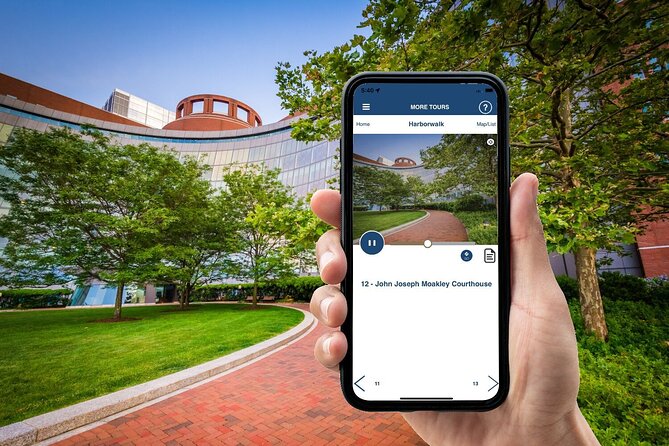
This is not a traditional guided walk with a person waiting at the meeting point. It is a private, self-guided activity for your group, delivered through the Action Tour Guide app.
That format works well along the waterfront. You can stop for a photograph, pause for lunch, or spend extra time looking across the harbor. The audio resumes when you are ready. If you prefer to move quickly, you can skip a story or keep walking.
The route has more than 18 audio stories, though the listed stops are grouped into larger sections. Most stop narrations are about 10 minutes, while the main Harborwalk segment is listed at about 45 minutes. The full experience is advertised at 2 to 3 hours, while the walking portion itself can take about 1 to 2 hours. Your pace and number of pauses will make the difference.
The app works offline after you download the tour. That matters in a city where you may not want to depend on a steady signal while walking beside the water. Download everything on strong Wi-Fi or cellular service before you arrive.
More Self-Guided Walking Tours in the USA
Starting at South Station with Boston’s grand entrance
The tour begins at South Station, a practical and memorable place to start. Its large facade includes an enormous eagle and clock, details easy to miss if you are rushing to catch a train.
The audio uses this building to set the mood. Boston’s past is not limited to brick meetinghouses and colonial lanes. It also includes large civic structures, rail travel, trade, finance, and the modern city you see today.
South Station is useful for logistics, too. It is near public transportation, so you can reach the starting point without arranging a special transfer. No guide meets you there. You simply open the app, enter the first story point, and let the GPS trigger the narration.
Bring earbuds. The audio is easier to follow in a city setting, and you will not need to hold your phone up for the entire walk. Couples can share one tour by splitting headphones, which makes the $9.99 price especially attractive.
The Federal Reserve and the city behind the money
From South Station, the route brings you past the Federal Reserve Bank of Boston. The building’s name sounds plain, but the architecture and the institution’s role give the stop more weight than its title suggests.
This part of the tour helps connect Boston’s colonial disputes with modern finance. The Tea Party was not an isolated outburst. Taxes, trade rules, government decisions, and the cost of goods all shaped the anger in the city.
I like this kind of connection because it keeps the tour from becoming a string of unrelated facts. You begin with an old protest, then see how Boston’s waterfront developed into a place of banking, business, transportation, and high-value real estate.
The stop is brief, so do not expect a full lesson in American banking. Instead, treat it as a bridge between the older waterfront and the modern city.
Atlantic Wharf and the trade that made the Tea Party possible
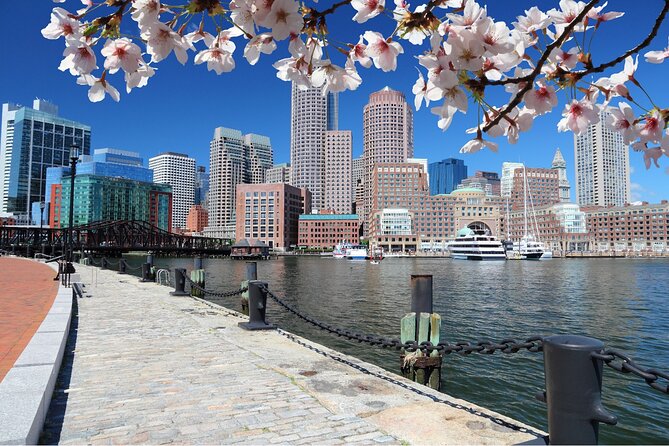
At Atlantic Wharf, near Russia Wharf, the walk reaches the start of its main Harborwalk section. Here the story turns to colonial trade.
This is one of the most useful parts of the route because it places tea inside a working port. Ships, merchants, imports, taxes, and international conflicts all affected what people in Boston could buy and what they had to pay.
The audio asks you to think past the familiar schoolbook version of the Tea Party. Why were tea prices so high? Why did taxes create such anger? How did a distant war affect daily life in Boston?
Those questions give the famous event some needed shape. You are not only hearing about crates thrown into the water. You are learning why tea mattered, who controlled its sale, and why a port city was the natural setting for such a protest.
More Self-Guided Walking Tours in Boston:
- Boston: City History and Highlights Audio App Walking Tour
★ 3.7 · 12 reviews - Self-Guided Smartphone Ghost Walking Tour Boston App EMF Reader
★ 4.5 · 6 reviews - Self Guided “The North End Pizza, Cannoli and Picnic” Solo Walking Tour
★ 5.0 · 3 reviews - Sofia: City Monuments Guided Walking Tour with Audio Guide
★ 4.5 · 825 reviews
Harbor Towers and a hard look at Boston housing
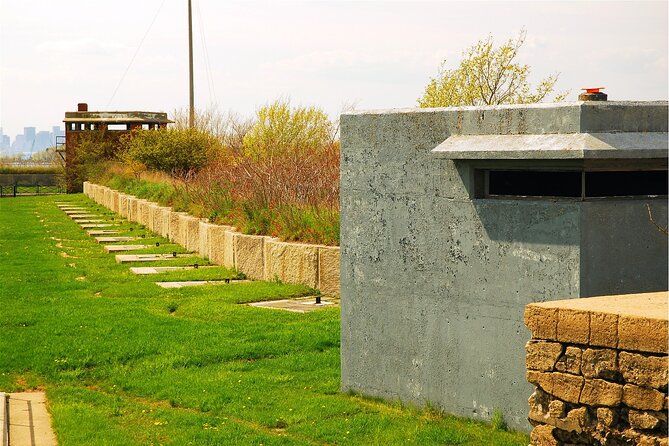
The Harbor Towers bring a sharp change in style. These Brutalist buildings have the heavy, fortress-like form associated with 1970s architecture. Some people admire the stark shapes. Others find them imposing.
The stop is valuable because it moves beyond old Boston. The tour uses the towers to discuss the city’s continuing argument over affordable housing and luxury living. That subject gives you a more current way to understand the waterfront.
Boston’s harbor was also the site of a major cleanup effort. The narration connects the buildings and the water, showing how development, housing, and environmental work have shaped the district.
This is a good example of the tour’s wider range. If you only want colonial history, the modern stops may feel like a detour. I think they make the walk more useful, because you see the waterfront as a living part of Boston rather than a preserved stage set.
Rowes Wharf and the man behind the name
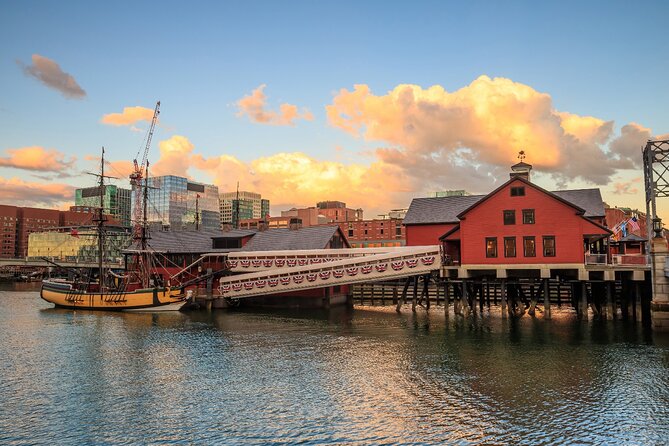
At Rowes Wharf, the story returns to the Tea Party and to John Rowe, a tea smuggler who encouraged the protest. The wharf’s name gives the stop a personal angle.
John Rowe’s dealings with the law add a little mischief to the history. The waterfront was not just a place where respectable merchants unloaded goods. It was also a place where people tested rules, avoided costs, and looked for an advantage.
This stop is a reminder to keep your eyes up as you walk. The audio tells you what the name means, but the setting helps you picture the port economy behind it. You can pause here to look across the water before continuing toward the marina.
The marina and the Harbor Hotel’s copper dome

Near the marina at Rowes Wharf, look up at the Harbor Hotel. Its architecture combines modern and colonial references, with an 80-foot copper dome topped by a glass cupola.
There is a specific viewing tip here. Walk to the center of the archway and look straight up. From that position, you can see through the top of the dome to the glass cupola above.
That kind of instruction is one reason a location-triggered audio tour works better than a basic written route. The narration can direct your eyes to a detail you might otherwise pass without noticing.
The stop also breaks up the historical material. After hearing about taxes, merchants, and law, you get a simple architectural moment. Take your time here, especially if you enjoy photographing buildings.
Long Wharf and the end of the main waterfront walk

Long Wharf is one of the best places to finish the core Harborwalk route. It has colonial connections, links to conflict with the British, and a long life as a center of harbor activity.
The walk from South Station to Long Wharf covers roughly a mile, though the full route is described as more than 1.5 miles. The difference likely depends on the exact path, extra audio points, and the way you move between locations. Plan for a comfortable urban walk rather than a demanding hike.
Long Wharf is also a practical stopping point. You can enjoy the harbor views, pause the tour, and decide if you want to continue with nearby attractions or end the experience there.
The route does not include admission to attractions. If you want to enter the New England Aquarium, for example, that ticket is separate. The audio tour helps you reach and understand the area, but it is not an attraction pass.
The New England Aquarium and the wider Harborwalk
The New England Aquarium is another major point along the waterfront. Part of the aquarium extends over the harbor, giving the building direct contact with the water around it.
The tour treats the aquarium as a landmark along the route rather than including entry. That distinction is important when you plan your budget. The $9.99 covers the audio experience, not admission, reservations, or attraction tickets.
The full Boston Harborwalk stretches about 43 miles, but this tour focuses on the historic Waterfront District from South Station to Long Wharf. That narrow focus is a strength. You get a manageable walk instead of a huge route that would take most of a day.
You can also use the audio content over multiple days, since access does not expire. If you do not finish in one outing, pause the tour and return later. You can also use it again on a future Boston visit.
How the app works on the street
After booking, you receive setup instructions and a password by email and text. Search for audio tour if the message is hard to find. You must download the separate Action Tour Guide app, rather than expecting the tour to run inside a standard map application.
Use an iPhone with iOS 15 or later, an Android device with version 9 or later, or an iPad or tablet with GPS and cellular capability. Enter the password on the number of devices matching the number of people booked.
Once you reach South Station, open the correct tour version and begin at the first story point. The audio should start automatically as you enter each location. Follow the route and its suggested pace for the smoothest experience.
The system is easy to use, but it is not foolproof. Keep your phone charged, download the route before arriving, and bring earbuds. If the audio fails, support is available through the tour provider.
What $9.99 gets you
At $9.99 per person, this is inexpensive for a Boston activity lasting up to several hours. A traditional guided walk may offer live conversation and the chance to ask questions, but this option gives you privacy and much more control.
The strongest value comes from lifetime access. You can pause the tour, use it over several days, or listen again on another Boston trip without paying again. A couple can also share one tour with split headphones, though each booked device receives its own access.
The price is less attractive if you want entry to the aquarium or another paid attraction. Those costs are separate. It is best to think of this as a narrated waterfront walk, not a full sightseeing pass.
Who should choose this self-guided walk
I would choose this tour if you like history but do not want to follow a group. It suits independent visitors, couples, families with flexible schedules, and anyone with only a few hours for the waterfront.
It is also a good fit if you enjoy architecture. The route includes the South Station facade, the Federal Reserve, Brutalist Harbor Towers, Rowes Wharf, and the Harbor Hotel dome. You get more than a Tea Party retelling.
You may want a live guide instead if you prefer conversation, local recommendations, or help with every turn. The app can tell you where to go, but it cannot adjust the story to your questions or personality.
The route is generally accessible to most people according to the supplied information, but no detailed surface or stair information is provided. If you need precise accessibility details, contact the provider before booking.
Should you book the Boston Harborwalk audio tour?
Book it if you want a low-cost, flexible introduction to Boston’s waterfront. The Tea Party content is stronger because it explains trade, taxes, and war rather than stopping at the famous crate-dumping image. The modern architecture and housing discussion also give the walk more range.
Skip it if you want a live historian or if you are mainly looking for admission to the aquarium. For everyone else, $9.99 buys a useful route, clear narration, offline maps, and lifetime access. Download it before you arrive, bring earbuds, and leave room for a snack or harbor-view pause along the way.
FAQ
Where does the Boston Harborwalk audio tour start?
The tour starts at South Station in Boston, near the large eagle and clock on the historic facade.
Where does the tour end?
The main route ends around Long Wharf. The itinerary also includes the New England Aquarium and other Harborwalk points along the waterfront.
How long does the tour take?
The experience is expected to take about 2 to 3 hours. The walking route itself is described as about 1 to 2 hours, depending on your pace and stops.
How far do you walk?
The route is more than 1.5 miles in total, with the main South Station to Long Wharf section described as about 1 mile.
Is a live guide included?
No. This is a private, self-guided audio tour. No one meets you at the starting point.
What device do I need?
You need an iPhone running iOS 15 or later, an Android device running version 9 or later, or an iPad or tablet with GPS and cellular capability.
Does the audio work offline?
Yes. Download the tour while you have strong Wi-Fi or cellular service. After downloading, the tour works without cellular service or Wi-Fi.
Are attraction tickets included?
No. Admission tickets, attraction passes, and reservations are not included. Entry to places such as the New England Aquarium must be arranged separately.
Can I cancel the tour?
Yes. You can receive a full refund if you cancel at least 24 hours before the experience start time. Cancellations within 24 hours are not refunded.
Just added around Boston
- Boston’s Freedom Trail: A Self-Guided Audio Tour★ 4.0 · 18 reviews
- Boston Self-Guided Audio Tour Bundle: Freedom Trail & More★ 4.5 · 5 reviews
- Self-Guided Audio Tour of Boston North End★ 4.5 · 3 reviews
- Boston’s Freedom Trail: A Self-Guided Tour of All 16 Sites★ 5.0 · 14 reviews
- The Ghosts of Boston’s Past Haunted Self-guided Tour★ 3.5 · 4 reviews
- Boston’s Old North Church Admission with Self-Guided Audio Tour★ 4.5 · 19 reviews
- Boston Record Breakers: Self-Guided Scavenger Hunt★ 4.5 · 4 reviews
- Self Guided “The North End Pizza, Cannoli and Picnic” Solo Walking Tour★ 5.0 · 3 reviews
Boston Audio Tours, compared.

Self Guided Classic Freedom Trail Location Aware (GPS) Walking Audio Tour
Read our review →
Boston Freedom Trail Self-Guided Tour with Audio Narration & Map
Read our review →
Self-Guided Boston’s Beacon Hill Underground Railroad Audio Tour Walking Tour
Read our review →
Self Guided “Historic Boston Downtown Freedom Trail” Audio/GPS Walking Tour
Read our review →
Boston’s Old North Church Admission with Self-Guided Audio Tour
Read our review →
Boston’s Freedom Trail: A Self-Guided Audio Tour
Read our review →
Boston’s Freedom Trail: A Self-Guided Tour of All 16 Sites
Read our review →
Boston: City History and Highlights Audio App Walking Tour
Read our review →Browse the lists this tour appears in