
REVIEW · BOSTON AUDIO TOURS
Boston: City History and Highlights Audio App Walking Tour
Boston’s past comes alive along this two-hour walk from Copp’s Hill to the Public Garden, linking graveyards, churches, markets, immigrant neighborhoods, and Revolution-era streets. You’ll move from Cotton Mather and the Salem Witch Trials to Paul Revere, John Adams, the Boston Massacre, and the making of modern Boston.
I like the low price and the freedom to stop for cannoli, coffee, photos, or a longer look inside a church. I also like the way the route joins national history with local stories, including Irish immigration and the 1919 molasses flood. The catch is that this is an app, not a person, and one user found the technology impossible to get working. English is the only language offered.
Key points to know before you walk
- Copp’s Hill starting point: Begin at the entrance to one of Boston’s oldest burying grounds, with the audio starting when you reach the location.
- Revolutionary Boston in context: Hear about Cotton Mather, Paul Revere, the Old North Church, Samuel Adams, John Hancock, and John Adams.
- A route through changing neighborhoods: Walk from the North End and Little Italy past the Rose Kennedy Greenway, Quincy Market, and Irish Famine Memorial.
- GPS turn-by-turn guidance: The app is designed to play the right track at the right location, so you do not need to stare at your phone constantly.
- A flexible two-hour plan: Pause and resume as you please, though one family took considerably longer than the estimate.
- Bring the essentials: You need a charged smartphone and headphones. There is no live guide or transportation.
From Copp’s Hill to Boston’s colonial beginnings
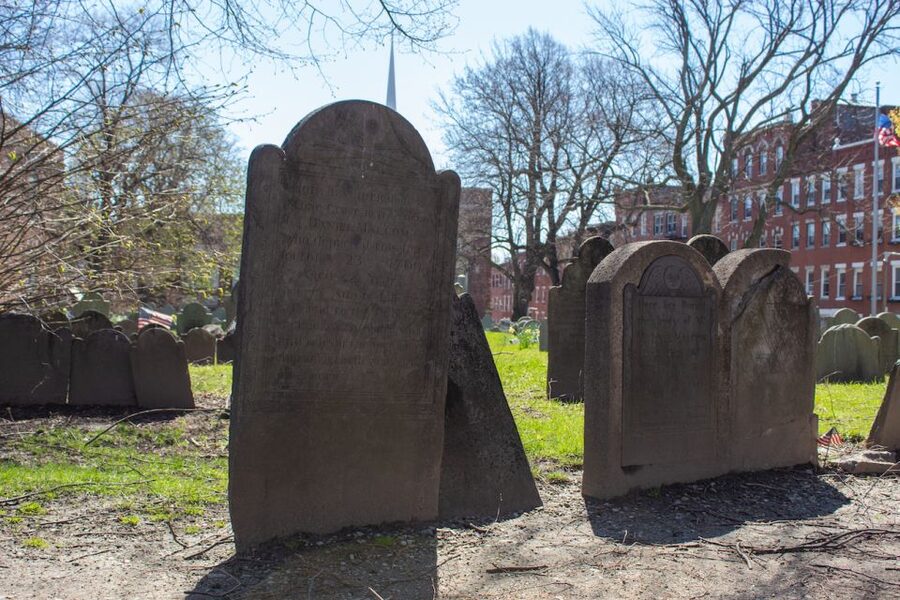
The tour begins at the entrance to Copp’s Hill Burying Ground in the North End. This is a fitting place to start because the route treats Boston as more than a collection of famous names. It begins with the people, beliefs, and conflicts that shaped the town before the Revolution.
The first major historical figure is Cotton Mather, whose grave is here. Mather was a minister at the center of the Salem Witch Trials in 1692, so this early stop reaches beyond the familiar Founding Fathers. It gives you a look at the fear and religious thinking of colonial New England before the better-known political drama arrived.
You should allow a little extra time at the burying ground if old stones and historic cemeteries interest you. The app supplies the context, but you will get more from it if you pause to look around rather than treating the site as a quick checkpoint.
The route then leads toward the Old North Church. The church matters not only because of its age, but because of the signal connected with Paul Revere’s midnight ride. The story concerns the warning sent from the church steeple as British troops approached, and the audio adds the useful question of who actually sent the signal to Revere.
The Old North Church is closed on Mondays, so plan carefully if you want more than an exterior look. On that day, the route still works as an outdoor walk, but your visit to the church itself is limited.
More Self-Guided Walking Tours in the USA
Little Italy, Paul Revere, and the North End today
From the church, you pass through the North End, Boston’s Little Italy. This is one of the route’s best changes of pace. Instead of hearing only about military plans and political speeches, you get the smells of bakeries and restaurants as the story shifts to immigration and daily life.
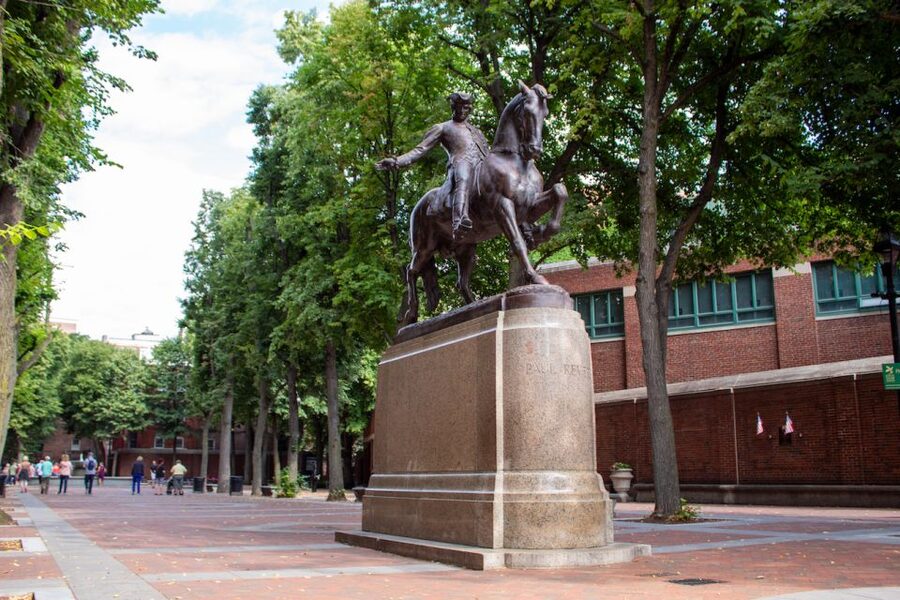
The Paul Revere House follows naturally. Revere is often reduced to one famous night, but the tour asks you to consider what happened after the Revolution as well. That wider view is useful. It keeps the walk from becoming a string of schoolbook facts and shows Revere as a person with a life beyond the midnight ride.
The North End section is also a good reason not to rush. You may want to stop for food, and the app can be paused whenever you like. A family using the tour took much longer than two hours, which makes sense if you add time for eating, browsing, photographs, or visiting sites along the way.
The route also touches the 1919 molasses flood, one of Boston’s strangest disasters. Two million gallons of molasses congealed in the North End, and the story gives the neighborhood a connection to industrial Boston as well as colonial Boston. It is the sort of unexpected detail that helps the walk feel local rather than ceremonial.
The Rose Kennedy Greenway and the Big Dig
The walk leaves the compact streets of the North End and reaches the Rose Kennedy Greenway. Here, the subject changes from colonial rebellion to the modern city and the Big Dig.
This part is valuable because Boston’s story did not stop in 1776. The Big Dig changed the city’s roads and public spaces, and the greenway now provides a calmer route through an area once dominated by major traffic works. The audio explains that transformation as you walk.
You will want to pay attention to your surroundings here because the greenway is a natural place for a short break. Since the tour is self-guided, you are not holding up a group if you stop. You can pause the narration, sit for a while, and continue when ready.
The GPS system is meant to keep the tour moving without constant map checking. In theory, that is a strong feature for a city walk, since you can watch the streets and buildings instead of walking with your eyes fixed on a screen. Still, technology is the main risk. Test the app before setting off, make sure your phone is charged, and carry headphones that work with your device.
Quincy Market, Faneuil Hall, and Samuel Adams
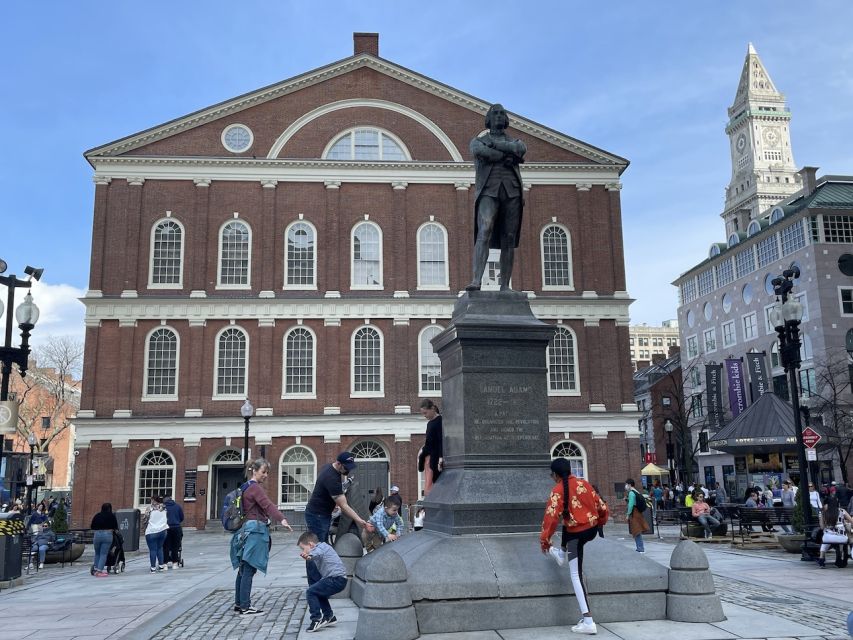
The next stretch brings you to Quincy Market and Faneuil Hall. This is one of Boston’s most visited areas, with shops and regular street performers adding plenty of activity around the historic buildings.
The audio connects the setting to Samuel Adams, one of the strongest voices for liberty before the Revolution. It also takes on a question many people ask: did Samuel Adams really brew beer? That sort of fact check gives the narration a lighter touch and helps break up the heavier political material.
Quincy Market is a practical place to pause for food, but do not expect the stop to feel quiet or secluded. This is a central commercial area, and the experience here is more about connecting present-day Boston with its political past than finding a peaceful historic corner.
The route works well for people who want a broad introduction. In a short distance, you move from colonial protest to modern shopping, from the North End’s Italian restaurants to one of the city’s best-known public meeting places. You are not simply ticking off monuments. You are seeing how old Boston has been reused by each new generation.
More Smartphone App Tours in Boston:
- Self-Guided Smartphone Ghost Walking Tour Boston App EMF Reader
★ 4.5 · 6 reviews - Rome: Colosseum & Forum with Audio Guide App -Optional Arena
★ 4.2 · 24,770 reviews - Venice: Grand Canal Gondola Ride with App Commentary
★ 4.1 · 23,020 reviews - Florence: Timed Entry to Michelangelo’s David + Audio App
★ 4.6 · 19,496 reviews
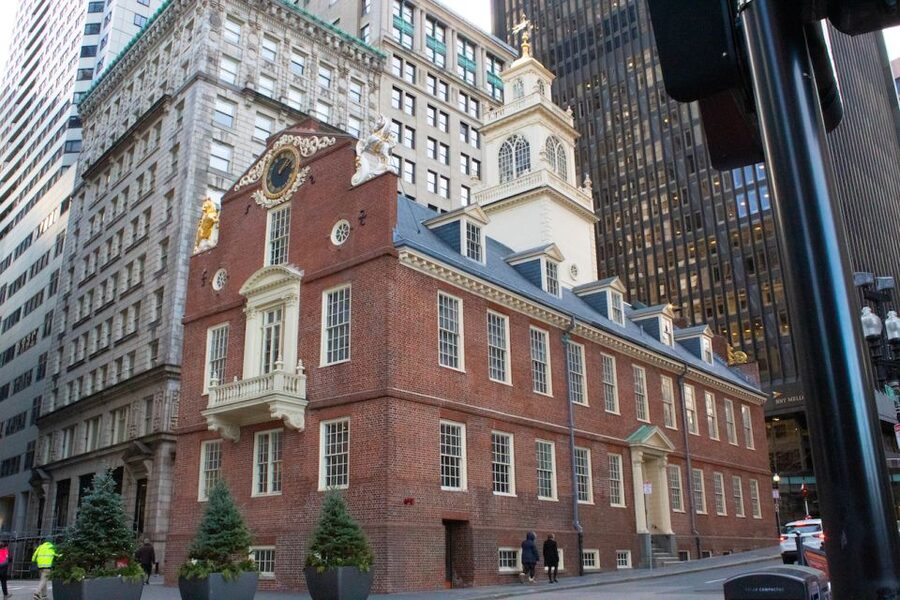
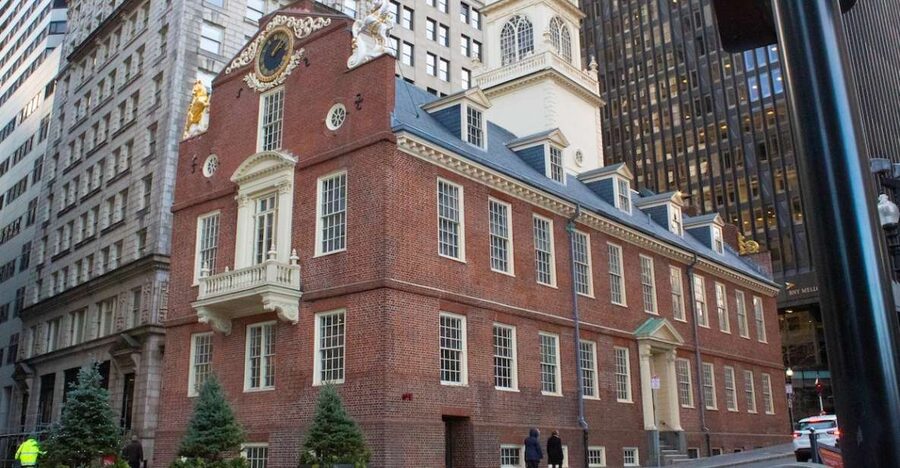
The Old State House and John Adams’s legal defense
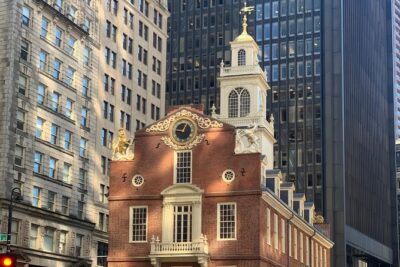
At the Old State House, the story turns to the Boston Massacre and John Adams. Adams later became president, but the important detail here is his decision to defend the British soldiers accused in the event.
That choice is one of the most worthwhile pieces of the tour because it shows the tension between principle and politics. Adams was a strong opponent of British rule, yet he defended the accused men in court. The point is not just that he was a Founder. It is that the new country’s ideals had to be tested in difficult cases.
You can use this stop to slow down and look at the building before continuing. The audio gives you the story while the city carries on around you, which is one of the pleasures of a self-guided route. You set the pace, and you decide how long the physical sites deserve.
The Irish Famine Memorial and Boston’s immigrant story
The route then reaches the Boston Irish Famine Memorial and shifts to the choices faced by Irish families in the 1800s. This is an important change in focus. Boston is often presented through colonial leaders, but its neighborhoods were also shaped by large waves of immigration.
The tour asks you to consider the hard choices Irish families faced during that period. The memorial gives the discussion a physical focus, while the walk itself shows how close these later stories are to the places associated with the Revolution.
I appreciate this section because it widens the meaning of Boston history. You are not hearing only about presidents, ministers, and military warnings. You are also hearing about families trying to decide what came next, and how immigration changed the city’s identity.
The supplied information does not give a precise entrance schedule for the memorial, so treat it mainly as an outdoor stop along the route. The audio provides the historical explanation as you pass by.
Granary Burying Ground and the Founding generation

Granary Burying Ground is one of the route’s strongest stops. John Adams, John Hancock, and Paul Revere are buried here, bringing several of the tour’s main figures together in one place.
This is where the earlier stories gain a physical sense of scale. You have heard about Revere’s ride, Adams’s courtroom decision, and Hancock’s role in the Revolution. Now you can see their graves in the same historic burial ground.
The tour also returns to local questions, including who sent the signal from the Old North Church and what Revere did after the war. That return is helpful. A good walking tour should not leave famous people frozen at the one event that made them famous, and this route makes an effort to follow the story beyond the usual textbook moment.
Historic burying grounds can have uneven surfaces and limited ease of movement. The experience is specifically not suitable for people with mobility impairments, so consider that before booking. You will be walking between sites as well as standing in outdoor spaces.
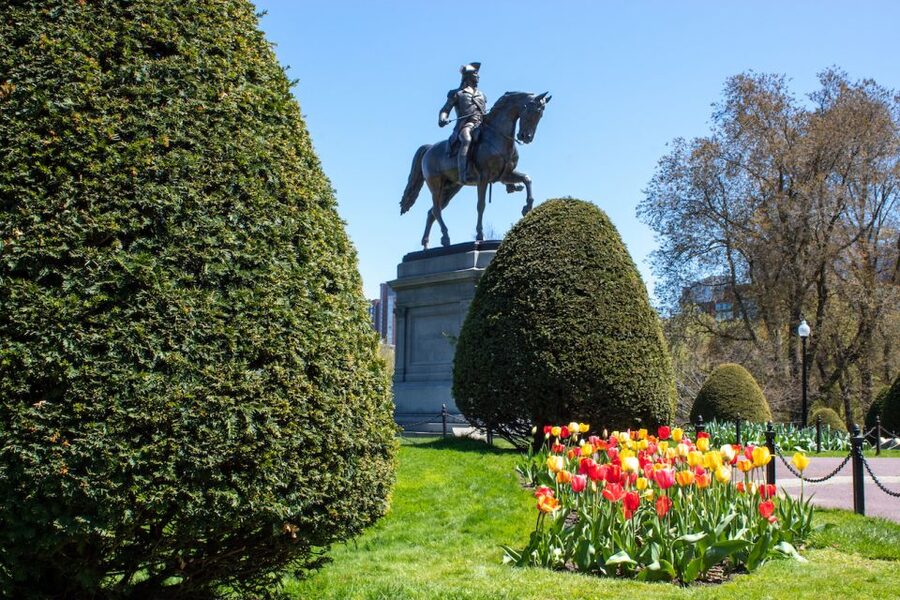
Boston Common and the George Washington Statue
The walk ends at the George Washington Statue in the Boston Public Garden, after passing through the story of Boston Common and the creation of America’s first public park.
The ending shifts the mood from conflict to civic space. A public park may feel ordinary when you are sitting in it, but the tour explains why Boston Common was created and how public land became part of the city’s identity.
Finishing in the Public Garden gives you a clear endpoint rather than dropping you in the middle of a crowded district. It is also a natural place to stop after the audio ends. The route begins in the North End and finishes in a central park, so you can continue exploring on foot from there if you wish, though no onward transportation is included.
The full route is advertised at two hours. That is a reasonable target if you keep moving and do not spend long inside sites or restaurants. I would plan more time if you want to eat in Little Italy, browse Quincy Market, stop for photos, or linger in the burial grounds.
How the VoiceMap audio works in real use
This is a self-guided VoiceMap app tour, not a live walk with a guide waiting at Copp’s Hill. You open the app on your smartphone, go to the starting point, and the audio is supposed to begin automatically when you arrive.
The GPS turn-by-turn directions are meant to keep you on track and start each recording at the correct place. That is useful in Boston, where short streets, busy intersections, and several historic sites can make a route confusing.
The main drawback is that the system needs to work properly. One person could not get the tour running and ended up walking through the city without it. That is not a small concern, because the narration is the whole product.
I would download or open the app before reaching the starting point, charge your phone fully, and bring headphones. The route is in English only. One French-speaking user had to translate the written material while listening, eventually giving up after many audio segments. If you need another language, this is not the right choice.
The narration has been praised for being entertaining and informative, and one user specifically enjoyed the voice of Big Al. That gives you a sense of the tone: this is not a silent map with a few labels. It is a spoken tour designed to keep the history moving.
Is $7 a fair price for two hours in Boston?
At $7 per person, the tour is inexpensive for a two-hour introduction to central Boston. You are paying for the audio content and GPS route, not for admission to attractions, food, transport, or a personal guide.
That price is especially fair if you want a flexible first look at Boston and are comfortable managing an app. You can pause for lunch, resume later, or take longer at a cemetery without worrying about a group schedule.
The value drops if you want access inside every landmark or need personal help with directions. The Old North Church is closed on Mondays, and the tour does not include transportation or a live guide. You should also factor in the cost of anything you choose to visit or eat along the way, since those extras are separate.
Free cancellation up to 24 hours before the scheduled date and the option to reserve now and pay later make it easier to fit the walk into a changing itinerary. The listed times are only for reference, and you can book a date that suits you.
Who should book this audio walk?
I would choose this for an independent visitor who likes history but does not want to join a fixed group. It works well for a couple, a family, or a solo visitor who wants a route through the North End, downtown, and the Public Garden without paying for a private guide.
It is also a good match if you enjoy odd details. Cotton Mather, the molasses flood, Samuel Adams’s beer connection, and John Adams’s legal defense add variety to the better-known Paul Revere stories.
I would hesitate if you need another language, dislike troubleshooting apps, or have mobility limitations. I would also think twice if your main goal is a detailed interior tour of Boston’s landmarks. This experience is primarily an outdoor walking route with audio narration.
Should you book the Boston history audio walk?
Book it if you want a low-cost, flexible way to connect Boston’s biggest historic names with its neighborhoods and immigrant stories. The route is well chosen, and the best moments come when the narration moves from a grave to a church, from a market to a memorial, and then into the public parks that shape the city today.
Prepare for the technology. Use a charged phone, headphones, and a little patience at the start. If the app works, $7 buys a useful two-hour framework for Boston. If you need a live guide, a non-English version, or a fully accessible route, choose another option.
FAQ
Where does the Boston audio walking tour begin?
It begins at the entrance of Copp’s Hill Burying Ground in Boston’s North End.
Where does the tour finish?
The route finishes at the George Washington Statue in the Boston Public Garden.
How long does the walking tour take?
The stated duration is two hours, though you may take longer if you stop for food, shopping, photos, or extra sightseeing.
Is there a live guide?
No. This is a self-guided smartphone audio tour, and no guide meets you at the starting point.
What app is used for the tour?
You use the VoiceMap app on your smartphone.
Does the tour provide directions?
Yes. The audio tour includes GPS-enabled, turn-by-turn directions.
What should I bring?
Bring headphones and a charged smartphone.
Is the tour available in languages other than English?
No. The audio guide is provided in English only.
Can I take the tour on any date?
Yes. You can book any date you want. The listed times are for reference purposes.
Is the Old North Church open during the tour?
The Old North Church is closed on Mondays, so only the exterior is available on that day.
Can I cancel the booking?
Yes. You can cancel up to 24 hours in advance for a full refund.
Is the tour suitable for people with mobility impairments?
No. The experience is listed as unsuitable for people with mobility impairments.
More History Tours in Boston
- Highlights and History of Boston: GPS Guided Audio Tour
★ 5.0 · 4 reviews - Venice: St. Mark Basilica Ticket, Audioguide+History Gallery
★ 3.9 · 4,780 reviews - Maltese Islands History Audio-Visual Show and La Sacra Infermeria Tour
★ 4.0 · 344 reviews - Valletta: Self-Guided Historical Walking Tour (Audio Guide)
★ 3.7 · 251 reviews
More Self-Guided Walking Tours in Boston
- Boston Harborwalk & Tea Party Self-Guided Walking Audio Tour
★ 5.0 · 17 reviews - Self Guided “The North End Pizza, Cannoli and Picnic” Solo Walking Tour
★ 5.0 · 3 reviews - Sofia: City Monuments Guided Walking Tour with Audio Guide
★ 4.5 · 825 reviews - Florence: 2.5 hour Audio Guided Walking Tour led by Host
★ 4.6 · 293 reviews
Just added around Boston
- Boston’s Freedom Trail: A Self-Guided Audio Tour★ 4.0 · 18 reviews
- Boston Self-Guided Audio Tour Bundle: Freedom Trail & More★ 4.5 · 5 reviews
- Self-Guided Audio Tour of Boston North End★ 4.5 · 3 reviews
- Boston’s Freedom Trail: A Self-Guided Tour of All 16 Sites★ 5.0 · 14 reviews
- The Ghosts of Boston’s Past Haunted Self-guided Tour★ 3.5 · 4 reviews
- Boston’s Old North Church Admission with Self-Guided Audio Tour★ 4.5 · 19 reviews
- Boston Record Breakers: Self-Guided Scavenger Hunt★ 4.5 · 4 reviews
- Self Guided “The North End Pizza, Cannoli and Picnic” Solo Walking Tour★ 5.0 · 3 reviews
Boston Audio Tours, compared.
Self Guided Classic Freedom Trail Location Aware (GPS) Walking Audio Tour
Read our review →
Boston Freedom Trail Self-Guided Tour with Audio Narration & Map
Read our review →
Self-Guided Boston’s Beacon Hill Underground Railroad Audio Tour Walking Tour
Read our review →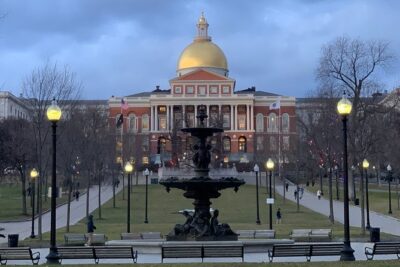
Self Guided “Historic Boston Downtown Freedom Trail” Audio/GPS Walking Tour
Read our review →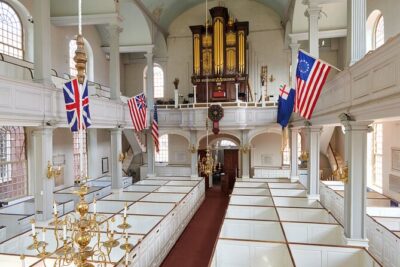
Boston’s Old North Church Admission with Self-Guided Audio Tour
Read our review →
Boston’s Freedom Trail: A Self-Guided Audio Tour
Read our review →
Boston Harborwalk & Tea Party Self-Guided Walking Audio Tour
Read our review →
Boston’s Freedom Trail: A Self-Guided Tour of All 16 Sites
Read our review →Browse the lists this tour appears in