
REVIEW · FLORENCE AUDIO TOURS
Best of Santa Maria Novella Basilica: No-Wait Audio Tour
Santa Maria Novella gives you one of Florence’s best art-and-faith experiences without the fuss of a large guided group. Behind its famous façade, you’ll find Masaccio’s revolutionary Trinità, Giotto’s Crucifix, Ghirlandaio’s detailed frescoes, and quiet cloisters shaped by Dominican life. The portable audio guide lets you stop when you want and listen at your own speed.
I like the priority entrance, especially in busy Florence, and I like that the audio device is provided on site, so you do not need personal earphones or a separate phone app for the basilica. The narration is notably detailed, and the handoff at the ticket office is well organized.
The main drawback is that this is self-guided, not a conversation with an art historian. The basilica also has rules for worship, and the site is not suitable for wheelchair users, so check those points before booking.
Key points at a glance
- Masaccio’s Trinità: See the fresco that changed the way Renaissance painters handled space and perspective.
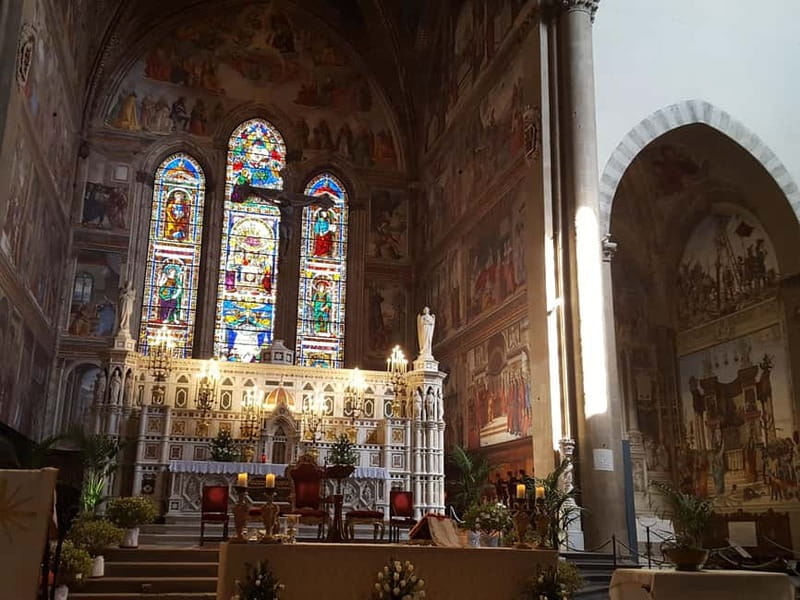
- Tornabuoni Chapel: Study Ghirlandaio’s crowded scenes of Florence’s upper class, with young Michelangelo’s artistic world close by.
- Portable audio guide: Listen to detailed commentary without using your own phone or earphones.
- Priority access: Enter through a separate entrance after collecting your ticket and audio guide behind the basilica.
- Cloisters and district guide: Continue into the cloisters, then use the included Florence city app to explore the Santa Maria Novella area.
- Two-hour visit: Enough time for the main artworks and chapels, but you will need to keep moving if you want to hear everything.
Why Santa Maria Novella deserves two hours
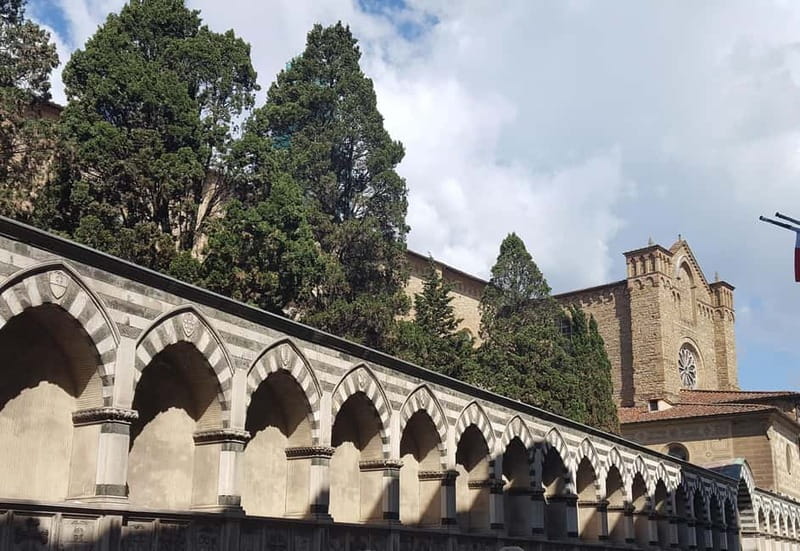
Florence is packed with famous churches, but Santa Maria Novella has an unusual advantage: several major stages of Italian art appear within one complex. Romanesque and Gothic forms meet Renaissance design, and the building links religious devotion with the money and influence of Florence’s leading families.
The Dominican friars still preach here, which helps you see the basilica as more than a museum. It remains a place of worship, even as its walls display works by Masaccio, Giotto, Botticelli, Ghirlandaio, Brunelleschi, and Paolo Uccello.
I would allow the full two hours if you enjoy art, architecture, or Florentine history. You can move faster, but a quick look will miss the connections between the artists, the religious orders, and the families who paid for the chapels.
More Audio Tours in Florence:
- Florence: Timed Entry to Michelangelo’s David + Audio App
★ 4.6 · 19,496 reviews - Florence: Uffizi Priority Ticket & Masterpieces Audio App
★ 4.2 · 6,402 reviews - Florence: Palazzo Vecchio Entrance Ticket & Audioguide
★ 4.4 · 4,822 reviews
Collecting your ticket behind the basilica
The meeting point is at Piazza Stazione number 4, behind Santa Maria Novella, at the ticket office. Show your voucher there, and you receive both the entrance ticket and the portable audio guide.
This arrangement matters because you do not simply walk up to the church and join the first queue you see. Look for the ticket office behind the basilica, then follow the instructions for the separate priority entrance.
The booking includes the entrance ticket, reservation charge, agency fees, and priority access. At $29 per person, the price is higher than a basic church admission, but it also covers advance arrangements and the audio device. For a first visit during a busy period, that convenience can be worth paying for.
Give yourself a little extra time before your chosen start. The advertised visit lasts two hours, but the exact entry times depend on availability. Comfortable shoes are wise because you will spend much of the visit standing and walking through the complex.
The marble façade and the first look inside
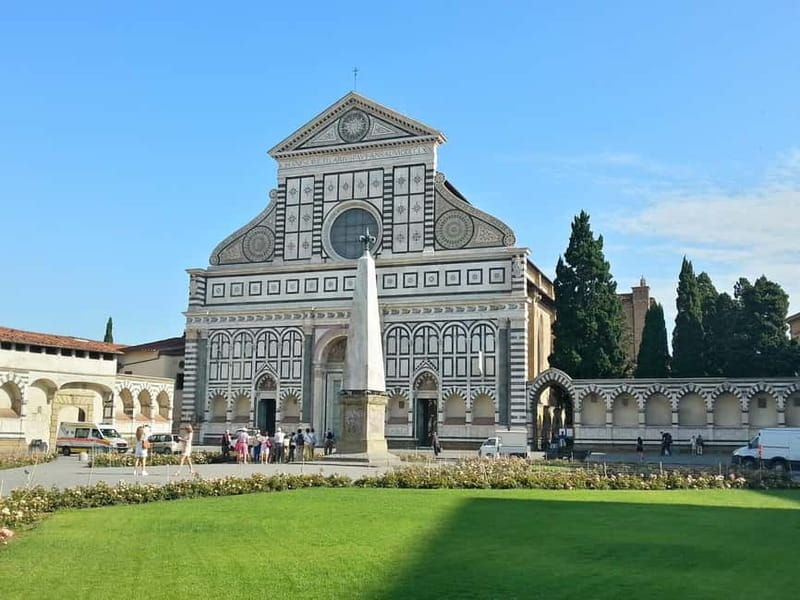
Begin outside with the marble façade, one of Florence’s most recognizable church fronts. Its ordered geometric design later caught Michelangelo’s attention, and the audio guide explains why the exterior matters before you even enter.
Inside, the effect changes. The façade is controlled and mathematical, while the interior leads you through a mixture of Gothic height, Romanesque forms, and Renaissance balance. The building feels less like a single-period monument and more like Florence itself, with layers added over time.
Use the audio guide as a companion rather than a lecture you must follow without pause. Listen to the main introduction, then stop the device when a painting or architectural detail catches your eye. That freedom is one of the best reasons to choose this format instead of a fixed group tour.
Masaccio’s Trinità and the birth of convincing space
Masaccio’s Trinità is one of the essential stops. The fresco is famous for making a painted wall appear to open into a deep architectural space. The effect was startling in its time, and it helped change how artists presented rooms, bodies, and distance.
This is a place where the audio commentary earns its keep. Without context, you may see a solemn religious image and move on. With an explanation of the painted architecture and its role in Renaissance art, you can understand why this single work matters so much.
Take a moment to look at the relationship between the figures and the illusion of space. You do not need specialist art training to appreciate the trick. The point is simple: Masaccio made a flat surface feel like a real chapel opening in front of you.
Same place, a different route to walk:
- Florence: Uffizi Gallery Timed Entry Ticket & Audio Guide
★ 4.2 · 2,794 reviews - Florence: Michelangelo’s David Entrance Ticket and Audio App
★ 4.3 · 1,901 reviews - Florence: Uffizi & Accademia Priority Tickets with Audio App
★ 4.4 · 1,253 reviews - Florence: Eco-Friendly Golf Cart City Tour with Audio Guide
★ 4.6 · 1,094 reviews
Giotto, Brunelleschi, and three ways to show faith
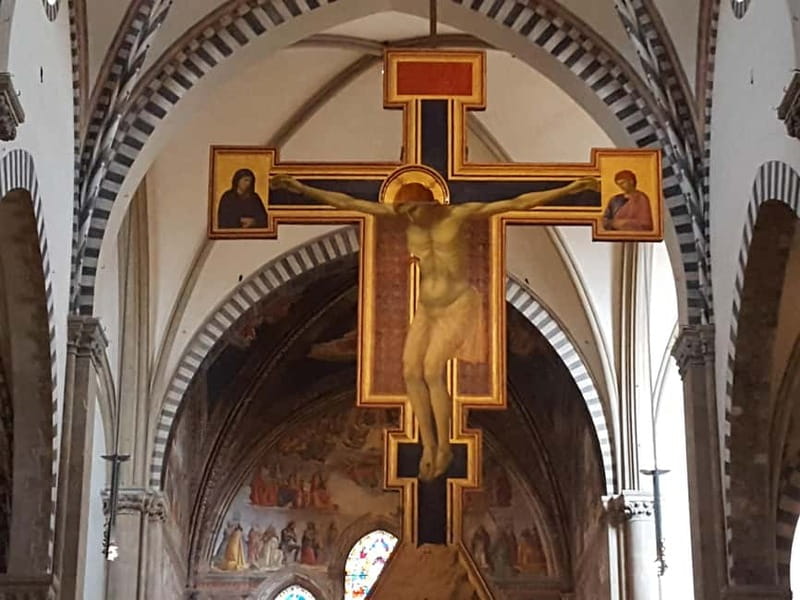
Giotto’s Crucifix gives you a different mood. Where Masaccio’s work focuses attention on space and structure, Giotto’s image carries emotional weight through the suffering figure of Christ.
The basilica also presents Brunelleschi’s elegant reinterpretation, allowing you to compare different artistic responses to Christian subjects. These works are not just names to check off. They show how Florentine artists kept revising the same religious themes through changes in proportion, expression, and design.
The audio guide helps connect these works instead of treating each one as an isolated stop. I recommend listening to the explanation for one artwork, then looking closely before moving to the next. That small pause turns the visit from a parade of famous names into a clearer story about changing artistic ideas.
The Tornabuoni Chapel and Florence’s elite
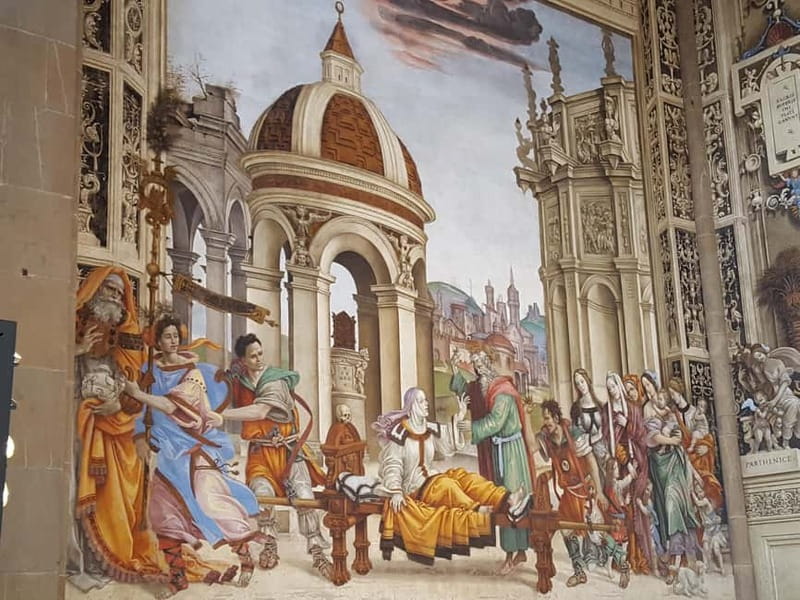
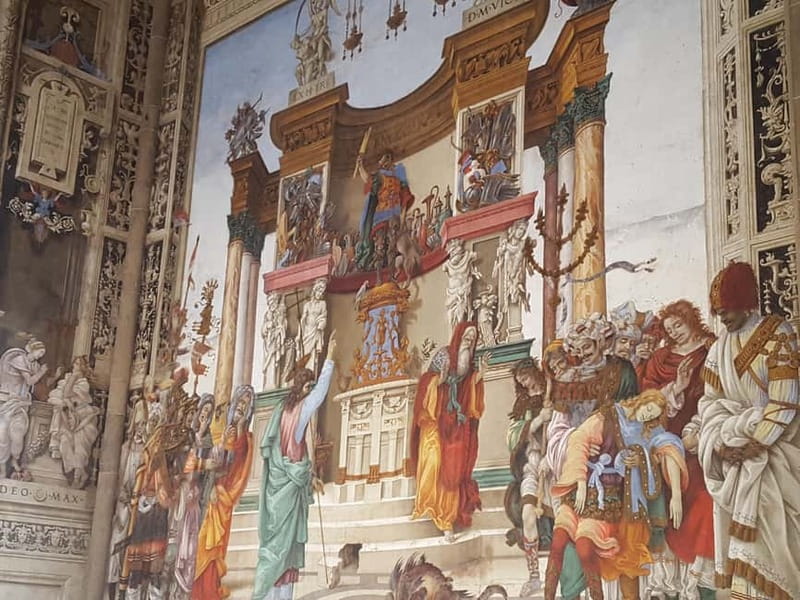
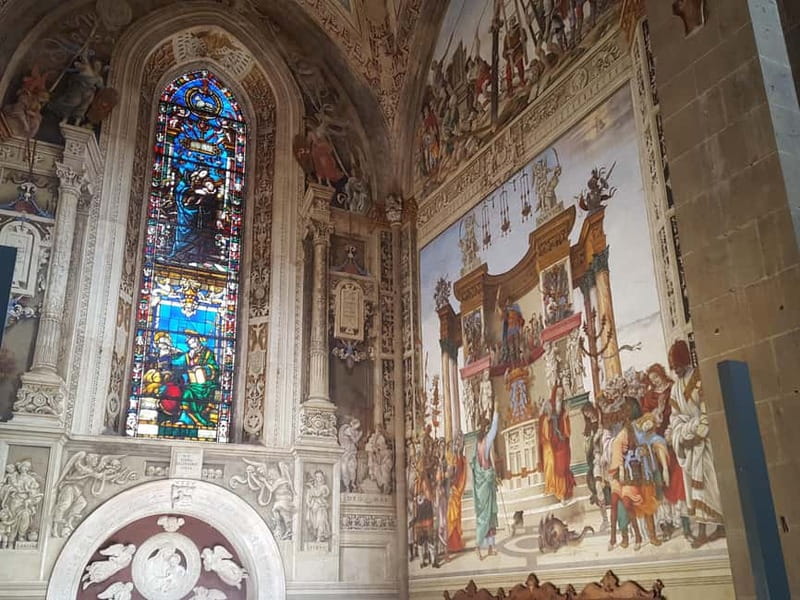
The Tornabuoni Chapel is one of the most rewarding parts of the visit. Domenico Ghirlandaio filled it with scenes that present sacred stories alongside the people, clothing, buildings, and social customs of Renaissance Florence.
Ghirlandaio was also a mentor to the young Michelangelo, so the chapel offers a useful connection to the wider Florentine art world. Look beyond the central religious scenes and study the faces, fabrics, and details of upper-class life. The chapel acts almost like a painted record of the city’s powerful families.
This is also where Florence’s wealthy patrons become easier to understand. Families such as the Tornabuoni, Strozzi, and Medici funded art not only from devotion, but also to display status and secure a place in the city’s memory.
The chapel can feel visually crowded, especially if you try to follow every figure at once. Let the audio guide select a few details for you. Then return to the walls and see what else you notice.
Medici and Strozzi power in a sacred setting
Santa Maria Novella is a useful place to see how religion and politics overlapped. Dominican friars shaped the spiritual life of Florence, while major families shaped the buildings and chapels through their commissions.
The stories connected with the Medici and Strozzi add a human side to the art. Rivalries, family ambition, public reputation, and religious duty all appear in the background. The paintings may look peaceful, but the money behind them came from a city where leading families competed for influence.
You should not expect a political history course in two hours. Instead, the audio guide gives you enough background to understand why certain chapels are so elaborate and why portraits of well-dressed Florentines appear inside sacred scenes.
That blend is one of the visit’s strongest features. You see beautiful art, but you also see who had the money to commission it and how carefully those families placed themselves within Florence’s religious world.
Botticelli, the Green Cloister, and quieter corners
Botticelli’s intimate Nativity offers a smaller, more personal moment after the grander chapels. It is worth slowing down here, since the work gives you a different sense of scale and feeling from the large fresco cycles.
The Green Cloister, associated with Paolo Uccello, changes the rhythm again. Its frescoes and open spaces create a calmer setting, with faded surfaces that show the passage of time. The word green refers to the distinctive fresco technique and coloring used in the cloister, not to a garden view.
The cloisters are valuable because they let you step away from the main church interior. You can look at the art, but you can also notice how the complex was organized for religious life. The quieter setting makes it easier to think about the Dominican community that used these spaces.
Some frescoes may appear worn compared with the brighter works in the chapels. That is part of the experience, but it also means you should not expect every image to look crisp or fully preserved.
How the portable audio guide works for you
The dedicated device is the practical heart of this visit. You collect it with your ticket, so the main narration does not require a mobile application, data connection, or personal earphones.
A detailed audio guide is especially useful here because Santa Maria Novella rewards context. You can hear about the artists, the friars, the patron families, and the meaning of individual scenes while standing directly in front of them.
The tradeoff is personal pace. A guide leading you in person can notice what interests you and answer questions. This audio experience cannot do that. It works best if you enjoy choosing your own stops and do not need live discussion.
You also receive access to a Florence city guide app with alternative routes, including an itinerary focused on the Santa Maria Novella district outside the basilica. The main visit does not require you to use an app, and personal earphones are not required. Treat the district guide as an extra for later, not as part of the church narration.
Clothing, photography, and access notes
Santa Maria Novella is an active place of worship, so dress appropriately. Shorts and sleeveless tops are not allowed, and you should be ready to follow the basilica’s religious rules.
Flash photography is not allowed. Keep your camera settings respectful, and do not let taking pictures distract you from the works that are easiest to appreciate in person.
The experience is not suitable for wheelchair users. If step-free access is essential for you, confirm arrangements before booking rather than assuming that priority entry solves mobility concerns.
There is no food, drink, or transportation included. The site is in central Florence, but you are responsible for reaching the meeting point at Piazza Stazione number 4.
Is $29 a fair price?
The value depends on what you want from the visit. If you only want to enter the basilica for a quick look, $29 may feel high. You are paying for more than admission, with reservation handling, priority access, and a dedicated audio guide included.
For a first visit, I consider the price reasonable if you would otherwise spend time in a ticket queue or pay separately for art commentary. The detailed narration is particularly helpful for Masaccio’s Trinità, the Tornabuoni Chapel, and the connections between the Dominican order and Florence’s ruling families.
The city guide app adds some value after your visit, especially if you plan to walk around the Santa Maria Novella district. It does not replace a full Florence guidebook, but an extra route can help you make better use of the area around the basilica.
The free cancellation policy also reduces the risk of booking ahead. You can cancel up to 24 hours before the visit for a full refund, and the reserve-now, pay-later option keeps your plans flexible.
Who should book this experience?
I would choose this for an independent visitor who wants structure without joining a group. It suits art lovers, first-time visitors to Florence, and anyone who prefers to pause in front of a painting rather than keep up with a guide.
Families with older children may also find the audio format useful, since each person can listen at a comfortable pace. The main requirement is patience. There is a lot to see, and the art makes more sense when you give it time.
This is less suitable if you want live questions and conversation, dislike audio tours, or need wheelchair access. It is also not ideal for a very rushed schedule, since the strength of Santa Maria Novella lies in the connections between its spaces.
Should you book Santa Maria Novella with the audio guide?
Book it if you want to see major Florentine art while learning why the basilica mattered to the Dominican order, the Medici, the Strozzi, and other powerful families. The combination of priority entry, a detailed portable audio guide, and access to the cloisters gives you a clear and flexible two-hour visit.
Skip it if you only want a brief look inside or if you strongly prefer a live guide. For most independent visitors, though, $29 is a fair trade for easier entry and useful context in one of Florence’s most rewarding churches.
FAQ
Where is the meeting point?
Meet at Piazza Stazione number 4, behind Santa Maria Novella, at the ticket office. Show your voucher there to collect your ticket and portable audio guide.
How long does the experience last?
The visit lasts about two hours. Starting times depend on availability.
Does the ticket include priority access?
Yes. The experience includes priority access through a separate entrance, along with the reservation ticket and agency fees.
Is an audio guide included?
Yes. You receive an official portable audio guide at the ticket office. No personal earphones or mobile application are required for the basilica audio tour.
Is a live guide included?
No. This is a self-guided experience, and no physical guide is included.
What artworks can I see?
The visit includes works associated with Masaccio, Giotto, Brunelleschi, Ghirlandaio, Botticelli, and Paolo Uccello. Key areas include the Trinità, Tornabuoni Chapel, and Green Cloister.
What should I wear?
Appropriate clothing is recommended because Santa Maria Novella is a place of worship. Shorts and sleeveless tops are not allowed, and comfortable shoes are suggested.
Is the experience suitable for wheelchair users?
No. The experience is listed as unsuitable for wheelchair users.
Can I take photographs?
Photography with flash is not allowed.
Can I cancel the booking?
Yes. You can cancel up to 24 hours in advance for a full refund. You can also reserve now and pay later.
Just added around Florence
- Florence: Uffizi Gallery Reserved Ticket & Digital Audio Guide★ 4.5 · 3 reviews
- Around Florence Hills: App‑Guided e‑Vespa Tour + Wine&Food★ 4.5 · 22 reviews
- Florence: Uffizi Gallery Audio Guided Tour led by Tour Leader★ 3.5 · 6 reviews
- Uffizi Gallery: Self-guided App Visit & Optional Accademia Museum★ 4.0 · 19 reviews
- Uffizi Gallery Audio-Guided Visit with optional Accademia Gallery★ 3.5 · 42 reviews
- Florence: Uffizi Gallery Timed Entry Ticket with Audio★ 3.0 · 3 reviews
- Uffizi Combined Ticket:UFFIZI, PITTI, BOBOLI & digital audioguide★ 4.0 · 26 reviews
- Accademia Gallery Skip the line Tickets with Audio Guide★ 4.0 · 10 reviews
Florence Audio Tours, compared.
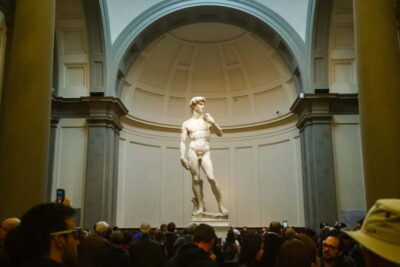
Florence: Timed Entry to Michelangelo’s David + Audio App
Read our review →
Florence: Uffizi Priority Ticket & Masterpieces Audio App
Read our review →
Florence: Palazzo Vecchio Entrance Ticket & Audioguide
Read our review →
Florence: Uffizi Gallery Timed Entry Ticket & Audio Guide
Read our review →
Florence: Michelangelo’s David Entrance Ticket and Audio App
Read our review →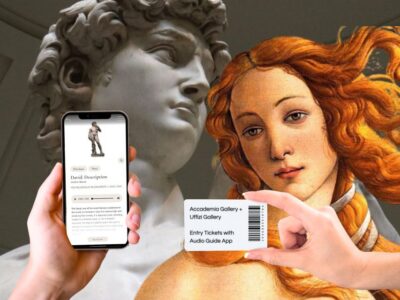
Florence: Uffizi & Accademia Priority Tickets with Audio App
Read our review →
Florence: Eco-Friendly Golf Cart City Tour with Audio Guide
Read our review →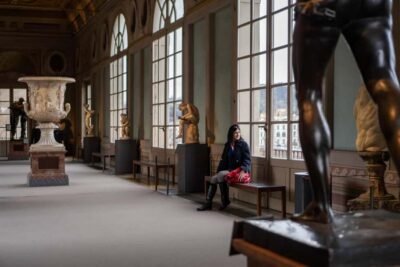
Florence: Uffizi Gallery Reserved Entry Ticket & Audioguide
Read our review →Browse the lists this tour appears in