
REVIEW · TOKYO AUDIO TOURS
Tokyo: Sumo Keiko Training Tour with Audio Guide & Photo
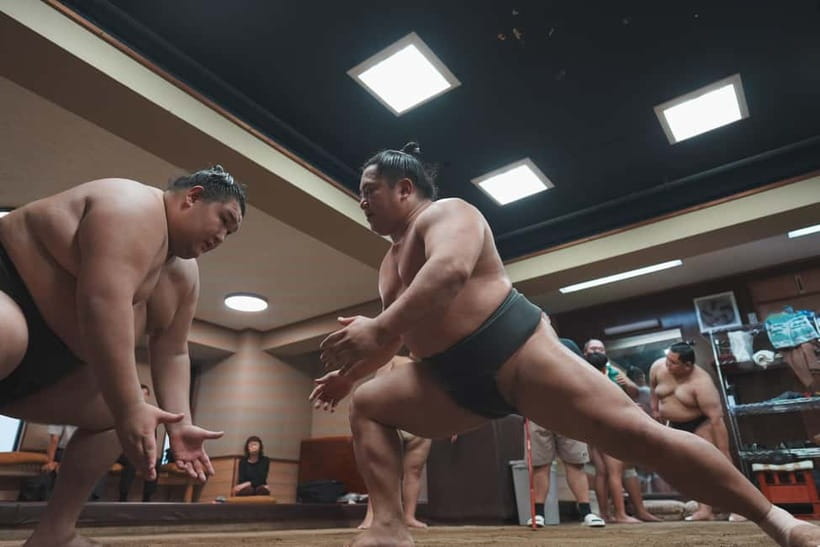
Instead of watching a polished tournament bout, you see professional wrestlers at practice, where repetition, discipline, and technique matter more than showmanship. The session takes place at Nakamura-beya, only two minutes from JR Ryogoku Station and beside Ryogoku Kokugikan National Sumo Arena.
I like the close look at daily training and the practical audio guide, which covers sumo ranks, history, and techniques in 10 languages. The included photo with the wrestlers is another real plus, especially if you want a lasting memento rather than only a few phone pictures.
The main drawback is the quiet format. You must watch without speaking, restroom access is before the session, and many people sit on cushions for up to 1.5 hours because bench chairs are limited.
Key points
- Watch keiko at Nakamura-beya: See a genuine professional training session rather than a staged demonstration.
- Use commentary in 10 languages: Audio is available in Chinese, English, French, German, Hindi, Italian, Japanese, Korean, Polish, Spanish, and Portuguese.
- Get a photo with sumo wrestlers: The photo is included, along with a training explanation pamphlet.
- Arrive beside Ryogoku Kokugikan: The stable is about two minutes from JR Ryogoku Station, with major sumo sights nearby.
- Expect a quiet, seated visit: Bring earphones, avoid flash photography, and prepare to sit on a cushion if bench seating is full.
- Plan for 40 to 90 minutes: The exact length and starting time depend on availability.
Watching Real Practice at Nakamura-beya
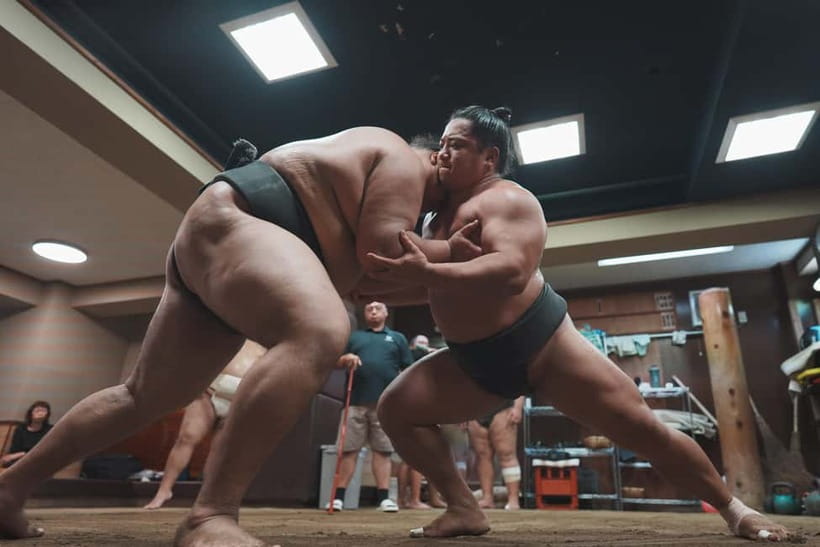
The heart of this visit is keiko, the Japanese word for sumo training. You are not attending a tournament, and the wrestlers are not performing a show for an audience. You watch them work through practice in their own stable, with the focus on strength, balance, ritual, and technique.
That distinction matters. A tournament gives you the drama of ranked matches and a formal arena setting. Training gives you a closer look at the work behind those matches. You may notice how controlled and serious the room feels, even when the action itself is brief or repetitive.
The setting is Nakamura-beya, a sumo stable near Ryogoku’s main arena. The meeting point is easy to reach, which helps if you are fitting this into a busy Tokyo day. From JR Ryogoku Station, the walk takes about two minutes. You also finish where you started, so there is no need to arrange a separate pickup or find your way back through unfamiliar streets.
Your role is simple: arrive, settle in, listen, and watch quietly. Speaking during practice is discouraged. That rule is not a minor detail. Sumo training depends on concentration, and the quiet helps you pay attention to the physical effort in front of you.
More Audio Tours in Japan:
- Tokyo: Open Top Panoramic Sightseeing Bus with Audio Guide
★ 3.8 · 254 reviews - Tokyo: Daikoku Self-Drive R35 GT-R Custom Car Experience
★ 4.9 · 129 reviews - Tokyo: 60min Panoramic Open Top Bus Tour with Audio Guide
★ 4.0 · 40 reviews
What the Audio Guide Adds to the Training
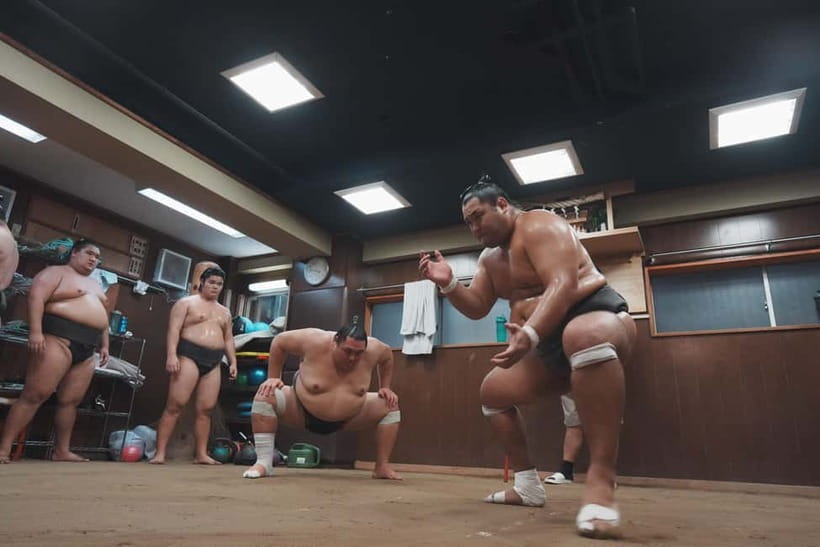
Sumo can be hard to follow if you know only the basics. The audio guide helps put the movements into context, explaining sumo history, wrestler ranks, and training techniques while you watch.
You can listen in Chinese, English, French, German, Hindi, Italian, Japanese, Korean, Polish, Spanish, or Portuguese. The live guide speaks English, Japanese, and Korean. This gives you two useful layers of help: direct guidance at the venue and recorded information on your phone.
Bring your own earphones. If you forget them or do not have a pair, the operator can lend you some. Your phone is the main tool for the audio portion, so arrive with enough battery if possible. Charging stations are available at the venue, but it is still wise not to rely on them during a short visit.
The audio commentary is especially useful for first-time sumo audiences. You can watch the physical details while learning why rank matters and how training fits into the sport. If you already know sumo well, the session still gives you a chance to connect familiar ideas with actual practice. One recent booking described the close view as useful even for someone who already knew a lot about sumo.
A Quiet Room, Cushions, and Practical Comfort
The venue is fully air-conditioned, with free Wi-Fi and charging service. That is welcome in Tokyo, particularly if you have been walking around Ryogoku or arriving during hot weather.
Seating requires a little planning. There are only a limited number of bench chairs, and priority goes to people with disabilities. Other participants sit on cushions, potentially for the full 1.5-hour period. If sitting on the floor is uncomfortable, consider contacting the operator before booking or planning for the shorter available session if that option is offered.
You should use the restroom before joining. The guidance specifically asks you not to leave for restroom use during practice, so this is not the place for a casual drop-in with frequent breaks.
The minimum age is six. Children under six cannot join, and older children need to understand the quiet format. A child who enjoys sports, Japanese culture, or watching skilled physical activity may get a lot from the visit. A child who needs to move around or talk often may find the rules difficult.
The Photo With the Wrestlers
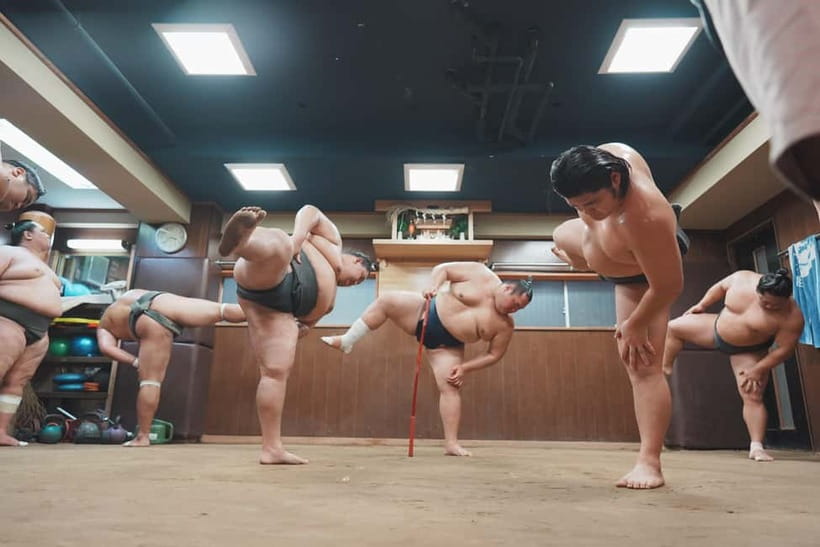
A photo with sumo wrestlers is included in the price. It gives you a clear souvenir from the visit and adds a personal moment after watching the training.
Photography is allowed during the experience, but flash photography is not. Sunglasses and bare feet are also not allowed. Follow the instructions from the staff, keep your phone ready without disrupting the room, and do not assume that every moment of practice is a photo opportunity.
The photo is one of the strongest reasons to choose this visit instead of simply viewing the Sumo Museum from outside. You get both the sporting setting and a personal record of being there. The exact timing of the photo is not specified, so think of it as an included part of the visit rather than something to schedule at a particular minute.
Same place, a different route to walk:
- Private Drifting Lesson w/ OG Pro Instructor Tokyo Drift Japan
★ 5.0 · 35 reviews - [Self-Drive] Tokyo & Daikoku Custom Car Driving Tour
★ 4.9 · 25 reviews - Mt. Fuji Drive Tour (Includes Visit to Local Speedway)
★ 5.0 · 19 reviews - Tokyo: Pre Japan Planning Kit: Itineraries, Food & Survival
★ 4.9 · 18 reviews
How the 40 to 90 Minutes Usually Fits Your Day
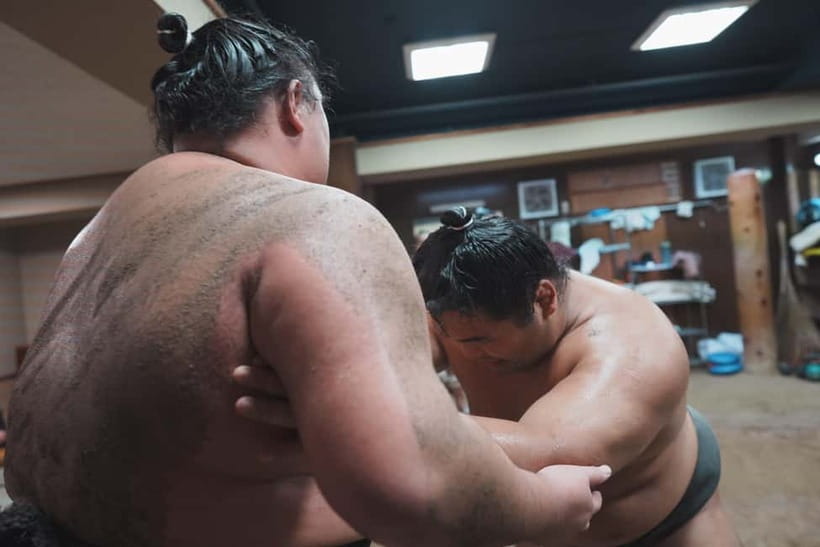
The advertised duration ranges from 40 to 90 minutes, while the planned visit can last about 1.5 hours. Starting times and the available length depend on the schedule you select, so check the current time options carefully before paying.
The basic flow is straightforward:
- Meet at Nakamura-beya.
- Receive the training explanation pamphlet and settle into the venue.
- Watch the live practice session in silence.
- Follow the information through the live guide and audio guide.
- Take the included photo with sumo wrestlers.
- Finish back at Nakamura-beya.
Late arrival is a serious issue. If you arrive after the start, your viewing time is shortened, and the session cannot be extended. Since the stable is so close to the station, there is little reason to cut it close. Allow time to leave the station, find the entrance, and use the restroom before the session.
This is a good morning or midday addition to a Ryogoku plan, provided the starting time fits. It is also short enough to pair with another attraction, but the longer version can take enough time that you should not place it between two tightly scheduled bookings.
Why the Ryogoku Location Helps
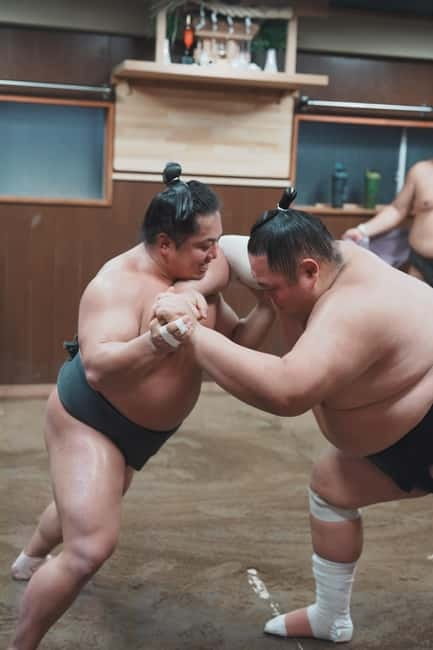
Ryogoku is Tokyo’s sumo district, and the location gives this activity more value than an isolated sports demonstration. Nakamura-beya is next to Ryogoku Kokugikan National Sumo Arena, the city’s best-known sumo venue.
The Sumo Museum is within walking distance, making it an easy follow-up. You can use the museum to look at sumo-related objects and background information after seeing training in person. The contrast works well: the stable shows the physical practice, while the museum offers a quieter cultural stop.
You can also continue toward the Tokyo waterfront on foot. The listing does not specify a full walking route or a set sightseeing program, so you will need to plan that part yourself. Still, the location makes it easy to turn a short sumo visit into a half-day around Ryogoku instead of making a special cross-city trip for a 40-minute activity.
JR Ryogoku Station is the key transport advantage. The meeting point saves time, especially if you are staying elsewhere in Tokyo and want a clear station-based plan. A directions video is also provided to help you find Nakamura-beya.
Is $85 a Fair Price?
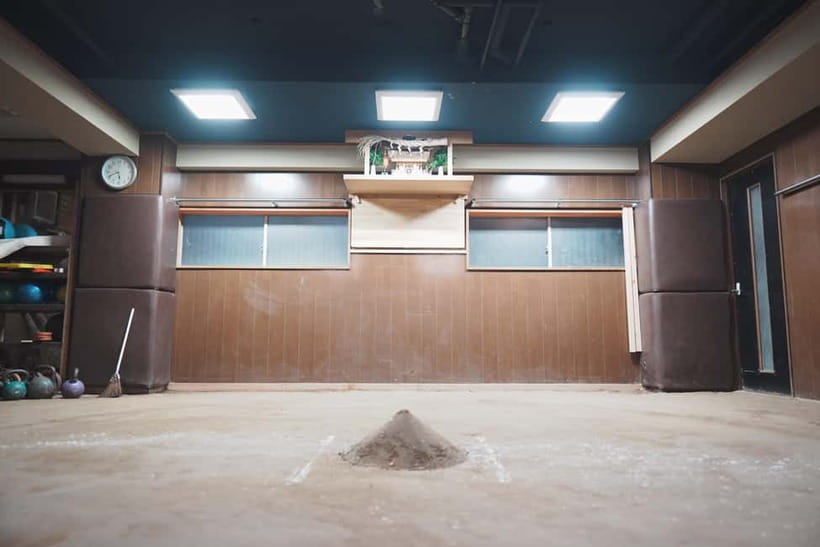
At $85 per person, this is not a budget attraction. The value depends on what you want from sumo.
You are paying for more than a seat near a practice session. The price includes the live training, a guide in English, Japanese, or Korean, audio commentary in 10 languages, the training pamphlet, Wi-Fi, charging service, and a photo with wrestlers. The strong point is access to real practice in a working sumo stable, not simply a general introduction to the sport.
The cost makes the most sense if you care about sumo and want an organized visit with explanations. It is also reasonable for a first-time visitor who wants help understanding what is happening. The value is weaker if you only want to see a tournament bout, because this is training rather than competition, or if you are mainly looking for a quick photo stop.
The included photo helps justify the price, but it should not be the only reason you book. The lasting value is watching keiko up close and learning how the sport is structured. The photo then gives you a concrete reminder of that visit.
The overall rating is 4.8 from five bookings, with praise focused on the rare chance to watch practice closely and the way the session can deepen your respect for the wrestlers’ work. With such a small number of ratings, I would treat that score as encouraging rather than final proof. The details of the format matter more than the number.
Rules That Shape the Experience
The restrictions here protect the training environment and make the visit more comfortable for everyone.
You must watch quietly and avoid flash. Do not wear sunglasses or go barefoot. Bring suitable clothing and shoes, and keep your phone use discreet even though photography is allowed.
The quiet rule may surprise you if you expect a lively sports event. This is not a crowd scene with constant commentary. The atmosphere is controlled, and your attention belongs on the wrestlers.
The cushion seating is the biggest comfort concern. People with disabilities receive priority for the limited bench chairs, so do not count on a chair unless the operator confirms one. If you have mobility concerns, ask about seating before you commit. The supplied information confirms priority for visitors with disabilities but does not give further details about step-free access or specific seating arrangements.
Who Will Get the Most From This Visit?
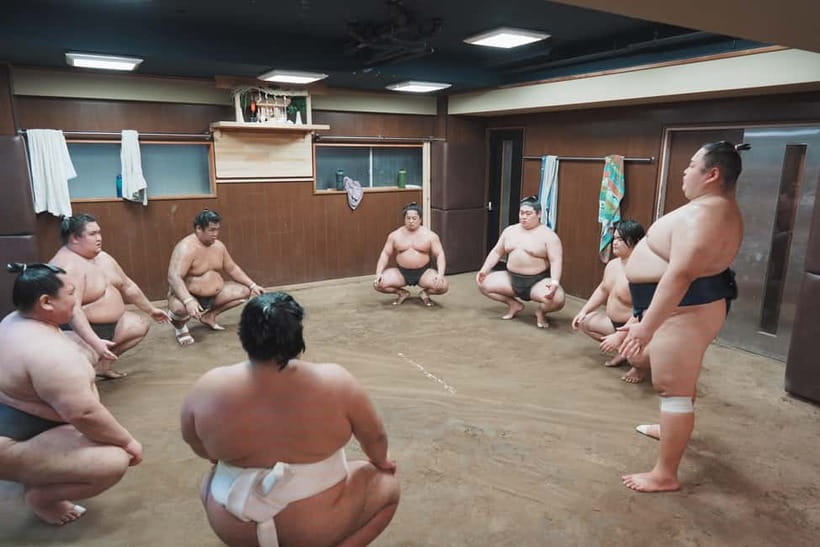
I would choose this for a sumo fan, a first-time visitor to Japan who wants cultural context, or anyone interested in disciplined physical training. The audio options make it accessible to a wide range of language speakers, and the location works well with other Ryogoku sights.
It is also a good choice for families with children aged six and older who can sit quietly. Explain the rules before you arrive. The wrestlers are practicing, so the visit depends on respect and patience.
I would hesitate to recommend it if you dislike floor seating, cannot remain quiet for the session, or want the excitement of formal competition. I would also avoid booking it as a rushed stop. Late arrival directly reduces your viewing time, and there is no extension.
The best preparation is simple: bring earphones, charge your phone, arrive early, use the restroom first, and check the exact duration. These small steps make a noticeable difference.
Should You Book the Nakamura-beya Training Tour?
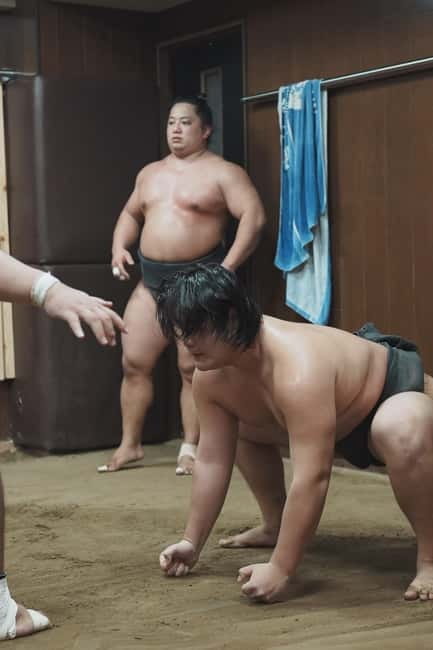
Book it if you want to see the working side of sumo rather than only its public tournament image. The stable location, multilingual audio guide, included wrestler photo, and nearby Sumo Museum make this an efficient Ryogoku experience.
Skip it if you need guaranteed bench seating, cannot follow a quiet viewing format, or are looking only for a fast photo. At $85, you should value the training itself. For the right audience, the chance to watch real keiko and understand what you are seeing makes the price worthwhile.
FAQ
Where does the sumo training tour meet?
The meeting point is Nakamura-beya Sumo Stable, about two minutes from JR Ryogoku Station and next to Ryogoku Kokugikan National Sumo Arena.
How long does the activity last?
The available duration is 40 to 90 minutes. The planned visit can last about 1.5 hours, and you should check the available starting time and length when booking.
What languages are available for the audio guide?
The audio guide is available in Chinese, English, French, German, Hindi, Italian, Japanese, Korean, Polish, Spanish, and Portuguese.
Is a live guide included?
Yes. The live guide speaks English, Japanese, and Korean.
Do I need to bring earphones?
You should bring your own earphones to listen to the audio guide on your phone. A pair can be lent to you if needed.
Can children join the activity?
Children must be at least six years old. Children under six are not permitted to join.
Just added around Japan
- Tokyo: Pre Japan Planning Kit: Itineraries, Food & Survival★ 4.9 · 18 reviews
- Hakone: Self Guided Trip to Mt. Fuji // Made by Local Guides★ 4.6 · 7 reviews
- [Self-Drive] Tokyo & Daikoku Custom Car Driving Tour★ 4.9 · 25 reviews
- One Day Private Customized Self-Guided Tour in Kyoto★ 4.2 · 11 reviews
- One Day Private Customized Self-Guided Tour in Wakayama★ 3.5 · 4 reviews
- Kyoto/Osaka: Nara Customizable Self-Guided Tour with Driver★ 5.0 · 5 reviews
- Tokyo Drift Self Driving Private Lesson w/ OG Teacher Japan★ 5.0 · 15 reviews
- Mt. Fuji Drive Tour (Includes Visit to Local Speedway)★ 5.0 · 19 reviews
Tokyo Audio Tours, compared.
Tokyo: Open Top Panoramic Sightseeing Bus with Audio Guide
Read our review →
Tokyo: 60min Panoramic Open Top Bus Tour with Audio Guide
Read our review →
Private Drifting Lesson w/ OG Pro Instructor Tokyo Drift Japan
Read our review →
Tokyo: Pre Japan Planning Kit: Itineraries, Food & Survival
Read our review →
Akihabara: Self-Guided Tour with a special brochure
Read our review →
Hakone: Self Guided Trip to Mt. Fuji // Made by Local Guides
Read our review →Browse the lists this tour appears in