
REVIEW · BARCELONA AUDIO TOURS
Barcelona: Mies van der Rohe Pavilion Ticket and Audio Guide
The Mies van der Rohe Pavilion is architecture stripped to its bones: glass, stone, water, steel, and carefully measured space. I like the calm, uncluttered setting and the chance to study a building that helped shape modern architecture without spending half a day in a museum.
I also like the five-language audio guide and the easy access for wheelchair users. The main drawback is simple: this is a small site, so your visit may be brief, and some people question paying $10 for a building that can be seen fairly quickly. Photographers and models may also be working inside, changing the quiet mood.
Key points to know before you go
- A 1929 pavilion rebuilt in 1986: The original German Pavilion was dismantled after the Barcelona International Exhibition, then recreated on its original site.
- Designed by Mies van der Rohe and Lily Reich: Their work uses a small number of materials with unusually exact placement.
- A short visit with serious architectural value: Plan around the building itself rather than a long program of activities.
- Audio commentary in five languages: Choose English, Spanish, Catalan, French, or German.
- The setting may change: Artistic interventions, professional photo shoots, and models can occasionally alter the appearance and atmosphere.
- Good access and flexible booking: The pavilion is wheelchair accessible, and cancellation is free up to 24 hours before the visit.
Why this small building matters
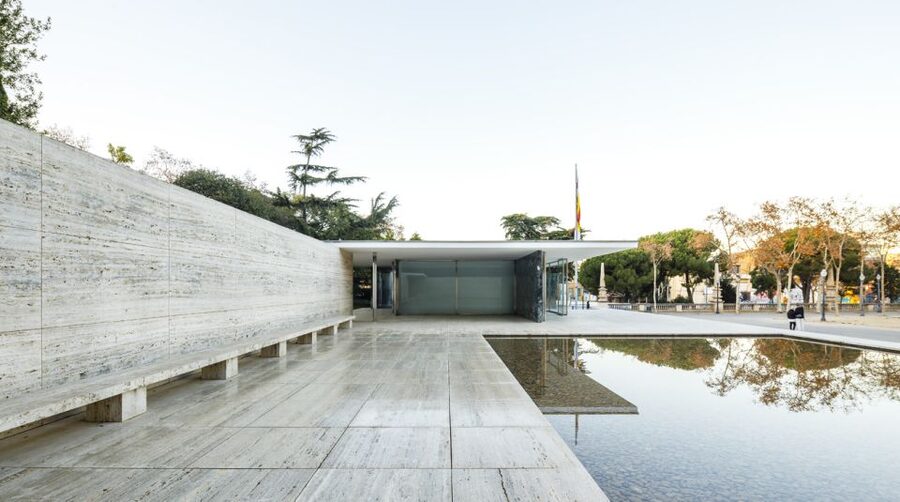
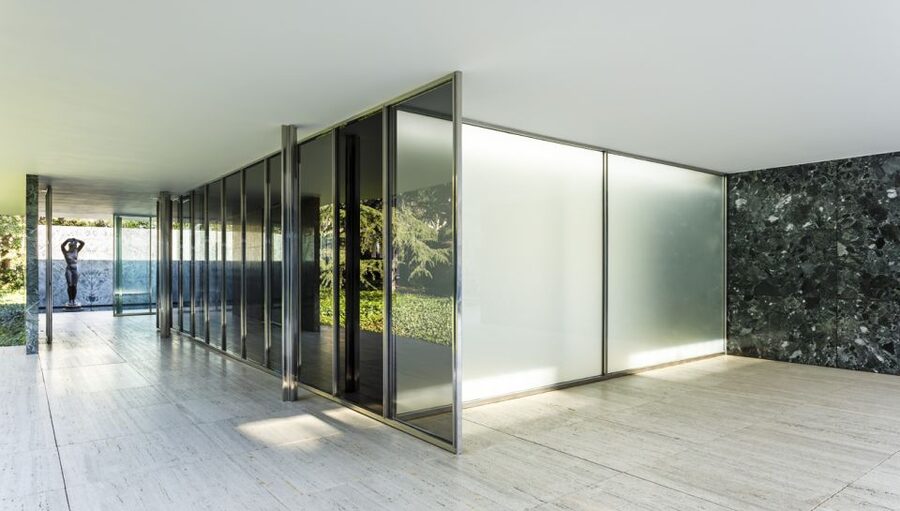
Barcelona has no shortage of famous architecture, but the Mies van der Rohe Pavilion asks you to look at space in a different way. It does not rely on ornament, a grand tower, or a large collection of objects. Its effect comes from proportion, open sight lines, reflective surfaces, and the exact meeting of materials.
Mies van der Rohe and Lily Reich designed the building as the German national pavilion for the 1929 Barcelona International Exhibition. It was intended for a major public event, yet the design is remarkably restrained. Instead of filling the space with decoration, the architects gave visitors a sequence of open areas shaped by walls, glass panels, water, and carefully selected stone.
That restraint is the point. You are not simply looking at a historic building. You are seeing an idea about how a building can work. The pavilion helped lay the foundations of modern architecture, and generations of architects and artists have studied its clean forms and close relationship between inside and outside.
I find this kind of place rewarding when you give it a little attention. At first, it can seem almost too plain. Then you notice how a wall directs your view, how a surface changes with the light, or how one material makes another look more vivid.
More Audio Tours in Barcelona:
- Barcelona: Sagrada Familia Entry Ticket with Audio Guide
★ 4.6 · 105,312 reviews - Barcelona: Casa Batlló Entry with Self-Audioguide Tour
★ 4.7 · 25,359 reviews - Barcelona: Palau de la Música Self-Guided Tour
★ 4.6 · 3,603 reviews
Entering the 1929 German Pavilion
Your visit begins with the entrance ticket and access to the pavilion. The ticket lets you skip the ticket line, which matters most if you are fitting the site into a busy Barcelona day. The experience is not organized like a long guided tour with several scheduled stops. Instead, you move through the building at your own pace with the audio guide.
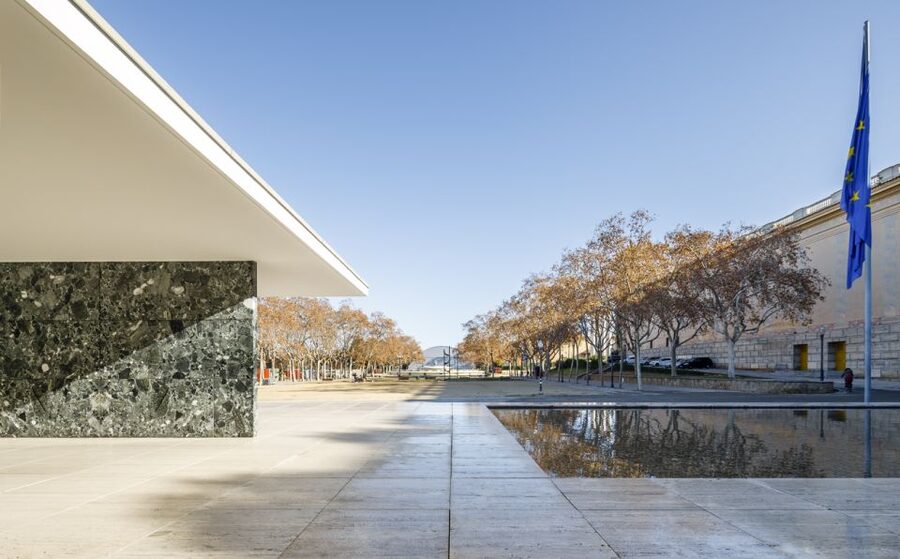
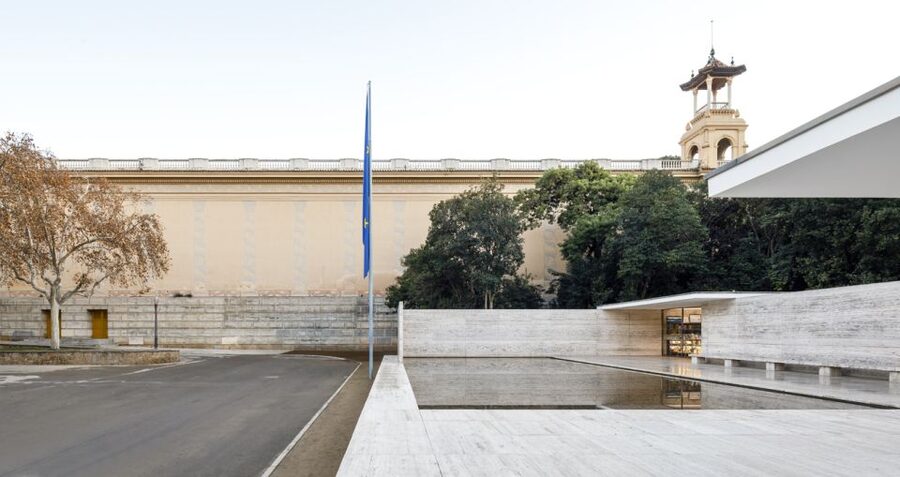
The pavilion was created for the 1929 exhibition, but what you see today is a reconstruction. The original structure was dismantled once the event ended. Its influence continued to grow, however, and the pavilion was rebuilt on its original site before reopening in 1986.
That reconstruction is one of the most important facts to understand before you arrive. This is not the untouched 1929 structure. It is a careful recreation of a building considered important enough to bring back. The story raises a useful question about architecture: can a recreated building still carry the meaning of the original? The pavilion gives you a chance to consider that for yourself.
The audio guide helps explain this background without requiring you to read a long panel of text. It is available in English, Spanish, Catalan, French, and German. If you care about architectural history but do not already know the pavilion, the commentary gives the visit more shape.
Reading the materials, from Alps to Tinos
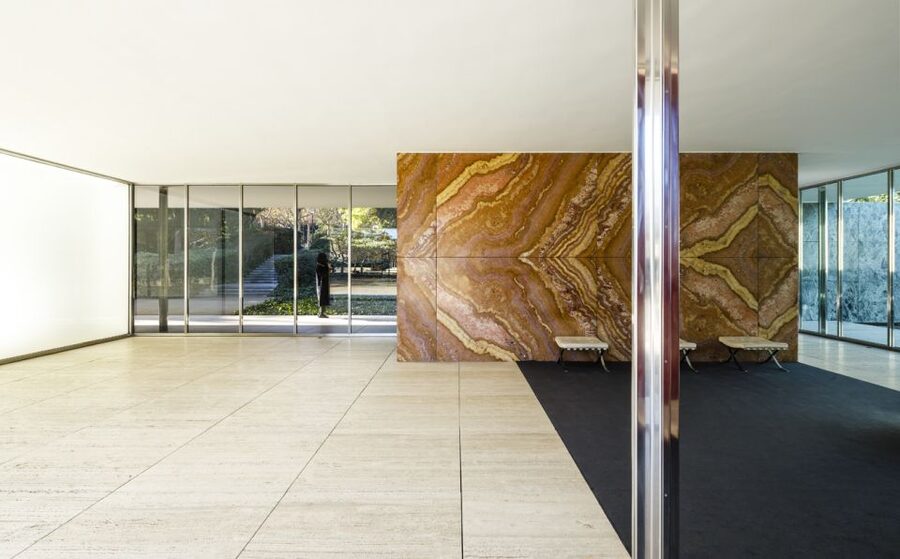
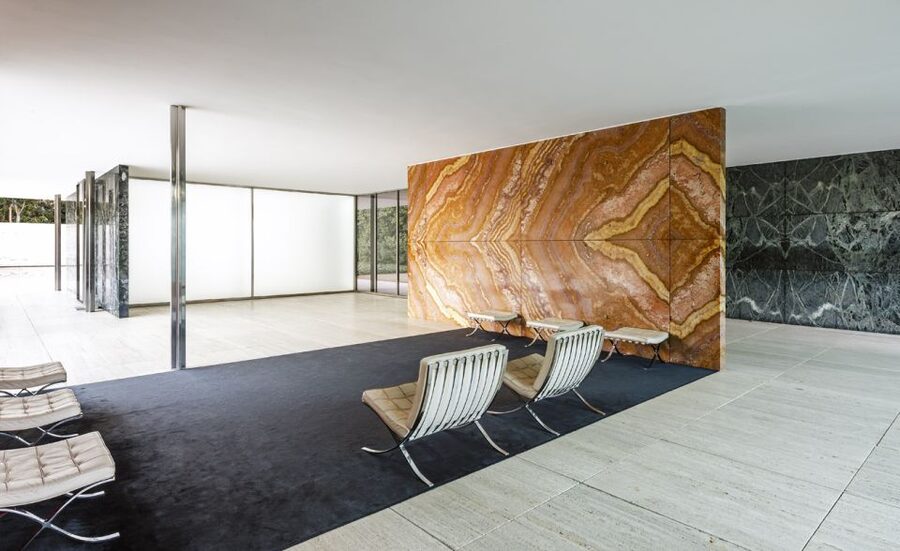
The pavilion’s design depends heavily on its materials. The stone was selected and brought from several places, including the Alps, Tivoli, Atlas, and Tinos. These are not casual finishing choices. Color, veining, texture, and contrast are all part of the building’s visual order.
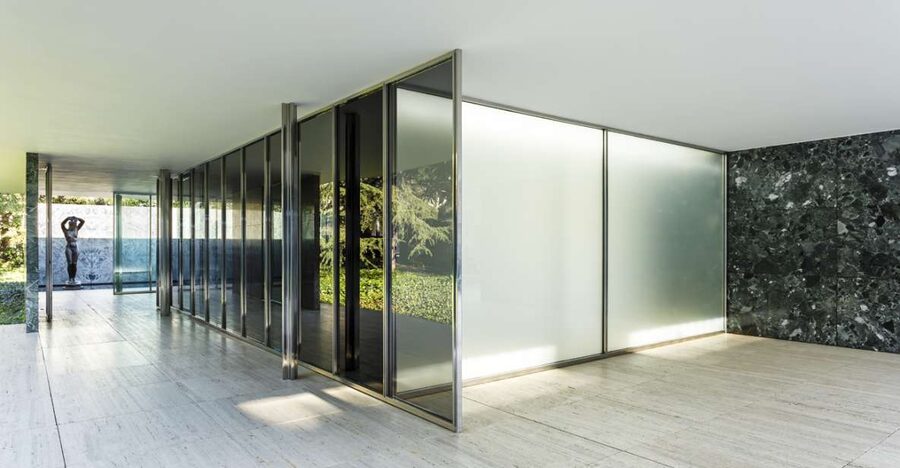
You will see how the walls and surfaces create a controlled palette rather than a busy display. Stone gives the space weight. Glass opens it outward. Steel adds fine lines and structure. Water brings reflection and movement without making the design feel crowded.
I like the way the pavilion makes ordinary architectural elements worth studying. A wall is not merely a wall here. It can frame a view, block one sight line, or guide you toward another part of the building. The result is a calm visit, but not an empty one.
Take your time with the transitions between interior and exterior areas. The linear relationship between the two is central to the design. You may find that the pavilion feels different depending on where you are standing, even though the building itself is small.
This is also where the audio guide earns its place. Without some context, you might walk through in a few minutes and wonder why the building has such a strong reputation. The commentary connects the visual details with the pavilion’s place in modern architecture.
A short visit that rewards slow looking
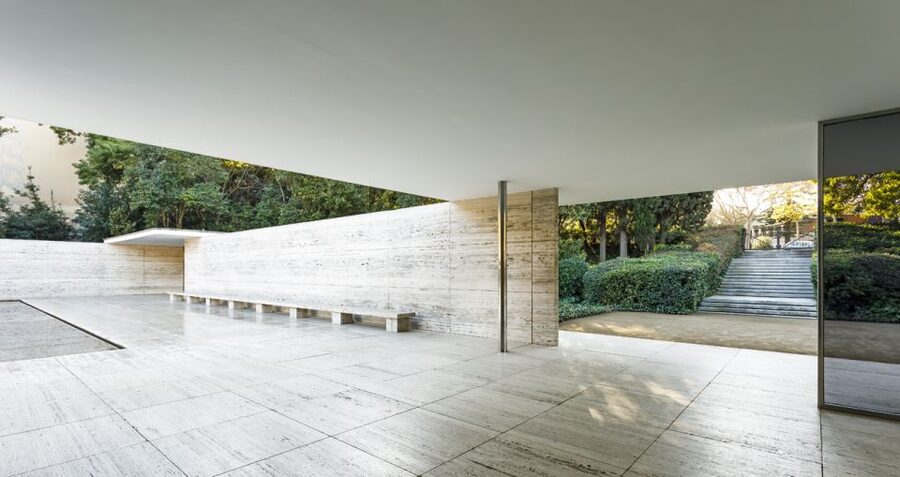
The pavilion does not offer a full day of activities. Its appeal is concentrated. You come to see the structure, understand its design, and consider its influence.
That short format can work well during a Barcelona itinerary. You can fit the visit around other plans instead of committing to a long tour. The ticket is valid for one day, with starting times available according to the booking calendar. Opening hours may change, so check the current schedule before setting out.
The site has also been described as relatively quiet, with limited public traffic at some times. That can make it easier to appreciate the open space and restrained design. Still, do not expect perfect solitude. Professional photographers and models may be using the pavilion during your visit, and they become part of the scene.
That is not necessarily a problem. The pavilion was designed to be seen, photographed, and studied. But a photo shoot can make a very small building feel less private and may block a view for a while. If you want the calmest possible visit, timing matters, although the available information does not promise a particular quiet period.
Occasionally, the pavilion hosts artistic interventions. These can change its appearance, so your experience may not look exactly like the familiar photographs. For some people, that adds interest. For others, it may be a drawback if they want to see the building in its most stripped-back form.
Same place, a different route to walk:
- Casa Batllo Admission Ticket with Intelligent Audio Guide
★ 4.5 · 3,168 reviews - La Pedrera-Casa Mila Admission Ticket with Audioguide
★ 4.5 · 1,032 reviews - Gaudi´s Casa Vicens Skip the Line Ticket with Audioguide
★ 4.5 · 685 reviews - Erotic Museum Admission Ticket with Audioguide
★ 5.0 · 527 reviews
How much value do you get for $10?
At $10 per person, the ticket is inexpensive compared with many major Barcelona attractions. Still, value depends on what you want from a visit.
If you judge the price by time alone, the pavilion may feel costly. You could spend less than an hour there, depending on how carefully you listen to the audio guide and study the design. One Spanish visitor felt the building should be free, a reasonable opinion given its small size and short visit.
I see the value in a different way. The ticket pays for access to a highly influential work of modern architecture, plus the explanation needed to understand why it matters. If you enjoy design, art, architecture, or Barcelona’s cultural history, $10 is a fair price for a focused stop.
The value is weaker if you want a large museum, many rooms, or a long guided experience. You should not book this expecting a full attraction with a packed schedule. Think of it as a concentrated architectural visit, not an all-day sightseeing event.
The skip-the-line entry also has some practical value. Barcelona’s popular sites can make even small delays annoying when you have reservations elsewhere. Here, a smoother entrance helps you keep the rest of your day on track.
Using the audio guide well
The audio guide is included, and you can listen in English, Spanish, Catalan, French, or German. It provides the historical frame that the building itself does not spell out.
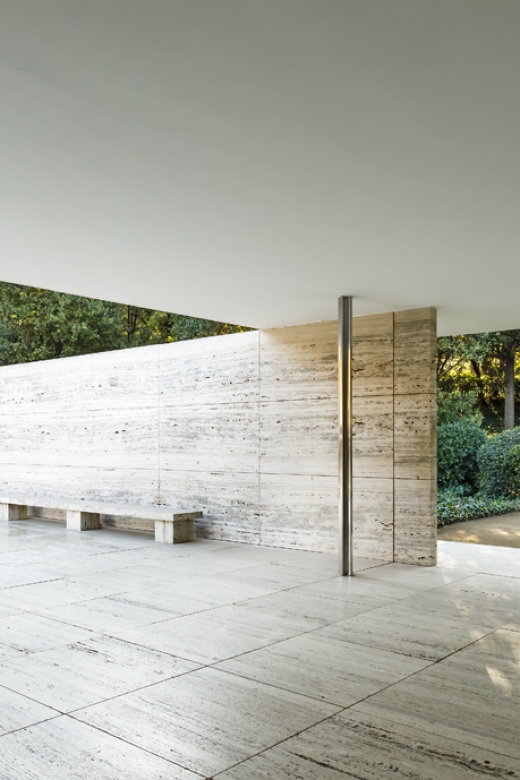
Start by taking in the pavilion before focusing on commentary. Look at the way the walls divide the area, how the glass connects the spaces, and how the materials contrast. Then use the guide to understand the reconstruction, the 1929 exhibition, and the architectural ideas behind what you have seen.
This two-step approach works better than treating the audio guide like background noise. The pavilion has few objects and no long sequence of rooms, so the information is most useful when connected to a detail directly in front of you.
One practical warning is worth noting. At least one booking experience did not include the expected audio guide, leaving the visitor confused. I cannot say how common that is, but you should confirm how the guide is provided when you arrive. If the audio option is important to you, ask staff promptly rather than waiting until the end.
There are no named personal guides here. The experience is self-guided, with the audio commentary doing the explaining. That gives you freedom, but it also means you are responsible for setting your own pace and making sure you do not rush through.
Access, rules, and small practical details
The pavilion is wheelchair accessible, which makes this architectural stop easier to include for visitors with mobility needs. The information provided does not specify every access detail, so anyone who needs particular arrangements should confirm them before booking.
Smoking, food, and drinks are not allowed. Pets are also prohibited, except for assistance dogs. Tripods are not permitted, an important detail for anyone carrying photography equipment.
The photography rule makes sense in a compact building where equipment can interfere with other people’s movement. You can still appreciate the pavilion visually, but do not plan on setting up a tripod for a long architectural shoot.
You should also arrive at the scheduled time. One booking experience specifically advised punctual arrival, and that is sensible for a timed cultural visit. Opening hours can change, and the available starting times depend on the current schedule.
A short nature trail near the site was also enjoyed by one visitor. It is not presented as part of the pavilion ticket, so treat it as a possible nearby extra rather than a guaranteed part of the experience.
Who will enjoy the pavilion most
I would recommend this visit most strongly to:
- People interested in modern architecture and design
- Visitors who like short cultural stops with strong ideas behind them
- Art students, architects, photographers, and design-minded visitors
- Anyone who wants a quieter contrast to Barcelona’s larger attractions
- Visitors who appreciate audio explanations in their own language
- People looking for an accessible attraction with flexible cancellation
You may be less satisfied if you need constant activity or expect a long itinerary. The pavilion is deliberately spare. Its pleasure comes from looking closely, not from checking off many rooms or displays.
Families can visit, but younger children may not find much to do unless an adult brings the design to life through questions and observation. Ask them to find reflections, compare the stones, or notice how the walls change the view. The building can become interesting when you treat it as a visual puzzle.
The site also suits people who have already seen Barcelona’s major landmarks and want something more focused. It offers a different kind of city experience, one built around ideas rather than spectacle.
Should you book the Mies van der Rohe Pavilion?
Book it if you want to see an influential modernist building, understand its reconstruction, and spend a calm stretch of time studying materials and space. The $10 price is reasonable for design-minded visitors, especially with the multilingual audio guide and skip-the-line entry.
Skip it if you want a large attraction or feel that a brief visit should not carry an admission charge. The pavilion is small, and photo shoots or artistic interventions may affect the atmosphere.
My practical advice is to pair it with other plans in the area, check the opening time, and arrive promptly. Give the audio guide your attention, but also allow yourself a few quiet minutes without commentary. That is when the building’s careful balance begins to make sense.
FAQ
How much does the Mies van der Rohe Pavilion ticket cost?
The ticket costs $10 per person.
How long is the ticket valid?
The ticket is valid for one day.
Which languages are available for the audio guide?
The audio guide is available in Spanish, Catalan, English, French, and German.
Is the Mies van der Rohe Pavilion wheelchair accessible?
Yes, the pavilion is wheelchair accessible.
Can I cancel my booking?
Yes. You can cancel up to 24 hours in advance for a full refund.
Can I pay later?
Yes. The reserve now and pay later option lets you book without paying immediately.
What is not allowed inside the pavilion?
Smoking, food and drinks, pets except assistance dogs, and tripods are not allowed.
Just added around Barcelona
- Self-Guided Audio Tour – Legends of the Gothic Quarter★ 4.5 · 6 reviews
- Self-Guided Audio Tour-The Surrealist Barcelona of Dalí and Gaudí★ 3.5 · 8 reviews
- Love in the Gothic Quarter Barcelona: Self-Guided Romantic Walk★ 4.5 · 9 reviews
- Self-Guided Tours Barcelona: 150+ Captivating Audio Stories★ 5.0 · 4 reviews
- Montjuïc Cable Car Entry Voucher with Audio Tour on Your Phone★ 3.5 · 37 reviews
- Barcelona Self-Guided Audio Tour★ 3.0 · 6 reviews
- Barcelona Gothic Quarter Self-Guided Tour: Hidden Skull Route★ 5.0 · 10 reviews
- Montjuic Park Walking Tour with Audioguide on Your Smartphone★ 3.0 · 4 reviews
Barcelona Audio Tours, compared.
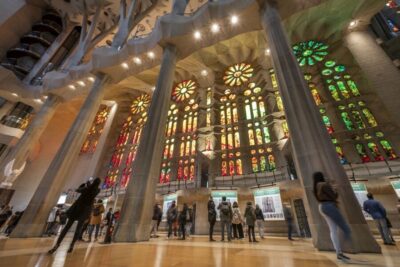
Barcelona: Sagrada Familia Entry Ticket with Audio Guide
Read our review →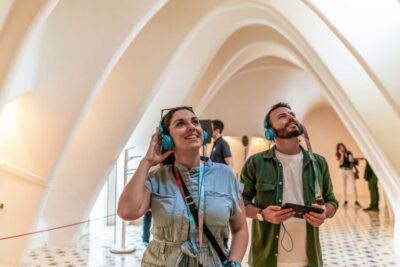
Barcelona: Casa Batlló Entry with Self-Audioguide Tour
Read our review →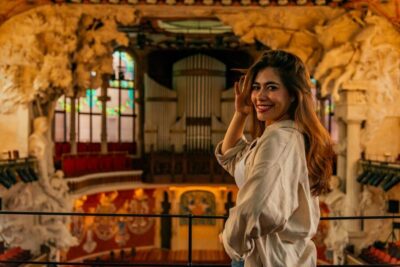
Barcelona: Palau de la Música Self-Guided Tour
Read our review →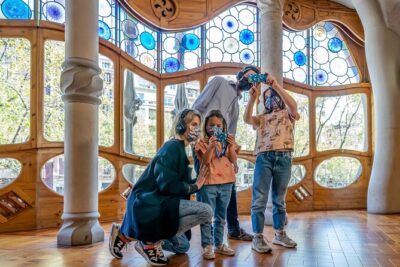
Casa Batllo Admission Ticket with Intelligent Audio Guide
Read our review →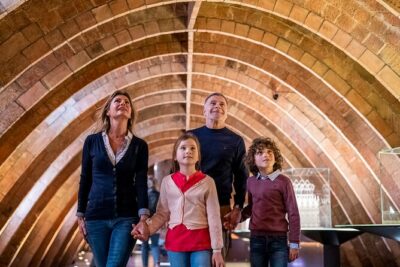
La Pedrera-Casa Mila Admission Ticket with Audioguide
Read our review →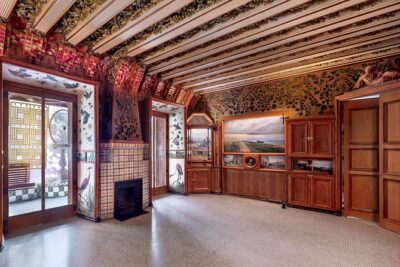
Gaudi´s Casa Vicens Skip the Line Ticket with Audioguide
Read our review →

Barcelona: Montjuïc Cable Car Ticket with Audio Guide
Read our review →Browse the lists this tour appears in