
REVIEW · ITALY AUDIO TOURS
Selinunte: Archeological Park Entry Ticket & App Audioguide
Selinunte is not a quick stop at one impressive temple. It is a huge archaeological park spread across sanctuaries, necropolis grounds, temples, and the Caves of Cusa, with more than 2,500 years of history under your feet. This ticket gives you one full day to explore at your own pace, without buying admission at the regular ticket line.
I like two things here. First, the park is vast, so you can choose your rhythm instead of being tied to a fixed group. Second, the ticket includes a digital postcard, a small but thoughtful way to share a photo from Sicily. The main consideration is that the ticket does not include a guided tour or audio guide, and the site’s size means you need to plan your energy and route.
Key points at a glance
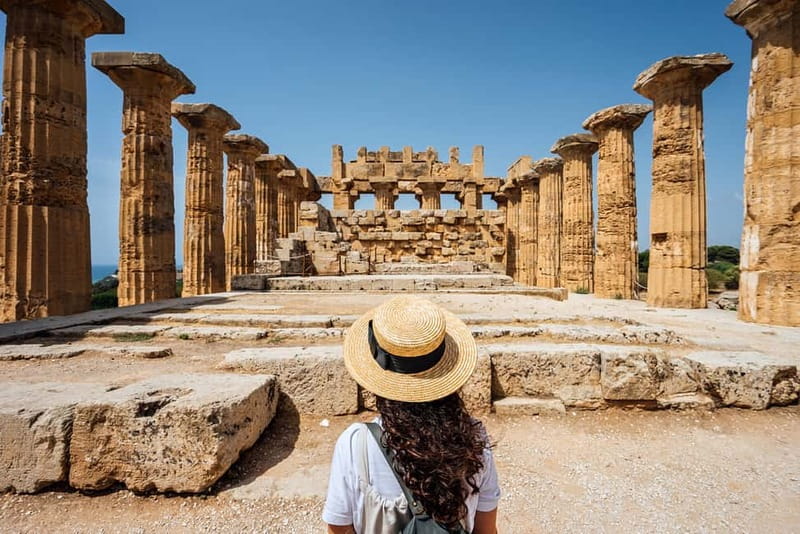
- See seven temples, sanctuaries, and a necropolis across one of Europe’s largest archaeological areas.
- Visit the Sanctuary of Malophoros and other sacred sites linked to ancient Selinunte.
- Explore examples of early Doric architecture, including some well-preserved remains.
- Choose your way around the park, on foot, by e-car, or by small train.
- Use a single-entry ticket valid for one day, with voucher exchange at the park ticket office.
- Send a free Pemcard digital postcard after your visit.
Why Selinunte deserves a full day
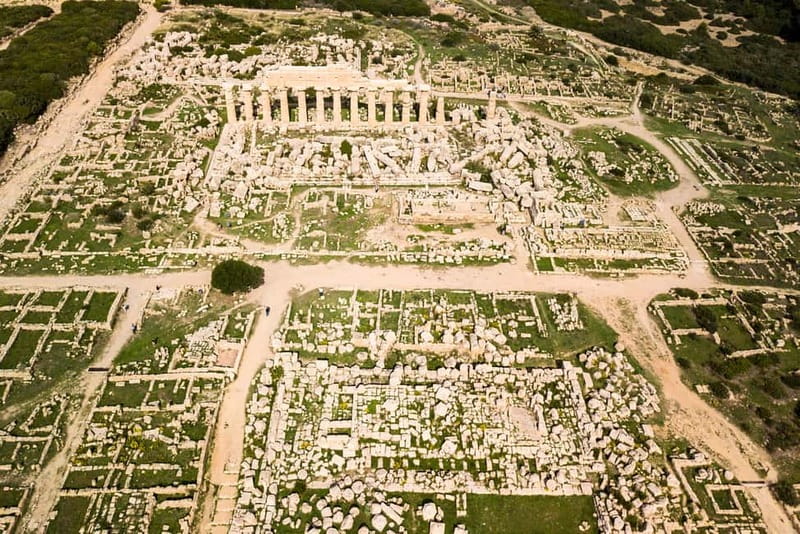
Selinunte was founded by colonists from Megara Hyblea and took its name from selinon, the wild parsley that grew in the area. Its location in western Sicily helped it grow into an important Greek settlement, but the site you see today is not a compact town center. It is a broad archaeological area with religious buildings, burial grounds, and unfinished stonework spread across open ground.
That scale changes the experience. You are not simply walking up to one famous ruin, taking a photo, and leaving. You are moving through several parts of an ancient city, with different kinds of remains appearing along the way.
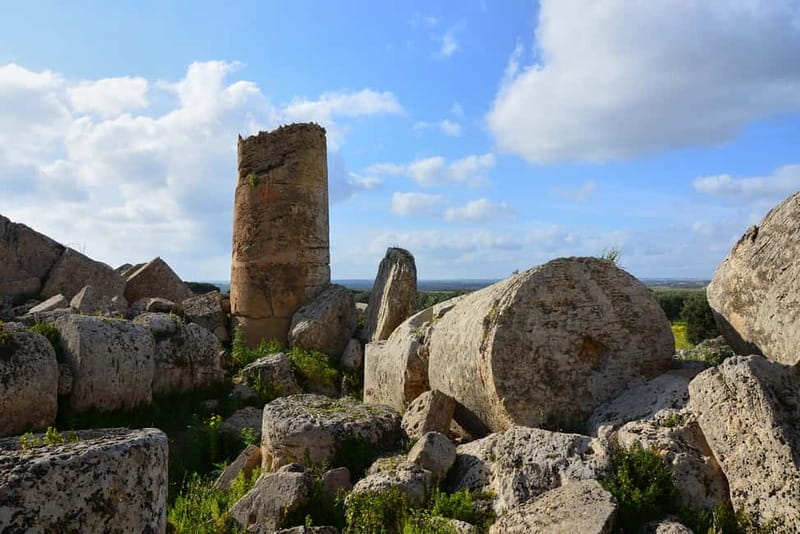
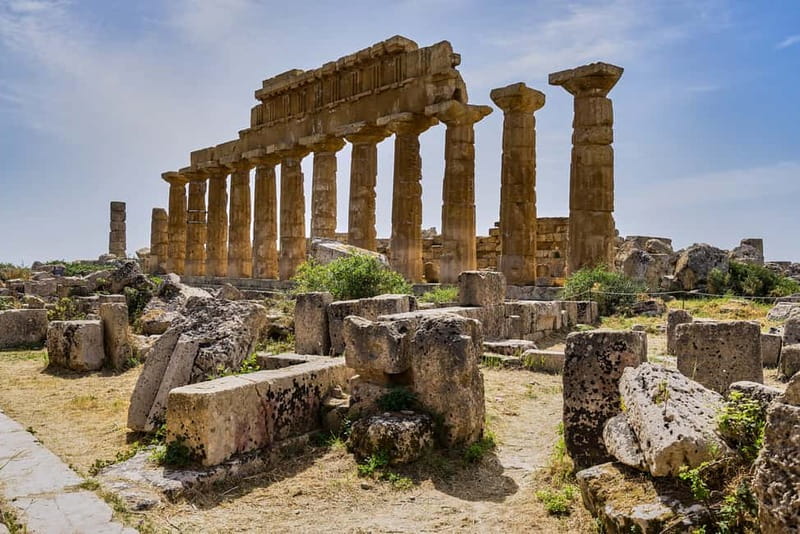
The park includes seven temples, sanctuaries, the necropolis, and the Caves of Cusa. Some structures are in better condition than others. That contrast is useful because it lets you see both finished Greek architecture and the practical work behind it, including stone prepared for construction.
The site is described as the largest archaeological area in Europe, so the one-day validity matters. You do not need to force every section into a rushed morning. If you have time, you can pause at the major monuments, study the remains, and use the available transport options when walking becomes tiring.
More Skip-the-Line Audio Guide Tickets in Italy
- Rome: Pantheon Fast-Track Ticket and Official Audioguide
★ 4.5 · 27,353 reviews - Pompeii: Entry Ticket with Audio Guide
★ 4.1 · 13,491 reviews - Venice: La Fenice Opera House Entry Ticket with Audio Guide
★ 4.6 · 11,742 reviews
Starting at the ticket office
Your voucher is not the final admission ticket. You must exchange it at the Archaeological Park ticket office for the official entry ticket. This is a small but important detail, especially if you arrive expecting to walk straight through a gate with a phone voucher.
The experience is advertised with skip-the-line entry, which can save time at busy periods. Still, allow a few minutes for the voucher exchange. The smoothest approach is to have the booking confirmation ready before you reach the ticket office.
The ticket allows one entry only. You cannot leave the park and expect to return later on the same admission. Plan food, water, transport, and your preferred route before passing through the entrance.
The activity is valid for one day, and starting times depend on availability when you book. Since no fixed guided schedule is involved, you have useful freedom once inside. You are not waiting for a guide or trying to keep up with a group.
Walking among Selinunte’s temples
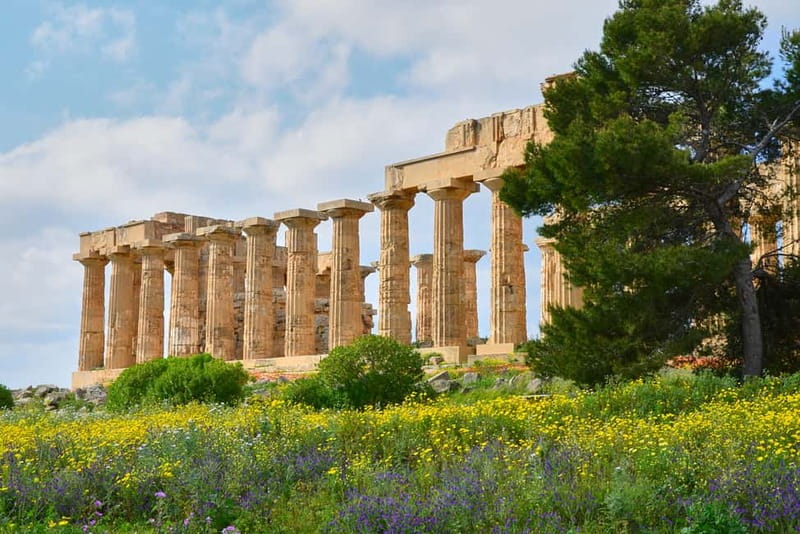
The temples are the main reason most people come, but they make more sense when you view them as part of a larger sacred and civic area. Selinunte preserves examples of buildings made according to the Doric order, the oldest Greek architectural style named in the experience.
Doric architecture is easy to recognize in broad terms: sturdy columns, strong horizontal lines, and a restrained appearance. At Selinunte, you can see how Greek builders worked with monumental scale, even where time and damage have left only sections of the original structures.
Some buildings are preserved well enough to give you a clear sense of their design. Others survive as blocks, foundations, or scattered columns. That is not a weakness of the visit. It is part of reading an archaeological site honestly. You see what remains, not a polished reconstruction that fills in every gap.
The park’s seven temples give you several chances to compare construction, condition, and setting. You can take your time with the best-preserved examples, then keep moving when a ruin is more difficult to interpret. Without an audio guide or tour leader, you will need to rely on on-site information and your own preparation, so downloading background material before arrival may help.
The Sanctuary of Malophoros
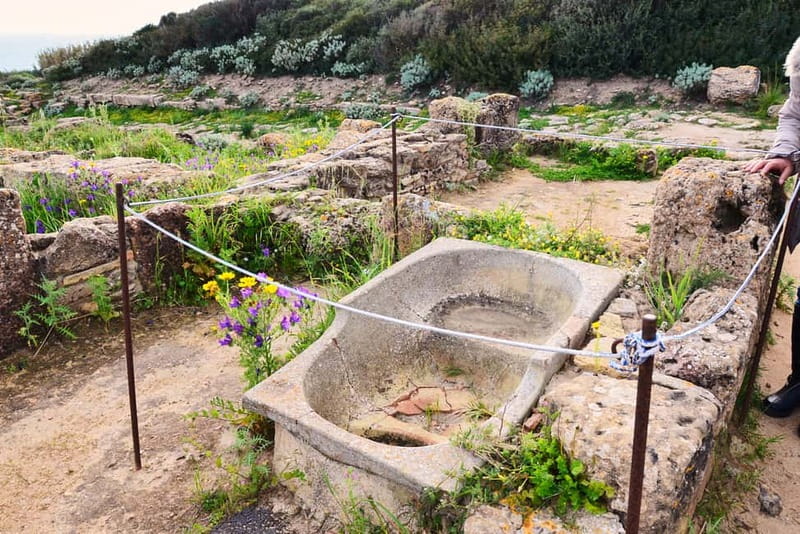
The Sanctuary of Malophoros is one of the named highlights, and it gives the visit a different focus from the large temple remains. A sanctuary was a place of worship and ritual, so this part of Selinunte helps you think about how people used the city, not just how its buildings looked.
The name Malophoros is associated with a deity connected to offerings, though the supplied information does not provide a full explanation of the cult or its rituals. What you can expect is another sacred area within the wider park, with its own archaeological character rather than one more version of a monumental temple.
I would not rush through this stop. The grand temples tend to attract the most attention, but sanctuaries often show a more specific side of ancient life. Look at the layout and surviving fragments, and compare the scale with the larger temple zones.
Since signs may not always make every connection obvious, take a little time to orient yourself. One visitor specifically found that signage could be improved. That is useful advice for planning: bring a park map if one is available, and do not assume every ruin will explain itself at a glance.
More Smartphone App Tours in Italy:
- Rome: Colosseum & Forum with Audio Guide App -Optional Arena
★ 4.2 · 24,770 reviews - Venice: Grand Canal Gondola Ride with App Commentary
★ 4.1 · 23,020 reviews - Florence: Timed Entry to Michelangelo’s David + Audio App
★ 4.6 · 19,496 reviews - Rome: Colosseum, Forum, Palatine Hill Entry & Audioguide App
★ 4.4 · 10,957 reviews
The necropolis and the story beyond temples
The necropolis adds another layer to Selinunte. Temples show public worship and monumental building. Burial areas bring the focus back to individuals, families, and the customs surrounding death.
A necropolis is not just a collection of old stones. It helps you see the settlement as a lived-in community with generations of residents. As you move through the park, the combination of sacred buildings and burial grounds gives a fuller picture of the ancient city.
The experience information does not specify the exact tomb types or the number of graves you will see, so I would treat this as a broad archaeological zone rather than a guaranteed sequence of dramatic monuments. Its value is in the overall setting and in how it connects Selinunte’s public buildings with its human story.
This is also one reason the site suits visitors who enjoy archaeology more than quick sightseeing. You need to notice relationships between areas, rather than waiting for each stop to provide a single spectacular view.
Caves of Cusa and unfinished stone
The Caves of Cusa are another unusual part of the park. Despite the name, expect an archaeological quarry area rather than a typical tourist cave attraction. The site is linked to the stone used for Selinunte’s buildings and helps show how massive architectural pieces were prepared before reaching a temple.
This is where the practical side of ancient construction comes into view. A column did not simply appear at a building site. Stone had to be selected, shaped, and moved, often with enormous effort. The Caves of Cusa give you a chance to think about that process.
The information provided does not state the exact transport arrangements between the main park and the caves, so check the current park map and local instructions. The experience does say you can explore on foot, in an e-car, or on a small train, but it does not promise that every option serves every section at every time.
That uncertainty is not a reason to skip the caves. It is a reason to avoid planning your entire day around a tight sequence. Give yourself room to adjust.
On foot, by e-car, or by small train
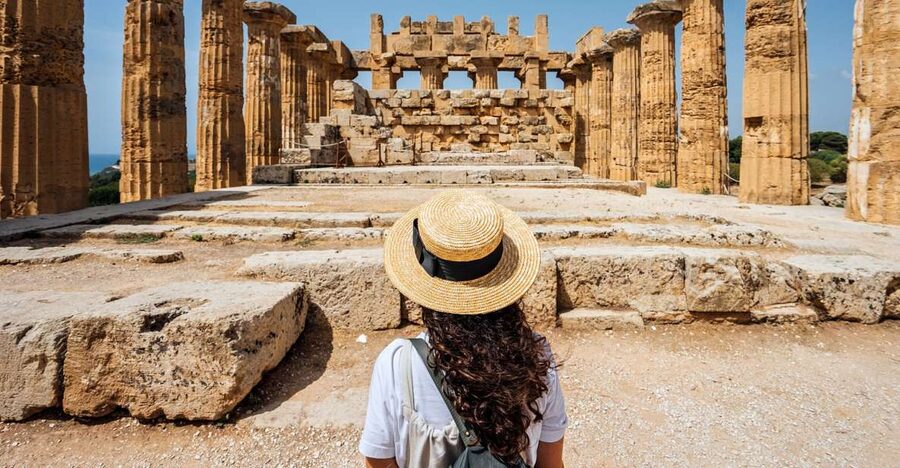
You can explore Selinunte on foot, by e-car, or on a small train. This choice matters because the park is large, and a full visit may involve more walking than the entrance area suggests.
Walking gives you the most control. You can pause at a broken column, change your route, and spend longer at a sanctuary that catches your attention. It also requires more stamina, particularly if you try to cover every named area in one day.
An e-car or small train can make the park more manageable, especially if you are traveling with children, have limited energy, or want to conserve time for the main temples. The information does not say whether these rides cost extra, how often they run, or whether they reach every area. Check those details locally rather than treating them as included parts of the ticket.
The park is wheelchair accessible, which is important, but accessibility at a large archaeological site can vary from one path or monument to another. If you use a wheelchair, contact the park or check current access information before arrival so you know which routes and transport options are practical.
What the $23 price buys you
At $23 per person, this is more than a basic admission to a small museum. You are paying for access to a very large archaeological park with temples, sanctuaries, burial areas, and quarry remains, plus the convenience of skipping the ticket line.
The value is strongest if you plan to spend several hours exploring. A short visit that covers only one temple will make the price feel less attractive, since the ticket’s real advantage is access to the full area for one day.
The price does not include a guided tour or audio guide. That keeps the experience flexible and avoids paying for a service you may not want, but it also means the historical interpretation is up to you. If you want detailed explanations of the gods, rituals, building dates, and political background, arrange a separate guide or prepare before you go.
The included digital postcard is not a major financial benefit, but it is a nice extra. After your visit, you can send a Pemcard digital photo to friends or family, using the instructions supplied for the service. It works like a modern postcard and gives you a simple way to share the day.
Who will enjoy this experience most
This ticket suits you if you like ancient sites at your own pace and do not need a guide to keep the visit moving. It is also a good fit if your schedule is uncertain, since you can reserve now and pay later, with free cancellation up to 24 hours before the activity.
Families may appreciate the choice of walking, e-car, or small train, though the park’s size means young children may tire. The digital postcard adds a small family-friendly touch, especially if children enjoy taking photos.
Independent history fans will get the most from the freedom. You can spend extra time at the temples, compare different sections of the park, and make your own route.
This is less suitable if you want a tightly organized tour with stories delivered at each stop. Since neither a guide nor audio guide is included, you will not receive a continuous explanation as you walk. The site also may not suit anyone looking for a quick, compact attraction.
Booking and practical details
You can reserve the ticket and pay later, which helps if your Sicily plans are still shifting. Free cancellation is available up to 24 hours in advance for a full refund.
Check the available starting times when booking. The ticket is valid for one day, but it allows only a single entry, so decide when you are ready to begin before exchanging the voucher.
Bring your booking confirmation to the park ticket office and exchange it for the official admission ticket. Even with skip-the-line entry, this exchange is part of the process.
Wear practical footwear and plan for time outdoors, though the supplied information does not specify the exact conditions of every path. Since the park is large, avoid assuming that you can see every area comfortably in a short window.
Is the Selinunte ticket worth booking?
I would book it if you want a flexible day at one of Sicily’s major Greek archaeological sites and are comfortable exploring without a guide. The combination of seven temples, the Sanctuary of Malophoros, the necropolis, and the Caves of Cusa gives you far more than a single monument visit.
The ticket is especially useful when you value time and independence. Skip-the-line entry, one-day validity, and several ways to move around the park make the visit easier to shape around your interests.
I would choose a guided option instead if detailed explanation is the main reason you are coming. For everyone else, the $23 price is reasonable when you use the ticket as intended: take your time, cover more than one section, and let Selinunte’s size become part of the experience rather than a surprise.
FAQ
How long is the Selinunte ticket valid?
The ticket is valid for one day. Check availability when booking to see the possible starting times.
Can I enter Selinunte more than once with this ticket?
No. The voucher allows a single entry into the Archaeological Park of Selinunte.
Does the ticket include a guided tour?
No. A guided tour is not included.
Is an audio guide included?
No. The information provided states that an audio guide is not included.
Do I need to exchange my voucher?
Yes. Exchange your voucher at the Archaeological Park ticket office for the official entry ticket.
What can I see inside the park?
The park includes the necropolis, sanctuaries, the Sanctuary of Malophoros, seven temples, the Caves of Cusa, and other archaeological remains.
Can I explore the park without walking the entire time?
Yes. You can explore on foot, by e-car, or on a small train. The information does not specify whether these transport options cost extra or serve every section.
Is the archaeological park wheelchair accessible?
Yes. The activity is listed as wheelchair accessible. Because the park covers a large archaeological area, check current route and transport details if you need specific access arrangements.
Just added around Italy
- Genoa Historic Centre Quest: A Self-Guided Puzzle Adventure★ 4.0 · 3 reviews
- Genova Walking Tour with Audio and Written Guide by a Local★ 4.5 · 33 reviews
- Self-Drive (No Licence) Boat Rental in Portofino Gulf★ 5.0 · 12 reviews
- Finance and Nobility: Explore medieval Genoa on a self-guided audio tour★ 4.5 · 7 reviews
- Around Florence Hills: App‑Guided e‑Vespa Tour + Wine&Food★ 4.5 · 22 reviews
- Florence: Uffizi Gallery Audio Guided Tour led by Tour Leader★ 3.5 · 6 reviews
- Florence: Uffizi Gallery Reserved Ticket & Digital Audio Guide★ 4.5 · 3 reviews
- Uffizi Gallery: Self-guided App Visit & Optional Accademia Museum★ 4.0 · 19 reviews
Italy Audio Tours, compared.
Rome: Pantheon Fast-Track Ticket and Official Audioguide
Read our review →
Rome: Colosseum & Forum with Audio Guide App -Optional Arena
Read our review →
Venice: Grand Canal Gondola Ride with App Commentary
Read our review →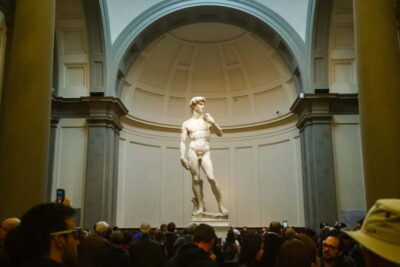
Florence: Timed Entry to Michelangelo’s David + Audio App
Read our review →
Rome: City Sightseeing Hop-on Hop-off Bus with Audioguide
Read our review →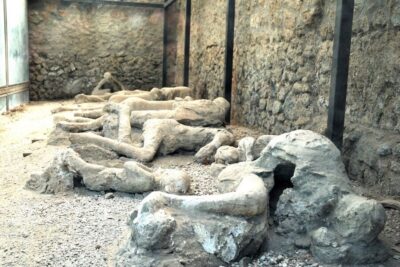
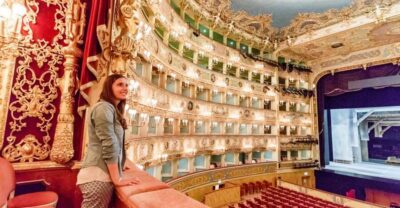
Venice: La Fenice Opera House Entry Ticket with Audio Guide
Read our review →
Rome: Colosseum, Forum, Palatine Hill Entry & Audioguide App
Read our review →Browse the lists this tour appears in