
REVIEW · FLORENCE AUDIO TOURS
Florence: Accademia Gallery Reserved Entry & Audio Guide
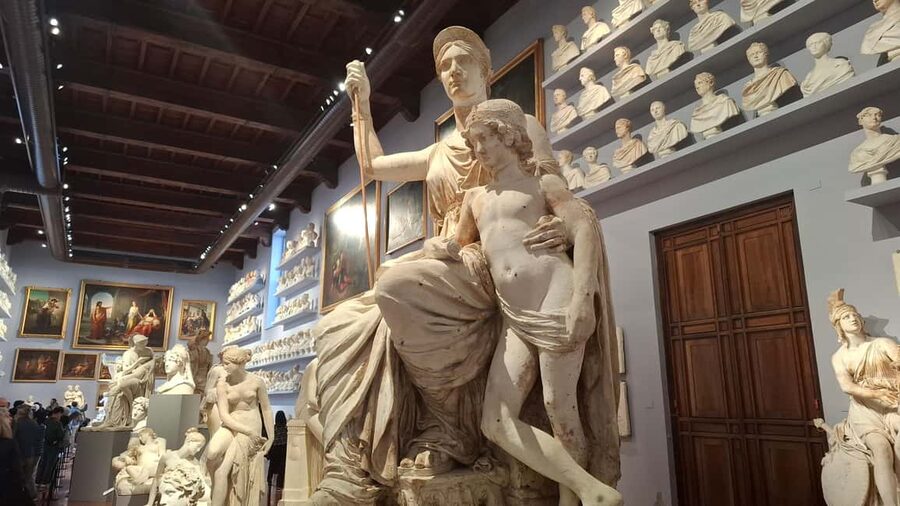
Michelangelo’s David is the reason most people come to Florence’s Accademia Gallery, and the reserved-entry format lets you spend your energy looking at the statue instead of standing in a ticket queue. You meet an assistant near Piazza San Marco, collect your ticket, and enter the museum for a self-guided visit.
I like the clear meeting arrangement, with an assistant in blue clothing marked with CAF Tour and Gray Line logos. I also like the freedom to set your own pace, especially since the David is only part of the collection. The main drawback is that your entry time matters: miss it, and you may face a long wait to get in.
Key points to know before booking
- David is the star: See Michelangelo’s famous marble sculpture at close range, then give yourself time to notice the hands, face, stance, and tension in the body.
- Reserved access saves time: You skip the ticket office line and the queue for visitors without reservations, though you should still arrive about 15 minutes early.
- The visit lasts about two hours: That is enough time for the major works, but you will need to manage your pace if you want to read every label.
- The audio guide is optional: Choose English, French, German, Italian, or Spanish commentary if you want background on Michelangelo and Renaissance Florence.
- Do not overlook the other sculptures: The Prigioni, San Matteo, and Palestrina Pietà give you a fuller picture of Michelangelo’s work.
- Security rules are strict: Only a water bottle of 0.5 liters or less is permitted, and you cannot drink in the exhibition rooms.
Why reserved entry matters at the Accademia
The Accademia Gallery is not a huge museum, but it is one of Florence’s most in-demand stops. Its fame rests on a single sculpture that draws visitors from around the world: David. Without a reservation, the wait can take up a large part of your day, especially during busy periods.
This booking covers the reservation fee and admission ticket. You still need to meet the local assistant before entering, so this is not a ticket that sends you straight through the doors on your own. The practical benefit is that someone helps you get the correct ticket and directs you toward the reserved entrance.
The meeting point is at the corner of Via Ricasoli and Piazza San Marco, in front of the loggiato of the Accademia delle Belle Arti. Look for the assistant wearing blue clothing with CAF Tour and Gray Line logos. I would arrive at least 15 minutes early. That small cushion matters in Florence, where a wrong turn or a slow walk through a crowded street can cost you your entry time.
The organized handoff seems to be one of the strongest parts of this experience. You are not left guessing which line to join or where to collect the ticket. Once inside, though, the visit becomes your own. There is no scheduled lecture or fixed route to follow.
More Museum Audio Guides in Florence
- Florence: Uffizi Gallery Timed Entry Ticket & Audio Guide
★ 4.2 · 2,794 reviews - Florence: Uffizi Gallery Reserved Entry Ticket & Audioguide
★ 4.5 · 970 reviews - Florence Duomo, Baptistery & Opera Museum Audioguided Tour
★ 4.2 · 607 reviews
Seeing Michelangelo’s David up close
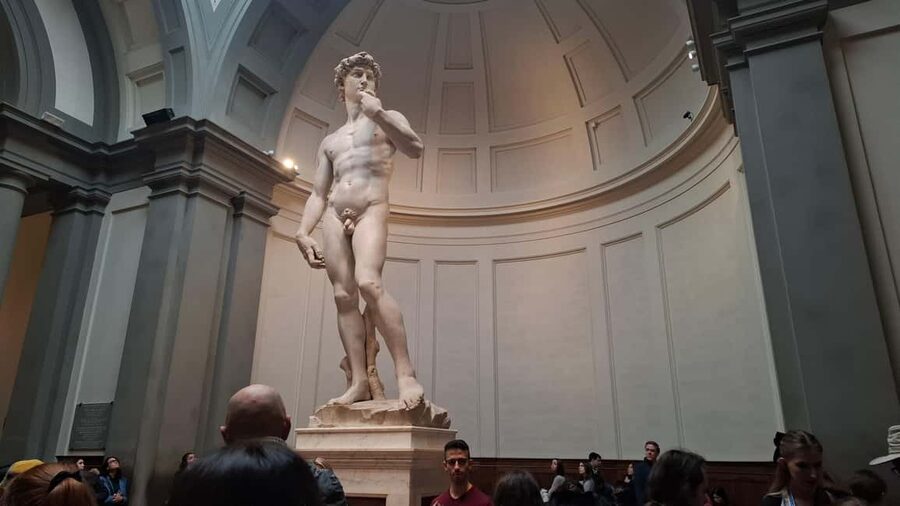
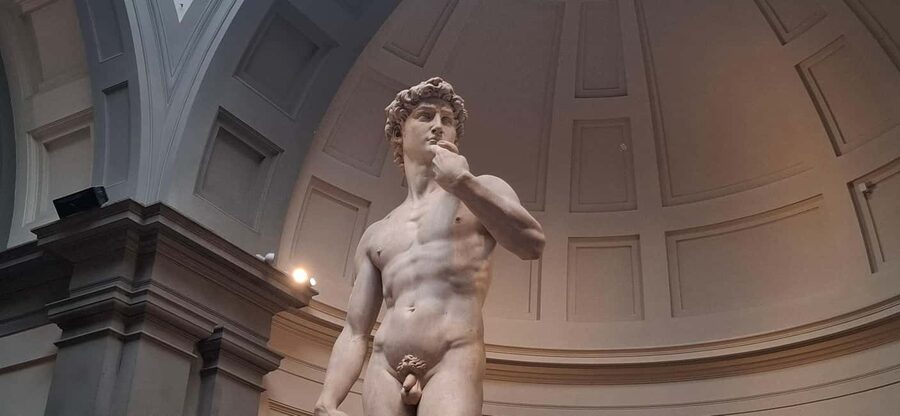
David is displayed at the end of the main gallery, where the long central corridor gives you a clear approach to the sculpture. The first sight is powerful because the statue is much larger than many people expect. Michelangelo carved it from a single block of marble, shaping a young David before his fight with Goliath rather than after the victory.
That choice gives the sculpture its sense of alertness. David is not celebrating. He is watching, thinking, and preparing. You can study the turn of the head, the concentrated face, the relaxed hand, and the way the body holds both calm and force.
Give yourself a few minutes before reaching for the audio guide or your camera. Look first from the front, then from the sides if the viewing space allows. The details that seem small in photographs become much clearer in person, including the careful treatment of the hair, hands, and veins.
David also carries a political meaning. Florence adopted the figure as a symbol of the strength and spirit of the Florentine Republic. That context helps explain why this statue became more than a religious subject or a demonstration of artistic skill.
The statue is the highlight, but it should not be the entire visit. If you walk in, take one quick picture, and leave, you will miss the reason the Accademia works as a museum rather than just a place for one famous sculpture.
The Prigioni and Michelangelo’s unfinished figures
After David, pay attention to the Prigioni, often called the Slaves. These large figures appear to struggle out of the marble, with some forms still partly attached to the stone. They show Michelangelo’s work in a different state from the polished David.
The unfinished surfaces are part of their power. You can see the contrast between a body that seems ready to emerge and the rough block that still holds it in place. The effect is not as tidy or immediately familiar as David, but it gives you a closer look at the process of sculpting.
I find these works especially useful for understanding Michelangelo’s skill. David can seem almost impossible because the finished surface hides the labor. The Prigioni reveal more of the physical act: removing stone, finding the figure, and deciding how much of the material should remain.
This is also where the optional audio guide can help. If you choose it, you can hear more about Michelangelo’s life, the works themselves, and the setting of Renaissance Florence without having to rely only on wall labels. The guide is available in English, French, German, Italian, and Spanish.
San Matteo and the Palestrina Pietà
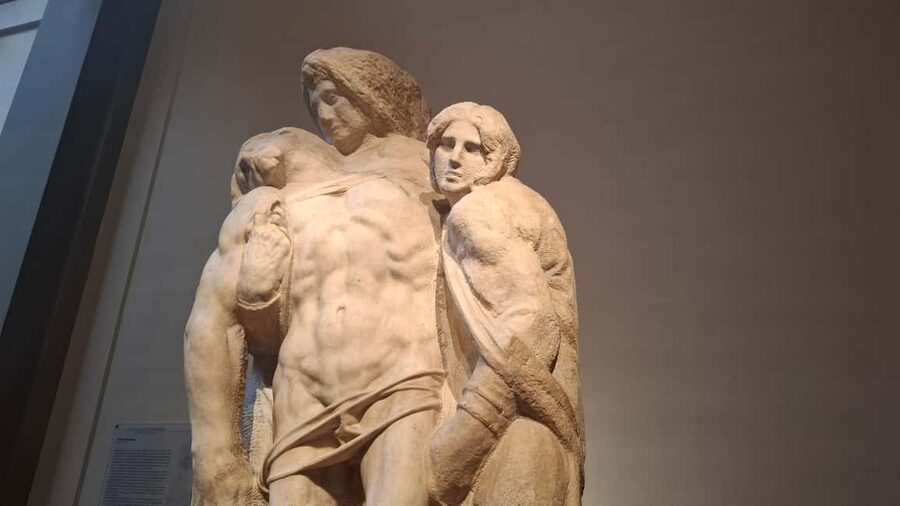
San Matteo continues the story of Michelangelo’s unfinished sculpture. Like the Prigioni, it gives you a chance to look at form before it reaches a fully polished state. You might find the work less instantly recognizable than David, but it rewards a slower look.
The Palestrina Pietà offers a different mood. Pietà subjects show the Virgin Mary holding the dead Christ, and this work brings a more emotional note to the visit. Its attribution and history have been debated, so the audio guide or museum information can be useful if you want more context rather than simply moving from one famous name to the next.
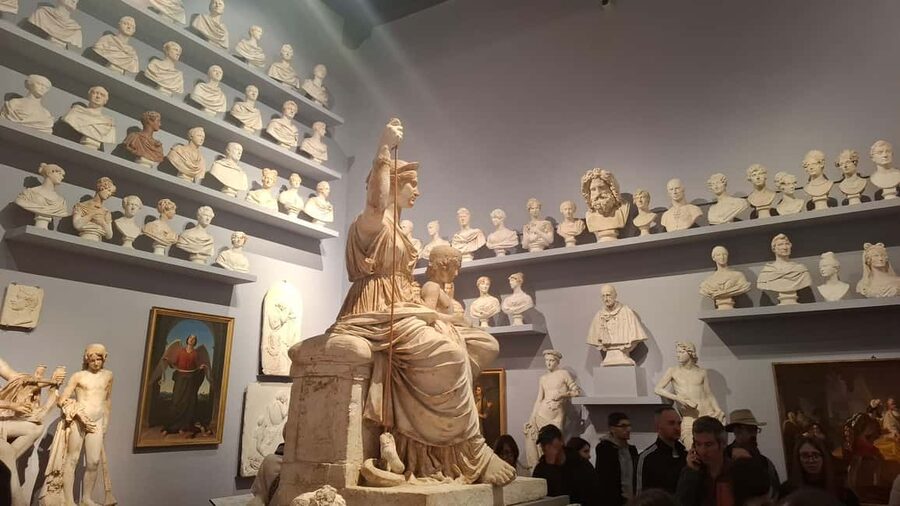
These sculptures make the Accademia worthwhile for anyone interested in the range of Renaissance art, not just its best-known masterpiece. The museum gives you finished marble, partially completed figures, religious subjects, and works that raise questions about authorship and process.
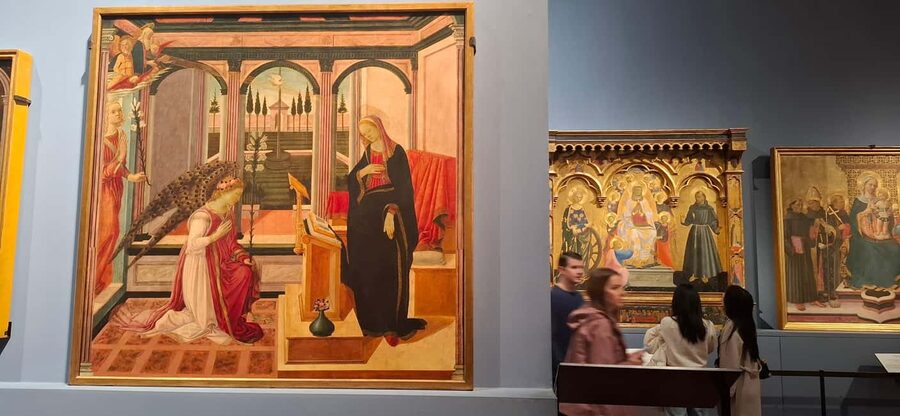
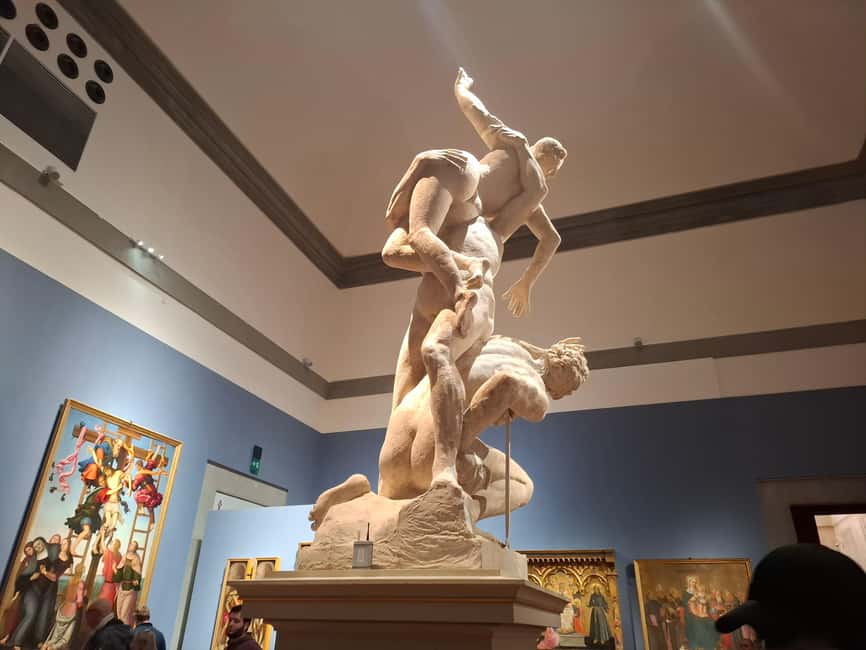
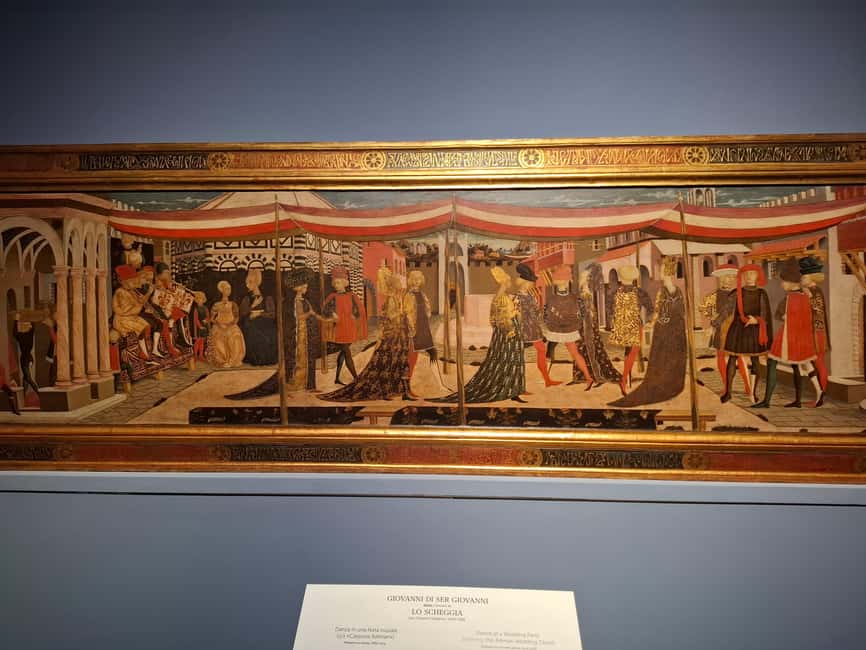
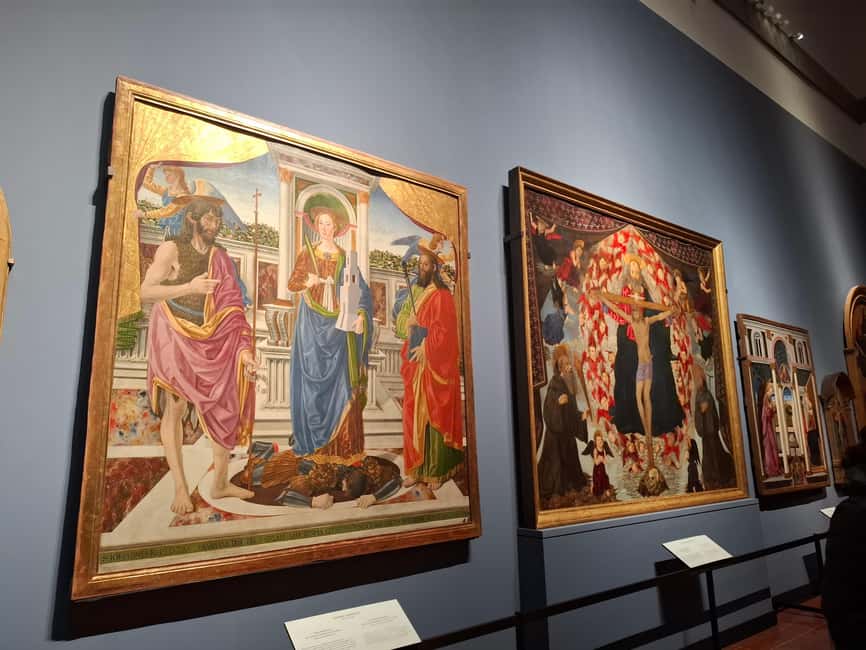
You should not expect two hours of wall-to-wall Michelangelo. The Accademia also contains paintings and other objects, and the exact amount of time you spend with them depends on your interest. The reserved ticket gives you room to explore, but it does not turn the museum into a large all-day collection.
More Museum Audio Guides in Italy
- Florence: Uffizi Gallery Tickets with Optional Audio Guide
★ 4.1 · 503 reviews - Florence: Accademia Gallery David Entry & Audio Guide App
★ 4.2 · 406 reviews - Uffizi Gallery: Entry tickets + audio guide
★ 4.0 · 347 reviews - Uffizi Gallery Timed Tickets with Audio guide
★ 4.0 · 174 reviews
What the audio guide adds
The audio guide is an option, not a requirement. If you enjoy reading labels and forming your own response to art, you can visit without it. If you want help connecting the sculptures to Michelangelo’s life and Florence’s political setting, the guide adds useful structure.
The commentary is available in five languages: English, French, German, Italian, and Spanish. It can help you notice details you might otherwise miss, especially in the unfinished works. An audio guide also lets you pause, move on, and return to a sculpture without staying with a group.
I would choose it if this is your first visit to the Accademia or if you have limited knowledge of Renaissance sculpture. I might skip it if you already plan to use your own museum notes or an audio app. One past booking used the Rick Steves Audio Europe app alongside the visit, showing that some people prefer bringing a separate guide, but you should choose only one main source of commentary if you want to keep the experience simple.
The audio guide does not change the entry process. You still meet the assistant, receive your admission ticket, and pass through security before visiting the galleries.
Two hours inside the gallery
The stated duration is two hours, which is a sensible amount of time for this museum. You can use the first part to see David and the main Michelangelo sculptures, then spend the remaining time on the other rooms and paintings.
A practical plan might look like this:
- Allow time at the meeting point before your scheduled entry.
- Go first to David while your attention is fresh.
- Return to the Prigioni and San Matteo for a slower look.
- Spend time with the Palestrina Pietà and the sculpture displays.
- Use the audio guide selectively rather than listening to every track.
- Keep a few minutes for any room that catches your eye.
You do not need to rush from room to room, but you should watch the clock if your two hours are part of a packed Florence schedule. The gallery is easy to pair with other central sights, yet the visit deserves more than a quick dash between lunch and another appointment.
The self-guided format suits independent visitors. You can stay with David for ten minutes or twenty, skip a painting, or return to a sculpture that made more sense after hearing the commentary. Families with young children may find the freedom helpful, though children under six cannot take part in this activity.
Meeting point, security, and small practical details
Your passport or ID card is listed as something to bring, so keep it accessible. Comfortable shoes are also a good idea, especially if you are walking to the gallery through central Florence before or after the visit.
Security allows only a bottle of water no larger than 0.5 liters. Bottled or canned drinks can be taken away at the entrance, and drinking is not allowed inside the exhibition rooms. Do not arrive with a large drink assuming you can carry it through.
Food and drinks are not included. This is not a problem for most people because the visit lasts about two hours, but plan around it if you are visiting with children or combining the gallery with a longer outing.
The assistant is there for multilingual help at the meeting point. The actual audio guide, if you select that option, is available in the five languages listed above. You should not book this expecting a personal art historian to lead you through the rooms. It is reserved admission with optional recorded commentary.
Is $48 good value?
At $48 per person, this is not the cheapest way to see a museum. The value depends on how much you care about saving time and reducing uncertainty.
The price covers admission, the reservation fee, and assistance at the meeting point. You also get the option of an audio guide. For a first visit during a busy period, paying more than a basic ticket can make sense because the cost protects a fixed part of your Florence schedule.
The time saved is the main benefit. A non-reserved visitor may need to wait in a long queue, while this booking is designed to avoid both the ticket office line and the queue for non-reserved entry. One booking reported only about a 15-minute wait before getting inside, although you should not treat that as a guaranteed maximum. Busy conditions and your arrival time still matter.
The price is less compelling if you are visiting during a quiet period, already have another reserved ticket, or are comfortable waiting. It is also less useful if you plan to spend only a few minutes at the museum. You get the best value when David is a top priority and your day in Florence is tightly planned.
Free cancellation up to 24 hours before the activity and the reserve-now, pay-later option add flexibility. Those terms are helpful if your schedule is still shifting, but check the booking conditions for your chosen time before you finalize plans.
Who should book this Accademia visit?
I would recommend it to first-time visitors who want to see David without gambling on a long queue. It also fits art lovers who want time with the Prigioni, San Matteo, and Palestrina Pietà rather than treating the gallery as a one-statue photo stop.
The optional audio guide makes it a good choice if you want context but do not want to join a longer guided tour. Independent visitors can move at their own speed, while people who prefer a fixed lecture may find the format too hands-off.
Families with children aged six and older can use the flexible pace, though the water and security rules require a little planning. Anyone who dislikes strict meeting times should think twice. You need to reach the corner of Via Ricasoli and Piazza San Marco on time, and missing your slot can mean a much longer wait.
Should you book it?
Book this experience if David is high on your Florence list and you value a simple, organized entry. The blue-shirted assistant, reserved admission, and optional five-language audio guide remove several common hassles, while the two-hour visit leaves you free to explore without a group schedule.
Skip it if you already have another reliable reservation or do not mind waiting. At $48, the ticket earns its keep through saved time and convenience, not through a large guided program. Arrive early, bring identification, carry only a small water bottle, and give the Prigioni and other sculptures the attention they deserve after David.
FAQ
Where is the meeting point?
Meet at the corner of Via Ricasoli and Piazza San Marco, in front of the loggiato of Accademia delle Belle Arti.
How will I recognize the assistant?
The assistant will be wearing blue clothing with CAF Tour and Gray Line logos.
How long does the visit last?
The activity duration is about two hours. Starting times vary, so check availability when choosing your booking.
Does the ticket skip the Accademia ticket line?
Yes. The booking includes reserved admission and is intended to skip the ticket office line and the queue for visitors without reservations.
Is the audio guide included?
The audio guide is included only if you select that option. It is available in English, French, German, Italian, and Spanish.
What should I bring?
Bring your passport or ID card and wear comfortable shoes.
Can I bring a drink inside?
Only a water bottle no larger than 0.5 liters is permitted. Bottled or canned drinks can be taken away at security, and drinking is not allowed in the exhibition rooms.
Can I cancel the booking?
You can cancel up to 24 hours in advance for a full refund. The reserve-now, pay-later option is also available.
Just added around Florence
- Florence: Uffizi Gallery Reserved Ticket & Digital Audio Guide★ 4.5 · 3 reviews
- Around Florence Hills: App‑Guided e‑Vespa Tour + Wine&Food★ 4.5 · 22 reviews
- Florence: Uffizi Gallery Audio Guided Tour led by Tour Leader★ 3.5 · 6 reviews
- Uffizi Gallery: Self-guided App Visit & Optional Accademia Museum★ 4.0 · 19 reviews
- Uffizi Gallery Audio-Guided Visit with optional Accademia Gallery★ 3.5 · 42 reviews
- Florence: Uffizi Gallery Timed Entry Ticket with Audio★ 3.0 · 3 reviews
- Uffizi Combined Ticket:UFFIZI, PITTI, BOBOLI & digital audioguide★ 4.0 · 26 reviews
- Accademia Gallery Skip the line Tickets with Audio Guide★ 4.0 · 10 reviews
Florence Audio Tours, compared.
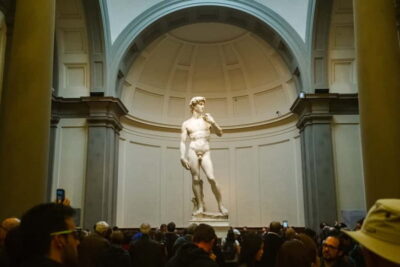
Florence: Timed Entry to Michelangelo’s David + Audio App
Read our review →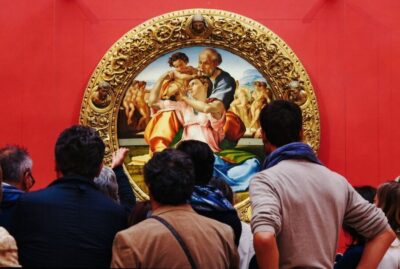
Florence: Uffizi Priority Ticket & Masterpieces Audio App
Read our review →
Florence: Palazzo Vecchio Entrance Ticket & Audioguide
Read our review →
Florence: Uffizi Gallery Timed Entry Ticket & Audio Guide
Read our review →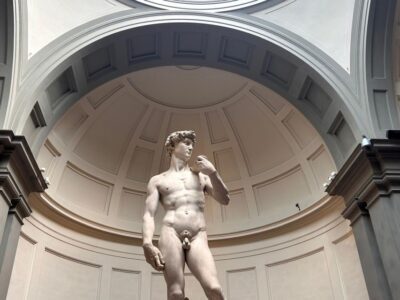
Florence: Michelangelo’s David Entrance Ticket and Audio App
Read our review →
Florence: Uffizi & Accademia Priority Tickets with Audio App
Read our review →
Florence: Eco-Friendly Golf Cart City Tour with Audio Guide
Read our review →
Florence: Uffizi Gallery Reserved Entry Ticket & Audioguide
Read our review →Browse the lists this tour appears in